
Product Life Cycle Introductory Stage Growth Stage Maturity

- Slides: 20
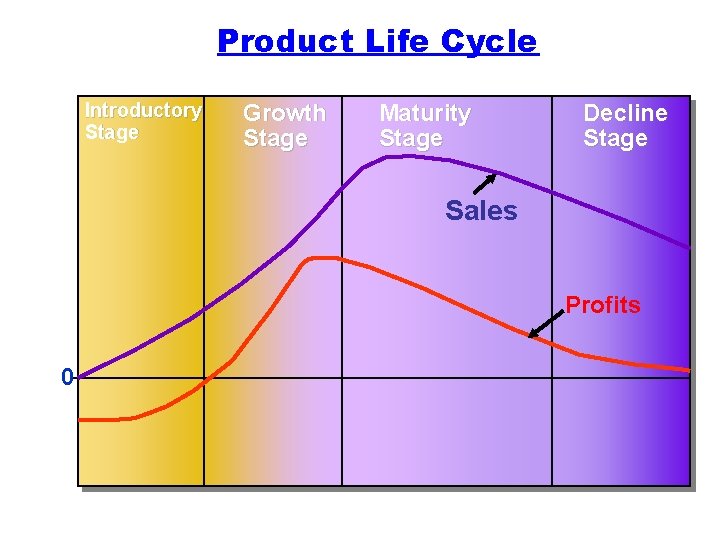
Product Life Cycle Introductory Stage Growth Stage Maturity Stage Decline Stage Sales Profits 0
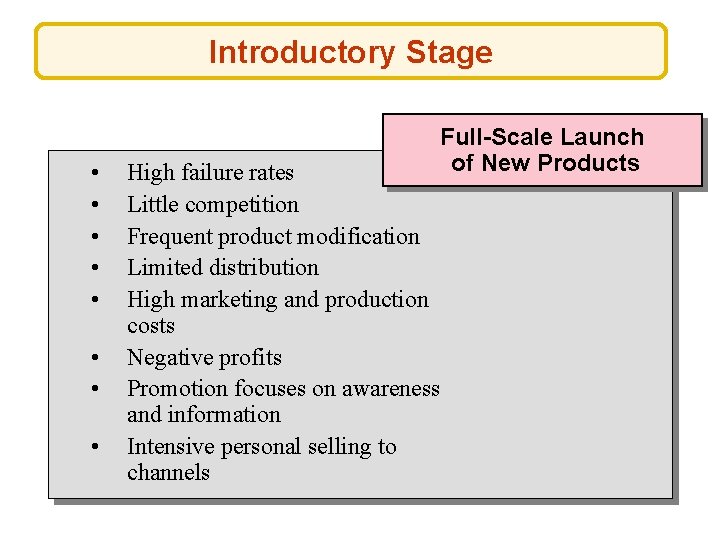
Introductory Stage • • Full-Scale Launch of New Products High failure rates Little competition Frequent product modification Limited distribution High marketing and production costs Negative profits Promotion focuses on awareness and information Intensive personal selling to channels
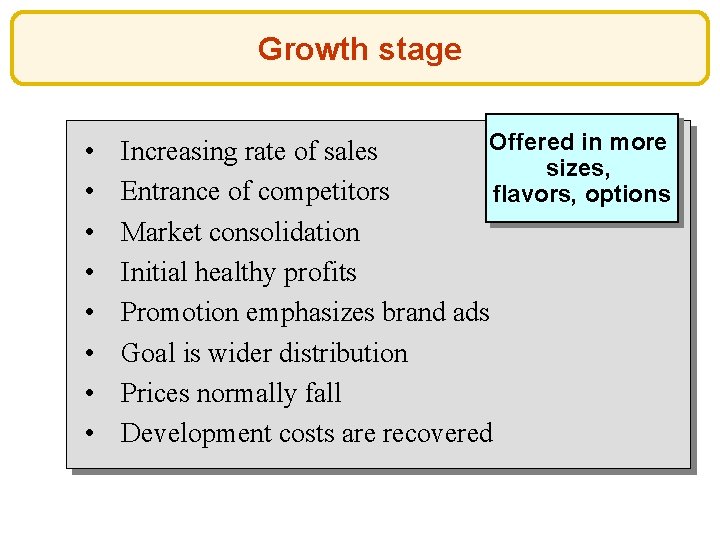
Growth stage • • Offered in more Increasing rate of sales sizes, Entrance of competitors flavors, options Market consolidation Initial healthy profits Promotion emphasizes brand ads Goal is wider distribution Prices normally fall Development costs are recovered
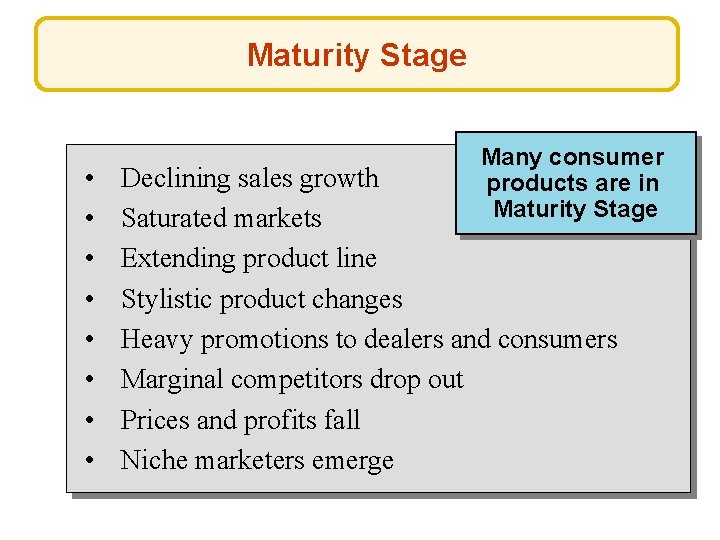
Maturity Stage • • Many consumer products are in Maturity Stage Declining sales growth Saturated markets Extending product line Stylistic product changes Heavy promotions to dealers and consumers Marginal competitors drop out Prices and profits fall Niche marketers emerge
Decline Stage • Long-run drop in sales • Large inventories of unsold items • Elimination of all nonessential marketing expenses Rate of decline depends on change in tastes or adoption of substitute products
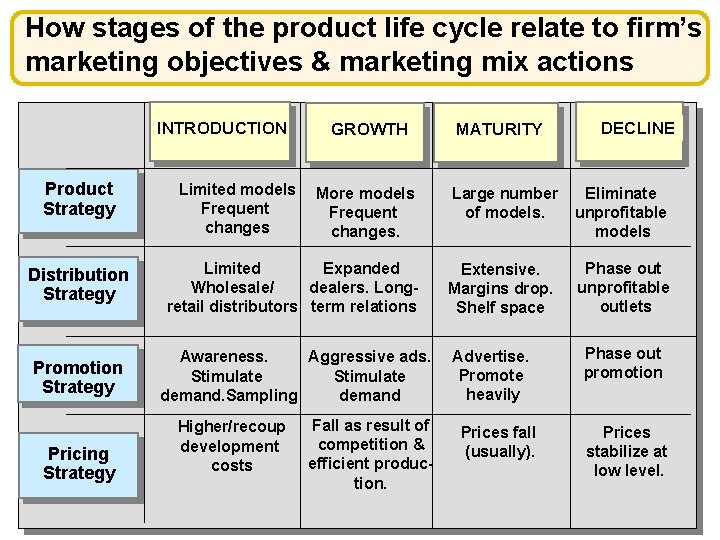
How stages of the product life cycle relate to firm’s marketing objectives & marketing mix actions INTRODUCTION Product Strategy Limited models Frequent changes GROWTH MATURITY DECLINE More models Frequent changes. Large number of models. Eliminate unprofitable models Distribution Strategy Limited Expanded Wholesale/ dealers. Longretail distributors term relations Extensive. Margins drop. Shelf space Phase out unprofitable outlets Promotion Strategy Awareness. Aggressive ads. Stimulate demand. Sampling demand Pricing Strategy Higher/recoup development costs Fall as result of competition & efficient production. Advertise. Promote heavily Prices fall (usually). Phase out promotion Prices stabilize at low level.
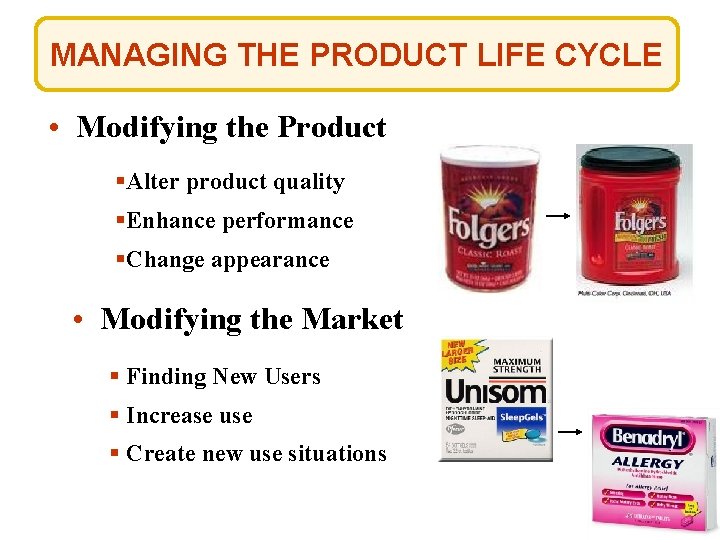
MANAGING THE PRODUCT LIFE CYCLE • Modifying the Product §Alter product quality §Enhance performance §Change appearance • Modifying the Market § Finding New Users § Increase use § Create new use situations
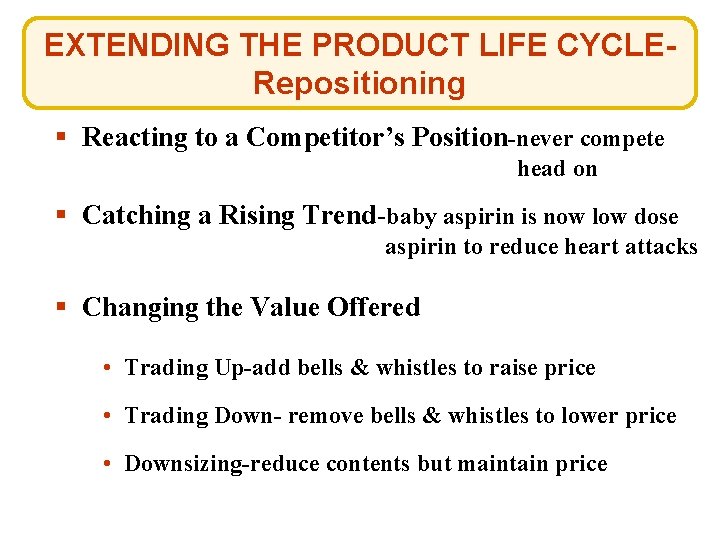
EXTENDING THE PRODUCT LIFE CYCLERepositioning § Reacting to a Competitor’s Position-never compete head on § Catching a Rising Trend-baby aspirin is now low dose aspirin to reduce heart attacks § Changing the Value Offered • Trading Up-add bells & whistles to raise price • Trading Down- remove bells & whistles to lower price • Downsizing-reduce contents but maintain price
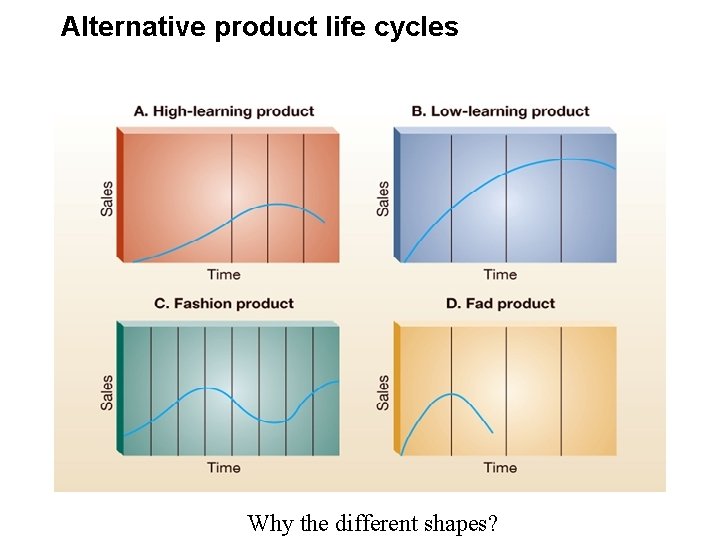
Alternative product life cycles Why the different shapes?
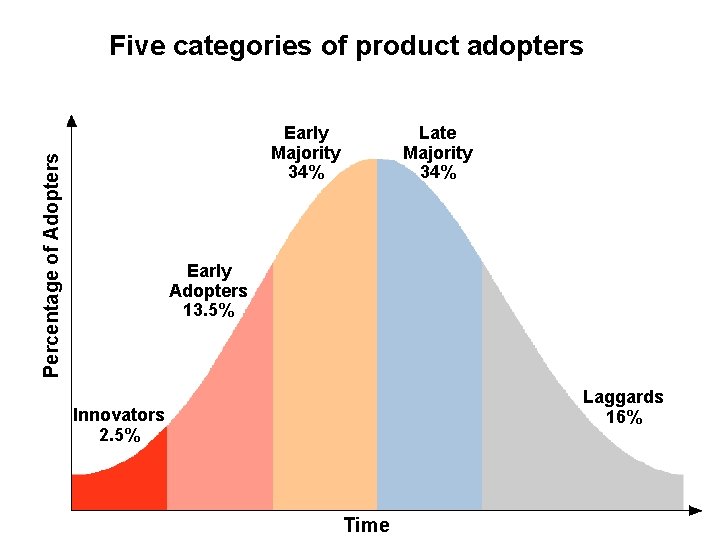
Five categories of product adopters Percentage of Adopters Early Majority 34% Late Majority 34% Early Adopters 13. 5% Laggards 16% Innovators 2. 5% Time
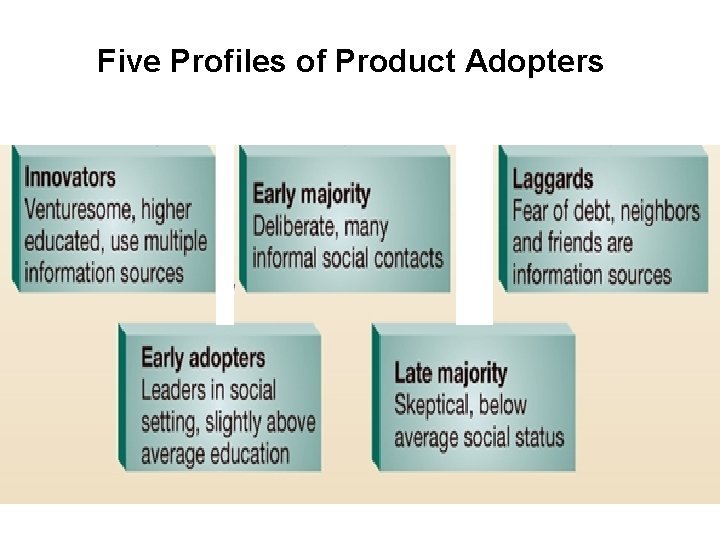
Five Profiles of Product Adopters
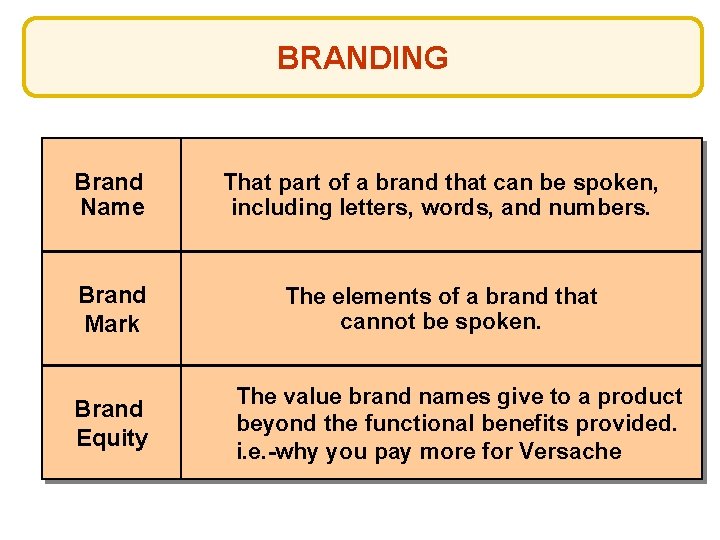
BRANDING Brand Name That part of a brand that can be spoken, including letters, words, and numbers. Brand Mark The elements of a brand that cannot be spoken. Brand Equity The value brand names give to a product beyond the functional benefits provided. i. e. -why you pay more for Versache
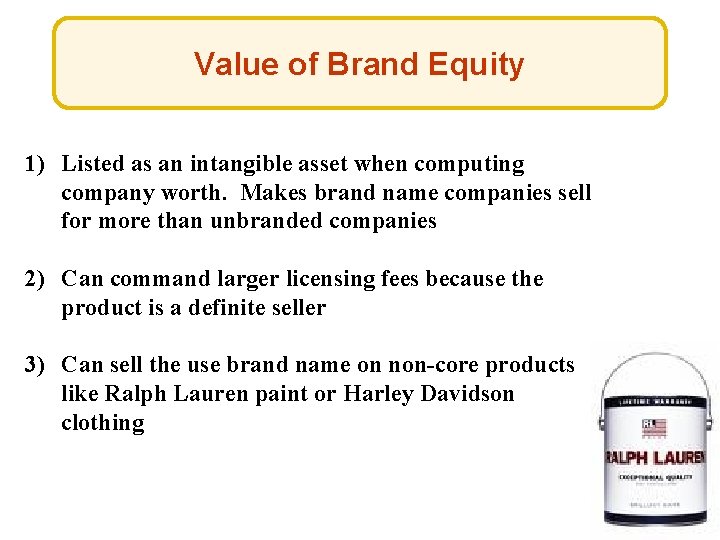
Value of Brand Equity 1) Listed as an intangible asset when computing company worth. Makes brand name companies sell for more than unbranded companies 2) Can command larger licensing fees because the product is a definite seller 3) Can sell the use brand name on non-core products like Ralph Lauren paint or Harley Davidson clothing
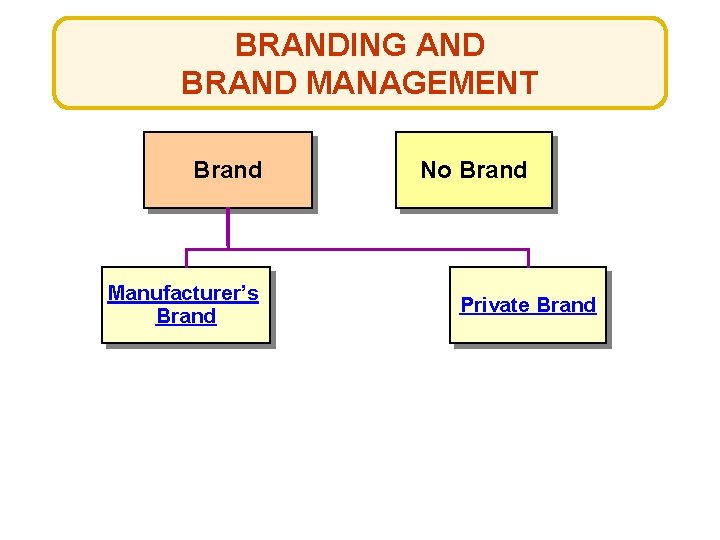
BRANDING AND BRAND MANAGEMENT Brand Manufacturer’s Brand No Brand Private Brand
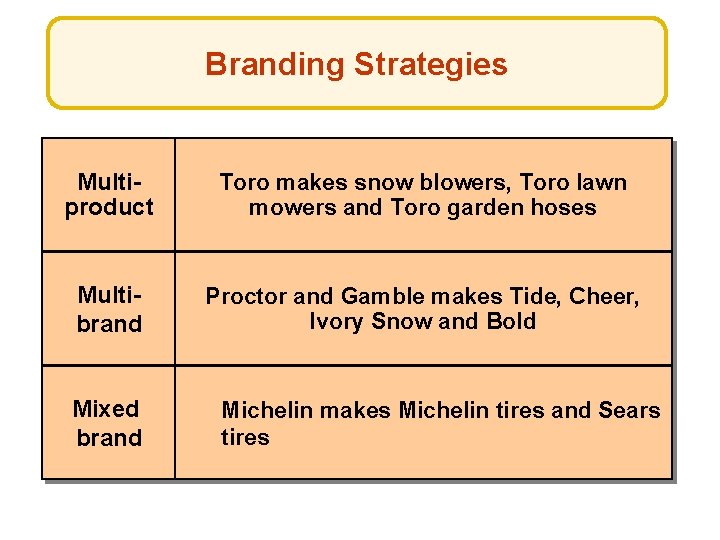
Branding Strategies Multiproduct Toro makes snow blowers, Toro lawn mowers and Toro garden hoses Multibrand Proctor and Gamble makes Tide, Cheer, Ivory Snow and Bold Mixed brand Michelin makes Michelin tires and Sears tires
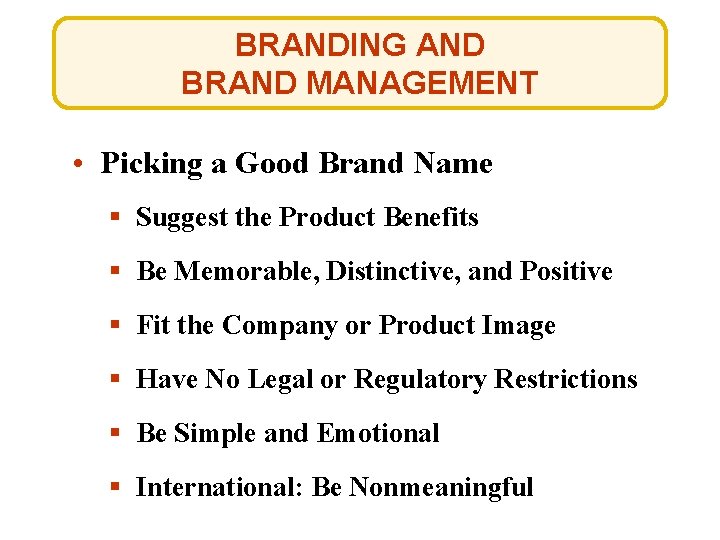
BRANDING AND BRAND MANAGEMENT • Picking a Good Brand Name § Suggest the Product Benefits § Be Memorable, Distinctive, and Positive § Fit the Company or Product Image § Have No Legal or Regulatory Restrictions § Be Simple and Emotional § International: Be Nonmeaningful
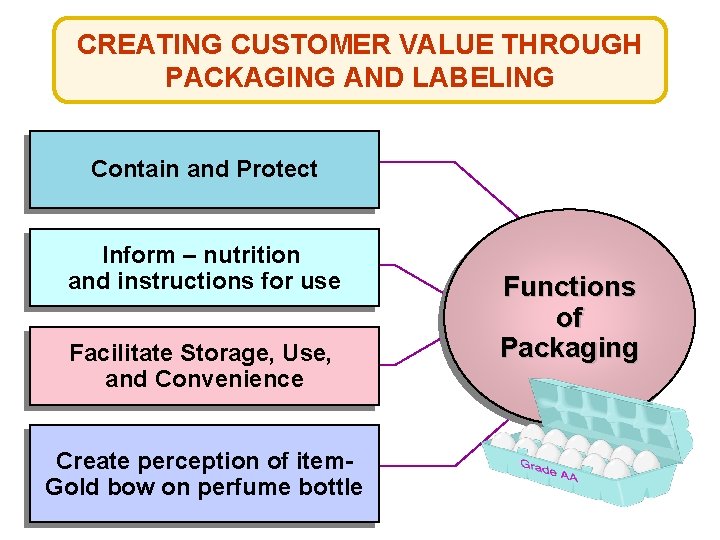
CREATING CUSTOMER VALUE THROUGH PACKAGING AND LABELING Contain and Protect Inform – nutrition and instructions for use Facilitate Storage, Use, and Convenience Create perception of item. Gold bow on perfume bottle Functions of Packaging
Product Life Cycle The product life cycle describes the stages a new product goes through in the marketplace: introduction, growth, maturity, and decline.
Private Brand Often called store brand, a private brand is a manufacturer brand of product sold under the name of the retailer.
Manufacturer Brand Manufacturer brands are often called national brands and are carry the brand name of a maker of the goods.