
PRODUCT LIFE CYCLE BBI 2 O TRADITIONAL PRODUCT
PRODUCT LIFE CYCLE BBI 2 O

TRADITIONAL PRODUCT LIFE CYCLE
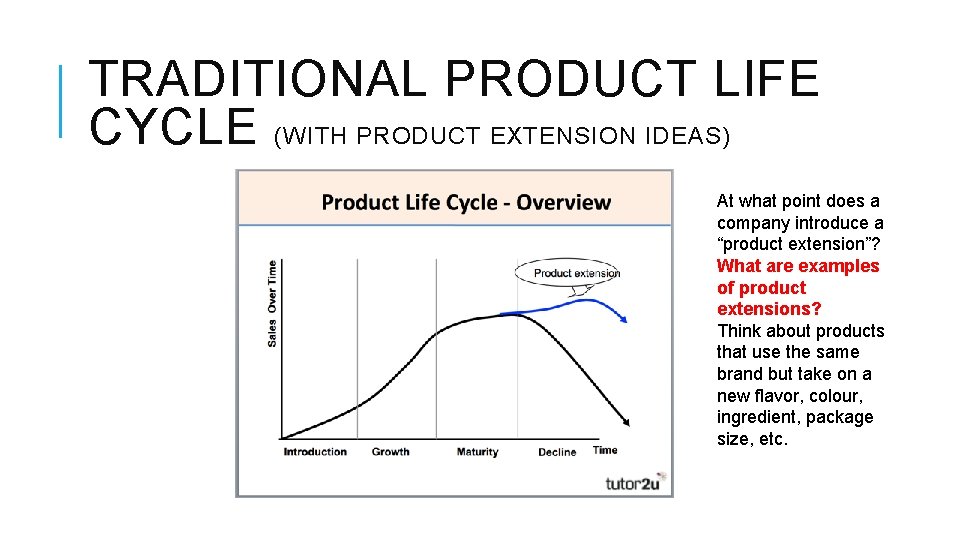
TRADITIONAL PRODUCT LIFE CYCLE (WITH PRODUCT EXTENSION IDEAS) At what point does a company introduce a “product extension”? What are examples of product extensions? Think about products that use the same brand but take on a new flavor, colour, ingredient, package size, etc.
THE TRADITIONAL PRODUCT LIFE CYCLE Introduction Stage A product launch is the moment when a new product is introduced into the marketplace – it is the birth of a new product The launch of a new product is very expensive (manufacturing, promotional activities, importers, wholesalers, retailers, warehouse space, new packaging, labelling, etc. ) Because of all of these things, the initial price of a product as it enters the market is often high
THE TRADITIONAL PRODUCT LIFE CYCLE Growth Stage The quicker a company can reach the growth stage with a new product or service, the quicker it can begin to make a profit If a product is removed from the market before it has recovered the costs of production and the product launch, it is called a bust If a profit isn’t realized in a given market it is due to barriers to entry, such as small market size, cost of research and development, advertising expenses, factory & equipment costs, design costs, lack of distribution channels, cost of raw materials
THE TRADITIONAL PRODUCT LIFE CYCLE Maturity Stage The period during which the sales of a product increase more slowly, if at all Marketers keep the name of their brand in front of consumers to remind them of the product’s features and its history Businesses use the income generated by their mature products to develop new products and fund product launches
THE TRADITIONAL PRODUCT LIFE CYCLE Decline Stage When a company is unable to find new customers for a given product or service, the product or service enters the decline stage of the product life cycle As profits decrease, marketers will try to determine what is causing the decline A temporary decline might be reversed by something as simple as a small change in price or a new advertising campaign
THE TRADITIONAL PRODUCT LIFE CYCLE Decision-Point Stage This is the final stage of the product life cycle, and the point when marketers make important brand management decisions regarding a product’s future Based on research marketers may decide to reformulate, repackage, and reintroduce a “new and improved” product
- Slides: 8