
Product Documentation Chapter 5 Required Medical Device Documentation


- Slides: 24
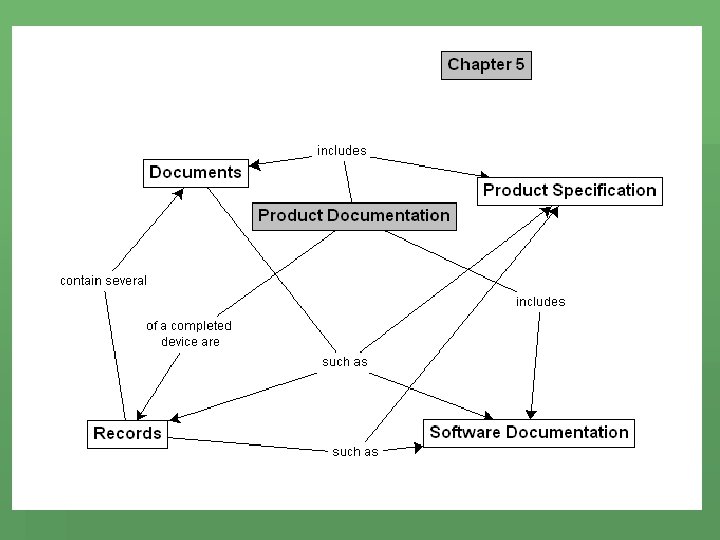
Product Documentation Chapter 5
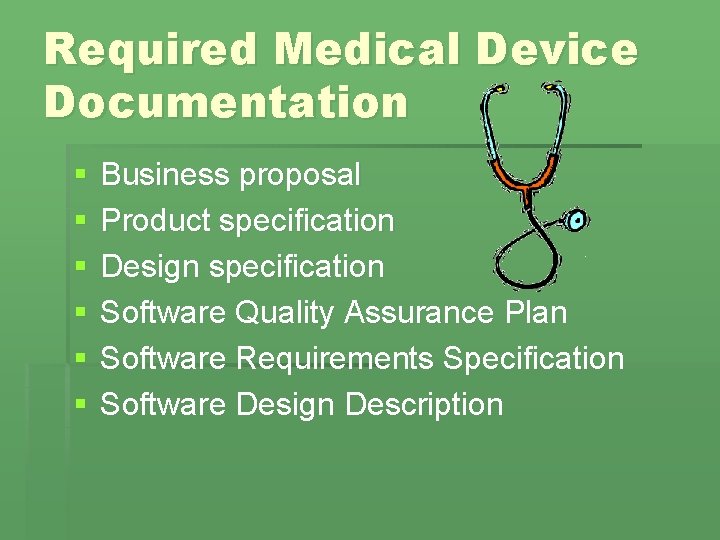
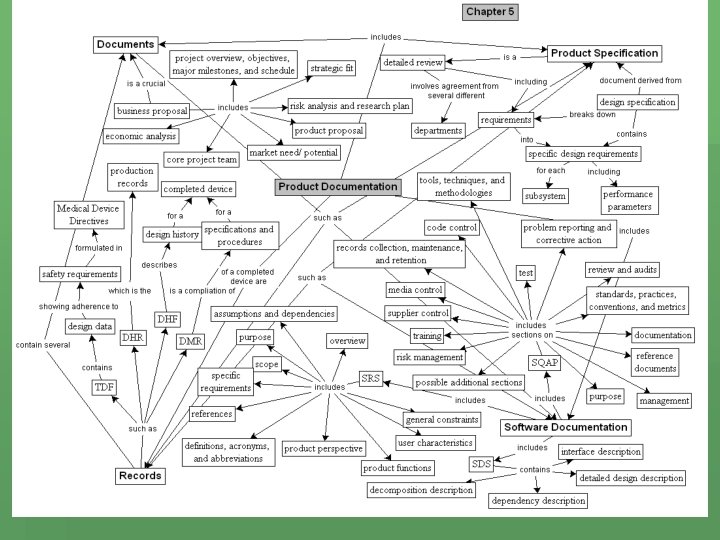
Required Medical Device Documentation § § § Business proposal Product specification Design specification Software Quality Assurance Plan Software Requirements Specification Software Design Description
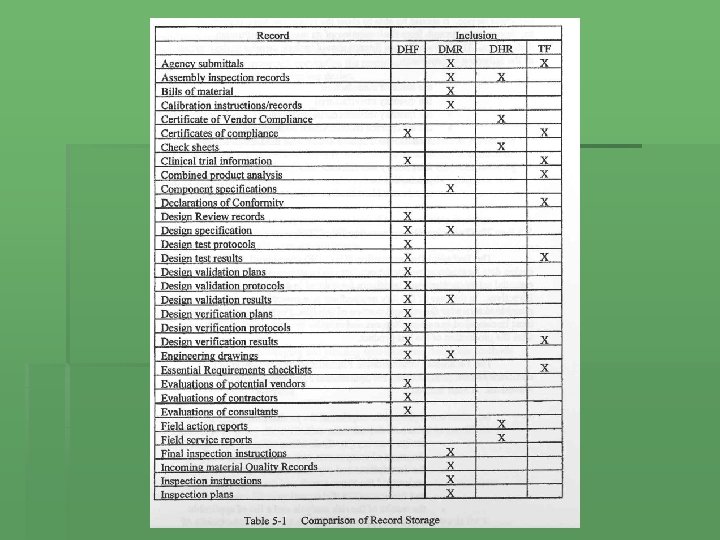
Primary types of records § Design History File (DHF) § Device Master Record (DMR) § Device History Record (DHR) § Technical Documentation File (TDF)
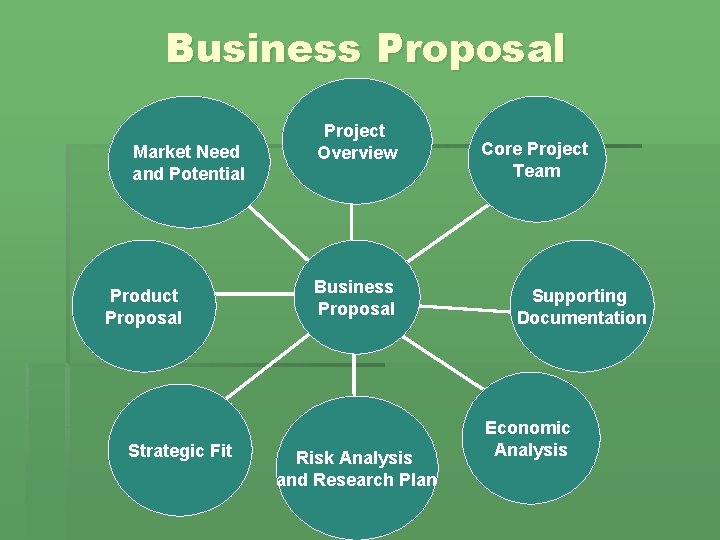
Business Proposal Market Need and Potential Product Proposal Strategic Fit Project Overview Business Proposal Risk Analysis and Research Plan Core Project Team Supporting Documentation Economic Analysis
Project Overview, Objectives, Major Milestones, and Schedule § Statement of overall project objectives and major milestones § Objectives clearly define project scope and provide specific direction § Schedule anticipates key decision points and completion of primary deliverables § Events contingent upon achievements of estimated dates should be stated
Market Need/ Potential § Defines customer and clinical need for product or service § Identifies potential territories to be served § Examine market size and trends § Compare product with competitors
Product Proposal § Proposes the product idea that fulfills the market need § Differentiates product features § Explains user and/or clinical value § Several alternatives product ideas should be evaluated against ‘base case’ idea
Strategic Fit § Discusses how the proposed product conforms with (or departs from) stated technology with respect to: § § § § Product Market Clinical setting Technology Design Manufacturing Service Where do the pieces fit?
Risk Analysis and Research Plan § Assessment of risks and unknowns § Estimate of resources needed to reduce risks to a level with a reasonably high level of confidence § Risk categories: § § § Technical Market Financial Regulatory Available resources Schedule
Economic Analysis § Rough estimate of costs and personnel required to specify, design, develop, and launch each product variant into the market place
Core Project Team § Formation of core project team to perform research to reduce risks, develop user specification, and prepare project plan § Outline requisite skills of proposed team members § Estimate approximate time required of each participant § Estimate incremental expenses
Proposal Requirements § § § § Project and feature descriptions Project’s market potential Social and environmental impact Team members, skills, roles, resumes All advisors Work plan and timeline Necessary equipment and resources Budget in tabular format
Proposal Evaluation – Project Aspect § Technical feasibility. § Technology that is appropriate, achievable, and commercially sustainable. § A plan and budget are reasonable and achievable. § Likelihood of development of a licensable or marketable product or service. § Demonstrated knowledge of market and evidence of consumer interest.
Proposal Evaluation -Team Aspect § Appropriate student and advisor skills § Team membership: • Balance of business, technical, and other specialists. • External mentors. • Diversity reflecting the institution’s population. § Team (faculty, students, mentors, and institution) commitment. § Strong faculty recommendations.
Product Specification § First step in transforming product ideas into approved product development efforts § Subject to revision level control § Joint ownership among all concerned departments Product specification helps turn this into reality
Design Specification § Derived from product specification § Requirements are reduced to specific design requirements § Addresses each subsystem § Each performance specification should be listed with nominal worst case requirements
Software Quality Assurance Plan (SQAP) § Assures that procedures, tools and techniques used during software development and modification are adequate to provide desired level of confidence in final product § Assures that software does not reduce reliability of device
Software Requirements Specification (SRS) § Specification for a particular software product or programs that perform certain functions § Correctly defines software requirements § Each software requirement is a statement of some essential capability of the software to be developed
Software Design Description (SDD) § Specifies necessary information content and recommended organization for a software design description § Detailed blueprint for implementation activity § Each requirement must be traceable to one or more design entities
Design History File (DHF) § Compilation of records which describes the design history of a finished device § Contains or references the records necessary to prove that the design was developed in accordance with approved design plans § Contains ‘institutional’ memory of previous design activities § Contains verification and validation protocols
Technical Documentation File (TDF) § Contains relevant design data which demonstrates that essential safety requirements are satisfied § File must be kept for 10 years after production stops in case of liability proceedings § Allows assessment of the conformity of the product with requirements of the Medical Device Directives