
Product Content Maturity Model Series Product Content Evolution




- Slides: 58
Product Content Maturity Model Series Product Content Evolution The Structured Phase
Agenda Introductions Product Content Maturity Model Overview The Autodesk Story SDL Trisoft
Our Presenters Andrew J. Thomas Marie Salet Director, Product Marketing Principal CMS Engineer SDL Autodesk
Product Content Maturity Model Overview
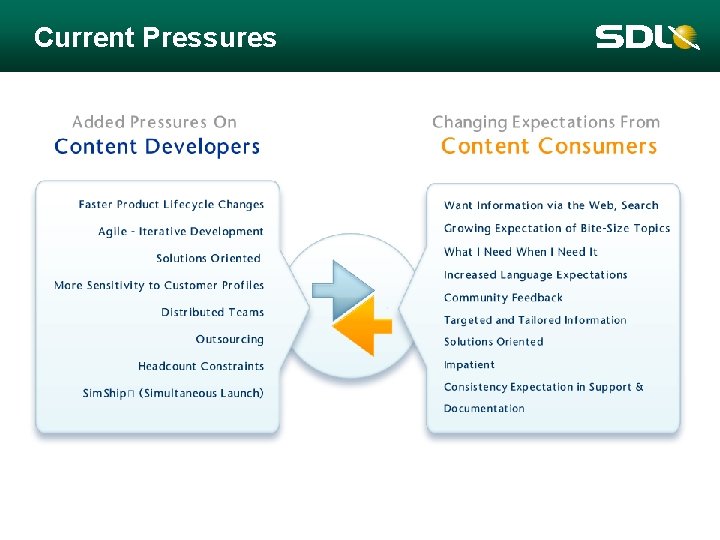
Current Pressures
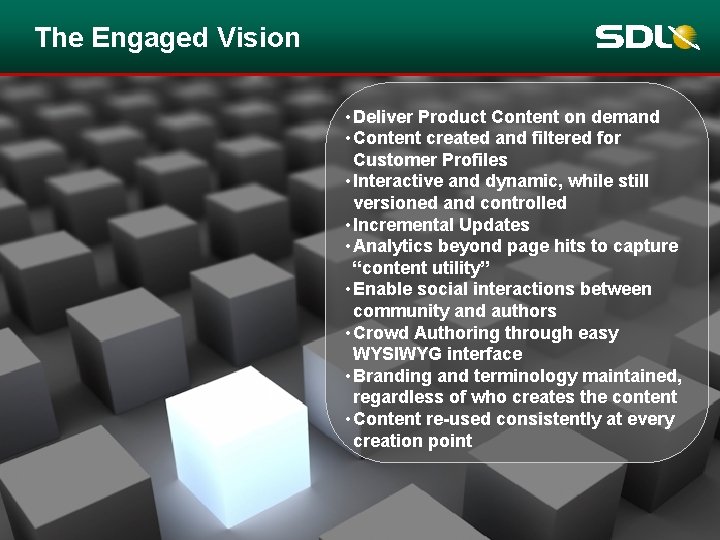
The Engaged Vision • Deliver Product Content on demand • Content created and filtered for Customer Profiles • Interactive and dynamic, while still versioned and controlled • Incremental Updates • Analytics beyond page hits to capture “content utility” • Enable social interactions between community and authors • Crowd Authoring through easy WYSIWYG interface • Branding and terminology maintained, regardless of who creates the content • Content re-used consistently at every creation point
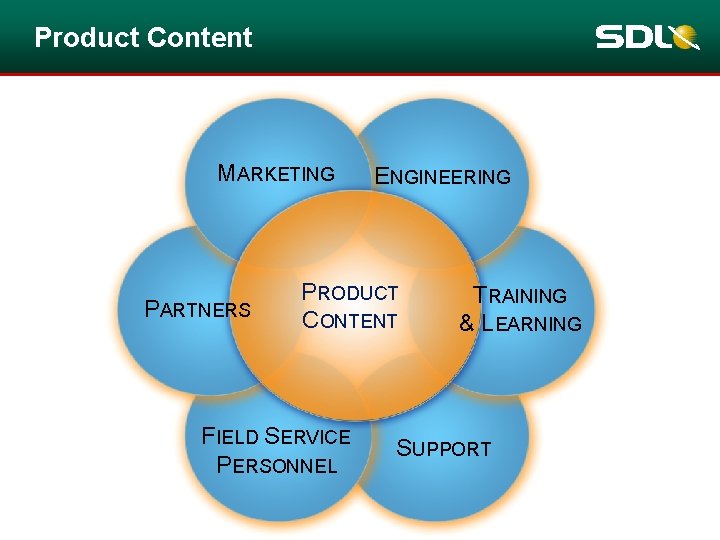
Product Content MARKETING PARTNERS ENGINEERING PRODUCT CONTENT FIELD SERVICE PERSONNEL TRAINING & LEARNING SUPPORT
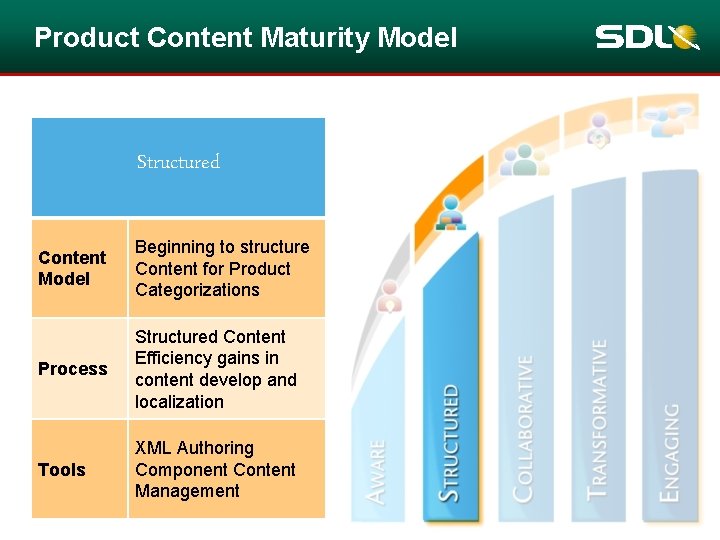
Product Content Maturity Model Structured Content Model Beginning to structure Content for Product Categorizations Process Structured Content Efficiency gains in content develop and localization Tools XML Authoring Component Content Management
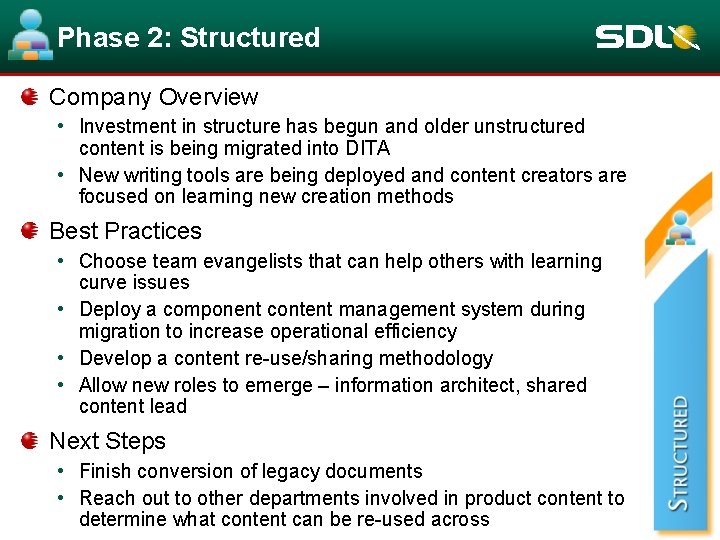
Phase 2: Structured Company Overview • Investment in structure has begun and older unstructured content is being migrated into DITA • New writing tools are being deployed and content creators are focused on learning new creation methods Best Practices • Choose team evangelists that can help others with learning curve issues • Deploy a component content management system during migration to increase operational efficiency • Develop a content re-use/sharing methodology • Allow new roles to emerge – information architect, shared content lead Next Steps • Finish conversion of legacy documents • Reach out to other departments involved in product content to determine what content can be re-used across
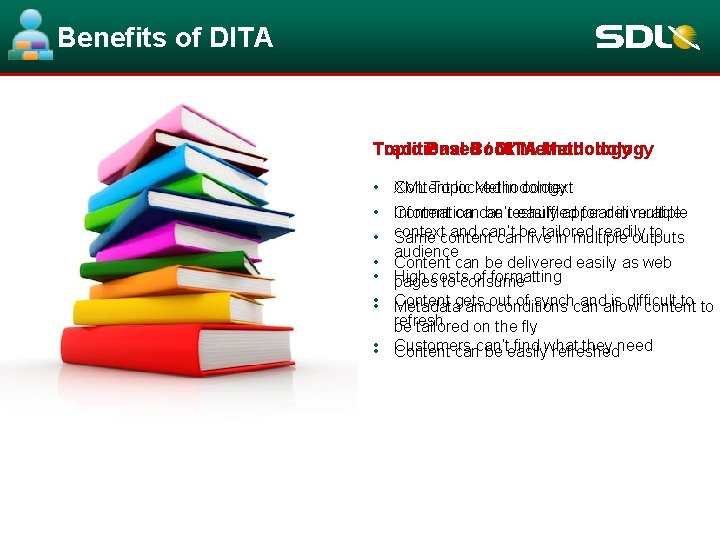
Benefits of DITA Traditional Topic Based Book / DITA Methodology Content locked in context • XML Topic Methodology easily appear in multiple • Information Content cancan’t be reshuffled for deliverable and can’t tailored readily to • context Same content canbe live in multiple outputs audience • Content can be delivered easily as web • High of formatting pagescosts to consume • • Content of synchcan andallow is difficult to to Metadatagets andout conditions content refresh be tailored on the fly • • Customers find what they need Content cancan’t be easily refreshed
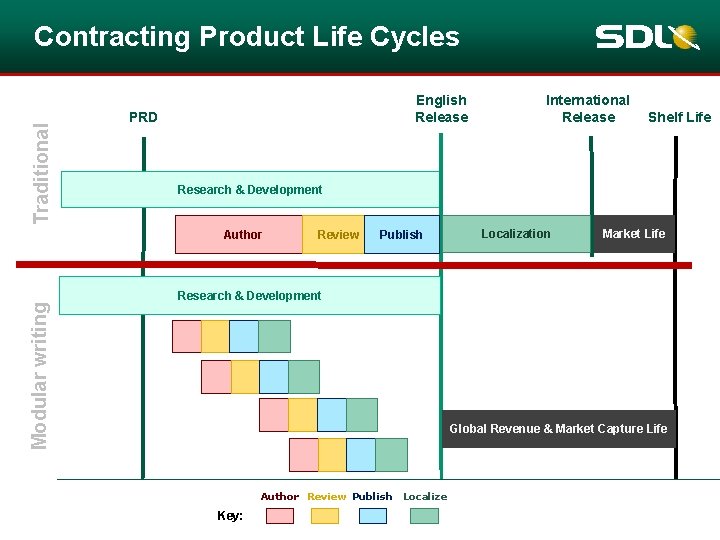
Traditional Contracting Product Life Cycles English Release PRD Shelf Life Research & Development Author Modular writing International Release Review Publish Localization Market Life Research & Development Global Revenue & Market Capture Life Author Review Publish Localize Key:
The Autodesk Story: The Road to DITA Marie Salet Principal CMS Engineer © 2009 Autodesk
The Road To DITA § § § About Autodesk Deciding to Move Unstructured to Structured to DITA Lessons © 2009 Autodesk
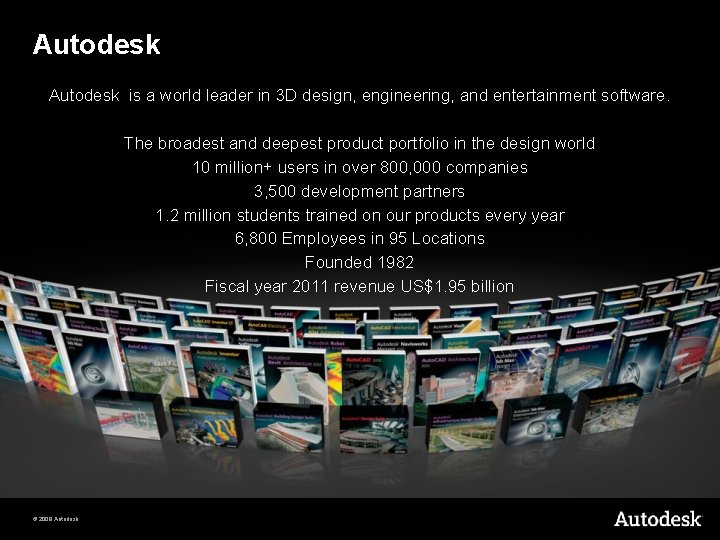
Autodesk is a world leader in 3 D design, engineering, and entertainment software. The broadest and deepest product portfolio in the design world 10 million+ users in over 800, 000 companies 3, 500 development partners 1. 2 million students trained on our products every year 6, 800 Employees in 95 Locations Founded 1982 Fiscal year 2011 revenue US$1. 95 billion © 2009 Autodesk
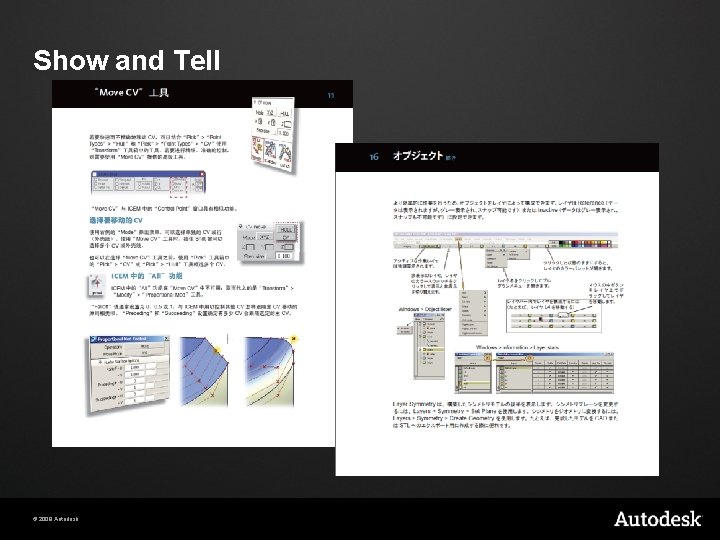
Product Documentation at Autodesk § Our products are complex and require extensive documentation § Autodesk documentation regularly wins awards § Product documentation localized into up to 19 languages § High volume of source content (12 million words) § Technical writing groups decentralized § Localization is a (mostly) centralized organization © 2009 Autodesk
Show and Tell © 2009 Autodesk
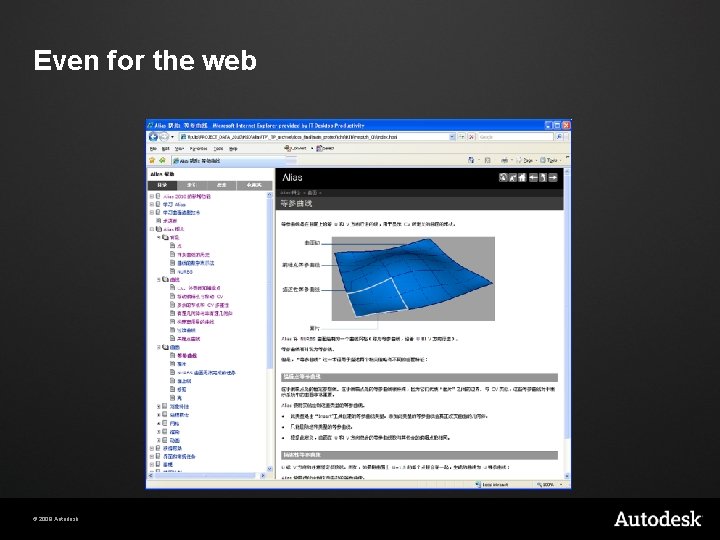
Even for the web © 2009 Autodesk
Once upon a time, a long time ago… © 2009 Autodesk
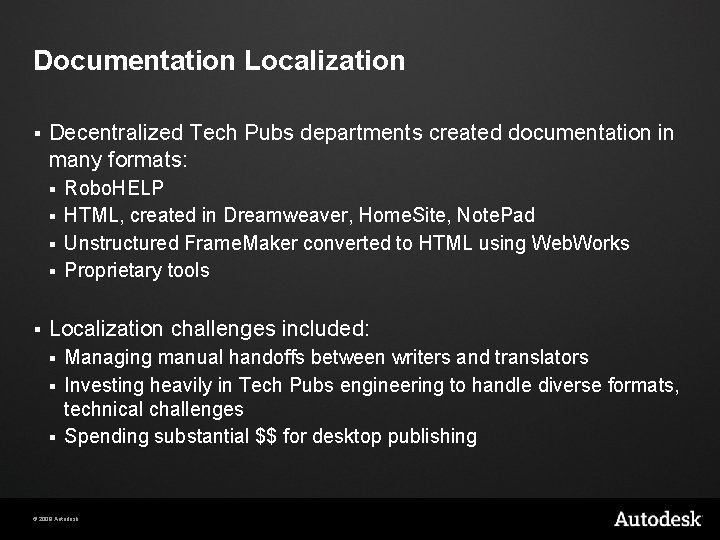
Documentation Localization § Decentralized Tech Pubs departments created documentation in many formats: Robo. HELP § HTML, created in Dreamweaver, Home. Site, Note. Pad § Unstructured Frame. Maker converted to HTML using Web. Works § Proprietary tools § § Localization challenges included: Managing manual handoffs between writers and translators § Investing heavily in Tech Pubs engineering to handle diverse formats, technical challenges § Spending substantial $$ for desktop publishing § © 2009 Autodesk
Getting Our Feet Wet © 2009 Autodesk
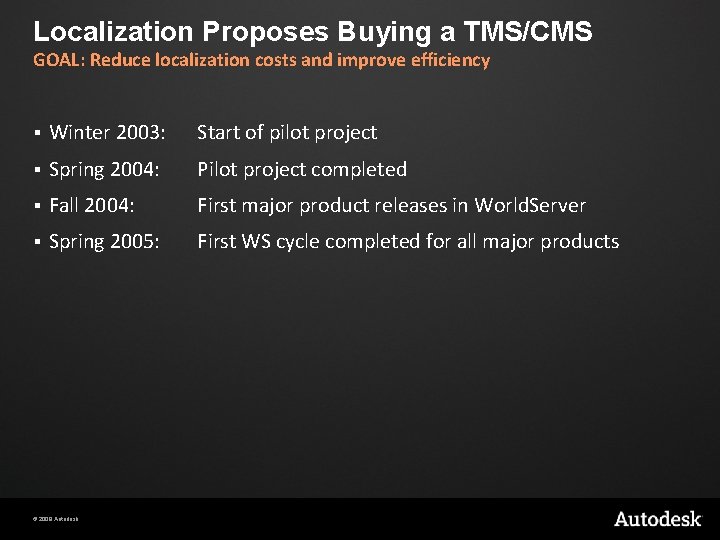
Localization Proposes Buying a TMS/CMS GOAL: Reduce localization costs and improve efficiency § Winter 2003: Start of pilot project § Spring 2004: Pilot project completed § Fall 2004: First major product releases in World. Server § Spring 2005: First WS cycle completed for all major products © 2009 Autodesk
Migrating Content to Structured § Migrating unstructured content to XML was not a trivial effort § Automated scripts and programs were developed to migrate content, but… § Extensive manual cleanup was required after content was in XML. Writers needed to do much of cleanup because they were the ones who knew the content. © 2009 Autodesk
Developed the CPM Data Model § Developed the CPM (Common Pubs Model), a corporate-standard XML model for technical publications in 2002/03 § Supports specialization of a base element set, and makes use of the class attribute value to define specialization inheritance § CPM specialization is "additive" rather than "restrictive", however, which is more flexible but precludes content sharing via "generalization" § Can share content authored using the "base" model amongst specializations however, as is done for the I&L books § Single-sourcing managed via XML attributes (e. g. product-exclude, product-include, units, media. Exclusions) © 2009 Autodesk
Getting Support…and Facing Resistance § Authoring Tech Pubs teams could not agree on a single data model (DTD) § Teams had to invest time and money to convert unstructured docs to XML format § Authoring teams had to learn structured authoring and drastically change way of working © 2009 Autodesk
Success © 2009 Autodesk
Success § We can output HTML or PDF from any of our source with the click of a button or on a scheduled basis § Documentation localization costs go down on projects year over year § Throughput has increased dramatically § Translation memories are managed centrally and are very high quality § Localization workflow is highly automated © 2009 Autodesk
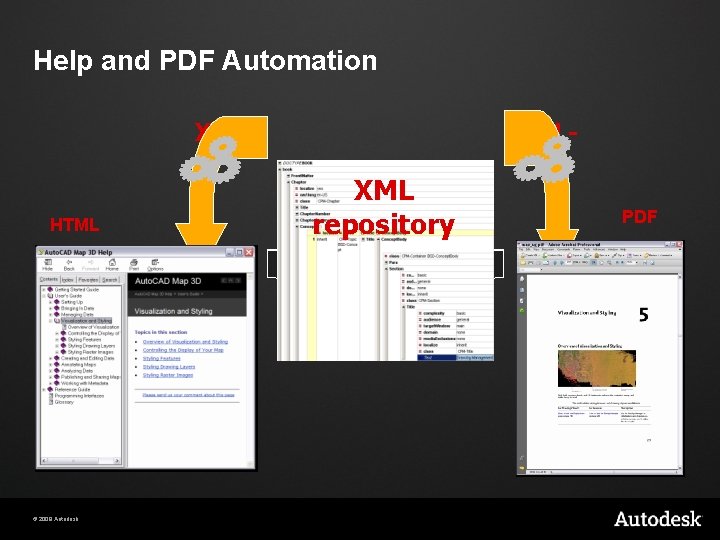
Help and PDF Automation XSLT HTML © 2009 Autodesk XML repository XSLFO PDF
Never Satisfied © 2009 Autodesk
Challenge Create an environment that provided better performance and stability for our authors. Provide better authoring tools which will enable them to focus on content development rather than fighting with the tools. Resulting in faster time to market. © 2009 Autodesk
Separate CMS and TMS § World. Server is a TMS not a true CMS § Versioning § Link Management § Assembly © 2009 Autodesk
Custom DTD or DITA Supporting a custom DTD § Authoring tools § Rendering § CMS DITA § Industry Standard § Out of the Box Tools © 2009 Autodesk
Déjà vu © 2009 Autodesk
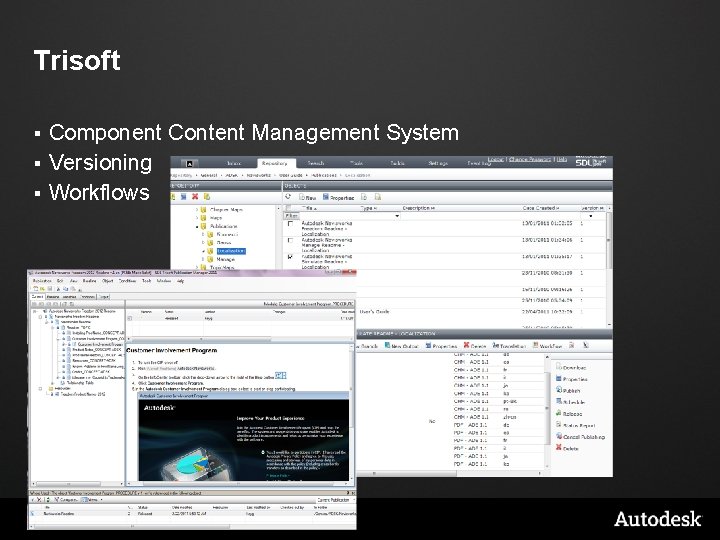
Trisoft Component Content Management System § Versioning § Workflows § © 2009 Autodesk
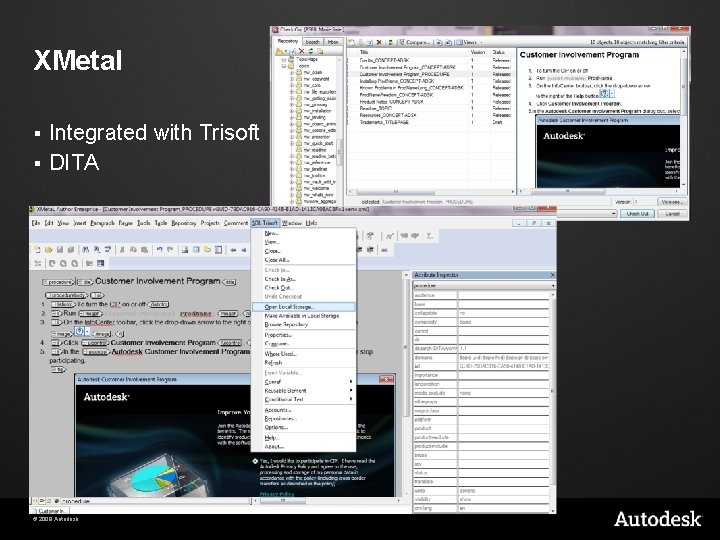
XMetal Integrated with Trisoft § DITA § © 2009 Autodesk
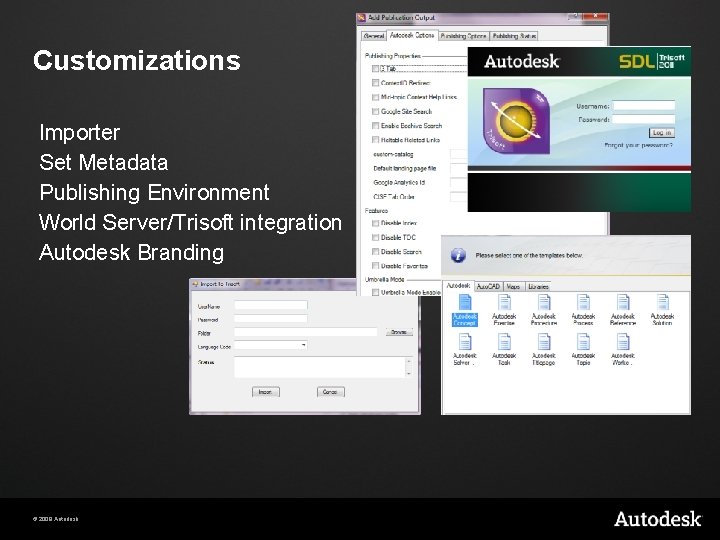
Customizations Importer Set Metadata Publishing Environment World Server/Trisoft integration Autodesk Branding © 2009 Autodesk
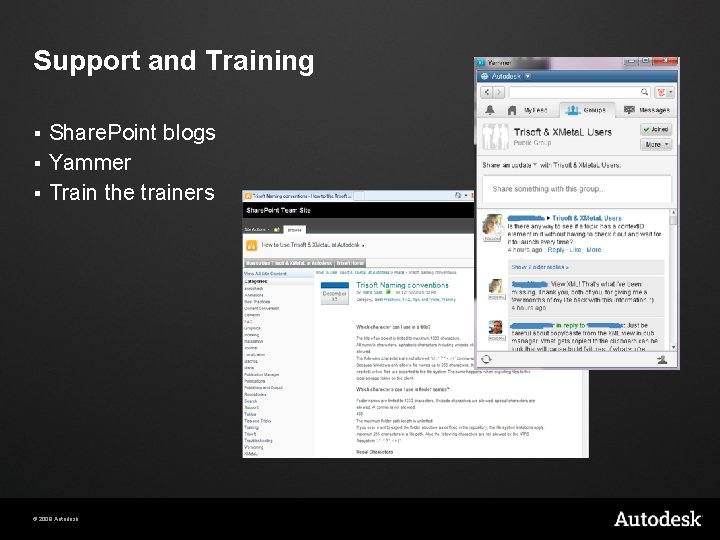
Support and Training Share. Point blogs § Yammer § Train the trainers § © 2009 Autodesk
Lessons Learned § § § Get an Executive sponsor Manage change Don’t do everything at once Ensure a front to back strategy (including localization) Set expectations Communicate! © 2009 Autodesk
The Eco System © 2009 Autodesk
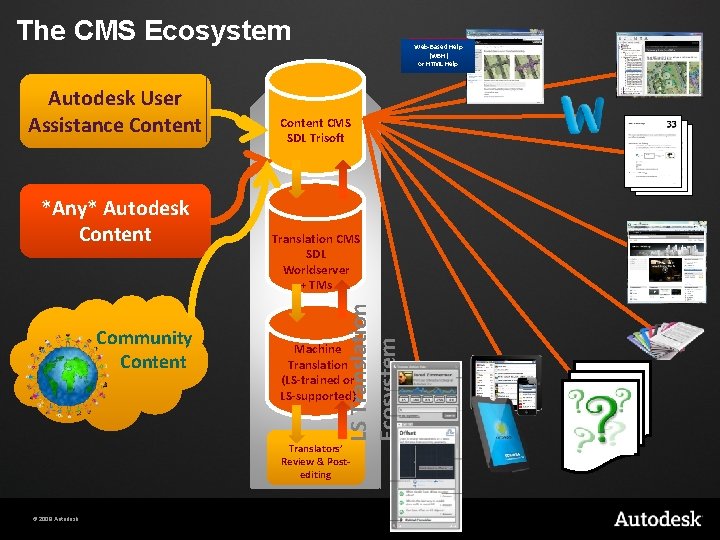
The CMS Ecosystem *Any* Autodesk Content Community Content CMS SDL Trisoft Translation CMS SDL Worldserver + TMs LS Translation Ecosystem Autodesk User Assistance Content Web-Based Help (WBH) or HTML Help Machine Translation (LS-trained or LS-supported) Translators’ Review & Postediting © 2009 Autodesk
Marie. Salet@autodesk. com © 2009 Autodesk
SDL Trisoft
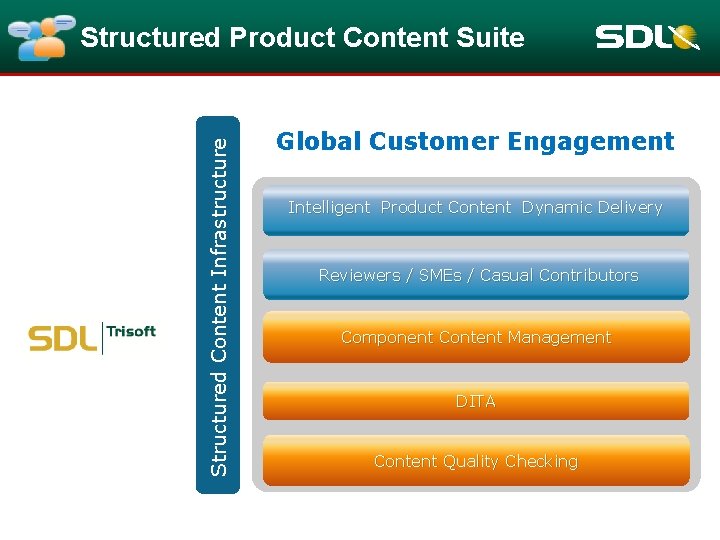
Structured Content Infrastructure Structured Product Content Suite Global Customer Engagement Intelligent Product Content Dynamic Delivery Reviewers / SMEs / Casual Contributors Component Content Management DITA Content Quality Checking
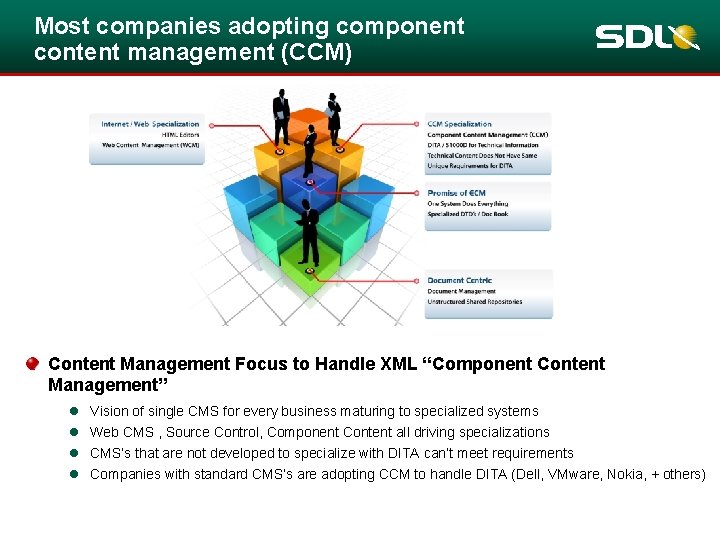
Most companies adopting component content management (CCM) Content Management Focus to Handle XML “Component Content Management” l l Vision of single CMS for every business maturing to specialized systems Web CMS , Source Control, Component Content all driving specializations CMS’s that are not developed to specialize with DITA can’t meet requirements Companies with standard CMS’s are adopting CCM to handle DITA (Dell, VMware, Nokia, + others)
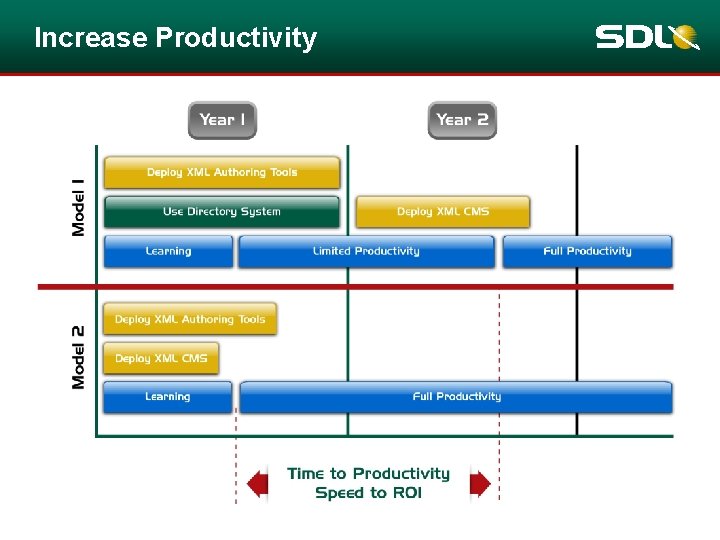
Increase Productivity
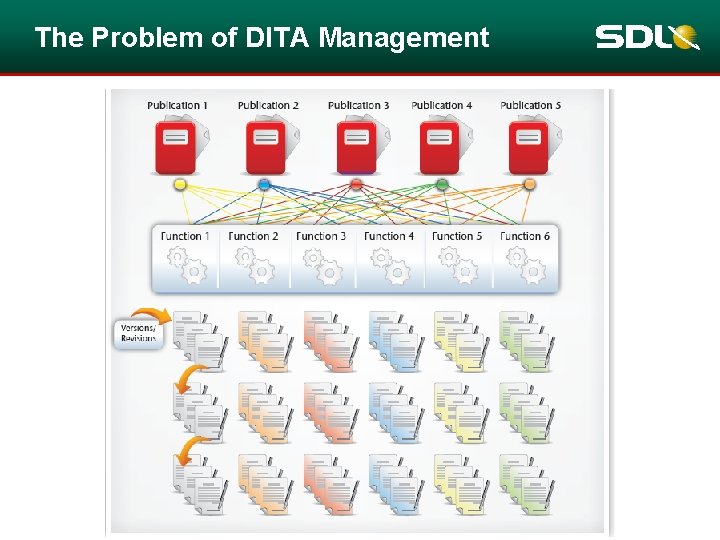
The Problem of DITA Management
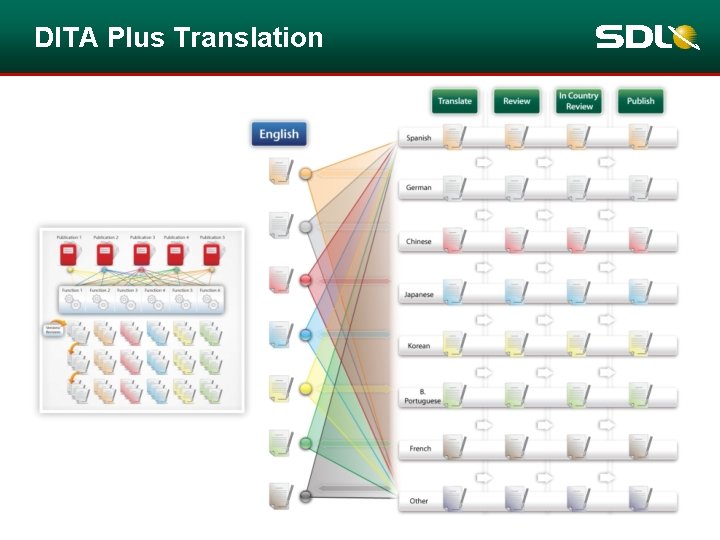
DITA Plus Translation
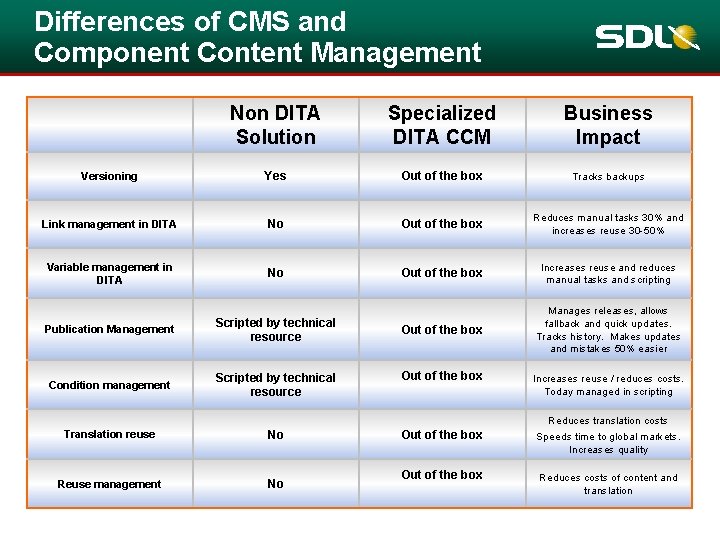
Differences of CMS and Component Content Management Non DITA Solution Specialized DITA CCM Business Impact Versioning Yes Out of the box Tracks backups Link management in DITA No Out of the box Reduces manual tasks 30% and increases reuse 30 -50% Variable management in DITA No Out of the box Increases reuse and reduces manual tasks and scripting Publication Management Scripted by technical resource Out of the box Manages releases, allows fallback and quick updates. Tracks history. Makes updates and mistakes 50% easier Condition management Scripted by technical resource Out of the box Increases reuse / reduces costs. Today managed in scripting Reduces translation costs Translation reuse No Reuse management No Out of the box Speeds time to global markets. Increases quality Out of the box Reduces costs of content and translation
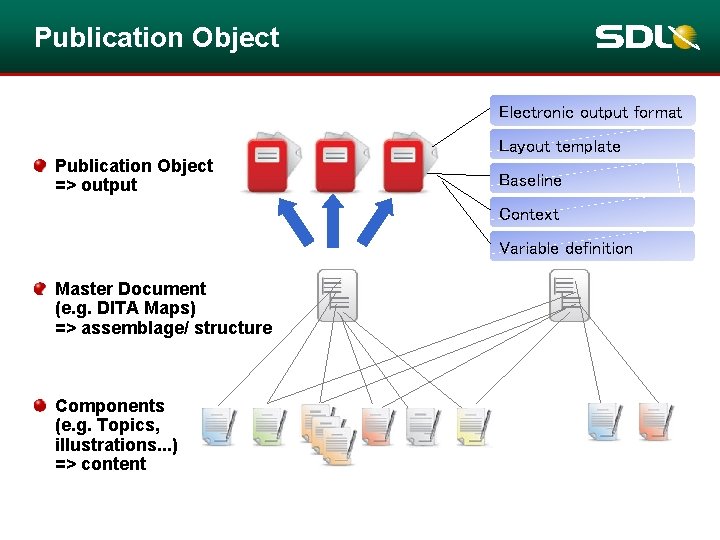
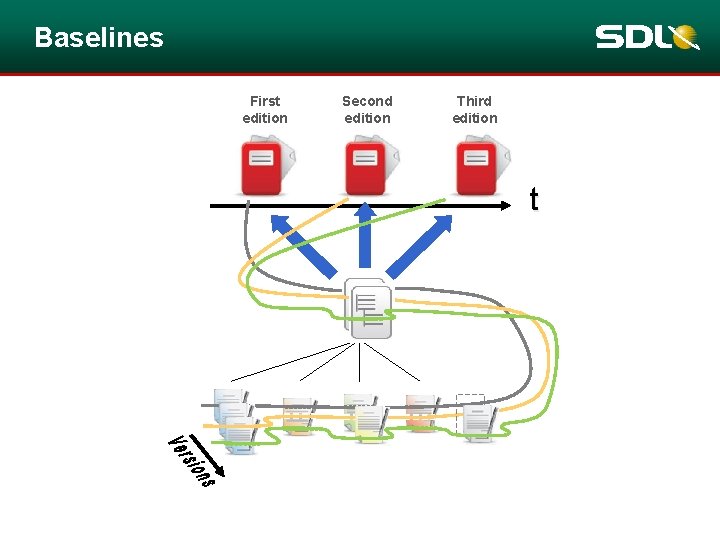
Publication Object Electronic output format Layout template Publication Object => output Baseline Context Variable definition Master Document (e. g. DITA Maps) => assemblage/ structure Components (e. g. Topics, illustrations. . . ) => content
Baselines First edition Second edition Third edition t
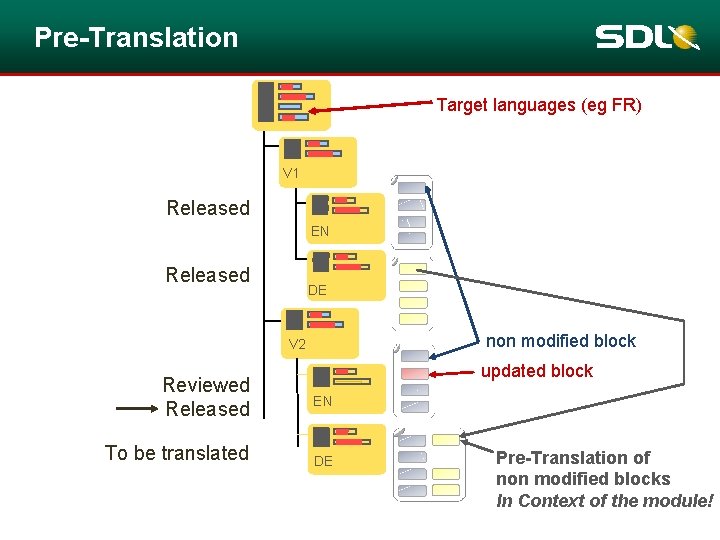
Pre-Translation Target languages (eg FR) V 1 Released EN Released DE non modified block V 2 Reviewed Released To be translated updated block EN DE Pre-Translation of non modified blocks In Context of the module!
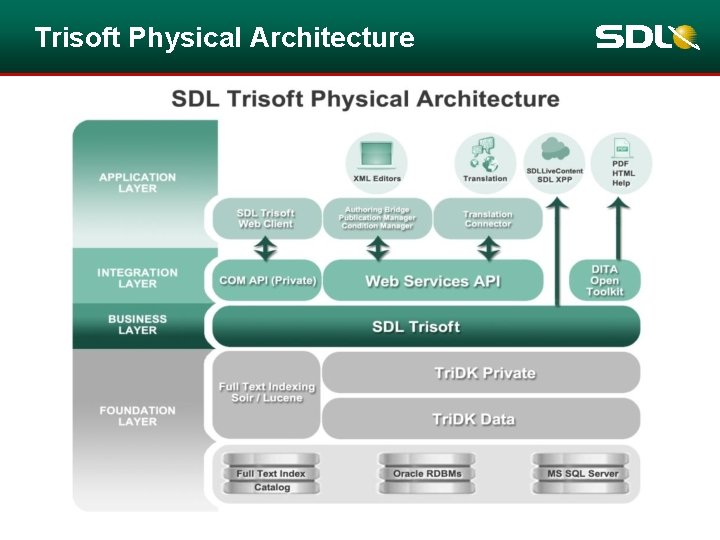
Trisoft Physical Architecture
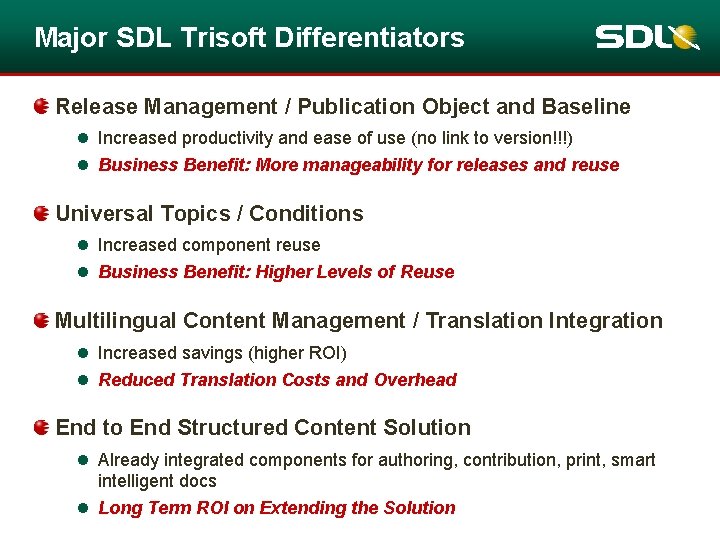
Major SDL Trisoft Differentiators Release Management / Publication Object and Baseline l Increased productivity and ease of use (no link to version!!!) l Business Benefit: More manageability for releases and reuse Universal Topics / Conditions l Increased component reuse l Business Benefit: Higher Levels of Reuse Multilingual Content Management / Translation Integration l Increased savings (higher ROI) l Reduced Translation Costs and Overhead End to End Structured Content Solution l Already integrated components for authoring, contribution, print, smart intelligent docs l Long Term ROI on Extending the Solution
CMS Watch Report: Strengths of Trisoft What Analysts Are Saying … “Extraordinarily good DITA support, including specializations and managing concurrent versions of documents” “Provides support for highly-granular, complex customer content variations through enhanced condition support” “Very good multilingual content support” “Authors can work with content offline” “Offers some translation matching, potentially saving money in localization scenarios”
Some of Our Customers
Questions?
Thank You for Joining Us Coming Attractions: DITA Webinar l Dec 15: DITA Emerging Trends and Best Practices: Practical Solutions for 2012 and Beyond l Guest speaker Jo. Ann Hackos of Comtech Services l Registration at www. sdl. com/en/xml/events SDL Innovate 2012 l March 2012 l Santa Clara, CA l www. sdl. com/innovate