
Produce Safety Produce Quality and Condition 1 Objectives
Produce Safety Produce Quality and Condition 1
Objectives After this session, the participant will be able to: 1. Identify the types of fresh produce quality defects. 2. Identify the types of fresh produce condition defects. 3. Discuss how quality and condition affect the grade of fresh produce. 2
U. S. Grade Standards • Developed by the Agricultural Marketing Service (AMS) • Describe measurable “quality” and “condition” characteristics of fresh produce • Provide fair market trade for produce grown in the U. S. • Updated periodically due to industry requests 3
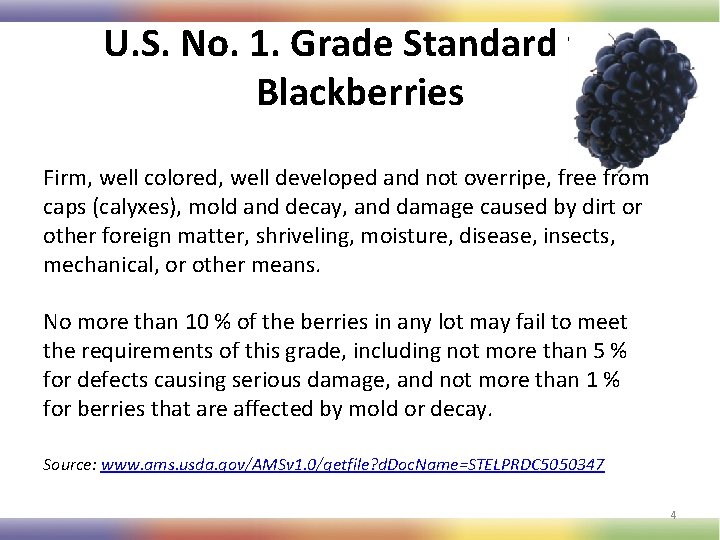
U. S. No. 1. Grade Standard for Blackberries Firm, well colored, well developed and not overripe, free from caps (calyxes), mold and decay, and damage caused by dirt or other foreign matter, shriveling, moisture, disease, insects, mechanical, or other means. No more than 10 % of the berries in any lot may fail to meet the requirements of this grade, including not more than 5 % for defects causing serious damage, and not more than 1 % for berries that are affected by mold or decay. Source: www. ams. usda. gov/AMSv 1. 0/getfile? d. Doc. Name=STELPRDC 5050347 4
Why does grade matter? • Provides specification with the language to get what you want • Provides receiving staff the quality and condition descriptions on: • What produce to accept • What produce to reject 5
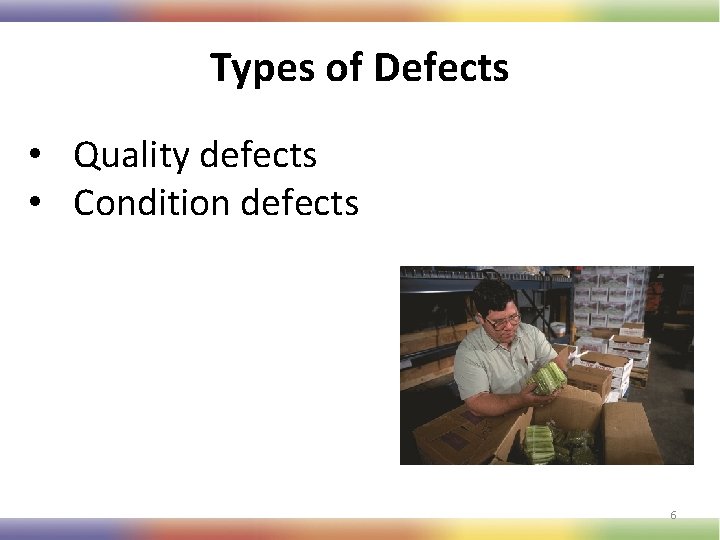
Types of Defects • Quality defects • Condition defects 6

Quality Defects: Shape 7

Quality Defects: Texture 8
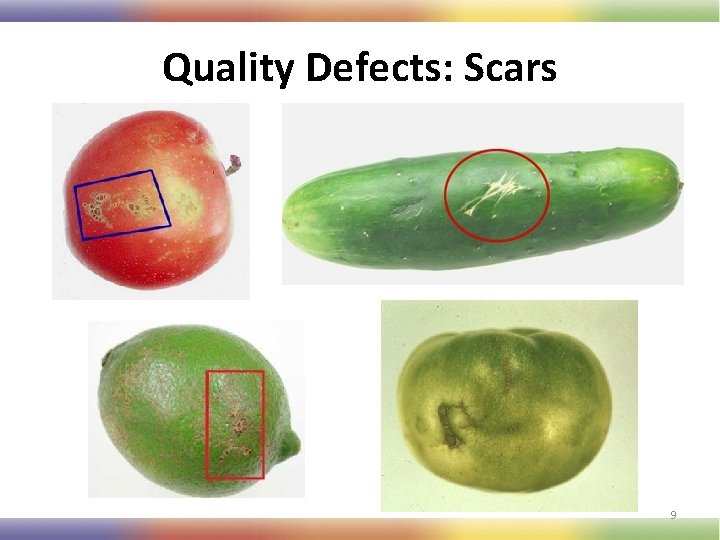
Quality Defects: Scars 9
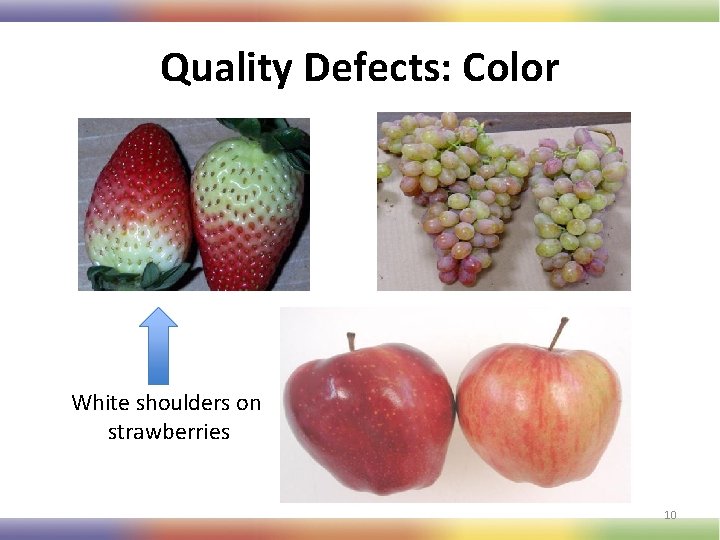
Quality Defects: Color White shoulders on strawberries 10
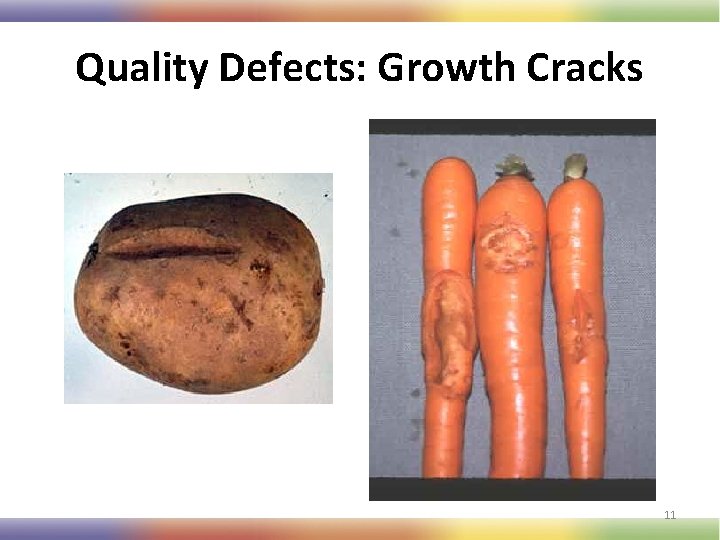
Quality Defects: Growth Cracks 11
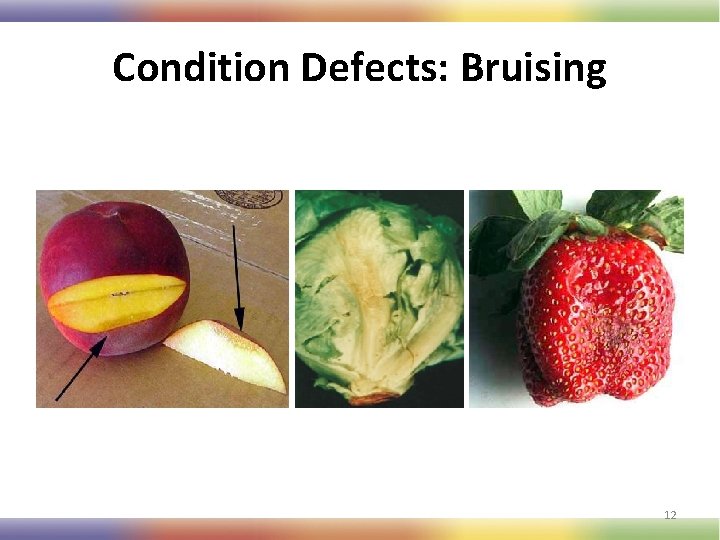
Condition Defects: Bruising 12
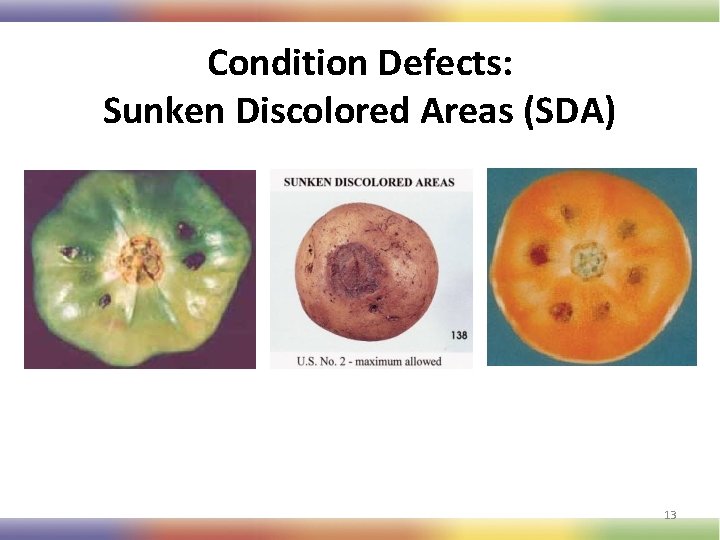
Condition Defects: Sunken Discolored Areas (SDA) 13
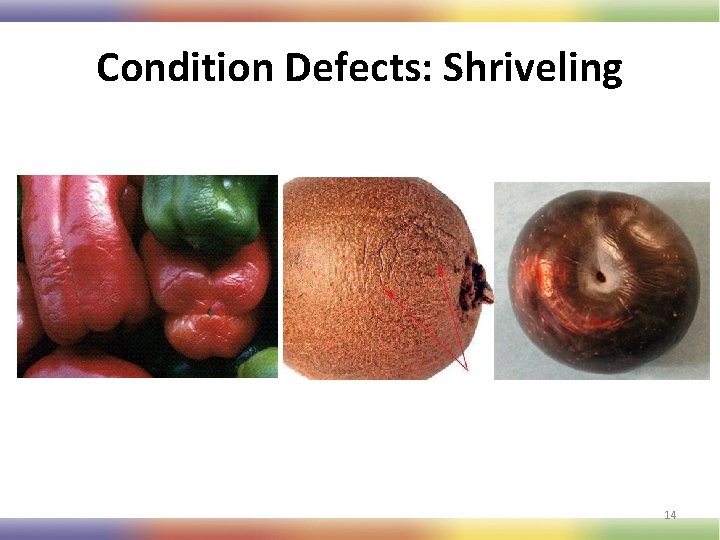
Condition Defects: Shriveling 14
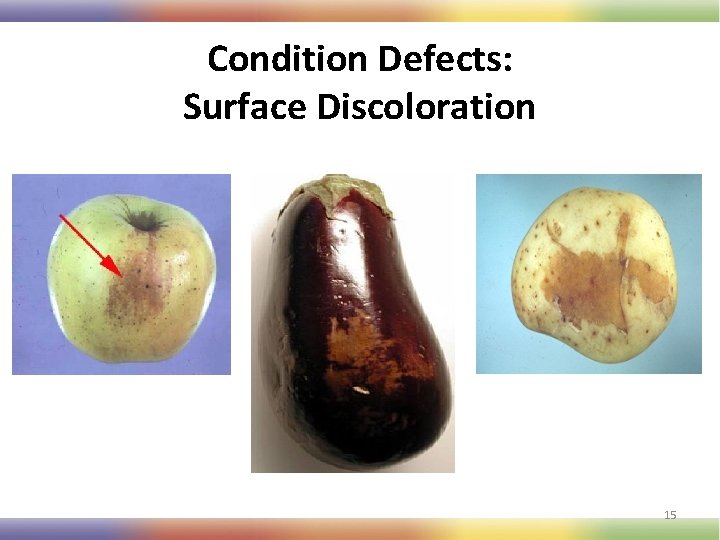
Condition Defects: Surface Discoloration 15
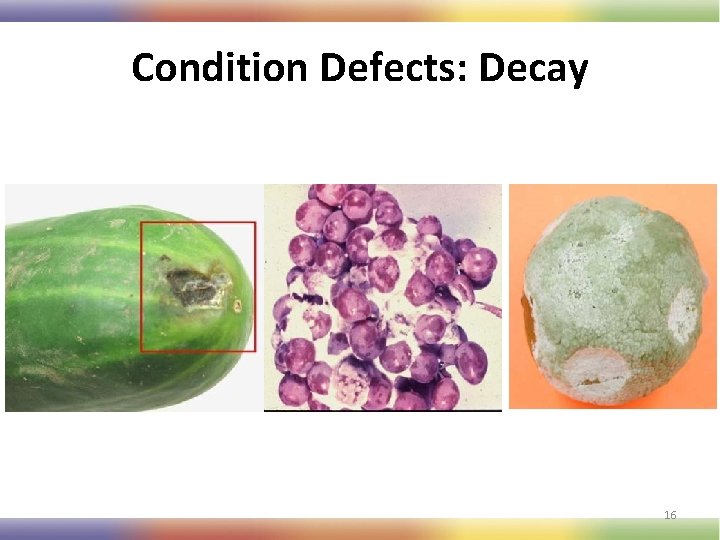
Condition Defects: Decay 16
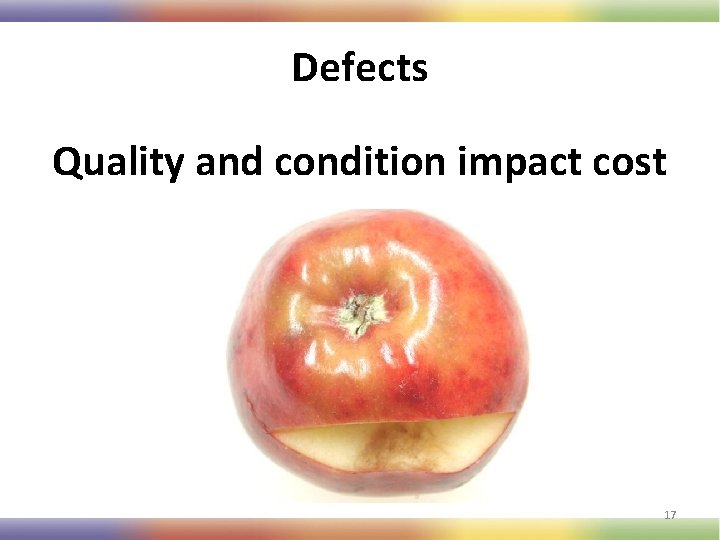
Defects Quality and condition impact cost 17

Training Train staff to receive produce based on specifications 18
Activity and Discussion 19
- Slides: 19