
PROCUREMENT SUPPORT SERVICE WHOUNICEF Technical Briefing Seminar on
PROCUREMENT SUPPORT SERVICE WHO/UNICEF Technical Briefing Seminar on Essential Medicines Policies, November 1 st -5 th 2010 Mariatou Tala Jallow, Manager, Procurement Support Services Pharmaceutical Management Unit
PRESENTATION OUTLINE • Rationale for Procurement Support – Why Global Fund is providing this service • Voluntary Pooled Procurement (VPP) and Capacity Building (CBS)mechanism – How the services operates • Update on Procurement Support activities – Achievements and challenges • Accessing the VPP and CBS – How to access the service
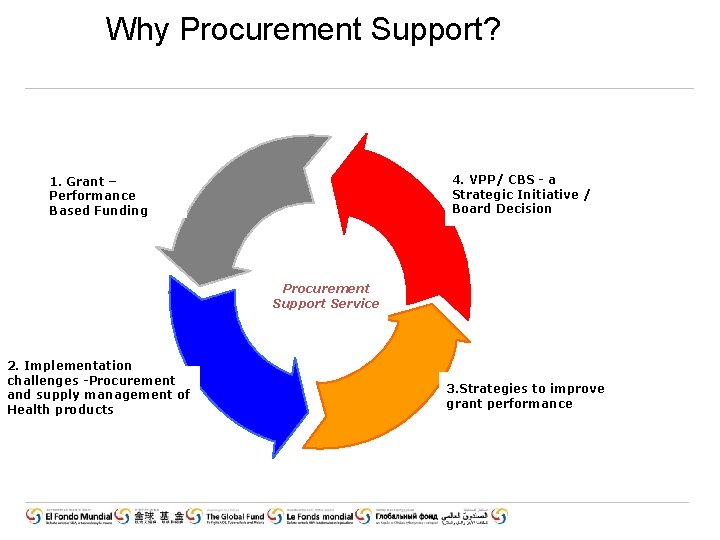
Why Procurement Support? 4. VPP/ CBS - a Strategic Initiative / Board Decision 1. Grant – Performance Based Funding Procurement Support Service 2. Implementation challenges -Procurement and supply management of Health products 3. Strategies to improve grant performance
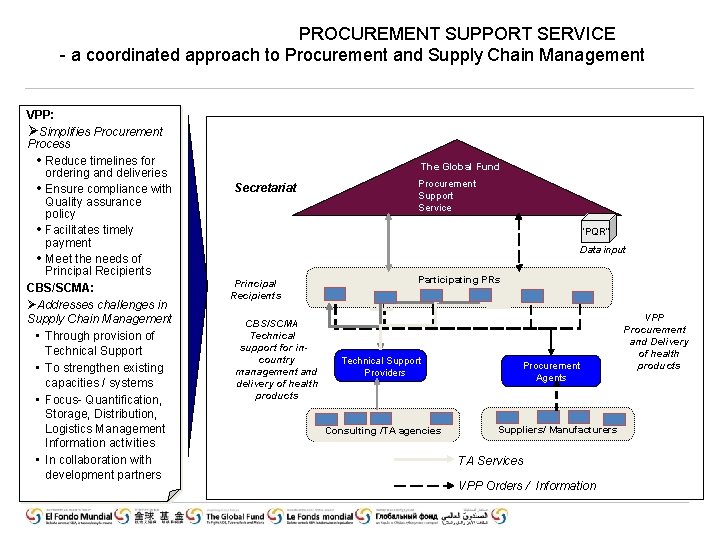
PROCUREMENT SUPPORT SERVICE - a coordinated approach to Procurement and Supply Chain Management VPP: ØSimplifies Procurement Process • Reduce timelines for ordering and deliveries • Ensure compliance with Quality assurance policy • Facilitates timely payment • Meet the needs of Principal Recipients CBS/SCMA: ØAddresses challenges in Supply Chain Management • Through provision of Technical Support • To strengthen existing capacities / systems • Focus- Quantification, Storage, Distribution, Logistics Management Information activities • In collaboration with development partners The Global Fund Secretariat Procurement Support Service ”PQR” Data input Principal Recipients CBS/SCMA Technical support for incountry management and delivery of health products Participating PRs Technical Support Providers Consulting /TA agencies Procurement Agents Suppliers/ Manufacturers TA Services VPP Orders / Information VPP Procurement and Delivery of health products
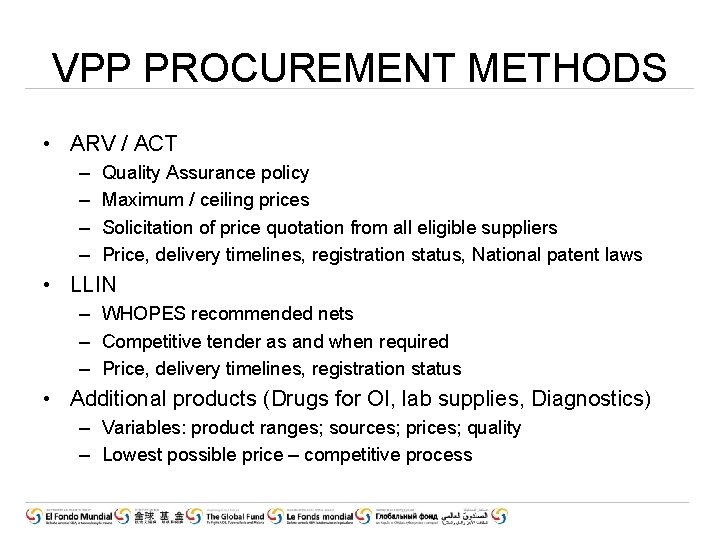
VPP PROCUREMENT METHODS • ARV / ACT – – Quality Assurance policy Maximum / ceiling prices Solicitation of price quotation from all eligible suppliers Price, delivery timelines, registration status, National patent laws • LLIN – WHOPES recommended nets – Competitive tender as and when required – Price, delivery timelines, registration status • Additional products (Drugs for OI, lab supplies, Diagnostics) – Variables: product ranges; sources; prices; quality – Lowest possible price – competitive process
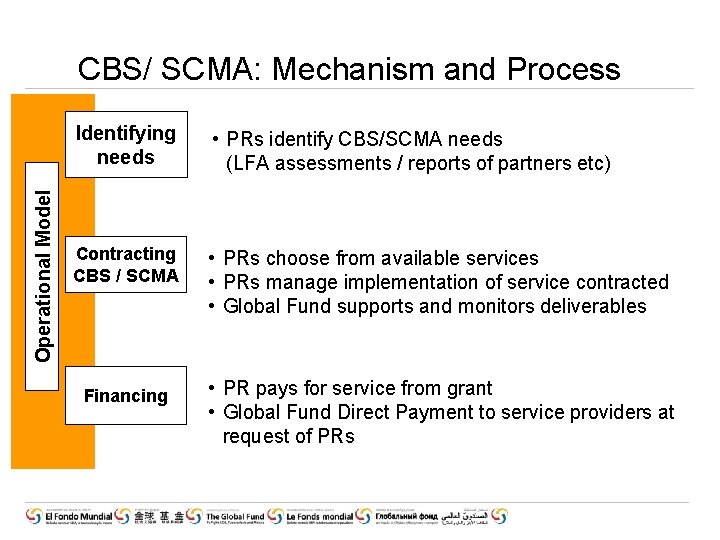
Operational Model CBS/ SCMA: Mechanism and Process Identifying needs • PRs identify CBS/SCMA needs (LFA assessments / reports of partners etc) Contracting CBS / SCMA • PRs choose from available services • PRs manage implementation of service contracted • Global Fund supports and monitors deliverables Financing • PR pays for service from grant • Global Fund Direct Payment to service providers at request of PRs
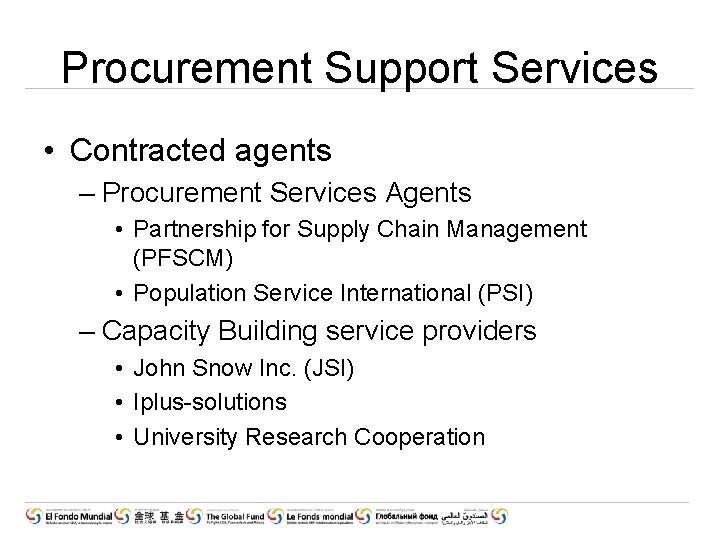
Procurement Support Services • Contracted agents – Procurement Services Agents • Partnership for Supply Chain Management (PFSCM) • Population Service International (PSI) – Capacity Building service providers • John Snow Inc. (JSI) • Iplus-solutions • University Research Cooperation
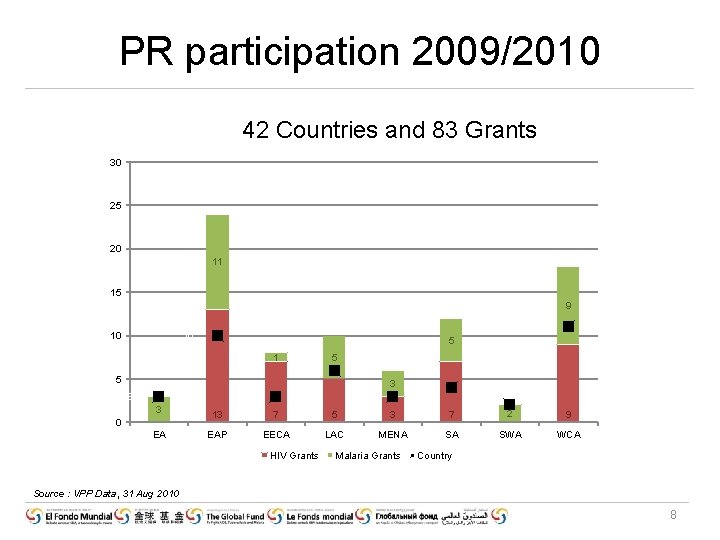
PR participation 2009/2010 42 Countries and 83 Grants 30 25 20 11 15 9 10 11 10 5 1 5 6 5 3 3 0 EA 3 4 13 7 5 3 7 EAP EECA LAC MENA SA HIV Grants Malaria Grants 2 2 9 SWA WCA Country Source : VPP Data, 31 Aug 2010 8
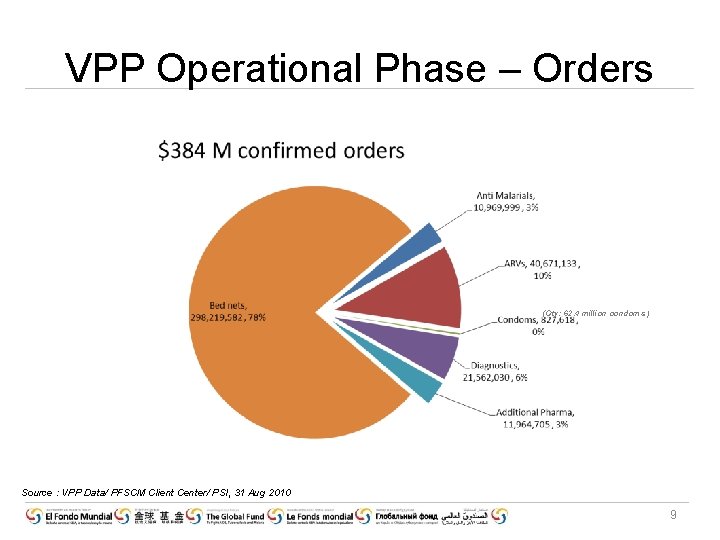
VPP Operational Phase – Orders (Qty: 62. 4 million condoms ) Source : VPP Data/ PFSCM Client Center/ PSI, 31 Aug 2010 9
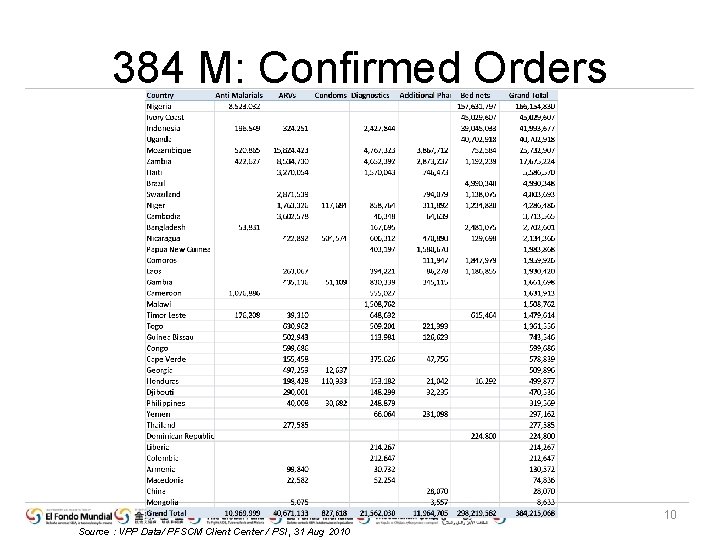
384 M: Confirmed Orders 10 Source : VPP Data/ PFSCM Client Center / PSI, 31 Aug 2010
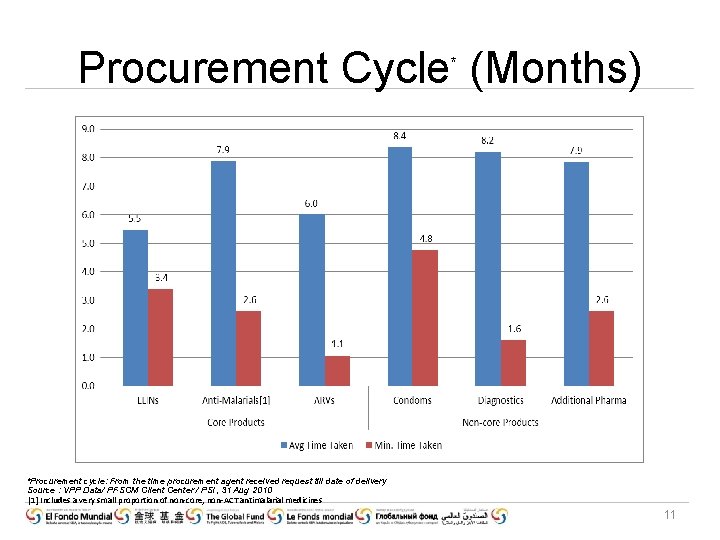
Procurement Cycle (Months) * *Procurement cycle: From the time procurement agent received request till date of delivery Source : VPP Data/ PFSCM Client Center / PSI, 31 Aug 2010 [1] Includes a very small proportion of non-core, non-ACT antimalarial medicines 11
Challenges • Demand aggregation – irregular participation of PRs; Global Fund grant architecture (multiple grants); individual (multiple) PSM plans and non-coordinated procurement cycles; • Emergency Orders - high proportion / inadequate procurement planning (40%); • Expectations from VPP – quicker results and delivery times; resolution of long-standing PSM bottlenecks; • Non-core products (Drugs for opportunistic infections; lab supplies) – low volume / low value, difficult to source; non-quality assurance standards; region specific 12
Achievements (Grant implementation) Procurement Support (VPP and CBS) – o Addresses procurement governance issues (Zambia, Djibouti) o Meets various needs of PRs (small countries) (Honduras, Swaziland) o Contribution to Universal Coverage for LLINs (Nigeria, Uganda) o Grant disbursements (Nigeria, Mozambique, Zambia) o Cost savings for countries: o over US$18 million for nets; o decrease in Procurement Service Agent fees (ARVs & ACTs) by 26% (pooling effect) o Facilitate grant signing and through CBS addresses CPs on PSM in grants (Nigeria, Liberia, Gambia) o Contribute to – regional training workshops 13
Achievements (Technical support) • Nigeria – RD 8 Malaria Grants – Condition Precedents(CPs) to address quantification, storage conditions, distribution system and LMIS addressed through Capacity Building/Supply Chain Management Assistance – Facilitated grant signing and disbursement • Gambia – RD 8 HIV Grants CPs to address quantification, storage conditions, Logistics Management Information System (LMIS), Quality Assurance (QA) system and Procurement Supply Management (PSM) Unit • Liberia– RD 7 HIV Grants – CPs to address, quantification, storage conditions, LMIS, QA system and PSM Unit capacity addressed through CBS/SCMA – Facilitated: • grant disbursements to new PR (MOHSW) • partner collaboration and leveraging of resources 14

- Slides: 15