
Procter Gamble HR System Overview Agenda Procter Gamble
Procter & Gamble HR System Overview
Agenda • • • Procter & Gamble Company HR Systems Overview HR Systems Issues we’re facing Q&A
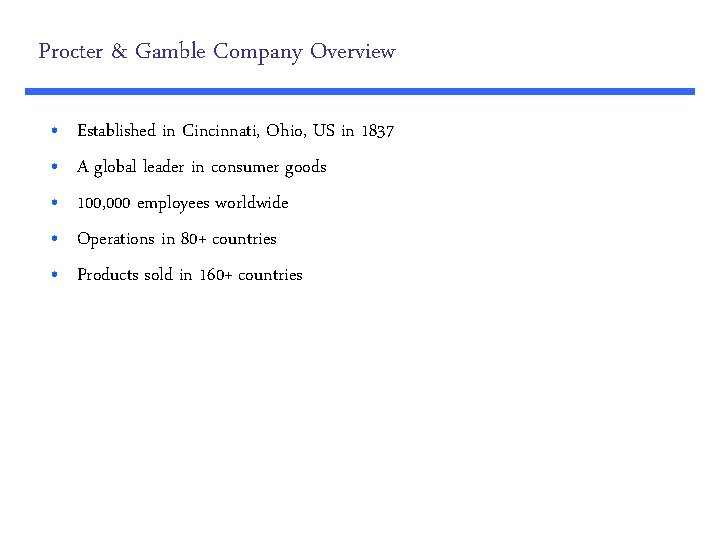
Procter & Gamble Company Overview • • • Established in Cincinnati, Ohio, US in 1837 A global leader in consumer goods 100, 000 employees worldwide Operations in 80+ countries Products sold in 160+ countries
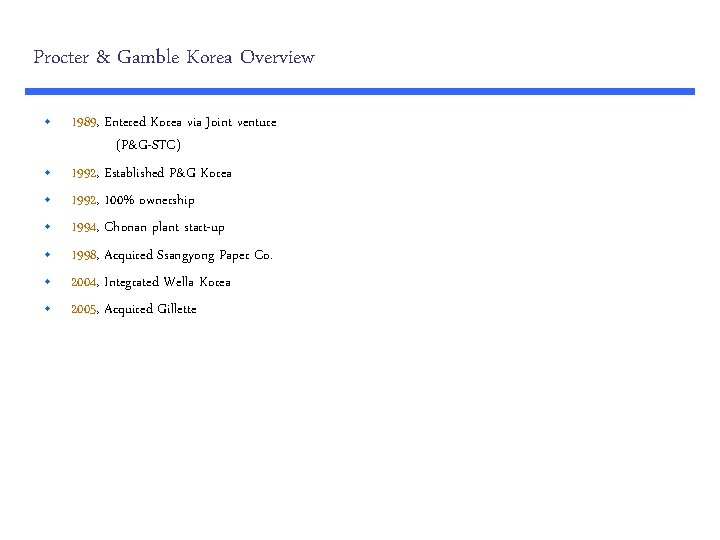
Procter & Gamble Korea Overview • • 1989, Entered Korea via Joint venture (P&G-STC) 1992, Established P&G Korea 1992, 100% ownership 1994, Chonan plant start-up 1998, Acquired Ssangyong Paper Co. 2004, Integrated Wella Korea 2005, Acquired Gillette
Procter & Gamble Korea Overview • • • 500 employees General Office in Seoul Plant in Chonan Acquired Gillette Brands -- Pantene, Vidal Sassoon, Head & Shoulder, Whisper, Cutie, Febreze, Pringles, SKII, Ivory, Joy, Crest, Wella, IAMS
Procter & Gamble HR System Overview • A holistic system approach • A strong linkage to P&G business model • A strong Corporate culture – Corporate Purpose, Values, Principles – Business Conduct Policy • 169 years of trial and error
Procter & Gamble HR System Overview • • • . Home-grown management Early responsibility Manager manages employee. Line organization responsible for organization development HR develops and owns the systems. Line organization executes the systems.
Business Need Analysis • Key factors in design and implementation – Business success (short term and long term) – Balance between business and organization – Productivity – Company's needs and wants from employees – Employee's needs and wants from Company • Determine the type of people, skills, and experience we need for the business to be successful • Determine the type of organization and its culture we want to build
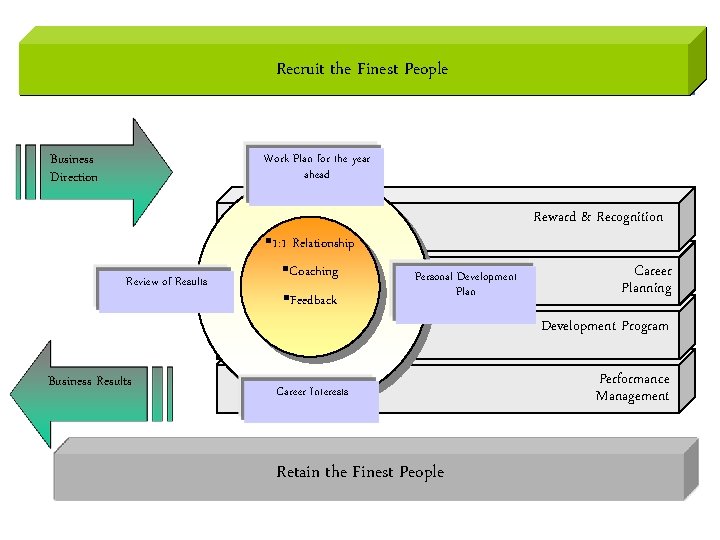
Recruit the Finest People Business Direction Work Plan for the year ahead Reward & Recognition § 1: 1 Relationship Review of Results §Coaching §Feedback Personal Development Plan Career Planning Development Program Business Results Career Interests Retain the Finest People Performance Management

HR Model

Dimensions of HR’s Role: The Four Quadrant Model Multiple Roles of HR: • • The roles are not separate and unrelated All 4 roles can come into play while doing HR work One or more of the roles may dominate depending on the nature of the work Every HR practitioner can & often does play all 4 roles Change Agent Strategic Partner Employee Champion Administrative Expert
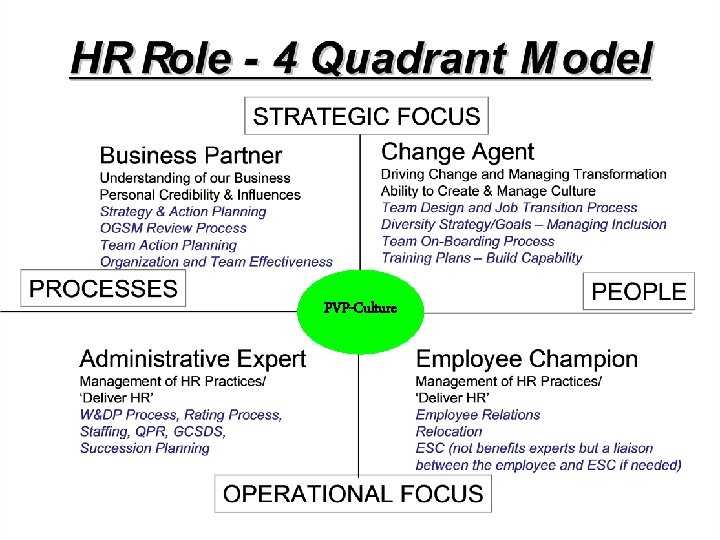
PVP-Culture

P&G Core Value Purpose, Values and Principles
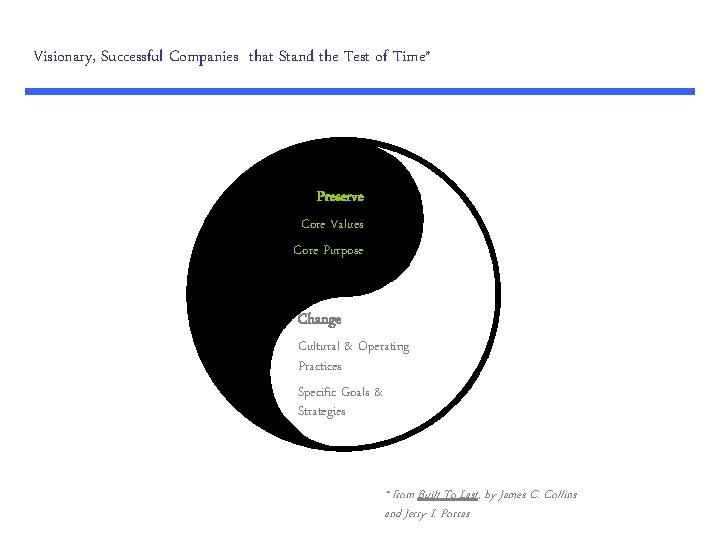
Visionary, Successful Companies that Stand the Test of Time* Preserve Core Values Core Purpose Change Cultural & Operating Practices Specific Goals & Strategies * from Built To Last, by James C. Collins and Jerry I. Porras
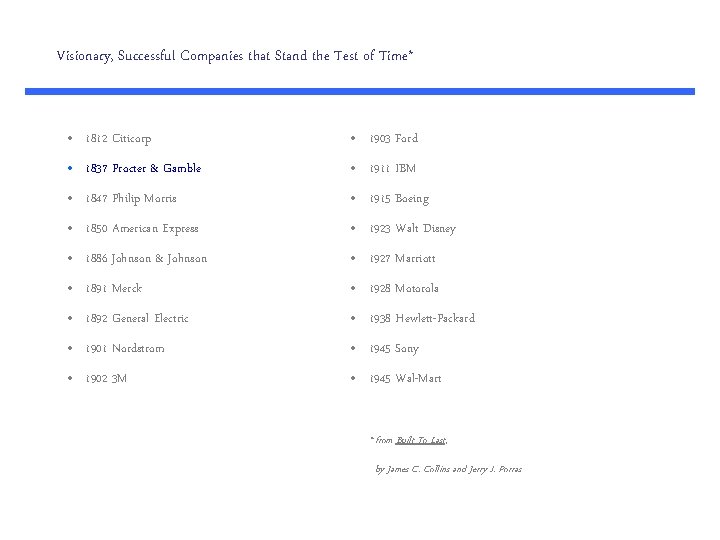
Visionary, Successful Companies that Stand the Test of Time* • 1812 Citicorp • 1903 Ford • 1837 Procter & Gamble • 1911 IBM • 1847 Philip Morris • 1915 Boeing • 1850 American Express • 1923 Walt Disney • 1886 Johnson & Johnson • 1927 Marriott • 1891 Merck • 1928 Motorola • 1892 General Electric • 1938 Hewlett-Packard • 1901 Nordstrom • 1945 Sony • 1902 3 M • 1945 Wal-Mart * from Built To Last, by James C. Collins and Jerry I. Porras
Our PVP William Procter and James Gamble’s most significant contribution was not hog fat soap, lamp oils or candles, for these would eventually become obsolete; their primary contribution was something that can never become obsolete: a highly adaptable organization with a ‘spiritual inheritance’ of deeply ingrained core values transferred to generation after generation of P&G people. " "윌리엄 프락터와 제임스 갬블의 가장 위대한 공헌은 비누, 램프오일, 양 초가 아니었다. 왜냐하면 이것들은 결국에는 역사 속으로 사라져 버린 것들이기 때문이다. 그들의 가장 중요한 공헌은 결코 사라 질 수 없는 그 무언가 이다. 그것은 수 세대 동안 P&G 사람들에게 전해진 것으로 깊게 각인된 핵심가치라는 정신적 유산을 가진 매우 적응성이 뛰어난 조직이 었다. ” James C. Collins and Jerry I. Porras, authors of Built to Last – Successful Habits of Visionary Companies, 1995

Corporate Purpose, Value and Principles • Purpose, Values and Principles represent the Corporate Culture. – PURPOSE states the most fundamental reason why the organization exists. – VALUES are the core concepts that define the character of the Company and its people – PRINCIPLES are the guidance by which choices, decisions, and behaviors are determined.
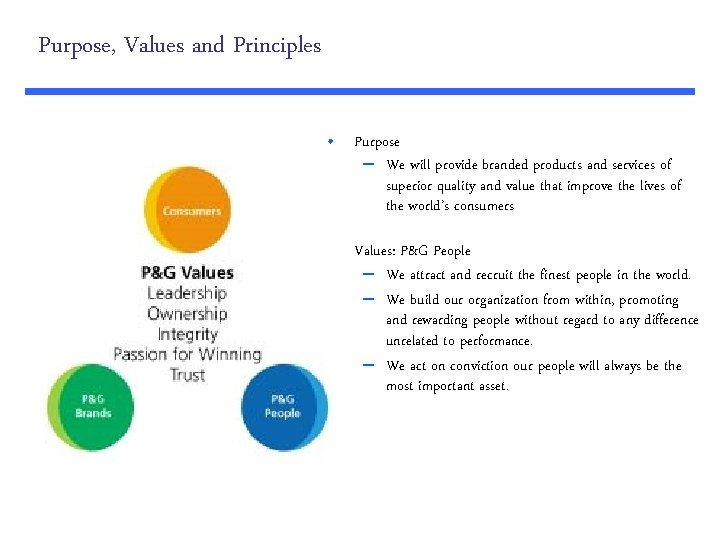
Purpose, Values and Principles • Purpose – We will provide branded products and services of superior quality and value that improve the lives of the world’s consumers • Values: P&G People – We attract and recruit the finest people in the world. – We build our organization from within, promoting and rewarding people without regard to any difference unrelated to performance. – We act on conviction our people will always be the most important asset.
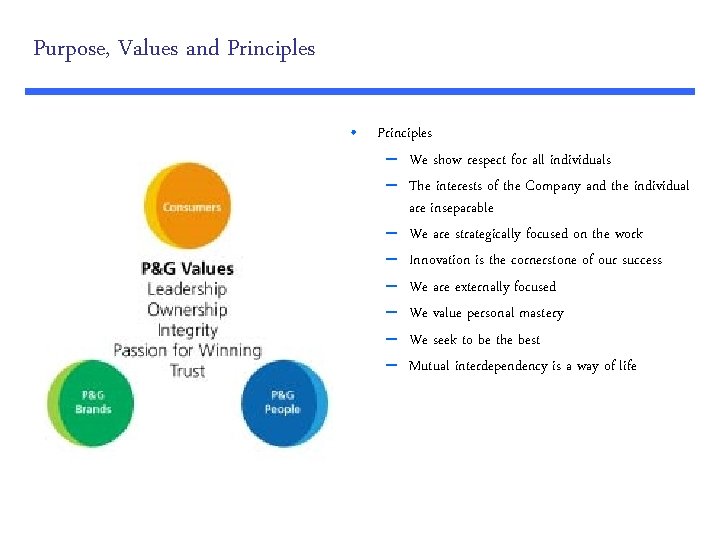
Purpose, Values and Principles • Principles – We show respect for all individuals – The interests of the Company and the individual are inseparable – We are strategically focused on the work – Innovation is the cornerstone of our success – We are externally focused – We value personal mastery – We seek to be the best – Mutual interdependency is a way of life
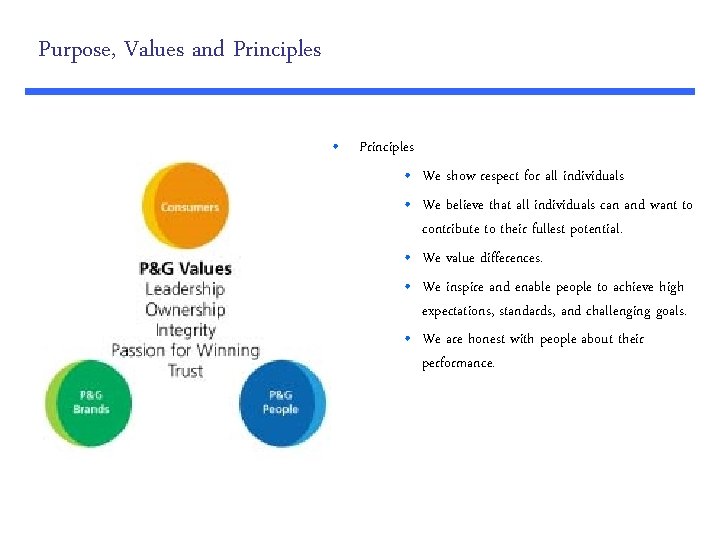
Purpose, Values and Principles • We show respect for all individuals • We believe that all individuals can and want to contribute to their fullest potential. • We value differences. • We inspire and enable people to achieve high expectations, standards, and challenging goals. • We are honest with people about their performance.
How PVP works in P&G • • • Business Conduct Policy Regular Training and Compliance report Actual Case Studies Performance measure for leaders Hot Line And many more

Promotion from Within
Promotion from within • Unique HR practice of P&G • Fundamental to retain our corporate core values • Reason we need to focus on selection process and employee development – Hire future leaders – Hire at entry levels only – Maintain healthy turnovers for continuous supply of new talents
A Culture to Support Development • • • Long history of developing people Leaders take ownership in developing people and coaching others Willingness to release people for developmental opportunities Organization and people development are key measures in performance assessment Business decisions frequently combined with talent/staffing discussions Build from within requires continual learning and development
We Build Our Organization from Within Why? • Value deep knowledge • Rooted in learning the business from the ground up • Organizational focus is on growing talent vs. searching for talent • Internally developed talent produces better business results Ø 90% success rate at executive level vs. 50% industrial average industry How? • Hire only at entry level (exceptions = doctors, lawyers, etc. ) • Field The Best Team in Acquisitions • Search for talent locally, regionally then worldwide • Combine and leverage On-the Job Posting and Assignment Planning • Develop for greater responsibility
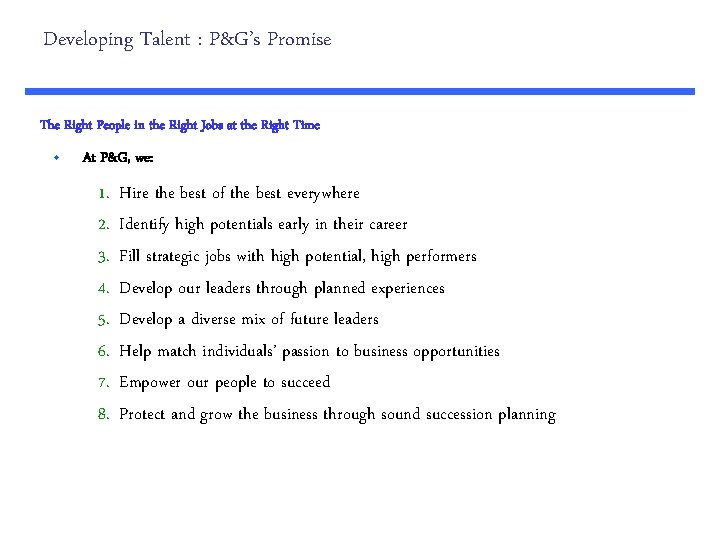
Developing Talent : P&G’s Promise The Right People in the Right Jobs at the Right Time • At P&G, we: 1. 2. 3. 4. 5. 6. 7. 8. Hire the best of the best everywhere Identify high potentials early in their career Fill strategic jobs with high potential, high performers Develop our leaders through planned experiences Develop a diverse mix of future leaders Help match individuals’ passion to business opportunities Empower our people to succeed Protect and grow the business through sound succession planning
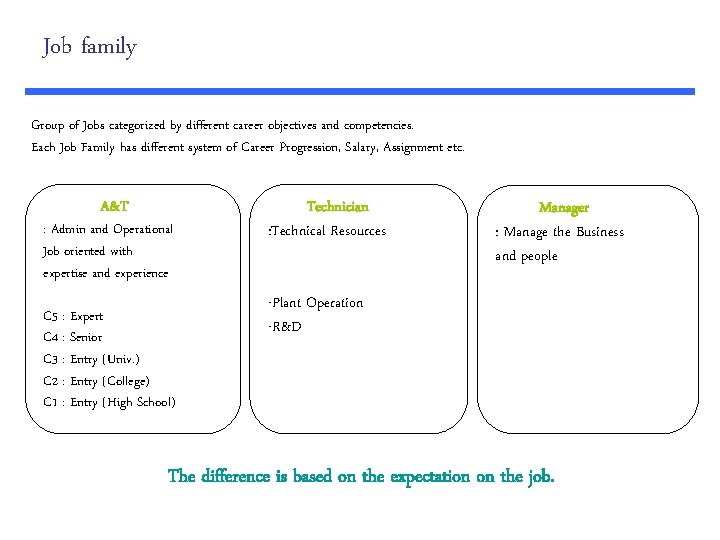
Job family Group of Jobs categorized by different career objectives and competencies. Each Job Family has different system of Career Progression, Salary, Assignment etc. A&T : Admin and Operational Job oriented with expertise and experience C 5 : Expert C 4 : Senior C 3 : Entry (Univ. ) C 2 : Entry (College) C 1 : Entry (High School) Technician : Technical Resources Manager : Manage the Business and people -Plant Operation -R&D The difference is based on the expectation on the job.
Recruiting Process
Talent Supply Process • Owned by hiring function : Career system • Focusing on a candidate’s behavior, result, experience : past behavior is the best predictor of future behavior • Major selection criteria is a potential to be a group manager (2 levels up)
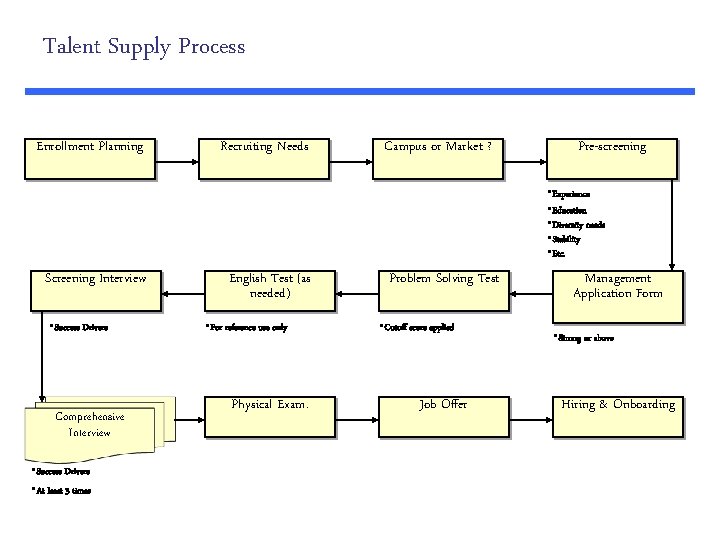
Talent Supply Process Enrollment Planning Recruiting Needs Campus or Market ? Pre-screening • Experience • Education • Diversity needs • Stability • Etc. Screening Interview • Success Drivers Comprehensive Interview • Success Drivers • At least 3 times English Test (as needed) • For reference use only Physical Exam. Problem Solving Test • Cutoff score applied Job Offer Management Application Form • Strong or above Hiring & Onboarding
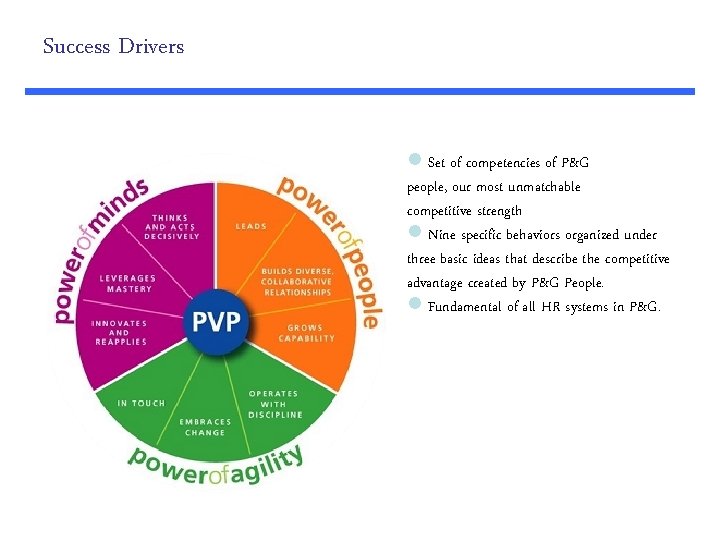
Success Drivers l Set of competencies of P&G people, our most unmatchable competitive strength l Nine specific behaviors organized under three basic ideas that describe the competitive advantage created by P&G People. l Fundamental of all HR systems in P&G.
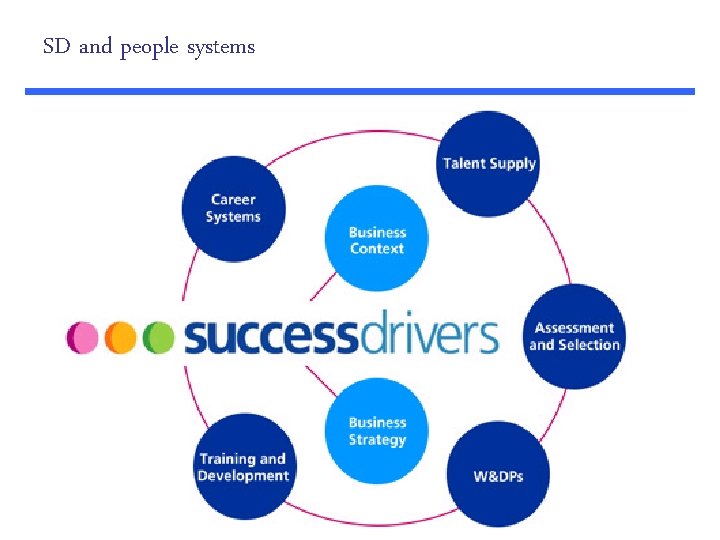
SD and people systems
Performance Evaluation
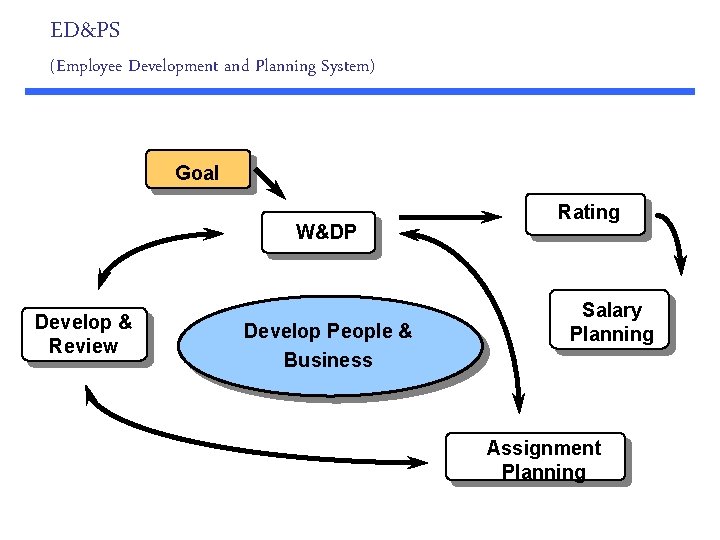
ED&PS (Employee Development and Planning System) Goal W&DP Develop & Review Develop People & Business Rating Salary Planning Assignment Planning
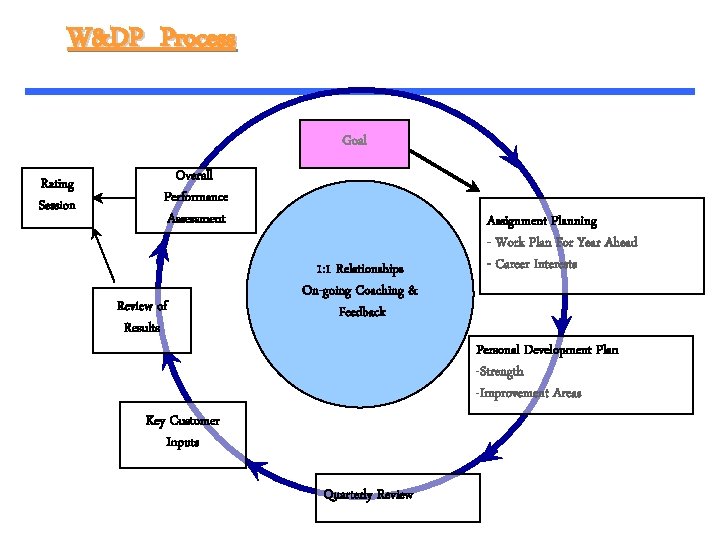
W&DP Process Goal Rating Session Overall Performance Assessment Review of Results 1: 1 Relationships On-going Coaching & Feedback Assignment Planning - Work Plan For Year Ahead - Career Interests Personal Development Plan -Strength -Improvement Areas Key Customer Inputs Quarterly Review
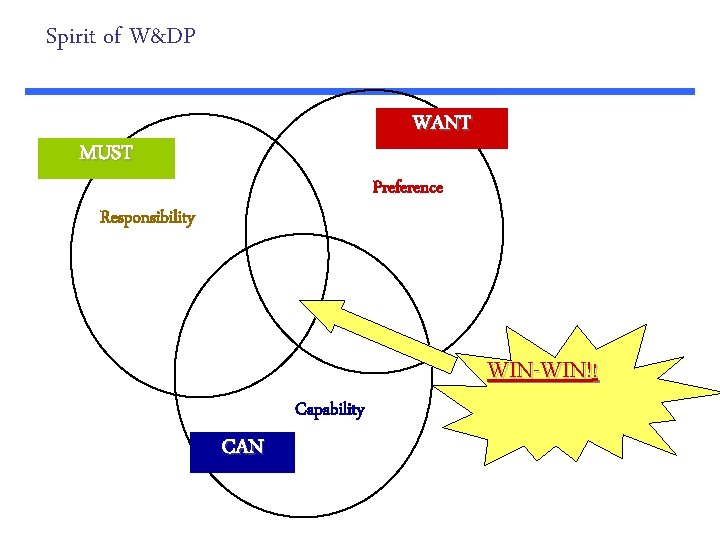
Spirit of W&DP WANT MUST Preference Responsibility Capability CAN WIN-WIN!!
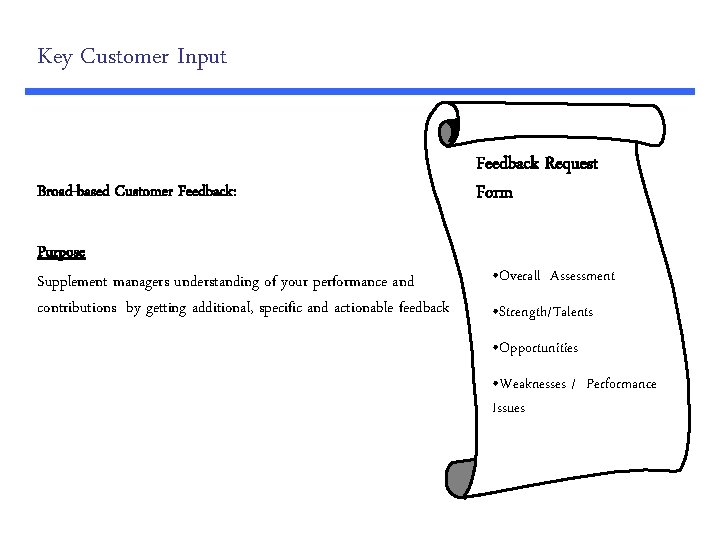
Key Customer Input Broad-based Customer Feedback: Purpose Supplement managers understanding of your performance and contributions by getting additional, specific and actionable feedback Feedback Request Form • Overall Assessment • Strength/Talents • Opportunities • Weaknesses / Performance Issues
Broad Base Feedback Process - Employee will propose the key customer - Manager will ask & collect inputs Proposed Key Customer should meet followings; - Who works with the employee closely - 3~4 will be sufficient - Consider diversity, multi-functional
Compensation & Benefit
P&G Compensation Principle • Pay competitively – With Selective Group of Companies • Pay for performance
P&G Compensation System Compensation Management : 2 processes • Compensation Benchmarking – Process: Establish competitive job value – Product: Salary Ranges • Salary Planning – Process: Differentiate pay according to performance and contribution – Product: Individual Salary Plan
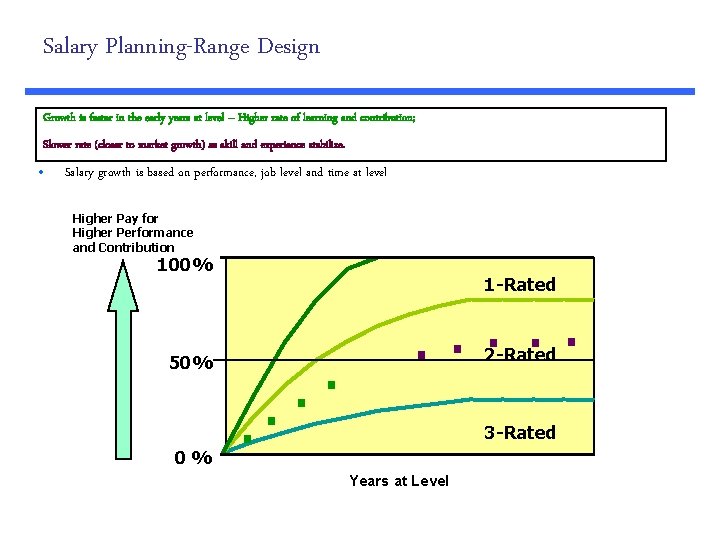
Salary Planning-Range Design Growth is faster in the early years at level – Higher rate of learning and contribution; Slower rate (closer to market growth) as skill and experience stabilize. • Salary growth is based on performance, job level and time at level Higher Pay for Higher Performance and Contribution 100% 50% 0% 1 -Rated . . 2 -Rated 3 -Rated Years at Level
Compensation System
Benefit Principle We attract, retain and motivate employees by offering a reasonable policies and plans packages.
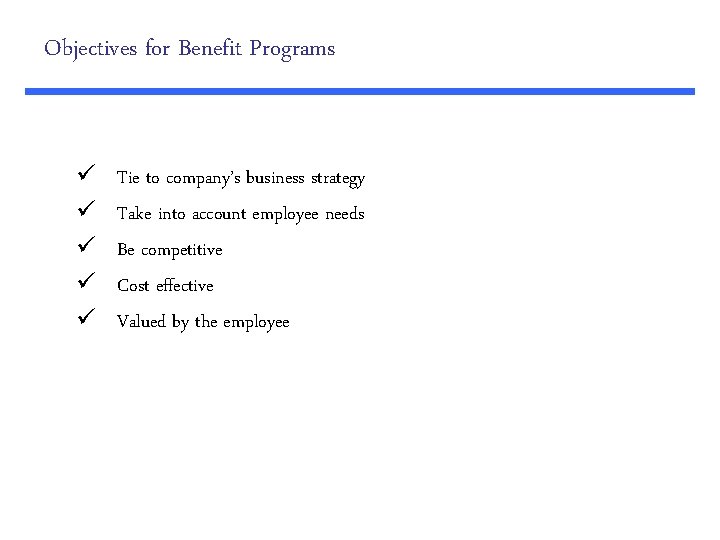
Objectives for Benefit Programs ü ü ü Tie to company’s business strategy Take into account employee needs Be competitive Cost effective Valued by the employee
Tie to Company’s Business Strategy Ø Be able to attract and retain good people Ø Share in company’s performance Ø Be able to adapt to changing environment – Demographics – Government programs and legislation – Competitive practice Ø Provide affordable benefits
Meet Employee Needs Ø Protect against potential loss of income – Disability – Death Ø Maintain appropriate standard of living after retirement Ø Offer opportunities for capital accumulation Ø Protect against burdensome health care costs Ø Recognize different employee needs (offer choice if possible)
Meet Employee Needs • Three pillars of provision – Social security – Company provided – Employee provided
Offer Competitive Programs Ø Our target is median in peer group Ø Choice of peer group consistent with compensation surveys Ø Total compensation package to be competitive
Cost Effective Ø Takes advantage of – Economies of scale – Favorable tax treatment Ø Employee participation in cost
Valued by the Employee Ø Regularly communicated to employees Ø Employee must understand added value of benefit programs Ø Part of total compensation package
Employee Sensing v. Stay in touch with employee’s emerging needs v. External environment (change of regulations)
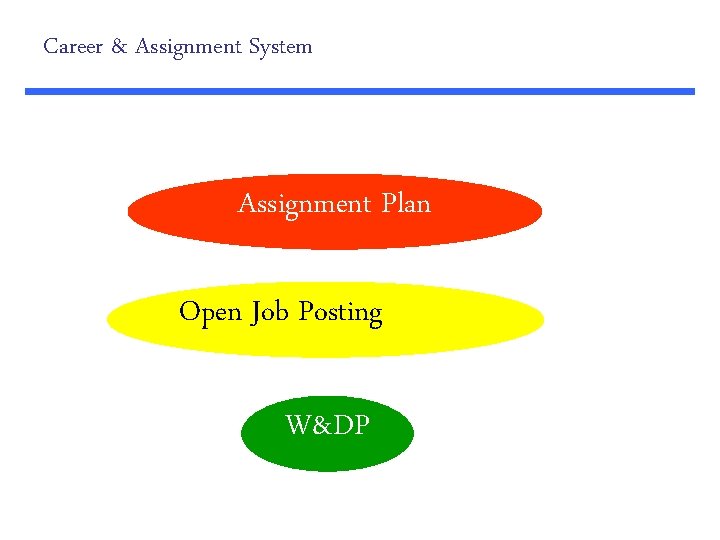
Career & Assignment System Assignment Plan Open Job Posting W&DP
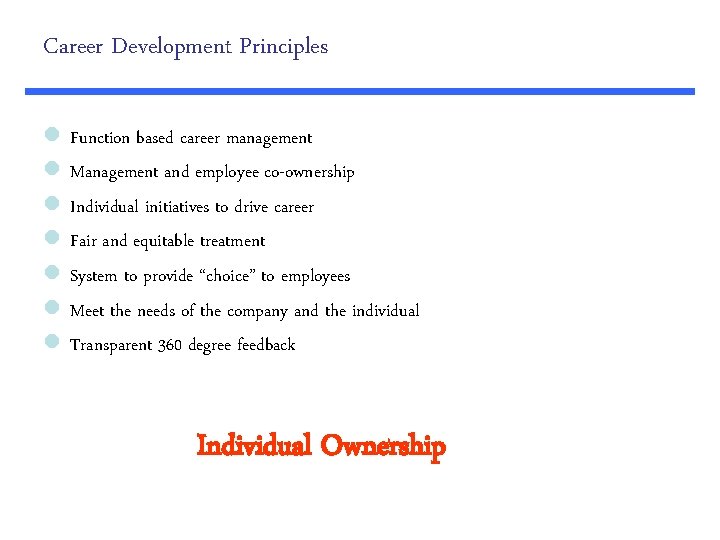
Career Development Principles l l l l Function based career management Management and employee co-ownership Individual initiatives to drive career Fair and equitable treatment System to provide “choice” to employees Meet the needs of the company and the individual Transparent 360 degree feedback Individual Ownership
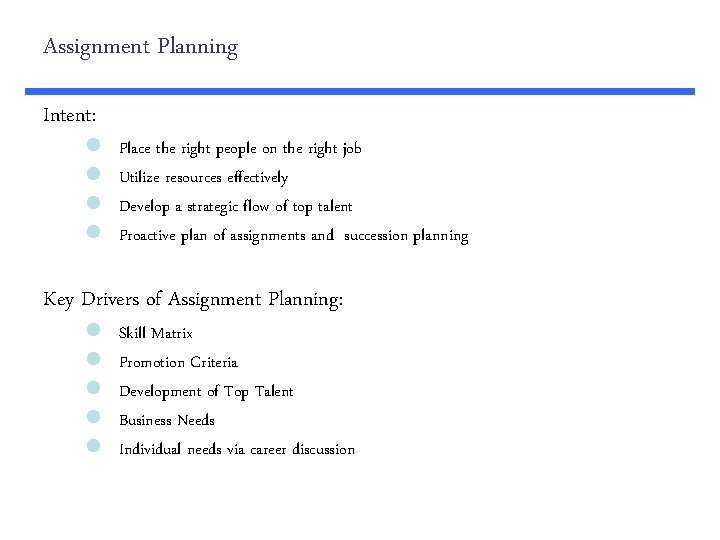
Assignment Planning Intent: l l Place the right people on the right job Utilize resources effectively Develop a strategic flow of top talent Proactive plan of assignments and succession planning Key Drivers of Assignment Planning: l l l Skill Matrix Promotion Criteria Development of Top Talent Business Needs Individual needs via career discussion
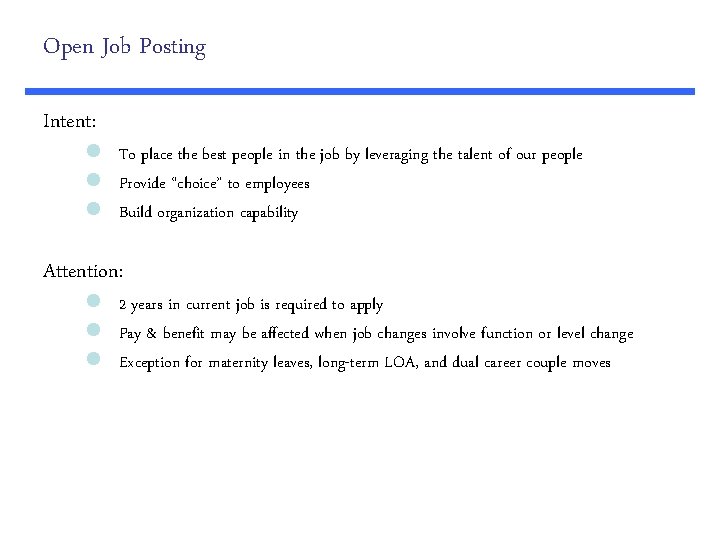
Open Job Posting Intent: l To place the best people in the job by leveraging the talent of our people l Provide “choice” to employees l Build organization capability Attention: l 2 years in current job is required to apply l Pay & benefit may be affected when job changes involve function or level change l Exception for maternity leaves, long-term LOA, and dual career couple moves
Training System
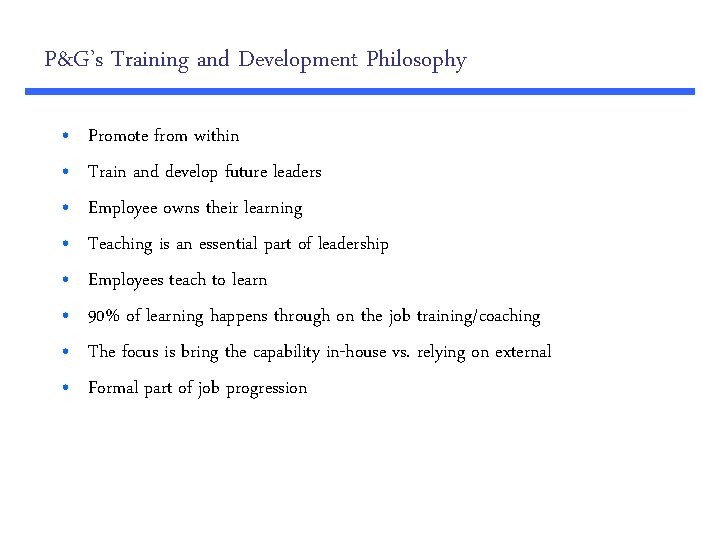
P&G’s Training and Development Philosophy • • Promote from within Train and develop future leaders Employee owns their learning Teaching is an essential part of leadership Employees teach to learn 90% of learning happens through on the job training/coaching The focus is bring the capability in-house vs. relying on external Formal part of job progression
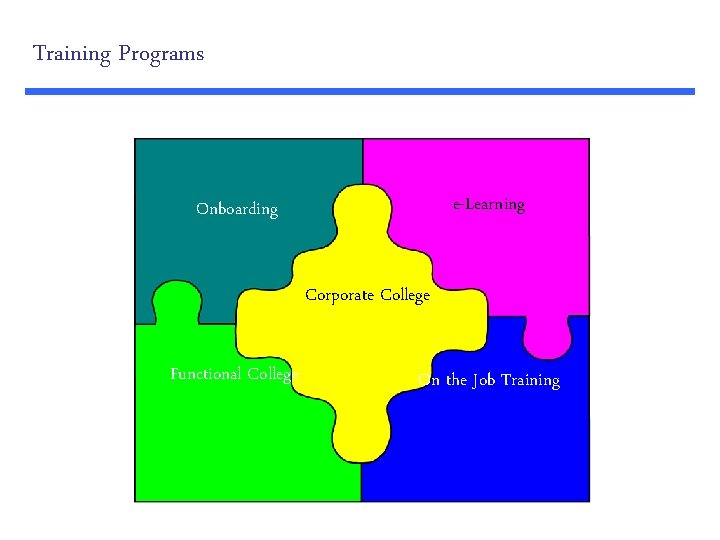
Training Programs e-Learning Onboarding Corporate College Functional College On the Job Training
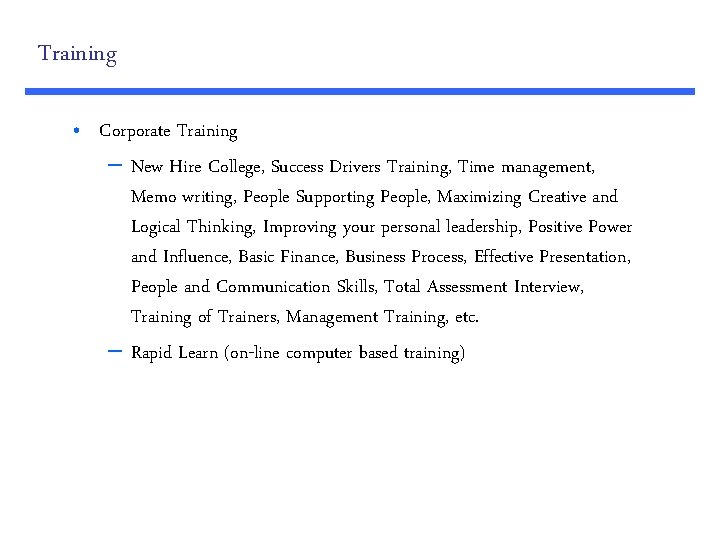
Training • Corporate Training – New Hire College, Success Drivers Training, Time management, Memo writing, People Supporting People, Maximizing Creative and Logical Thinking, Improving your personal leadership, Positive Power and Influence, Basic Finance, Business Process, Effective Presentation, People and Communication Skills, Total Assessment Interview, Training of Trainers, Management Training, etc. – Rapid Learn (on-line computer based training)
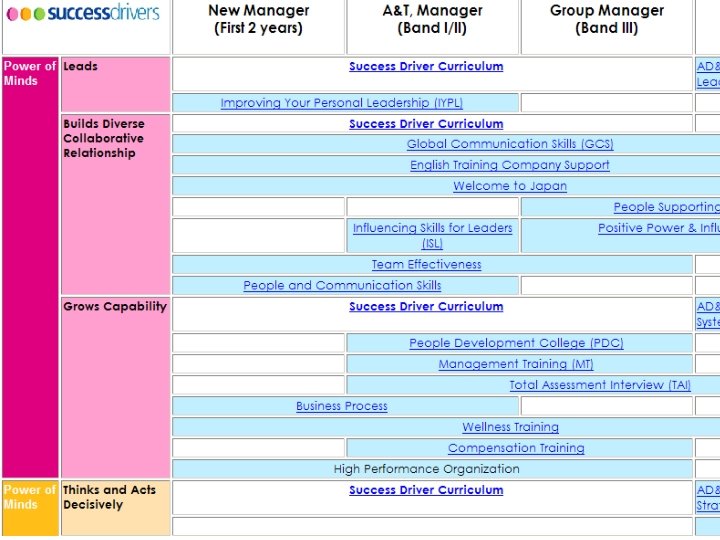
Training
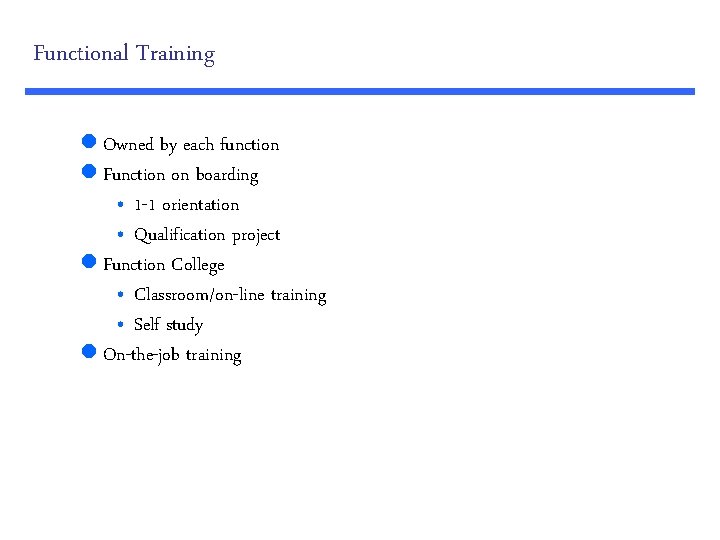
Functional Training l Owned by each function l Function on boarding • 1 -1 orientation • Qualification project l Function College • Classroom/on-line training • Self study l On-the-job training
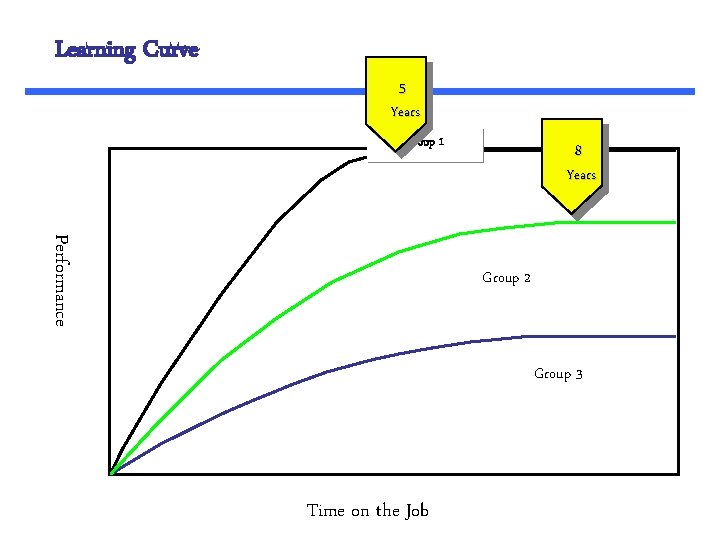
Learning Curve 5 Years Group 1 8 Years Performance Group 2 Group 3 Time on the Job
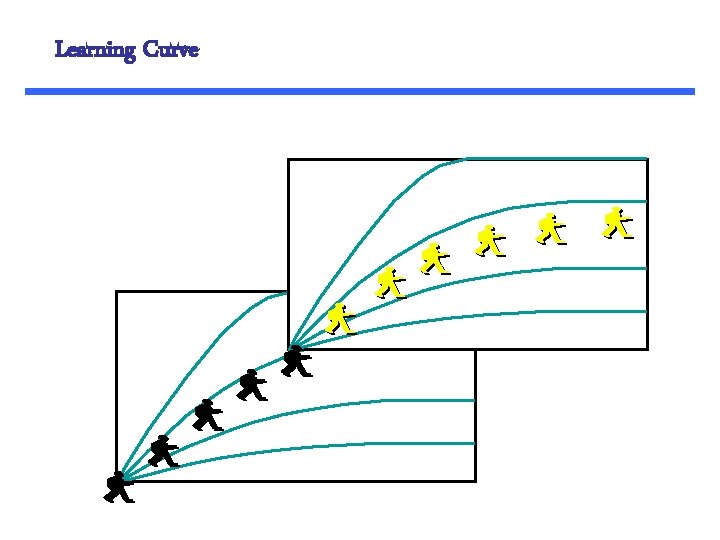
Learning Curve
Talent Development System
Talent Review • Selecting top 1% of our total employees to develop them further by assigning them to a core, strategic and challenging position • Talent Review Meeting – – – Twice a year Add new talents and drop poor talents Function BU Country Region Global Performance driven selection process : Rating, W&DP, 360 degree feedback, etc. Check Diversity : Gender, Nationality, Race
Top Talent Development Program • Objective : Identify top local talents early in their career and accelerate their development by proactive assignment/career planning, focused training, mentoring, and personal action planning. • Full support from top management : developing people is one of key performance measures to management level • Performance Based Competition • Strategic, Challenging assignment – assess the procedure how to survive through the assignment – Coaching, Mentoring
NEA LTDP System • NEA (North East Asia) Local Talent Development Program • To develop weak area of NEA employees as a global leader focusing on 4 critical skill area – – Leadership Strategic Thinking Global Communication Skill Coaching Skill • Group Manager Level – Playing a Key role as a bridge between executives and juniors (90% of our total population)
NEA LTDP System • Accelerate Top Talents’ development and prepare them as a future global leader • 1 year program • Methodology – – – Personal Action Plan Development based on feedback Classroom training and case studies taught by GMs and Directors Assignment and career planning reviewed by NEA Leadership Team Skill assessment & feedback (LAT, EPA) Leadership mentoring
Personal Action Plan Development • Before the session starts, participants should submit self-assessment and broad-based feedback – Leadership Assessment Tool (LAT) – English Proficiency Assessment (EPA) • Develop personal improvement plan
Top Talent Training • 1 year program : 9 sessions with Graduation case study • Classroom training in Japan with all participants • Case Studies facilitated by General Managers and Directors • At the end of each session, the facilitators give feedback on individual performance during the case study • Opportunity to Network with other top talents and top management another leaning enhancement
Assignment and Career Planning • Review next 2 assignment plan including promotion plan • Review future potential (up to which level) to set career plan • Assess Top talents’ skill : Leadership, Strategic Thinking, Global Communication Skill, Coaching Skill • Assessment Center : Web based tool – Individual and Line manager fill out the data – Accessible anywhere in P&G
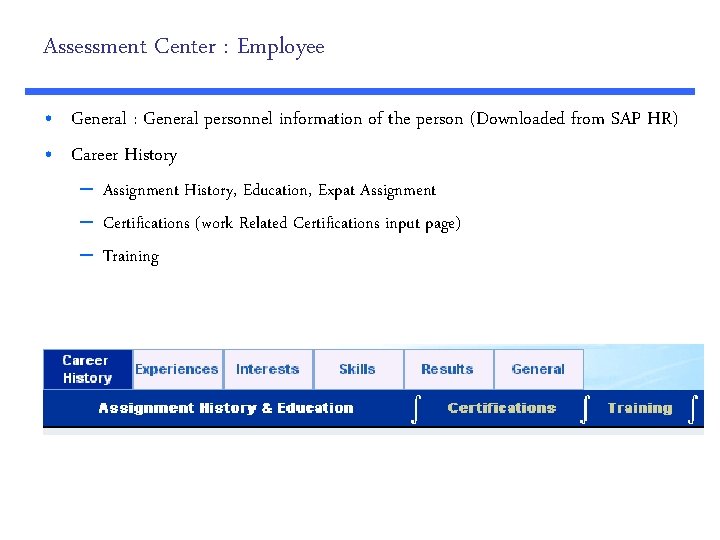
Assessment Center : Employee • General : General personnel information of the person (Downloaded from SAP HR) • Career History – Assignment History, Education, Expat Assignment – Certifications (work Related Certifications input page) – Training
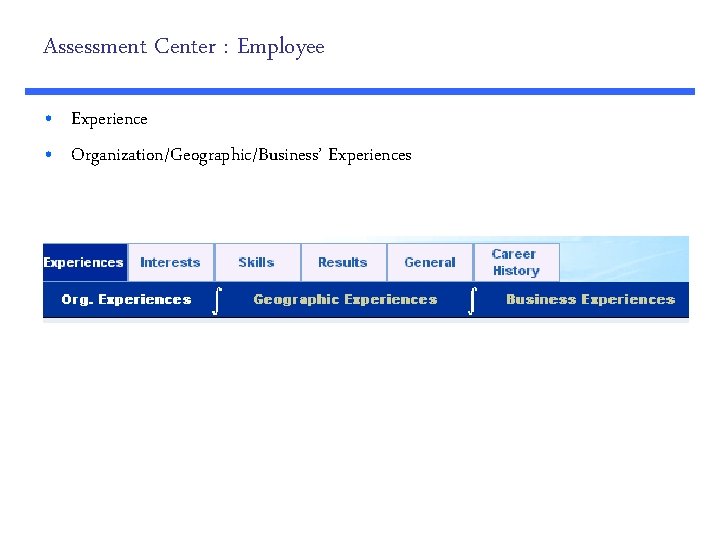
Assessment Center : Employee • Experience • Organization/Geographic/Business’ Experiences
Assessment Center : Employee • Interests – Career Interest – Mobility : Identify locations preferred or not preferred • Skills – Language Skill – Technical Skill by function • Results – Attach most recent W&DP and other documents, which shows business result.
Assessment Center : Manager • Career Plan – Estimated future potential – Estimated year ready – Next promotion plan • Assignment Plan : next 2 assignment plan – – Assignment name Promotion Status Starting Date Location
Assessment Center : Manager • Development area – Identify Top 3 development area and set improvement plan • Succession Plan – – – General information of successor Priority of Candidate (1 to 4) Candidate Type : Planned, Emergency, Diversity, Local Estimated succession timing Rating for past 3 years
Leadership Mentoring • Mentor : a relationship between a junior and senior colleague that is viewed by the junior as positively contributing to his/her development. – 2 level up manager from any function – Any kind of topic – Share personal experiences • Sponsor : Technical support – support quality job delivery – Function Head in most cases • Secret for success? Promotion from within!
Employee Communication Process • To selected employees : communicate through one to one discussion. – – – The intent of the program Why he/she is selected The contents of NEA Leadership Development Program Implications for his/her selection Your expectations Establish clear expectation that this is not a guarantee for promotion
Employee Communication Process • To other employees : no proactive communication to other employees but provide perspectives when asked. – – This is a going program and they may have opportunity to enroll next year. This is not the program for everyone. It takes management recommendation to enroll. Strong performance and future potential are two key criteria for nomination. Other programs are available via Corporate Training Program. Everyone can take advantage of similar program. – When asked why a certain manager was not selected, be transparent about what it takes for the manager to be nominated (candid feedback)
Top Talent Reward System • • No special incentive or allowance for Top Talents Pay for performance better reward to top talents Salary growth is based on performance, job level and time at level 50% of salary gap between top performer and poor performer

Issues We’re Facing
Issues we’re facing • Gillette Integration – Successful business integration through successful cultural integration • Promotion from within – Take time to develop leaders from bottom – Should plan fastest track in career for leaders and maintain continuously – Hard to find a right replace in case of sudden leave of talent : Succession plan implements this issue but difficult to back up 100% capability in a short period
Closing • Managements’ full commitment and support is critical (culture promoting people who grow capability of others) • P&G’s talent development system is based on P&G’s Promote from Within principle • May not be applicable to other companies • Key to success is finding the objective and essence of a company and what would be the best fit to the company
- Slides: 84