
PROCESSING OF PET BOTTLES MOHAMMED ALZAYER CHRIS CLAY
PROCESSING OF PET BOTTLES MOHAMMED ALZAYER CHRIS CLAY XINHANG SHEN Mat E 453 December 11 th, 2014
Outline • Background Amcor Blow Molding Recycling • Fluid Mechanics Temperature Molecular Weight • Bottle Processing Purification Preforms Bottles • Conclusions
Background: AMCOR • Global Company – Australian • 1860 as Australian Paper Manufacturers • 1986 changed name – 90% Food industry – 43 countries • West EU and NA – 180 plants – 27, 000 employees • Ames – – 1997 175 Employees 10% of Ames Power Primarily Preform
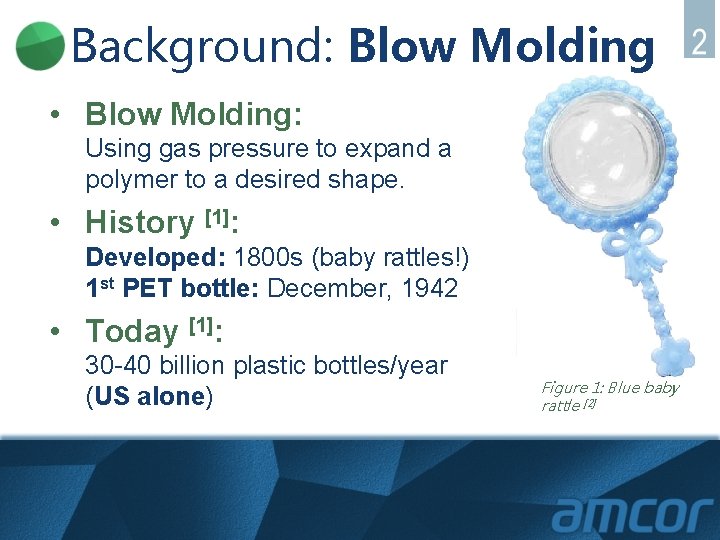
Background: Blow Molding • Blow Molding: Using gas pressure to expand a polymer to a desired shape. • History [1]: Developed: 1800 s (baby rattles!) 1 st PET bottle: December, 1942 • Today [1]: 30 -40 billion plastic bottles/year (US alone) Figure 1: Blue baby rattle [2]
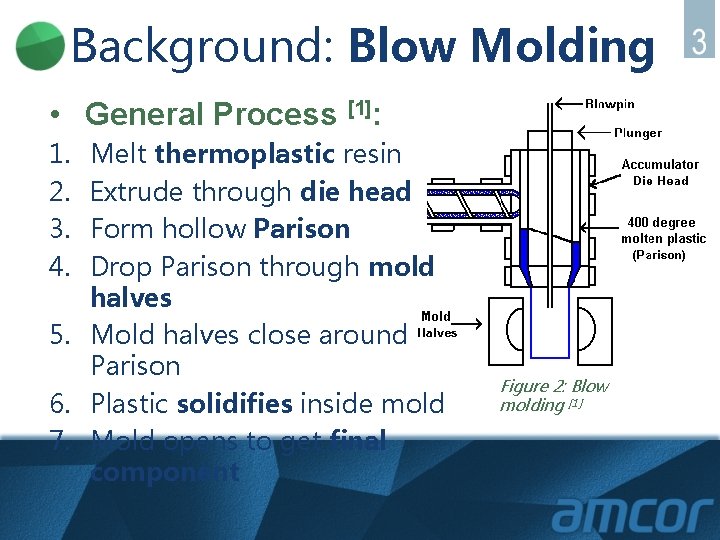
Background: Blow Molding • General Process [1]: 1. 2. 3. 4. Melt thermoplastic resin Extrude through die head Form hollow Parison Drop Parison through mold halves 5. Mold halves close around Parison 6. Plastic solidifies inside mold 7. Mold opens to get final component Figure 2: Blow molding [1]
Background: Blow Molding • Variations [1]: 1. 2. 3. 4. Injection blow molding Stretch blow molding Extrusion blow molding Reheat and blow molding Bolded: involved in beverage bottle processing
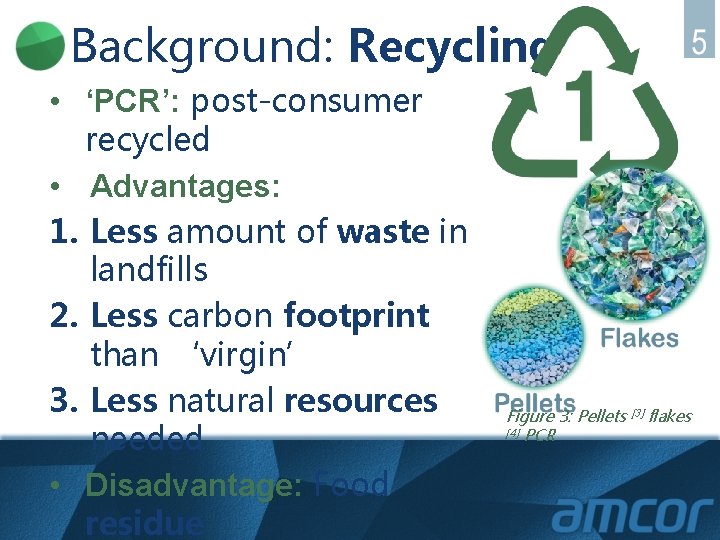
Background: Recycling • ‘PCR’: post-consumer recycled • Advantages: 1. Less amount of waste in landfills 2. Less carbon footprint than ‘virgin’ 3. Less natural resources needed • Disadvantage: Food residue Figure 3: Pellets [3] flakes [4] PCR
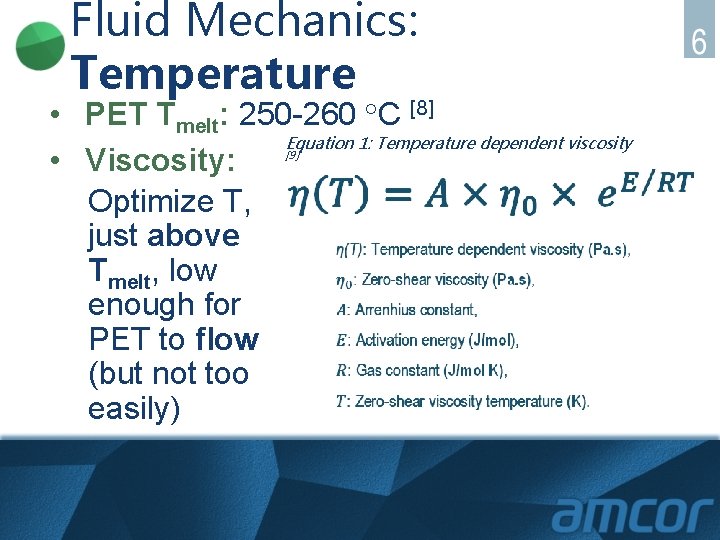
Fluid Mechanics: Temperature • PET Tmelt: 250 -260 °C [8] Equation 1: Temperature dependent viscosity • Viscosity: Optimize T, just above Tmelt, low enough for PET to flow (but not too easily) [9]
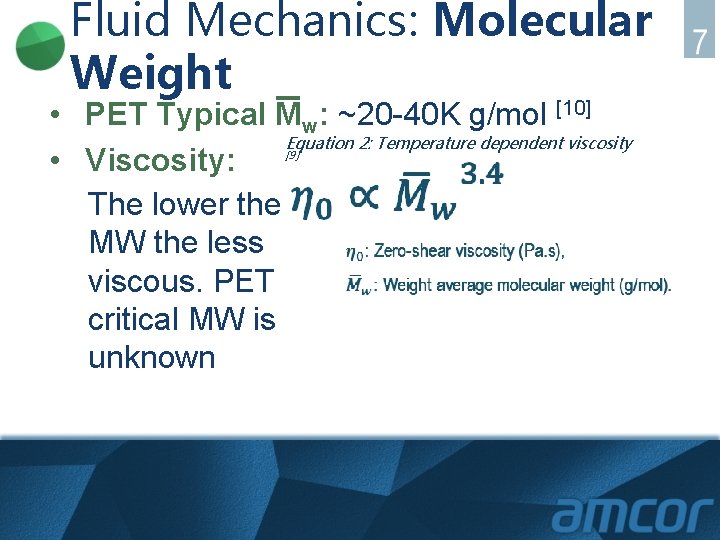
Fluid Mechanics: Molecular Weight • PET Typical Mw: ~20 -40 K g/mol [10] Equation 2: Temperature dependent viscosity • Viscosity: The lower the MW the less viscous. PET critical MW is unknown [9]
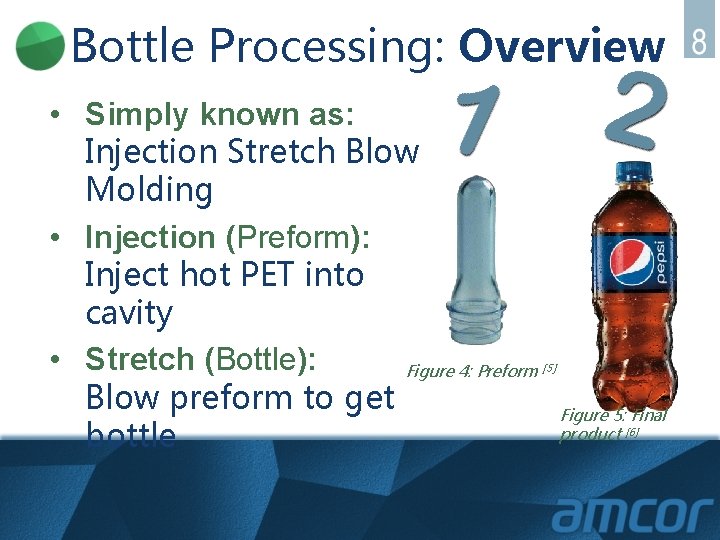
Bottle Processing: Overview • Simply known as: Injection Stretch Blow Molding • Injection (Preform): Inject hot PET into cavity • Stretch (Bottle): Figure 4: Preform Blow preform to get bottle [5] Figure 5: Final product [6]
Bottle Processing: Purification • PET pellets come by railcar Moved into Silos by Suction • Dried for 6 -10 hours Rate limiting step for the process ~ 0. 2 % Moisture • Additives Colorant, Plasticizers, Release Agents

Bottle Processing: Prefor • Injection Stretch Blow Molding: Summarized in 4 steps Figure 6: First two steps involved in injection stretch blow molding [7]
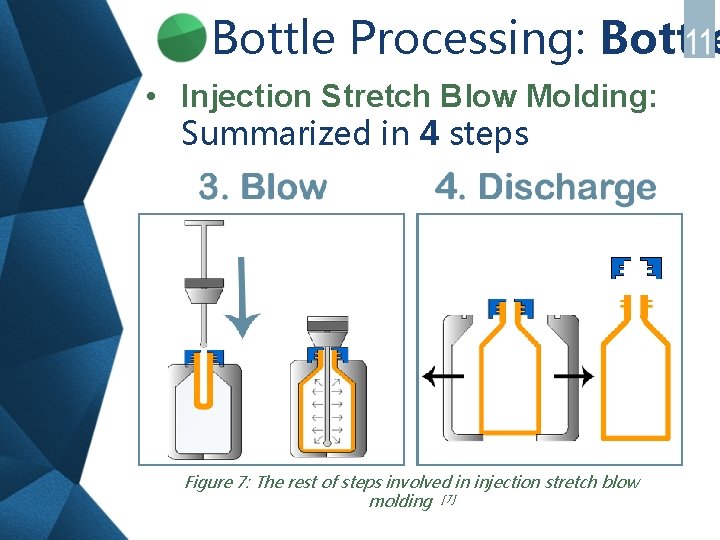
Bottle Processing: Bottle • Injection Stretch Blow Molding: Summarized in 4 steps Figure 7: The rest of steps involved in injection stretch blow molding [7]
Conclusions • • AMCOR Makes PET Preforms/ Bottles Receive PET pellets and dry them Preforms made via injection molding Bottles made from preforms by blow molding
References [1] Manufacturing: Plastic Molding & Forming. Engineer's Handbook. Web. [2] Blue Baby Rattle Shower Favor Holders. Factorydirectcraft. Web. [3] Recycled HDPE Resins. Envision Plastics. Web. [4] PCR PET Flakes Decontamination. Viscotec. Web. [5] PET Preform Injection Molding Machine: SZ-1600 A. Web. [6] Pepsi Introduces New Shape for Bottle After 16 Years. Designboom. Web. [7] Injection Stretch Blow Moulding. Plastipedia. Web. [8] Polyethlene Terephthatate: Melting Point. Web. [9] Mendoza, J. D. , Mat E 453 Lecture, Iowa State University. [10] Pearl Engineering PEPLEPET B-103 C PET Bottle Grade.
- Slides: 15