
Processing of clinical specimen Done by Mrs Areej
Processing of clinical specimen Done by: Mrs. Areej Alshayea
Processing the sample includes: Collection. 2. Transportation. 3. Processing. 1.
Collection: 1. 2. 3. 4. 5. � Universal container: urine, sputum. Bijou bottle: CSF. Container with wide neck: Stool Blood culture bottle: blood. Swabs: throat, wound and skin swab at the site of infection( eye, ear. . ). All the containers should be sterile.
Transportation: � Sample should be labeled (patient name, medical record number, age). � Sample should be send to the lab as soon as possible to be processed. Why? 1. To survive the pathogenic organism in the sample. 2. To prevent contaminants to grow. To prevent false positive results.
Processing: From the sample we do: a) Culturing on media: NA, BA, EMB, Mac, CLED. b) Staining: gram stain, spore, capsule stain.
Antibiotic sensitivity: use it for identification of organism. Ex. Novobiocin differentiate between Staph epidermidis (sensitive) and Staph saprophyticus(resistant). Bacitracin differentiate between Streptococcus gp A (sensitive) from other Streptococcus groups(resistant). c)
d) Biochemical reaction: (API 20 E): it’s a strip contains 20 tests in one strip, each one in tubules. We use it for identification of organism. Ex. Catalase test: Catalase is an enzyme produced by some organism it break down H 2 O 2 + org. produce catalase ---- H 2 + O 2 (bubbles)- catalase +ve H 2 O 2 + org. not produce catalase ---- no bubbles - catalase -ve
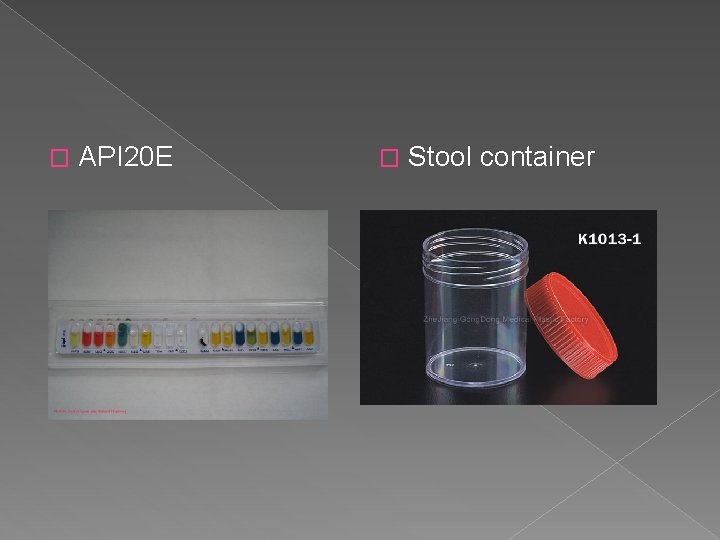
� API 20 E � Stool container
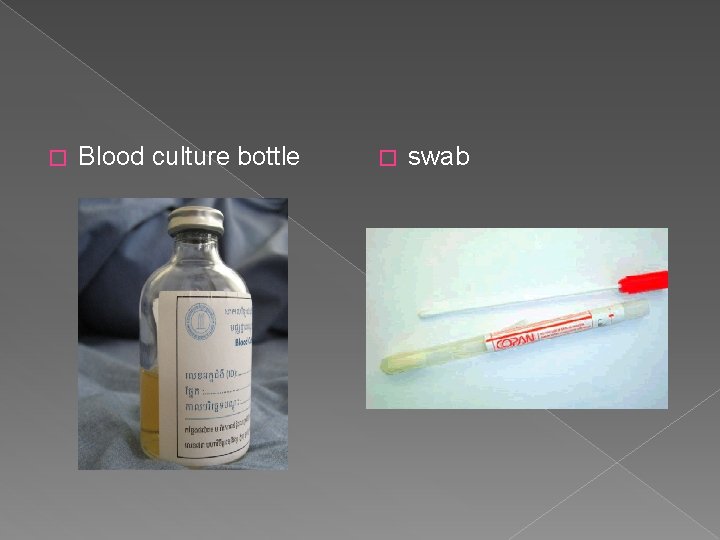
� Blood culture bottle � swab
- Slides: 9