
Processes of the Respiratory System Pulmonary ventilation mechanical
- Slides: 33
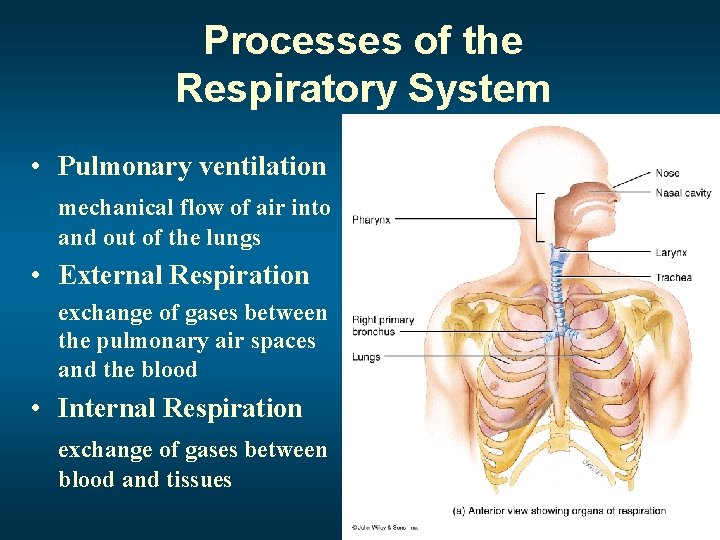
Processes of the Respiratory System • Pulmonary ventilation mechanical flow of air into and out of the lungs • External Respiration exchange of gases between the pulmonary air spaces and the blood • Internal Respiration exchange of gases between blood and tissues
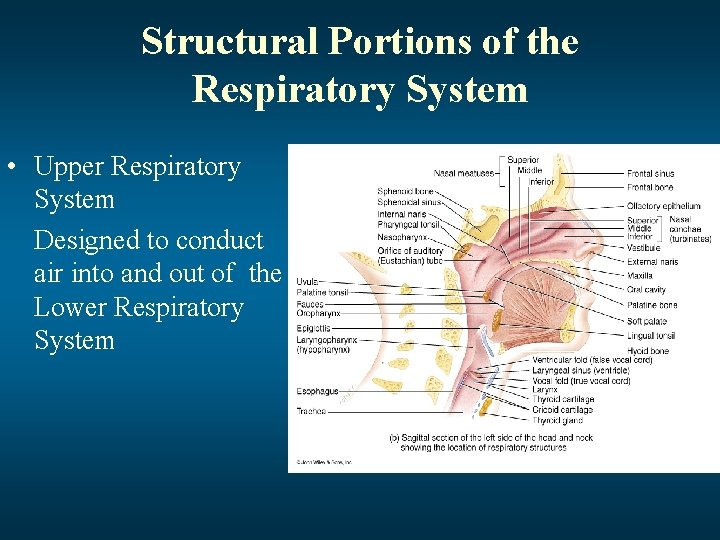
Structural Portions of the Respiratory System • Upper Respiratory System Designed to conduct air into and out of the Lower Respiratory System
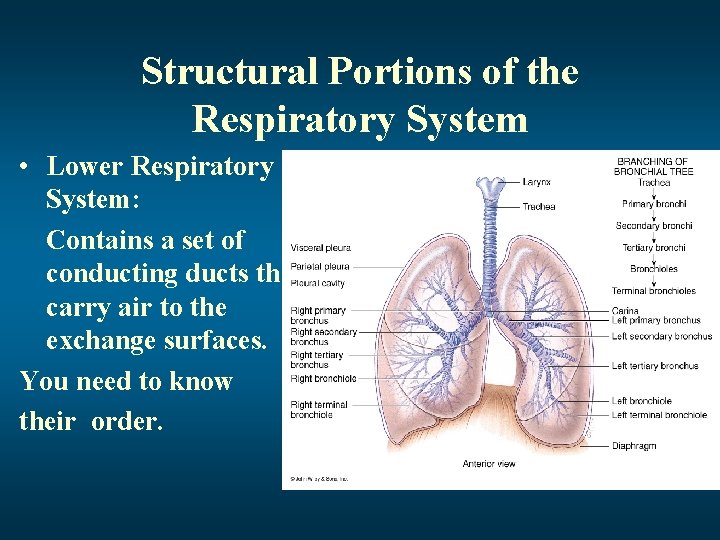
Structural Portions of the Respiratory System • Lower Respiratory System: Contains a set of conducting ducts that carry air to the exchange surfaces. You need to know their order.
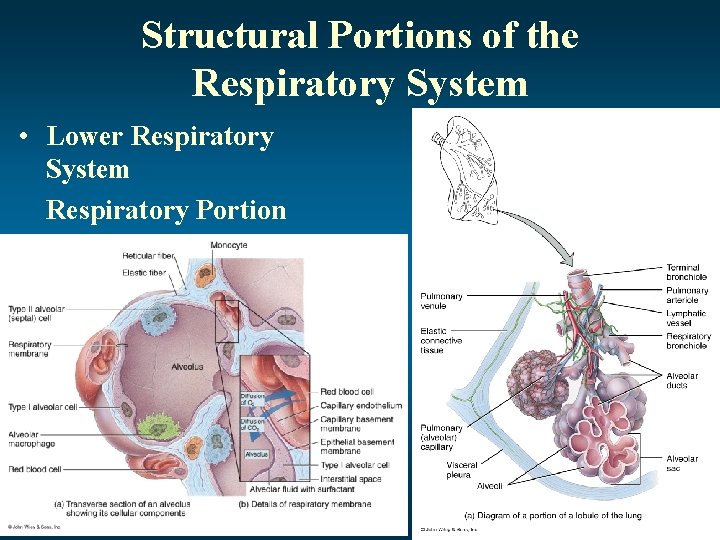
Structural Portions of the Respiratory System • Lower Respiratory System Respiratory Portion
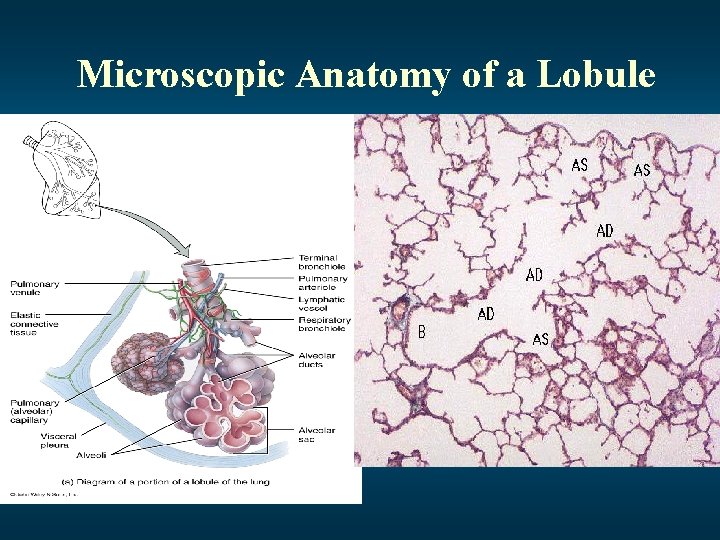
Microscopic Anatomy of a Lobule
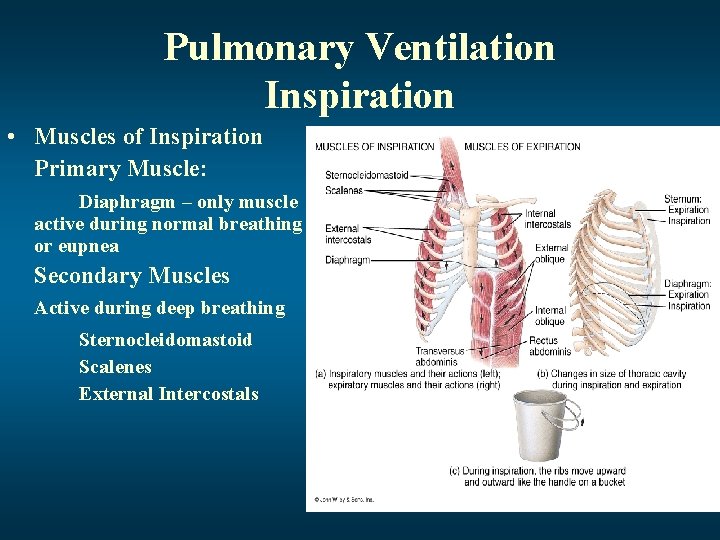
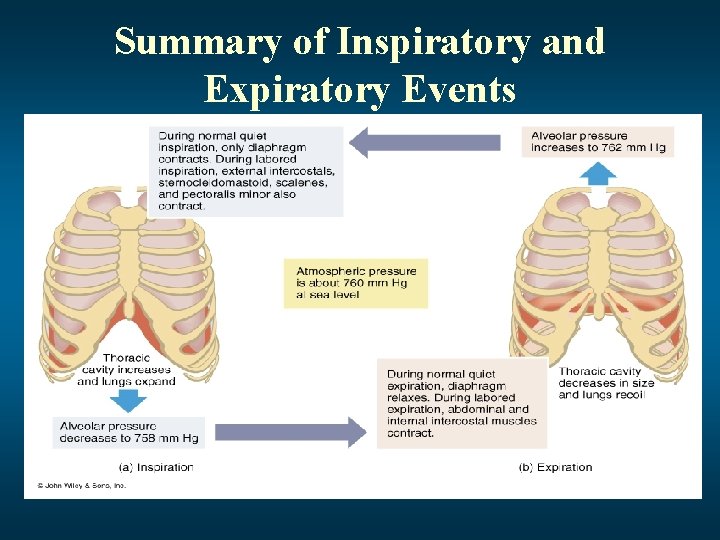
Pulmonary Ventilation Inspiration • Muscles of Inspiration Primary Muscle: Diaphragm – only muscle active during normal breathing or eupnea Secondary Muscles Active during deep breathing Sternocleidomastoid Scalenes External Intercostals
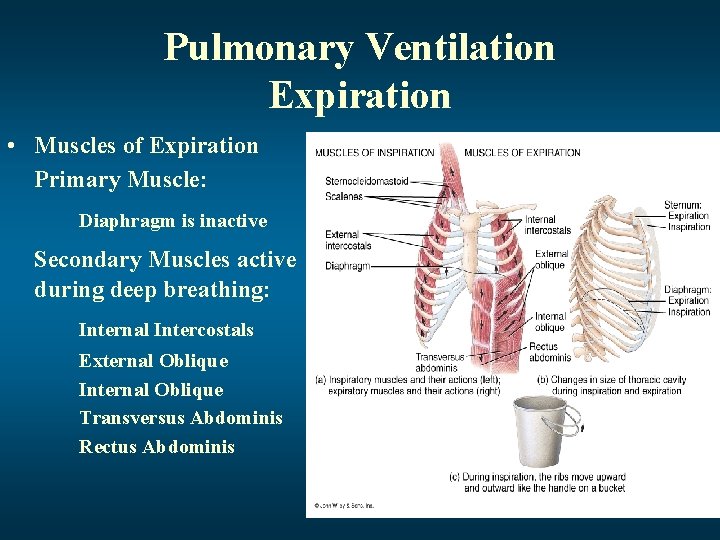
Pulmonary Ventilation Expiration • Muscles of Expiration Primary Muscle: Diaphragm is inactive Secondary Muscles active during deep breathing: Internal Intercostals External Oblique Internal Oblique Transversus Abdominis Rectus Abdominis
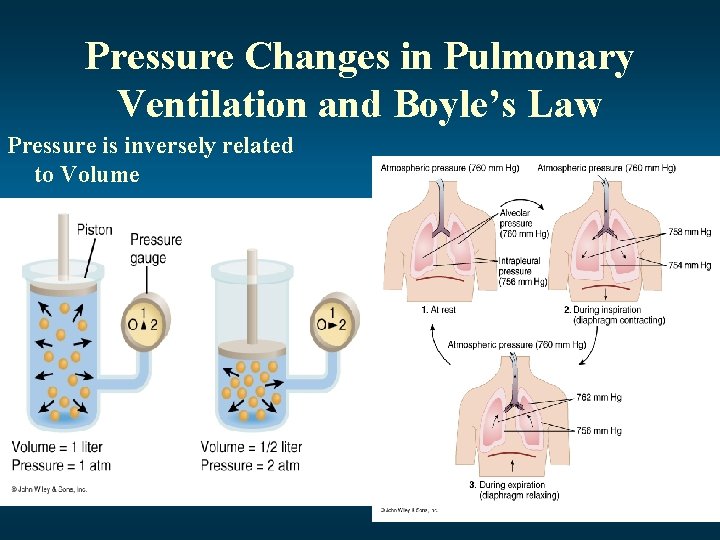
Pressure Changes in Pulmonary Ventilation and Boyle’s Law Pressure is inversely related to Volume
Summary of Inspiratory and Expiratory Events
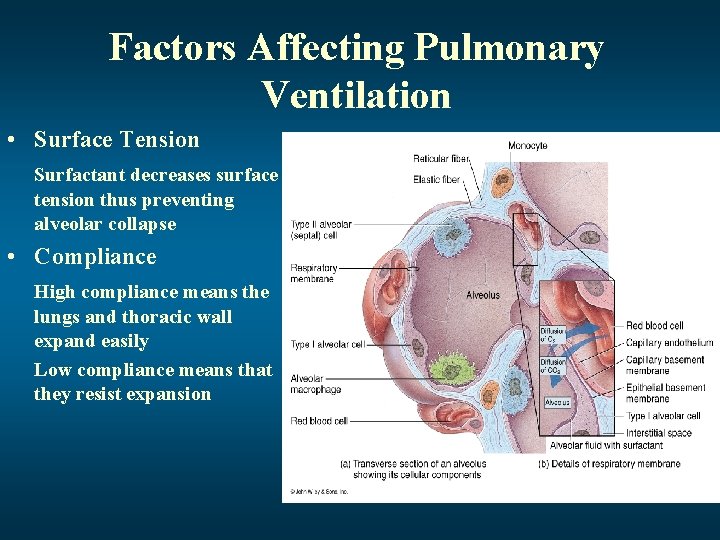
Factors Affecting Pulmonary Ventilation • Surface Tension Surfactant decreases surface tension thus preventing alveolar collapse • Compliance High compliance means the lungs and thoracic wall expand easily Low compliance means that they resist expansion
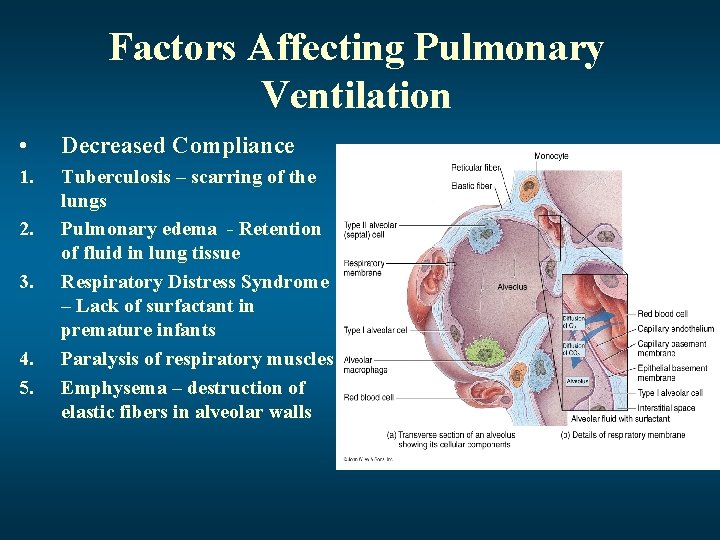
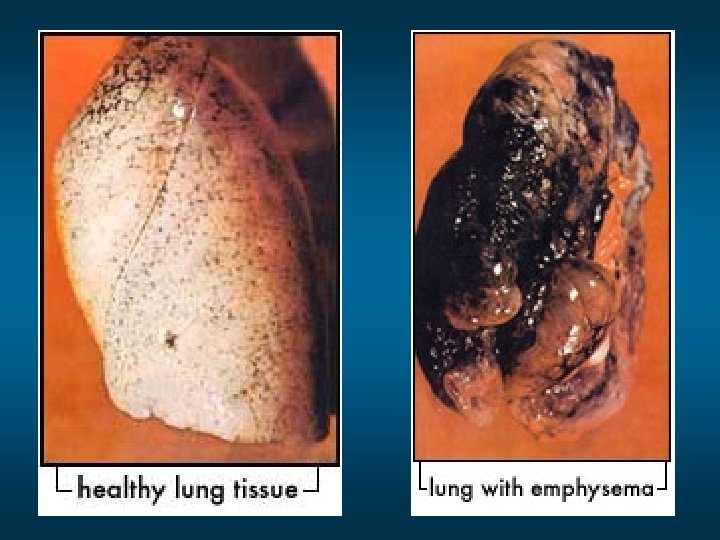
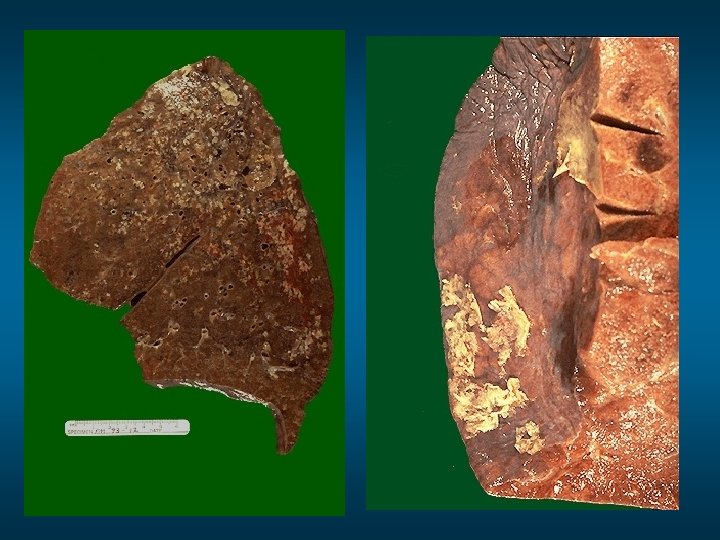
Factors Affecting Pulmonary Ventilation • Decreased Compliance 1. Tuberculosis – scarring of the lungs Pulmonary edema - Retention of fluid in lung tissue Respiratory Distress Syndrome – Lack of surfactant in premature infants Paralysis of respiratory muscles Emphysema – destruction of elastic fibers in alveolar walls 2. 3. 4. 5.
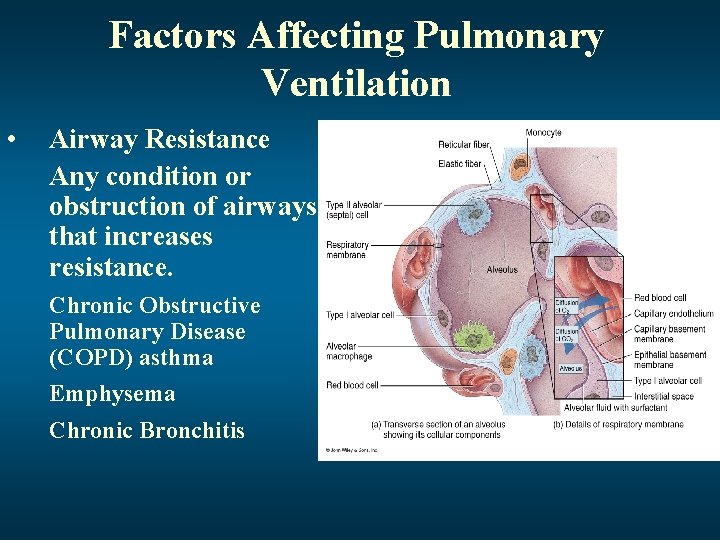
Factors Affecting Pulmonary Ventilation • Airway Resistance Any condition or obstruction of airways that increases resistance. Chronic Obstructive Pulmonary Disease (COPD) asthma Emphysema Chronic Bronchitis
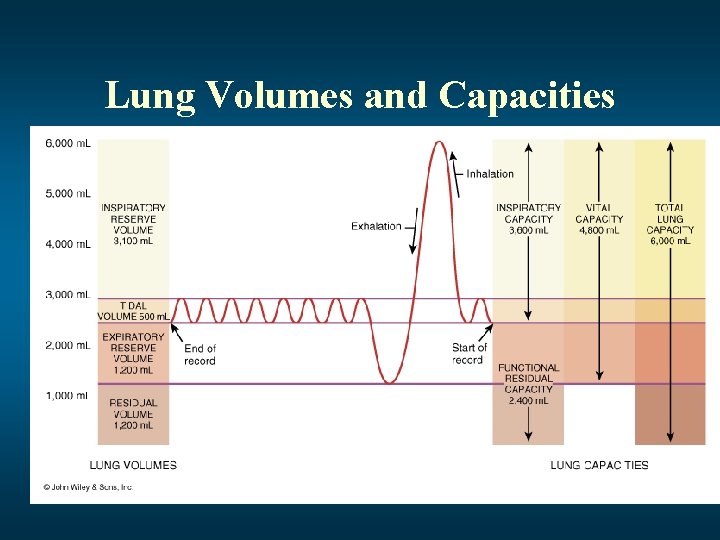
Lung Volumes and Capacities
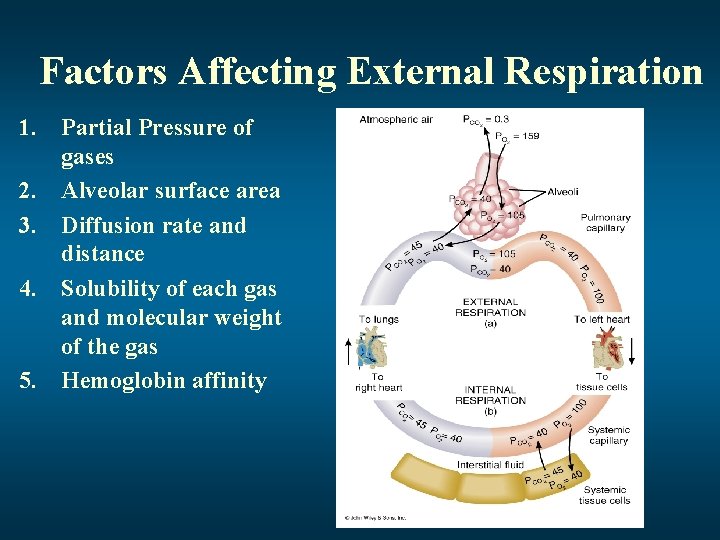
Factors Affecting External Respiration 1. Partial Pressure of gases 2. Alveolar surface area 3. Diffusion rate and distance 4. Solubility of each gas and molecular weight of the gas 5. Hemoglobin affinity
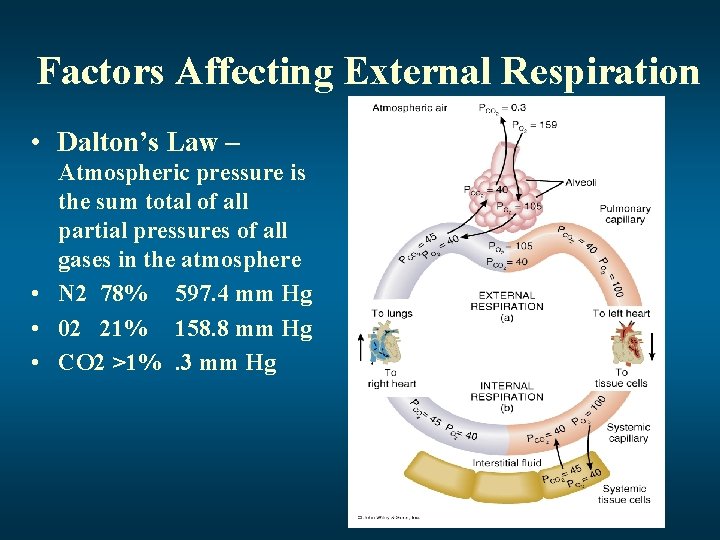
Factors Affecting External Respiration • Dalton’s Law – Atmospheric pressure is the sum total of all partial pressures of all gases in the atmosphere • N 2 78% 597. 4 mm Hg • 02 21% 158. 8 mm Hg • CO 2 >1%. 3 mm Hg
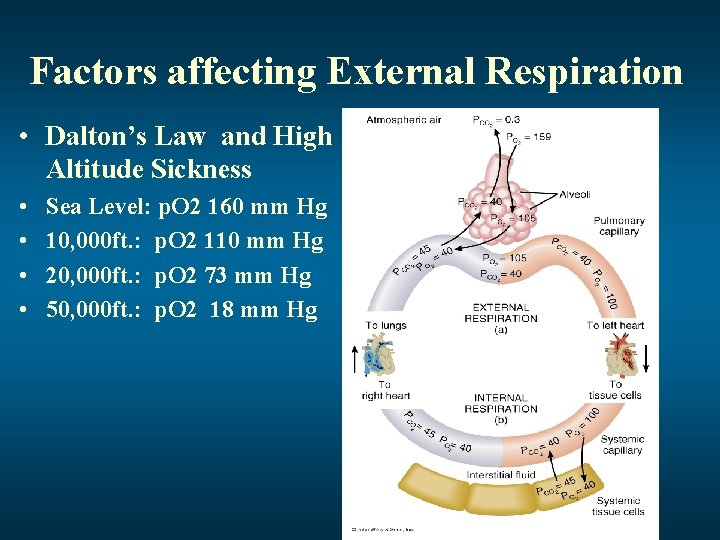
Factors affecting External Respiration • Dalton’s Law and High Altitude Sickness • • Sea Level: p. O 2 160 mm Hg 10, 000 ft. : p. O 2 110 mm Hg 20, 000 ft. : p. O 2 73 mm Hg 50, 000 ft. : p. O 2 18 mm Hg
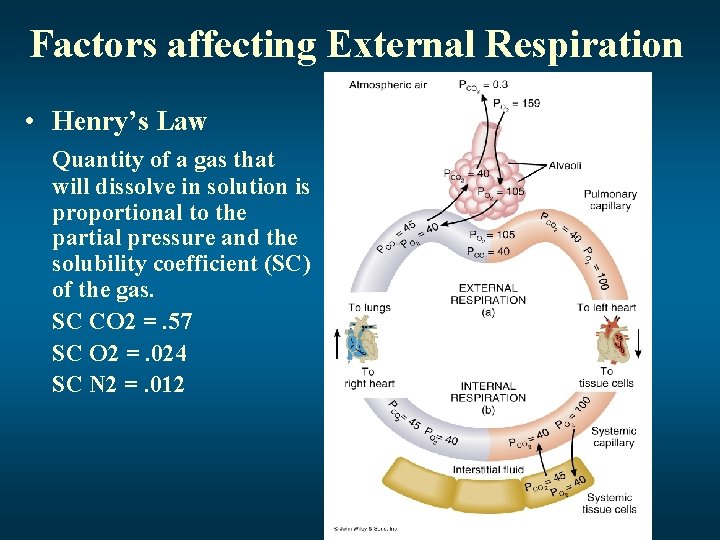
Factors affecting External Respiration • Henry’s Law Quantity of a gas that will dissolve in solution is proportional to the partial pressure and the solubility coefficient (SC) of the gas. SC CO 2 =. 57 SC O 2 =. 024 SC N 2 =. 012
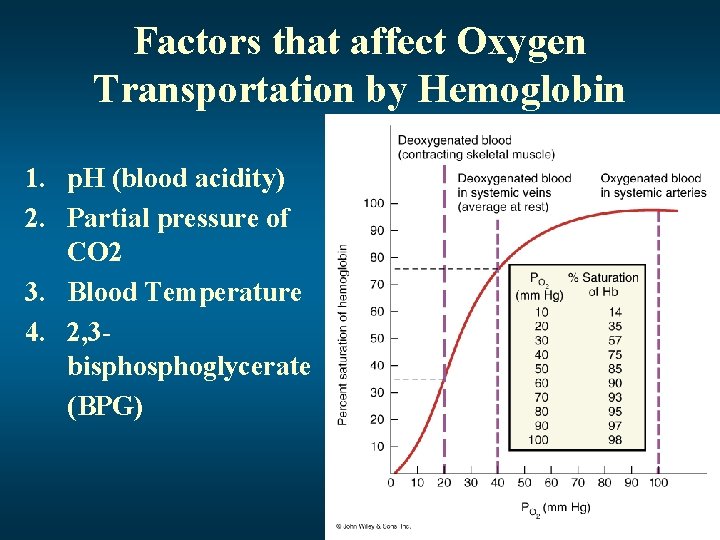
Factors that affect Oxygen Transportation by Hemoglobin 1. p. H (blood acidity) 2. Partial pressure of CO 2 3. Blood Temperature 4. 2, 3 bisphoglycerate (BPG)
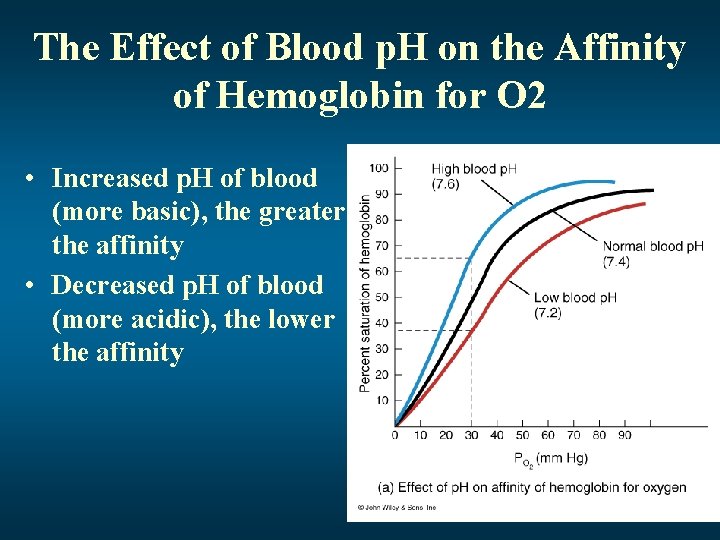
The Effect of Blood p. H on the Affinity of Hemoglobin for O 2 • Increased p. H of blood (more basic), the greater the affinity • Decreased p. H of blood (more acidic), the lower the affinity
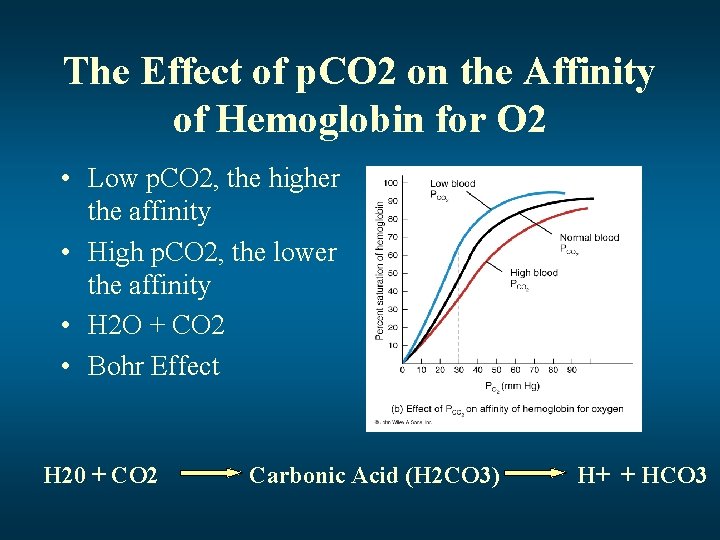
The Effect of p. CO 2 on the Affinity of Hemoglobin for O 2 • Low p. CO 2, the higher the affinity • High p. CO 2, the lower the affinity • H 2 O + CO 2 • Bohr Effect H 20 + CO 2 Carbonic Acid (H 2 CO 3) H+ + HCO 3
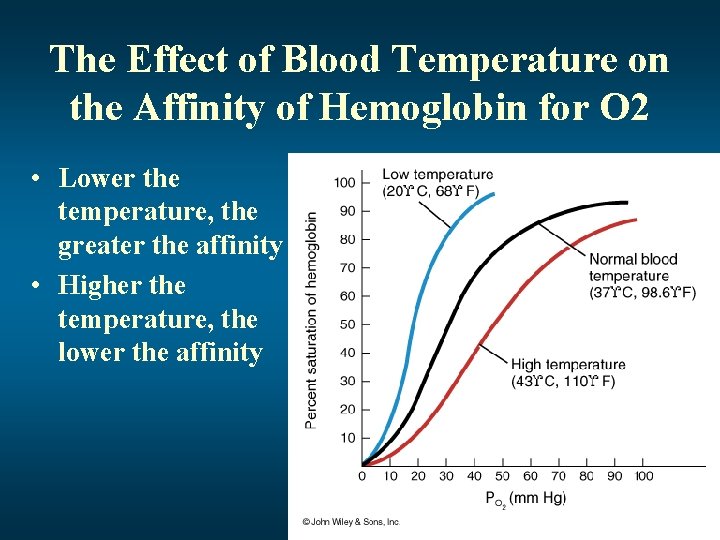
The Effect of Blood Temperature on the Affinity of Hemoglobin for O 2 • Lower the temperature, the greater the affinity • Higher the temperature, the lower the affinity
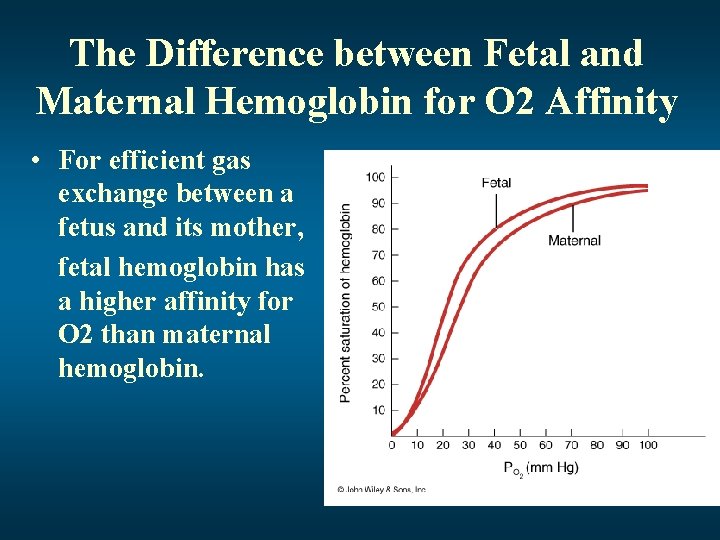
The Difference between Fetal and Maternal Hemoglobin for O 2 Affinity • For efficient gas exchange between a fetus and its mother, fetal hemoglobin has a higher affinity for O 2 than maternal hemoglobin.
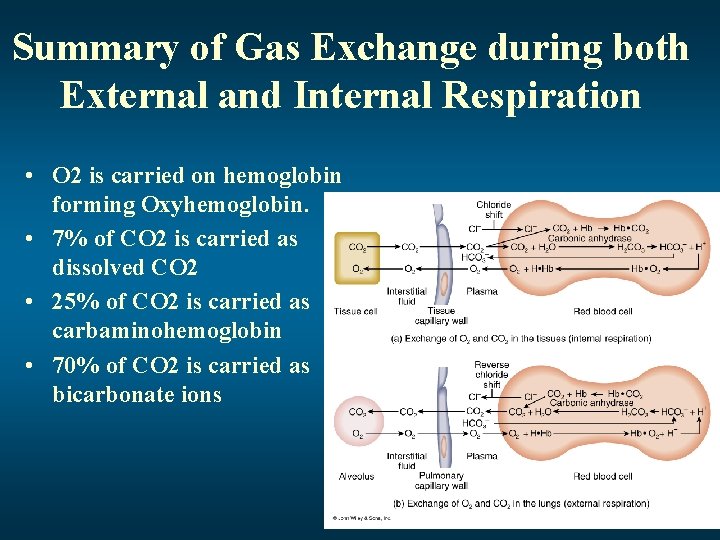
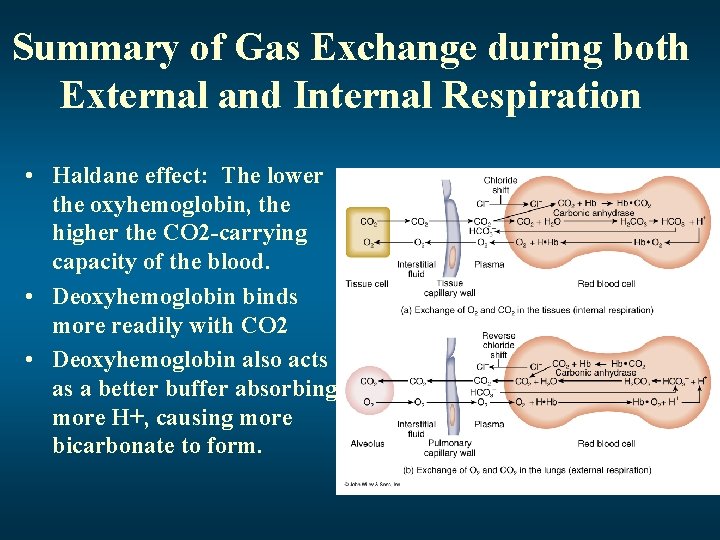
Summary of Gas Exchange during both External and Internal Respiration • O 2 is carried on hemoglobin forming Oxyhemoglobin. • 7% of CO 2 is carried as dissolved CO 2 • 25% of CO 2 is carried as carbaminohemoglobin • 70% of CO 2 is carried as bicarbonate ions
Summary of Gas Exchange during both External and Internal Respiration • Haldane effect: The lower the oxyhemoglobin, the higher the CO 2 -carrying capacity of the blood. • Deoxyhemoglobin binds more readily with CO 2 • Deoxyhemoglobin also acts as a better buffer absorbing more H+, causing more bicarbonate to form.
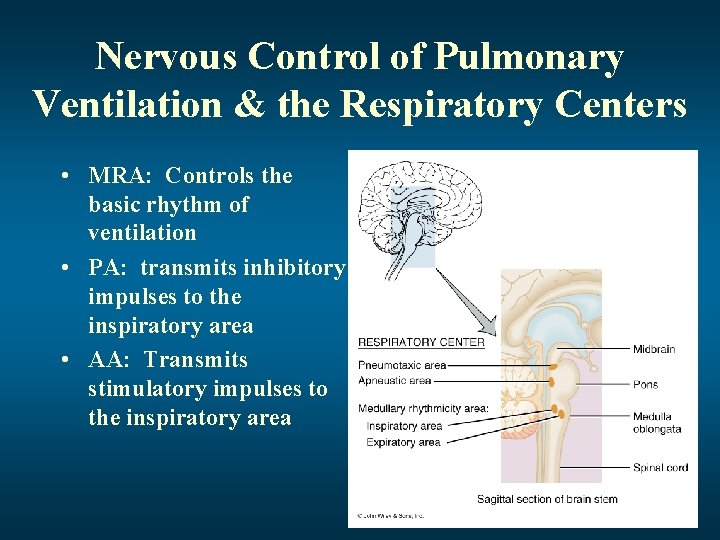
Nervous Control of Pulmonary Ventilation & the Respiratory Centers • MRA: Controls the basic rhythm of ventilation • PA: transmits inhibitory impulses to the inspiratory area • AA: Transmits stimulatory impulses to the inspiratory area
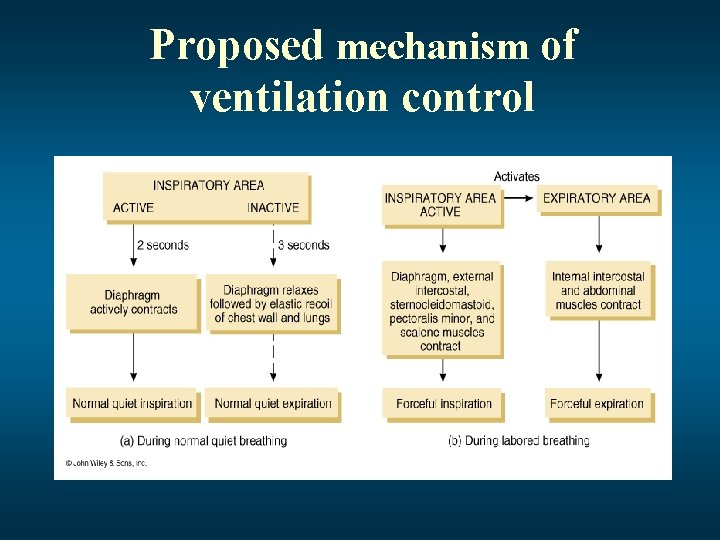
Proposed mechanism of ventilation control
Chemical Regulation of Respiration • Aortic Body: Cluster of chemoreceptors located in the wall of the aortic arch that respond to H+ • Carotid Bodies: Cluster of chemoreceptors located in the walls of the L & R Carotid arteries that respond to H+ • Central chemoreceptors: located in the Medulla Oblongata also respond to H+
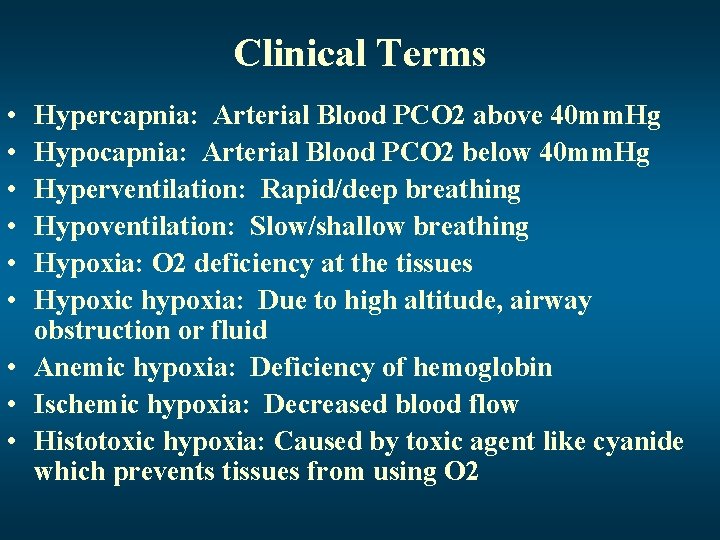
Clinical Terms • • • Hypercapnia: Arterial Blood PCO 2 above 40 mm. Hg Hypocapnia: Arterial Blood PCO 2 below 40 mm. Hg Hyperventilation: Rapid/deep breathing Hypoventilation: Slow/shallow breathing Hypoxia: O 2 deficiency at the tissues Hypoxic hypoxia: Due to high altitude, airway obstruction or fluid • Anemic hypoxia: Deficiency of hemoglobin • Ischemic hypoxia: Decreased blood flow • Histotoxic hypoxia: Caused by toxic agent like cyanide which prevents tissues from using O 2