
Process Safety Management of Highly Hazardous Chemicals 29


- Slides: 24
Process Safety Management of Highly Hazardous Chemicals 29 CFR 1910. 119 (PSM) BLR’s Safety Training Presentations 1
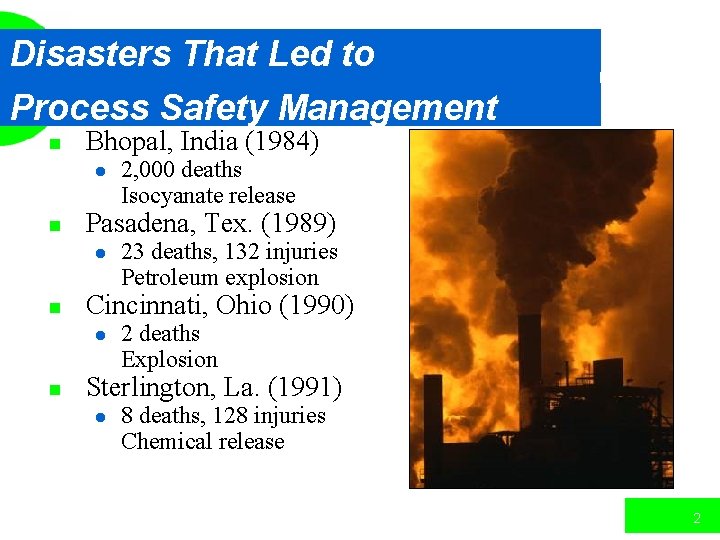
Disasters That Led to Process Safety Management n Bhopal, India (1984) l n Pasadena, Tex. (1989) l n 23 deaths, 132 injuries Petroleum explosion Cincinnati, Ohio (1990) l n 2, 000 deaths Isocyanate release 2 deaths Explosion Sterlington, La. (1991) l 8 deaths, 128 injuries Chemical release 2
Clean Air Act Amendments— 1990 n n Required secretary of labor to promulgate a PSM standard must include a list of highly hazardous chemicals Highly hazardous chemicals list must include: toxics, flammables, highly reactive and explosive materials Required EPA to establish RMP standard 3
Minimum Program Requirements n Written safety information n Workplace hazard assessment n Consult with employees n Establish a system to respond to findings n Periodic review of assessments and response n Written operating procedures n Safety training and operating information 4
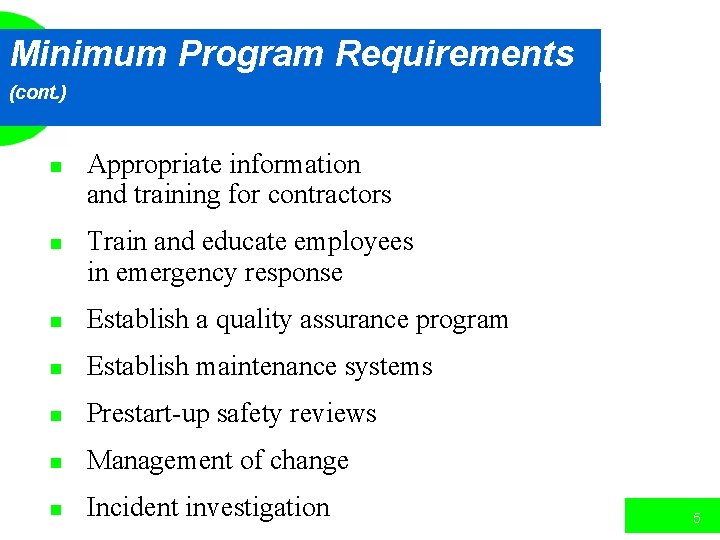
Minimum Program Requirements (cont. ) n n Appropriate information and training for contractors Train and educate employees in emergency response n Establish a quality assurance program n Establish maintenance systems n Prestart-up safety reviews n Management of change n Incident investigation 5
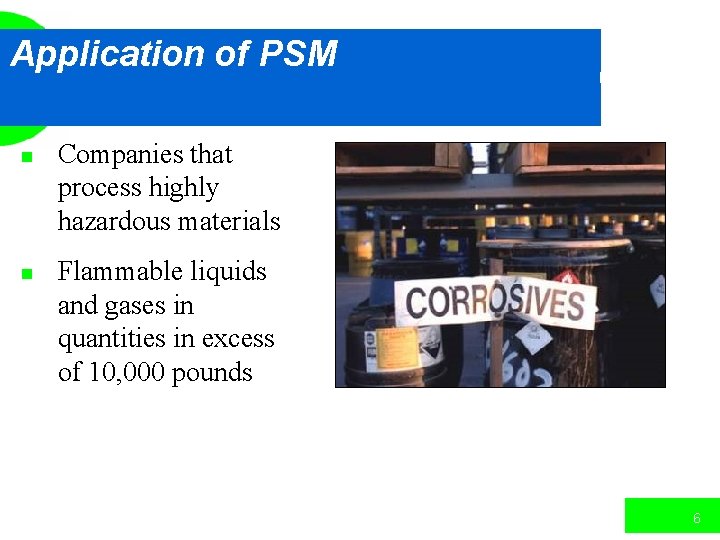
Application of PSM n n Companies that process highly hazardous materials Flammable liquids and gases in quantities in excess of 10, 000 pounds 6
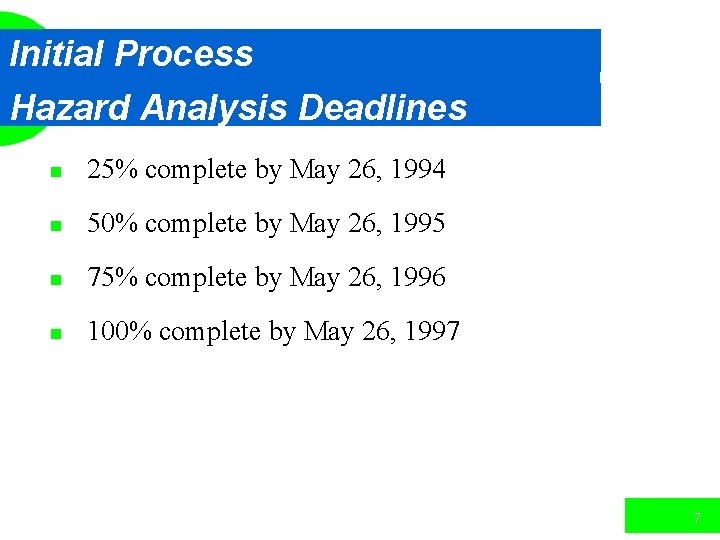
Initial Process Hazard Analysis Deadlines n 25% complete by May 26, 1994 n 50% complete by May 26, 1995 n 75% complete by May 26, 1996 n 100% complete by May 26, 1997 7
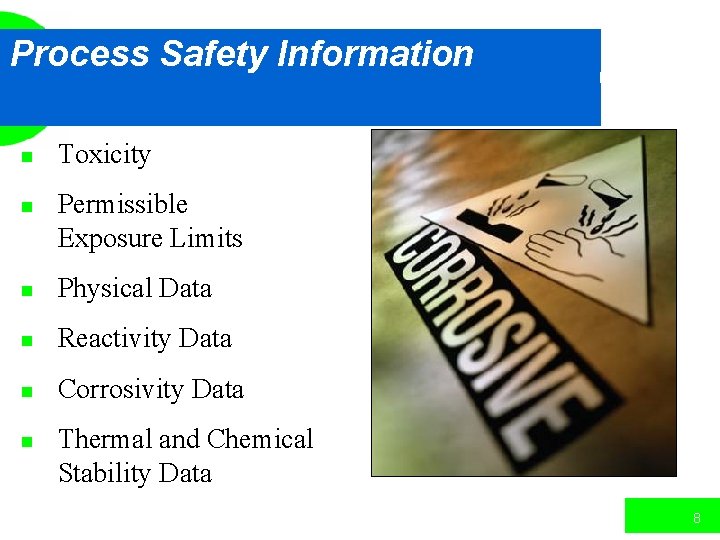
Process Safety Information n n Toxicity Permissible Exposure Limits n Physical Data n Reactivity Data n Corrosivity Data n Thermal and Chemical Stability Data 8
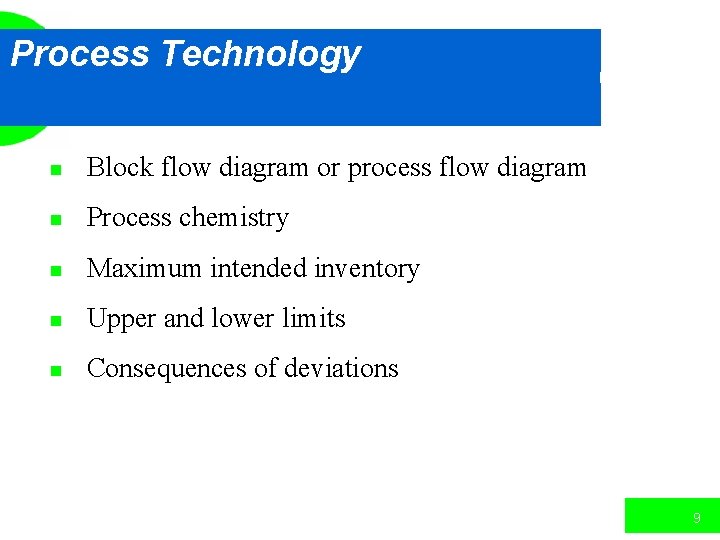
Process Technology n Block flow diagram or process flow diagram n Process chemistry n Maximum intended inventory n Upper and lower limits n Consequences of deviations 9
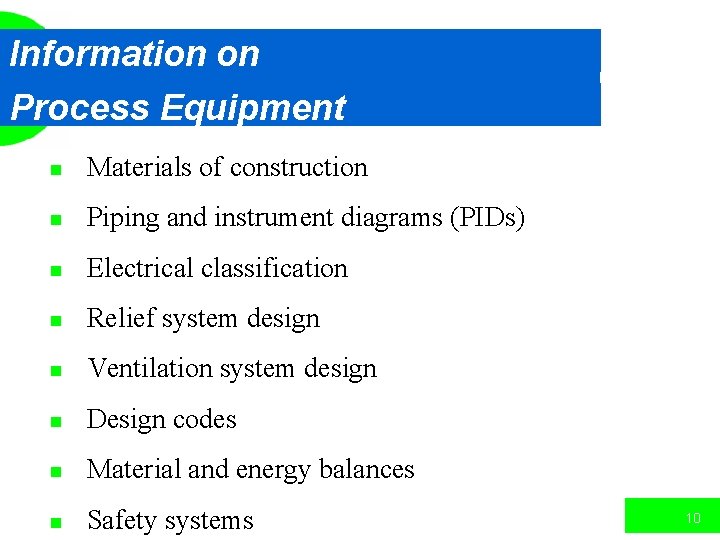
Information on Process Equipment n Materials of construction n Piping and instrument diagrams (PIDs) n Electrical classification n Relief system design n Ventilation system design n Design codes n Material and energy balances n Safety systems 10
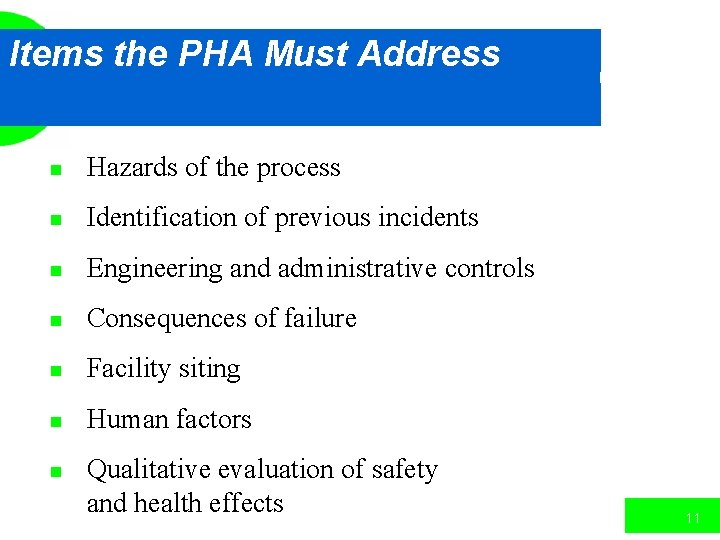
Items the PHA Must Address n Hazards of the process n Identification of previous incidents n Engineering and administrative controls n Consequences of failure n Facility siting n Human factors n Qualitative evaluation of safety and health effects 11
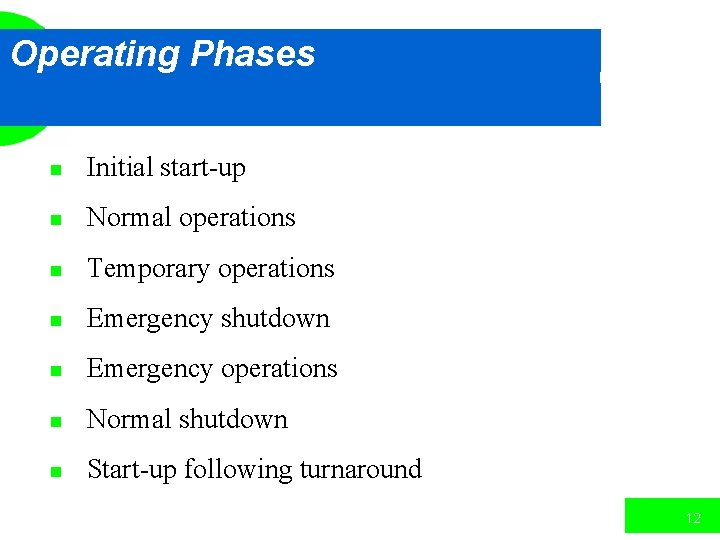
Operating Phases n Initial start-up n Normal operations n Temporary operations n Emergency shutdown n Emergency operations n Normal shutdown n Start-up following turnaround 12
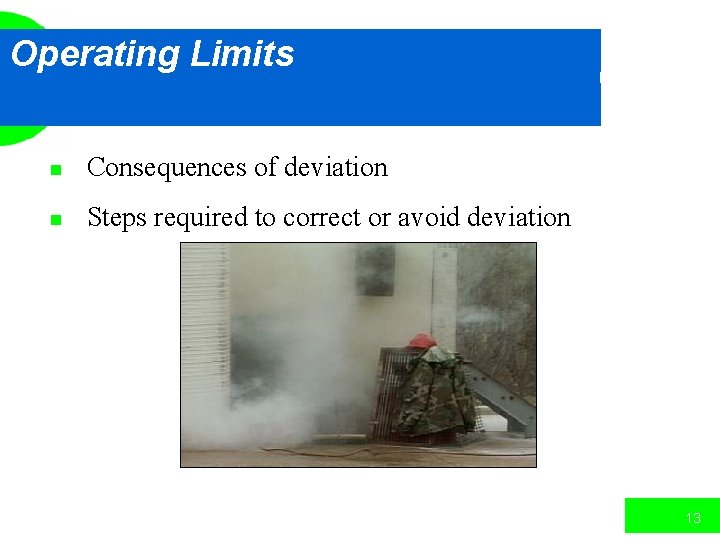
Operating Limits n Consequences of deviation n Steps required to correct or avoid deviation 13
Safety and Health Considerations n Properties and hazards of the chemicals n Precautions to prevent exposures n Control measures to be taken n Quality control for raw materials/control of inventory n Special or unique hazards n Safety systems and their functions 14
Management of Change n Technical basis for the proposed change n Impact of the change on safety and health n Modifications of the operating procedures n Necessary time period for the change n Authorization requirements for the change 15
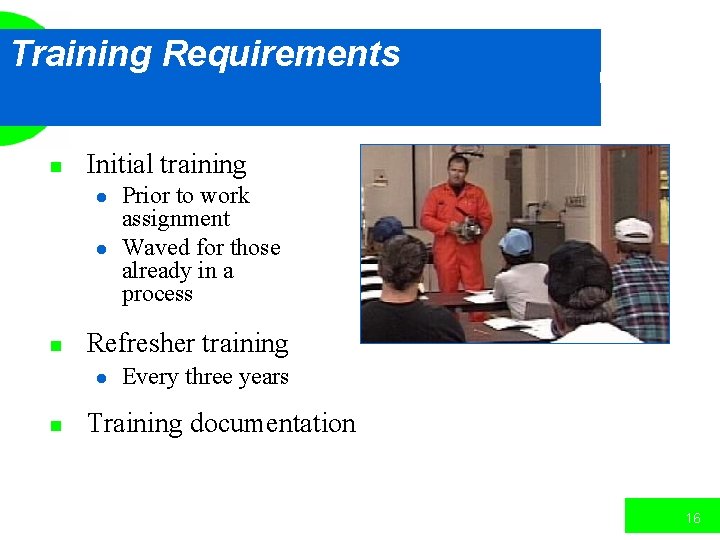
Training Requirements n Initial training l l n Refresher training l n Prior to work assignment Waved for those already in a process Every three years Training documentation 16
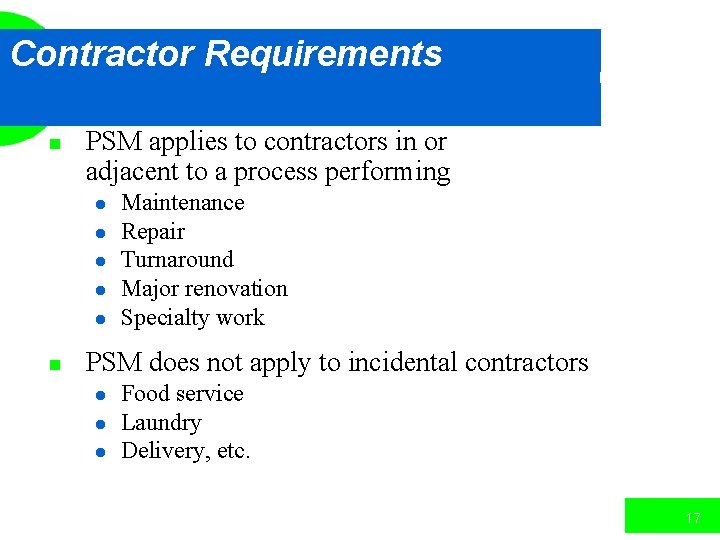
Contractor Requirements n PSM applies to contractors in or adjacent to a process performing l l l n Maintenance Repair Turnaround Major renovation Specialty work PSM does not apply to incidental contractors l l l Food service Laundry Delivery, etc. 17
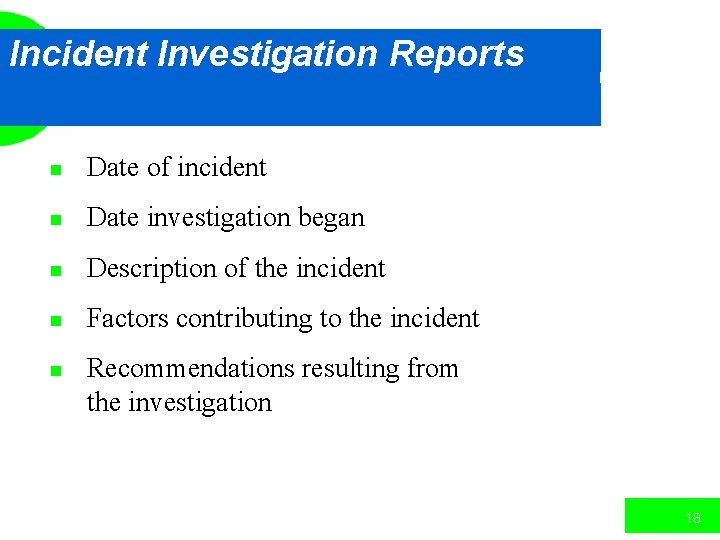
Incident Investigation Reports n Date of incident n Date investigation began n Description of the incident n Factors contributing to the incident n Recommendations resulting from the investigation 18
Quiz Review 19
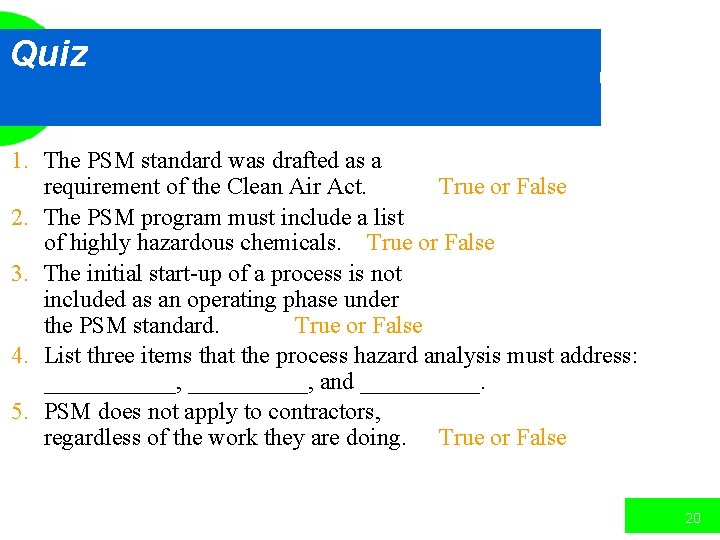
Quiz 1. The PSM standard was drafted as a requirement of the Clean Air Act. True or False 2. The PSM program must include a list of highly hazardous chemicals. True or False 3. The initial start-up of a process is not included as an operating phase under the PSM standard. True or False 4. List three items that the process hazard analysis must address: ______, and _____. 5. PSM does not apply to contractors, regardless of the work they are doing. True or False 20
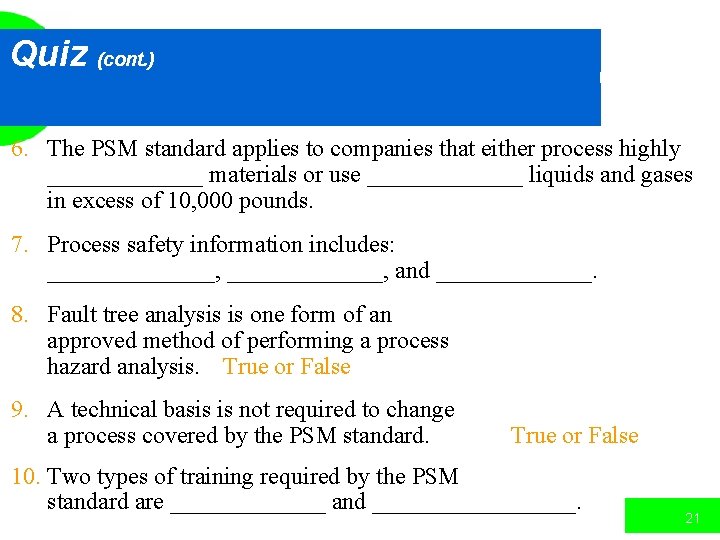
Quiz (cont. ) 6. The PSM standard applies to companies that either process highly _______ materials or use _______ liquids and gases in excess of 10, 000 pounds. 7. Process safety information includes: _______, and _______. 8. Fault tree analysis is one form of an approved method of performing a process hazard analysis. True or False 9. A technical basis is not required to change a process covered by the PSM standard. True or False 10. Two types of training required by the PSM standard are _______ and _________. 21
Quiz Answers 1. True. The PSM standard was drafted as a result of the Clean Air Act Amendments of 1990. 2. True. 3. False. The initial start-up of a process is an operating phase that must be included. 4. The items that a process hazard analysis must address include hazards of the process, identification of previous accidents, engineering and administrative controls, consequences of failure, facility siting, human factors, and qualitative evaluation of S and H effects. 5. False. PSM does apply to contractors who work on or adjacent to a process. 22
Quiz Answers 1. True. The PSM standard was drafted as a result of the Clean Air Act Amendments of 1990. 2. True. 3. False. The initial start-up of a process is an operating phase that must be included. 4. The items that a process hazard analysis must address include hazards of the process, identification of previous accidents, engineering and administrative controls, consequences of failure, facility siting, human factors, and qualitative evaluation of S and H effects. 5. False. PSM does apply to contractors who work on or adjacent to a process. 23
Training 24