
Process Safety At the Alaska LNG Liquefaction Facility
- Slides: 50
Process Safety At the Alaska LNG Liquefaction Facility and Marine Terminal April 12, 2018 Leslie “Fritz” Krusen AKLNG-4030 -PPP-PRS-DOC-00001
Agenda • • • LNG Site Overview Hazard Analysis Report Flares Noise Seismic Design Emergency Response Plan 2
Agenda • • • LNG Site Overview Hazard Analysis Report Flares Noise Seismic Design Emergency Response Plan 3
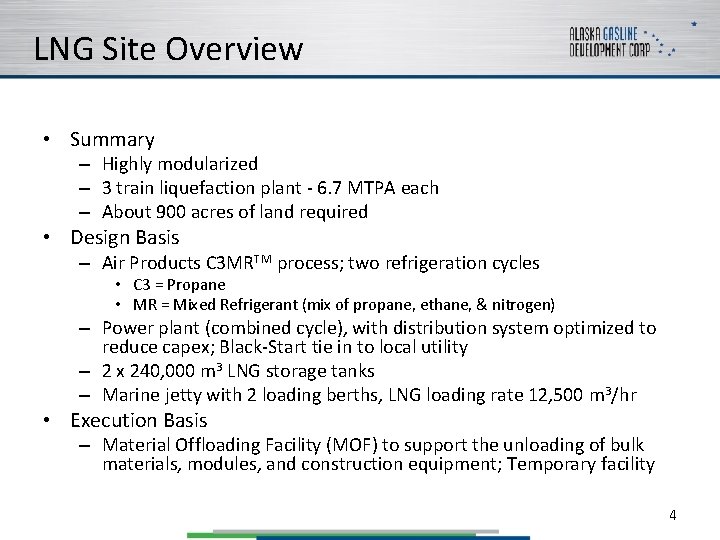
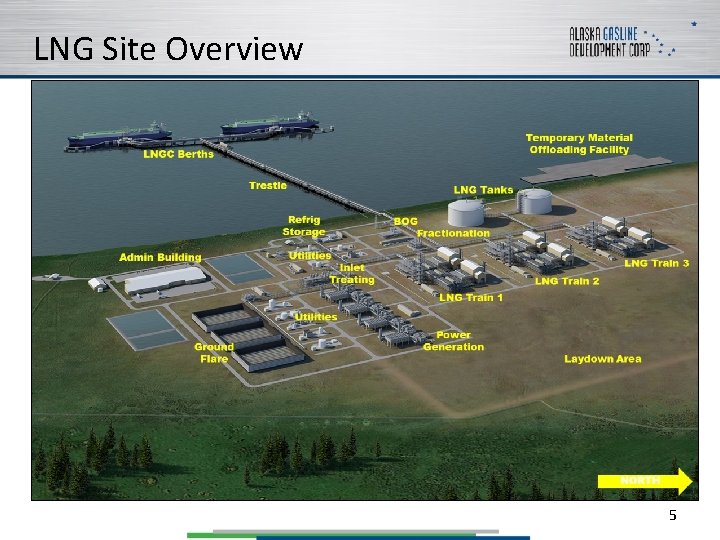
LNG Site Overview • Summary – Highly modularized – 3 train liquefaction plant - 6. 7 MTPA each – About 900 acres of land required • Design Basis – Air Products C 3 MRTM process; two refrigeration cycles • C 3 = Propane • MR = Mixed Refrigerant (mix of propane, ethane, & nitrogen) – Power plant (combined cycle), with distribution system optimized to reduce capex; Black-Start tie in to local utility – 2 x 240, 000 m 3 LNG storage tanks – Marine jetty with 2 loading berths, LNG loading rate 12, 500 m 3/hr • Execution Basis – Material Offloading Facility (MOF) to support the unloading of bulk materials, modules, and construction equipment; Temporary facility 4
LNG Site Overview 5
Agenda • • • LNG Site Overview Hazard Analysis Report Flares Noise Seismic Design Emergency Response Plan 6
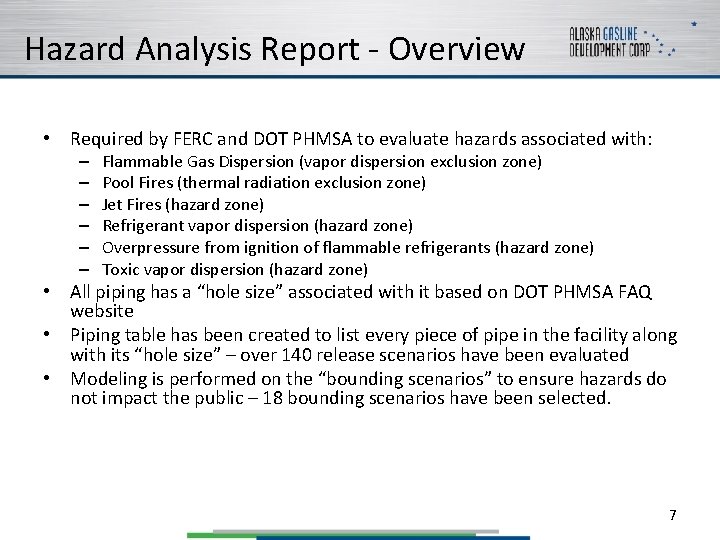
Hazard Analysis Report - Overview • Required by FERC and DOT PHMSA to evaluate hazards associated with: – – – Flammable Gas Dispersion (vapor dispersion exclusion zone) Pool Fires (thermal radiation exclusion zone) Jet Fires (hazard zone) Refrigerant vapor dispersion (hazard zone) Overpressure from ignition of flammable refrigerants (hazard zone) Toxic vapor dispersion (hazard zone) • All piping has a “hole size” associated with it based on DOT PHMSA FAQ website • Piping table has been created to list every piece of pipe in the facility along with its “hole size” – over 140 release scenarios have been evaluated • Modeling is performed on the “bounding scenarios” to ensure hazards do not impact the public – 18 bounding scenarios have been selected. 7
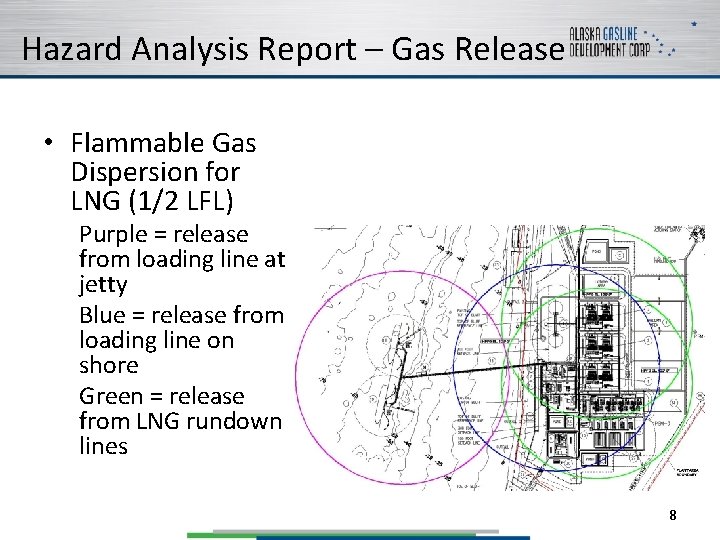
Hazard Analysis Report – Gas Release • Flammable Gas Dispersion for LNG (1/2 LFL) Purple = release from loading line at jetty Blue = release from loading line on shore Green = release from LNG rundown lines 8
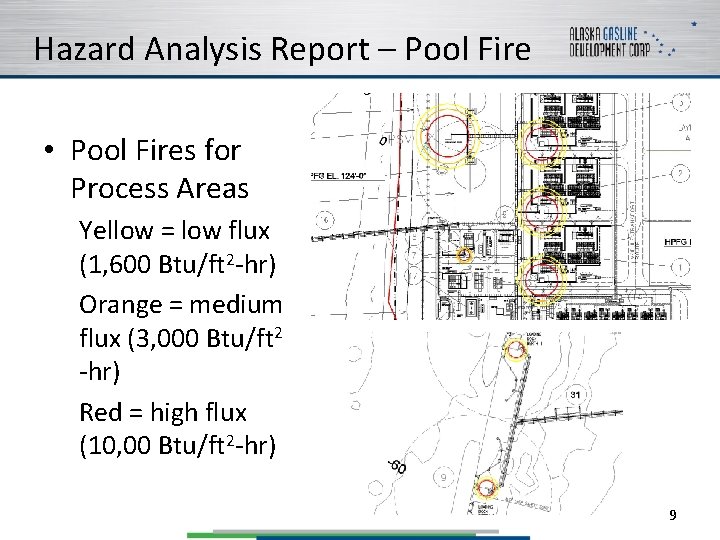
Hazard Analysis Report – Pool Fire • Pool Fires for Process Areas Yellow = low flux (1, 600 Btu/ft 2 -hr) Orange = medium flux (3, 000 Btu/ft 2 -hr) Red = high flux (10, 00 Btu/ft 2 -hr) 9
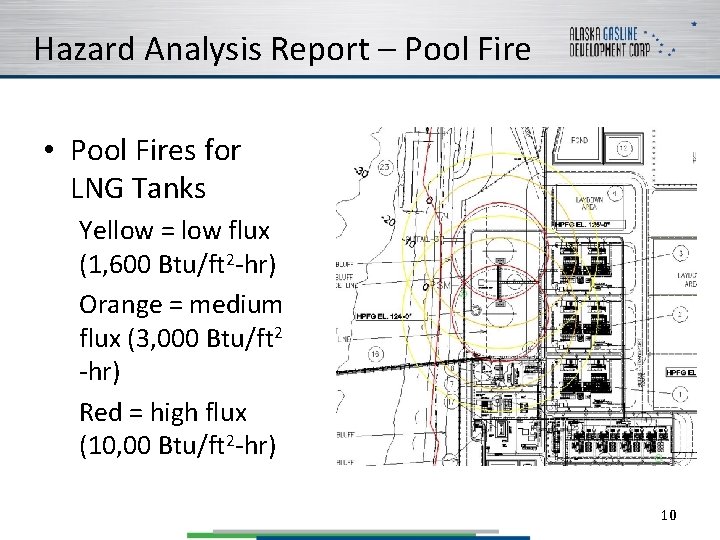
Hazard Analysis Report – Pool Fire • Pool Fires for LNG Tanks Yellow = low flux (1, 600 Btu/ft 2 -hr) Orange = medium flux (3, 000 Btu/ft 2 -hr) Red = high flux (10, 00 Btu/ft 2 -hr) 10
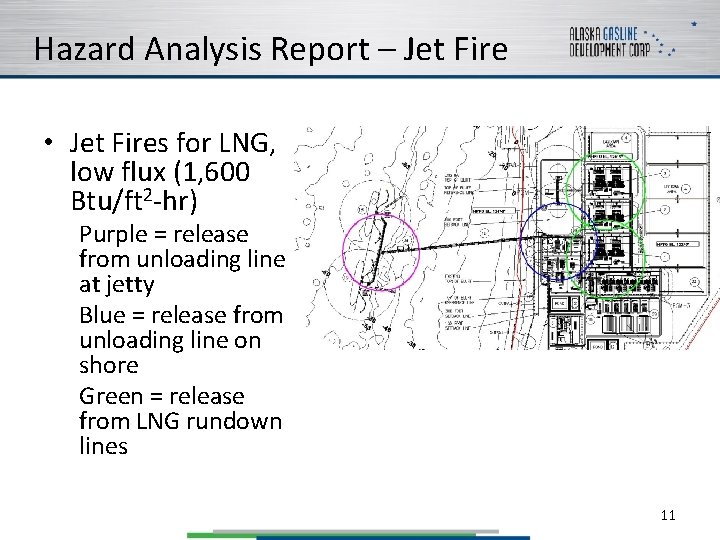
Hazard Analysis Report – Jet Fire • Jet Fires for LNG, low flux (1, 600 Btu/ft 2 -hr) Purple = release from unloading line at jetty Blue = release from unloading line on shore Green = release from LNG rundown lines 11
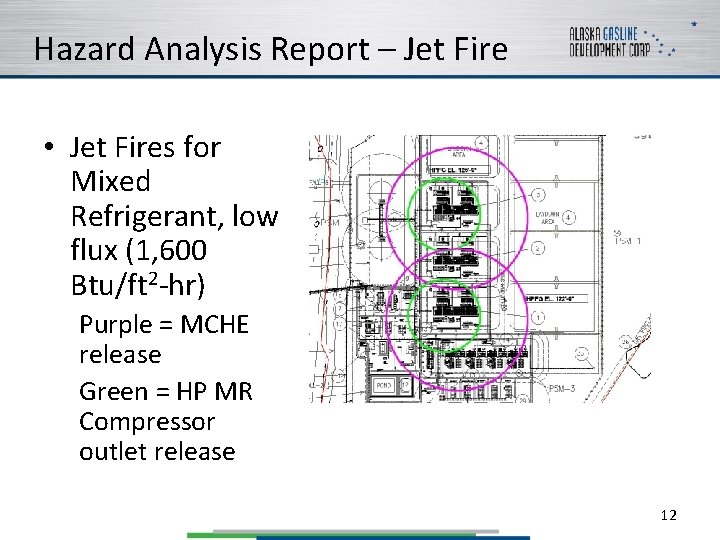
Hazard Analysis Report – Jet Fire • Jet Fires for Mixed Refrigerant, low flux (1, 600 Btu/ft 2 -hr) Purple = MCHE release Green = HP MR Compressor outlet release 12
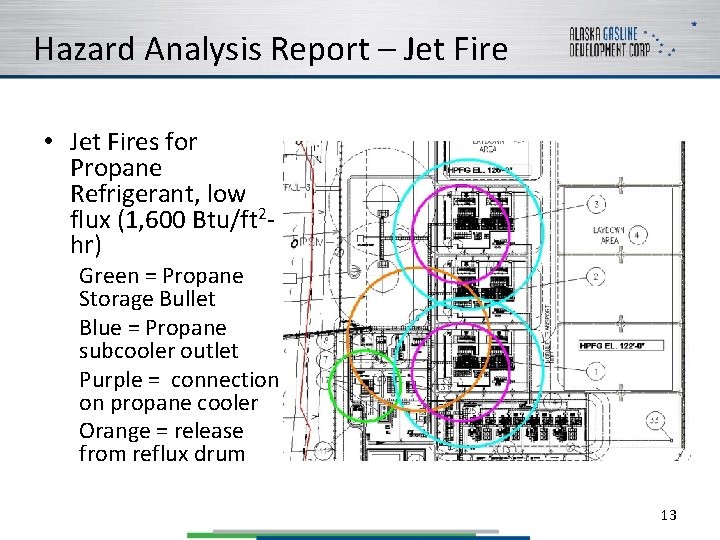
Hazard Analysis Report – Jet Fire • Jet Fires for Propane Refrigerant, low flux (1, 600 Btu/ft 2 hr) Green = Propane Storage Bullet Blue = Propane subcooler outlet Purple = connection on propane cooler Orange = release from reflux drum 13
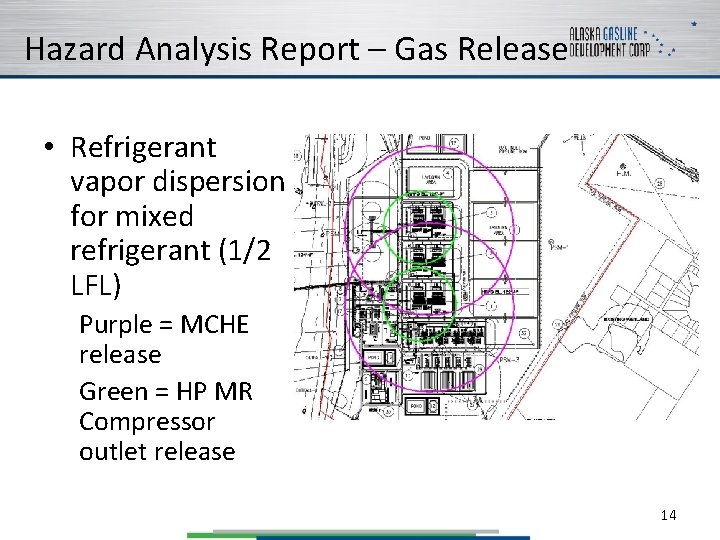
Hazard Analysis Report – Gas Release • Refrigerant vapor dispersion for mixed refrigerant (1/2 LFL) Purple = MCHE release Green = HP MR Compressor outlet release 14
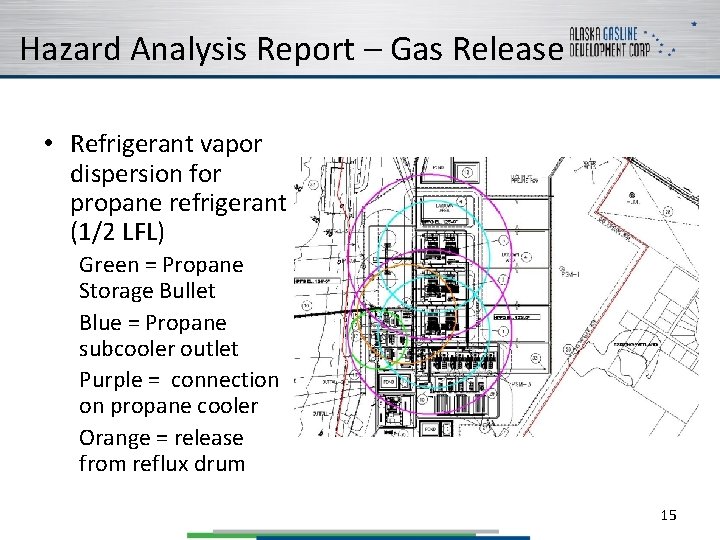
Hazard Analysis Report – Gas Release • Refrigerant vapor dispersion for propane refrigerant (1/2 LFL) Green = Propane Storage Bullet Blue = Propane subcooler outlet Purple = connection on propane cooler Orange = release from reflux drum 15
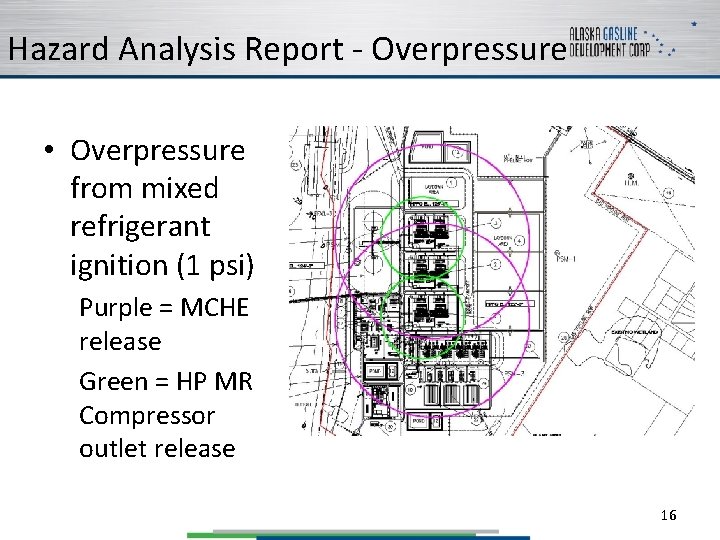
Hazard Analysis Report - Overpressure • Overpressure from mixed refrigerant ignition (1 psi) Purple = MCHE release Green = HP MR Compressor outlet release 16
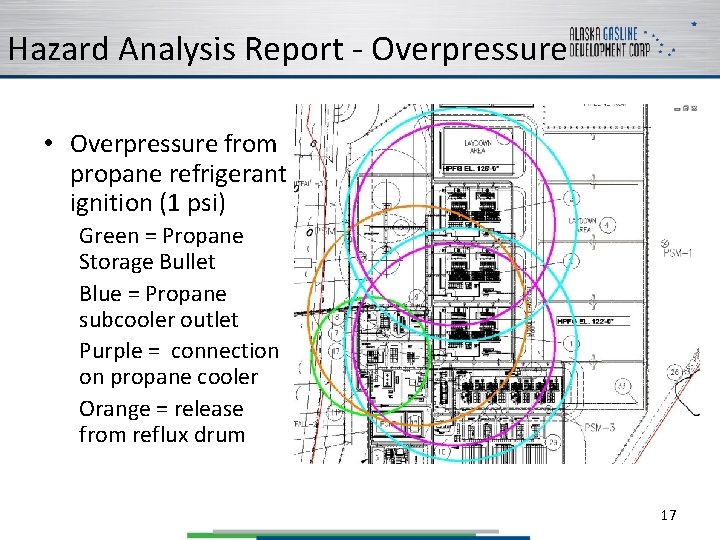
Hazard Analysis Report - Overpressure • Overpressure from propane refrigerant ignition (1 psi) Green = Propane Storage Bullet Blue = Propane subcooler outlet Purple = connection on propane cooler Orange = release from reflux drum 17
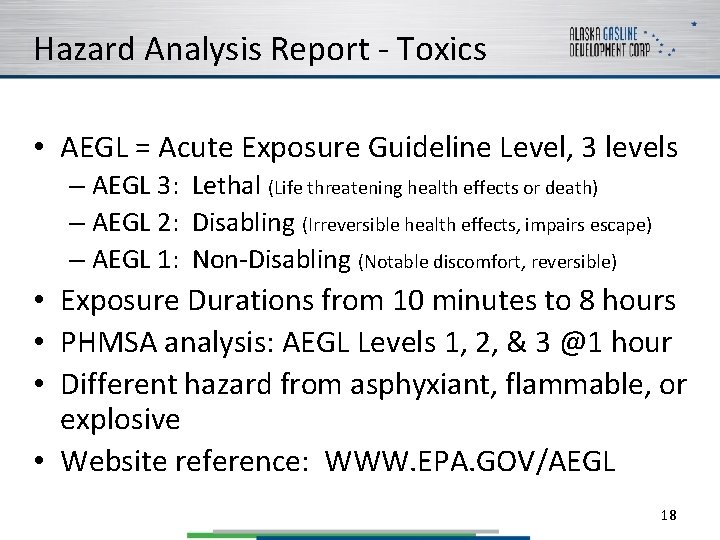
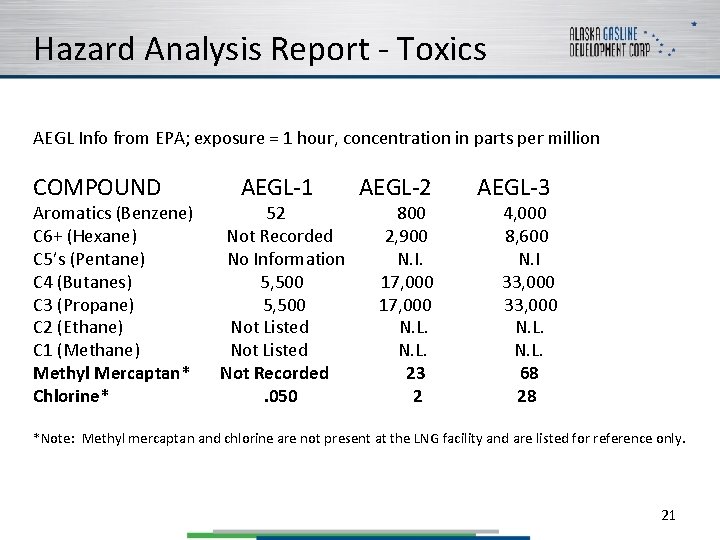
Hazard Analysis Report - Toxics • AEGL = Acute Exposure Guideline Level, 3 levels – AEGL 3: Lethal (Life threatening health effects or death) – AEGL 2: Disabling (Irreversible health effects, impairs escape) – AEGL 1: Non-Disabling (Notable discomfort, reversible) • Exposure Durations from 10 minutes to 8 hours • PHMSA analysis: AEGL Levels 1, 2, & 3 @1 hour • Different hazard from asphyxiant, flammable, or explosive • Website reference: WWW. EPA. GOV/AEGL 18
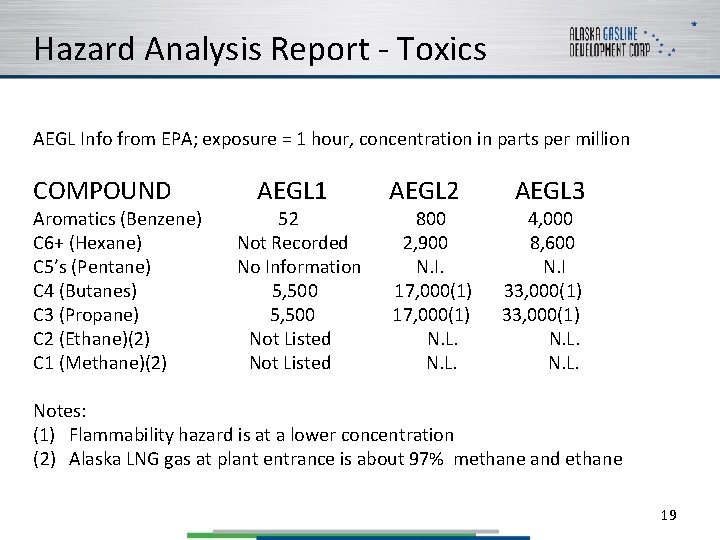
Hazard Analysis Report - Toxics AEGL Info from EPA; exposure = 1 hour, concentration in parts per million COMPOUND Aromatics (Benzene) C 6+ (Hexane) C 5’s (Pentane) C 4 (Butanes) C 3 (Propane) C 2 (Ethane)(2) C 1 (Methane)(2) AEGL 1 52 Not Recorded No Information 5, 500 Not Listed AEGL 2 800 2, 900 N. I. 17, 000(1) N. L. AEGL 3 4, 000 8, 600 N. I 33, 000(1) N. L. Notes: (1) Flammability hazard is at a lower concentration (2) Alaska LNG gas at plant entrance is about 97% methane and ethane 19
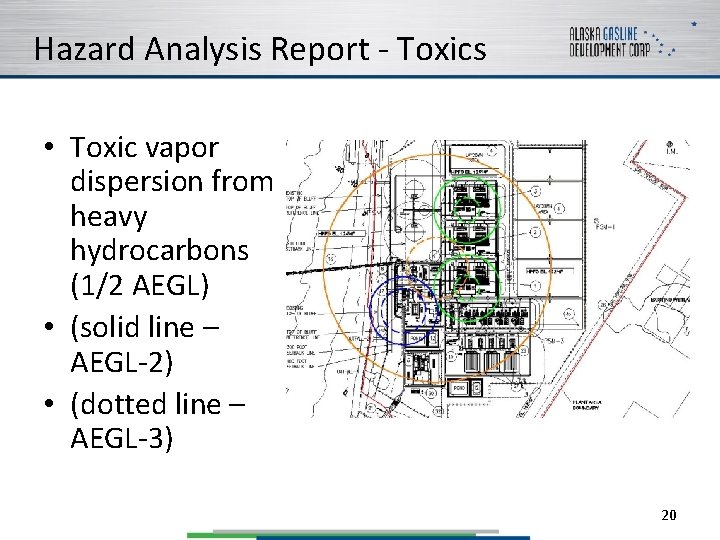
Hazard Analysis Report - Toxics • Toxic vapor dispersion from heavy hydrocarbons (1/2 AEGL) • (solid line – AEGL-2) • (dotted line – AEGL-3) 20
Hazard Analysis Report - Toxics AEGL Info from EPA; exposure = 1 hour, concentration in parts per million COMPOUND Aromatics (Benzene) C 6+ (Hexane) C 5’s (Pentane) C 4 (Butanes) C 3 (Propane) C 2 (Ethane) C 1 (Methane) Methyl Mercaptan* Chlorine* AEGL-1 52 Not Recorded No Information 5, 500 Not Listed Not Recorded. 050 AEGL-2 800 2, 900 N. I. 17, 000 N. L. 23 2 AEGL-3 4, 000 8, 600 N. I 33, 000 N. L. 68 28 *Note: Methyl mercaptan and chlorine are not present at the LNG facility and are listed for reference only. 21
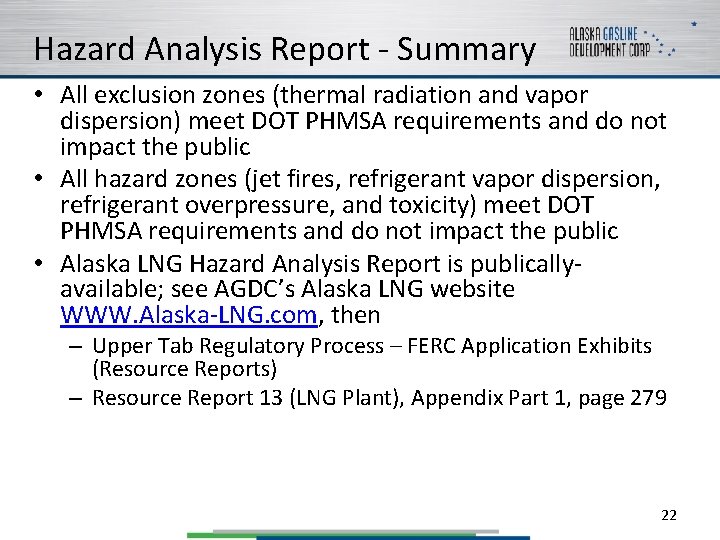
Hazard Analysis Report - Summary • All exclusion zones (thermal radiation and vapor dispersion) meet DOT PHMSA requirements and do not impact the public • All hazard zones (jet fires, refrigerant vapor dispersion, refrigerant overpressure, and toxicity) meet DOT PHMSA requirements and do not impact the public • Alaska LNG Hazard Analysis Report is publicallyavailable; see AGDC’s Alaska LNG website WWW. Alaska-LNG. com, then – Upper Tab Regulatory Process – FERC Application Exhibits (Resource Reports) – Resource Report 13 (LNG Plant), Appendix Part 1, page 279 22
Agenda • • • LNG Site Overview Hazard Analysis Report Flares Noise Seismic Design Emergency Response Plan 23
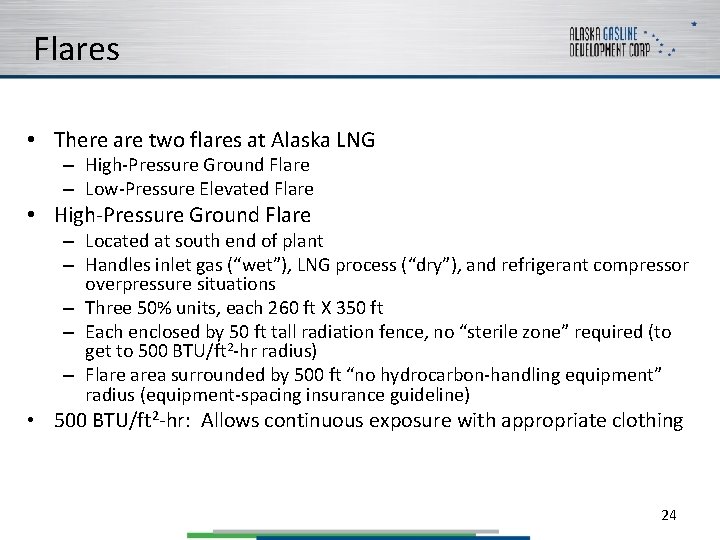
Flares • There are two flares at Alaska LNG – High-Pressure Ground Flare – Low-Pressure Elevated Flare • High-Pressure Ground Flare – Located at south end of plant – Handles inlet gas (“wet”), LNG process (“dry”), and refrigerant compressor overpressure situations – Three 50% units, each 260 ft X 350 ft – Each enclosed by 50 ft tall radiation fence, no “sterile zone” required (to get to 500 BTU/ft 2 -hr radius) – Flare area surrounded by 500 ft “no hydrocarbon-handling equipment” radius (equipment-spacing insurance guideline) • 500 BTU/ft 2 -hr: Allows continuous exposure with appropriate clothing 24
Flares • Low-Pressure Elevated Flare – Located near bluff at middle of plant – Handles LNG Carrier (ship) and LNG tank overpressure situations, plus ship cool-down – One 24” tower, currently 200 ft tall – Tower surrounded by fence with 120 ft radius for “sterile zone” (to get to 500 BTU/ft 2 -hr) – Ship cool-down could occur 4 -5 times per year and could last about 17 hours (depends on ship size) 25
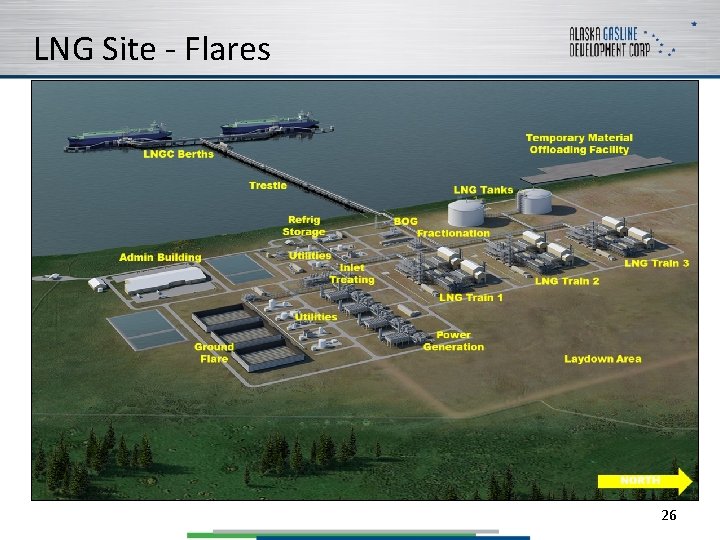
LNG Site - Flares 26
Agenda • • • LNG Site Overview Hazard Analysis Report Flares Noise Seismic Design Emergency Response Plan 27
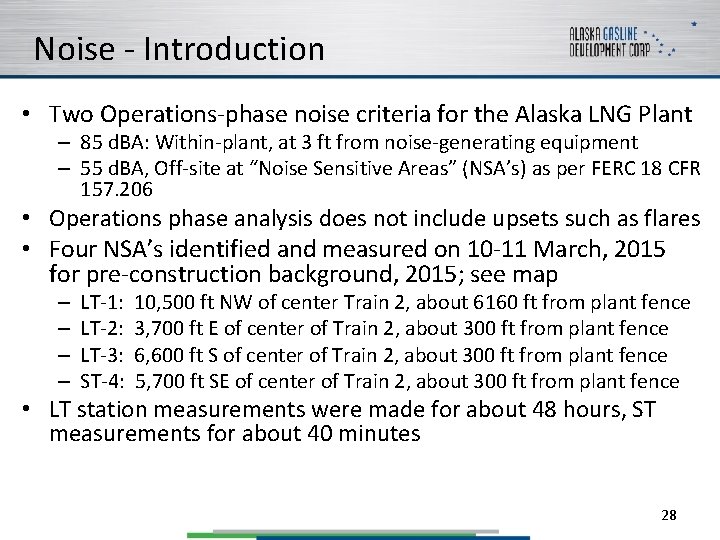
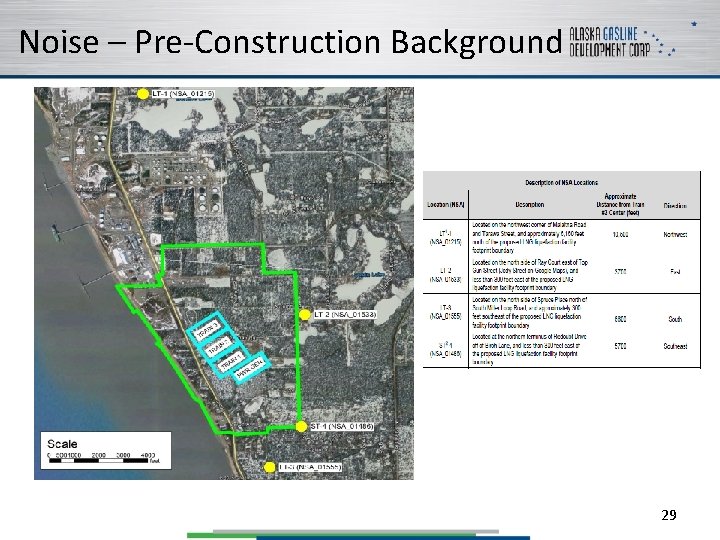
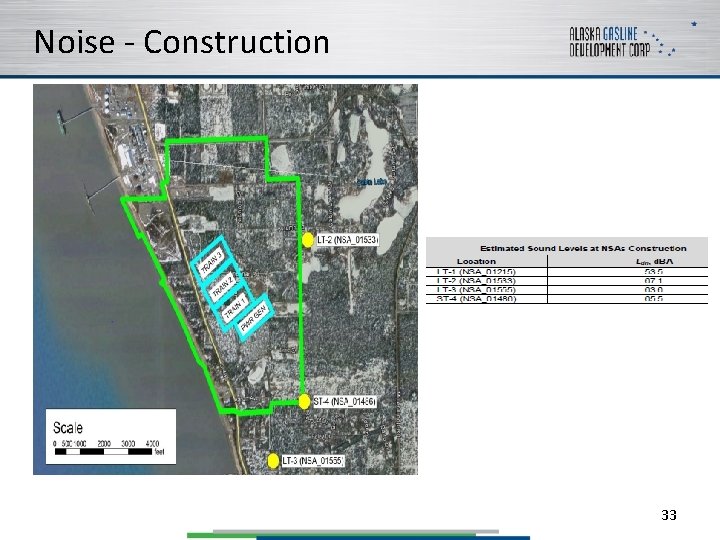
Noise - Introduction • Two Operations-phase noise criteria for the Alaska LNG Plant – 85 d. BA: Within-plant, at 3 ft from noise-generating equipment – 55 d. BA, Off-site at “Noise Sensitive Areas” (NSA’s) as per FERC 18 CFR 157. 206 • Operations phase analysis does not include upsets such as flares • Four NSA’s identified and measured on 10 -11 March, 2015 for pre-construction background, 2015; see map – – LT-1: LT-2: LT-3: ST-4: 10, 500 ft NW of center Train 2, about 6160 ft from plant fence 3, 700 ft E of center of Train 2, about 300 ft from plant fence 6, 600 ft S of center of Train 2, about 300 ft from plant fence 5, 700 ft SE of center of Train 2, about 300 ft from plant fence • LT station measurements were made for about 48 hours, ST measurements for about 40 minutes 28
Noise – Pre-Construction Background 29
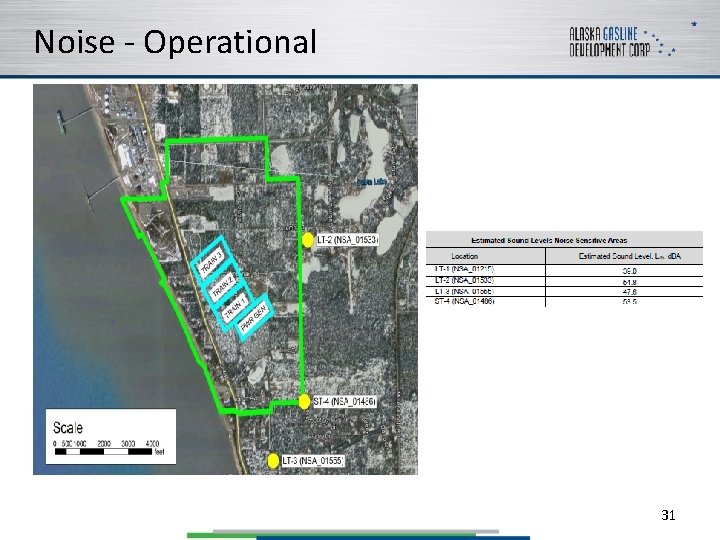
Noise - Operational • Numerous design optimizations were made to reduce operational noise: – – – Low-noise blades on the airfin coolers Low-noise inlet air ducts and exhaust stacks on the gas turbines Noise-abatement insulation on compressor discharge piping Enclosures and buildings around noise-generating equipment Etc • The four NSA’s currently look to be under the 55 d. BA Operational noise limit during steady-state operations, see map 30
Noise - Operational 31
Noise - Construction • Construction phase uses Federal Highway Administration (FHWA) protocols to address intermittent nature of activities such; average noise may exceed 55 d. BA at NSA’s (see map) • Pile-Driving is likely the loudest construction activity – Probably will be limited to 12 hours per day – Plant permits will included piled foundations – But good Nikiski soils may allow some spread-footing foundations instead of piles • Pile-Driving will occur for the offshore structures • Kenai Spur Highway Re-Route is not currently included in the LNG Plant construction (or operational) noise assessment 32
Noise - Construction 33
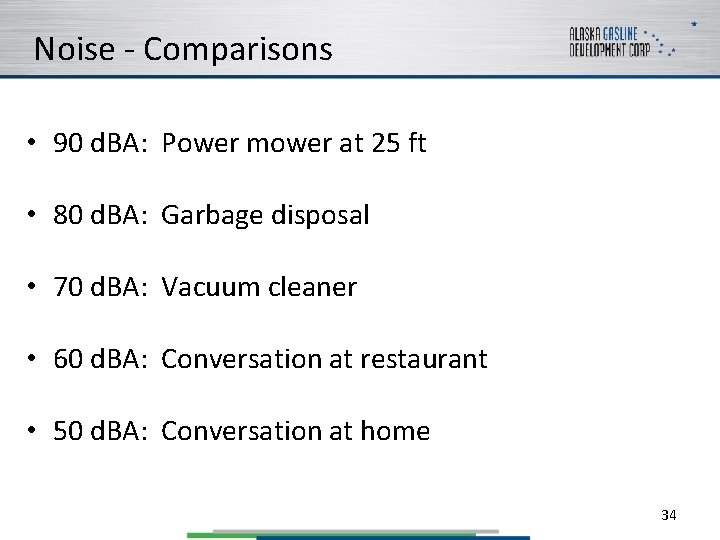
Noise - Comparisons • 90 d. BA: Power mower at 25 ft • 80 d. BA: Garbage disposal • 70 d. BA: Vacuum cleaner • 60 d. BA: Conversation at restaurant • 50 d. BA: Conversation at home 34
Noise - Conclusion • With design mitigations, the Alaska LNG Plant will meet the steady-state Operational offsite criteria of 55 d. BA • Construction could be noisier than 55 d. BA at offsite receptors, but impact will be intermittent • Alaska LNG Liquefaction Facility Environmental Sound Level Assessment Report is publically-available; see AGDC’s Alaska LNG website WWW. Alaska-LNG. com, then – Upper Tab Regulatory Process – FERC Application Exhibits (Resource Reports) – Resource Report 9, Appendix P 35
Agenda • • • LNG Site Overview Hazard Analysis Report Flares Noise Seismic Design Emergency Response Plan 36
Seismic Design Considerations I • Nikiski is known to be a high-seismic area – 1964 Great Alaska Earthquake (magnitude 9. 2) – Recent (Jan, 2016) magnitude 7. 1 earthquake felt on Kenai Peninsula • Several design code give guidance to ensure robustness – Overall: DOT Title 49 CFR 193, FERC Draft 2007 Seismic Design Guidelines – LNG-Containing/Controlling Equipment: NFPA-59 A – Buildings and Structures: ASCE 7 -05 and 7 -10 – Marine Facilities: • USCG Title 33 CFR 127. 103 • California MOTEMS (Marine Oil Terminal Engineering & Maintenance Standard) 37
Seismic Design Considerations II • Facilities must be designed for: – Operating Basis Earthquake (OBE): Equipment remains functional – Safe Shutdown Earthquake (SSE): Equipment may be damaged and require repair, but containment is maintained • Seismic design details are confidential, but Alaska LNG (LNG plant) Facilities Seismic Engineering Report is publically-available; see AGDC’s Alaska LNG website WWW. Alaska-LNG. com, then – Upper Tab Regulatory Process – FERC Application Exhibits (Resource Reports) – Resource Report 13 (LNG Plant), Appendix Part 4 38
Agenda • • • LNG Site Overview Hazard Analysis Report Flares Noise Seismic Design Emergency Response Plan 39
Emergency Response Plan - Overview • • A combined Emergency Response Plan (ERP) will be developed to incorporate not just the Liquefaction Facility, but also the GTP and Pipeline that are part of the overall Alaska LNG Project Within this combined plan will be individual ERPs that will meet all regulatory requirements and address the site-specific nature of the covered facilities. – Individual ERPs will be site-specific and identify the types of emergencies that will require notification to appropriate agencies. – The individual ERPs will contain the response organization and resources (e. g. , diagrams, maps, plans, and procedures) necessary to respond adequately. The combined ERP will be developed using the nationally recognized Federal Emergency Management Agency (FEMA) guidelines and use the National Incident Management System (NIMS) as the methodology with the Incident Command System (ICS) organizational structure. – The ICS is the common emergency response tool used by industry and local emergency response agencies. – The Project’s ICS will link to plans maintained by other affected response agencies or third parties and thus help to ensure appropriate communications, understanding, and cooperation are in place. The combined and individual plans will be prepared in consultation with stakeholders to ensure that all actions to emergencies are coordinated and understood by emergency responders, local community leaders, the government, and the general public. 40
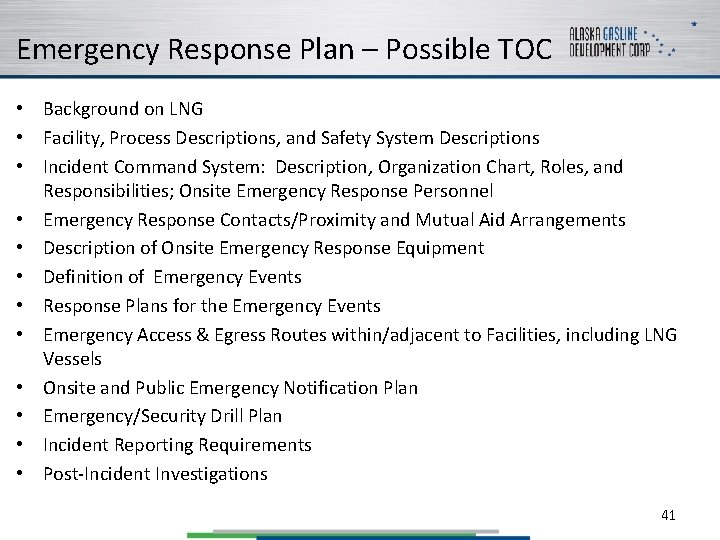
Emergency Response Plan – Possible TOC • Background on LNG • Facility, Process Descriptions, and Safety System Descriptions • Incident Command System: Description, Organization Chart, Roles, and Responsibilities; Onsite Emergency Response Personnel • Emergency Response Contacts/Proximity and Mutual Aid Arrangements • Description of Onsite Emergency Response Equipment • Definition of Emergency Events • Response Plans for the Emergency Events • Emergency Access & Egress Routes within/adjacent to Facilities, including LNG Vessels • Onsite and Public Emergency Notification Plan • Emergency/Security Drill Plan • Incident Reporting Requirements • Post-Incident Investigations 41
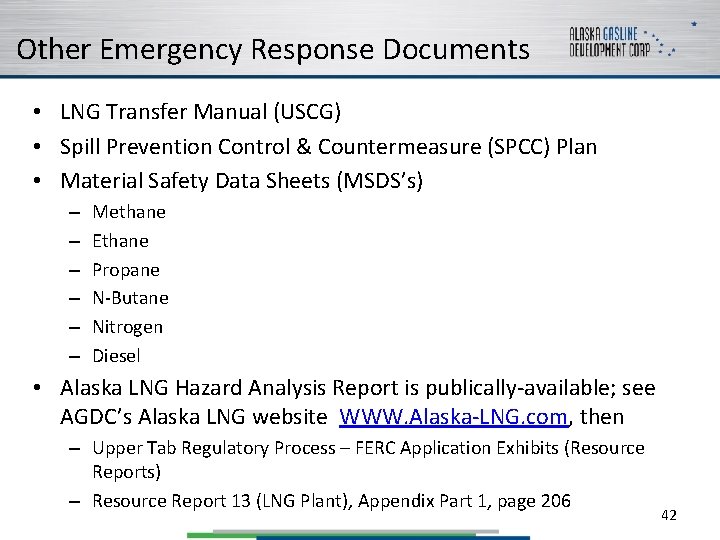
Other Emergency Response Documents • LNG Transfer Manual (USCG) • Spill Prevention Control & Countermeasure (SPCC) Plan • Material Safety Data Sheets (MSDS’s) – – – Methane Ethane Propane N-Butane Nitrogen Diesel • Alaska LNG Hazard Analysis Report is publically-available; see AGDC’s Alaska LNG website WWW. Alaska-LNG. com, then – Upper Tab Regulatory Process – FERC Application Exhibits (Resource Reports) – Resource Report 13 (LNG Plant), Appendix Part 1, page 206 42
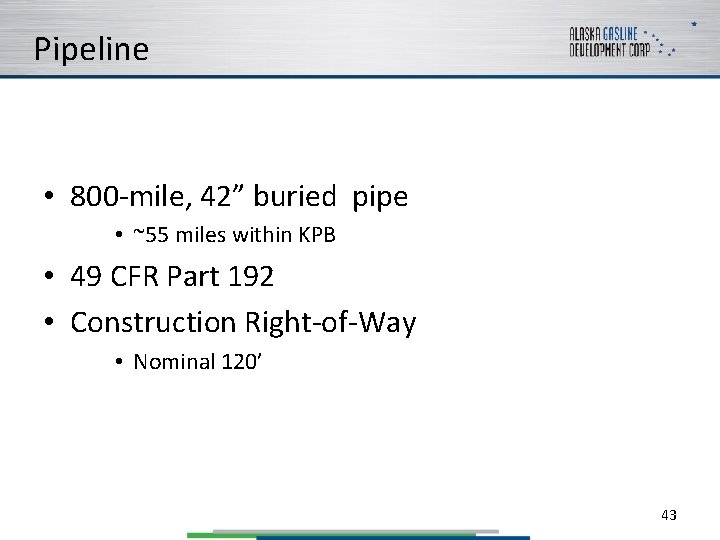
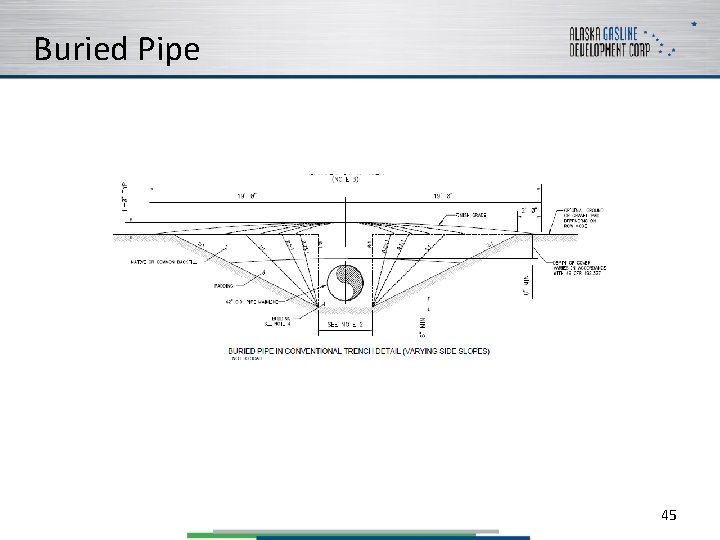
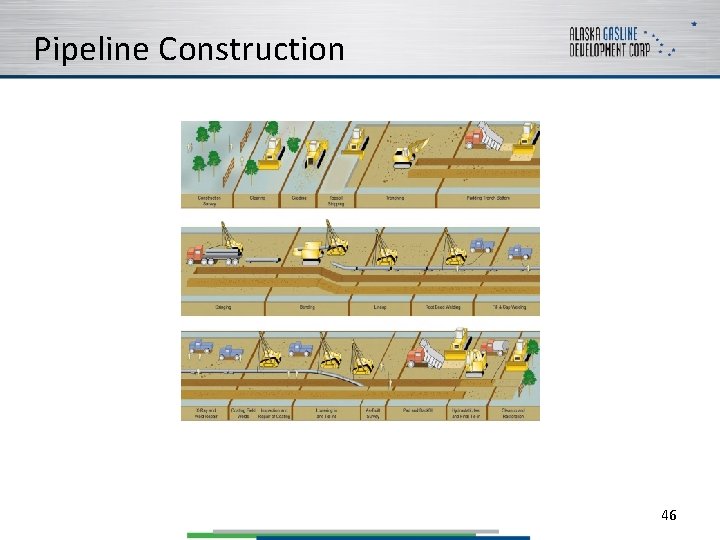
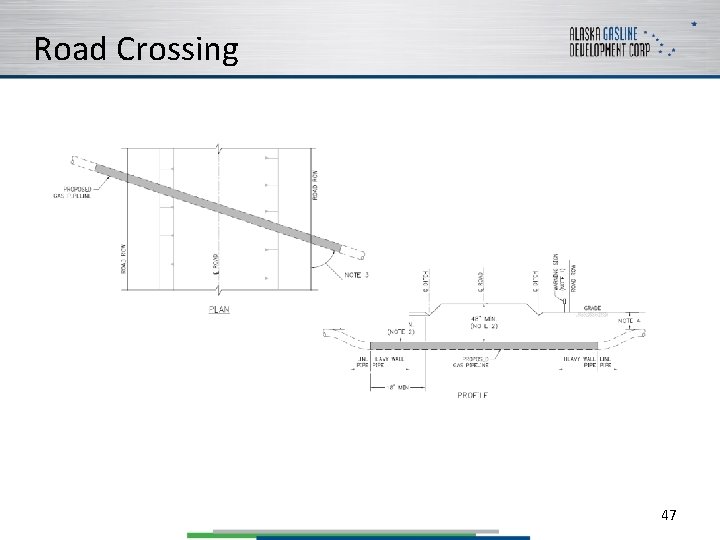
Pipeline • 800 -mile, 42” buried pipe • ~55 miles within KPB • 49 CFR Part 192 • Construction Right-of-Way • Nominal 120’ 43
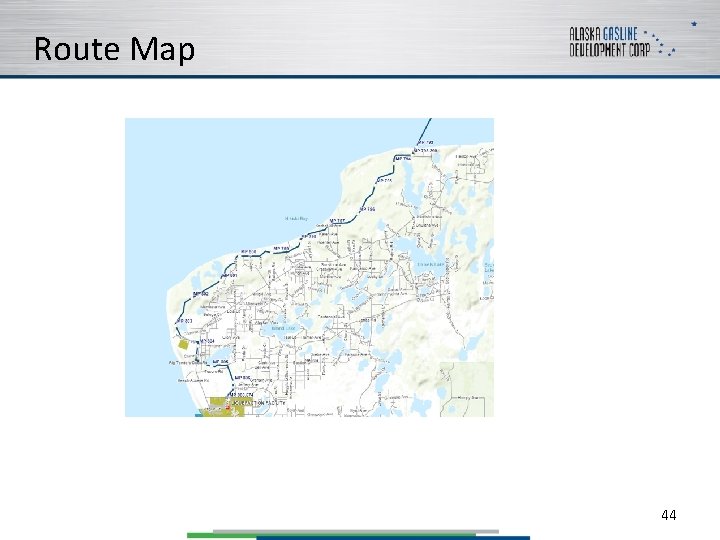
Route Map 44
Buried Pipe 45
Pipeline Construction 46
Road Crossing 47
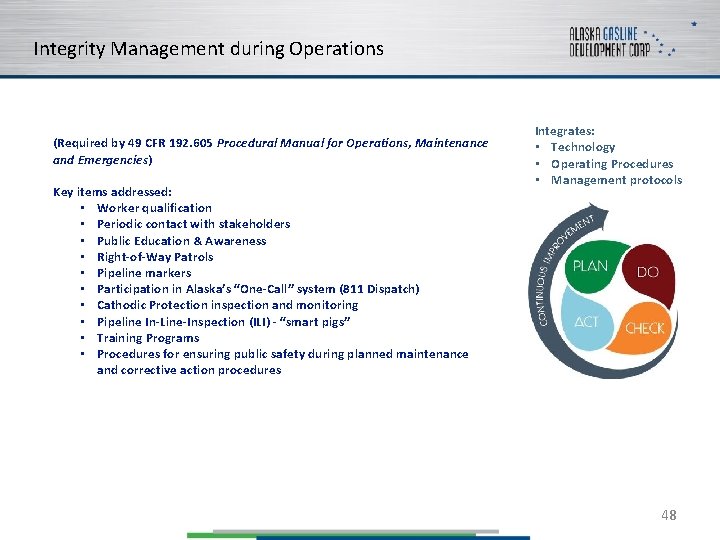
Integrity Management during Operations (Required by 49 CFR 192. 605 Procedural Manual for Operations, Maintenance and Emergencies) Key items addressed: • Worker qualification • Periodic contact with stakeholders • Public Education & Awareness • Right-of-Way Patrols • Pipeline markers • Participation in Alaska’s “One-Call” system (811 Dispatch) • Cathodic Protection inspection and monitoring • Pipeline In-Line-Inspection (ILI) - “smart pigs” • Training Programs • Procedures for ensuring public safety during planned maintenance and corrective action procedures Integrates: • Technology • Operating Procedures • Management protocols 48
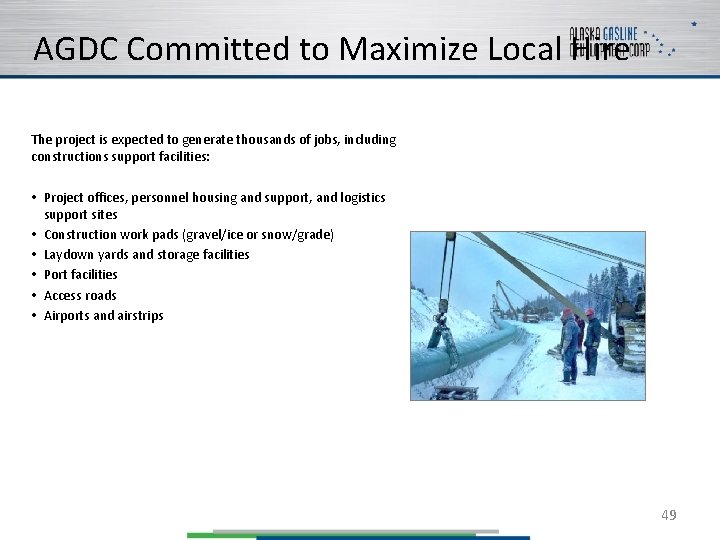
AGDC Committed to Maximize Local Hire The project is expected to generate thousands of jobs, including constructions support facilities: • Project offices, personnel housing and support, and logistics support sites • Construction work pads (gravel/ice or snow/grade) • Laydown yards and storage facilities • Port facilities • Access roads • Airports and airstrips 49
AGDC. us