
Process Power and Marine Division Design Safety into


- Slides: 35
Process, Power and Marine Division Design Safety into Your Plant Mary Kay O’Conner Process Safety Symposium Frank Joop Global Business Development Intergraph Process, Power & Marine
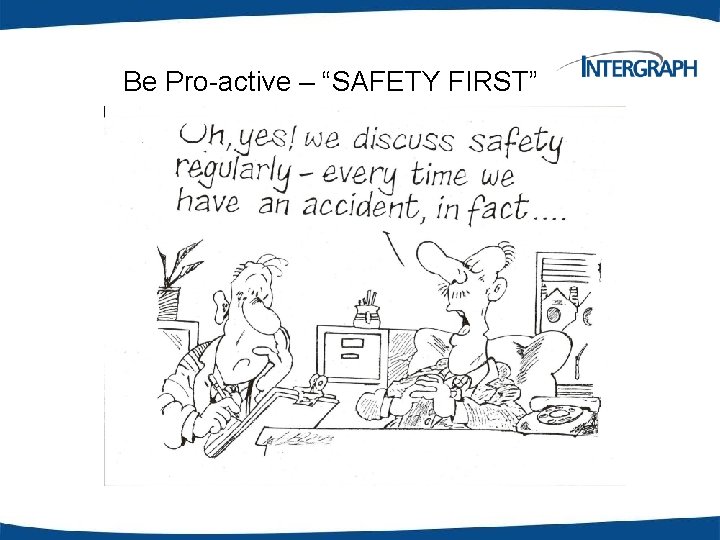
Be Pro-active – “SAFETY FIRST”
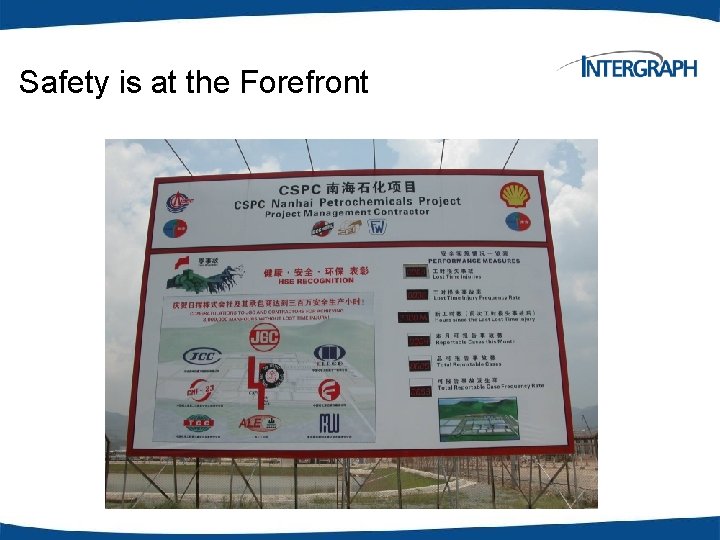
Safety is at the Forefront
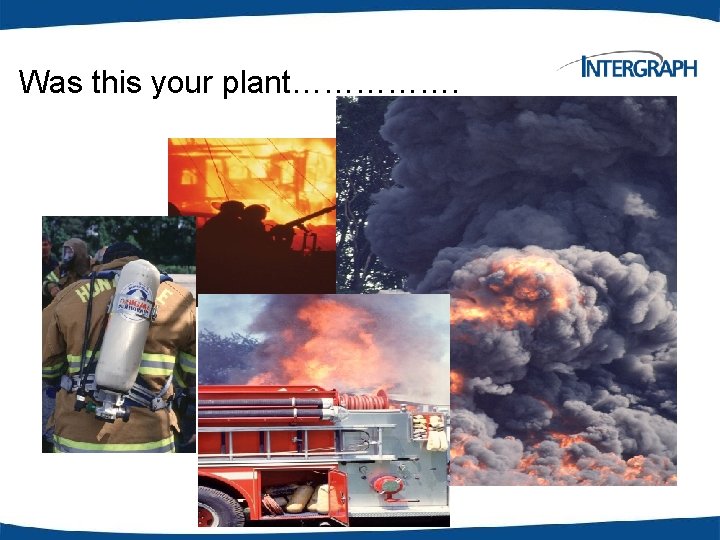
Was this your plant…………….
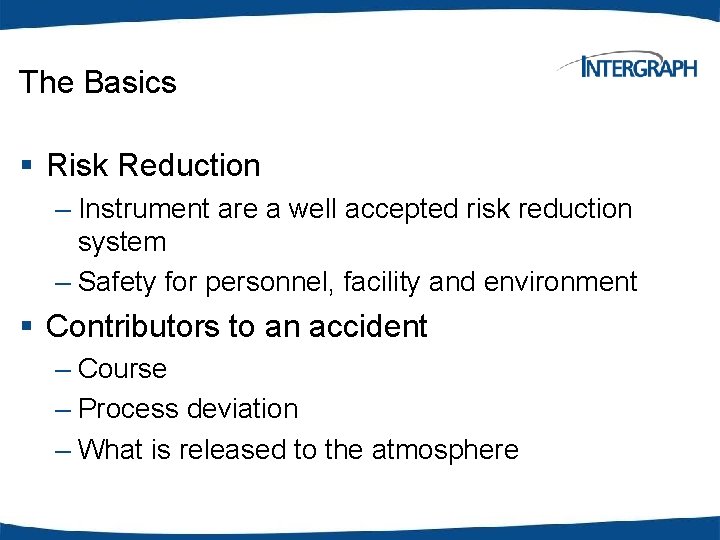
The Basics § Risk Reduction – Instrument are a well accepted risk reduction system – Safety for personnel, facility and environment § Contributors to an accident – Course – Process deviation – What is released to the atmosphere
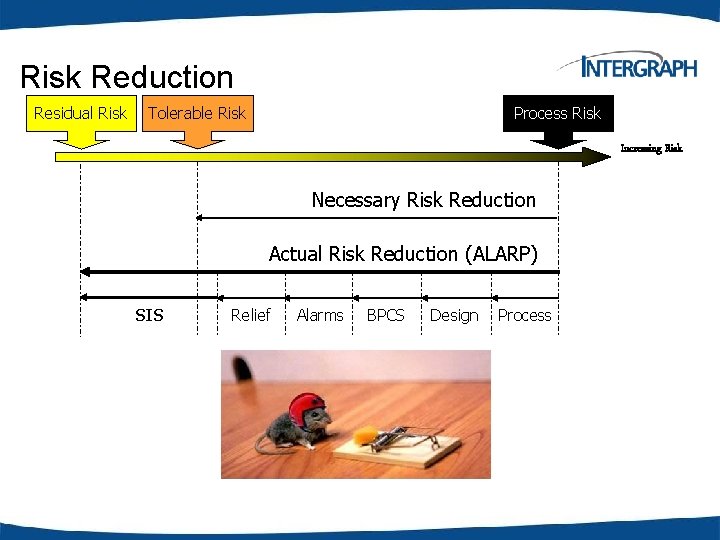
Risk Reduction Residual Risk Tolerable Risk Process Risk Increasing Risk Necessary Risk Reduction Actual Risk Reduction (ALARP) SIS Relief Alarms BPCS Design Process
Tolerable Risk
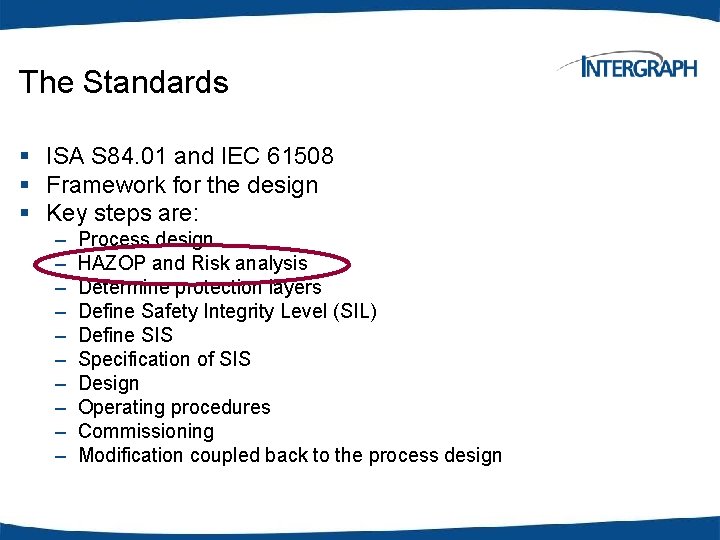
The Standards § ISA S 84. 01 and IEC 61508 § Framework for the design § Key steps are: – – – – – Process design HAZOP and Risk analysis Determine protection layers Define Safety Integrity Level (SIL) Define SIS Specification of SIS Design Operating procedures Commissioning Modification coupled back to the process design
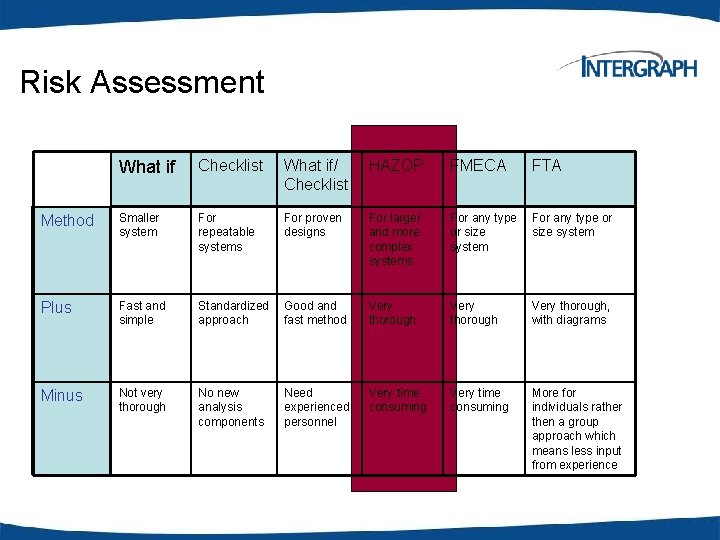
Risk Assessment What if Checklist What if/ Checklist HAZOP FMECA FTA Method Smaller system For repeatable systems For proven designs For larger and more complex systems For any type or size system Plus Fast and simple Standardized approach Good and fast method Very thorough, with diagrams Minus Not very thorough No new analysis components Need experienced personnel Very time consuming More for individuals rather then a group approach which means less input from experience
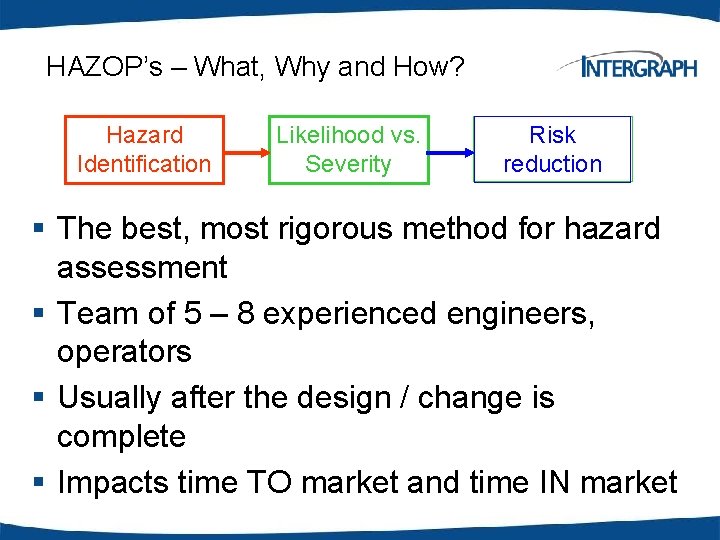
HAZOP’s – What, Why and How? Hazard Identification Likelihood vs. Severity Risk reduction § The best, most rigorous method for hazard assessment § Team of 5 – 8 experienced engineers, operators § Usually after the design / change is complete § Impacts time TO market and time IN market
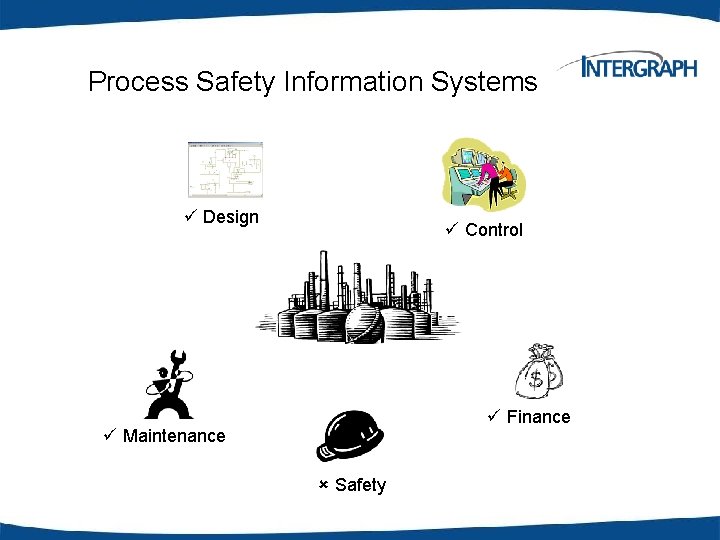
Process Safety Information Systems ü Design ü Control ü Finance ü Maintenance û Safety
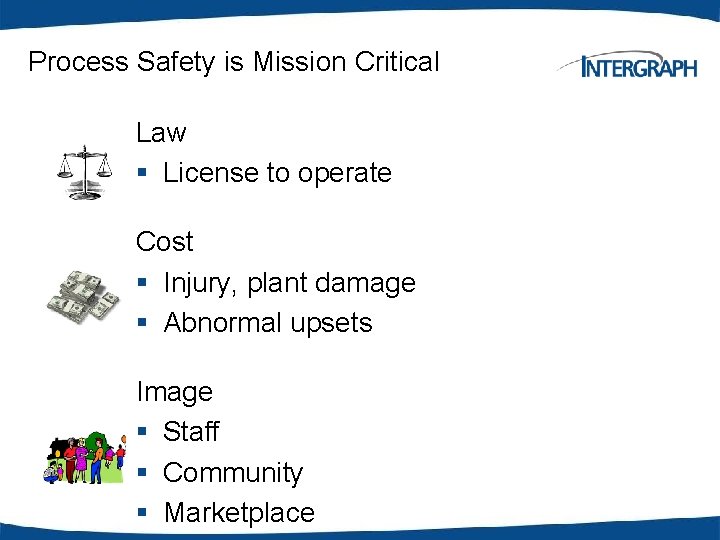
Process Safety is Mission Critical Law § License to operate Cost § Injury, plant damage § Abnormal upsets Image § Staff § Community § Marketplace
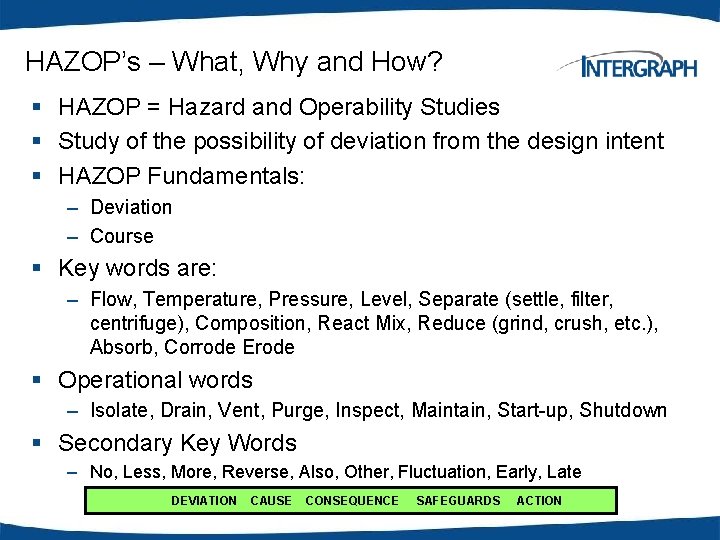
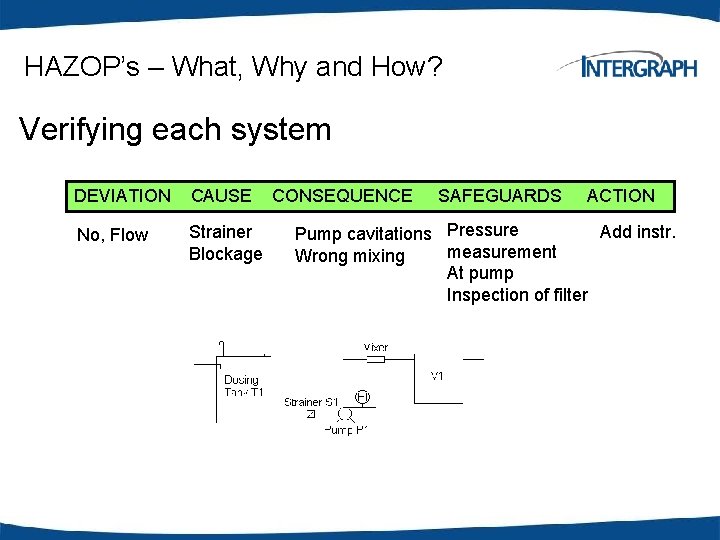
HAZOP’s – What, Why and How? § HAZOP = Hazard and Operability Studies § Study of the possibility of deviation from the design intent § HAZOP Fundamentals: – Deviation – Course § Key words are: – Flow, Temperature, Pressure, Level, Separate (settle, filter, centrifuge), Composition, React Mix, Reduce (grind, crush, etc. ), Absorb, Corrode Erode § Operational words – Isolate, Drain, Vent, Purge, Inspect, Maintain, Start-up, Shutdown § Secondary Key Words – No, Less, More, Reverse, Also, Other, Fluctuation, Early, Late DEVIATION CAUSE CONSEQUENCE SAFEGUARDS ACTION
HAZOP’s – What, Why and How? Verifying each system DEVIATION CAUSE No, Flow Strainer Blockage CONSEQUENCE SAFEGUARDS ACTION Add instr. Pump cavitations Pressure measurement Wrong mixing At pump Inspection of filter
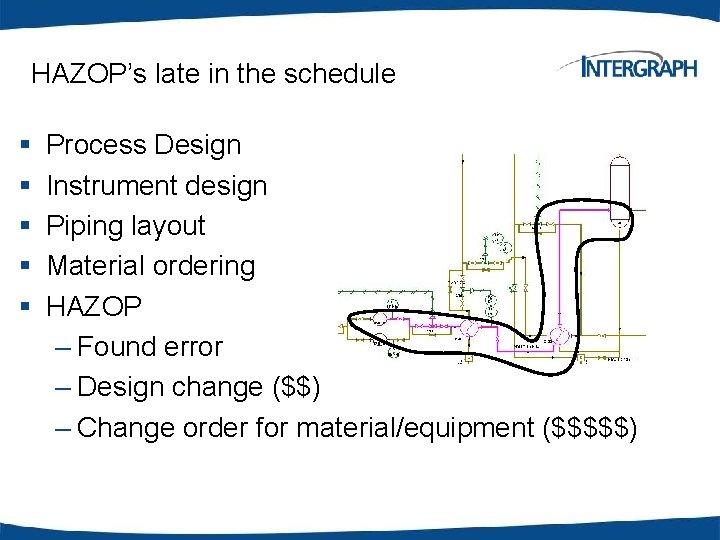
HAZOP’s late in the schedule § § § Process Design Instrument design Piping layout Material ordering HAZOP – Found error – Design change ($$) – Change order for material/equipment ($$$$$)
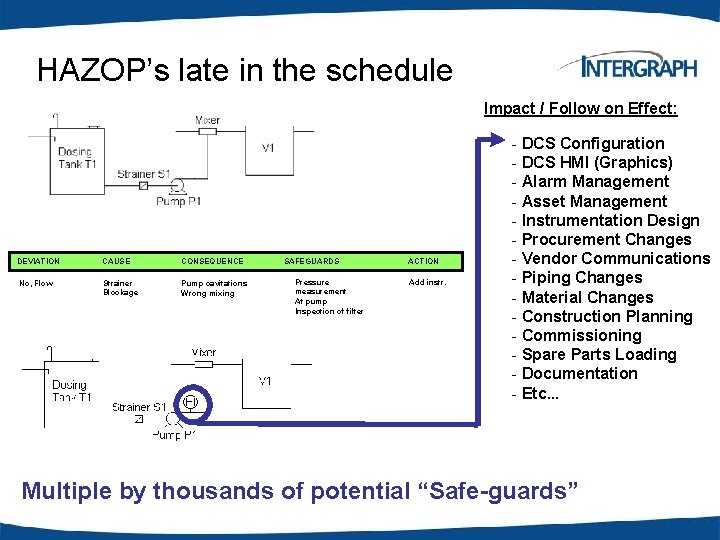
HAZOP’s late in the schedule Impact / Follow on Effect: DEVIATION No, Flow CAUSE CONSEQUENCE Strainer Blockage Pump cavitations Wrong mixing SAFEGUARDS Pressure measurement At pump Inspection of filter ACTION Add instr. - DCS Configuration - DCS HMI (Graphics) - Alarm Management - Asset Management - Instrumentation Design - Procurement Changes - Vendor Communications - Piping Changes - Material Changes - Construction Planning - Commissioning - Spare Parts Loading - Documentation - Etc. . . Multiple by thousands of potential “Safe-guards”
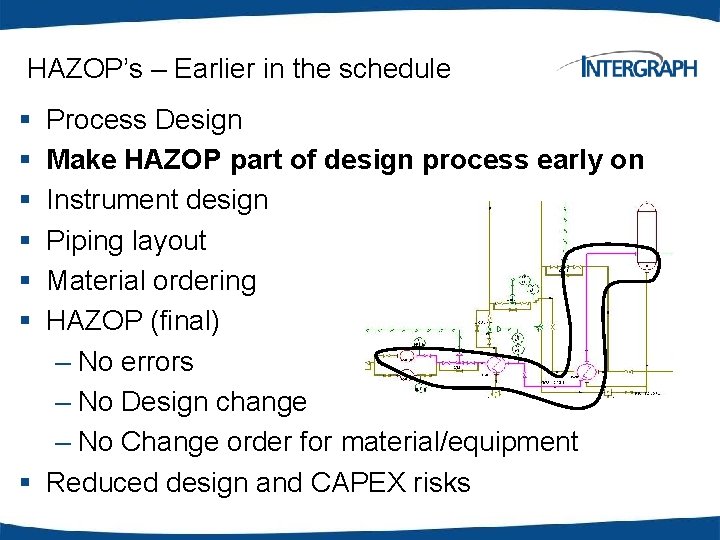
HAZOP’s – Earlier in the schedule § § § Process Design Make HAZOP part of design process early on Instrument design Piping layout Material ordering HAZOP (final) – No errors – No Design change – No Change order for material/equipment § Reduced design and CAPEX risks
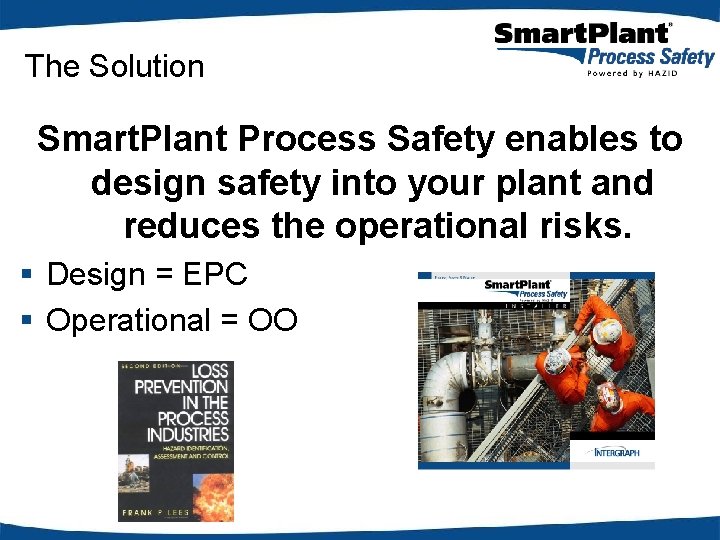
The Solution Smart. Plant Process Safety enables to design safety into your plant and reduces the operational risks. § Design = EPC § Operational = OO
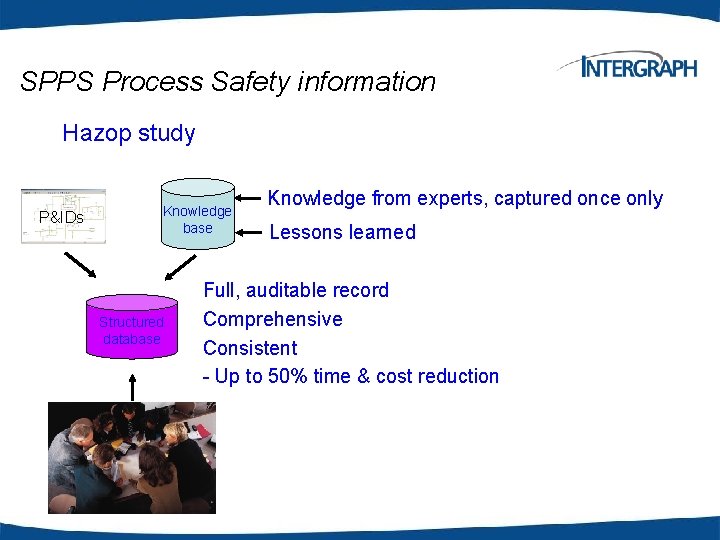
SPPS Process Safety information Hazop study P&IDs Knowledge base Structured database Knowledge from experts, captured once only Lessons learned Full, auditable record Comprehensive Consistent - Up to 50% time & cost reduction
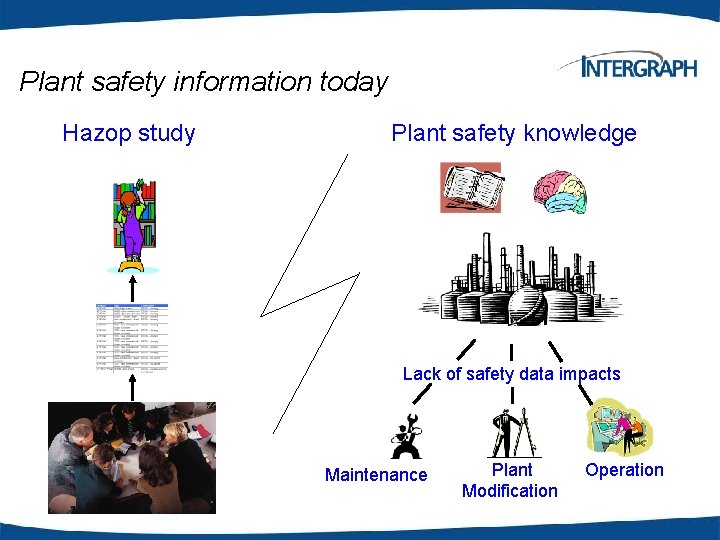
Plant safety information today Hazop study Plant safety knowledge Lack of safety data impacts Maintenance Plant Modification Operation
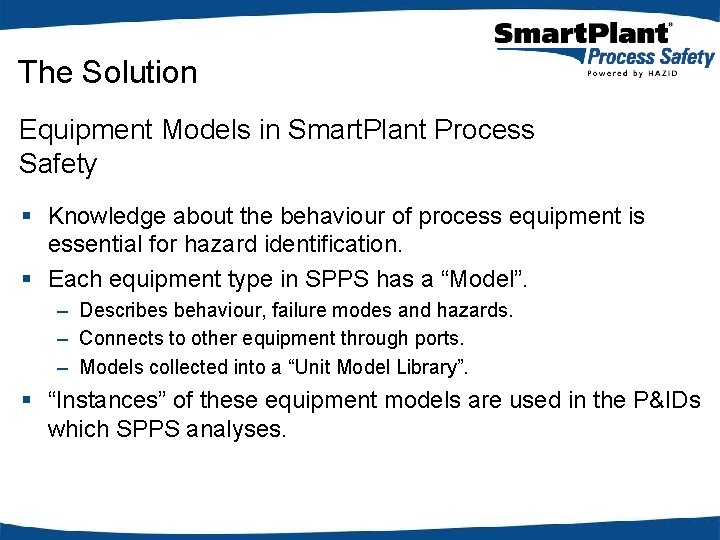
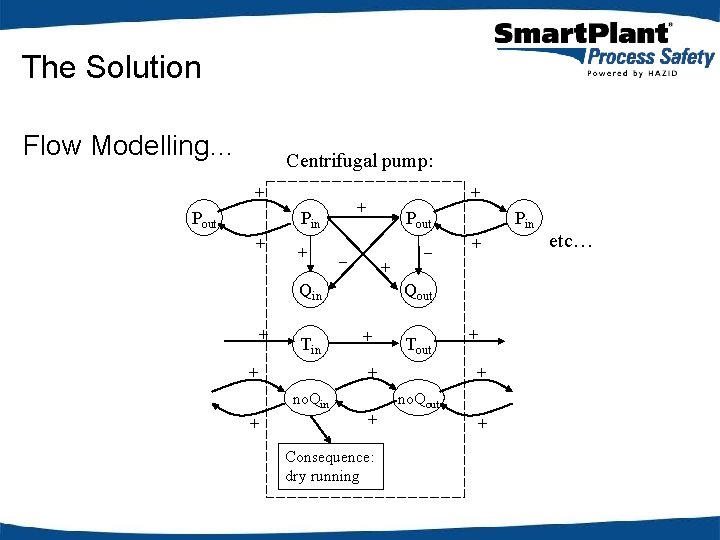
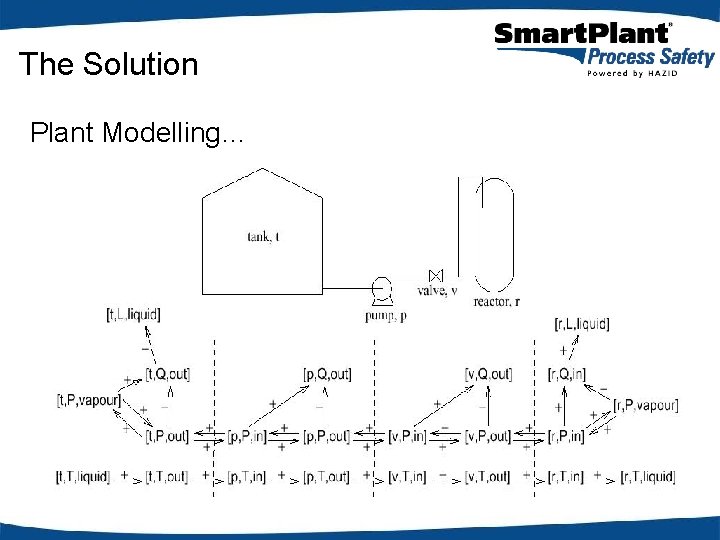
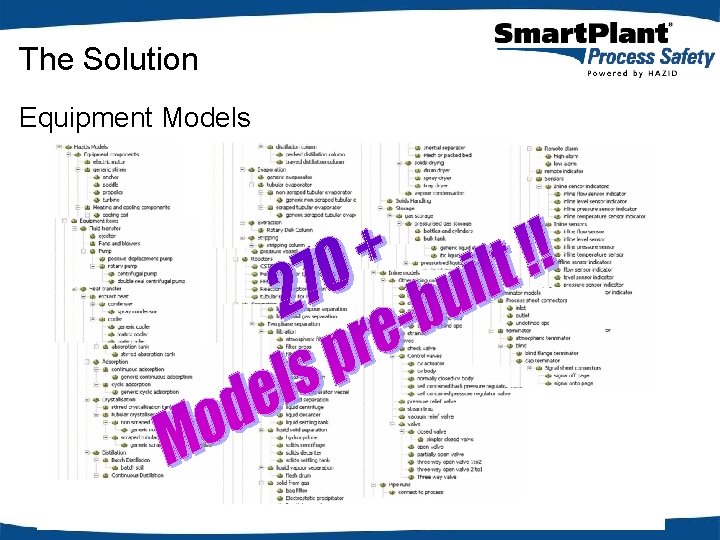
The Solution Equipment Models in Smart. Plant Process Safety § Knowledge about the behaviour of process equipment is essential for hazard identification. § Each equipment type in SPPS has a “Model”. – Describes behaviour, failure modes and hazards. – Connects to other equipment through ports. – Models collected into a “Unit Model Library”. § “Instances” of these equipment models are used in the P&IDs which SPPS analyses.
The Solution Flow Modelling… Centrifugal pump: + Pout + Pin + + + Pout – + Qin + Tin + Qout + Tout + + no. Qin + – Pin + + no. Qout + Consequence: dry running + etc…
The Solution Plant Modelling…
The Solution Equipment Models
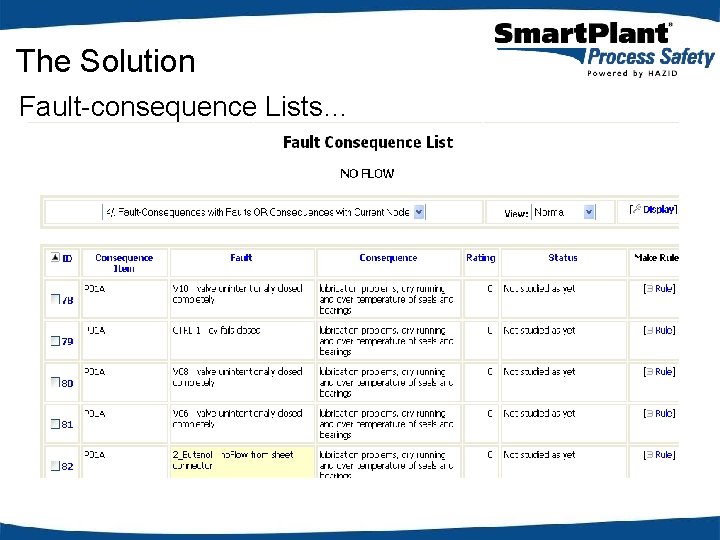
The Solution Fault-consequence Lists…
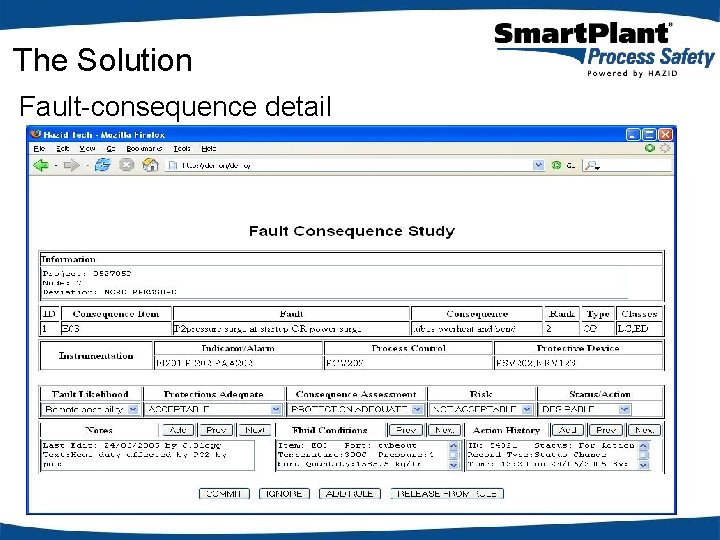
The Solution Fault-consequence detail
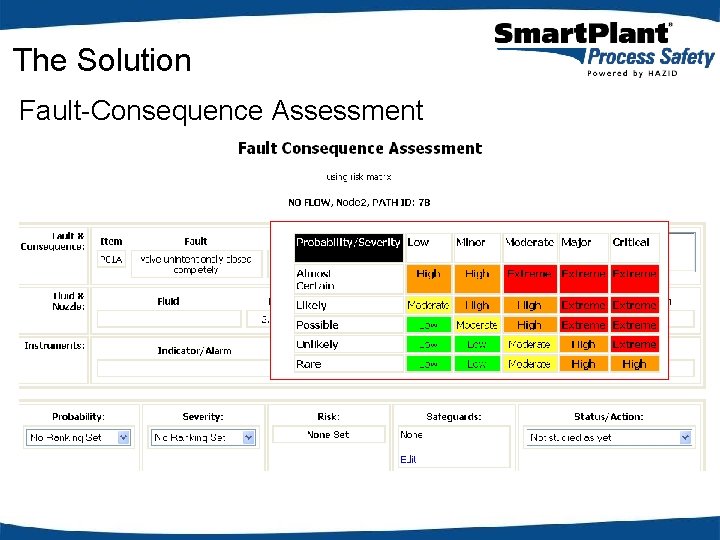
The Solution Fault-Consequence Assessment
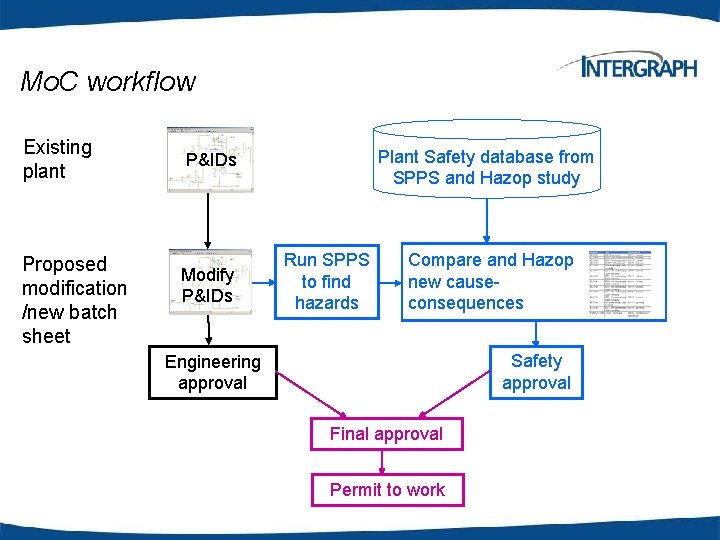
Mo. C workflow Existing plant Proposed modification /new batch sheet Plant Safety database from SPPS and Hazop study P&IDs Modify P&IDs Run SPPS to find hazards Compare and Hazop new causeconsequences Safety approval Engineering approval Final approval Permit to work
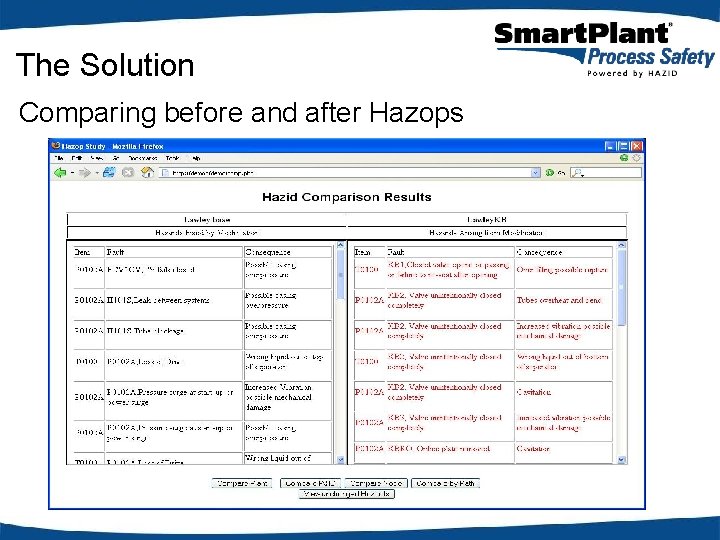
The Solution Comparing before and after Hazops
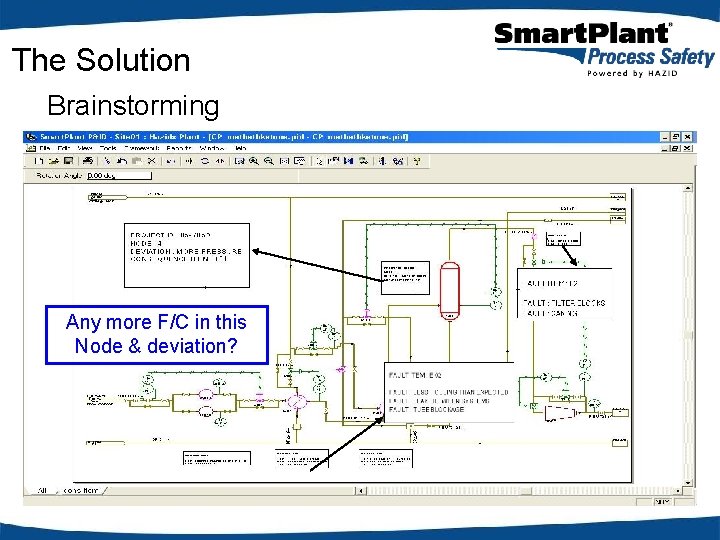
The Solution Brainstorming Any more F/C in this Node & deviation?
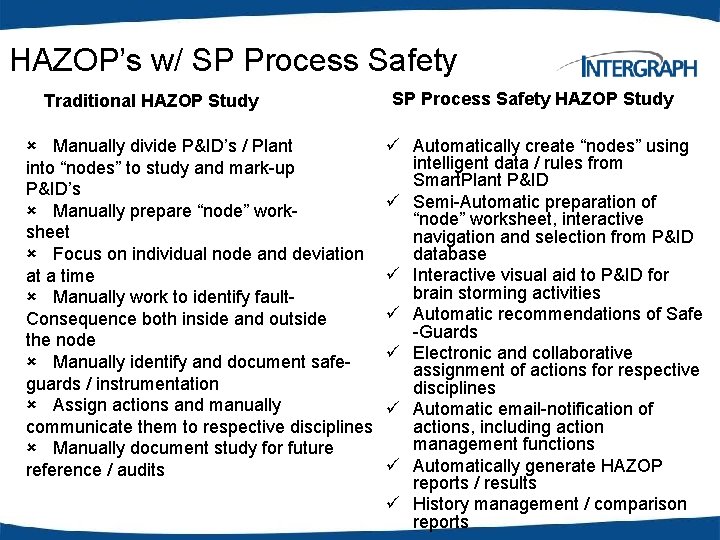
HAZOP’s w/ SP Process Safety Traditional HAZOP Study û Manually divide P&ID’s / Plant into “nodes” to study and mark-up P&ID’s û Manually prepare “node” worksheet û Focus on individual node and deviation at a time û Manually work to identify fault. Consequence both inside and outside the node û Manually identify and document safeguards / instrumentation û Assign actions and manually communicate them to respective disciplines û Manually document study for future reference / audits SP Process Safety HAZOP Study ü Automatically create “nodes” using intelligent data / rules from Smart. Plant P&ID ü Semi-Automatic preparation of “node” worksheet, interactive navigation and selection from P&ID database ü Interactive visual aid to P&ID for brain storming activities ü Automatic recommendations of Safe -Guards ü Electronic and collaborative assignment of actions for respective disciplines ü Automatic email-notification of actions, including action management functions ü Automatically generate HAZOP reports / results ü History management / comparison reports
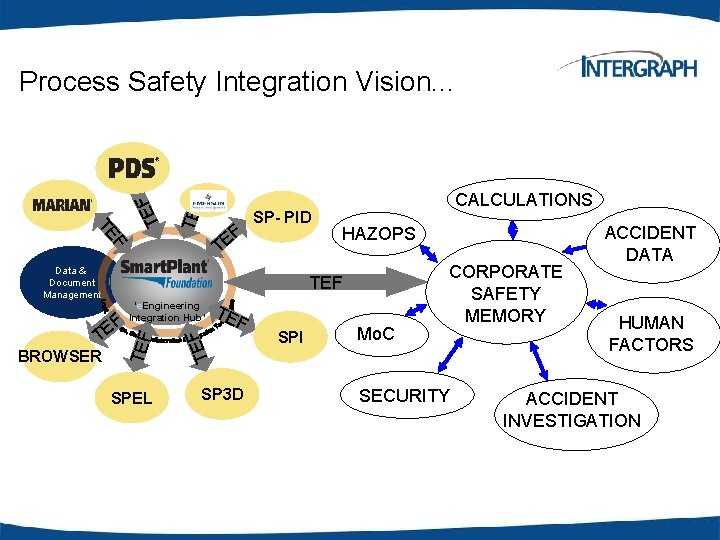
F TE TEF TE F Process Safety Integration Vision. . . Data & Document Management EF ‘e. Engineering Integration Hub’ SPEL TEF BROWSER HAZOPS TEF T F E T SP- PID CALCULATIONS TE F SP 3 D SPI Mo. C CORPORATE SAFETY MEMORY SECURITY ACCIDENT DATA HUMAN FACTORS ACCIDENT INVESTIGATION
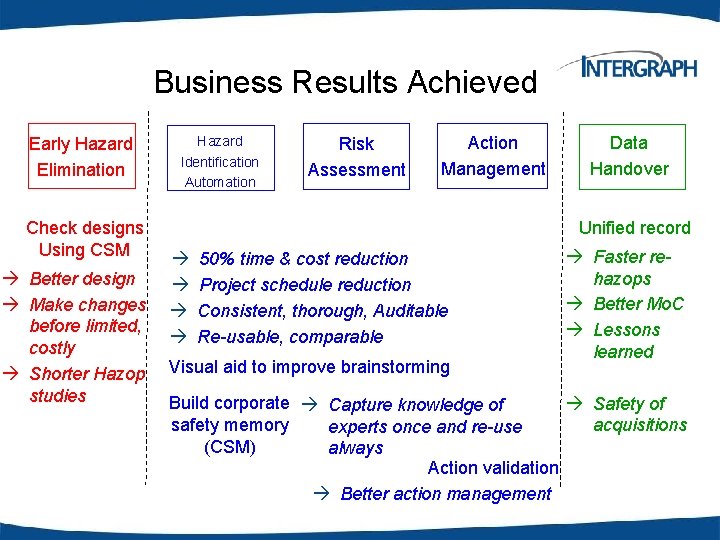
Business Results Achieved Early Hazard Elimination Check designs Using CSM à Better design à Make changes before limited, costly à Shorter Hazop studies Hazard Identification Automation Risk Assessment Action Management Data Handover Unified record à à 50% time & cost reduction Project schedule reduction Consistent, thorough, Auditable Re-usable, comparable Visual aid to improve brainstorming à Faster rehazops à Better Mo. C à Lessons learned Build corporate à Capture knowledge of à Safety of safety memory acquisitions experts once and re-use (CSM) always Action validation à Better action management
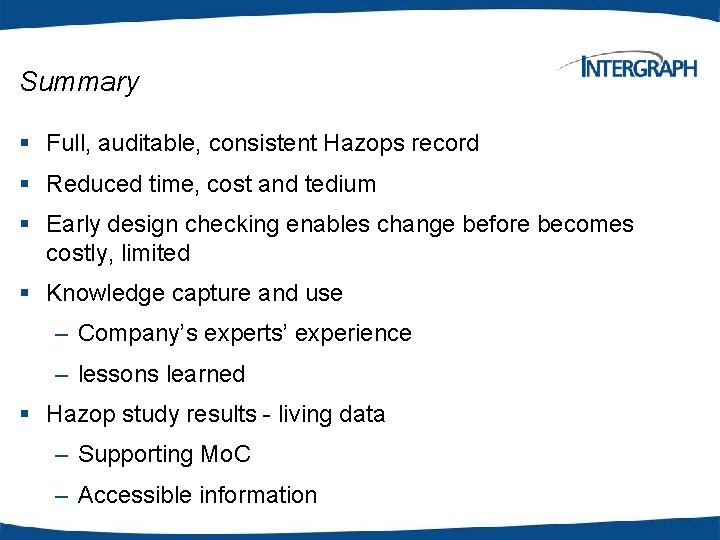
Summary § Full, auditable, consistent Hazops record § Reduced time, cost and tedium § Early design checking enables change before becomes costly, limited § Knowledge capture and use – Company’s experts’ experience – lessons learned § Hazop study results - living data – Supporting Mo. C – Accessible information
Process, Power and Marine Division Integrating the Engineering Enterprise…