
PROCESS OF DIGESTION THE DIGESTIVE SYSTEM FUNCTIONS CAN

- Slides: 15
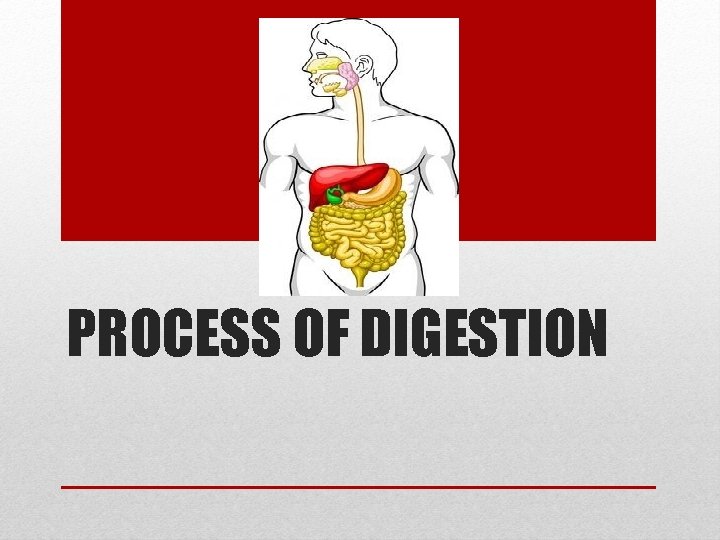
PROCESS OF DIGESTION
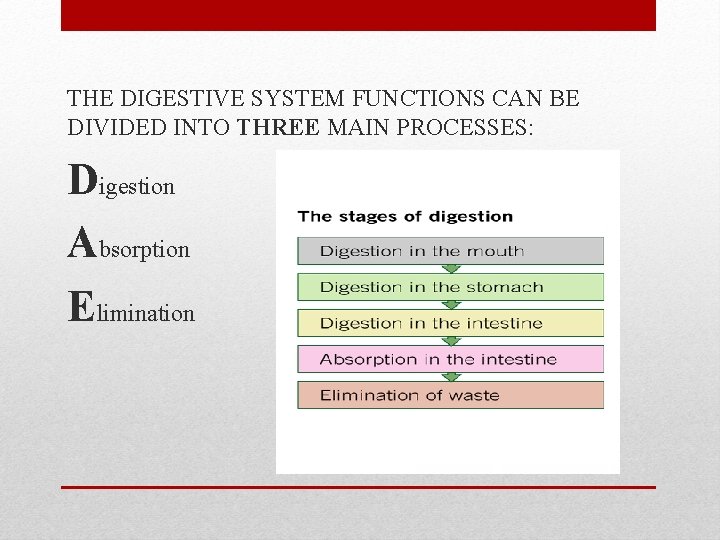
THE DIGESTIVE SYSTEM FUNCTIONS CAN BE DIVIDED INTO THREE MAIN PROCESSES: Digestion Absorption Elimination
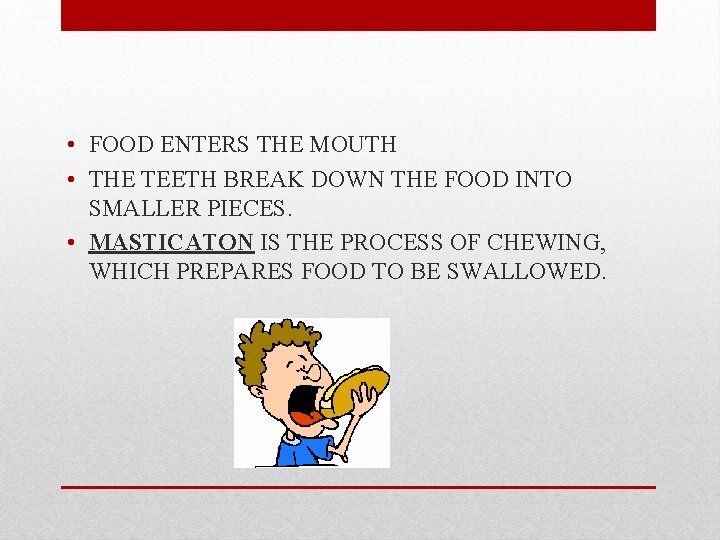
• FOOD ENTERS THE MOUTH • THE TEETH BREAK DOWN THE FOOD INTO SMALLER PIECES. • MASTICATON IS THE PROCESS OF CHEWING, WHICH PREPARES FOOD TO BE SWALLOWED.
• Chemicals or Enzymes in your saliva break down the food.
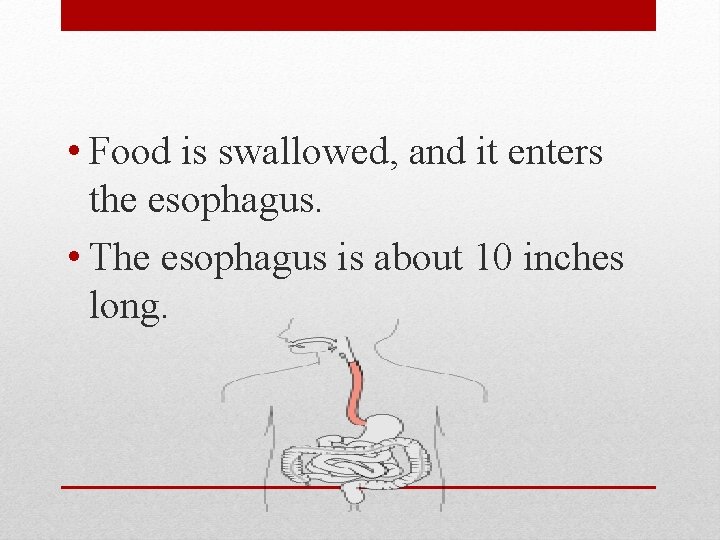
• Food is swallowed, and it enters the esophagus. • The esophagus is about 10 inches long.
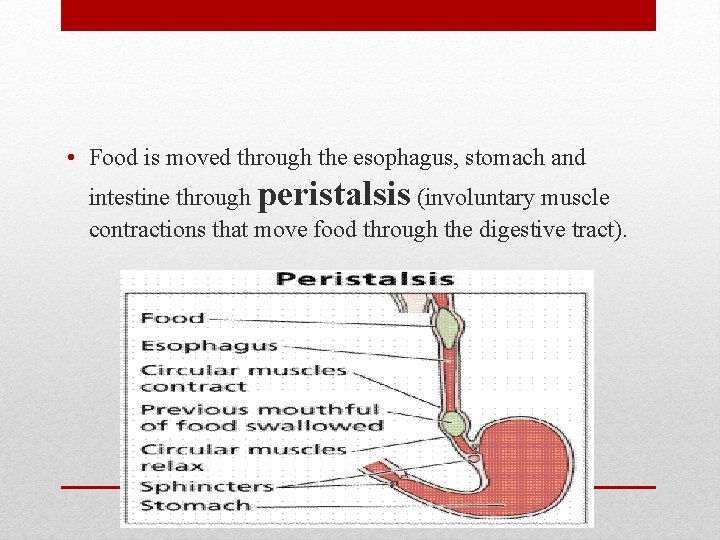
• Food is moved through the esophagus, stomach and intestine through peristalsis (involuntary muscle contractions that move food through the digestive tract).
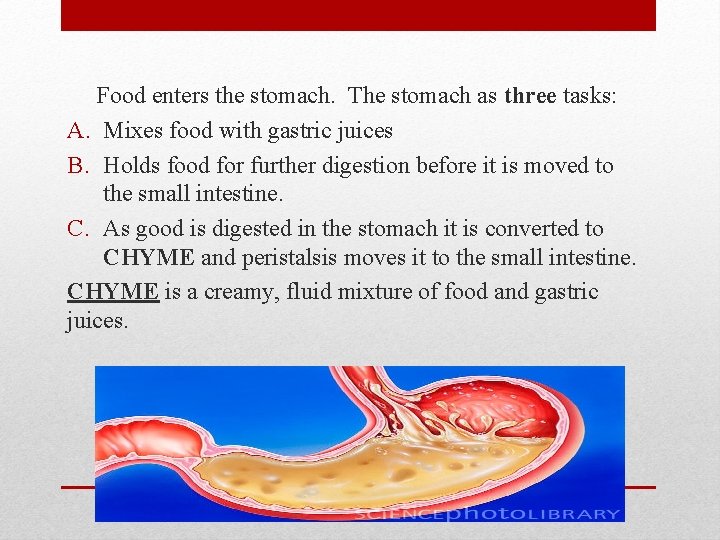
Food enters the stomach. The stomach as three tasks: A. Mixes food with gastric juices B. Holds food for further digestion before it is moved to the small intestine. C. As good is digested in the stomach it is converted to CHYME and peristalsis moves it to the small intestine. CHYME is a creamy, fluid mixture of food and gastric juices.
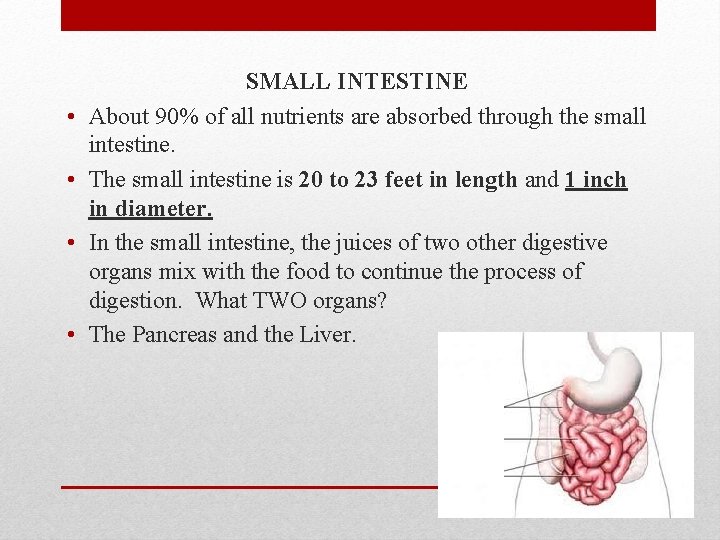
• • SMALL INTESTINE About 90% of all nutrients are absorbed through the small intestine. The small intestine is 20 to 23 feet in length and 1 inch in diameter. In the small intestine, the juices of two other digestive organs mix with the food to continue the process of digestion. What TWO organs? The Pancreas and the Liver.
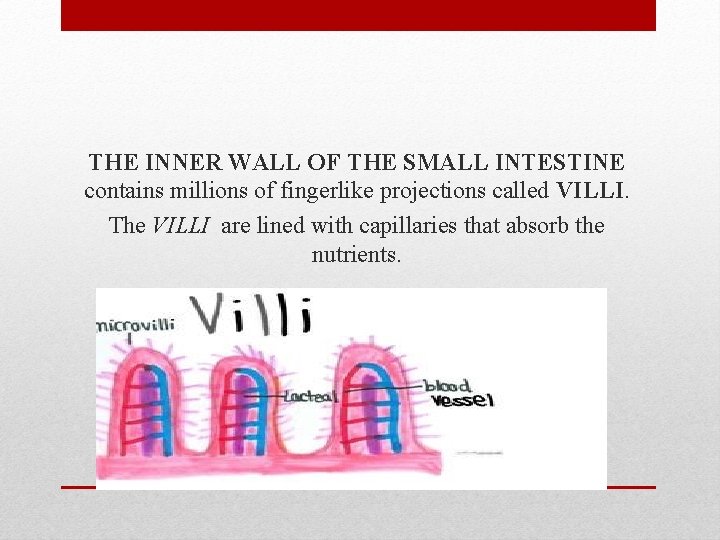
THE INNER WALL OF THE SMALL INTESTINE contains millions of fingerlike projections called VILLI. The VILLI are lined with capillaries that absorb the nutrients.
PANCREAS The pancreas produces enzymes that break down carbohydrates, fats, and proteins in food. LIVER The liver produces another digestive juice-BILE, a yellowgreen, bitter fluid important in breakdown and absorption of fats. Bile is stored in the gallbladder between meals.
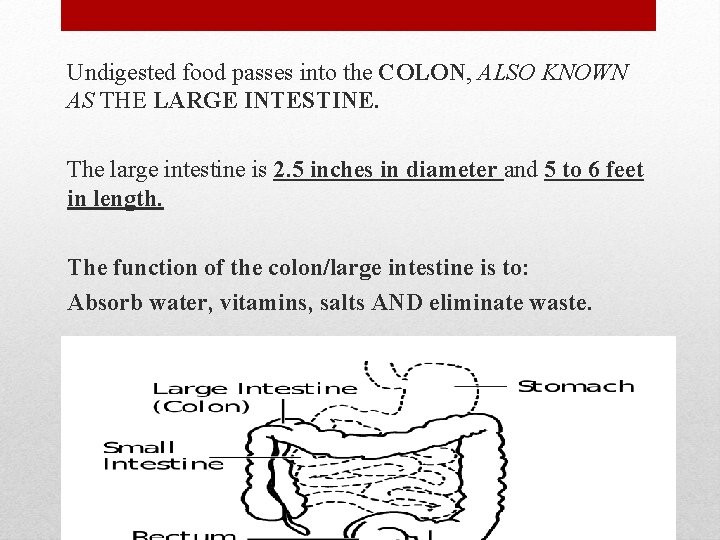
Undigested food passes into the COLON, ALSO KNOWN AS THE LARGE INTESTINE. The large intestine is 2. 5 inches in diameter and 5 to 6 feet in length. The function of the colon/large intestine is to: Absorb water, vitamins, salts AND eliminate waste.
OTHER PARTS OF THE DIGESTIVE SYSTEM Salivary Glands: These glands produce digestive juices. It contains an enzyme that begins to break down the starches and sugars into smaller pieces. Tongue: The tongue prepares chewed food for swallowing by shaping it. Uvula: A small flap of tissue at the back of the mouth. It prevents food from entering the nasal passages. Epiglottis: This is the tissue covering the throat, and prevents food from entering the respiratory system.
• Peptic Ulcer – A sore in the lining of the digestive tract. Causes: A bacterial infection or the overuse of aspirin. • Appendicitis – An inflammation of the appendix. Causes: A blockage or bacterial infection. STRUCTURAL PROBLEMS
• Drink at least eight 8 -ounce glasses of water each day • Limit your intake of caffeine and soft drinks, which can increase the amount of water lost through urination • Follow a well-balanced eating plan (USE MYPLATE) • Wash your hands before eating • Eat slowly and chew your food thoroughly HOW TO CARE FOR YOUR DIGESTIVE SYSTEM
https: //www. youtube. com/watch? v=4 d. G 2 PYD 94 es