
Process of conflict Constructivefunctional Conflict Destructivedysfunctional Conflict Growth
- Slides: 8
Process of conflict
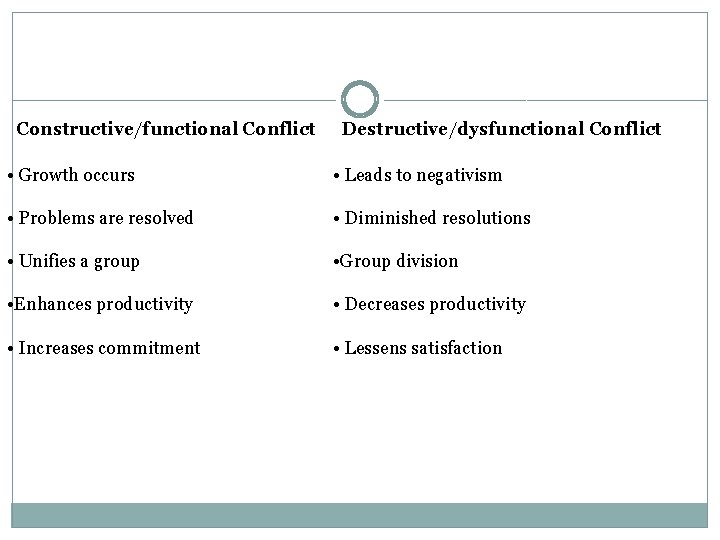
Constructive/functional Conflict Destructive/dysfunctional Conflict • Growth occurs • Leads to negativism • Problems are resolved • Diminished resolutions • Unifies a group • Group division • Enhances productivity • Decreases productivity • Increases commitment • Lessens satisfaction
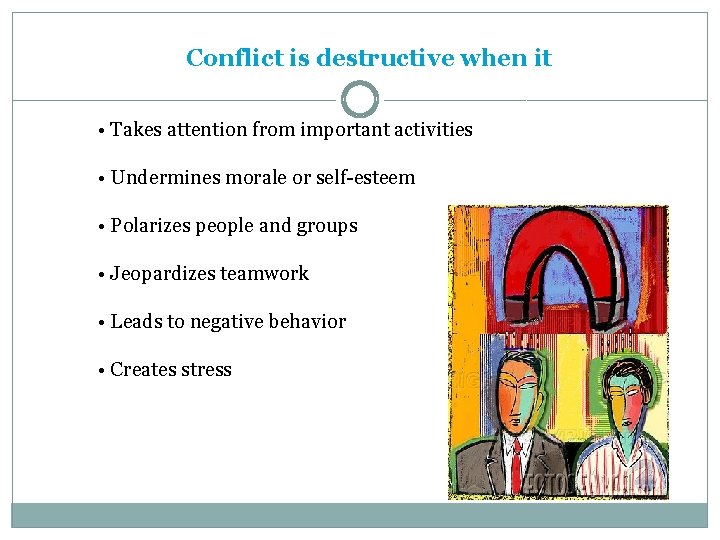
Conflict is destructive when it • Takes attention from important activities • Undermines morale or self-esteem • Polarizes people and groups • Jeopardizes teamwork • Leads to negative behavior • Creates stress
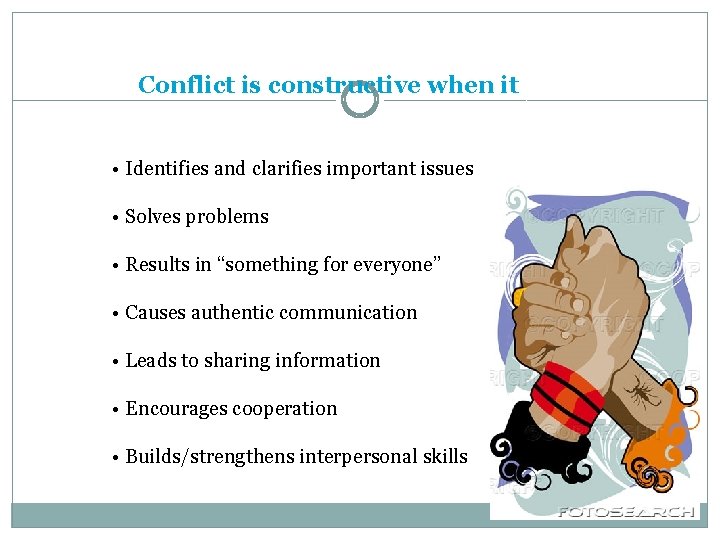
Conflict is constructive when it • Identifies and clarifies important issues • Solves problems • Results in “something for everyone” • Causes authentic communication • Leads to sharing information • Encourages cooperation • Builds/strengthens interpersonal skills
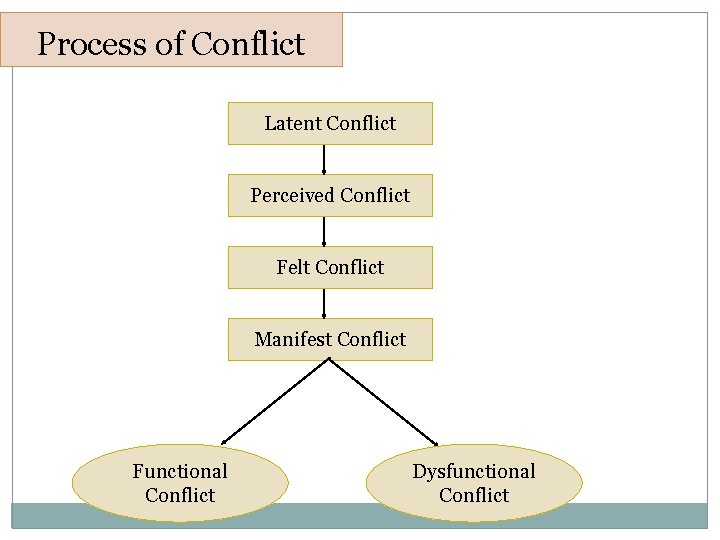
Process of Conflict Latent Conflict Perceived Conflict Felt Conflict Manifest Conflict Functional Conflict Dysfunctional Conflict
� Latent Conflict (Stage 1): When two or more parties need each other to achieve desired objectives, there is potential for conflict. Latent Conflict often arises when change occurs. Conflict is likely to be caused by a budget cutback, a change in organizational direction, a change in personal goals or the assignment of a new project to an already overloaded team. � Perceived Conflict (Stage 2): This is the stage at which members become aware of a problem. Incompatibility of needs is perceived and tension begins as the parties being to worry about what will happen. But no party feels that it is being overtly threatened. � Felt Conflict (Stage 3): At this stage parties become emotionally involved and begin to focus on differences of opinion and opposing interests. Internal tensions and frustration begin to crystallize, and people build emotional commitment to their position.
�Manifest Conflict (Stage 4): At this stage parties engage in actions that help to achieve their own objectives and ruin those of others. Conflict behaviors vary from the subtle, indirect and highly controlled forms of interface to direct, aggressive, violent and uncontrolled struggle. At the organisational level strikes or lock-outs are the result. �Conflict Outcome (Stage 5): The conflict finally results in an outcome which may be functional or dysfunctional. If handled well, the result is functional conflict. If mishandled, the consequences are dysfunctional conflict.
OUTCOMES OF CONFLICT �Win-lose outcome �Lose-lose outcome �Win- win outcome Grrrrr…. .