
Process Mapping 1 Ground Rules for Event Safety


- Slides: 43
Process Mapping 1
Ground Rules for Event • • Safety first (use personal protective equipment) Active participation by all Start and end on time All electronic gadgets (phones, pagers, etc) turned to “off” or “silent” Computers to be used only when instructed Keep an open mind to change Don’t let “perfect” get in the way of “better” 2
Process Mapping OBJECTIVES § Define Process Mapping § Identify purpose and benefits of Process Mapping § Identify components of a process § Define levels of process mapping 3
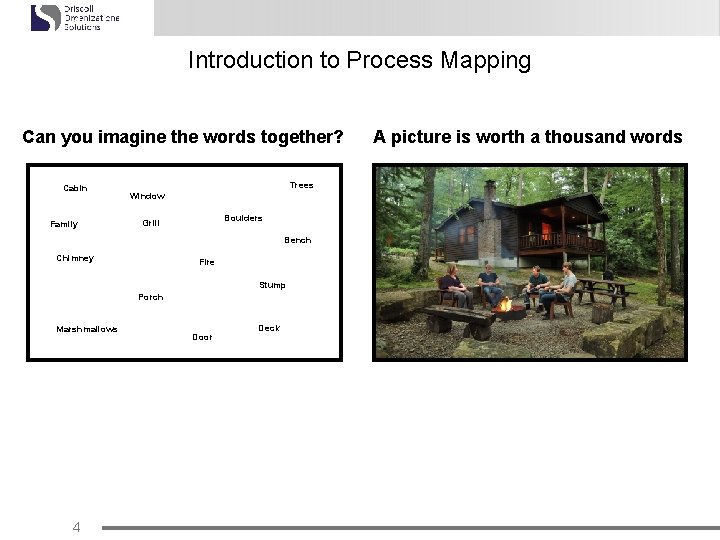
Introduction to Process Mapping Can you imagine the words together? Cabin Family Trees Window Boulders Grill Bench Chimney Fire Stump Porch Marshmallows 4 Door Deck A picture is worth a thousand words
Process Mapping ¢ ¢ 5 Graphic display of steps, events and operations that constitute a process A picture or diagram of what is actually happening A foundation for continuous improvement A real-time planning and implementation tool
Benefits of Process Mapping • Provides excellent reference point for continuous improvement – Facilitates reduced cycle time and improved output • Reduces ambiguous, complex processes to finite tasks – Helps learn focus on facts not opinions • Highlights functional interdependencies 6
Process Mapping ¢ ¢ Process Mapping is a tool used for continuous improvement Similar in concept to a roadmap: ¢ ¢ ¢ 7 Here is where we agree we are now (present situation) Here is where we want to be (goal destination or ideal situation) Here are our options to get there
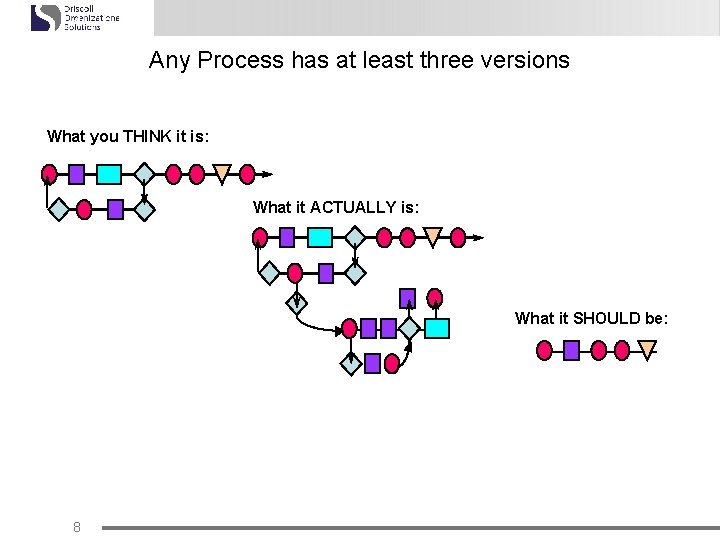
Any Process has at least three versions Why Map a Process? What you THINK it is: What it ACTUALLY is: What it SHOULD be: 8
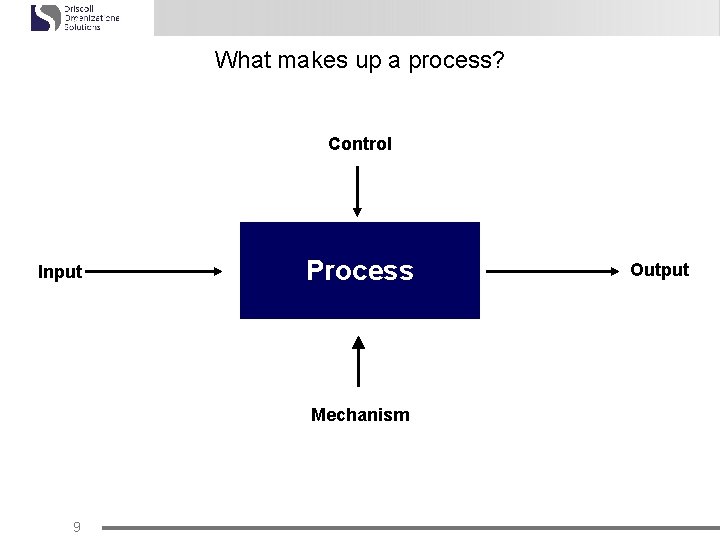
What makes up a process? Control Input Process Mechanism 9 Output
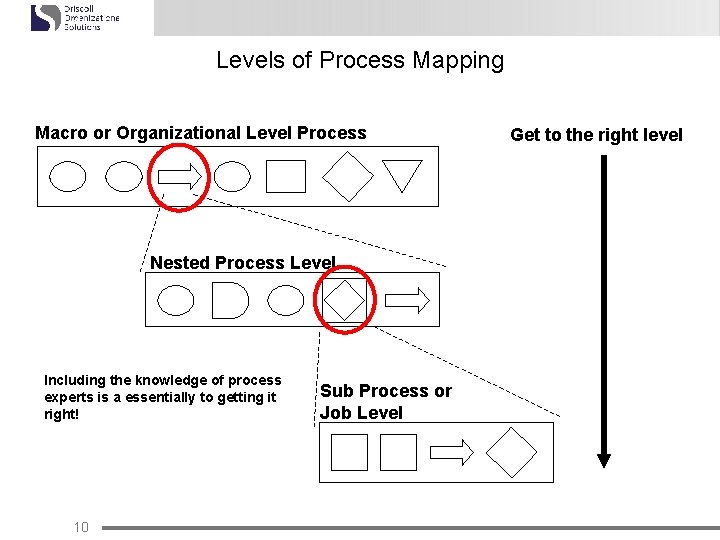
Levels of Process Mapping Macro or Organizational Level Process Nested Process Level Including the knowledge of process experts is a essentially to getting it right! 10 Sub Process or Job Level Get to the right level
Establish teams to address key business issues § Get the right mix of players § Natural interest and focus § Understand the process § Closest to the process § Understand needs and expectations 11
Process Mapping Charter Review As a team review the event charter and answer the following questions: What is the business need for this event? What are the clear geographic boundaries? Who is the owner? What are the goals for this event? 12
Steps to Process Mapping OBJECTIVES § Identify each of the basic steps to Process Mapping § Define each step in detail 13
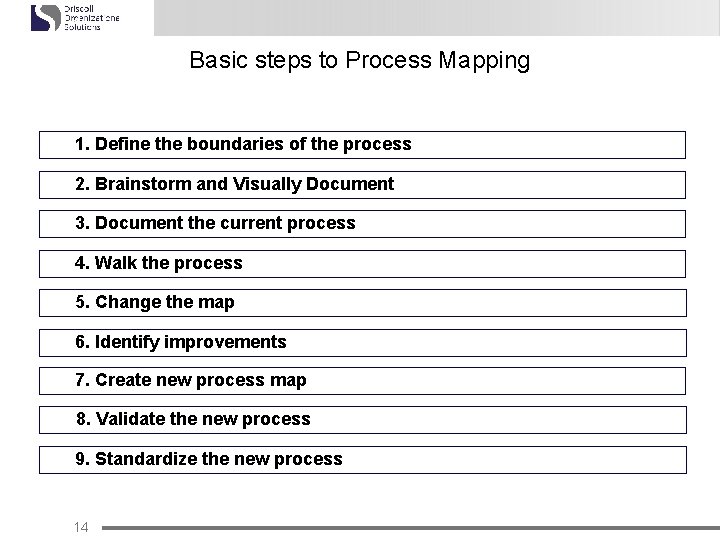
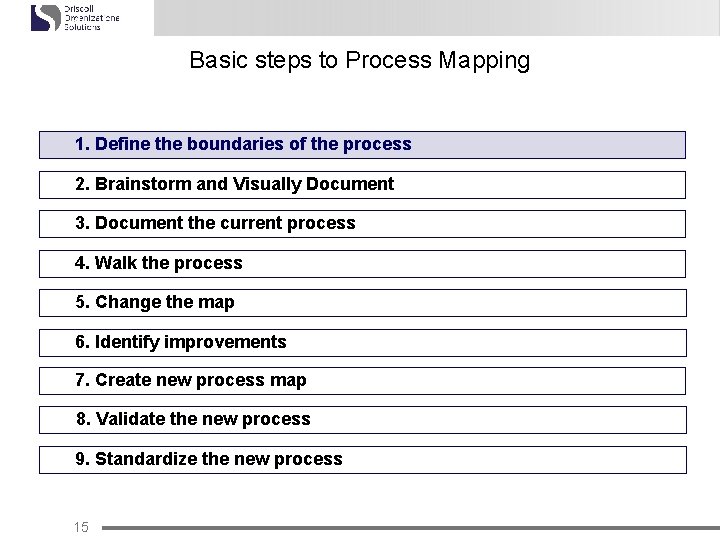
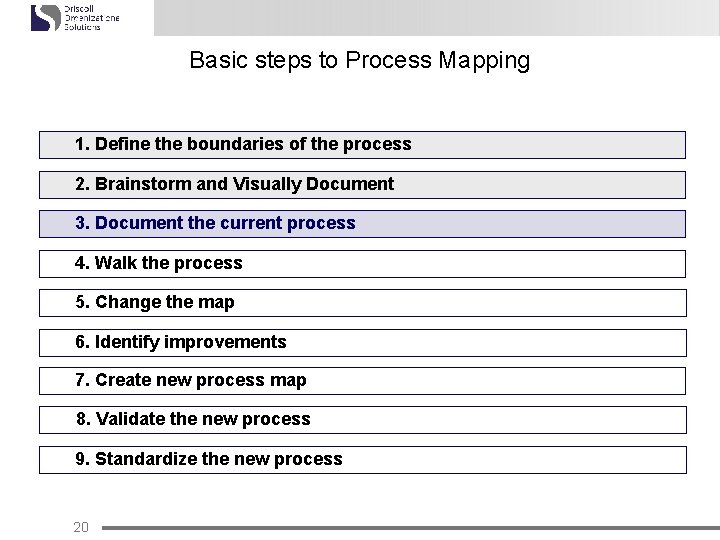
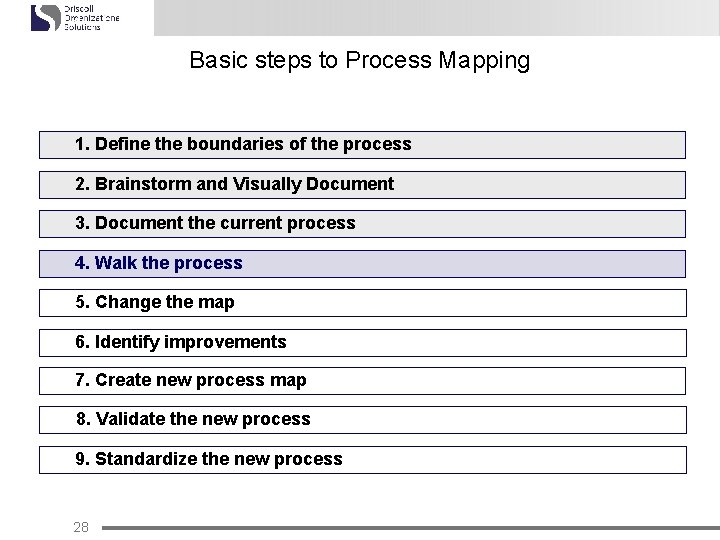
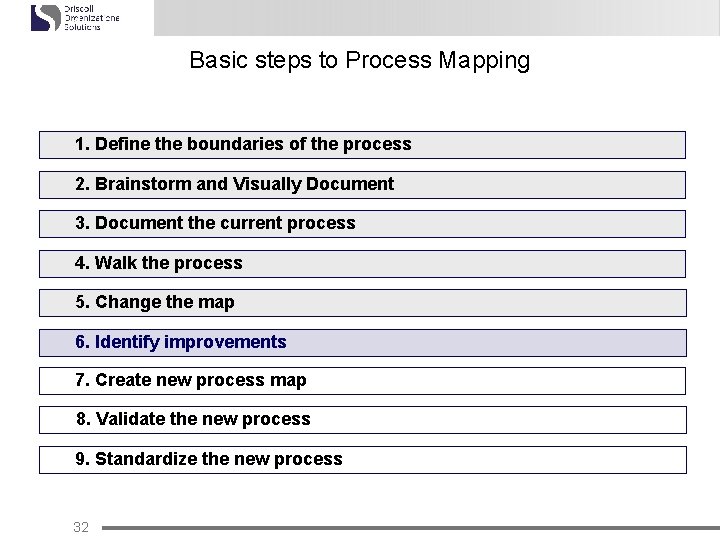
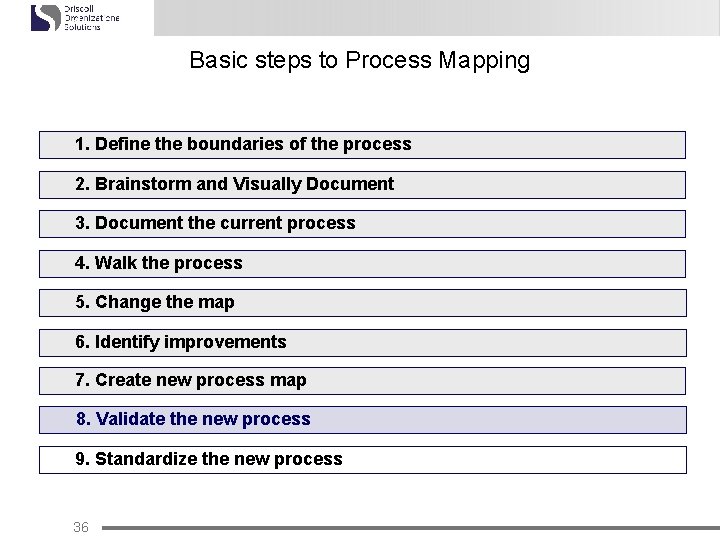
Basic steps to Process Mapping 1. Define the boundaries of the process 2. Brainstorm and Visually Document 3. Document the current process 4. Walk the process 5. Change the map 6. Identify improvements 7. Create new process map 8. Validate the new process 9. Standardize the new process 14
Basic steps to Process Mapping 1. Define the boundaries of the process 2. Brainstorm and Visually Document 3. Document the current process 4. Walk the process 5. Change the map 6. Identify improvements 7. Create new process map 8. Validate the new process 9. Standardize the new process 15
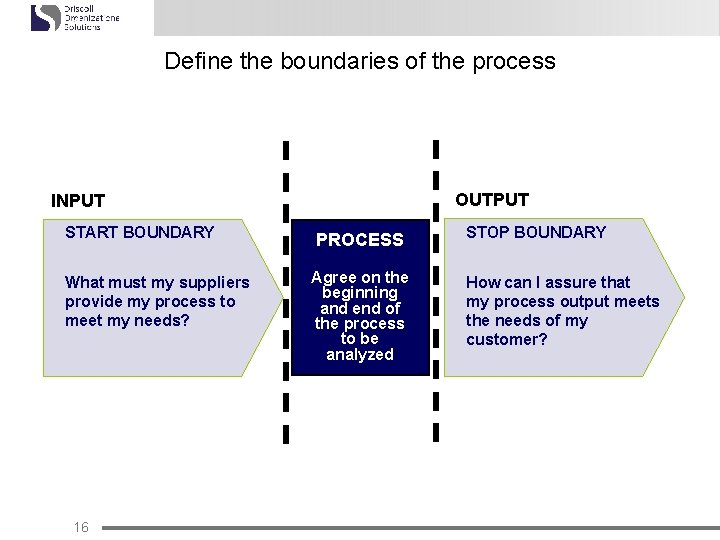
Define the boundaries of the process OUTPUT INPUT START BOUNDARY What must my suppliers provide my process to meet my needs? 16 PROCESS Agree on the beginning and end of the process to be analyzed STOP BOUNDARY How can I assure that my process output meets the needs of my customer?
Basic steps to Process Mapping 1. Define the boundaries of the process 2. Brainstorm and Visually Document 3. Document the current process 4. Walk the process 5. Change the map 6. Identify improvements 7. Create new process map 8. Validate the new process 9. Standardize the new process 17
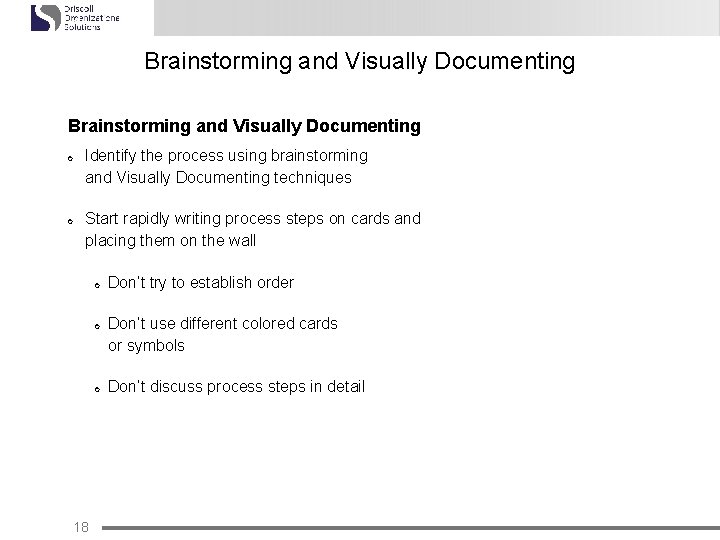
Brainstorming and Visually Documenting ¢ ¢ Identify the process using brainstorming and Visually Documenting techniques Start rapidly writing process steps on cards and placing them on the wall ¢ ¢ ¢ 18 Don’t try to establish order Don’t use different colored cards or symbols Don’t discuss process steps in detail
Ground Rules and Guidelines § Be open …. . generate ideas freely and rapidly § Be positive, supportive, non-critical…. . do not ‘criticize’ § Be willing to share your thoughts and feelings § Keep it simple § Team-play only § Build on the ideas of others § Try different and ‘wild’ directions § Avoid long discussions on any one idea 19
Basic steps to Process Mapping 1. Define the boundaries of the process 2. Brainstorm and Visually Document 3. Document the current process 4. Walk the process 5. Change the map 6. Identify improvements 7. Create new process map 8. Validate the new process 9. Standardize the new process 20
Document Current Process • Create a flowchart to arrange the process steps in time sequence Document current process and identify customer/supplier relationships Document the current way things are actually done, not the ideal, in order to identify opportunities Keep a record of problems, ideas or suggestions for change • • • 21
Flow Charting • Start with the input that initiates the process • Ask, “What happens next? ” • Record each step in boxes flowing from left to right or top to bottom. Put in arrows to show the flow of the process • When the flow can go in two directions, draw a diamond around a yes/no question and put in two arrows to show the two directions • Make sure each branch of the flow chart is complete • Always sign and date the flow chart for future reference 22
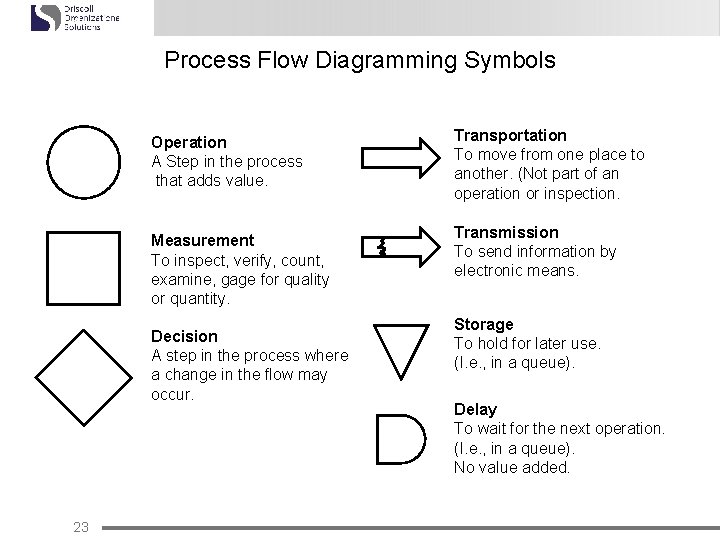
Process Flow Diagramming Symbols Operation A Step in the process that adds value. Measurement To inspect, verify, count, examine, gage for quality or quantity. Decision A step in the process where a change in the flow may occur. 23 Transportation To move from one place to another. (Not part of an operation or inspection. Transmission To send information by electronic means. Storage To hold for later use. (I. e. , in a queue). Delay To wait for the next operation. (I. e. , in a queue). No value added.
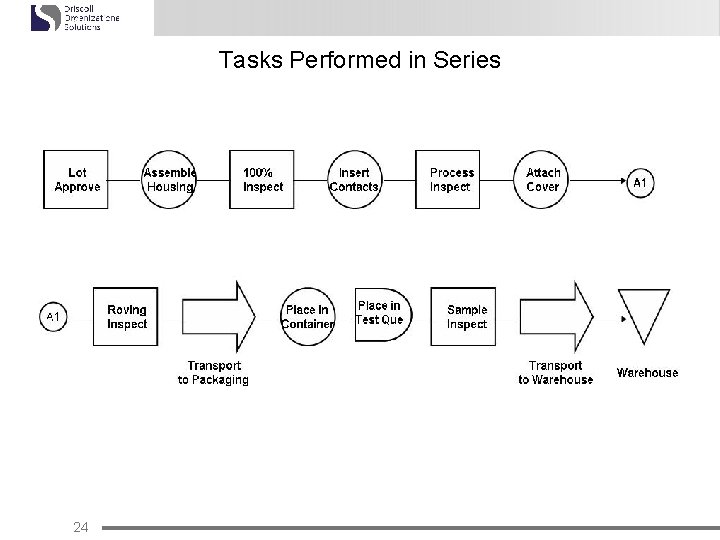
Tasks Performed in Series 24
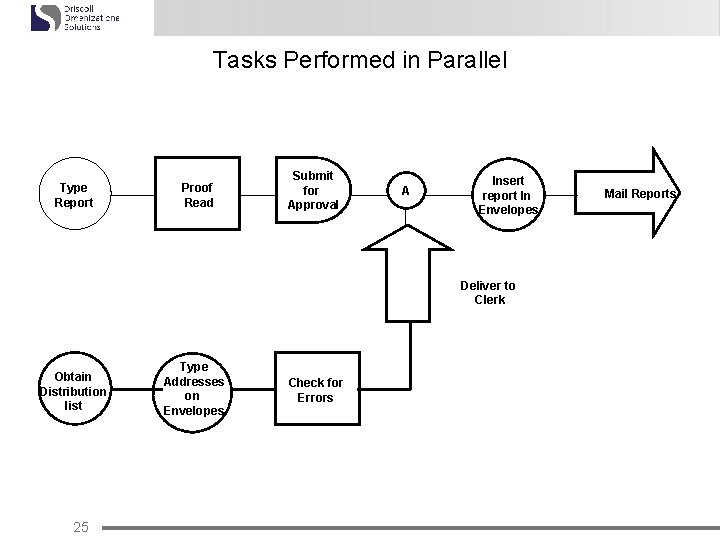
Tasks Performed in Parallel Type Report Proof Read Submit for Approval A Insert report In Envelopes Deliver to Clerk Obtain Distribution list 25 Type Addresses on Envelopes Check for Errors Mail Reports
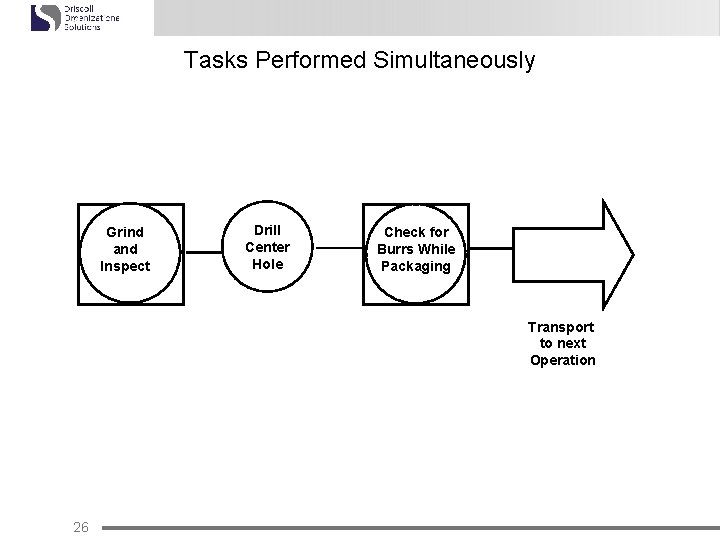
Tasks Performed Simultaneously Grind and Inspect Drill Center Hole Check for Burrs While Packaging Transport to next Operation 26
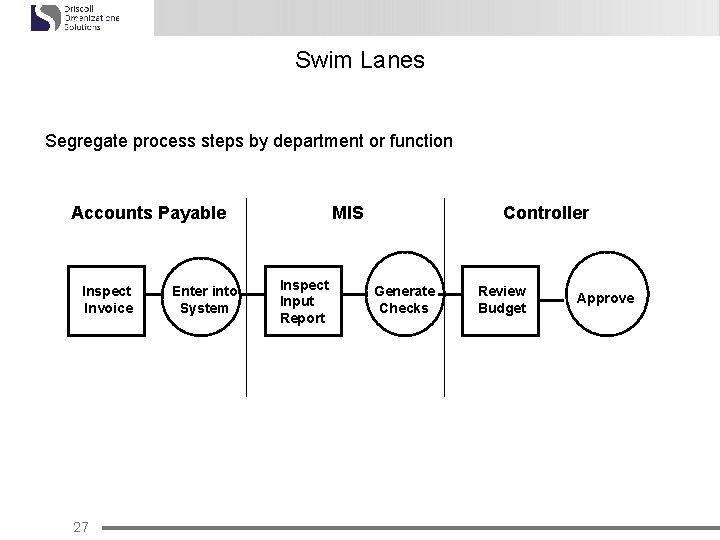
Swim Lanes Segregate process steps by department or function Accounts Payable Inspect Invoice 27 Enter into System MIS Inspect Input Report Controller Generate Checks Review Budget Approve
Basic steps to Process Mapping 1. Define the boundaries of the process 2. Brainstorm and Visually Document 3. Document the current process 4. Walk the process 5. Change the map 6. Identify improvements 7. Create new process map 8. Validate the new process 9. Standardize the new process 28
Walk the Process ¢ ¢ Use this step to validate your flowchart Note changes to your documented flow 29
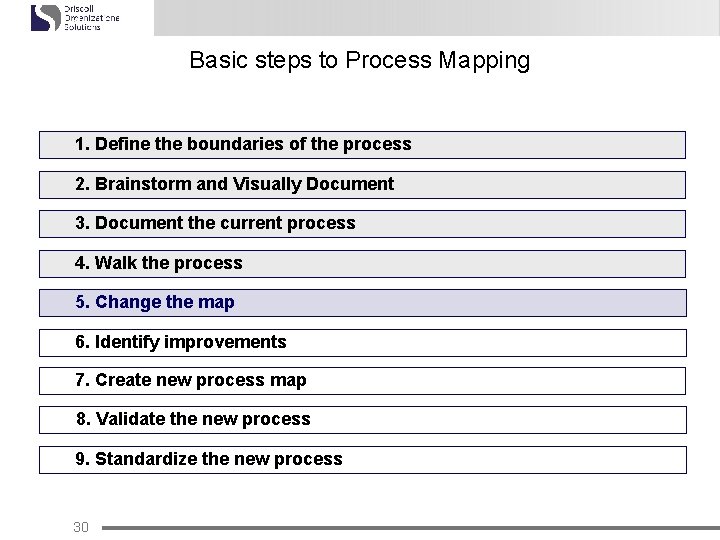
Basic steps to Process Mapping 1. Define the boundaries of the process 2. Brainstorm and Visually Document 3. Document the current process 4. Walk the process 5. Change the map 6. Identify improvements 7. Create new process map 8. Validate the new process 9. Standardize the new process 30
Change the Map ¢ ¢ Change the map to match the physical flow Concentrate on how the process exists at this point 31
Basic steps to Process Mapping 1. Define the boundaries of the process 2. Brainstorm and Visually Document 3. Document the current process 4. Walk the process 5. Change the map 6. Identify improvements 7. Create new process map 8. Validate the new process 9. Standardize the new process 32
Identify Improvements § Now that the maps are developed, ask the following questions § Based on your problem/opportunity statement: § Waste? § Delays? § Bad product? § Bad service? § Inventory queues? § Is it critical? § Is it controlled? How? § Does it add value? To which customer is it related? 33
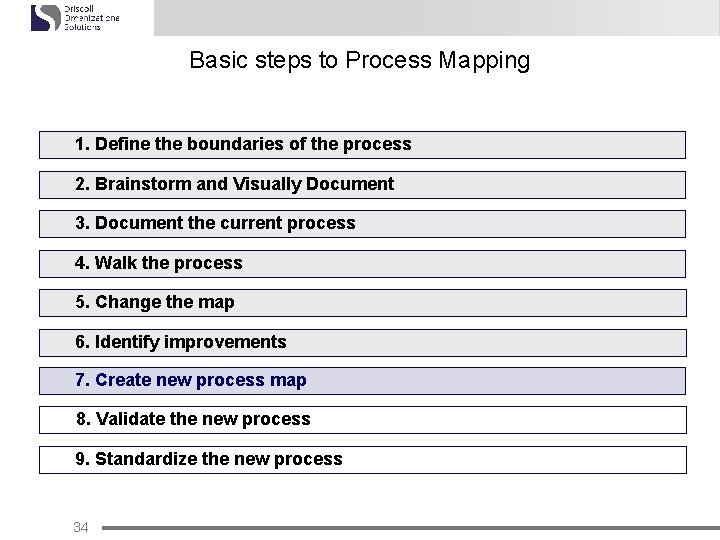
Basic steps to Process Mapping 1. Define the boundaries of the process 2. Brainstorm and Visually Document 3. Document the current process 4. Walk the process 5. Change the map 6. Identify improvements 7. Create new process map 8. Validate the new process 9. Standardize the new process 34
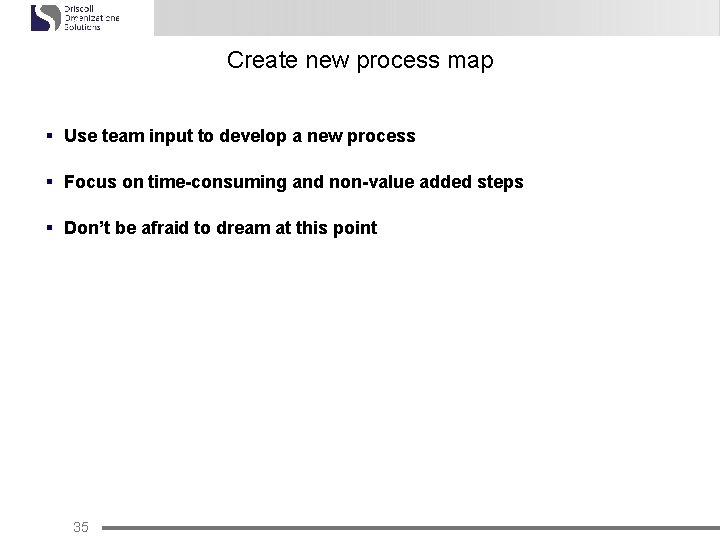
Create new process map § Use team input to develop a new process § Focus on time-consuming and non-value added steps § Don’t be afraid to dream at this point 35
Basic steps to Process Mapping 1. Define the boundaries of the process 2. Brainstorm and Visually Document 3. Document the current process 4. Walk the process 5. Change the map 6. Identify improvements 7. Create new process map 8. Validate the new process 9. Standardize the new process 36
Validate the New Process § Once again, walk the process to validate the steps § Look for bottlenecks § Keep the customer in mind! § Is the process delivering it’s product or service with minimal waste? § Listen to the process owners 37
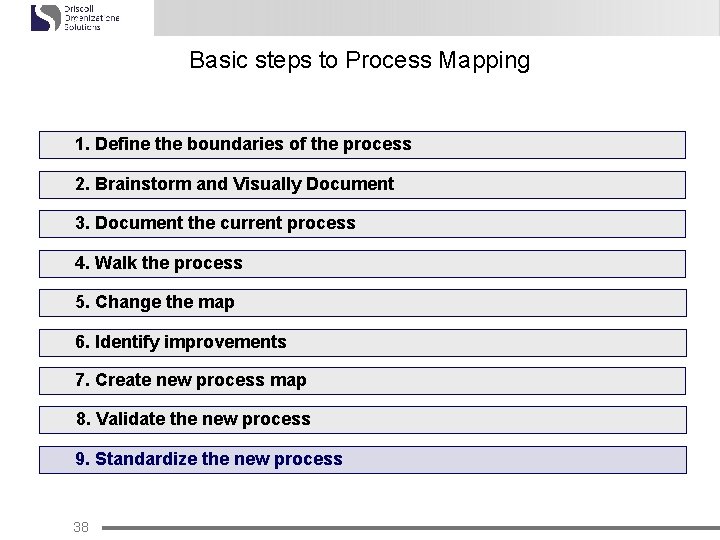
Basic steps to Process Mapping 1. Define the boundaries of the process 2. Brainstorm and Visually Document 3. Document the current process 4. Walk the process 5. Change the map 6. Identify improvements 7. Create new process map 8. Validate the new process 9. Standardize the new process 38
Standardize the New Process § Make the new process Standard Operating Procedure § Train the appropriate associates in the new process flow § Monitor the process for problems § Watch out for those who slip back to the old way 39
Steps to Process Mapping OBJECTIVES § Review types of Process Maps § Review Process Map Example § Review Process Mapping Hints 40
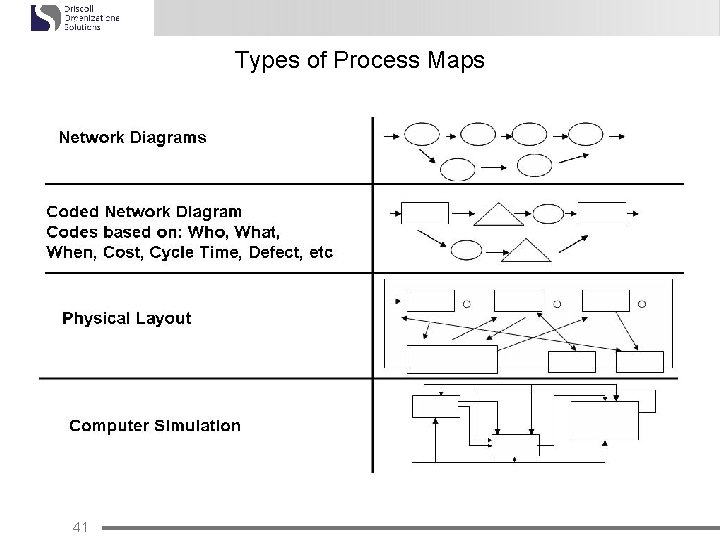
Types of Process Maps 41
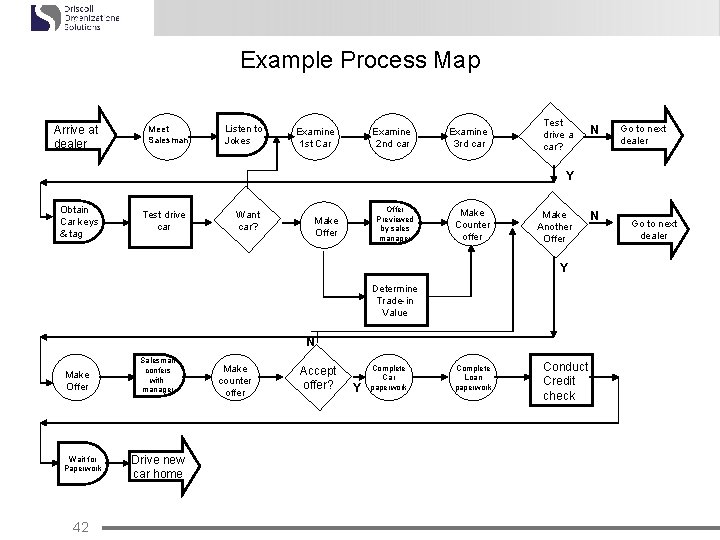
Example Process Map Arrive at dealer Meet Salesman Listen to Jokes Examine 1 st Car Examine 2 nd car Examine 3 rd car Test drive a car? N Go to next dealer Y Obtain Car keys & tag Test drive car Want car? Offer Previewed by sales manager Make Offer Make Counter offer Make Another Offer Y Determine Trade-in Value N Make Offer Wait for Paperwork 42 Salesman confers with manager Drive new car home Make counter offer Accept offer? Y Complete Car paperwork Complete Loan paperwork Conduct Credit check N Go to next dealer
Process Mapping Hints § May need to start with a macro level map § Visually Document technique useful for mapping a process that is well-defined § Doing the map in sequential order may help when mapping difficult processes § Allow at least 2 – 4 hours to map a process (may be much longer for more difficult or complex maps) § Make sure that all segments of the process are represented by someone on the team § Always try to look at the worst case scenario 43