
Process Management in Public Sector a Case Driven
Process Management in Public Sector : a Case Driven approach Joachim Vanden Brande, CEO, Lo. Qutus March 19 th, 2012 Warschau © Lo. Qutus 1
Agenda • Why process management in public sector ? • Different patterns to support process management • Solutions • Case • Q&A © Lo. Qutus 2
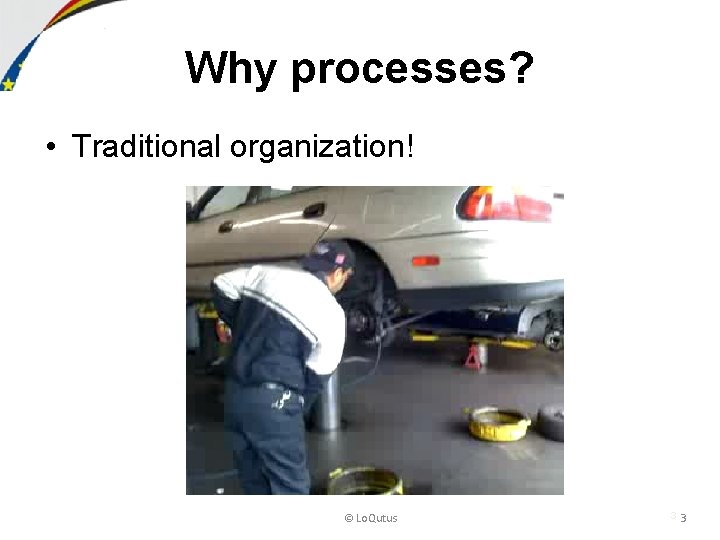
Why processes? • Traditional organization! © Lo. Qutus 3 3
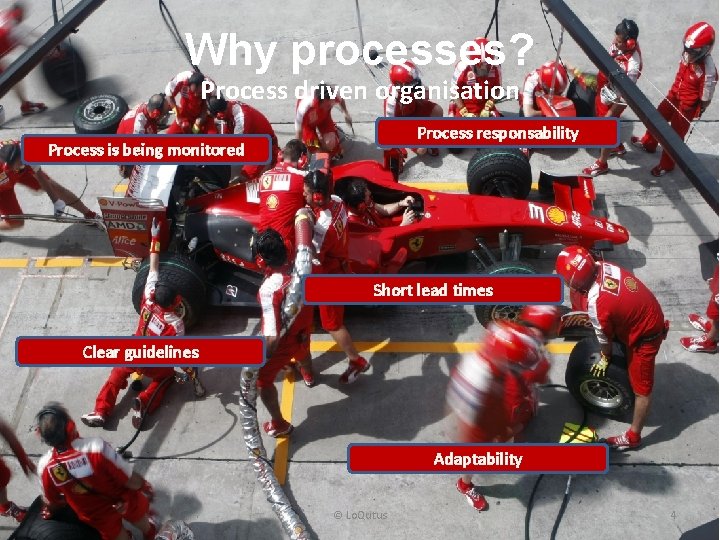
Why processes? Process driven organisation Process responsability Process is being monitored Short lead times Clear guidelines Adaptability © Lo. Qutus 4 4
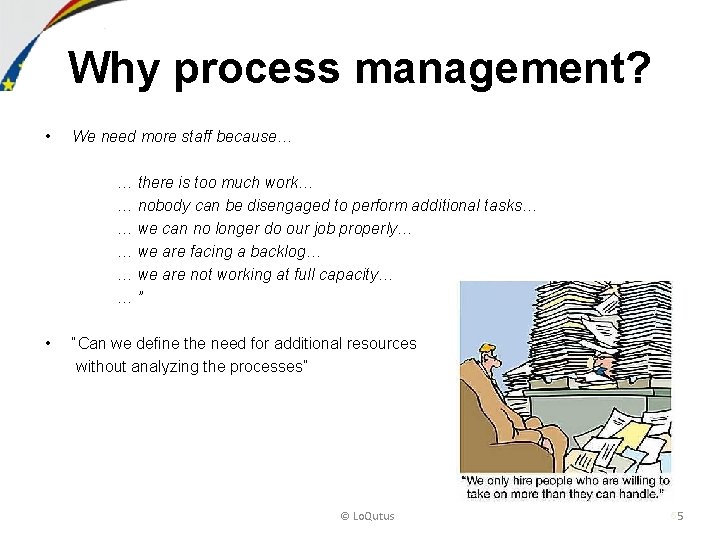
Why process management? • We need more staff because… … there is too much work… … nobody can be disengaged to perform additional tasks… … we can no longer do our job properly… … we are facing a backlog… … we are not working at full capacity… …” • “Can we define the need for additional resources without analyzing the processes” © Lo. Qutus 55
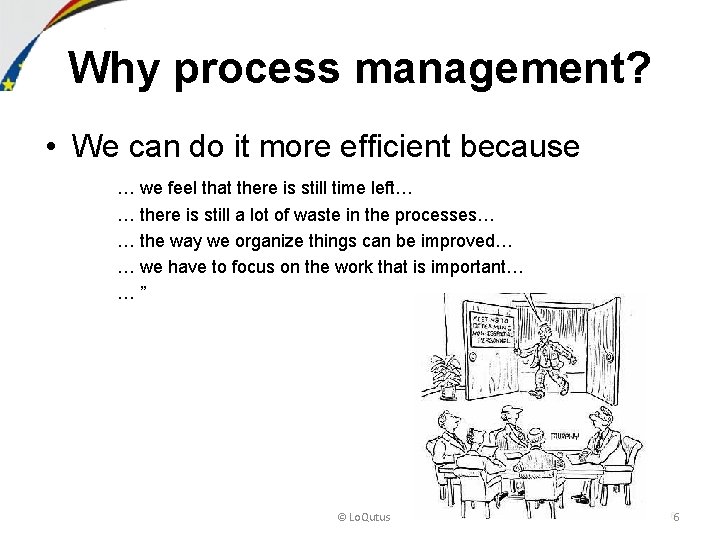
Why process management? • We can do it more efficient because … we feel that there is still time left… … there is still a lot of waste in the processes… … the way we organize things can be improved… … we have to focus on the work that is important… …” © Lo. Qutus 66
Why process management? In an information-based services company: • 5% of the activities create an added value … • 50 % of the activities are necessary, but do not create any added value for the citizens … • 45 % of the activities do not create any added value … Answering telephone calls, emails, …that are not intended for the company … Defective or incorrect information leading to additional contacts. . . Unreliable process quality resulting in extra work. . . 7 © Lo. Qutus 7
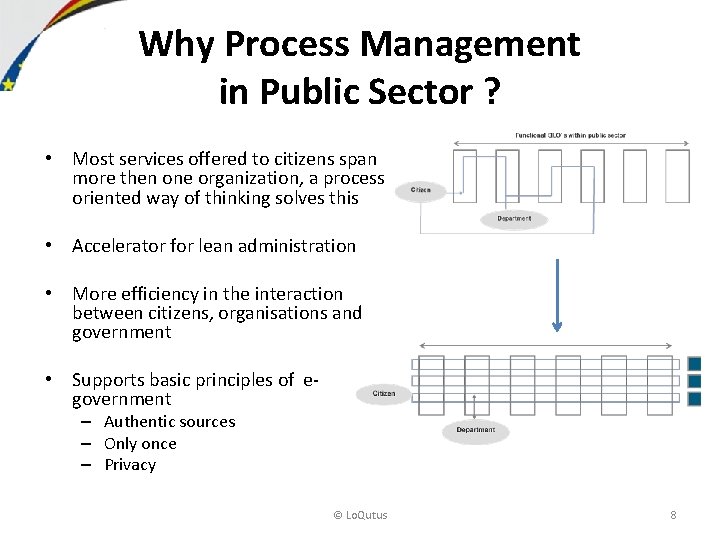
Why Process Management in Public Sector ? • Most services offered to citizens span more then one organization, a process oriented way of thinking solves this • Accelerator for lean administration • More efficiency in the interaction between citizens, organisations and government • Supports basic principles of egovernment – Authentic sources – Only once – Privacy © Lo. Qutus 8
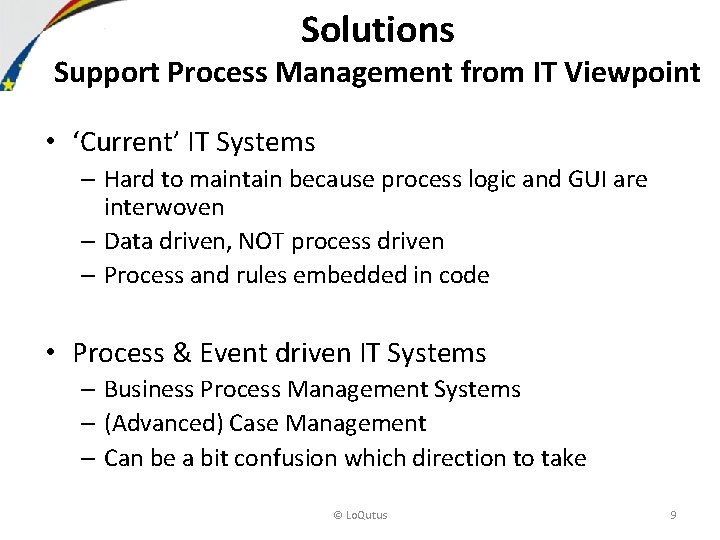
Solutions Support Process Management from IT Viewpoint • ‘Current’ IT Systems – Hard to maintain because process logic and GUI are interwoven – Data driven, NOT process driven – Process and rules embedded in code • Process & Event driven IT Systems – Business Process Management Systems – (Advanced) Case Management – Can be a bit confusion which direction to take © Lo. Qutus 9
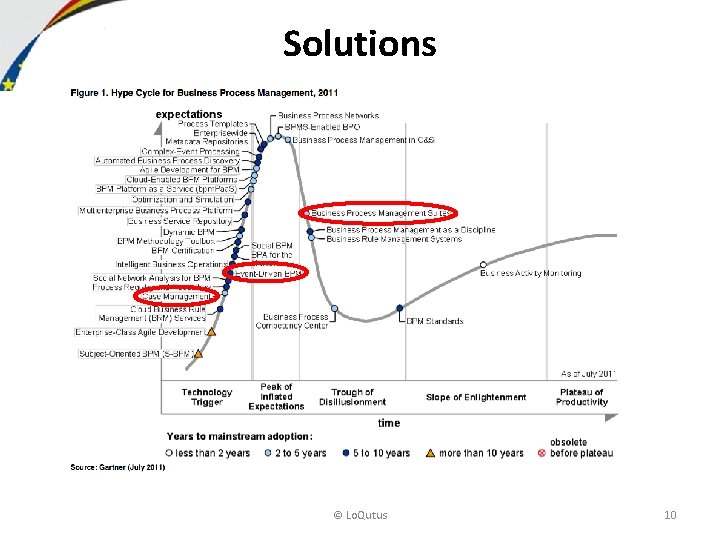
Solutions © Lo. Qutus 10
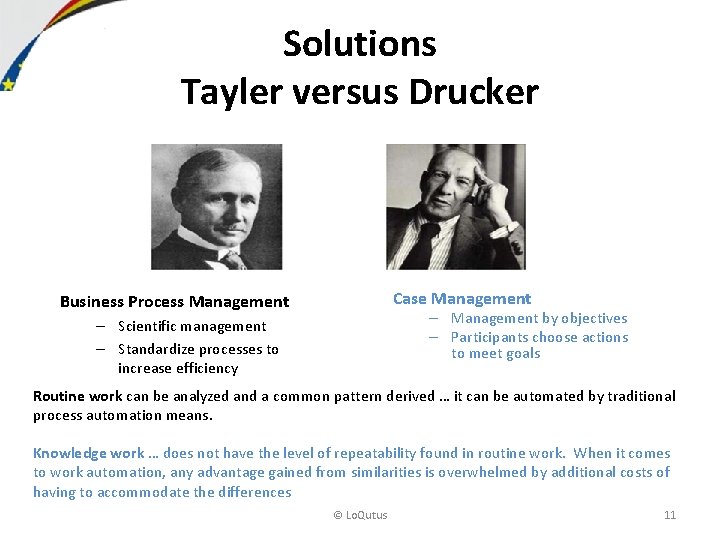
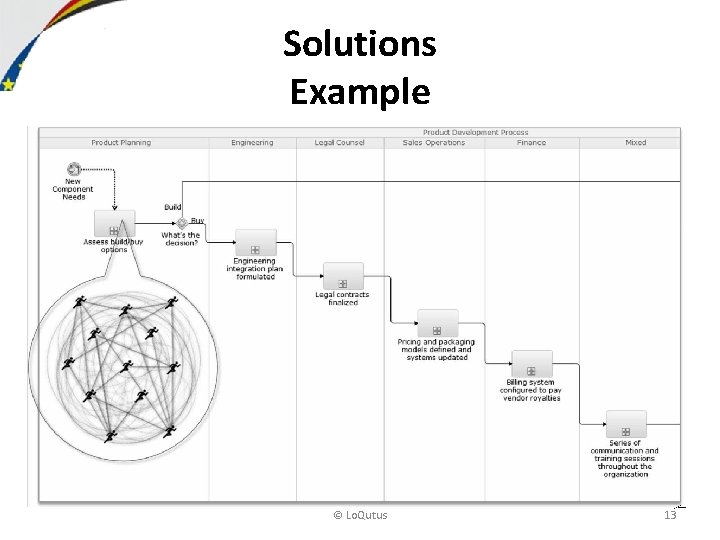
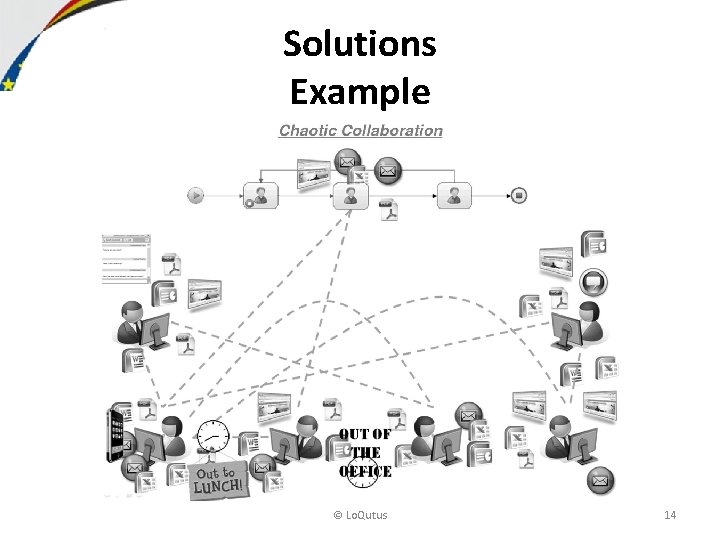
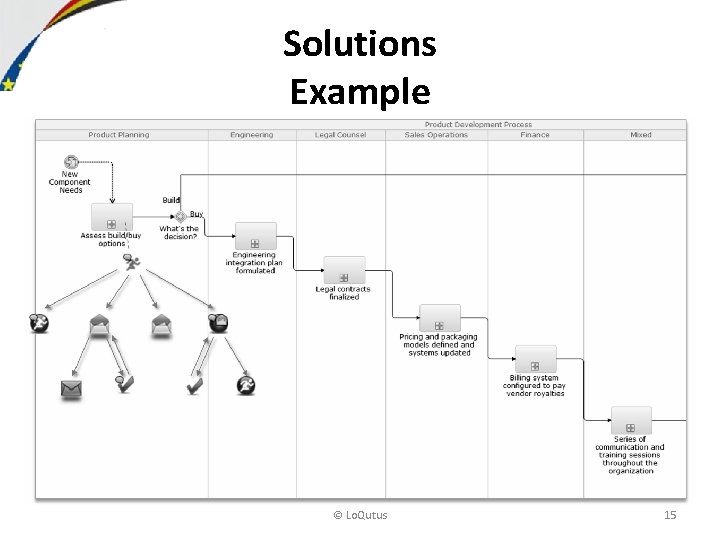
Solutions Tayler versus Drucker Case Management Business Process Management – Management by objectives – Participants choose actions to meet goals – Scientific management – Standardize processes to increase efficiency Routine work can be analyzed and a common pattern derived … it can be automated by traditional process automation means. Knowledge work … does not have the level of repeatability found in routine work. When it comes to work automation, any advantage gained from similarities is overwhelmed by additional costs of having to accommodate the differences © Lo. Qutus 11
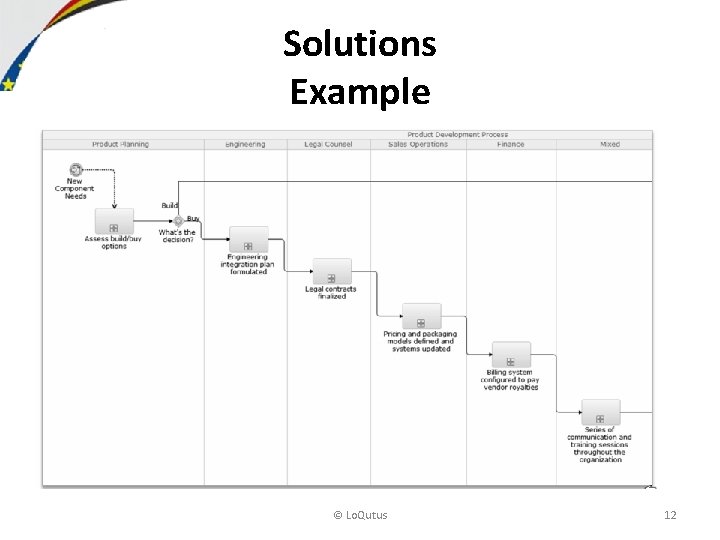
Solutions Example © Lo. Qutus 12
Solutions Example © Lo. Qutus 13
Solutions Example © Lo. Qutus 14
Solutions Example © Lo. Qutus 15
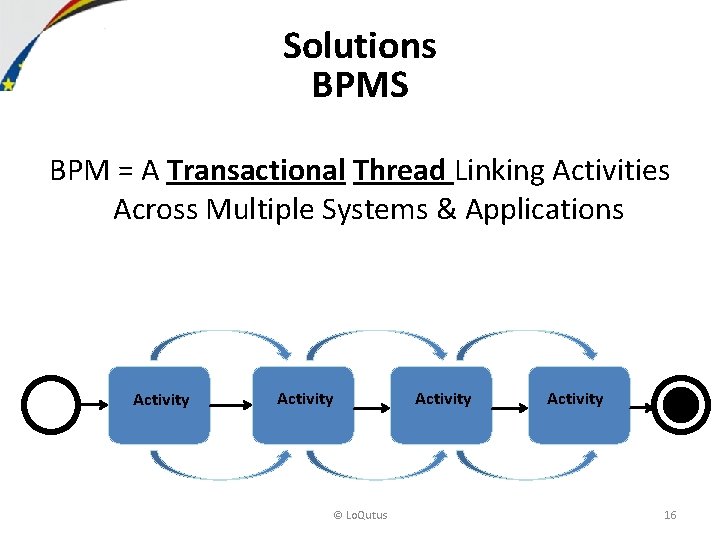
Solutions BPMS BPM = A Transactional Thread Linking Activities Across Multiple Systems & Applications State Activity Control © Lo. Qutus Activity Control 16
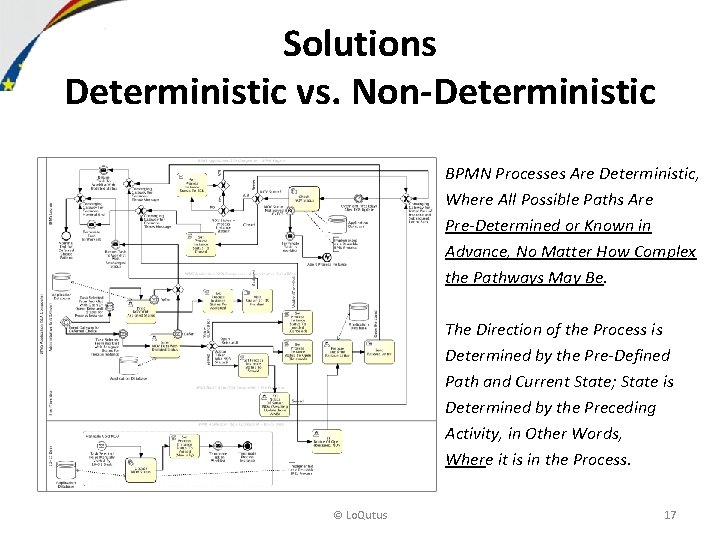
Solutions Deterministic vs. Non-Deterministic BPMN Processes Are Deterministic, Where All Possible Paths Are Pre-Determined or Known in Advance, No Matter How Complex the Pathways May Be. The Direction of the Process is Determined by the Pre-Defined Path and Current State; State is Determined by the Preceding Activity, in Other Words, Where it is in the Process. © Lo. Qutus 17
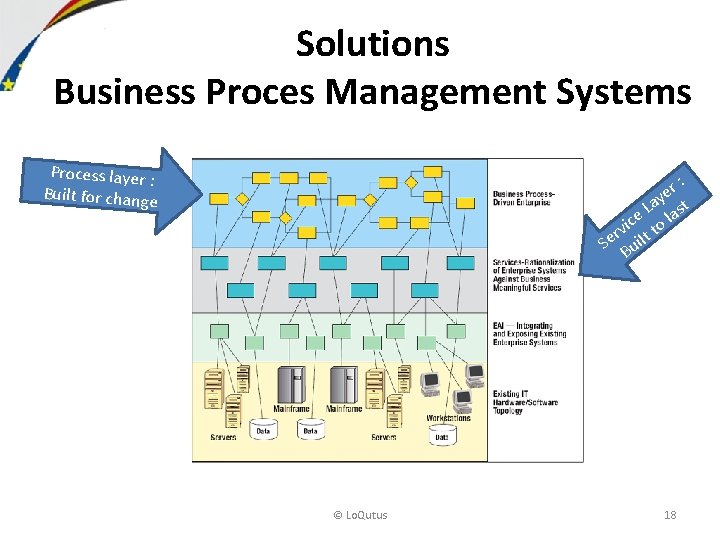
Solutions Business Proces Management Systems Process layer : Built for change r: e ay st L ice to la v r Se uilt B © Lo. Qutus 18
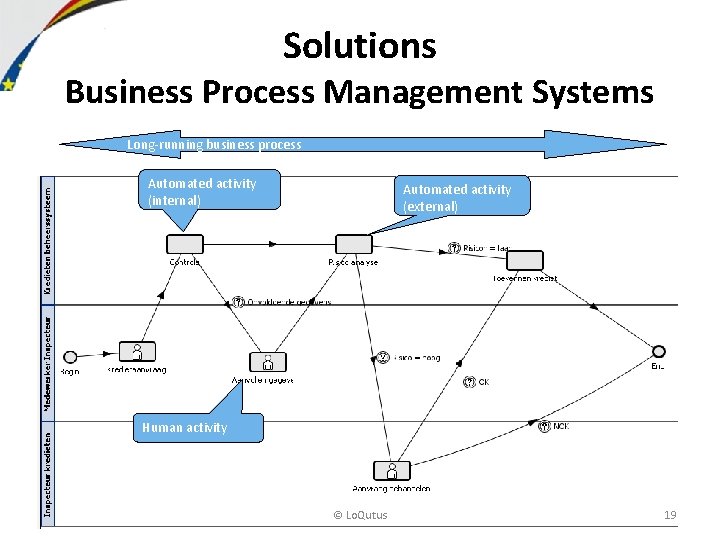
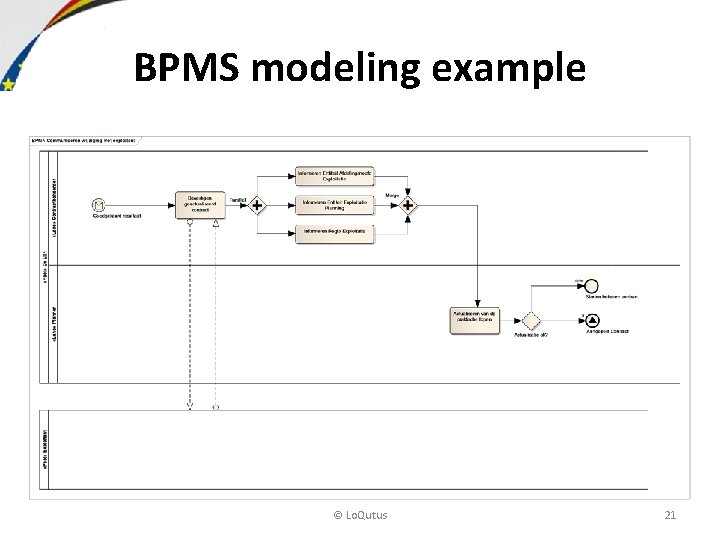
Solutions Business Process Management Systems Long-running business process Automated activity (internal) Automated activity (external) Human activity © Lo. Qutus 19
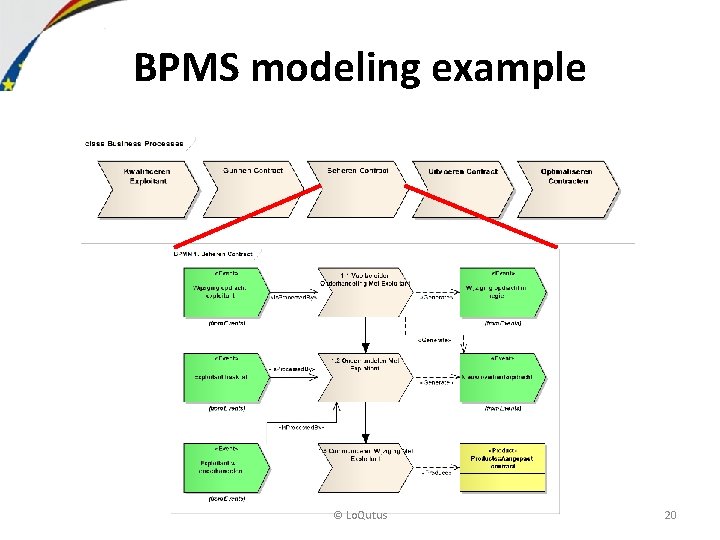
BPMS modeling example © Lo. Qutus 20
BPMS modeling example © Lo. Qutus 21
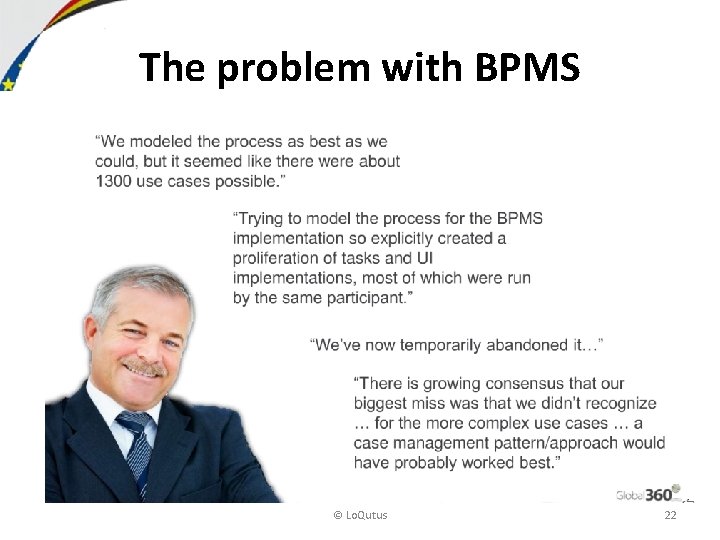
The problem with BPMS © Lo. Qutus 22
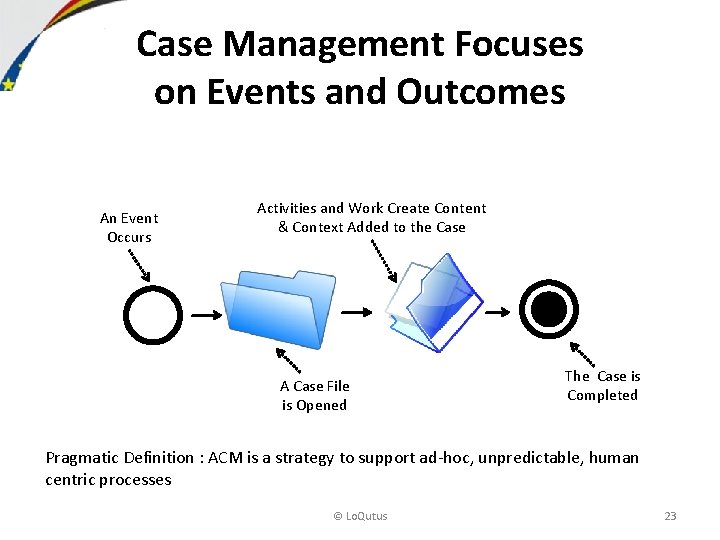
Case Management Focuses on Events and Outcomes An Event Occurs Activities and Work Create Content & Context Added to the Case A Case File is Opened The Case is Completed Pragmatic Definition : ACM is a strategy to support ad-hoc, unpredictable, human centric processes © Lo. Qutus 23
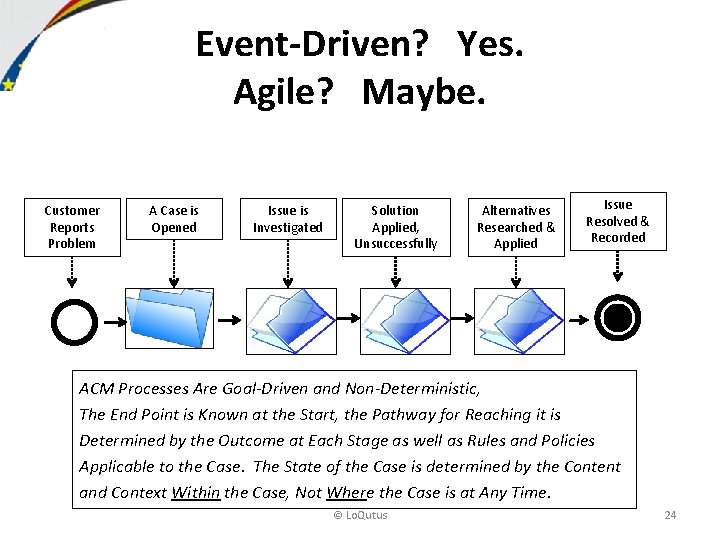
Event-Driven? Yes. Agile? Maybe. Customer Reports Problem A Case is Opened Issue is Investigated Solution Applied, Unsuccessfully Alternatives Researched & Applied Issue Resolved & Recorded ACM Processes Are Goal-Driven and Non-Deterministic, The End Point is Known at the Start, the Pathway for Reaching it is Determined by the Outcome at Each Stage as well as Rules and Policies Applicable to the Case. The State of the Case is determined by the Content and Context Within the Case, Not Where the Case is at Any Time. © Lo. Qutus 24
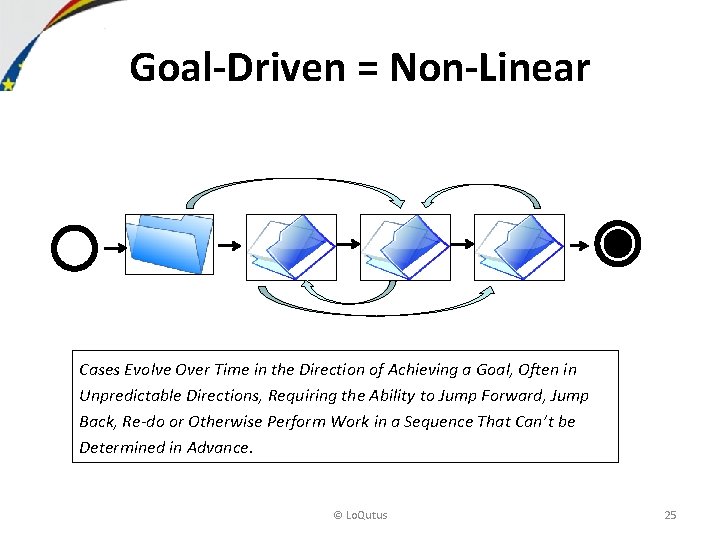
Goal-Driven = Non-Linear Cases Evolve Over Time in the Direction of Achieving a Goal, Often in Unpredictable Directions, Requiring the Ability to Jump Forward, Jump Back, Re-do or Otherwise Perform Work in a Sequence That Can’t be Determined in Advance. © Lo. Qutus 25
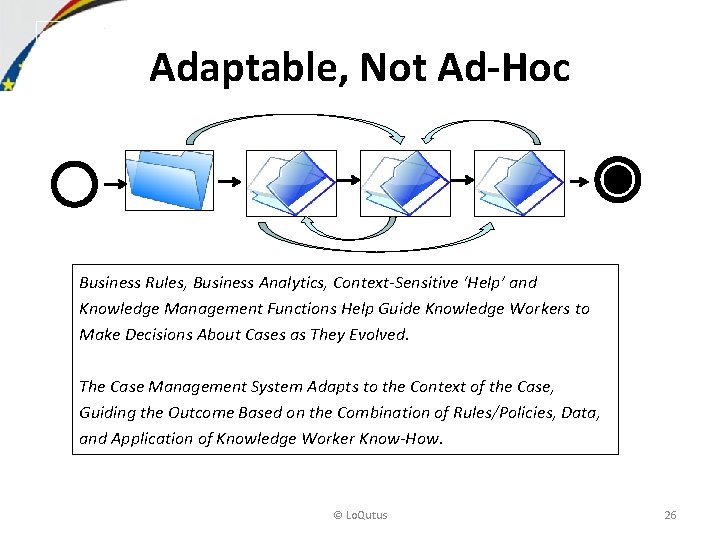
Adaptable, Not Ad-Hoc Business Rules, Business Analytics, Context-Sensitive ‘Help’ and Knowledge Management Functions Help Guide Knowledge Workers to Make Decisions About Cases as They Evolved. The Case Management System Adapts to the Context of the Case, Guiding the Outcome Based on the Combination of Rules/Policies, Data, and Application of Knowledge Worker Know-How. © Lo. Qutus 26
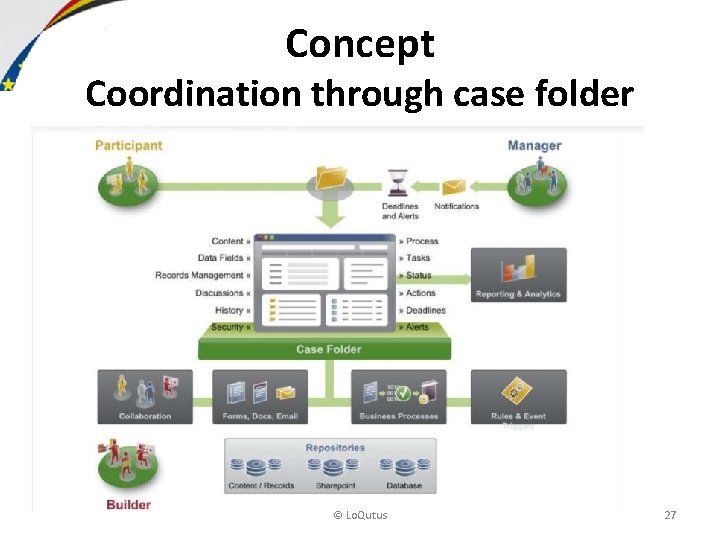
Concept Coordination through case folder © Lo. Qutus 27
© Lo. Qutus 28
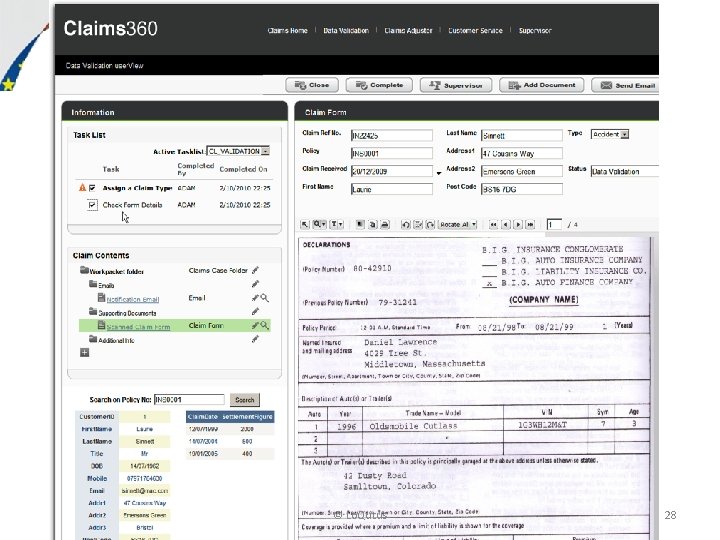
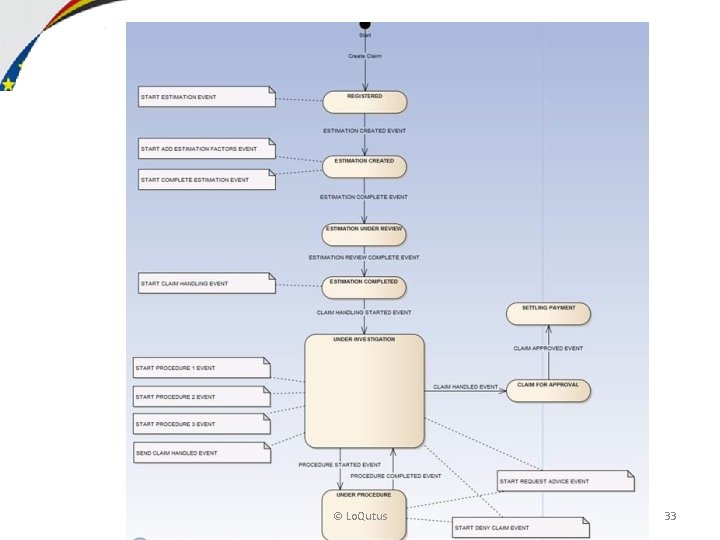
Claim case – High level © Lo. Qutus 29
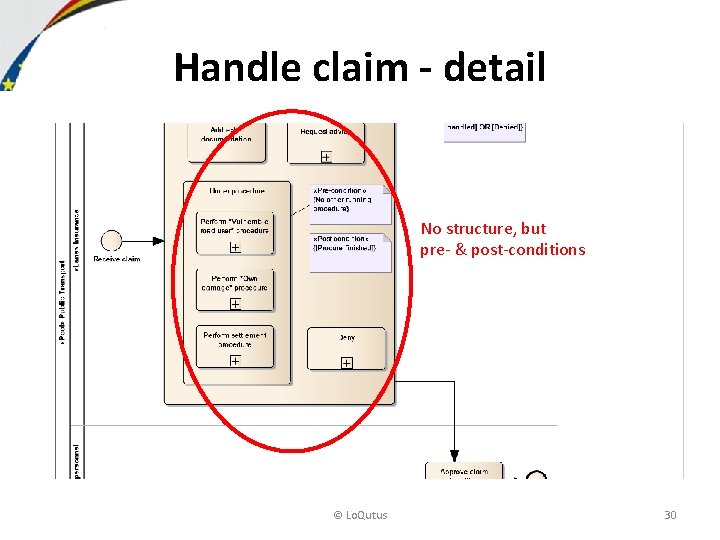
Handle claim - detail No structure, but pre- & post-conditions © Lo. Qutus 30
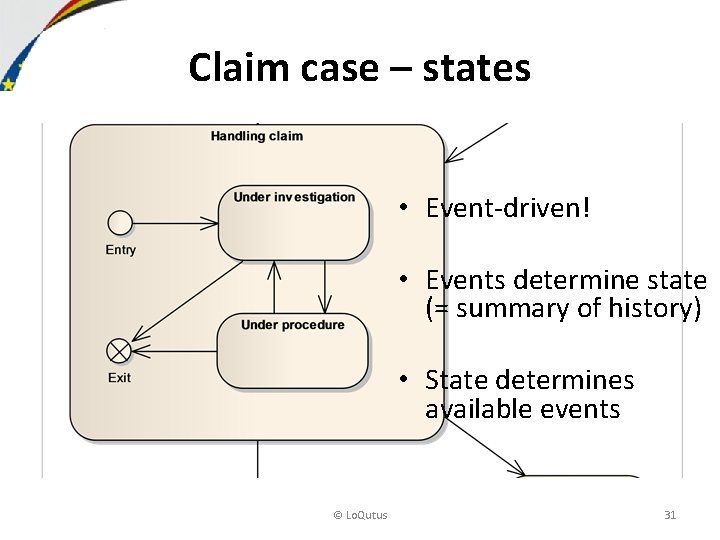
Claim case – states • Event-driven! • Events determine state (= summary of history) • State determines available events © Lo. Qutus 31
Claim case – High level © Lo. Qutus 32
© Lo. Qutus 33
Case Manage end-to-end process : Subsidies for school infrastructure © Lo. Qutus 34
Business process (simplified) • Agion – Project ALPHA © Lo. Qutus 35
Key succes factors (IT) • Maximum configurability (business users) – Letter templates – Calculations (rules) – Checklists++ © Lo. Qutus 36
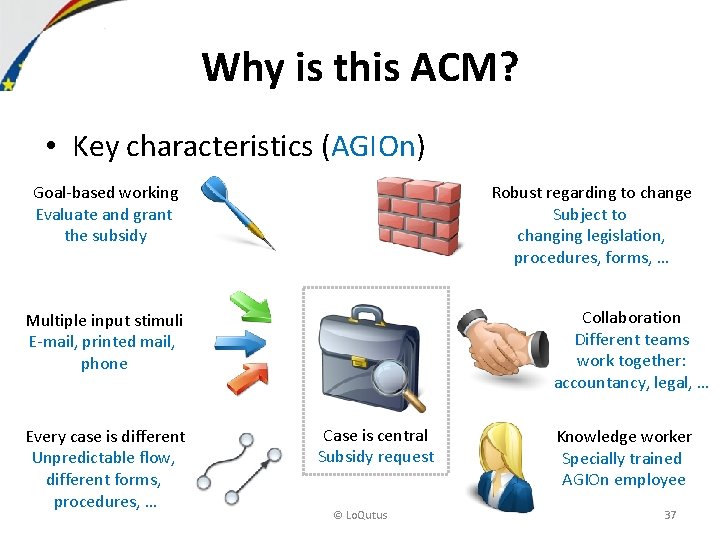
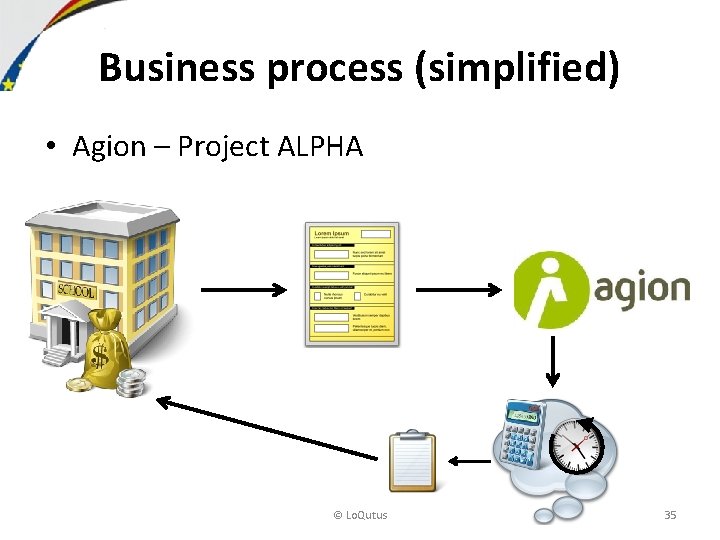
Why is this ACM? • Key characteristics (AGIOn) Goal-based working Evaluate and grant the subsidy Robust regarding to change Subject to changing legislation, procedures, forms, … Collaboration Different teams work together: accountancy, legal, … Multiple input stimuli E-mail, printed mail, phone Every case is different Unpredictable flow, different forms, procedures, … Case is central Subsidy request © Lo. Qutus Knowledge worker Specially trained AGIOn employee 37
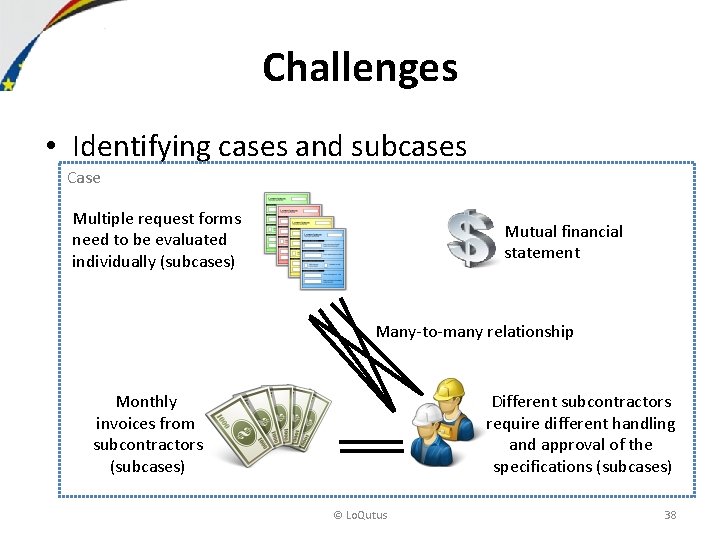
Challenges • Identifying cases and subcases Case Multiple request forms need to be evaluated individually (subcases) Mutual financial statement Many-to-many relationship Monthly invoices from subcontractors (subcases) Different subcontractors require different handling and approval of the specifications (subcases) © Lo. Qutus 38
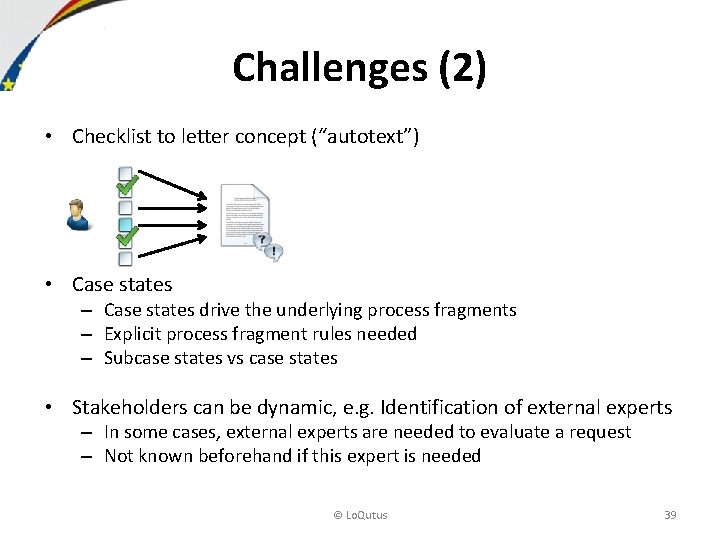
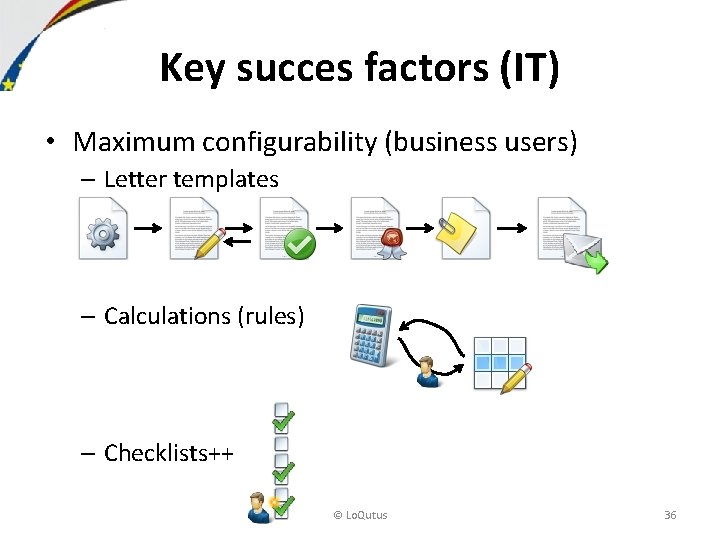
Challenges (2) • Checklist to letter concept (“autotext”) • Case states – Case states drive the underlying process fragments – Explicit process fragment rules needed – Subcase states vs case states • Stakeholders can be dynamic, e. g. Identification of external experts – In some cases, external experts are needed to evaluate a request – Not known beforehand if this expert is needed © Lo. Qutus 39
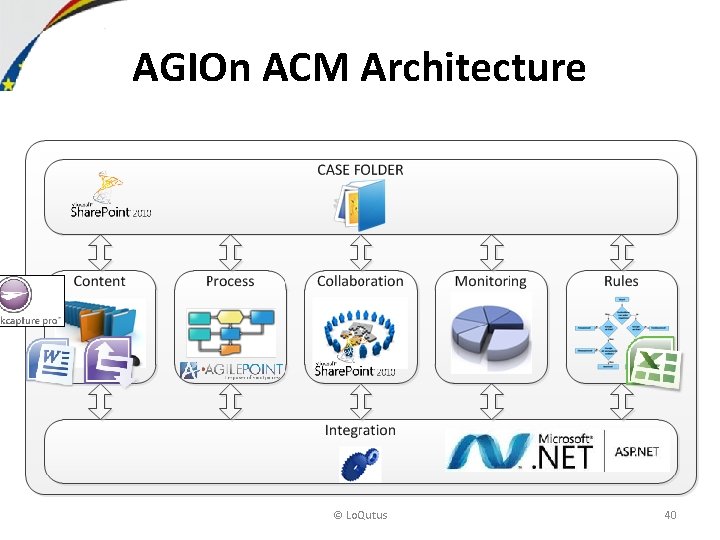
AGIOn ACM Architecture © Lo. Qutus 40
Summary • Process Management is necessary when we want to optimize the way organizations in Public Sector work • Process modeling and discovery should focus on both structured and unstructured processes in order to realize IT systems that support process management • State-of-the-art IT systems (BPMS & ACM) each have advantages, combine them © Lo. Qutus 41
Q&A Literature © Lo. Qutus 42
- Slides: 42