
Process Innovation Process Innovation CapabilityTalentAbility Knowledge Skills Sources

Process Innovation
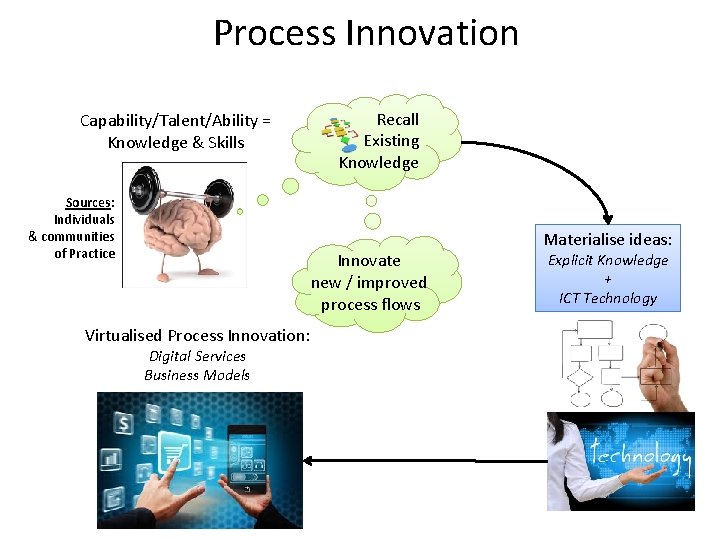
Process Innovation Capability/Talent/Ability = Knowledge & Skills Sources: Individuals & communities of Practice Recall Existing Knowledge Innovate new / improved process flows Virtualised Process Innovation: Digital Services Business Models Materialise ideas: Explicit Knowledge + ICT Technology
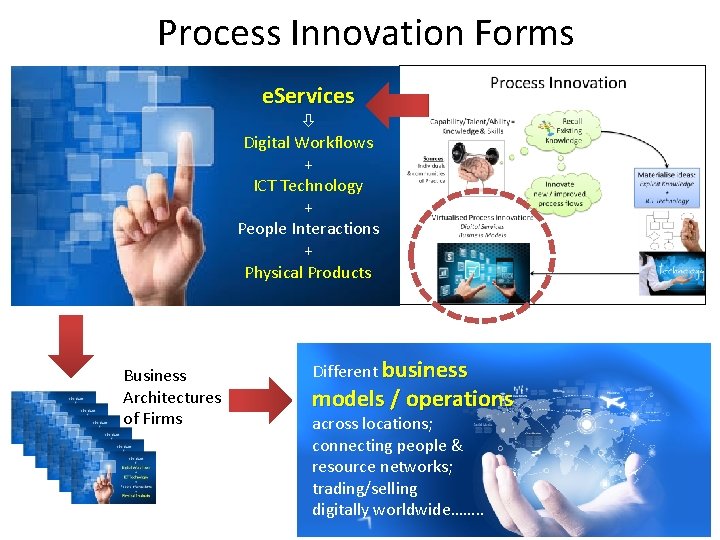
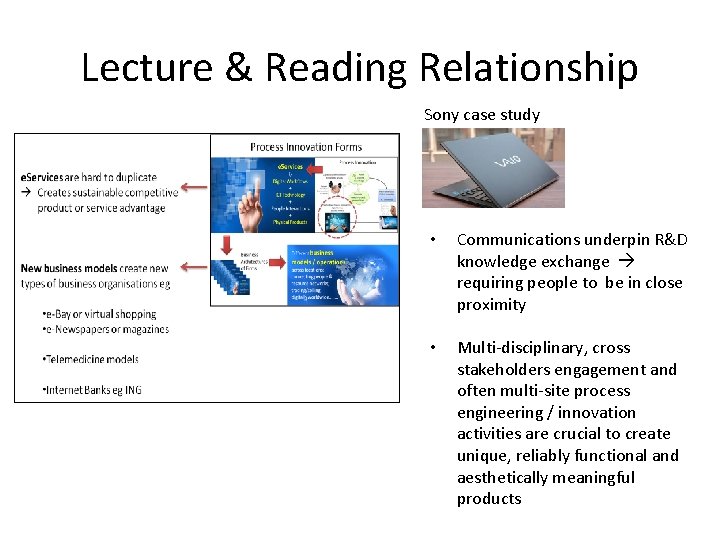
Process Innovation Forms e. Services Digital Workflows + ICT Technology + People Interactions + Physical Products Business Architectures of Firms Different business models / operations across locations; connecting people & resource networks; trading/selling digitally worldwide……. .
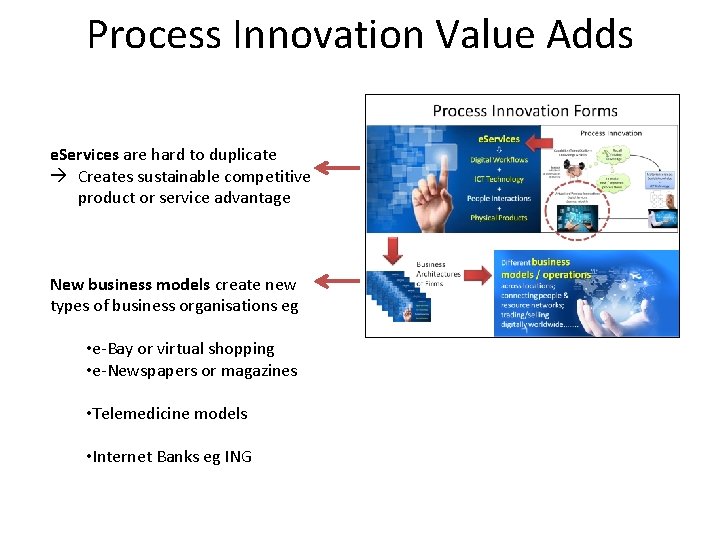
Process Innovation Value Adds e. Services are hard to duplicate Creates sustainable competitive product or service advantage New business models create new types of business organisations eg • e-Bay or virtual shopping • e-Newspapers or magazines • Telemedicine models • Internet Banks eg ING
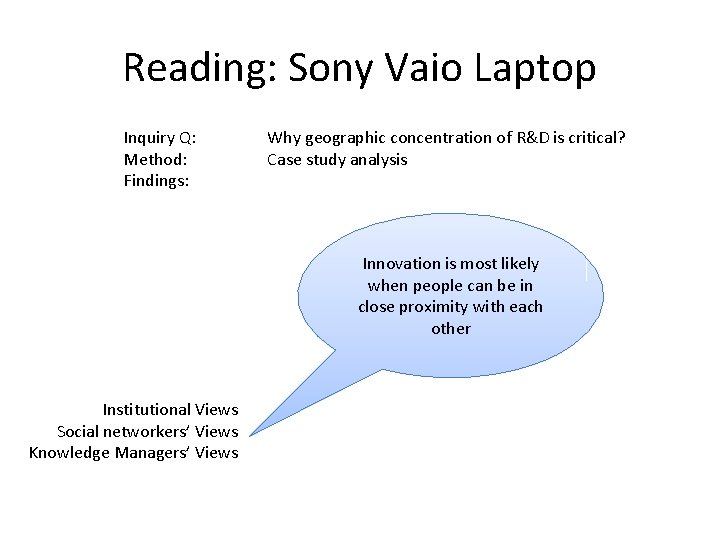
Reading: Sony Vaio Laptop Inquiry Q: Method: Findings: Why geographic concentration of R&D is critical? Case study analysis Innovation is most likely when people can be in close proximity with each other Institutional Views Social networkers’ Views Knowledge Managers’ Views
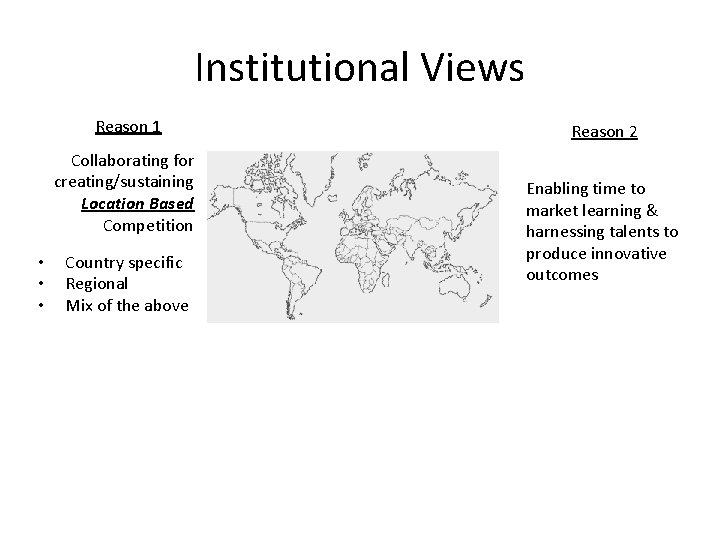
Institutional Views Reason 1 Collaborating for creating/sustaining Location Based Competition • • • Country specific Regional Mix of the above Reason 2 Enabling time to market learning & harnessing talents to produce innovative outcomes
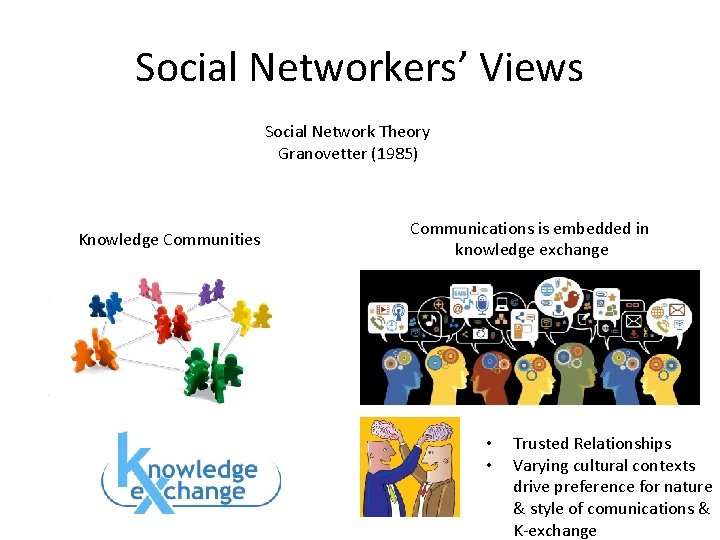
Social Networkers’ Views Social Network Theory Granovetter (1985) Knowledge Communities Communications is embedded in knowledge exchange • • Trusted Relationships Varying cultural contexts drive preference for nature & style of comunications & K-exchange
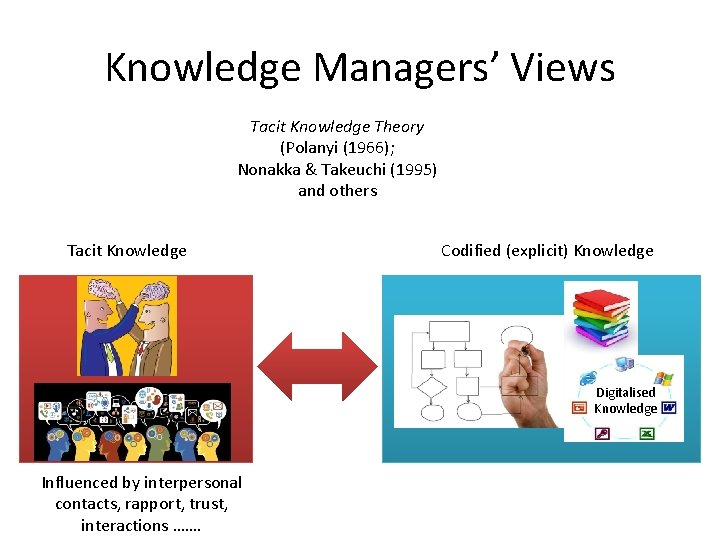
Knowledge Managers’ Views Tacit Knowledge Theory (Polanyi (1966); Nonakka & Takeuchi (1995) and others Tacit Knowledge Codified (explicit) Knowledge Digitalised Knowledge Influenced by interpersonal contacts, rapport, trust, interactions …….
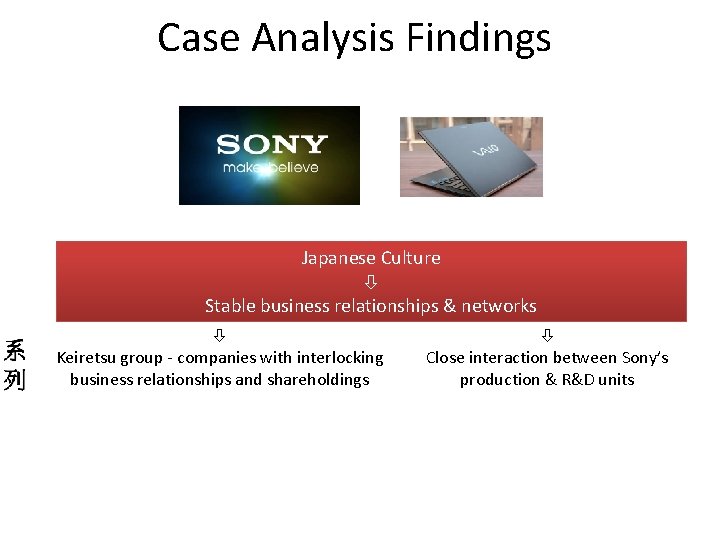
Case Analysis Findings Japanese Culture Stable business relationships & networks Keiretsu group - companies with interlocking business relationships and shareholdings Close interaction between Sony’s production & R&D units
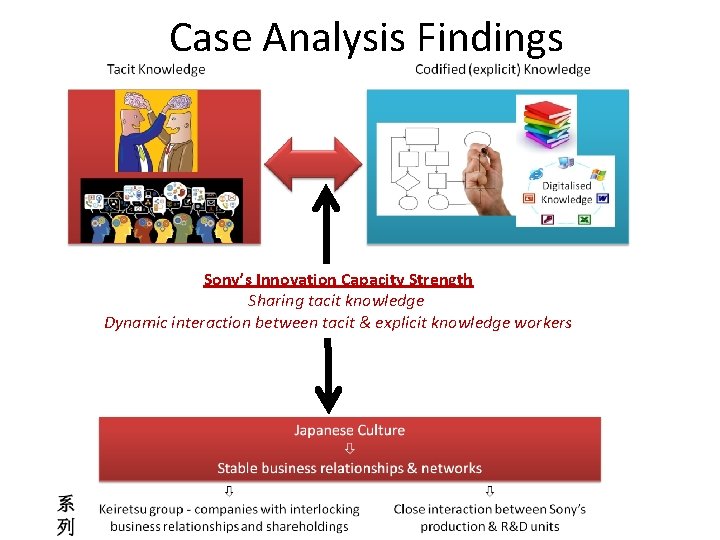
Case Analysis Findings Sony’s Innovation Capacity Strength Sharing tacit knowledge Dynamic interaction between tacit & explicit knowledge workers
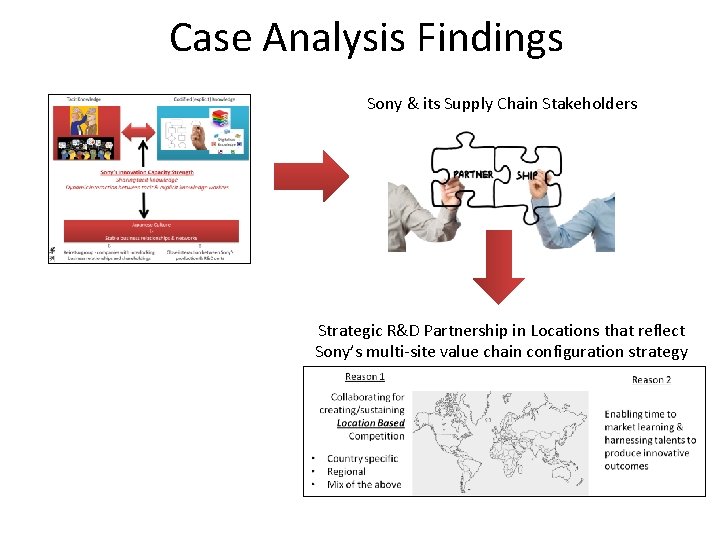
Case Analysis Findings Sony & its Supply Chain Stakeholders Strategic R&D Partnership in Locations that reflect Sony’s multi-site value chain configuration strategy
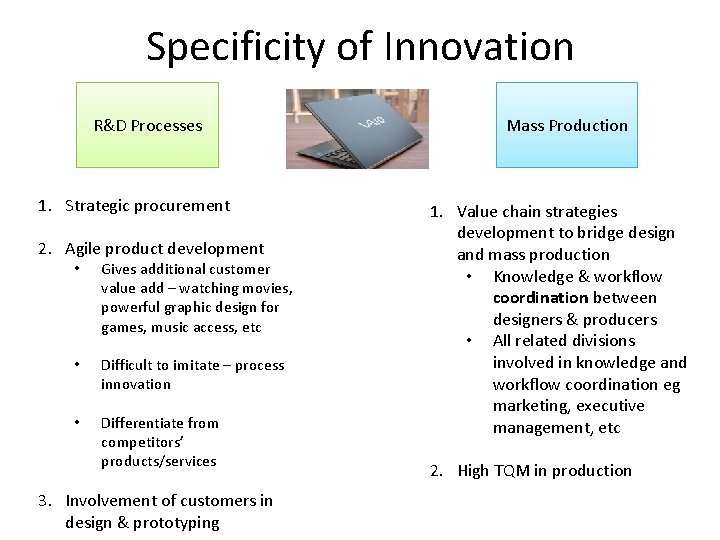
Specificity of Innovation R&D Processes 1. Strategic procurement 2. Agile product development • Gives additional customer value add – watching movies, powerful graphic design for games, music access, etc • Difficult to imitate – process innovation • Differentiate from competitors’ products/services 3. Involvement of customers in design & prototyping Mass Production 1. Value chain strategies development to bridge design and mass production • Knowledge & workflow coordination between designers & producers • All related divisions involved in knowledge and workflow coordination eg marketing, executive management, etc 2. High TQM in production
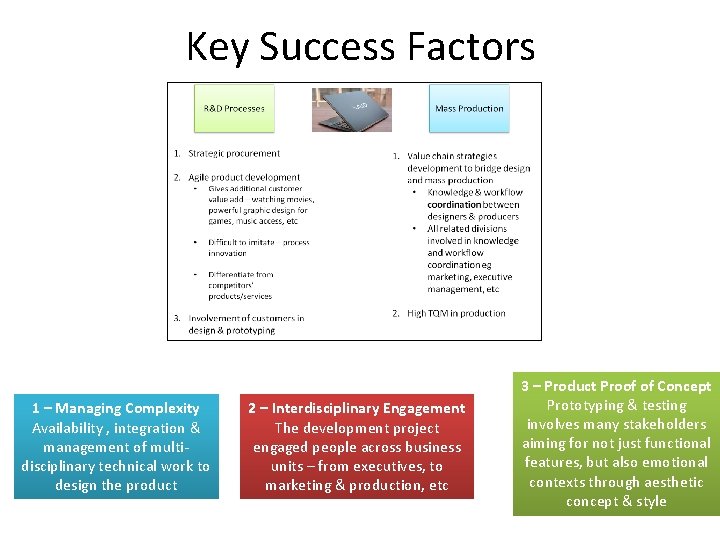
Key Success Factors 1 – Managing Complexity Availability , integration & management of multidisciplinary technical work to design the product 2 – Interdisciplinary Engagement The development project engaged people across business units – from executives, to marketing & production, etc 3 – Product Proof of Concept Prototyping & testing involves many stakeholders aiming for not just functional features, but also emotional contexts through aesthetic concept & style
Lecture & Reading Relationship Sony case study • Communications underpin R&D knowledge exchange requiring people to be in close proximity • Multi-disciplinary, cross stakeholders engagement and often multi-site process engineering / innovation activities are crucial to create unique, reliably functional and aesthetically meaningful products
- Slides: 14