
PROCESS IMPROVEMENT Program Development University of Massachusetts at
- Slides: 14
PROCESS IMPROVEMENT Program Development University of Massachusetts at Boston © 2007 William Holmes
METHODS OF PROCESS IMPROVEMENT Total Quality Management Six Sigma Process Re-engineering Using Best Practices Sociotechnical Systems
TOTAL QUALITY MANAGEMENT Philosophy of Change Seven-step approach Long-term approach Evolutionary approach
TOTAL QUALITY MANAGEMENT: SEVEN STEPS Define system Assess situation Analyze causes Try out improvement theory Study results Standardize improvements Plan continuous revisions
TOTAL QUALITY MANAGEMENT: ISSUES Slowness of change Use of invalid data Some actions not possible Results may overshadow process
SIX SIGMA Philosophy of change Use of customer expectations Quantitative criteria Focus on predictable processes
SIX SIGMA: PROCEDURES Describing process Quantifying process Variance identification Variance reduction Stabilization of process
PROCESS RE-ENGINEERING Philosophy of change, downsizing Seven steps for re-engineering Integrate and centralize processes Decentralize decisions
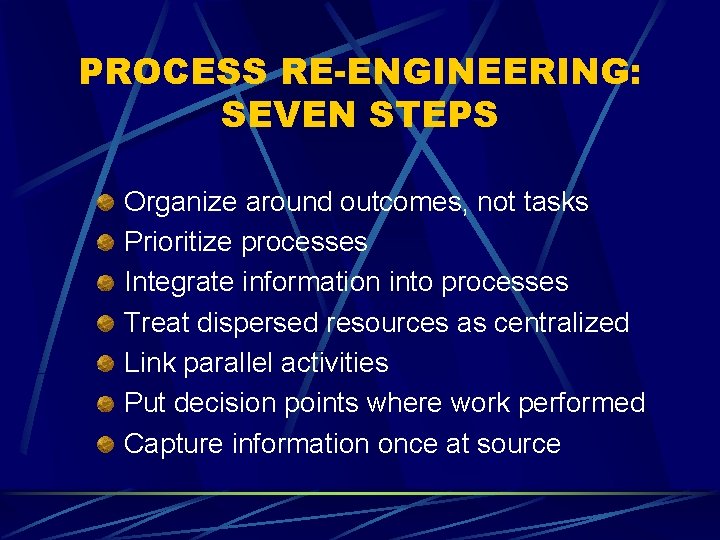
PROCESS RE-ENGINEERING: SEVEN STEPS Organize around outcomes, not tasks Prioritize processes Integrate information into processes Treat dispersed resources as centralized Link parallel activities Put decision points where work performed Capture information once at source
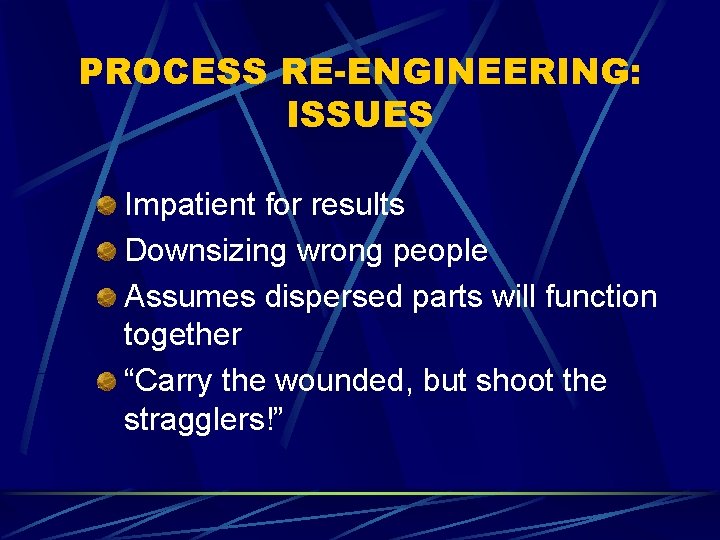
PROCESS RE-ENGINEERING: ISSUES Impatient for results Downsizing wrong people Assumes dispersed parts will function together “Carry the wounded, but shoot the stragglers!”
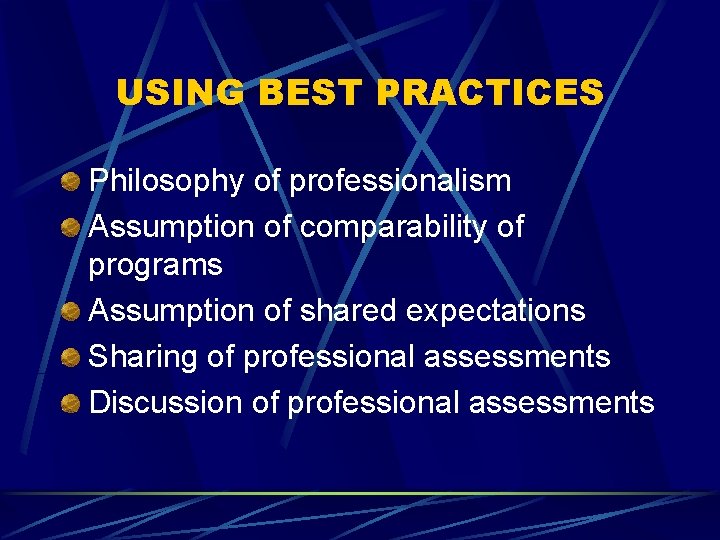
USING BEST PRACTICES Philosophy of professionalism Assumption of comparability of programs Assumption of shared expectations Sharing of professional assessments Discussion of professional assessments
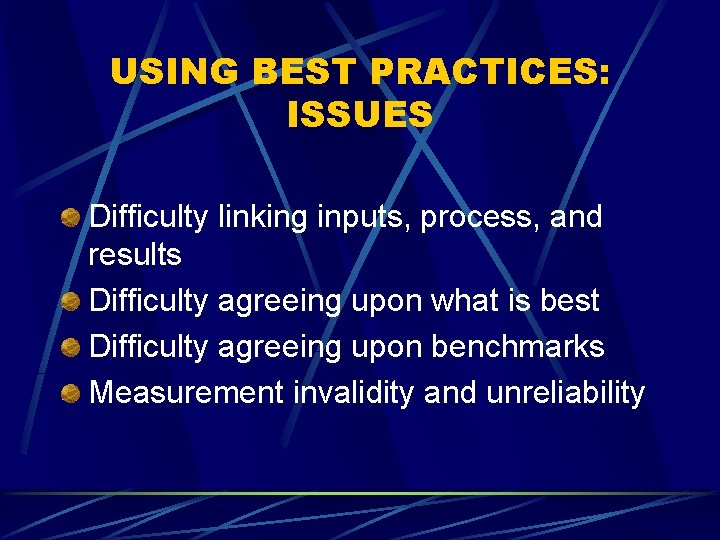
USING BEST PRACTICES: ISSUES Difficulty linking inputs, process, and results Difficulty agreeing upon what is best Difficulty agreeing upon benchmarks Measurement invalidity and unreliability
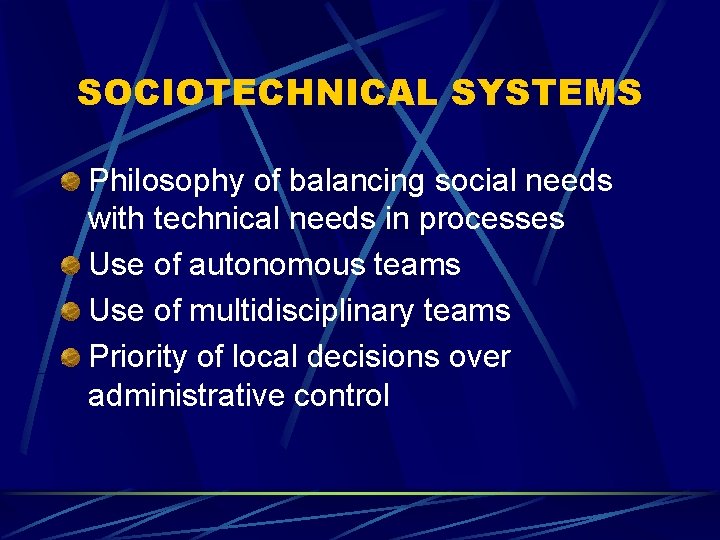
SOCIOTECHNICAL SYSTEMS Philosophy of balancing social needs with technical needs in processes Use of autonomous teams Use of multidisciplinary teams Priority of local decisions over administrative control
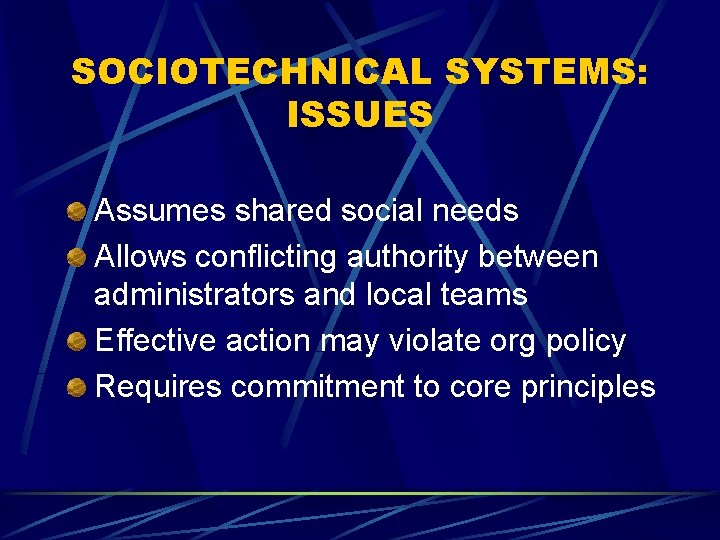
SOCIOTECHNICAL SYSTEMS: ISSUES Assumes shared social needs Allows conflicting authority between administrators and local teams Effective action may violate org policy Requires commitment to core principles