
Process Control Designing Process and Control Systems for
- Slides: 19
Process Control: Designing Process and Control Systems for Dynamic Performance Chapter 17. Inferential Control Copyright © Thomas Marlin 2013 The copyright holder provides a royalty-free license for use of this material at non-profit educational institutions
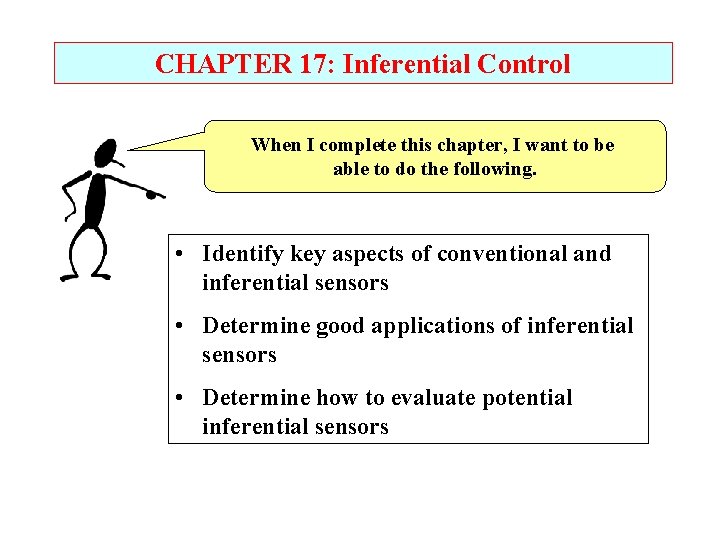
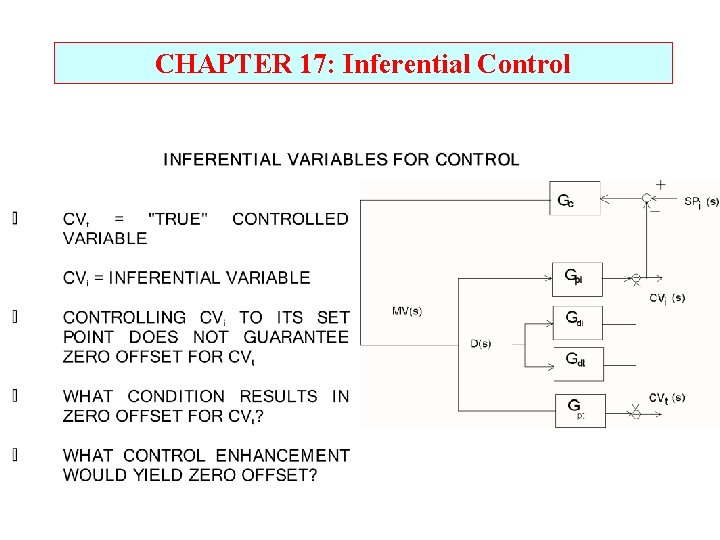
CHAPTER 17: Inferential Control When I complete this chapter, I want to be able to do the following. • Identify key aspects of conventional and inferential sensors • Determine good applications of inferential sensors • Determine how to evaluate potential inferential sensors
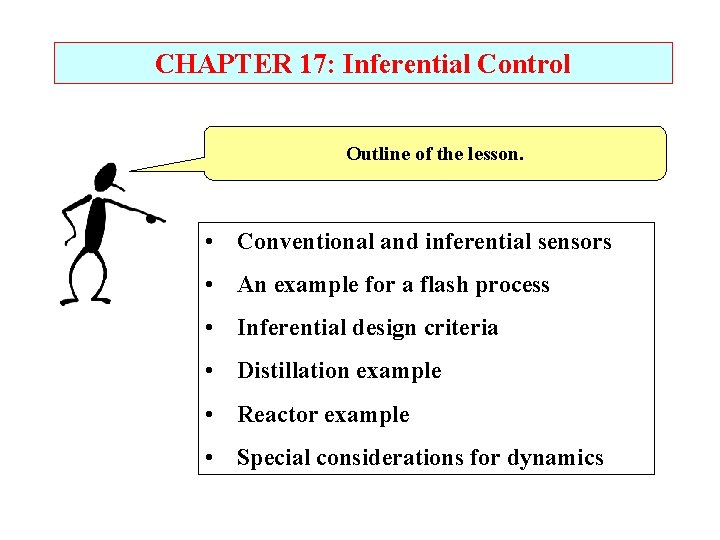
CHAPTER 17: Inferential Control Outline of the lesson. • Conventional and inferential sensors • An example for a flash process • Inferential design criteria • Distillation example • Reactor example • Special considerations for dynamics
CHAPTER 17: Inferential Control
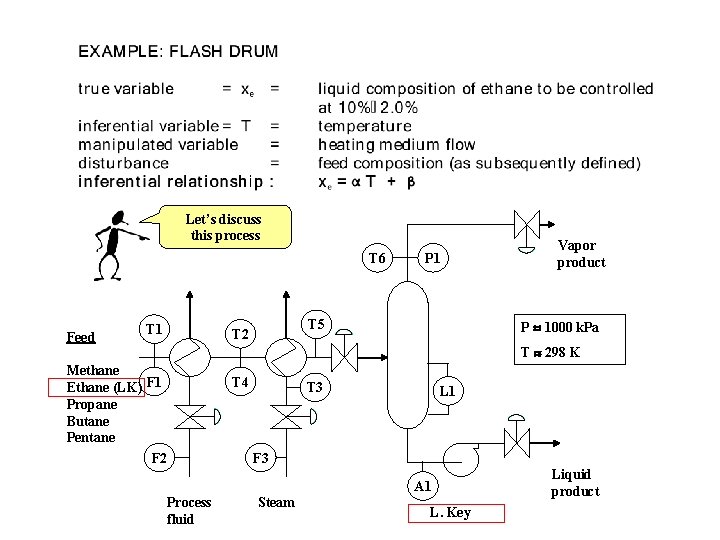
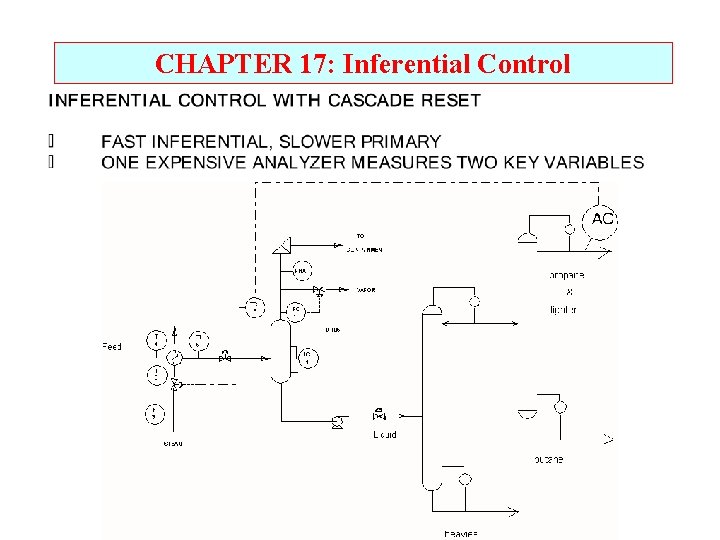
Let’s discuss this process T 6 Feed T 1 P 1 T 5 T 2 Vapor product P 1000 k. Pa T 298 K Methane Ethane (LK) F 1 Propane Butane Pentane F 2 T 4 T 3 L 1 F 3 A 1 Process fluid Steam L. Key Liquid product
CHAPTER 17: Inferential Control
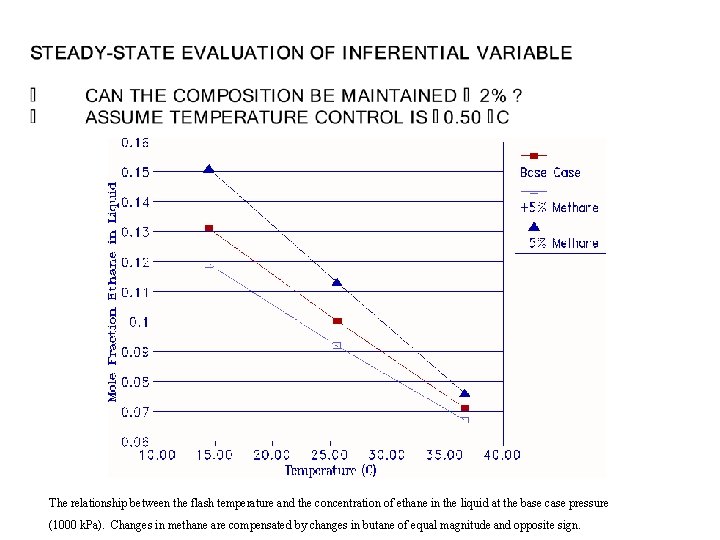
The relationship between the flash temperature and the concentration of ethane in the liquid at the base case pressure (1000 k. Pa). Changes in methane are compensated by changes in butane of equal magnitude and opposite sign.
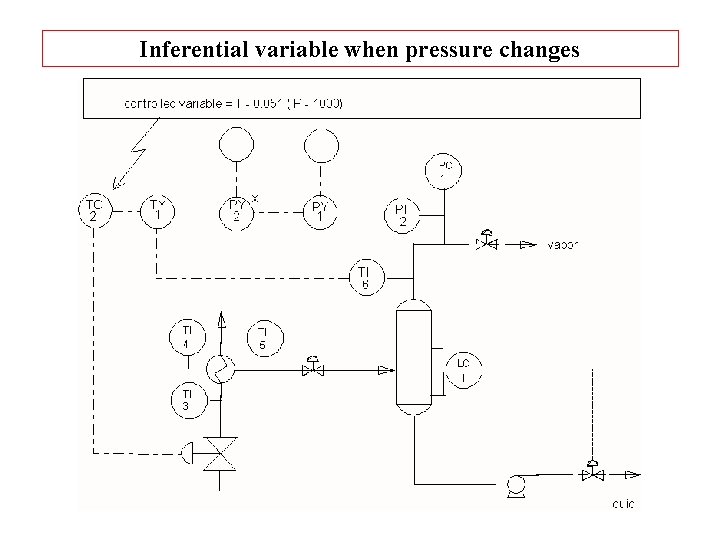
Inferential variable when pressure changes
CHAPTER 17: Inferential Control
CHAPTER 17: Inferential Control
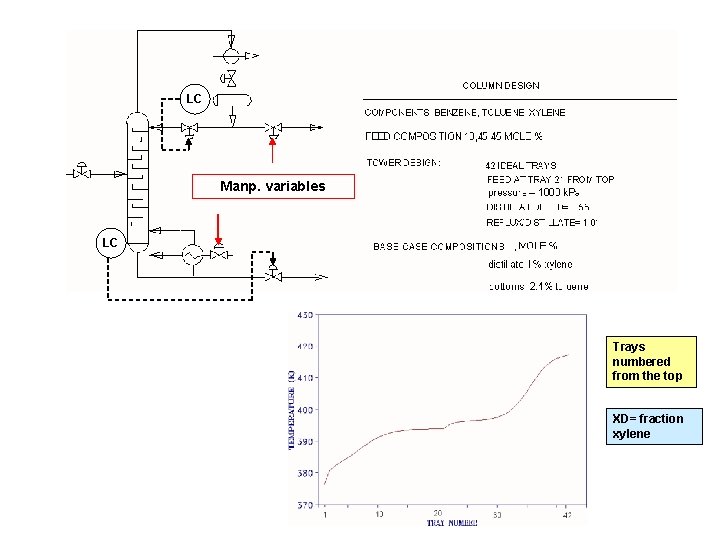
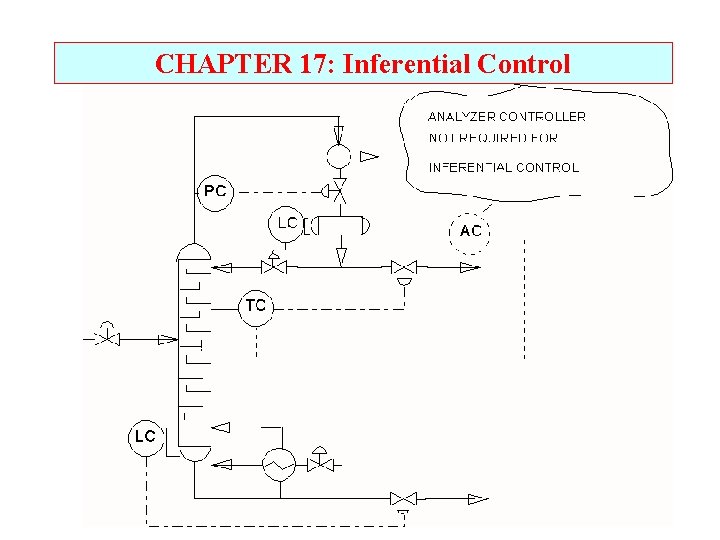
LC Manp. variables LC Trays numbered from the top XD= fraction xylene
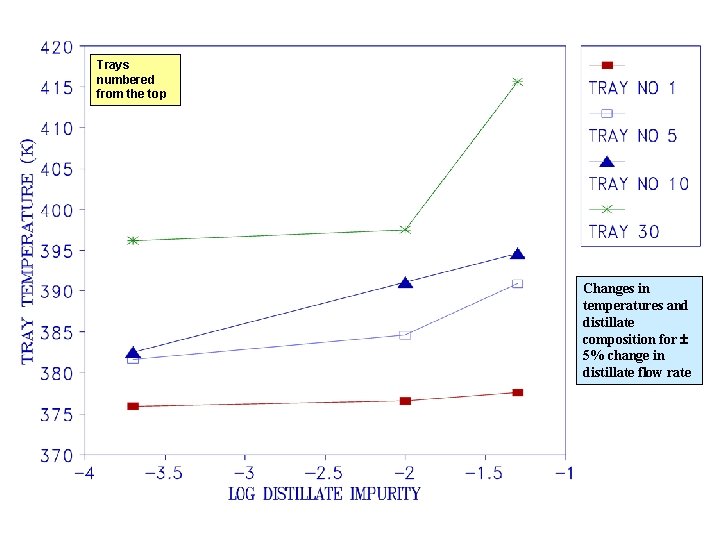
Trays numbered from the top Changes in temperatures and distillate composition for 5% change in distillate flow rate
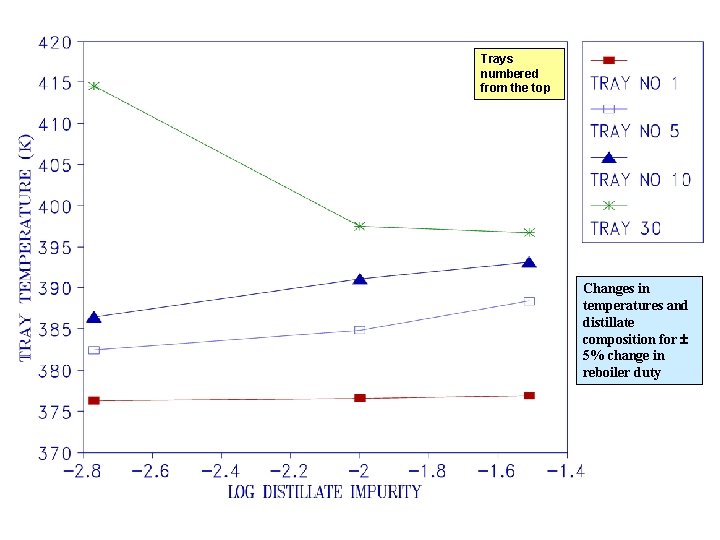
Trays numbered from the top Changes in temperatures and distillate composition for 5% change in reboiler duty
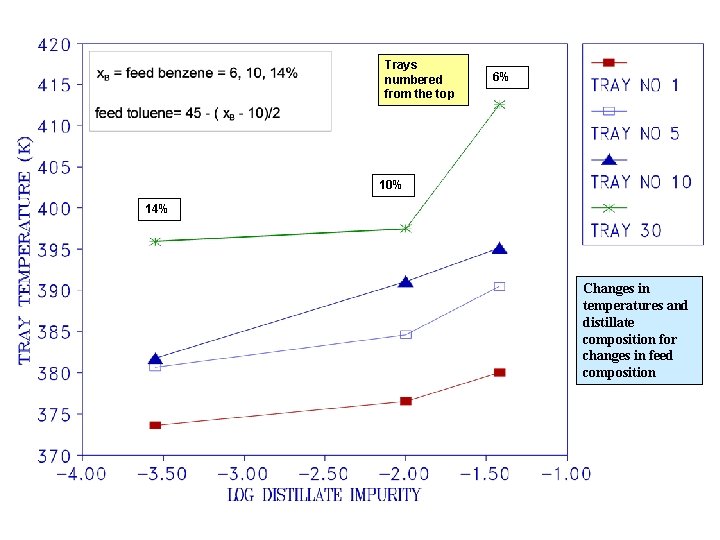
Trays numbered from the top 6% 10% 14% Changes in temperatures and distillate composition for changes in feed composition
CHAPTER 17: Inferential Control
CHAPTER 17: Inferential Control