
Process Confirmation Go Look See Agenda Introduction to


- Slides: 17
Process Confirmation & Go, Look, See
Agenda • Introduction to Process Confirmation • The Format • Completion Example • Deliverable • Go, Look, See ‘T’ card system
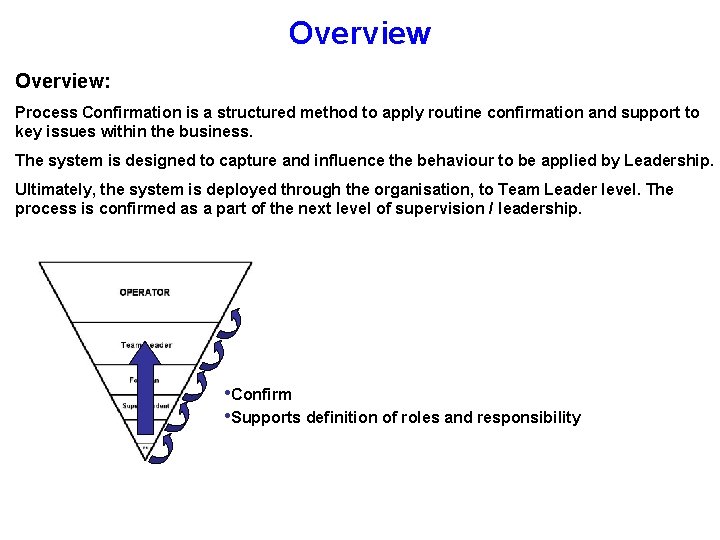
Overview: Process Confirmation is a structured method to apply routine confirmation and support to key issues within the business. The system is designed to capture and influence the behaviour to be applied by Leadership. Ultimately, the system is deployed through the organisation, to Team Leader level. The process is confirmed as a part of the next level of supervision / leadership. • Confirm • Supports definition of roles and responsibility
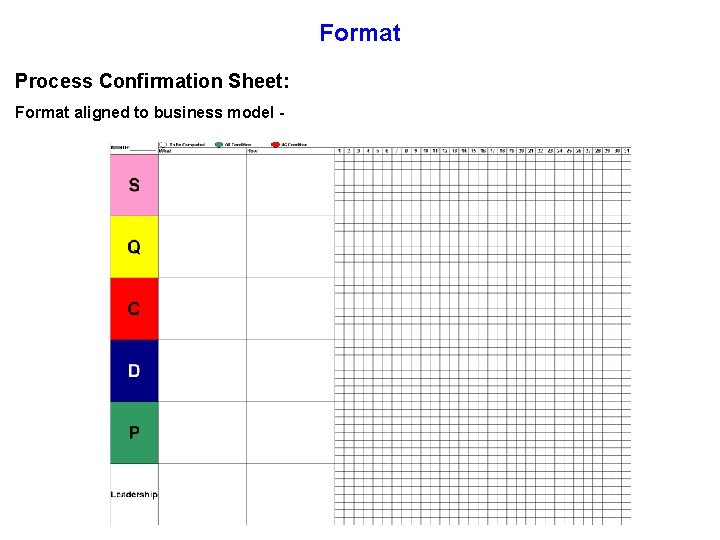
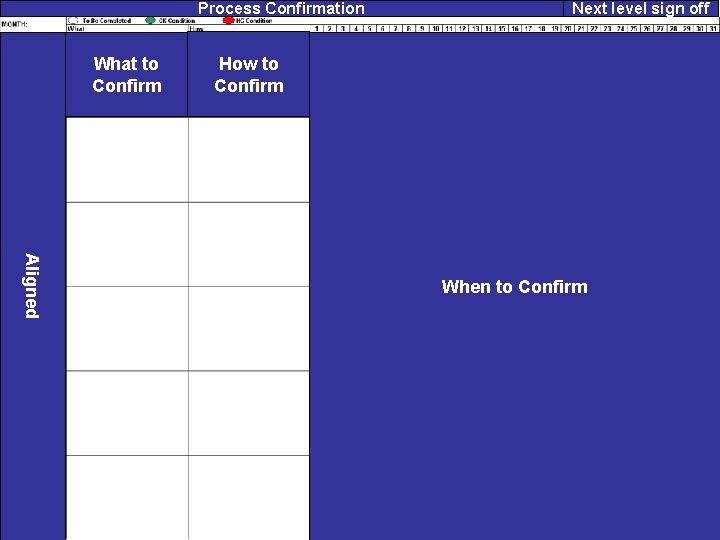
Format Process Confirmation Sheet: Format aligned to business model -
Process Confirmation Next level sign off How to What to Process. Confirmation. Confirm Sheet: Format aligned to business model - Aligned When to Confirm
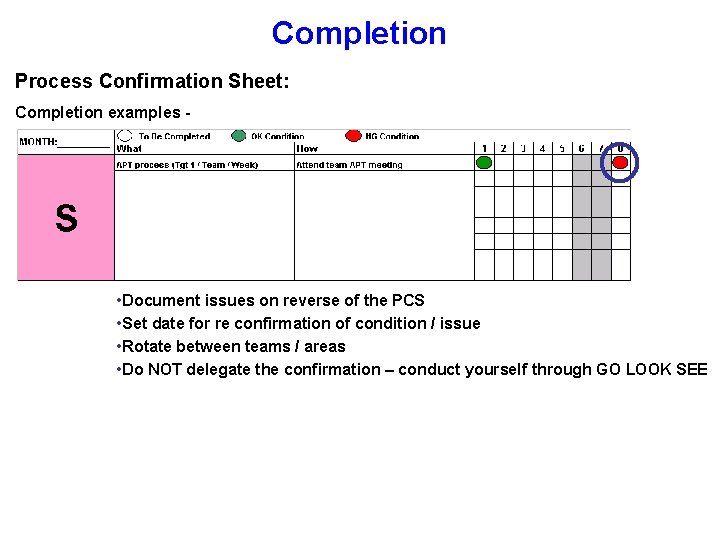
Completion Process Confirmation Sheet: Completion examples - • Document issues on reverse of the PCS • Set date for re confirmation of condition / issue • Rotate between teams / areas • Do NOT delegate the confirmation – conduct yourself through GO LOOK SEE
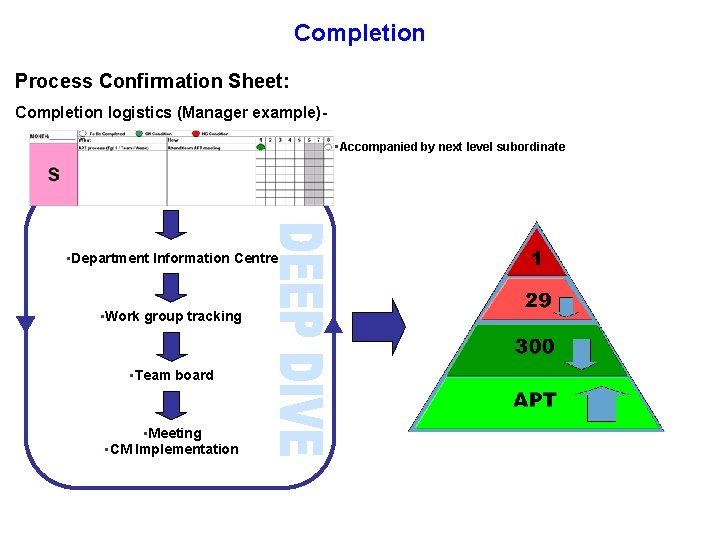
Completion Process Confirmation Sheet: Completion logistics (Manager example) • Accompanied by next level subordinate • Department Information Centre • Work group tracking • Team board • Meeting • CM Implementation
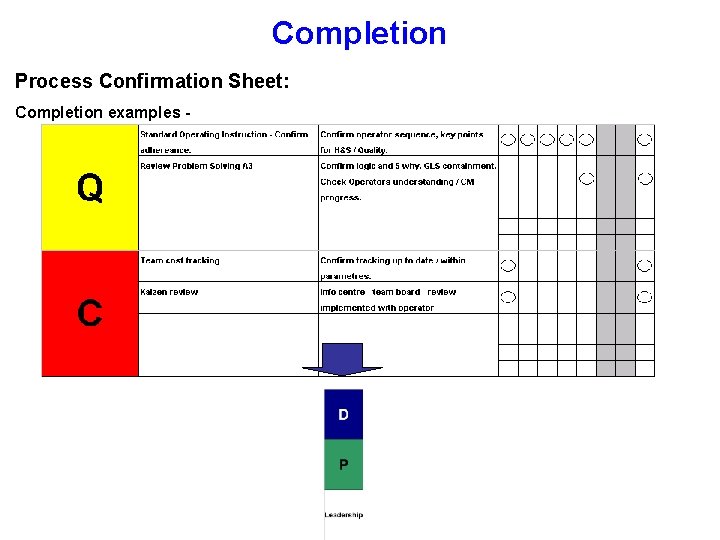
Completion Process Confirmation Sheet: Completion examples -
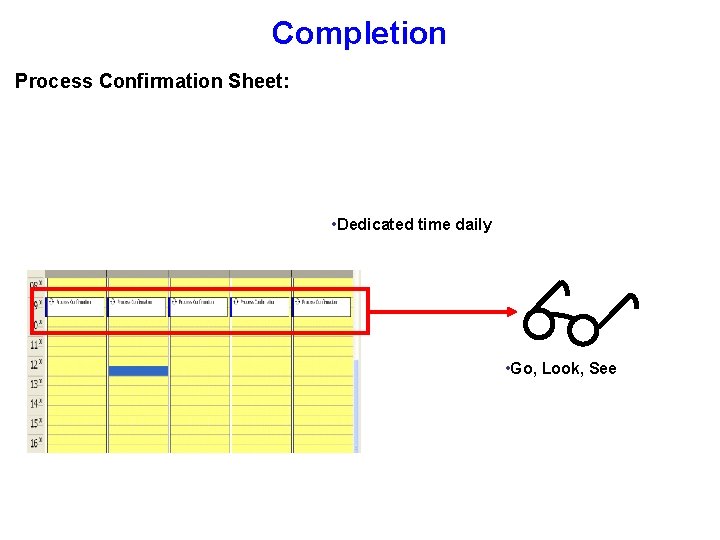
Completion Process Confirmation Sheet: • Dedicated time daily • Go, Look, See
Deliverable Just Do It !
Go Look See Leadership is the single most critical success factor for energizing and enabling people toward implementing Lean Manufacturing. • Leadership must develop and communicate the vision (Managers must repeatedly articulate message) • Leadership must be exhibited on the plant floor (Managers must spend time on the shop floor) • Leadership must exhibit the desired behaviours (Managers must lead by example) Managers must develop, understand, and fulfil their roles to provide leadership and support in the new system.
Discipline Of Scheduled Activities (KAMISHIBAI) • ‘T’ Cards • Checklists • Standardised Work Audits
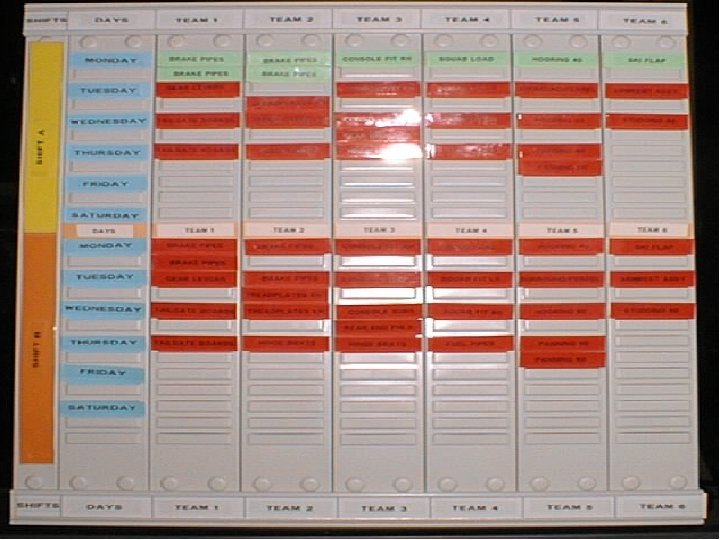
‘T’ Card Audit System Visual Management of Scheduled Tasks • To perform routine auditing tasks to schedule • To help the Team leader manage the line • To create team work through group involvement • To prevent reoccurrence of concerns i. e. Quality, Safety • To regulate frequencies • To delegate responsibilities on a daily basis
How To Use • Full team involvement • Update every 24 hours • Position board in central area • Turn card over when task completed • Each card corresponds to a scheduled task • Initial card when task completed • T/Leader to delegate tasks • All tasks to be completed by end of month • Break tasks down into manageable elements
Example of ‘T’ Card Use MONDAY 1. Team Leader reviews activities due for completion by reading the description at the top of the ‘T’ cards for that day. 2. Team Leader selects a task to complete. 3. The Team Leader or a team member if delegated completes the task as described on the body of the ‘T’ Card 4. The ‘T’ Card is turned over revealing the green side = Complete 5. The ‘T’ Card is re-positioned in its slot MONDAY
The Use of a ‘T’ Card Audit; • Gives control to the Team leader • Creates team participation • Creates ownership within the teams • Communicates across shifts that tasks are completed (or not)