
Process Choice and Layout Decisions in Manufacturing and
- Slides: 57
Process Choice and Layout Decisions in Manufacturing and Services
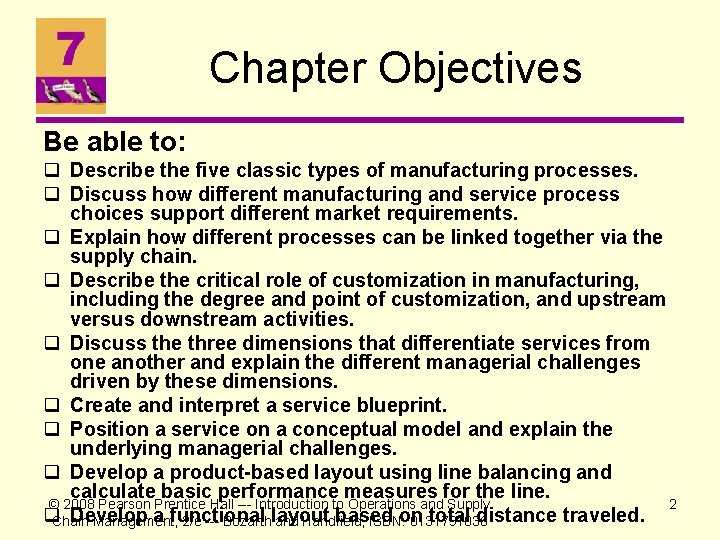
Chapter Objectives Be able to: q Describe the five classic types of manufacturing processes. q Discuss how different manufacturing and service process choices support different market requirements. q Explain how different processes can be linked together via the supply chain. q Describe the critical role of customization in manufacturing, including the degree and point of customization, and upstream versus downstream activities. q Discuss the three dimensions that differentiate services from one another and explain the different managerial challenges driven by these dimensions. q Create and interpret a service blueprint. q Position a service on a conceptual model and explain the underlying managerial challenges. q Develop a product-based layout using line balancing and calculate basic performance measures for the line. © 2008 Pearson Prentice Hall --- Introduction to Operations and Supply 2 q. Chain Develop a functional layout based on total distance traveled. Management, 2/e --- Bozarth and Handfield, ISBN: 0131791036
Manufacturing Processes • Engineering and business perspectives • Classic manufacturing processes • Choosing between classic types • The role of customization © 2008 Pearson Prentice Hall --- Introduction to Operations and Supply Chain Management, 2/e --- Bozarth and Handfield, ISBN: 0131791036 3
Engineering and Business Perspectives © 2008 Pearson Prentice Hall --- Introduction to Operations and Supply Chain Management, 2/e --- Bozarth and Handfield, ISBN: 0131791036 Chapter 4, Slide
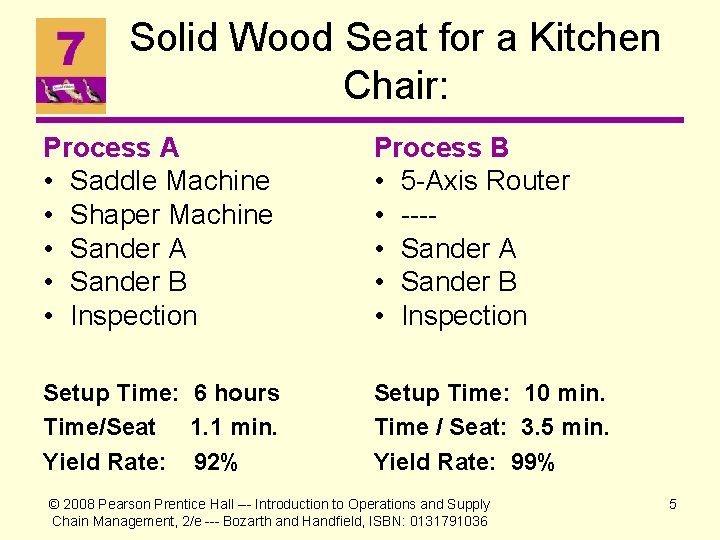
Solid Wood Seat for a Kitchen Chair: Process A • Saddle Machine • Shaper Machine • Sander A • Sander B • Inspection Process B • 5 -Axis Router • --- • Sander A • Sander B • Inspection Setup Time: 6 hours Time/Seat 1. 1 min. Yield Rate: 92% Setup Time: 10 min. Time / Seat: 3. 5 min. Yield Rate: 99% © 2008 Pearson Prentice Hall --- Introduction to Operations and Supply Chain Management, 2/e --- Bozarth and Handfield, ISBN: 0131791036 5
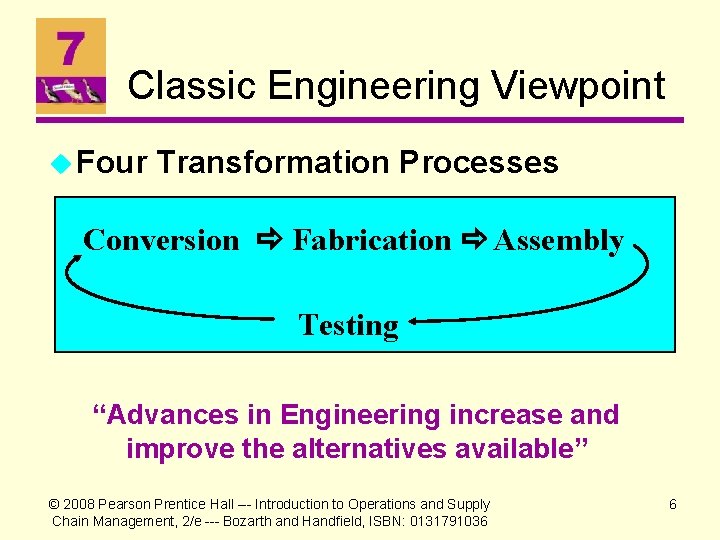
Classic Engineering Viewpoint u Four Transformation Processes Conversion Fabrication Assembly Testing “Advances in Engineering increase and improve the alternatives available” © 2008 Pearson Prentice Hall --- Introduction to Operations and Supply Chain Management, 2/e --- Bozarth and Handfield, ISBN: 0131791036 6
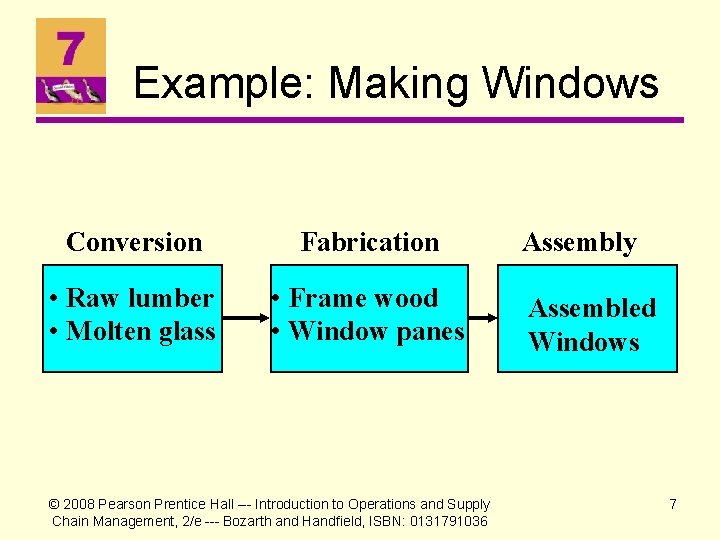
Example: Making Windows Conversion Fabrication • Raw lumber • Molten glass • Frame wood • Window panes © 2008 Pearson Prentice Hall --- Introduction to Operations and Supply Chain Management, 2/e --- Bozarth and Handfield, ISBN: 0131791036 Assembly Assembled Windows 7
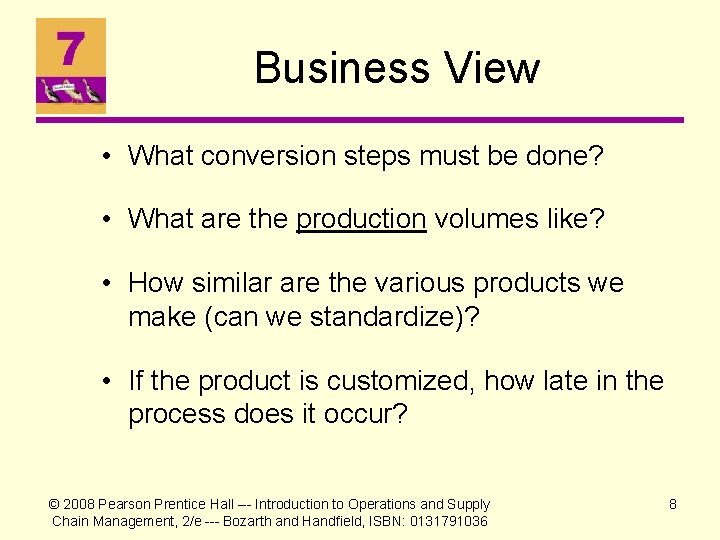
Business View • What conversion steps must be done? • What are the production volumes like? • How similar are the various products we make (can we standardize)? • If the product is customized, how late in the process does it occur? © 2008 Pearson Prentice Hall --- Introduction to Operations and Supply Chain Management, 2/e --- Bozarth and Handfield, ISBN: 0131791036 8
Classic Manufacturing Processes © 2008 Pearson Prentice Hall --- Introduction to Operations and Supply Chain Management, 2/e --- Bozarth and Handfield, ISBN: 0131791036 Chapter 4, Slide
Process Types (in order of decreasing volume) • Continuous Flow • Production Line • Batch (High Volume) • Batch (Low Volume) • Job Shop • Project © 2008 Pearson Prentice Hall --- Introduction to Operations and Supply Chain Management, 2/e --- Bozarth and Handfield, ISBN: 0131791036 10
Continuous Flow • Large production volumes • High level of automation • Basic material passed along, converted as it moves • Usually cannot be broken into discrete units • Usually very high fixed costs, inflexible Oil refinery, fiber formation, public utilities, automotive manufacturing © 2008 Pearson Prentice Hall --- Introduction to Operations and Supply Chain Management, 2/e --- Bozarth and Handfield, ISBN: 0131791036 11
Production Line High-volume production of standard products or “design window” • Processes arranged by product flow • Often “paced” (‘takt’ time discussed later) • Highly efficient, but not too flexible © 2008 Pearson Prentice Hall --- Introduction to Operations and Supply Chain Management, 2/e --- Bozarth and Handfield, ISBN: 0131791036 12
Batch I • Somewhere in between job shop and line processes • Moderate volumes, multiple products • Production occurs in “batches” Can manufacturing, carton makers, advertising mailers, etc. © 2008 Pearson Prentice Hall --- Introduction to Operations and Supply Chain Management, 2/e --- Bozarth and Handfield, ISBN: 0131791036 13
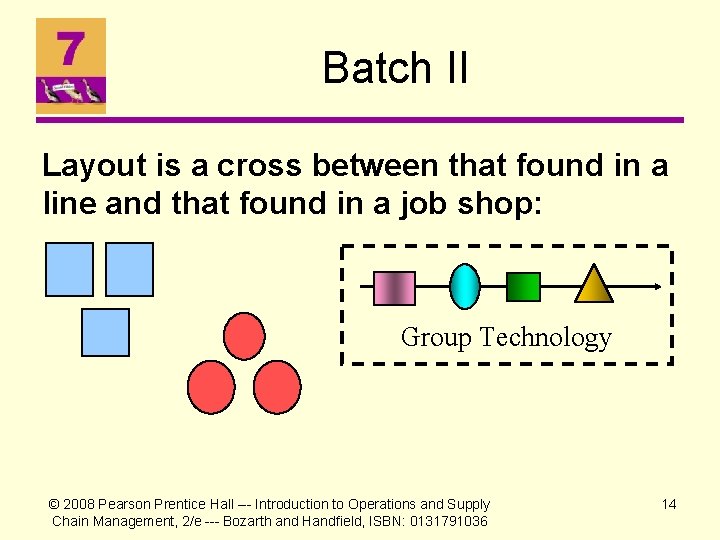
Batch II Layout is a cross between that found in a line and that found in a job shop: Group Technology © 2008 Pearson Prentice Hall --- Introduction to Operations and Supply Chain Management, 2/e --- Bozarth and Handfield, ISBN: 0131791036 14
Some Examples of Batch Manufacturing • Numerical control (NC) machines – Automated processing of entire batch – Machining center - multiple NC machines • Flexible manufacturing systems (FMS) – Dedicated to families of parts – NC and automated handling • Group technology – Similar in concept to FMS, but not as much automation © 2008 Pearson Prentice Hall --- Introduction to Operations and Supply Chain Management, 2/e --- Bozarth and Handfield, ISBN: 0131791036 15
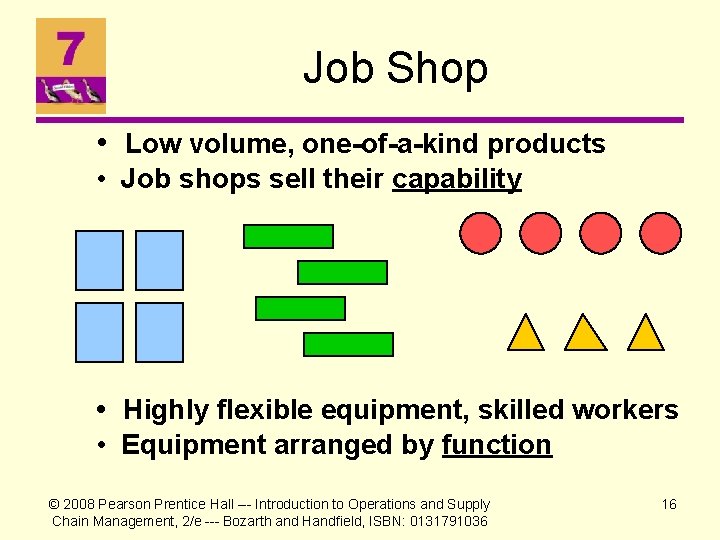
Job Shop • Low volume, one-of-a-kind products • Job shops sell their capability • Highly flexible equipment, skilled workers • Equipment arranged by function © 2008 Pearson Prentice Hall --- Introduction to Operations and Supply Chain Management, 2/e --- Bozarth and Handfield, ISBN: 0131791036 16
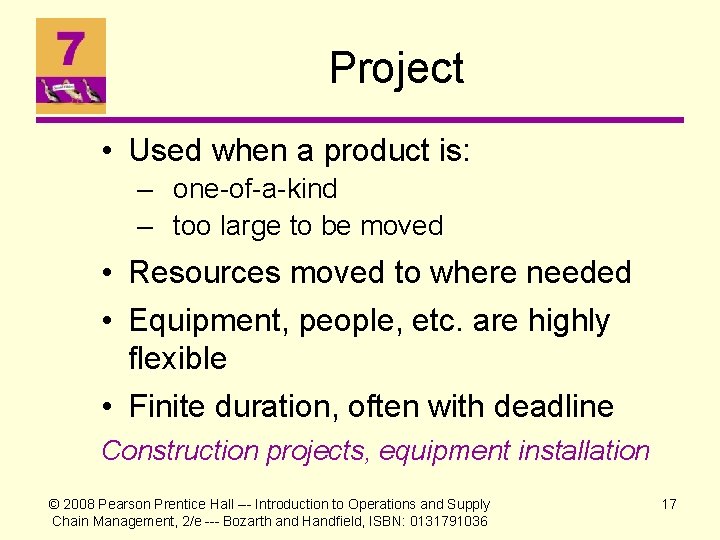
Project • Used when a product is: – one-of-a-kind – too large to be moved • Resources moved to where needed • Equipment, people, etc. are highly flexible • Finite duration, often with deadline Construction projects, equipment installation © 2008 Pearson Prentice Hall --- Introduction to Operations and Supply Chain Management, 2/e --- Bozarth and Handfield, ISBN: 0131791036 17
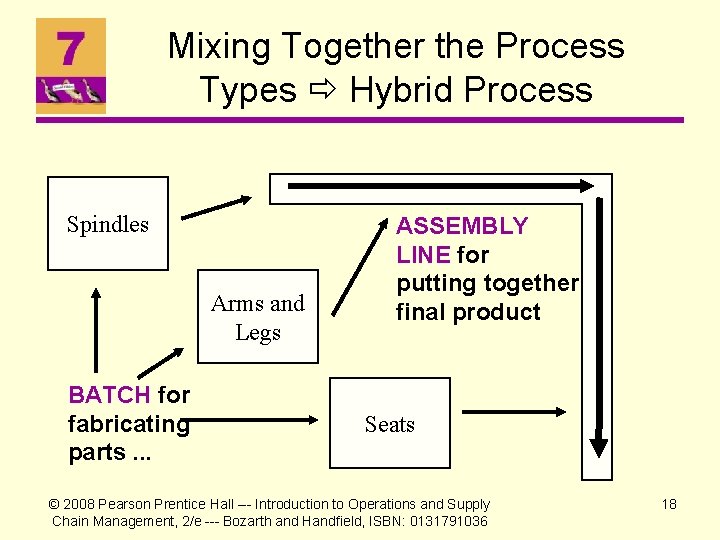
Mixing Together the Process Types Hybrid Process Spindles Arms and Legs BATCH for fabricating parts. . . ASSEMBLY LINE for putting together final product Seats © 2008 Pearson Prentice Hall --- Introduction to Operations and Supply Chain Management, 2/e --- Bozarth and Handfield, ISBN: 0131791036 18
Choosing Between Classic Types • The product-process matrix • Product and process life cycles © 2008 Pearson Prentice Hall --- Introduction to Operations and Supply Chain Management, 2/e --- Bozarth and Handfield, ISBN: 0131791036 Chapter 4, Slide
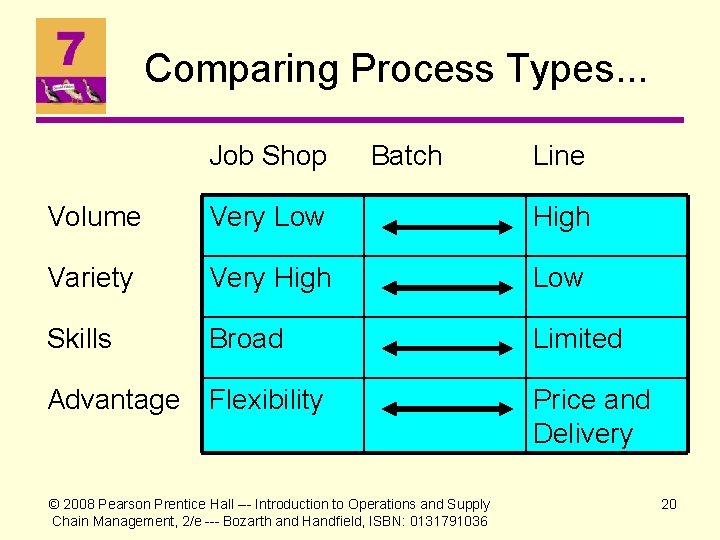
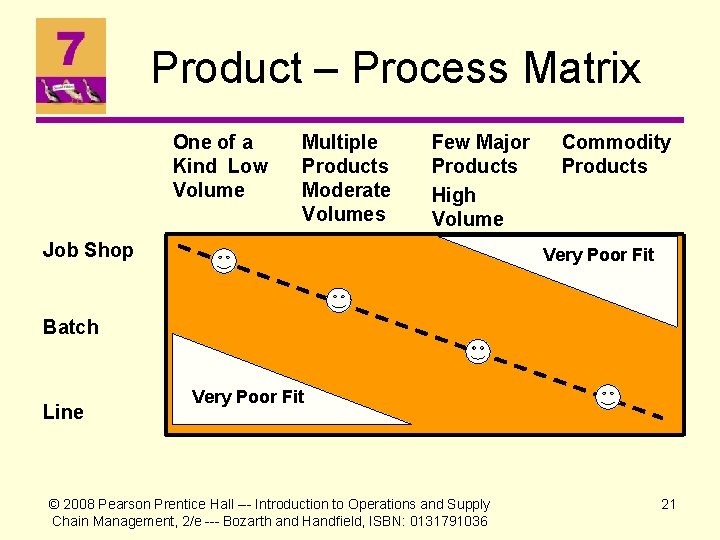
Comparing Process Types. . . Job Shop Batch Line Volume Very Low High Variety Very High Low Skills Broad Limited Advantage Flexibility Price and Delivery © 2008 Pearson Prentice Hall --- Introduction to Operations and Supply Chain Management, 2/e --- Bozarth and Handfield, ISBN: 0131791036 20
Product – Process Matrix One of a Kind Low Volume Multiple Products Moderate Volumes Few Major Products High Volume Job Shop Commodity Products Very Poor Fit Batch Line Very Poor Fit © 2008 Pearson Prentice Hall --- Introduction to Operations and Supply Chain Management, 2/e --- Bozarth and Handfield, ISBN: 0131791036 21
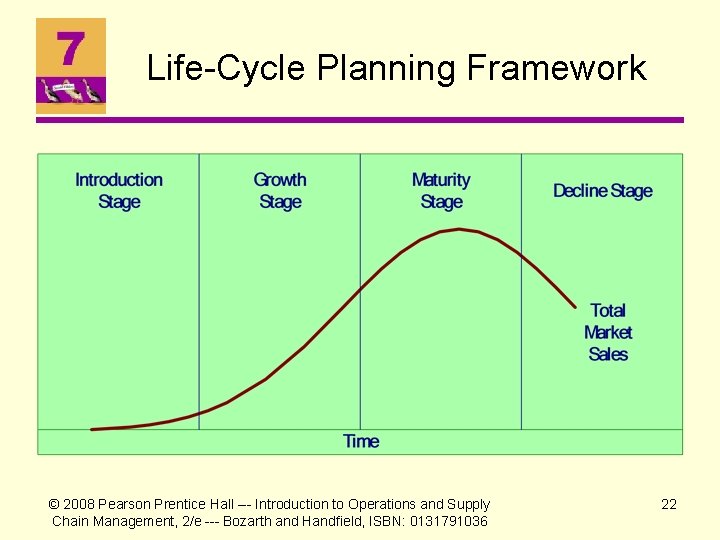
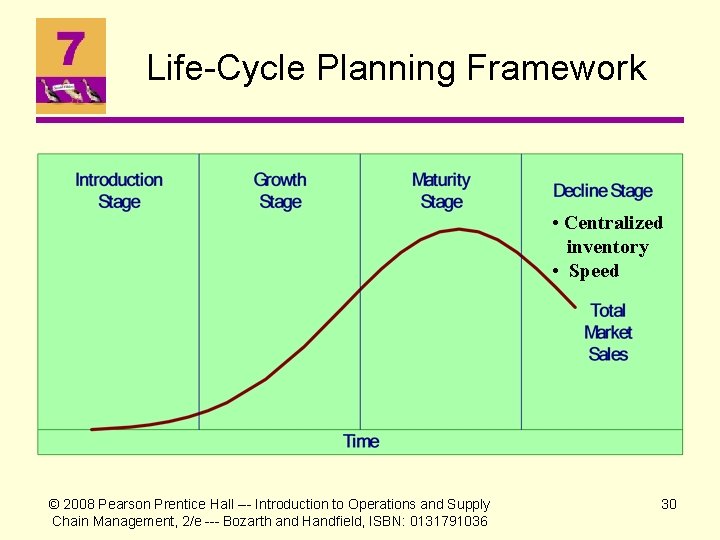
Life-Cycle Planning Framework © 2008 Pearson Prentice Hall --- Introduction to Operations and Supply Chain Management, 2/e --- Bozarth and Handfield, ISBN: 0131791036 22
Introduction Stage Availability key to market success but: • No reliable movement history • Unreliable forecasts • Small shipments • Erratic orders © 2008 Pearson Prentice Hall --- Introduction to Operations and Supply Chain Management, 2/e --- Bozarth and Handfield, ISBN: 0131791036 23
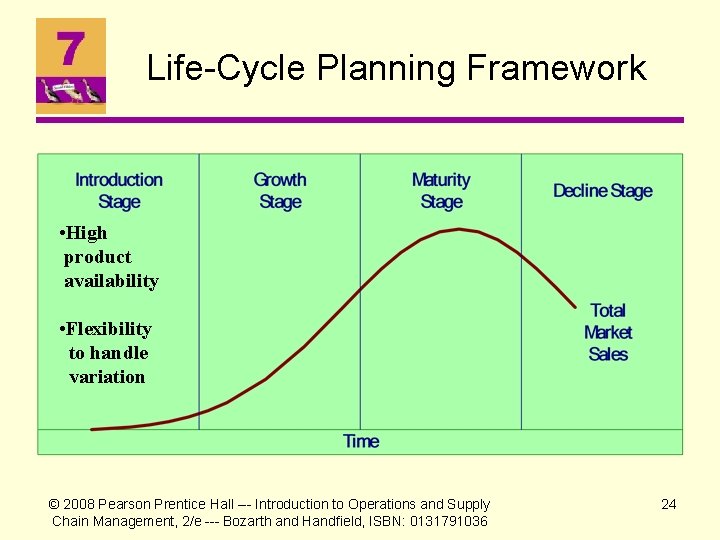
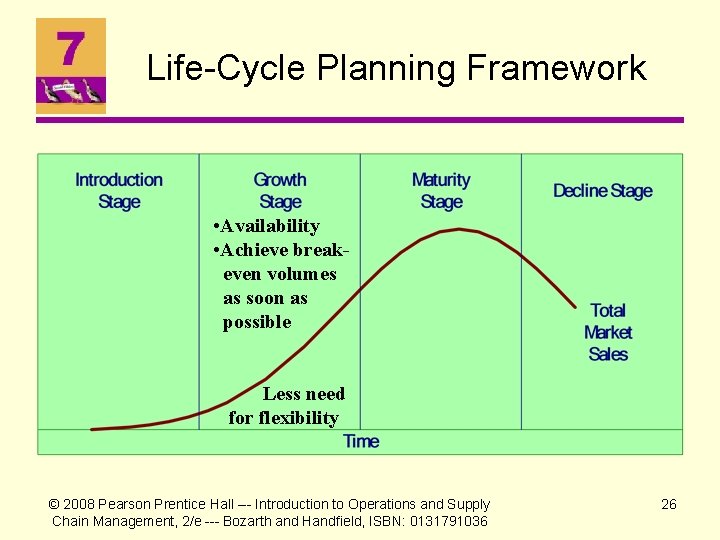
Life-Cycle Planning Framework • High product availability • Flexibility to handle variation © 2008 Pearson Prentice Hall --- Introduction to Operations and Supply Chain Management, 2/e --- Bozarth and Handfield, ISBN: 0131791036 24
Growth Stage • Sales somewhat more predictable • Higher volumes • Performance emphasis? . . . © 2008 Pearson Prentice Hall --- Introduction to Operations and Supply Chain Management, 2/e --- Bozarth and Handfield, ISBN: 0131791036 25
Life-Cycle Planning Framework • Availability • Achieve breakeven volumes as soon as possible Less need for flexibility © 2008 Pearson Prentice Hall --- Introduction to Operations and Supply Chain Management, 2/e --- Bozarth and Handfield, ISBN: 0131791036 26
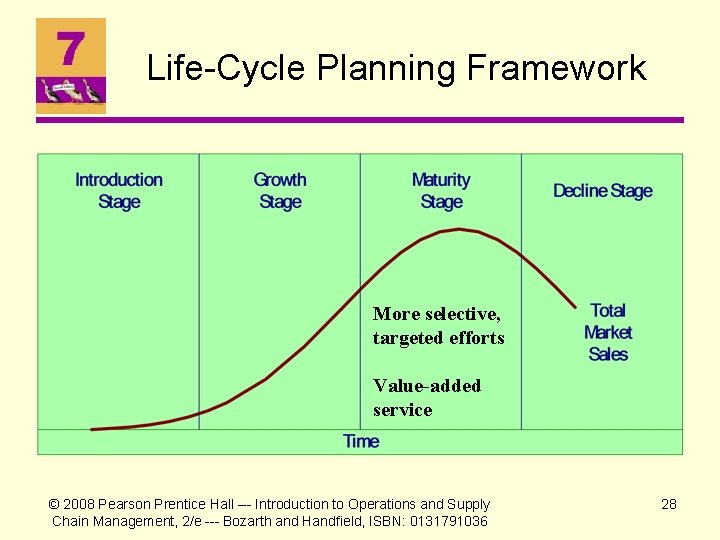
Maturity Stage • Intense competition around more standardized products • Frequent price and service adjustments • Implications. . . © 2008 Pearson Prentice Hall --- Introduction to Operations and Supply Chain Management, 2/e --- Bozarth and Handfield, ISBN: 0131791036 27
Life-Cycle Planning Framework More selective, targeted efforts Value-added service © 2008 Pearson Prentice Hall --- Introduction to Operations and Supply Chain Management, 2/e --- Bozarth and Handfield, ISBN: 0131791036 28
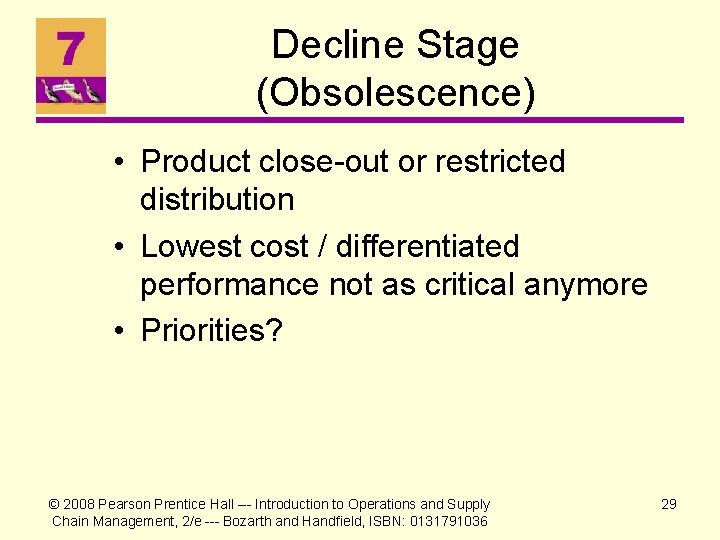
Decline Stage (Obsolescence) • Product close-out or restricted distribution • Lowest cost / differentiated performance not as critical anymore • Priorities? © 2008 Pearson Prentice Hall --- Introduction to Operations and Supply Chain Management, 2/e --- Bozarth and Handfield, ISBN: 0131791036 29
Life-Cycle Planning Framework • Centralized inventory • Speed © 2008 Pearson Prentice Hall --- Introduction to Operations and Supply Chain Management, 2/e --- Bozarth and Handfield, ISBN: 0131791036 30
Implications • What happens to process choices as companies follow products through their life cycles? • What happens to process choices when companies support products at various stages of the life cycle? © 2008 Pearson Prentice Hall --- Introduction to Operations and Supply Chain Management, 2/e --- Bozarth and Handfield, ISBN: 0131791036 31
The Role of Customization © 2008 Pearson Prentice Hall --- Introduction to Operations and Supply Chain Management, 2/e --- Bozarth and Handfield, ISBN: 0131791036 Chapter 4, Slide
What is “Customization”? An operations-centric view: “Customization occurs when a customer’s unique requirements directly affect the timing and nature of operations and supply chain activities” © 2008 Pearson Prentice Hall --- Introduction to Operations and Supply Chain Management, 2/e --- Bozarth and Handfield, ISBN: 0131791036 33
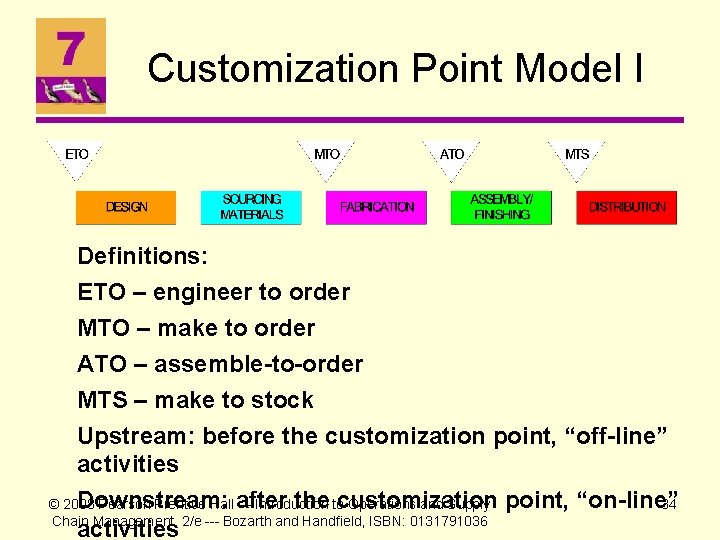
Customization Point Model I Definitions: ETO – engineer to order MTO – make to order ATO – assemble-to-order MTS – make to stock Upstream: before the customization point, “off-line” activities Downstream: after the customization point, “on-line” 34 activities © 2008 Pearson Prentice Hall --- Introduction to Operations and Supply Chain Management, 2/e --- Bozarth and Handfield, ISBN: 0131791036
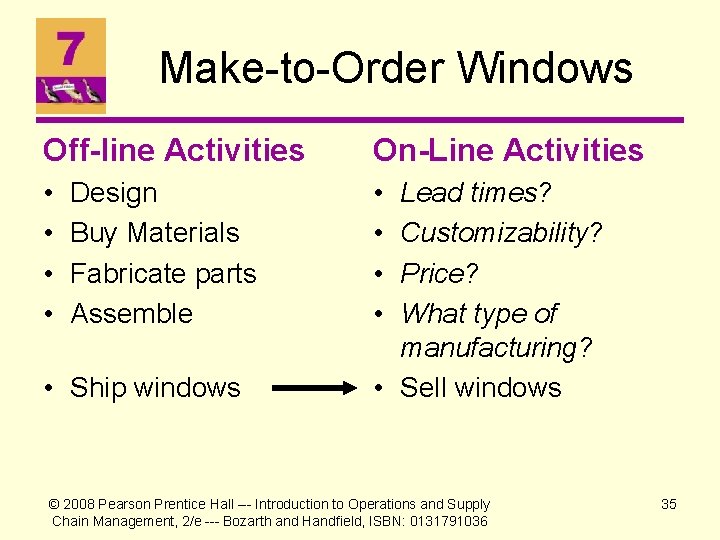
Make-to-Order Windows Off-line Activities On-Line Activities • • Design Buy Materials Fabricate parts Assemble • Ship windows Lead times? Customizability? Price? What type of manufacturing? • Sell windows © 2008 Pearson Prentice Hall --- Introduction to Operations and Supply Chain Management, 2/e --- Bozarth and Handfield, ISBN: 0131791036 35
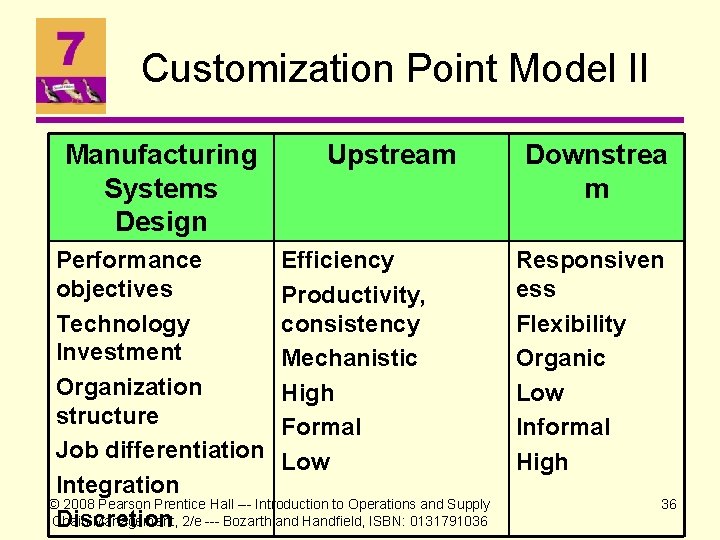
Customization Point Model II Manufacturing Systems Design Upstream Performance Efficiency objectives Productivity, Technology consistency Investment Mechanistic Organization High structure Formal Job differentiation Low Integration © 2008 Pearson Prentice Hall --- Introduction to Operations and Supply Chain Management, 2/e --- Bozarth and Handfield, ISBN: 0131791036 Discretion Downstrea m Responsiven ess Flexibility Organic Low Informal High 36
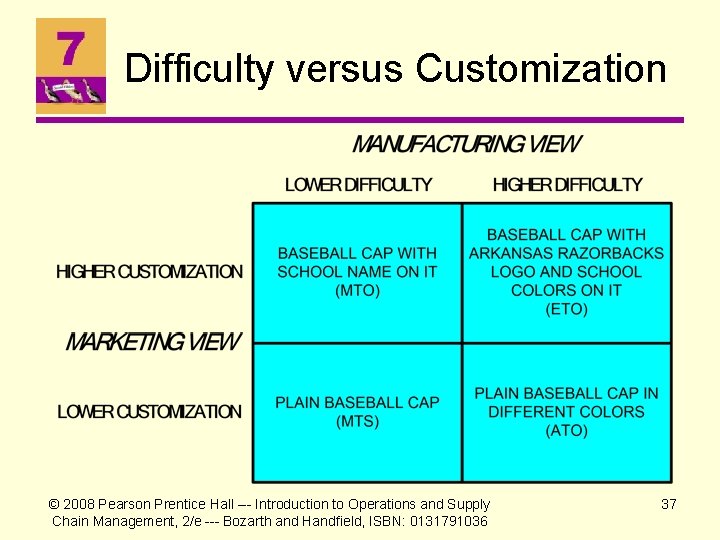
Difficulty versus Customization © 2008 Pearson Prentice Hall --- Introduction to Operations and Supply Chain Management, 2/e --- Bozarth and Handfield, ISBN: 0131791036 37
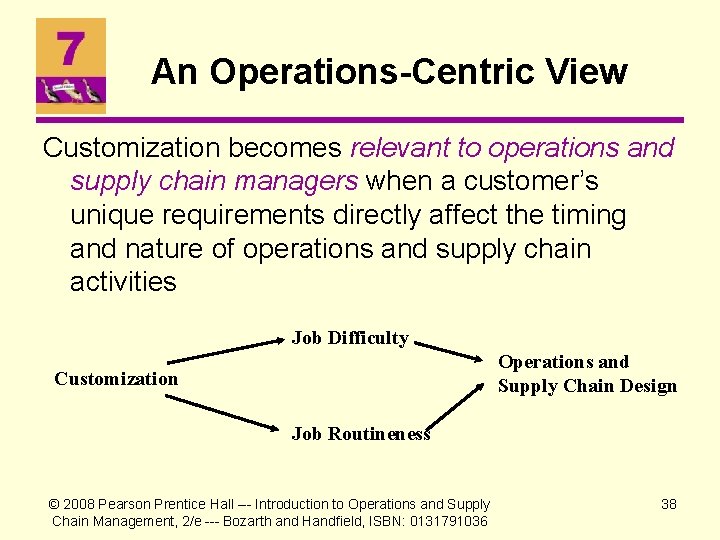
An Operations-Centric View Customization becomes relevant to operations and supply chain managers when a customer’s unique requirements directly affect the timing and nature of operations and supply chain activities Job Difficulty Operations and Supply Chain Design Customization Job Routineness © 2008 Pearson Prentice Hall --- Introduction to Operations and Supply Chain Management, 2/e --- Bozarth and Handfield, ISBN: 0131791036 38
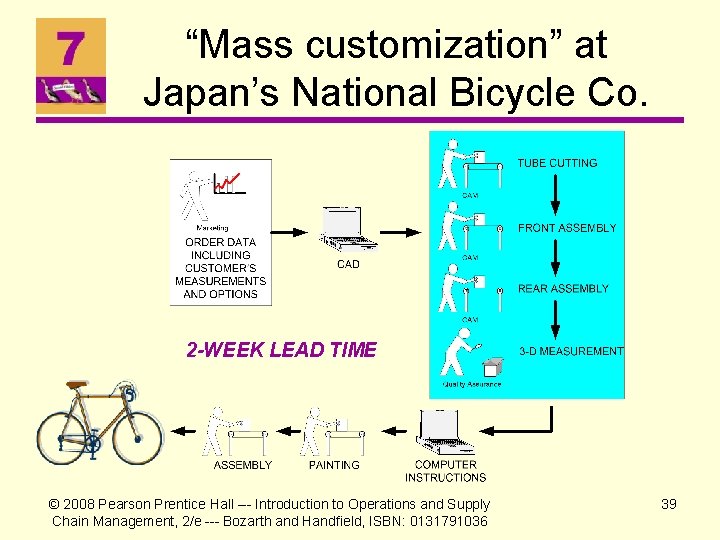
“Mass customization” at Japan’s National Bicycle Co. 2 -WEEK LEAD TIME © 2008 Pearson Prentice Hall --- Introduction to Operations and Supply Chain Management, 2/e --- Bozarth and Handfield, ISBN: 0131791036 39
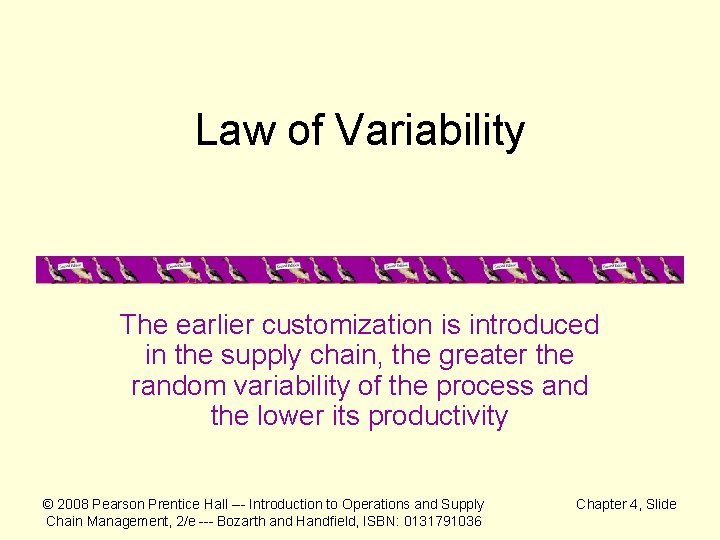
Law of Variability The earlier customization is introduced in the supply chain, the greater the random variability of the process and the lower its productivity © 2008 Pearson Prentice Hall --- Introduction to Operations and Supply Chain Management, 2/e --- Bozarth and Handfield, ISBN: 0131791036 Chapter 4, Slide
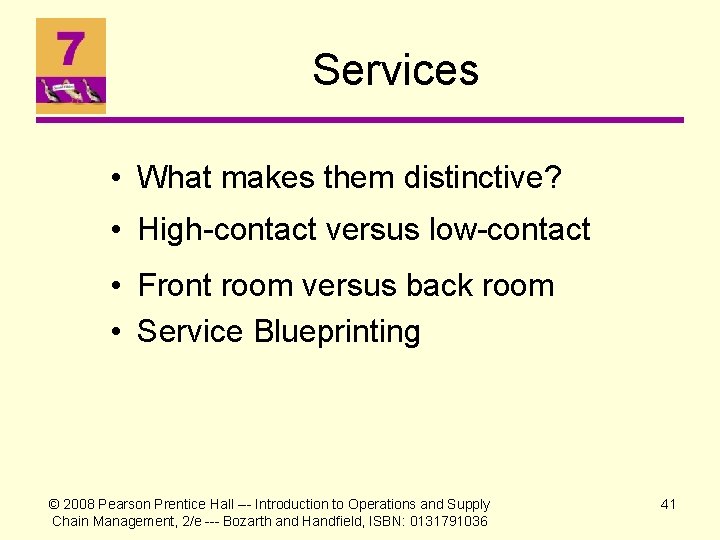
Services • What makes them distinctive? • High-contact versus low-contact • Front room versus back room • Service Blueprinting © 2008 Pearson Prentice Hall --- Introduction to Operations and Supply Chain Management, 2/e --- Bozarth and Handfield, ISBN: 0131791036 41
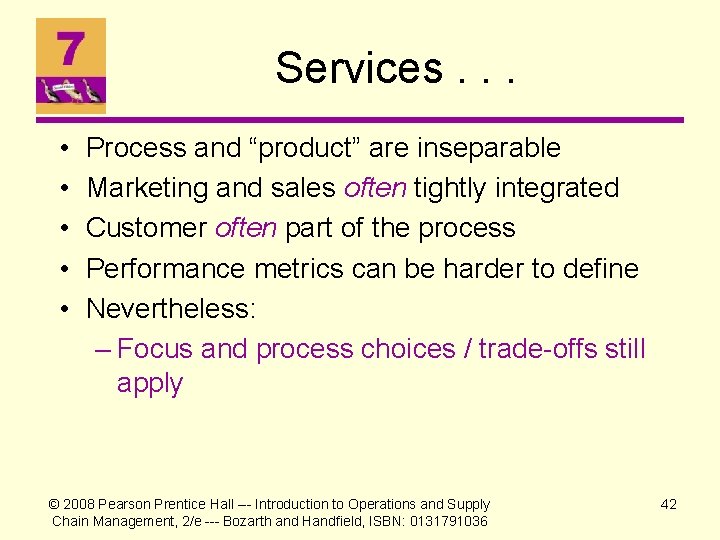
Services. . . • • • Process and “product” are inseparable Marketing and sales often tightly integrated Customer often part of the process Performance metrics can be harder to define Nevertheless: – Focus and process choices / trade-offs still apply © 2008 Pearson Prentice Hall --- Introduction to Operations and Supply Chain Management, 2/e --- Bozarth and Handfield, ISBN: 0131791036 42
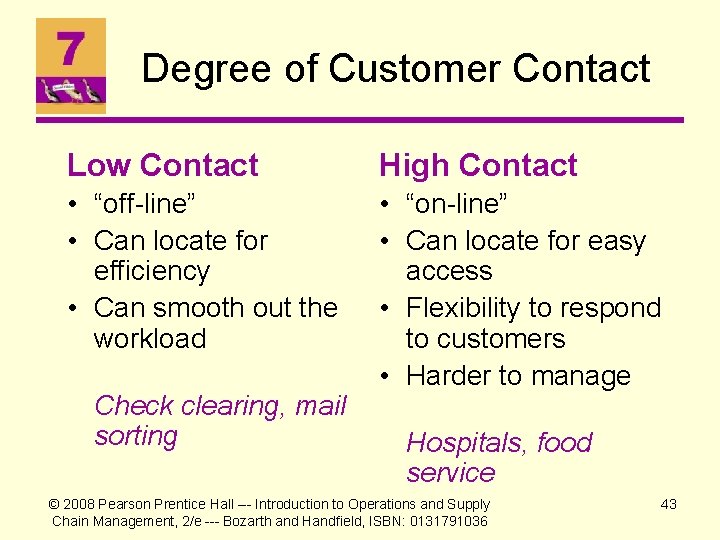
Degree of Customer Contact Low Contact High Contact • “off-line” • Can locate for efficiency • Can smooth out the workload • “on-line” • Can locate for easy access • Flexibility to respond to customers • Harder to manage Check clearing, mail sorting Hospitals, food service © 2008 Pearson Prentice Hall --- Introduction to Operations and Supply Chain Management, 2/e --- Bozarth and Handfield, ISBN: 0131791036 43
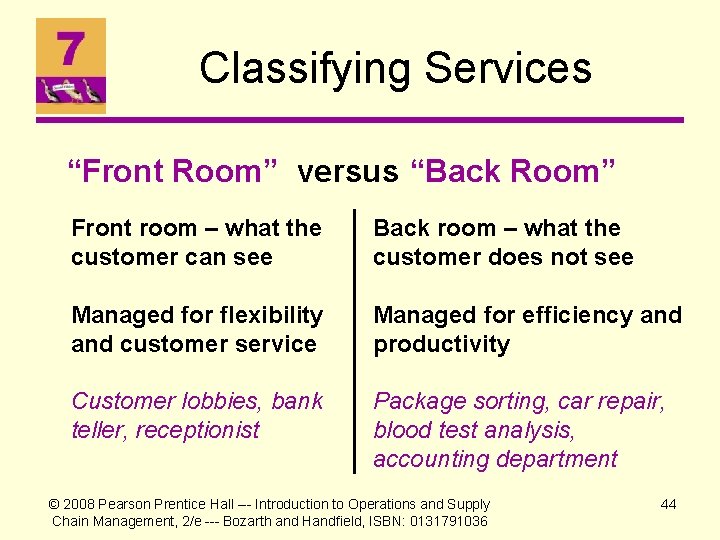
Classifying Services “Front Room” versus “Back Room” Front room – what the customer can see Back room – what the customer does not see Managed for flexibility and customer service Managed for efficiency and productivity Customer lobbies, bank teller, receptionist Package sorting, car repair, blood test analysis, accounting department © 2008 Pearson Prentice Hall --- Introduction to Operations and Supply Chain Management, 2/e --- Bozarth and Handfield, ISBN: 0131791036 44
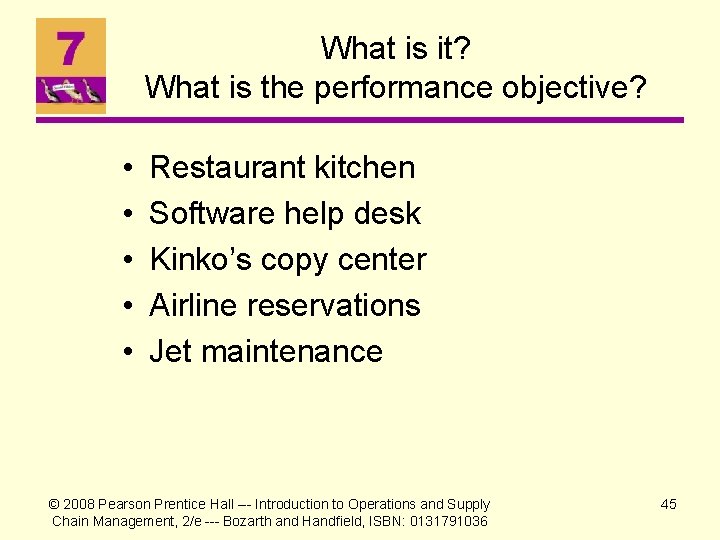
What is it? What is the performance objective? • • • Restaurant kitchen Software help desk Kinko’s copy center Airline reservations Jet maintenance © 2008 Pearson Prentice Hall --- Introduction to Operations and Supply Chain Management, 2/e --- Bozarth and Handfield, ISBN: 0131791036 45
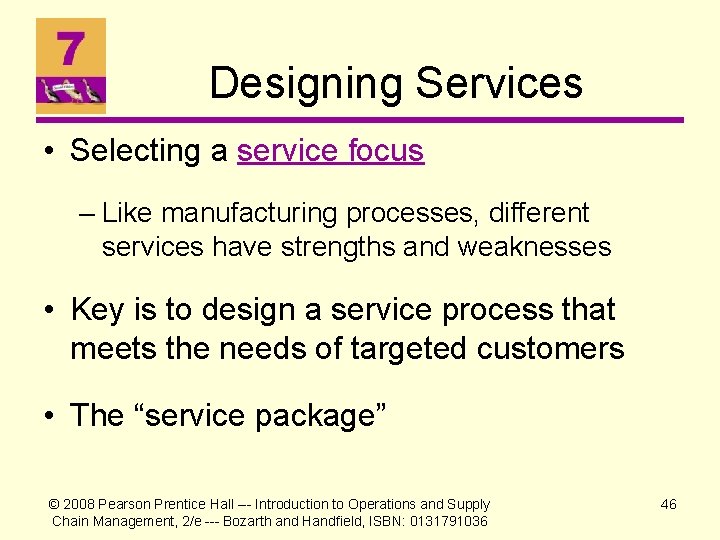
Designing Services • Selecting a service focus – Like manufacturing processes, different services have strengths and weaknesses • Key is to design a service process that meets the needs of targeted customers • The “service package” © 2008 Pearson Prentice Hall --- Introduction to Operations and Supply Chain Management, 2/e --- Bozarth and Handfield, ISBN: 0131791036 46
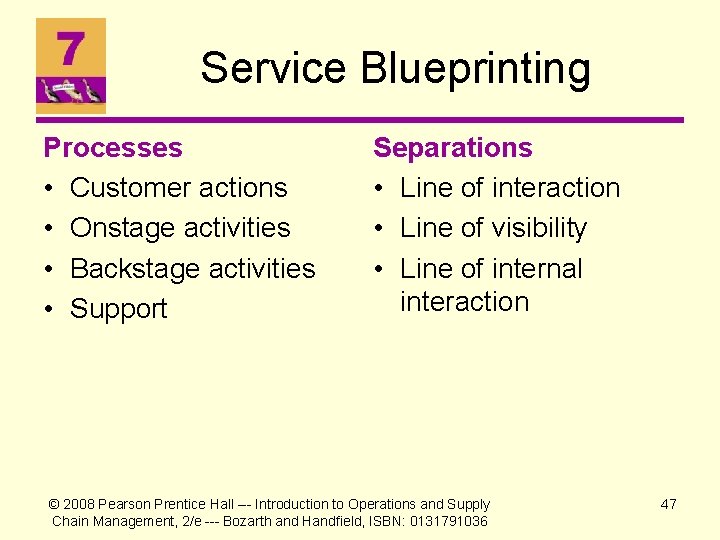
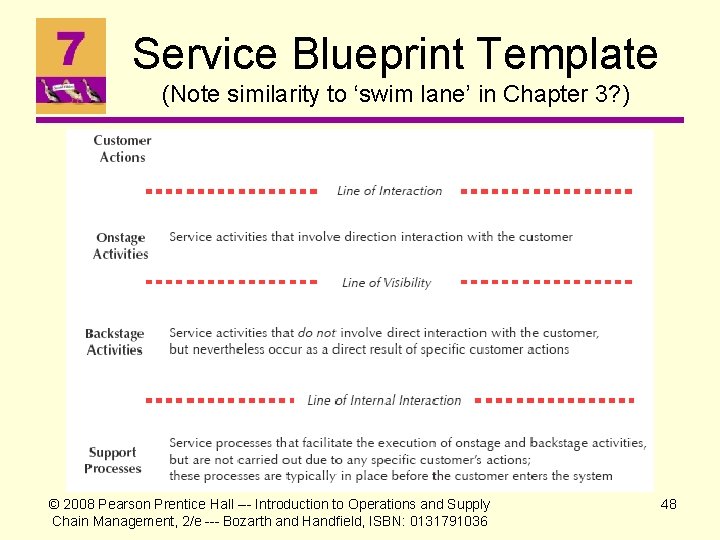
Service Blueprinting Processes • Customer actions • Onstage activities • Backstage activities • Support Separations • Line of interaction • Line of visibility • Line of internal interaction © 2008 Pearson Prentice Hall --- Introduction to Operations and Supply Chain Management, 2/e --- Bozarth and Handfield, ISBN: 0131791036 47
Service Blueprint Template (Note similarity to ‘swim lane’ in Chapter 3? ) © 2008 Pearson Prentice Hall --- Introduction to Operations and Supply Chain Management, 2/e --- Bozarth and Handfield, ISBN: 0131791036 48
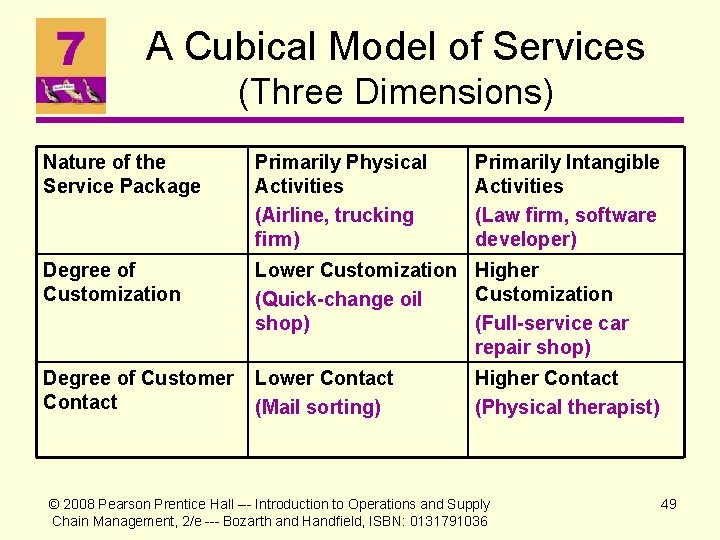
A Cubical Model of Services (Three Dimensions) Nature of the Service Package Primarily Physical Activities (Airline, trucking firm) Primarily Intangible Activities (Law firm, software developer) Degree of Customization Lower Customization Higher Customization (Quick-change oil shop) (Full-service car repair shop) Degree of Customer Contact Lower Contact (Mail sorting) Higher Contact (Physical therapist) © 2008 Pearson Prentice Hall --- Introduction to Operations and Supply Chain Management, 2/e --- Bozarth and Handfield, ISBN: 0131791036 49
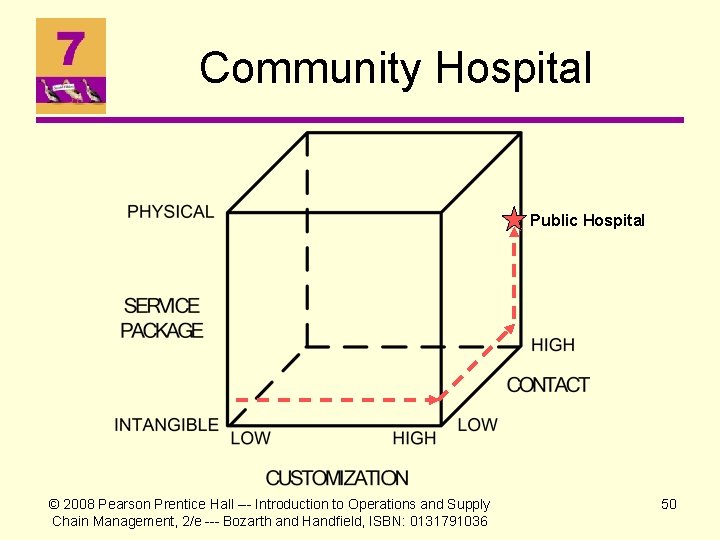
Community Hospital Public Hospital © 2008 Pearson Prentice Hall --- Introduction to Operations and Supply Chain Management, 2/e --- Bozarth and Handfield, ISBN: 0131791036 50
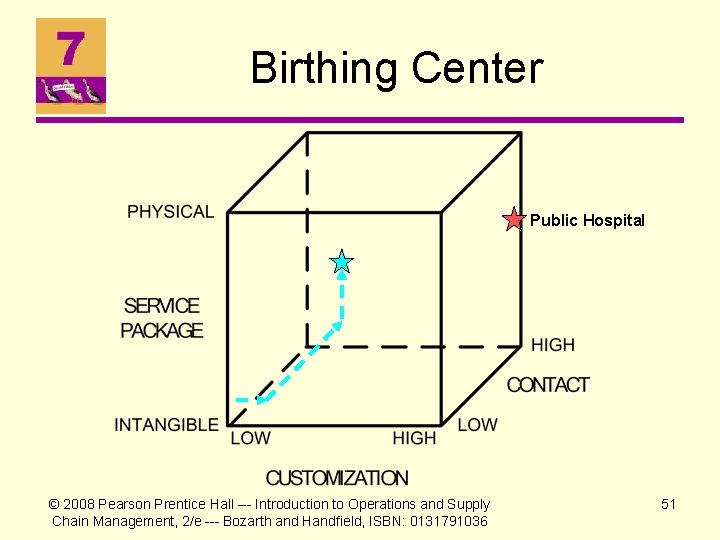
Birthing Center Public Hospital © 2008 Pearson Prentice Hall --- Introduction to Operations and Supply Chain Management, 2/e --- Bozarth and Handfield, ISBN: 0131791036 51
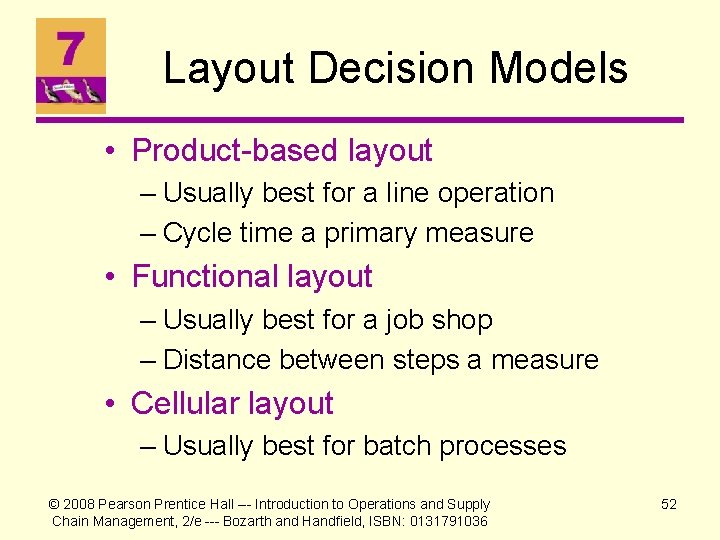
Layout Decision Models • Product-based layout – Usually best for a line operation – Cycle time a primary measure • Functional layout – Usually best for a job shop – Distance between steps a measure • Cellular layout – Usually best for batch processes © 2008 Pearson Prentice Hall --- Introduction to Operations and Supply Chain Management, 2/e --- Bozarth and Handfield, ISBN: 0131791036 52
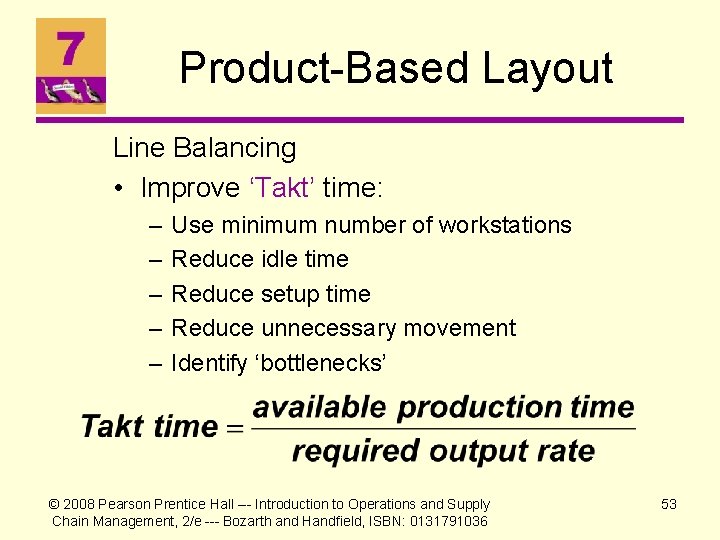
Product-Based Layout Line Balancing • Improve ‘Takt’ time: – – – Use minimum number of workstations Reduce idle time Reduce setup time Reduce unnecessary movement Identify ‘bottlenecks’ © 2008 Pearson Prentice Hall --- Introduction to Operations and Supply Chain Management, 2/e --- Bozarth and Handfield, ISBN: 0131791036 53
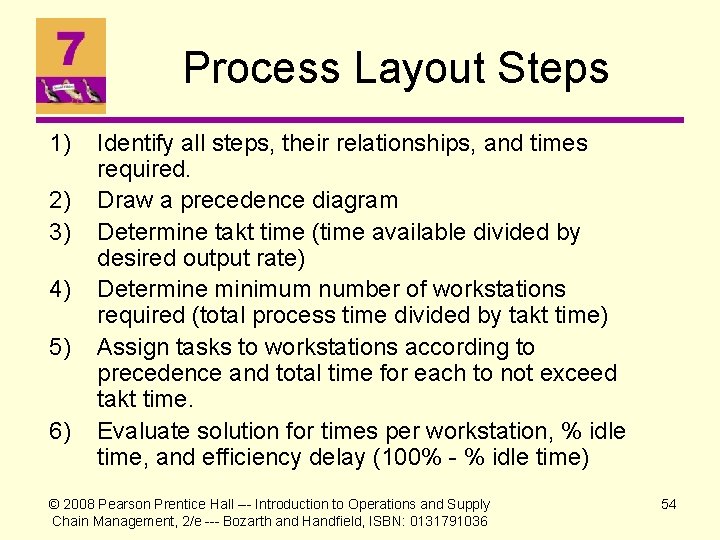
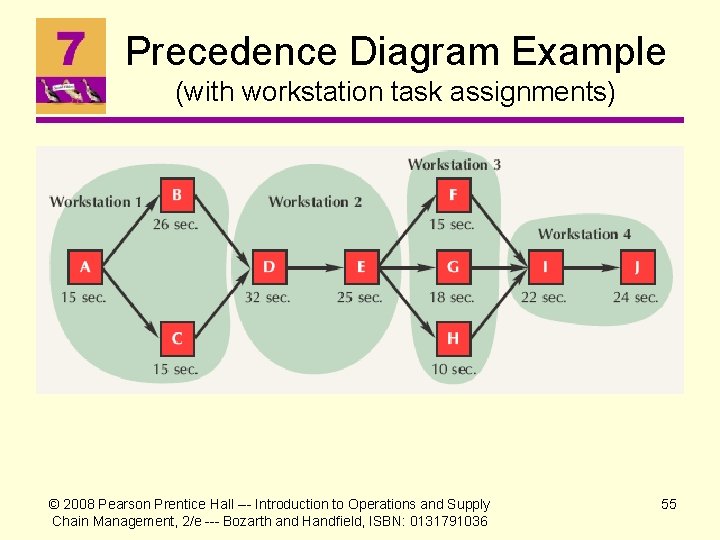
Process Layout Steps 1) 2) 3) 4) 5) 6) Identify all steps, their relationships, and times required. Draw a precedence diagram Determine takt time (time available divided by desired output rate) Determine minimum number of workstations required (total process time divided by takt time) Assign tasks to workstations according to precedence and total time for each to not exceed takt time. Evaluate solution for times per workstation, % idle time, and efficiency delay (100% - % idle time) © 2008 Pearson Prentice Hall --- Introduction to Operations and Supply Chain Management, 2/e --- Bozarth and Handfield, ISBN: 0131791036 54
Precedence Diagram Example (with workstation task assignments) © 2008 Pearson Prentice Hall --- Introduction to Operations and Supply Chain Management, 2/e --- Bozarth and Handfield, ISBN: 0131791036 55
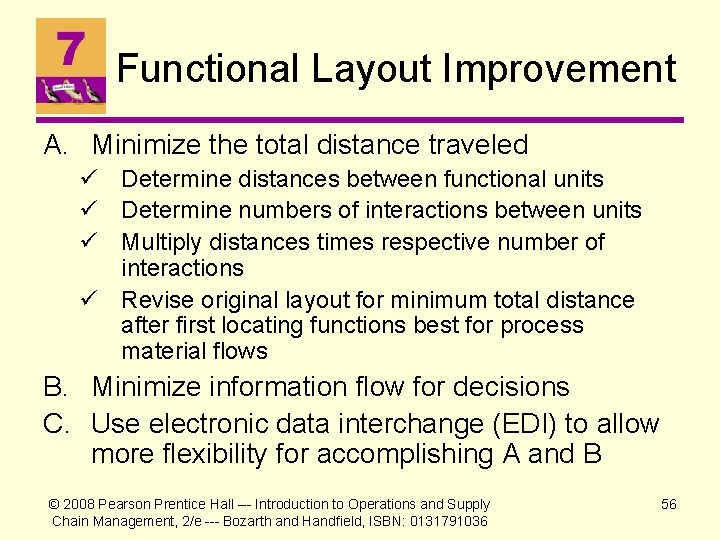
Functional Layout Improvement A. Minimize the total distance traveled ü Determine distances between functional units ü Determine numbers of interactions between units ü Multiply distances times respective number of interactions ü Revise original layout for minimum total distance after first locating functions best for process material flows B. Minimize information flow for decisions C. Use electronic data interchange (EDI) to allow more flexibility for accomplishing A and B © 2008 Pearson Prentice Hall --- Introduction to Operations and Supply Chain Management, 2/e --- Bozarth and Handfield, ISBN: 0131791036 56
Case Study in Manufacturing and Service Processes Loganville Window Treatments © 2008 Pearson Prentice Hall --- Introduction to Operations and Supply Chain Management, 2/e --- Bozarth and Handfield, ISBN: 0131791036 Chapter 4, Slide