
PROCESS 3 Steam Turbine Optimization for Solar Thermal
PROCESS 3 Steam Turbine Optimization for Solar Thermal Power Plant Operation Andrew Martin, Project Leader James Spelling, Research Student Division of Heat and Power Technology 1
Solar Electric Technologies are Hot! • Huge upswing in PV investments Still €€€/k. Wh Perhaps most suitable for distributed generation • Concentrating Solar Power (CSP) being explored and deployed extensively Spain, USA, Australia major players Feed-in tariffs, Renewable Portfolio Standards major sources for subsidies Division of Heat and Power Technology 2
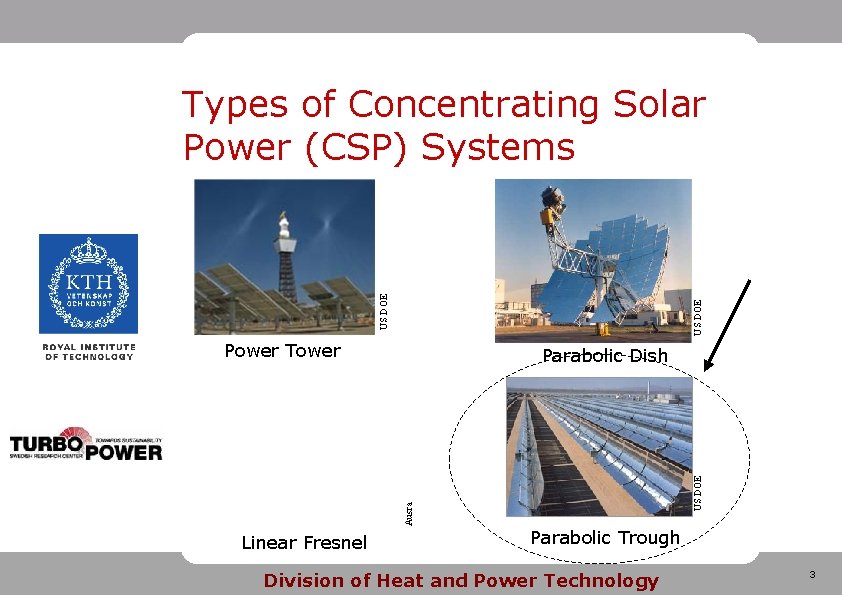
US DOE Types of Concentrating Solar Power (CSP) Systems Power Tower Linear Fresnel US DOE Ausra Parabolic Dish Parabolic Trough Division of Heat and Power Technology 3
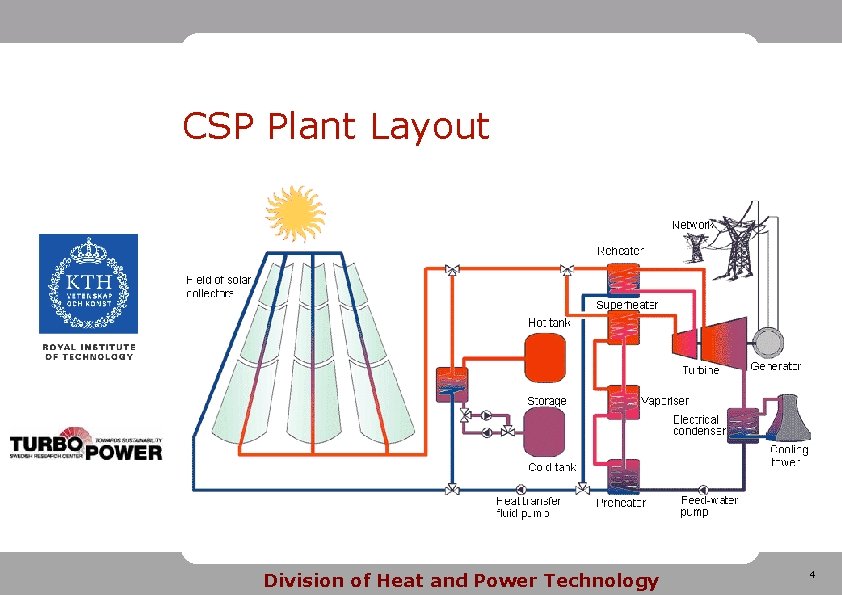
CSP Plant Layout Division of Heat and Power Technology 4
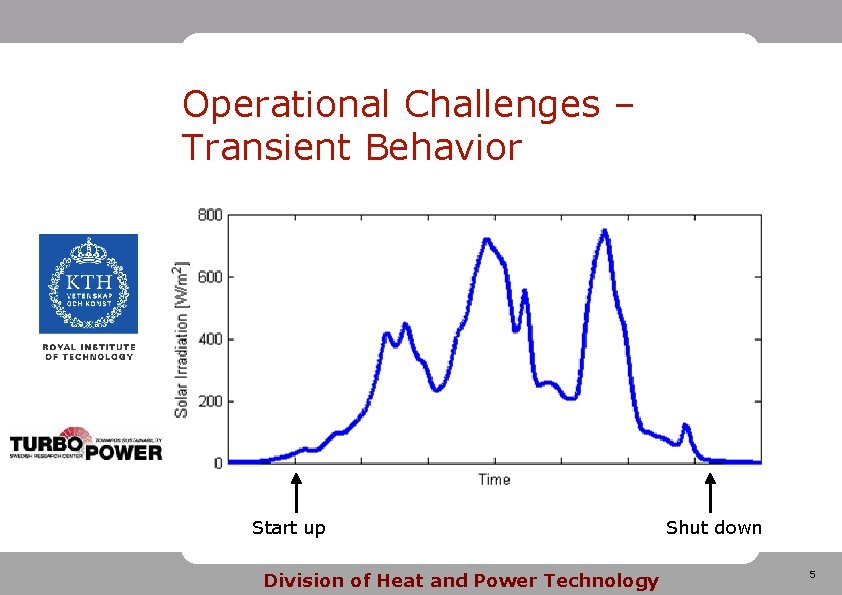
Operational Challenges – Transient Behavior Start up Division of Heat and Power Technology Shut down 5
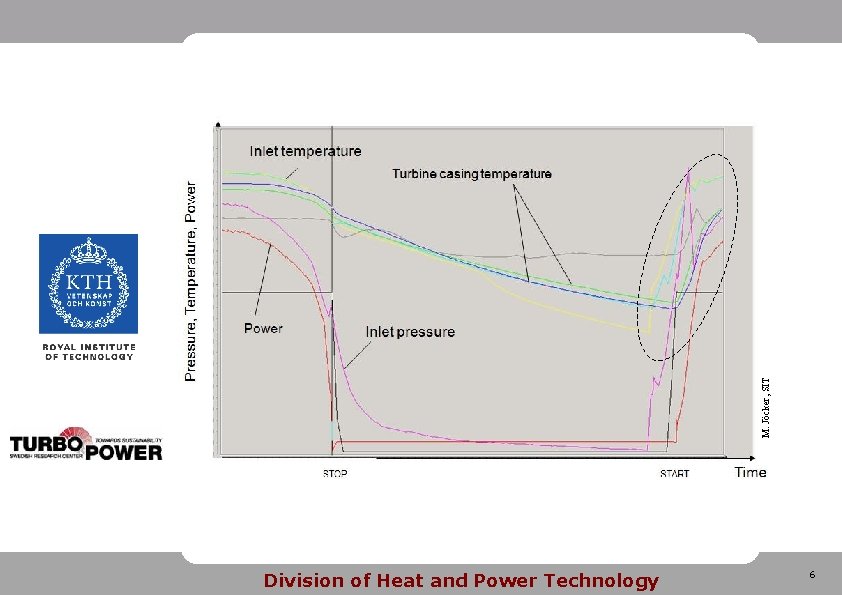
M. Jöcker, SIT Division of Heat and Power Technology 6
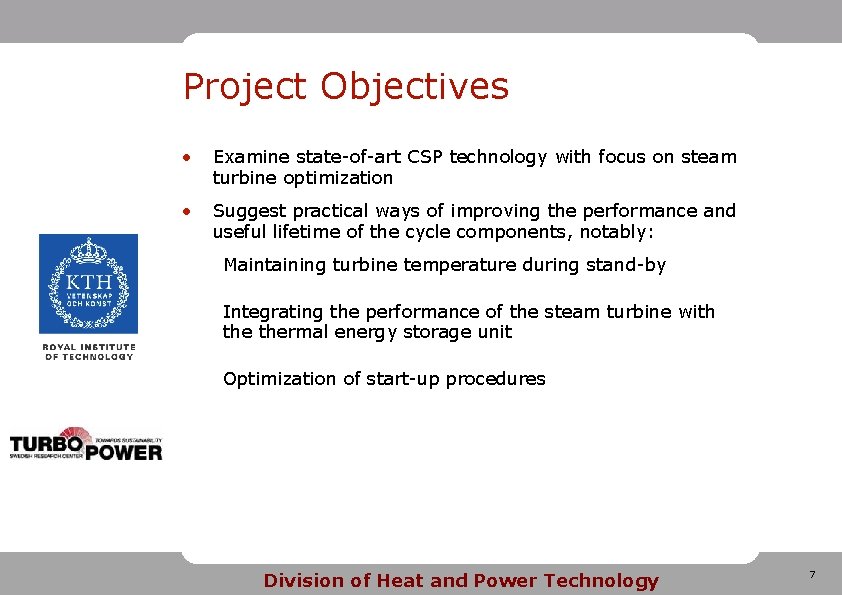
Project Objectives • Examine state-of-art CSP technology with focus on steam turbine optimization • Suggest practical ways of improving the performance and useful lifetime of the cycle components, notably: Maintaining turbine temperature during stand-by Integrating the performance of the steam turbine with thermal energy storage unit Optimization of start-up procedures Division of Heat and Power Technology 7

Methodology • Development of dynamic component model of steam turbine Simple 1 D (axial) heat transfer model Detailed 2 D (axisymmetric) heat transfer model coupled with a Stodola steam expansion model • Development of system models Complete system simulation model for gas turbine-based CSP is available • Simulation and optimisation of the solar trough plant ST operational strategies via thermal energy storage • Comparison of component and system simulation results with experimental data from existing CSP plants Division of Heat and Power Technology 8
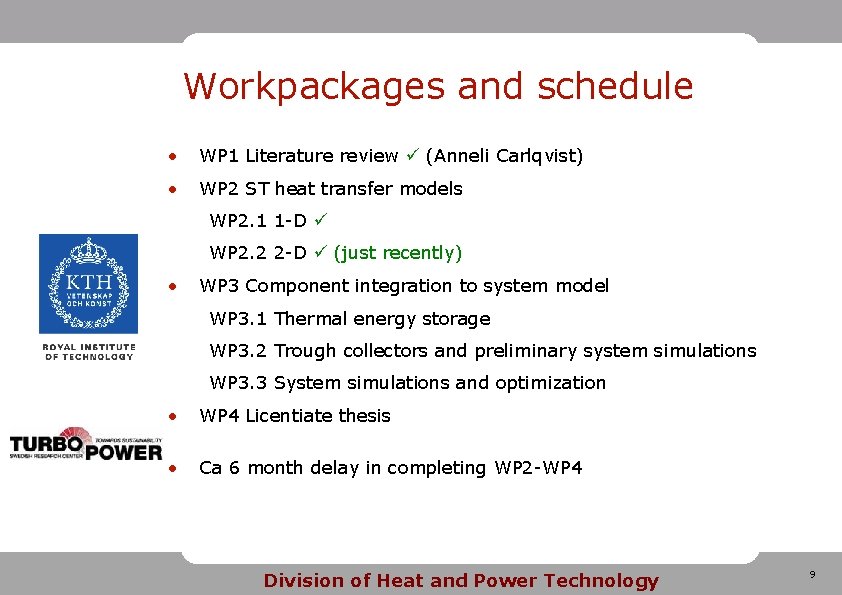
Workpackages and schedule • WP 1 Literature review (Anneli Carlqvist) • WP 2 ST heat transfer models WP 2. 1 1 -D WP 2. 2 2 -D (just recently) • WP 3 Component integration to system model WP 3. 1 Thermal energy storage WP 3. 2 Trough collectors and preliminary system simulations WP 3. 3 System simulations and optimization • WP 4 Licentiate thesis • Ca 6 month delay in completing WP 2 -WP 4 Division of Heat and Power Technology 9
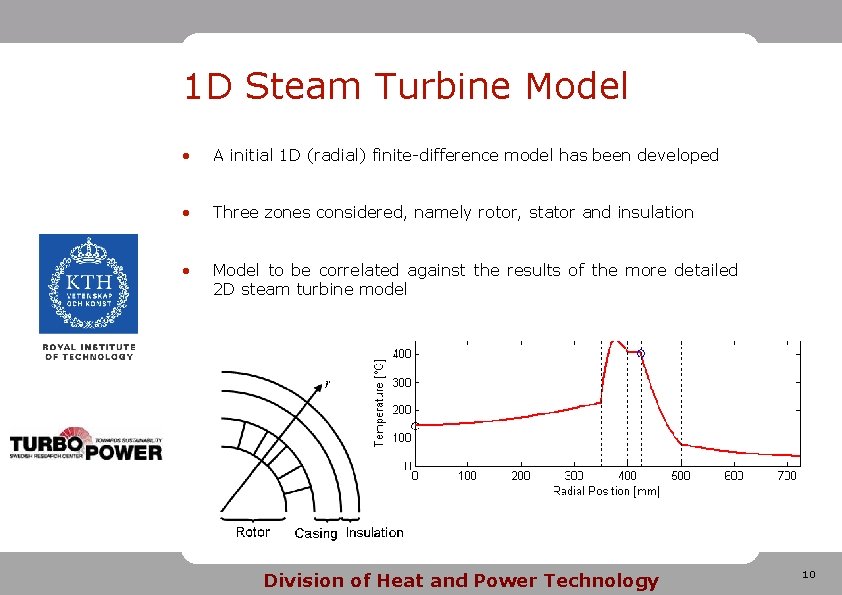
1 D Steam Turbine Model • A initial 1 D (radial) finite-difference model has been developed • Three zones considered, namely rotor, stator and insulation • Model to be correlated against the results of the more detailed 2 D steam turbine model Division of Heat and Power Technology 10
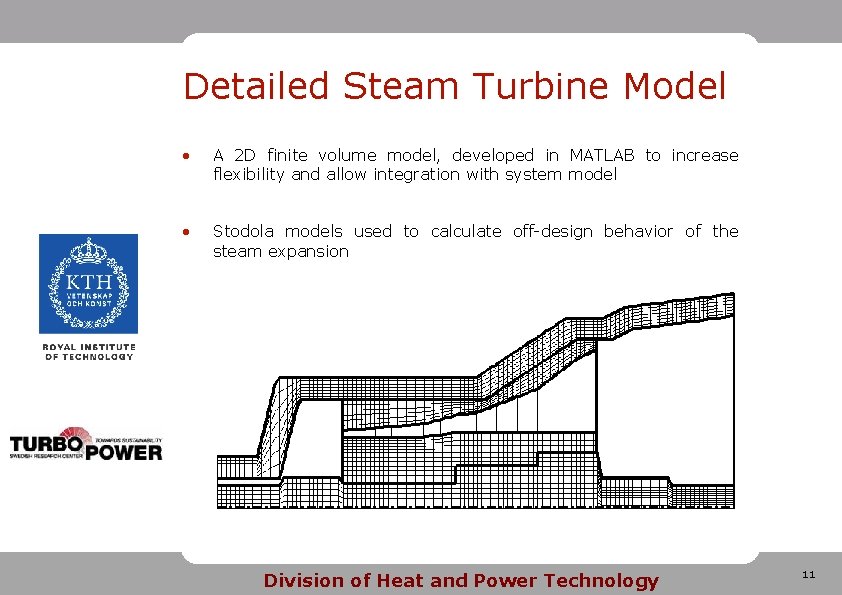
Detailed Steam Turbine Model • A 2 D finite volume model, developed in MATLAB to increase flexibility and allow integration with system model • Stodola models used to calculate off-design behavior of the steam expansion Division of Heat and Power Technology 11
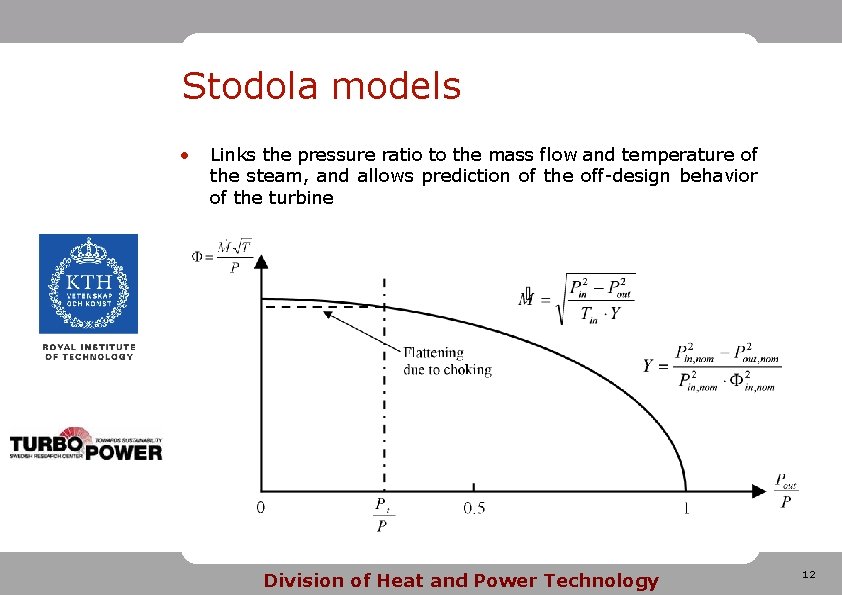
Stodola models • Links the pressure ratio to the mass flow and temperature of the steam, and allows prediction of the off-design behavior of the turbine Division of Heat and Power Technology 12
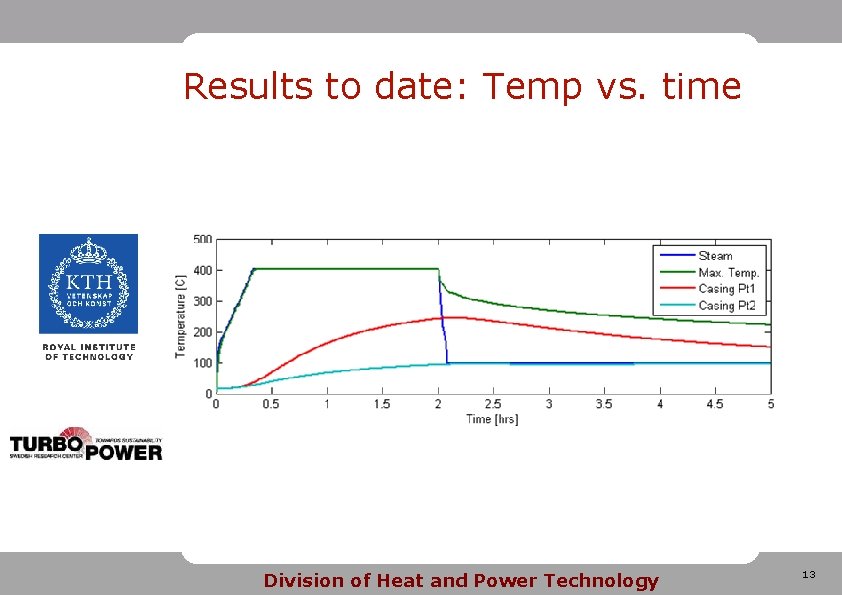
Results to date: Temp vs. time Division of Heat and Power Technology 13
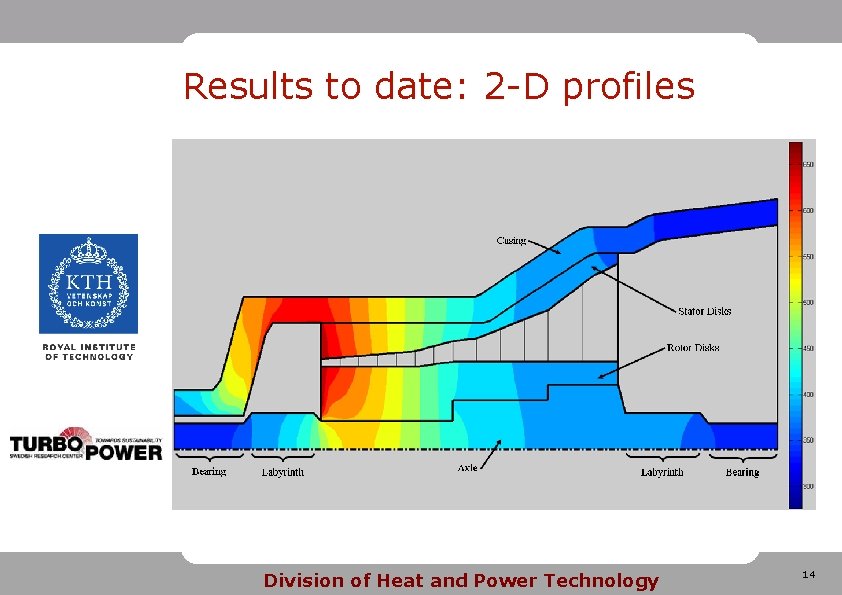
Results to date: 2 -D profiles Division of Heat and Power Technology 14
Results to date: Animation Division of Heat and Power Technology 15
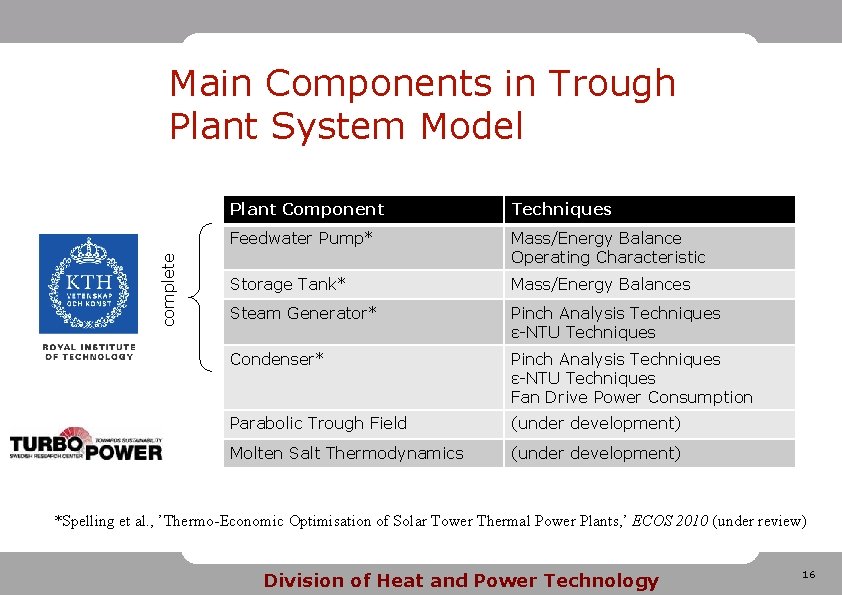
complete Main Components in Trough Plant System Model Plant Component Techniques Feedwater Pump* Mass/Energy Balance Operating Characteristic Storage Tank* Mass/Energy Balances Steam Generator* Pinch Analysis Techniques ε-NTU Techniques Condenser* Pinch Analysis Techniques ε-NTU Techniques Fan Drive Power Consumption Parabolic Trough Field (under development) Molten Salt Thermodynamics (under development) *Spelling et al. , ’Thermo-Economic Optimisation of Solar Tower Thermal Power Plants, ’ ECOS 2010 (under review) Division of Heat and Power Technology 16
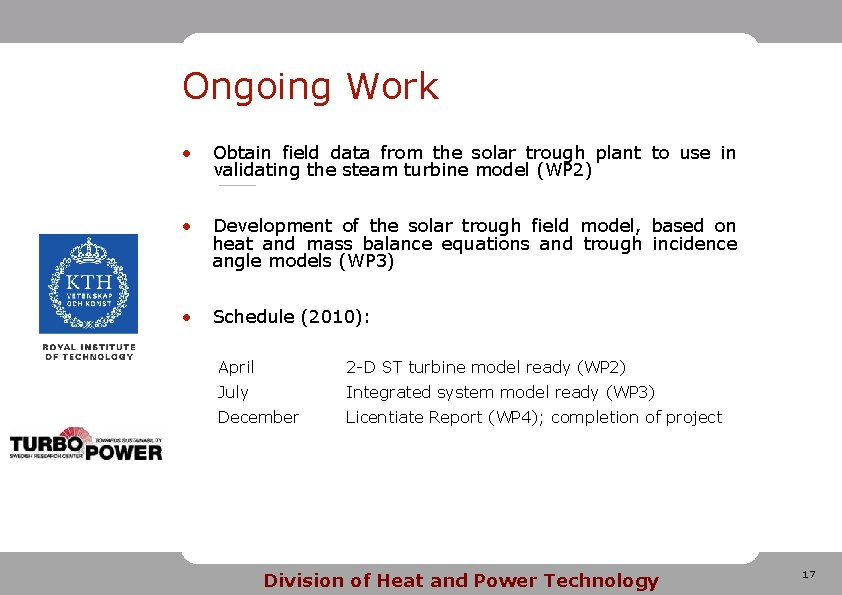
Ongoing Work • Obtain field data from the solar trough plant to use in validating the steam turbine model (WP 2) • Development of the solar trough field model, based on heat and mass balance equations and trough incidence angle models (WP 3) • Schedule (2010): April 2 -D ST turbine model ready (WP 2) July Integrated system model ready (WP 3) December Licentiate Report (WP 4); completion of project Division of Heat and Power Technology 17
End of presentation Division of Heat and Power Technology 18
- Slides: 18