
Procedures for a CRIMINAL case ARREST Police use
- Slides: 16
Procedures for a CRIMINAL case
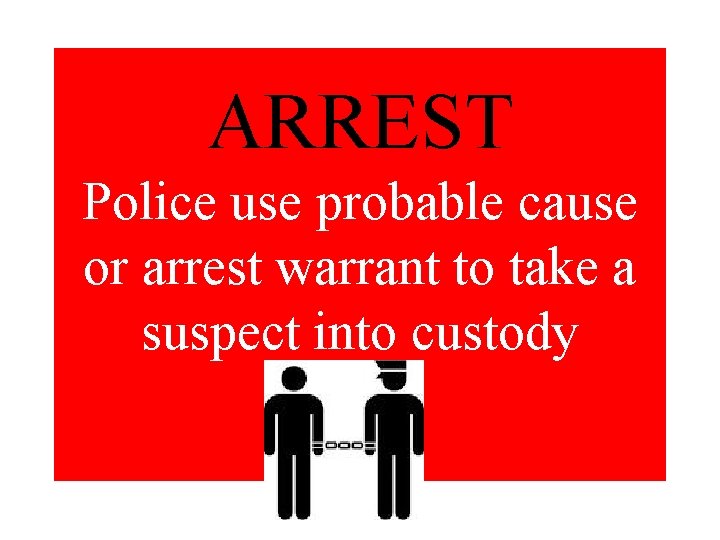
ARREST Police use probable cause or arrest warrant to take a suspect into custody
Police need probable cause Evidence used as a legal reason to make an arrest
Arrest warrant Legal document Allowing police to arrest a suspect
PRELIMINARY HEARING (aka Bail or Jail) judge hears charges and decides to grant bail or send to jail until trial
GRAND JURY INDICTMENT A grand Jury hears the evidence, suspect is indicted (officially charged) and a trial date is set
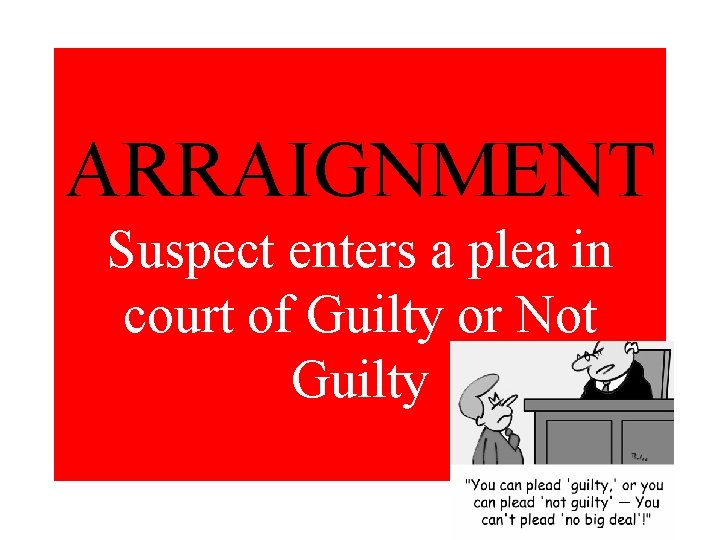
ARRAIGNMENT Suspect enters a plea in court of Guilty or Not Guilty
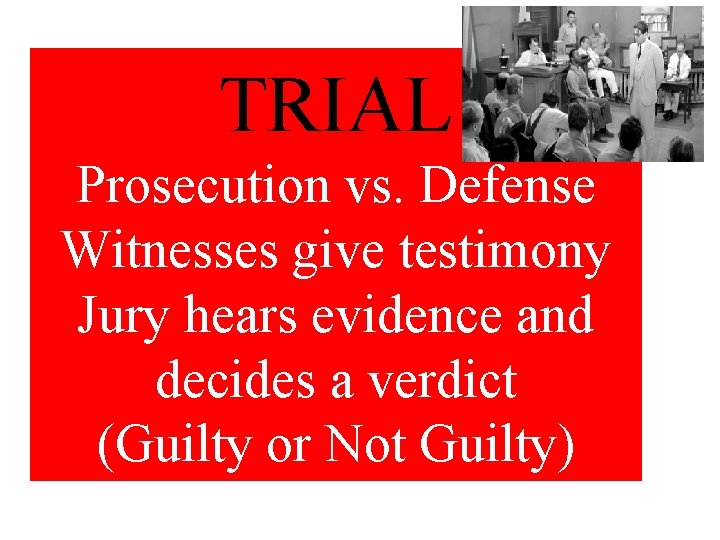
TRIAL Prosecution vs. Defense Witnesses give testimony Jury hears evidence and decides a verdict (Guilty or Not Guilty)
Prosecution prosecution • the government’s lawyers in a criminal trial • Trying to prove guilt
defense • the defendant’s lawyers in a criminal trial Defendant= person accused • Trying to prove innocence
jury citizens selected to decide a verdict (not guilty/guilty) based on trial evidence
Evidence Facts about the case presented during trials
witnesses a person called to give testimony the court or jury
VERDICT Decision of “guilty” or “not guilty” determined by the Judge or jury
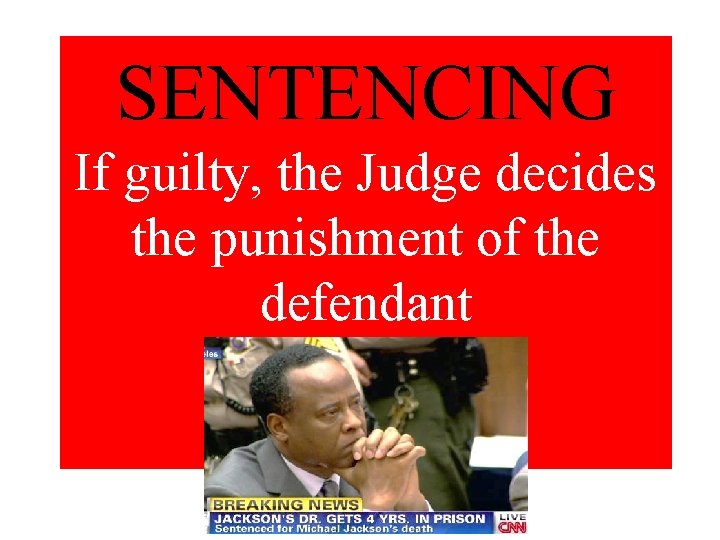
SENTENCING If guilty, the Judge decides the punishment of the defendant
Case Study Who is the Prosecutor? Who is the Defendant? What is the Crime? Where is the case being heard? What is the decision?