
Problems Involving One Numerical Variable Inferential Methods Confidence
Problems Involving One Numerical Variable Inferential Methods – Confidence Intervals
Confidence intervals for a single mean • In earlier examples, we tested claims about a population parameter using hypothesis tests. population mean, µ • What if the researcher has no idea (or theory about) what the true value of the population mean might be? • Or, what if the researcher wants to judge the practical significance of the results? • In this situation, the focus shifts to estimating the true value of the parameter.
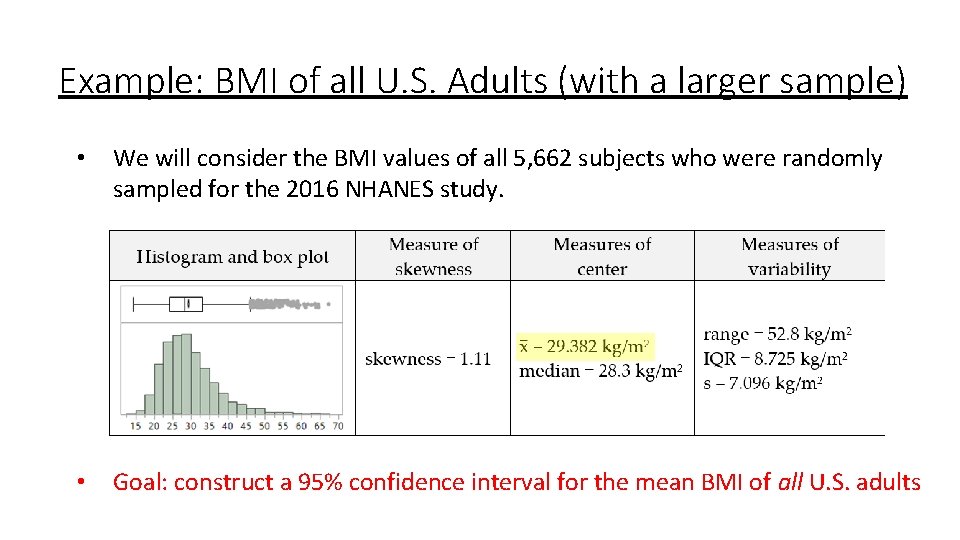
Example: BMI of all U. S. Adults (with a larger sample) • We will consider the BMI values of all 5, 662 subjects who were randomly sampled for the 2016 NHANES study. • Goal: construct a 95% confidence interval for the mean BMI of all U. S. adults
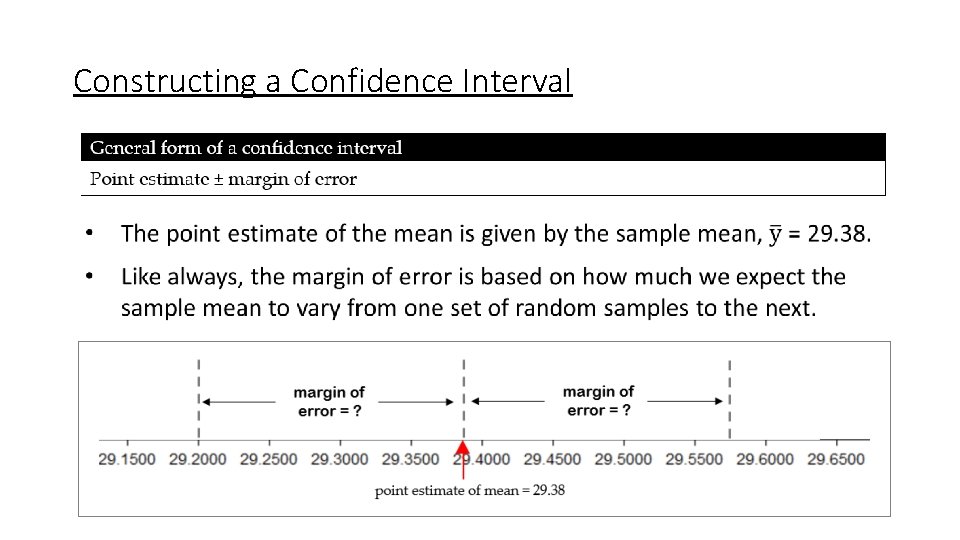
Constructing a Confidence Interval
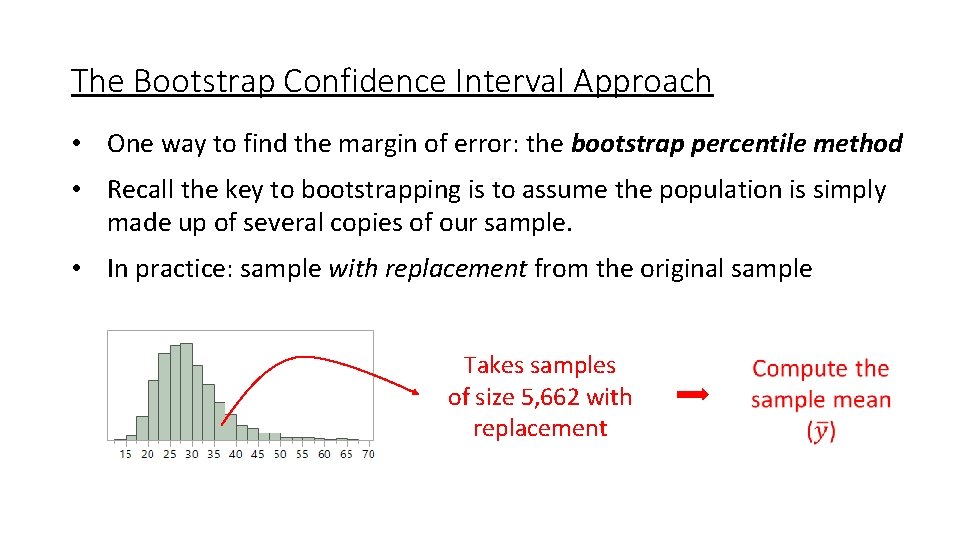
The Bootstrap Confidence Interval Approach • One way to find the margin of error: the bootstrap percentile method • Recall the key to bootstrapping is to assume the population is simply made up of several copies of our sample. • In practice: sample with replacement from the original sample Takes samples of size 5, 662 with replacement
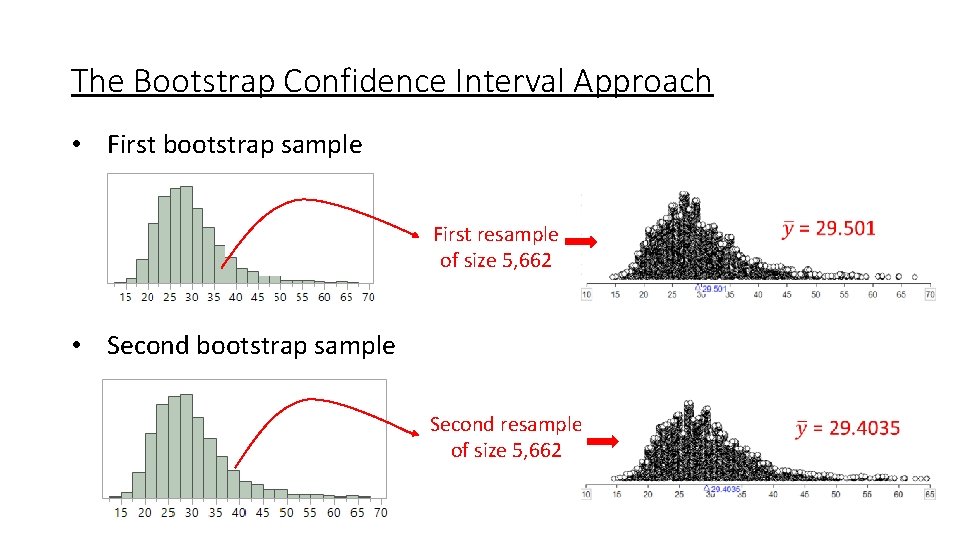
The Bootstrap Confidence Interval Approach • First bootstrap sample First resample of size 5, 662 • Second bootstrap sample Second resample of size 5, 662
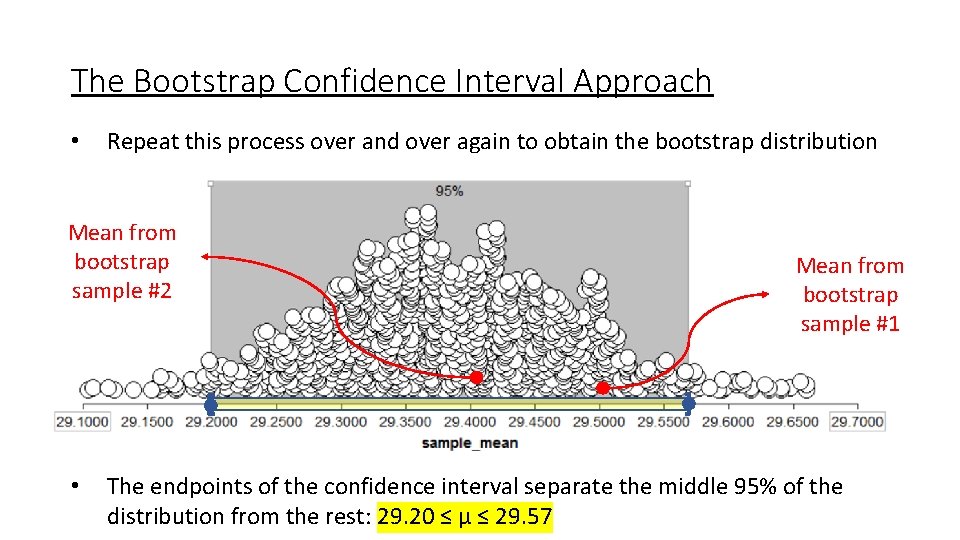
The Bootstrap Confidence Interval Approach • Repeat this process over and over again to obtain the bootstrap distribution Mean from bootstrap sample #2 • Mean from bootstrap sample #1 The endpoints of the confidence interval separate the middle 95% of the distribution from the rest: 29. 20 ≤ µ ≤ 29. 57
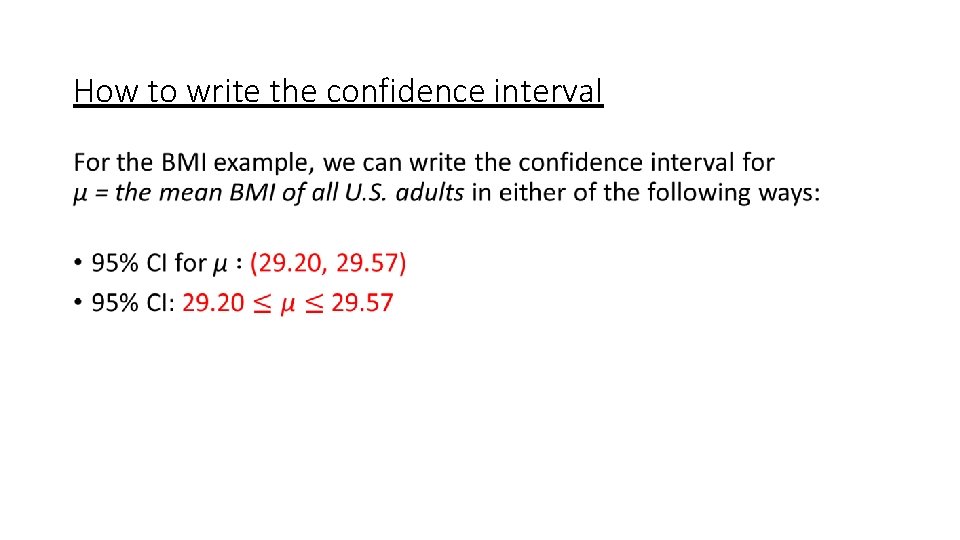
How to write the confidence interval •
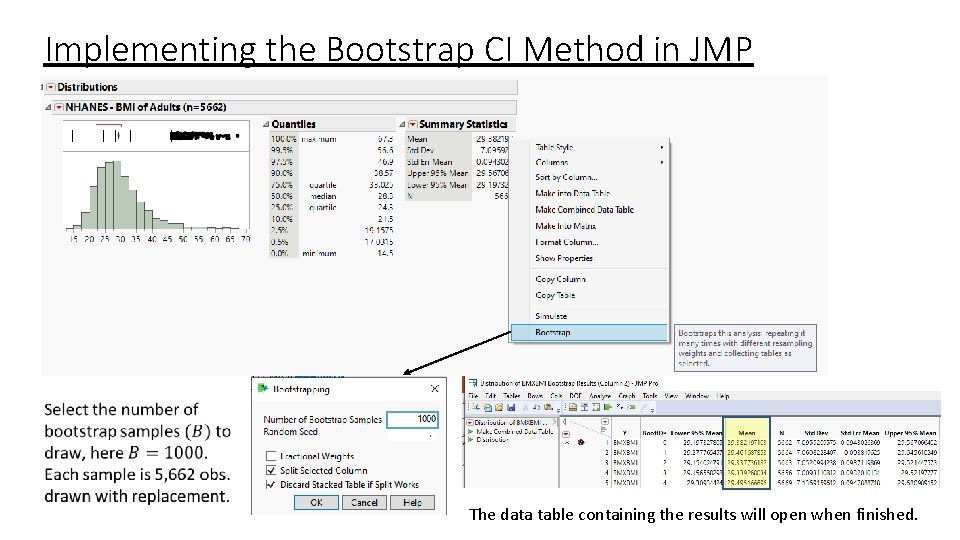
Implementing the Bootstrap CI Method in JMP The data table containing the results will open when finished.
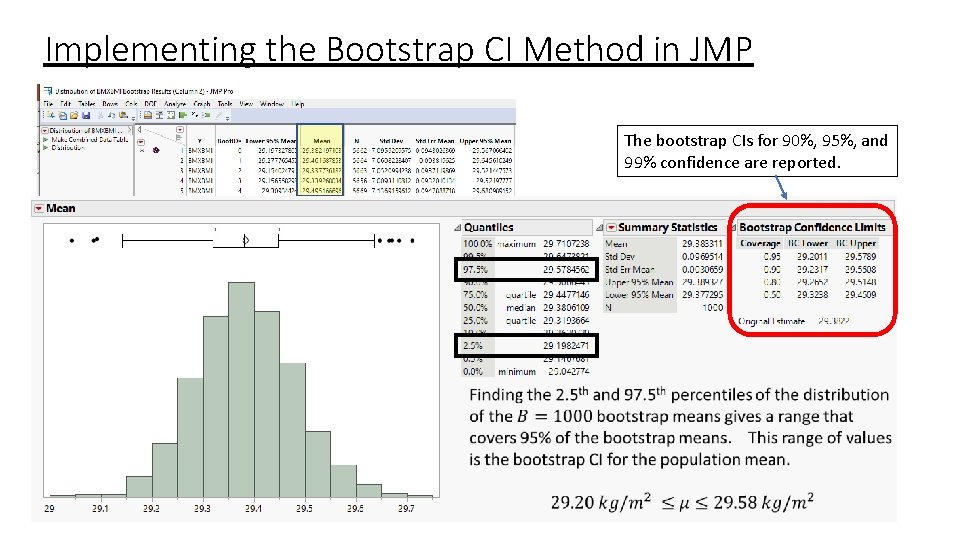
Implementing the Bootstrap CI Method in JMP The bootstrap CIs for 90%, 95%, and 99% confidence are reported.
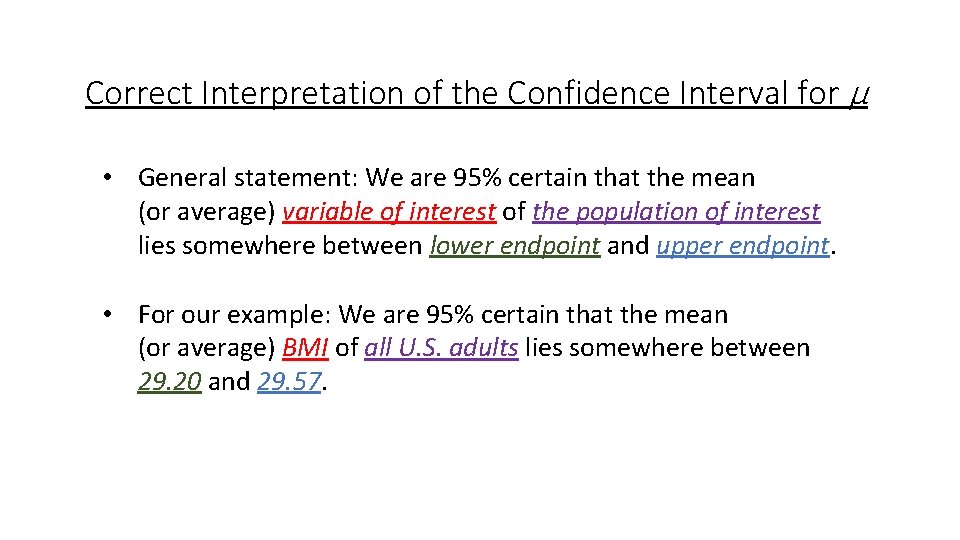
Correct Interpretation of the Confidence Interval for µ • General statement: We are 95% certain that the mean (or average) variable of interest of the population of interest lies somewhere between lower endpoint and upper endpoint. • For our example: We are 95% certain that the mean (or average) BMI of all U. S. adults lies somewhere between 29. 20 and 29. 57.
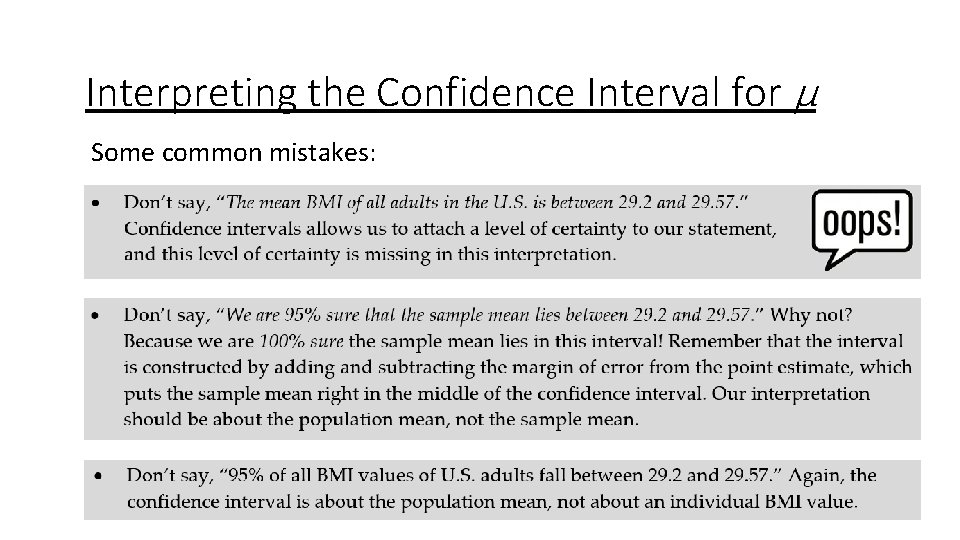
Interpreting the Confidence Interval for µ Some common mistakes:
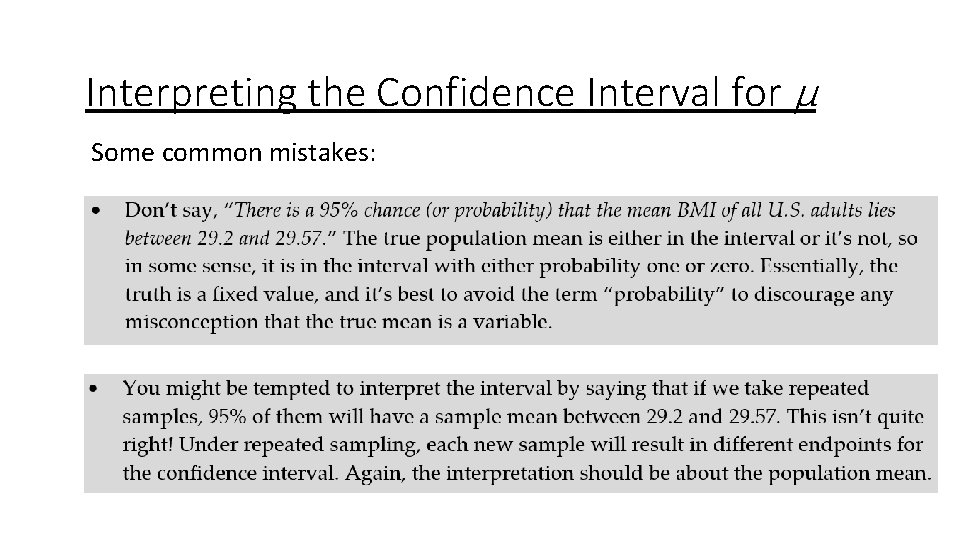
Interpreting the Confidence Interval for µ Some common mistakes:
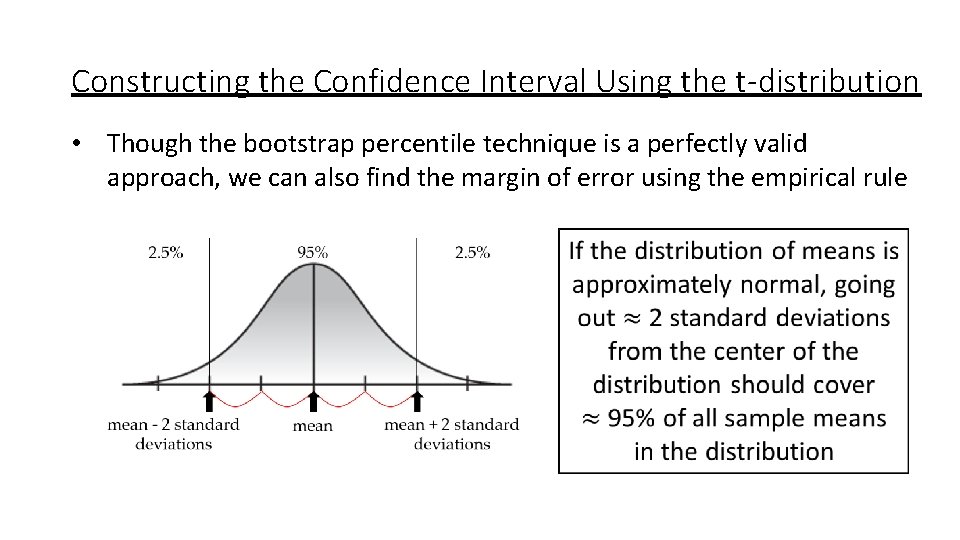
Constructing the Confidence Interval Using the t-distribution • Though the bootstrap percentile technique is a perfectly valid approach, we can also find the margin of error using the empirical rule
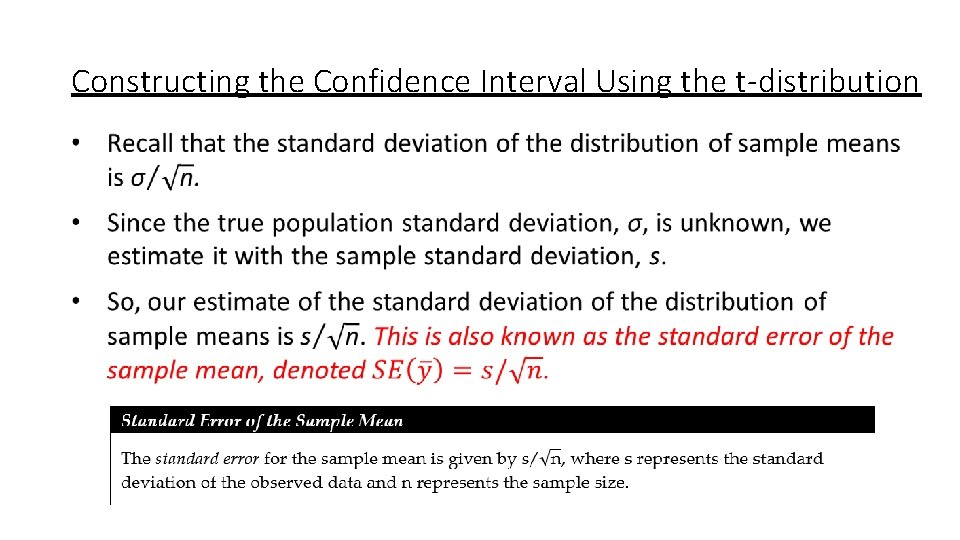
Constructing the Confidence Interval Using the t-distribution
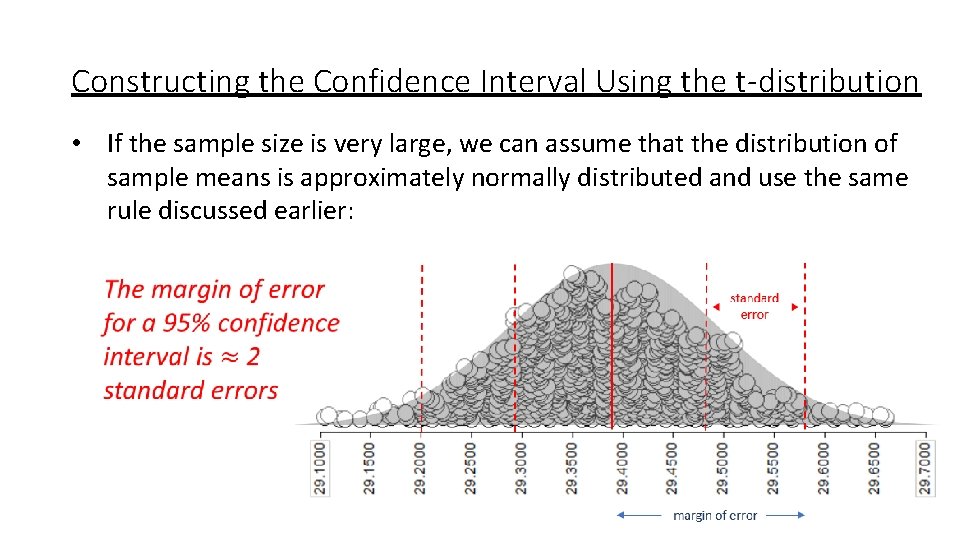
Constructing the Confidence Interval Using the t-distribution • If the sample size is very large, we can assume that the distribution of sample means is approximately normally distributed and use the same rule discussed earlier:
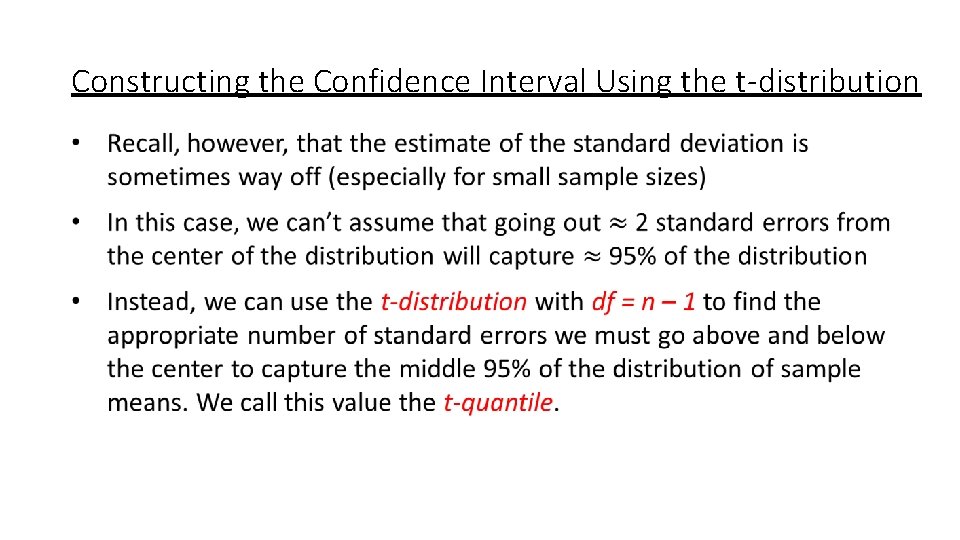
Constructing the Confidence Interval Using the t-distribution
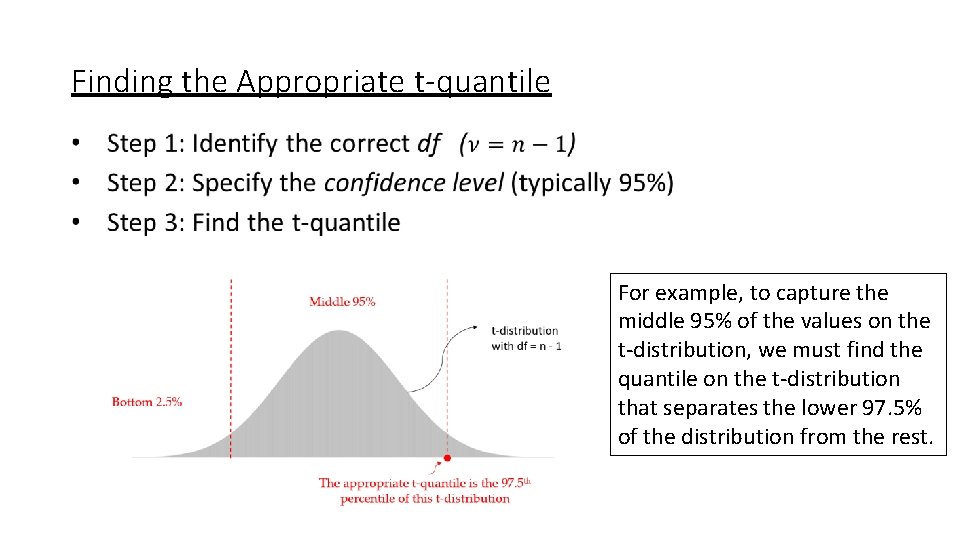
Finding the Appropriate t-quantile For example, to capture the middle 95% of the values on the t-distribution, we must find the quantile on the t-distribution that separates the lower 97. 5% of the distribution from the rest.
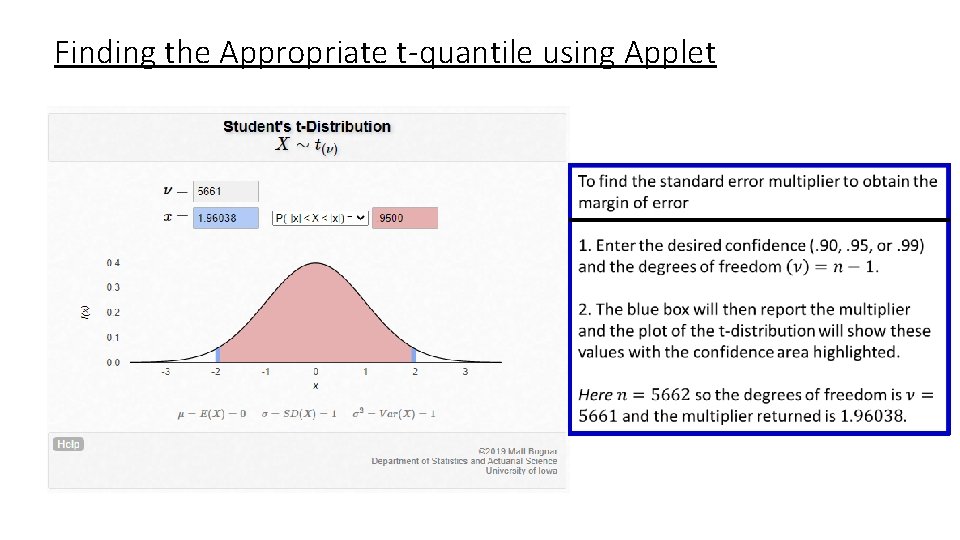
Finding the Appropriate t-quantile using Applet
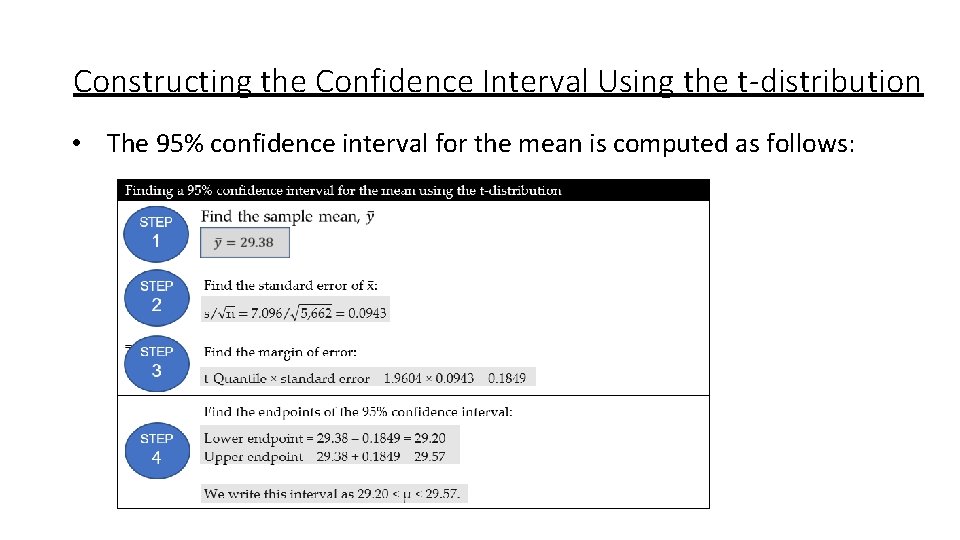
Constructing the Confidence Interval Using the t-distribution • The 95% confidence interval for the mean is computed as follows:
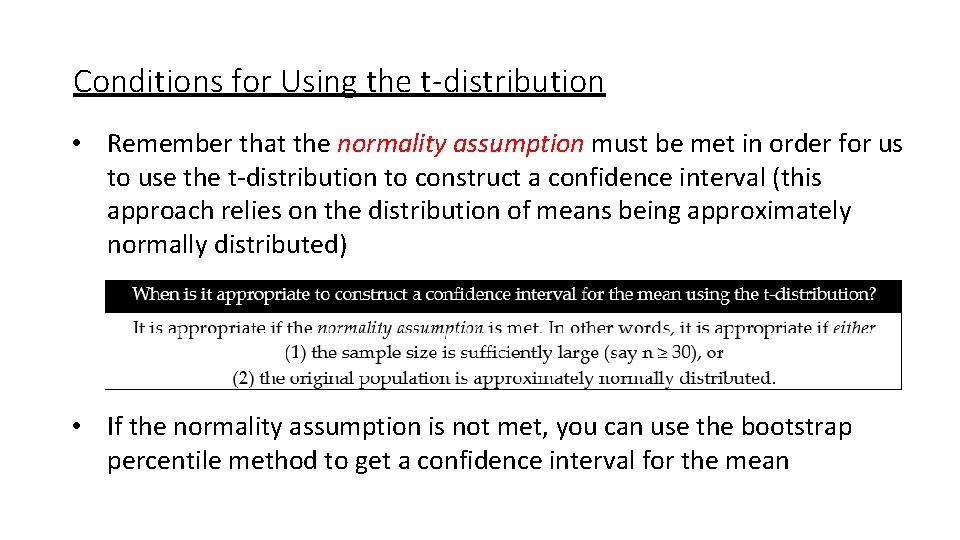
Conditions for Using the t-distribution • Remember that the normality assumption must be met in order for us to use the t-distribution to construct a confidence interval (this approach relies on the distribution of means being approximately normally distributed) • If the normality assumption is not met, you can use the bootstrap percentile method to get a confidence interval for the mean
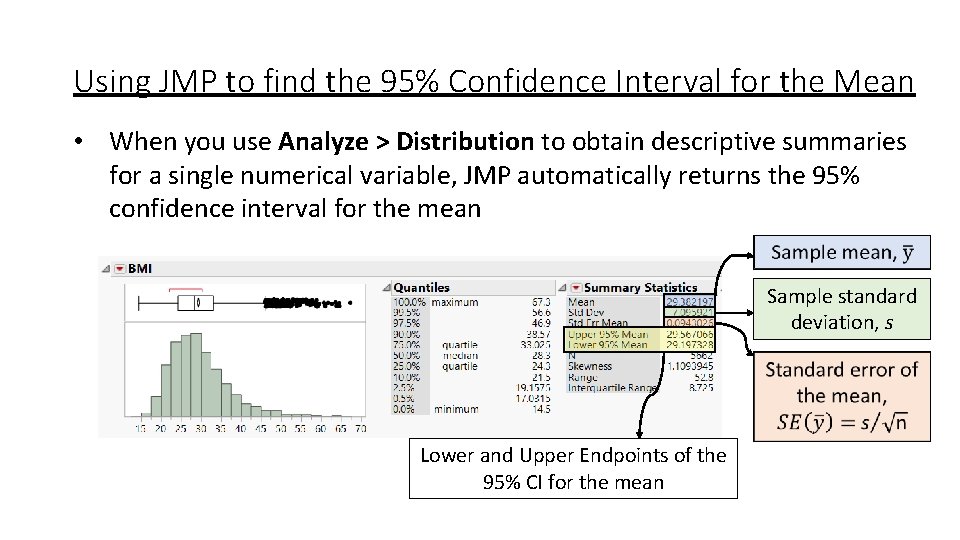
Using JMP to find the 95% Confidence Interval for the Mean • When you use Analyze > Distribution to obtain descriptive summaries for a single numerical variable, JMP automatically returns the 95% confidence interval for the mean Sample standard deviation, s Lower and Upper Endpoints of the 95% CI for the mean
- Slides: 22