
Problems in exposure studies Uranium in the environment
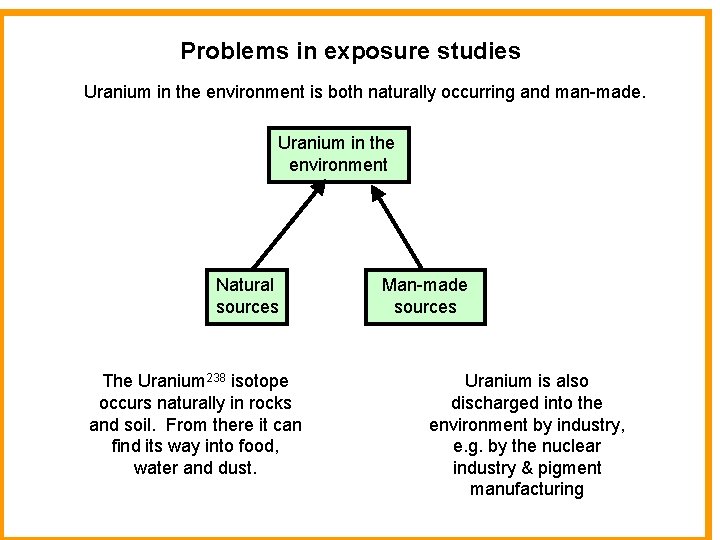
Problems in exposure studies Uranium in the environment is both naturally occurring and man-made. Uranium in the environment Natural sources The Uranium 238 isotope occurs naturally in rocks and soil. From there it can find its way into food, water and dust. Man-made sources Uranium is also discharged into the environment by industry, e. g. by the nuclear industry & pigment manufacturing
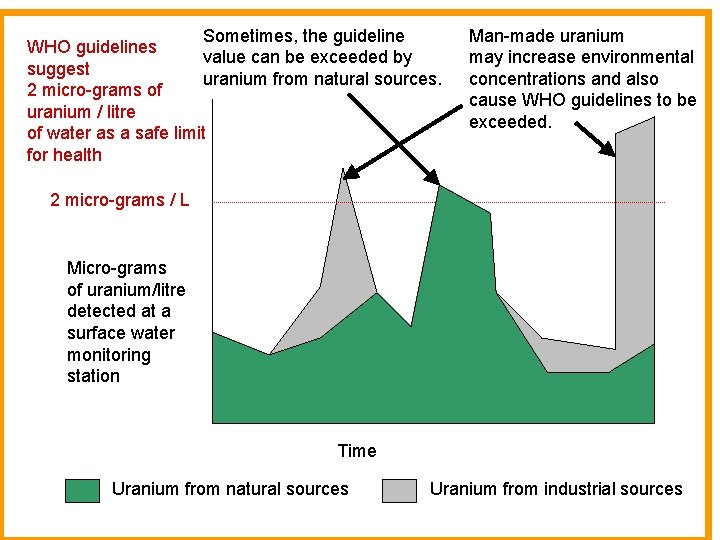
Sometimes, the guideline WHO guidelines value can be exceeded by suggest uranium from natural sources. 2 micro-grams of uranium / litre of water as a safe limit for health Man-made uranium may increase environmental concentrations and also cause WHO guidelines to be exceeded. 2 micro-grams / L Micro-grams of uranium/litre detected at a surface water monitoring station Time Uranium from natural sources Uranium from industrial sources
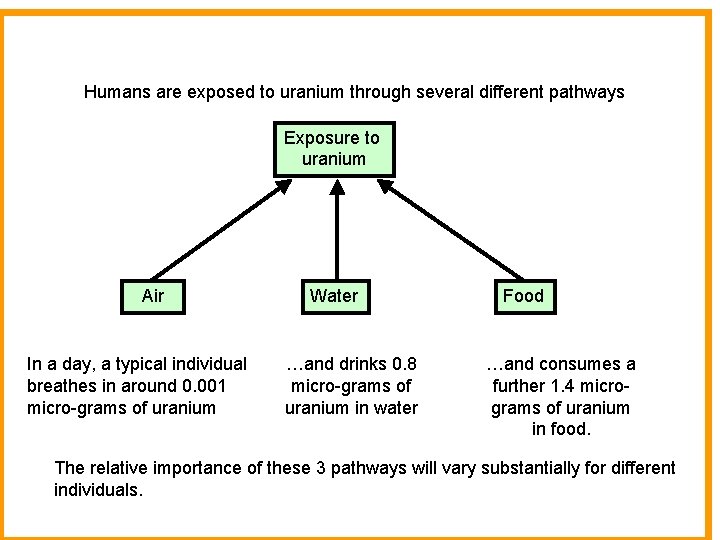
Humans are exposed to uranium through several different pathways Exposure to uranium Air In a day, a typical individual breathes in around 0. 001 micro-grams of uranium Water …and drinks 0. 8 micro-grams of uranium in water Food …and consumes a further 1. 4 micrograms of uranium in food. The relative importance of these 3 pathways will vary substantially for different individuals.
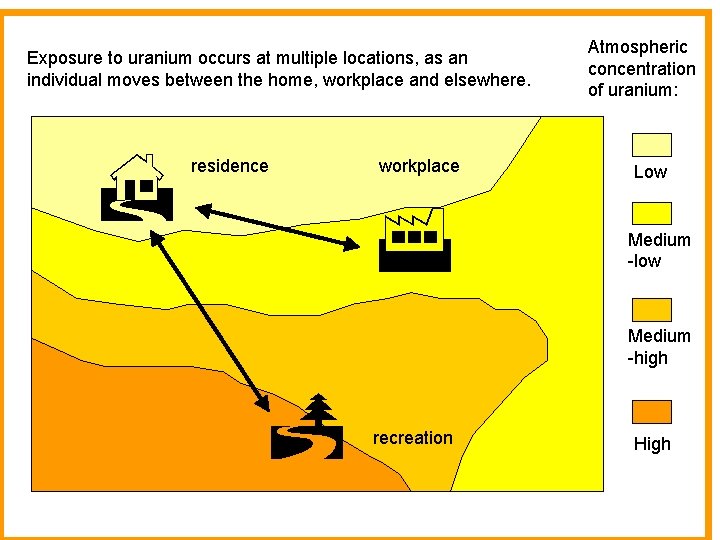
Exposure to uranium occurs at multiple locations, as an individual moves between the home, workplace and elsewhere. residence workplace Atmospheric concentration of uranium: Low Medium -low Medium -high recreation High
Implications for GIS studies of exposure • The same problems – a mobile population at risk, multiple exposure pathways, and a natural background rate of exposure – also affect other hazardous environmental substances • These problems can reduce the ability of a GIS-based study to identify the health effects of an environmental exposure. • The findings of GIS exposure studies should be compared with the results of laboratory-based studies to assess their plausibility.
- Slides: 5