
Problem Structuring Methods for Interorganizational Collaboration L Alberto
Problem Structuring Methods for Inter-organizational Collaboration L. Alberto Franco Operational Research & Systems Group Warwick Business School University of Warwick Alberto. franco@wbs. ac. uk
Presentation outline The nature of collaboration Conceptual model of collaboration The role of PSMs in collaboration Conclusion and research agenda 2
The nature of collaboration Rationale: stay competitive in turbulent environments (Trist 1983) gain ‘collaborative advantage’ (Huxham 1996) Problem-solving collaboration (Gray 1989): a process by which actors work together to gain a broader appreciation of a problematique of interest and reach joint agreements with respect to it. Motivation to collaborate (Oliver 1991): Stake in the problematique Interdependency 3
Problematique Ill-defined, or there is disagreement about how they should be defined. Often characterised by complexity and uncertainty. Several semi-autonomous stakeholders: have a vested interest in the problematique. their differing perspectives about the nature of the problematique often lead to adversarial relationships and conflict. Unilateral efforts to deal with the problematique typically produce less than satisfactory results. 4
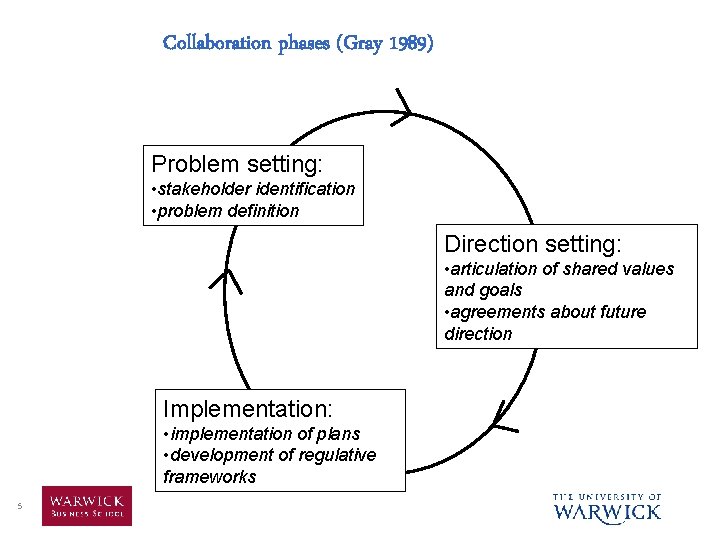
Collaboration phases (Gray 1989) Problem setting: • stakeholder identification • problem definition Direction setting: • articulation of shared values and goals • agreements about future direction Implementation: • implementation of plans • development of regulative frameworks 5
Requirements for successful collaboration Shared meaning about problematique Mutual adjustments in the power balance among collaborators 6
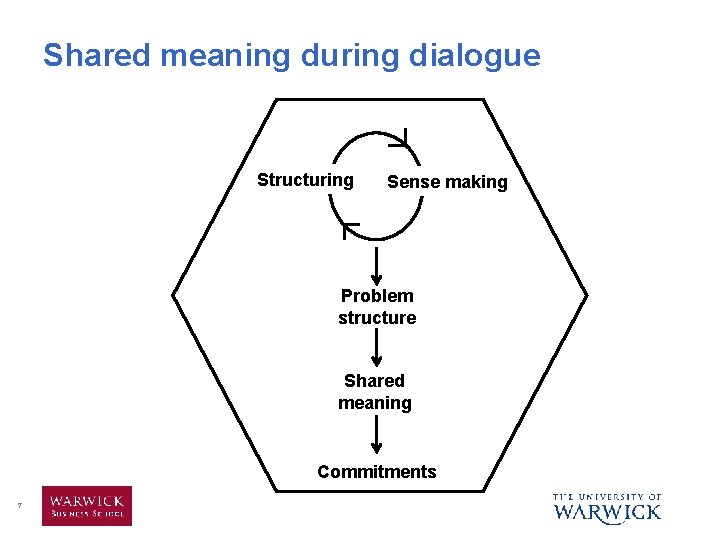
Shared meaning during dialogue Structuring Sense making Problem structure Shared meaning Commitments 7
8 1 ieps 2 ps 1 P ps 2 eps 1 2 ieps 1
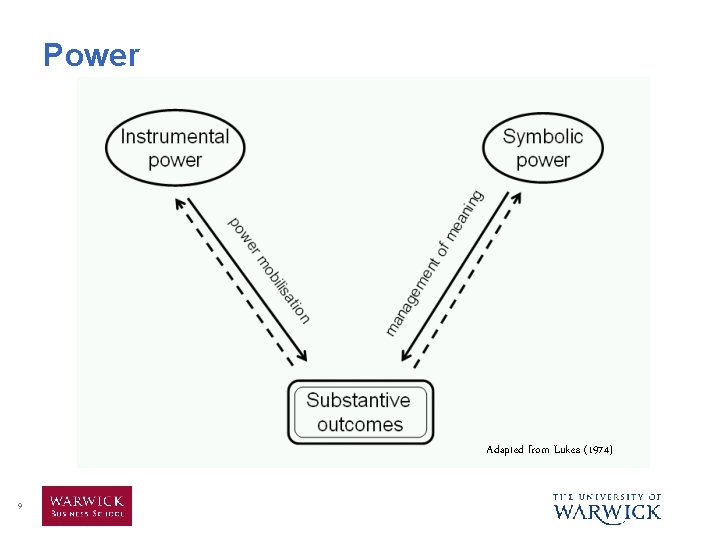
Power Adapted from Lukes (1974) 9
Dialogue, shared meaning and power Effective mobilisation of power during dialogue can make dialogue ‘unbalanced’: shared meaning creation process may become controlled by few actors persuasion, rather than negotiation, will prevail Unbalanced dialogue has a negative impact on the quality of dialogue Power can also be mobilised before and after dialogue 10
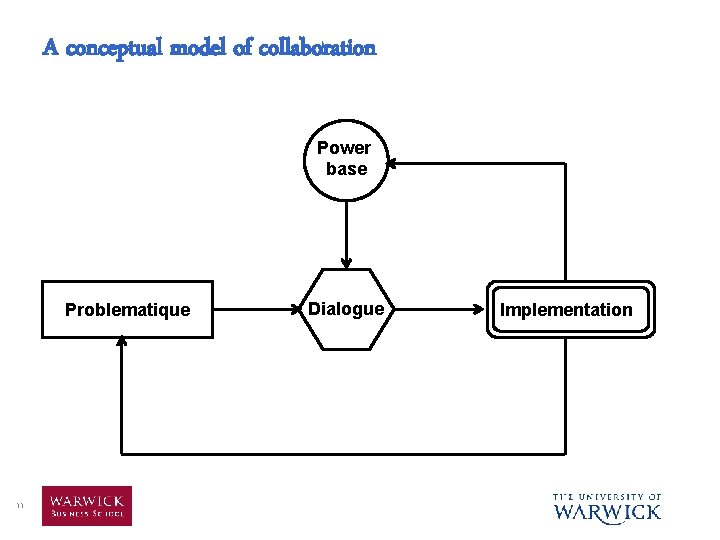
A conceptual model of collaboration Power base Problematique 11 Dialogue Implementation
PSM for collaboration? Contextual characteristics broadly correspond to those for which PSMs were developed Recent evidence of work with collaborative multiorganisational groups: e. g. Huxham (1991); Eden (1996); Friend & Hickling (1997); Taket and White (2000); Eden & Huxham (2001); Bryant (2003); Horlick-Jones et al (2001); Franco et al (2004), etc. No theoretical models which synthesise these experiences available yet Not clear whether PSMs can handle power dynamics during dialogue (and thus collaboration) 12
PSMs and the quality of dialogue Criteria for undistorted communications (Forester 1989) : comprehensiveness sincerity legitimacy accuracy 13
Conclusions and research agenda PSM may aspire to play a specific role during dialogue and thus collaboration. Conceptual model can be used as a vehicle for testing whether PSMs can successfully take up such role. Methodological issues regarding subjective evaluations of quality of dialogue and of power relations. 14
- Slides: 14