
Problem Solving Submitted by Aadhiti Aakash Raj Submitted
Problem Solving Submitted by: Aadhiti Aakash Raj Submitted to: Sandesh Sir
What is Problem? ? ? The concise oxford Dictionary (1995) defines a problem as: “A doubtful or difficult matter requiring a solution” “Something hard to understand or accomplish or deal with” All problems have two features in common: Goals and barriers. Goals Problems involve setting out to achieve some objective or desired state of affairs and can include avoiding a situation or event. Goals can be anything that you wish to achieve, where you want to be. If you are hungry then your goal is probably to eat something, if you are a head of an organisation(CEO) then your main goal may be to maximise profits.
Barriers? ? ? If there were no barriers in the way of achieving a goal, then there would be no problem. Problem solving involves overcoming the barriers or obstacles that prevent the immediate achievement of goals. Following our examples above, if you feel hungry then your goal is to eat. A barrier to this may be that you have no food available. You take a trip to the supermarket and buy some food, removing the barriers and thus solving the problem.
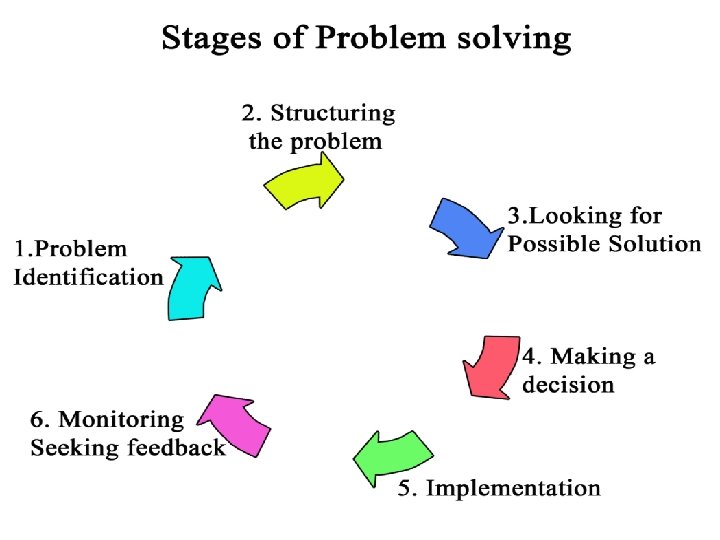
Stages of problem solving Problem Identification Detecting and recognizing that there is a problem; identifying the nature of the problem defining the problems. The first phase of problem solving may sound obvious, but often requires more thought and the analysis. Identifying a problem can be a difficult task in itself, is there a problem at all? What is the nature of the problem, are there in fact numerous problem? How can the problem be best defined?
Stages of problem solving Structuring the problem A period of observation, careful inspection, fact-finding and developing a clear picture of the problem. Following on from problem identification, structuring the problem is all about gaining more information about the problem and increasing understanding. This phase is all about fact finding and analysis, building a more comprehensive picture of both the goals and barriers. This stage may not be necessary for very simple problems but it essential for problems of a more complex nature.
Stages of problem solving Looking for possible solutions Generating a range of possible courses of action, but with little attempt to evaluate them at this stage. From the information gathered in the first two phases of the problem solving framework it is now time to start thinking about possible solutions to the identified problem. In a group situation this stage is often carried out as a brain-storming session, letting each person in the group express their views on possible solutions.
Stages of problem solving Making a decision This is perhaps the most complex part of the problem solving process. Following on from the previous step it is now time to look at each potential solution and carefully analyse it. Some solution may not be possible, due to the other problems. Like time constraints or budgets It is important what might happen if nothing was done to solve the problem. Sometimes trying to solve a problem that leads to many move problems requires some very creative thinking and innovative ideas. Finally, make a decision on which course of action to take- decision making is an important skill in itself.
Stages of problem solving Implementation means action on the chosen solution. During implementation more problems may arise especially if identification or structuring of the original problem was not carried out fully.
Stages of problem solving Monitoring/Seeking Feedback The final stage of problem solving is concerned with checking that the process was successful. This can be achieved by monitoring and gaining feedback from people affected by any changes that occurred. It is good practice to keep a record of outcomes and any additional problems that occurred.
Conclusion Well, the content is about the problem solving process. It has given a several phases to deal with. By implementing them problem can be distile in an effective way. so, it is the positive way of solving any kind of problems……………… References www. mindtools. com www. skillsyouneed. com
- Slides: 11