
Problem Solving Search Introduction A knowledge base is
Problem Solving (Search)
Introduction Ø Ø A knowledge base is a collection of facts about a certain subject We need some inferencing mechanism that references the knowledge base to reason and draw conclusion v Searching and pattern matching techniques are used v Searching algorithms are used which examine the KB in an orderly way to solve the problem
Problem solving elements Ø The process of problem solving involves three elements: Problem states ü Define the problem situation and existing condition ¨ Initial state (s) ¨ Other states ¨ In tic-tac-toe the initial state is 3 x 3 grid of squares, as a player add X or 0, the problem state changes. v Goal ü The objective, a final answer, result to be achieved v Operators ü The procedure used to change from one state to another state and continue until a goal is reached ü An operator can be an algorithm ü A control strategy is used by operator ü In tic-tac-toe, maximizing ones options and minimizing the opponent’s option. v
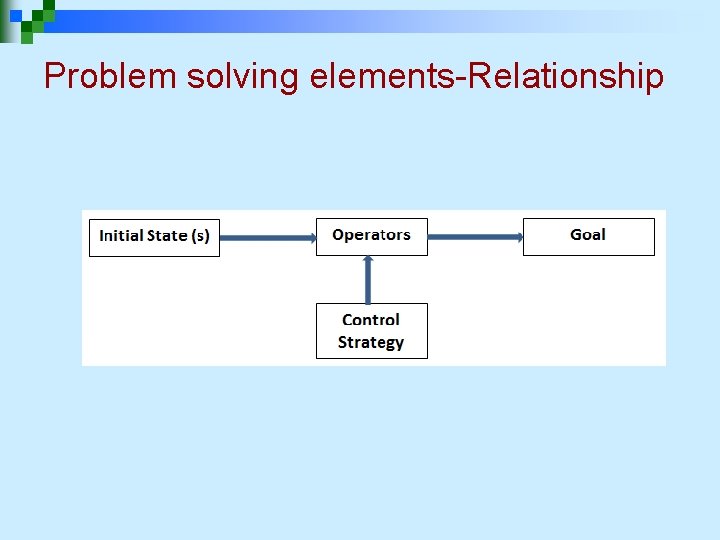
Problem solving elements-Relationship
State and search space To define a problem, visualize a solution, or select a search method, it is often useful to express the problem in graphical terms. Ø This can be done by drawing a graph of the problem showing the various problem states and how they are interconnected. Ø The resulting graph is referred to as state graph or state space Ø
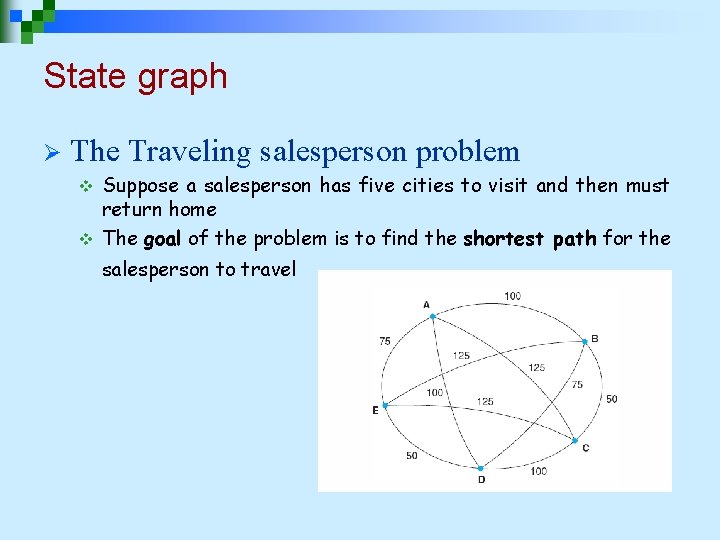
State graph Ø The Traveling salesperson problem Suppose a salesperson has five cities to visit and then must return home v The goal of the problem is to find the shortest path for the v salesperson to travel
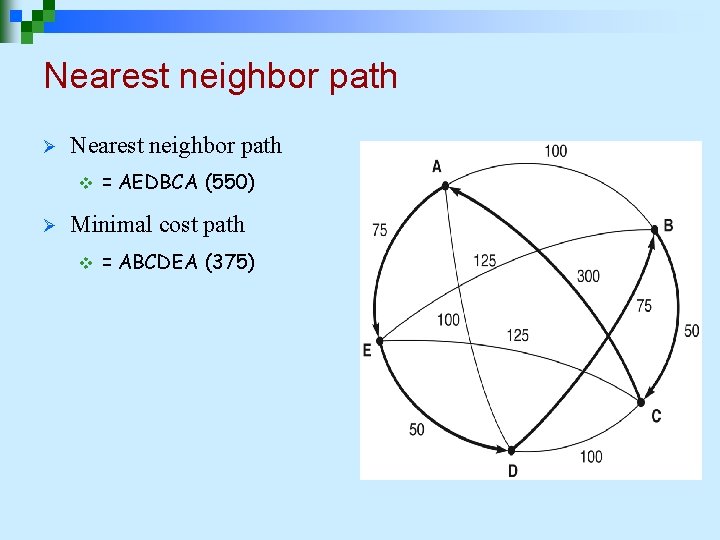
Nearest neighbor path Ø Nearest neighbor path v Ø = AEDBCA (550) Minimal cost path v = ABCDEA (375)
State Space Representation In the state space representation of a problem, the nodes of a graph correspond to partial problem solution states and the arcs correspond to steps in a problem solving process Ø One or more initial states form the root of the graph Ø The graph also defines one or more goal conditions, which are solutions to a problem Ø
State Space Representation Ø State space search characterizes problem solving as the process of finding a solution path form the start state to a goal Ø A goal may describe a state, such as winning board in tic-tac-toe game
Problem with state graph Sometimes the repetition of a same path, having a cycle, infinitely is the main problem in graph Ø Solution Ø v Search tree is used to represent the problem and minimizes this problem
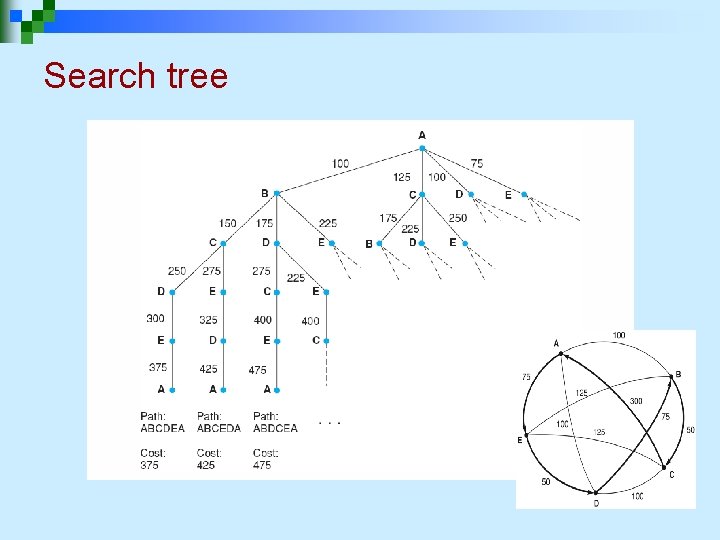
Search tree
Search tree Ø Ø Ø It is another way to represent the problem The root node is called the initial state The successor nodes are called the child nodes The nodes are the various states in the search space The arcs are operators used to move from one state to another state Beginning at the root node, operators are applied to achieve new states
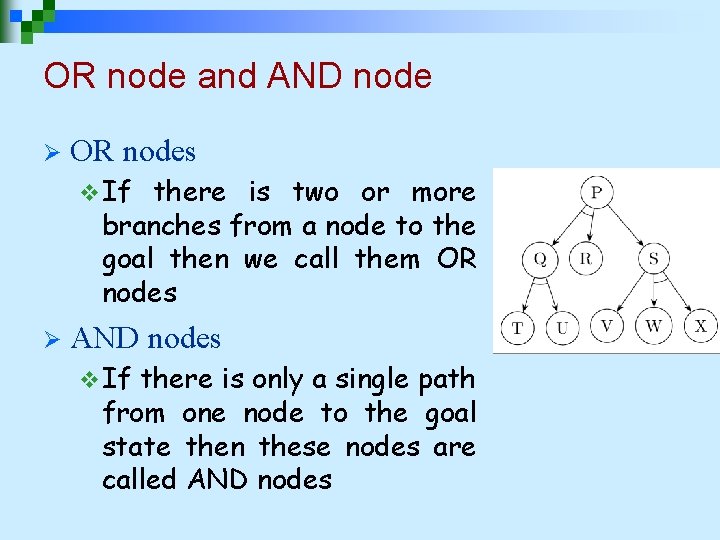
OR node and AND node Ø OR nodes v If there is two or more branches from a node to the goal then we call them OR nodes Ø AND nodes v If there is only a single path from one node to the goal state then these nodes are called AND nodes
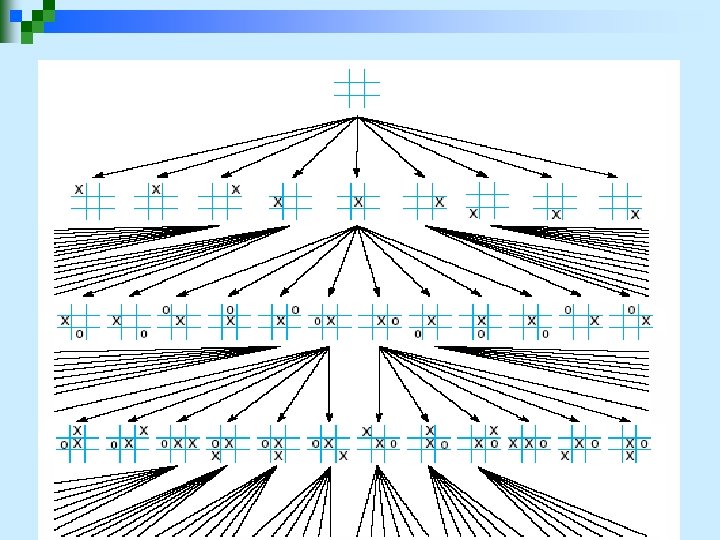
Game tree A game tree is a graph showing all possible states or plays in a game between two players Ø The game tree for “tac-toe” is Ø
Search methods There are two basic approaches to searching a state space: Ø Blind search Ø Heuristic search
Search methods Ø Blind search v It is a collection of procedures used to search a state space v Starts at the root node and generates successor states v The search continue till the goal state is achieved v Here, the whole space is searched in an orderly manner till the goal is achieved
Search methods Ø Heuristic search v It is blind search that has been given some guidance or direction to reach the goal state
Search methods Ø Heuristic search v It is blind search that has been given some guidance or direction to reach the goal state
Combinatorial Explosion Blind search takes so much time with large problem that it suffers from combinatorial explosion Ø When many alternatives must be considered the search space expands exponentially Ø If N is average number of branches per node and D is the depth then Ø v Total Ø Ø Ø Number of search = ND Tic Tac Toe= 362, 880 nodes Chess = 10 to the 120 th power possible chess moves Checkers game = 10 to the 40 th power possible moves 9/12/2021 20
Blind Search Ø Ø Ø Ø Begin at the root node and go all the way to the goal The operators and the order in which they are tried have no meaning Brute force techniques Takes a considerable amount of time to finds a solution The practicality of the blind search lies in the time it takes to get to the solution Often it suffers from unacceptable long computing time However, for some simple problems its practical to use blind search
Blind Search : Possibilities v Depth-first search v Breadth-first search v Forward chaining v Backward chaining 9/12/2021 22
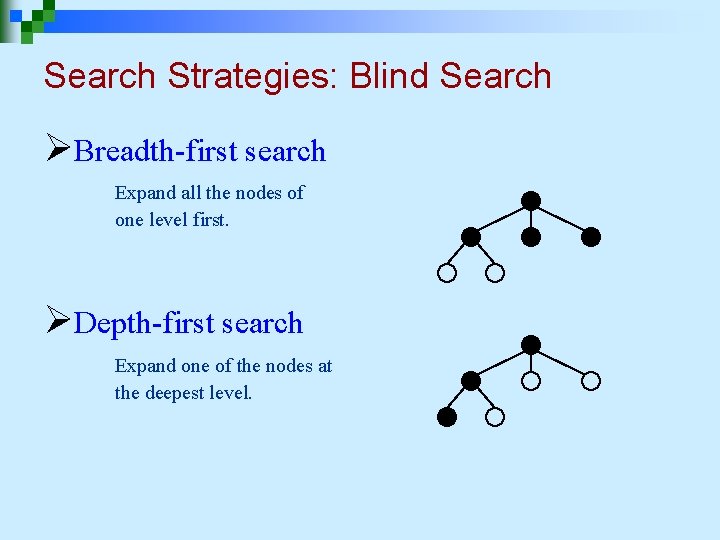
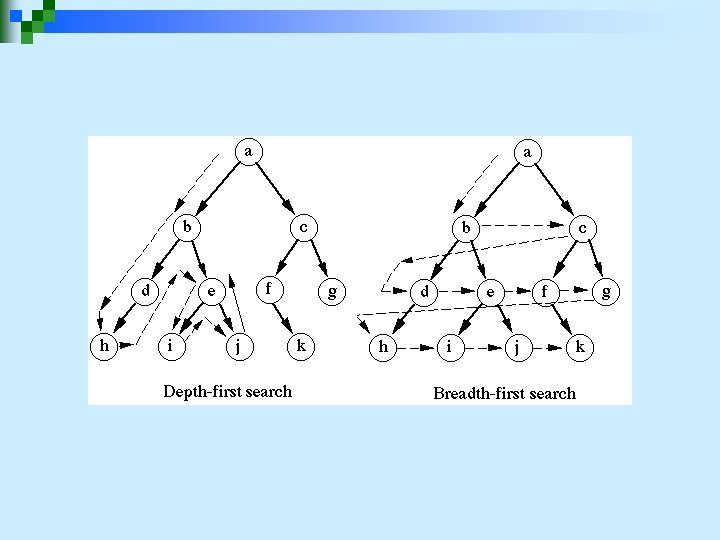
Search Strategies: Blind Search ØBreadth-first search Expand all the nodes of one level first. ØDepth-first search Expand one of the nodes at the deepest level.
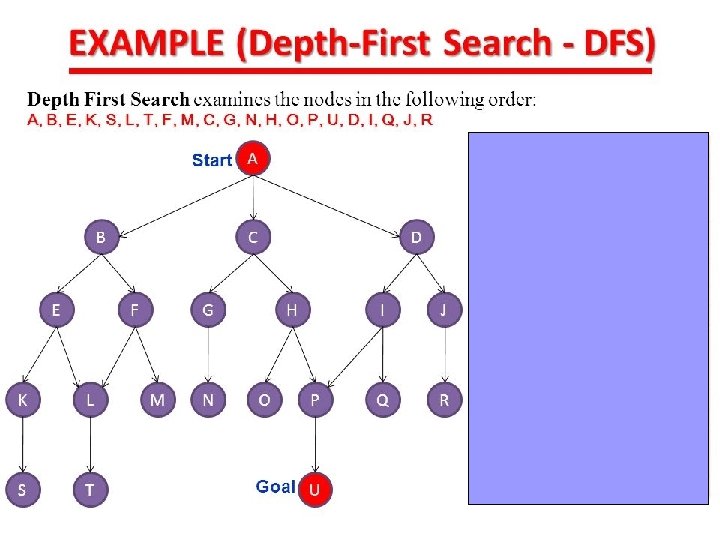
Depth-first search Ø In DFS, when a state is examined, all of its children and their descendants are examined before any of its siblings
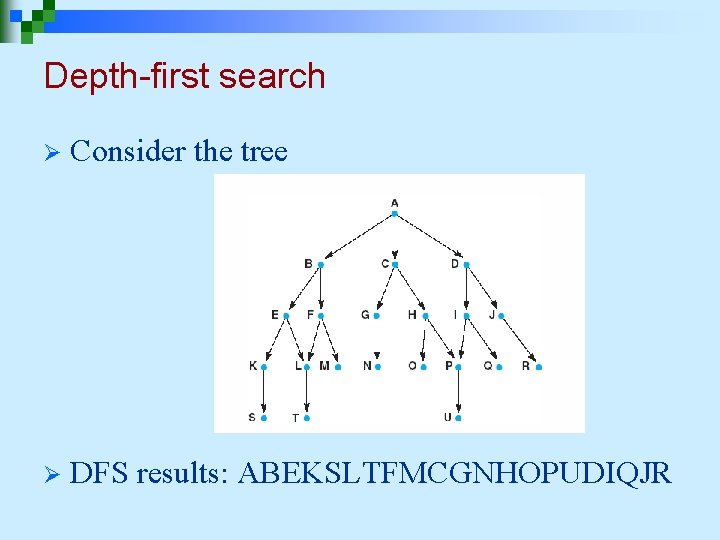
Depth-first search Ø Consider the tree Ø DFS results: ABEKSLTFMCGNHOPUDIQJR
Depth-first search Ø Properties of DFS v If it is known that the solution path will be long, DFS will not spend time searching a large number of “shallow” states in the graph v However, DFS may “lost” deep in a graph, missing short paths to a goal, or even stuck in an infinite loop v To minimize this problem, depth limit can be defined, such a search is called depth bound. v Educated guess or determined experimentally
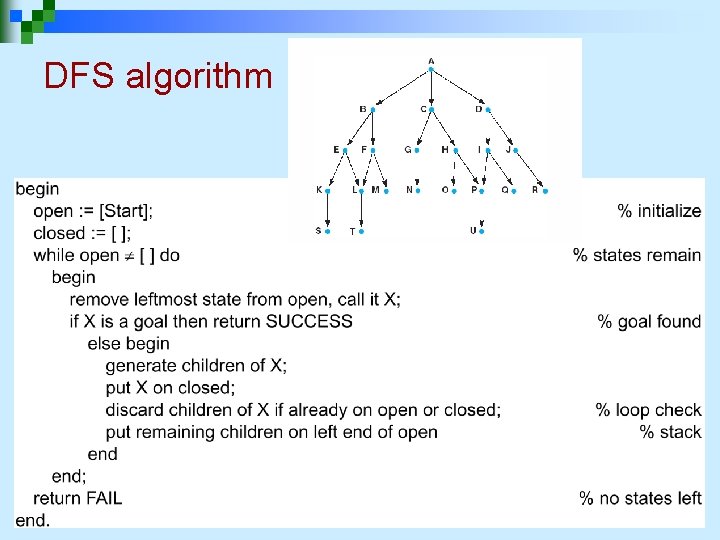
DFS algorithm
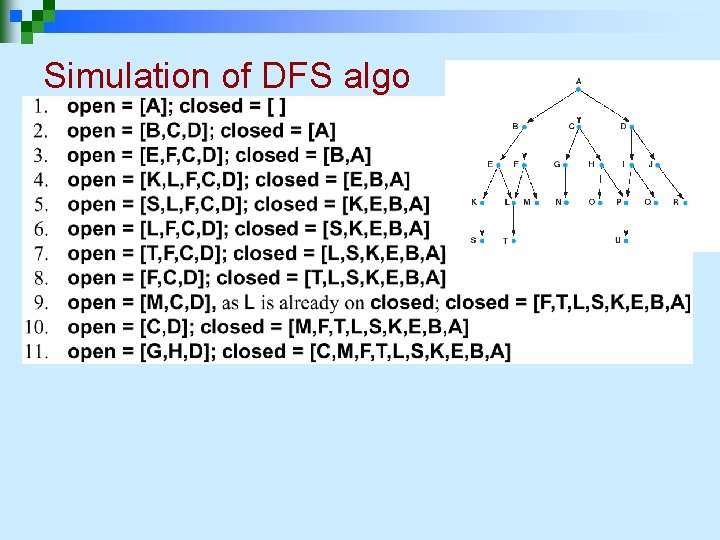
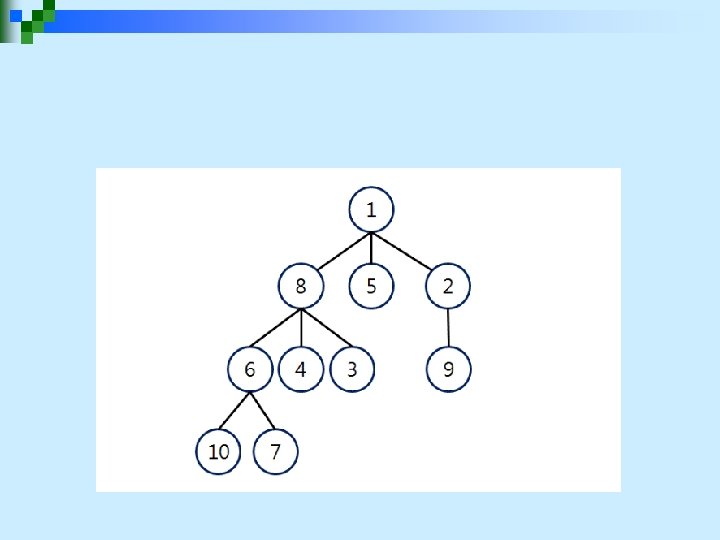
Simulation of DFS algo
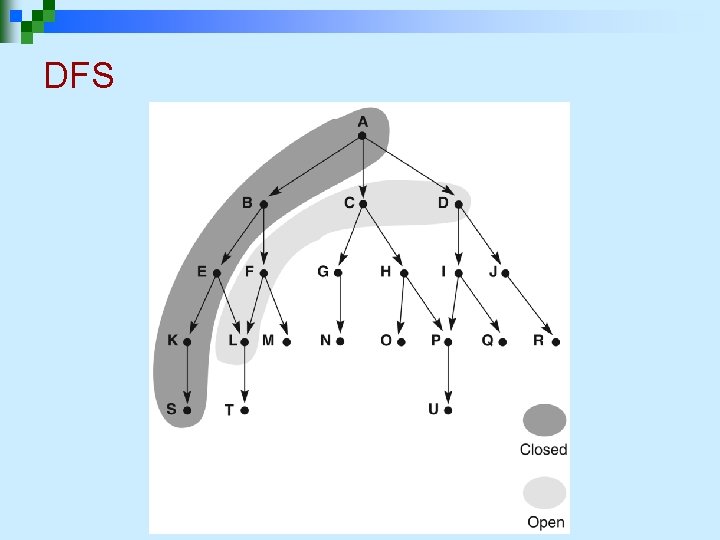
DFS
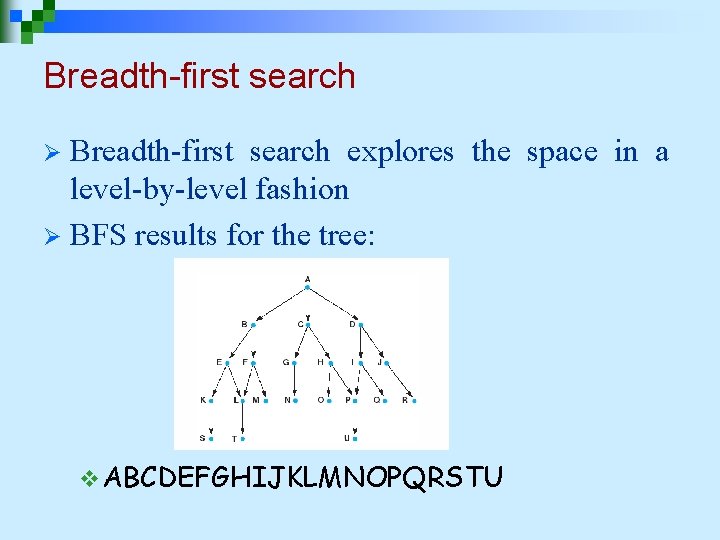
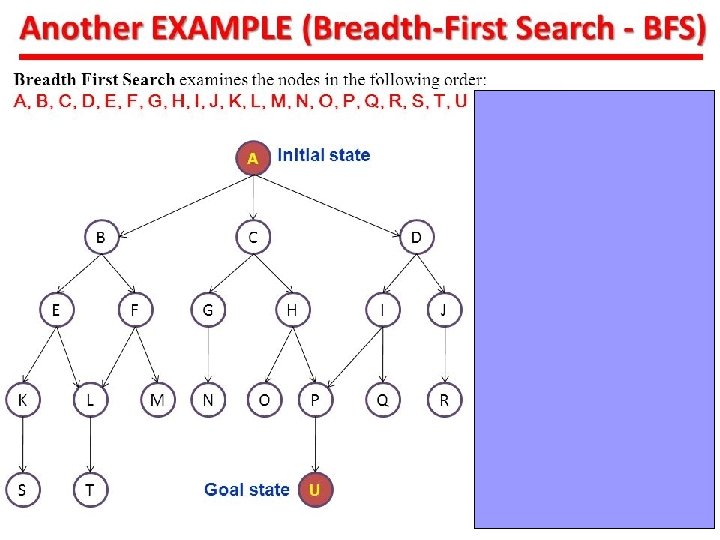
Breadth-first search explores the space in a level-by-level fashion Ø BFS results for the tree: Ø v ABCDEFGHIJKLMNOPQRSTU
Breadth-first search Ø Properties of BFS v Because it always examines all nodes at level n before proceeding to level n+1, BFS always finds the shortest path to a goal v In a problem have a simple solution, the solution will be found v Unfortunately, if the states have a high average number of children, it may use all the memory before it find a solution
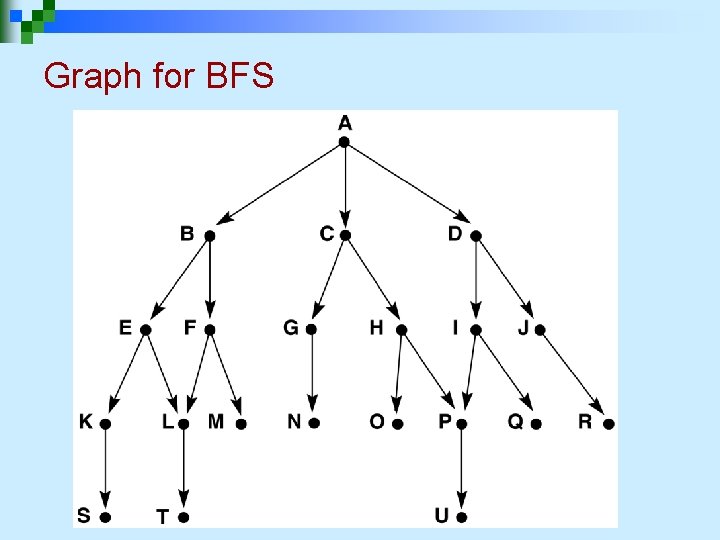
Graph for BFS
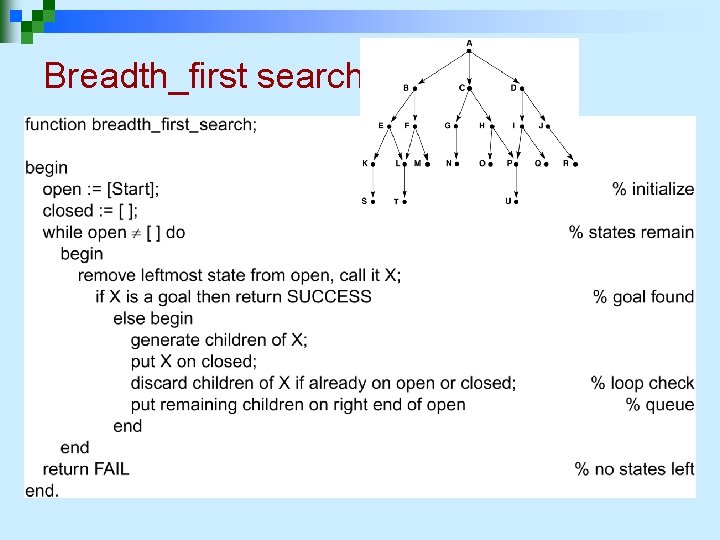
Breadth_first search algorithm
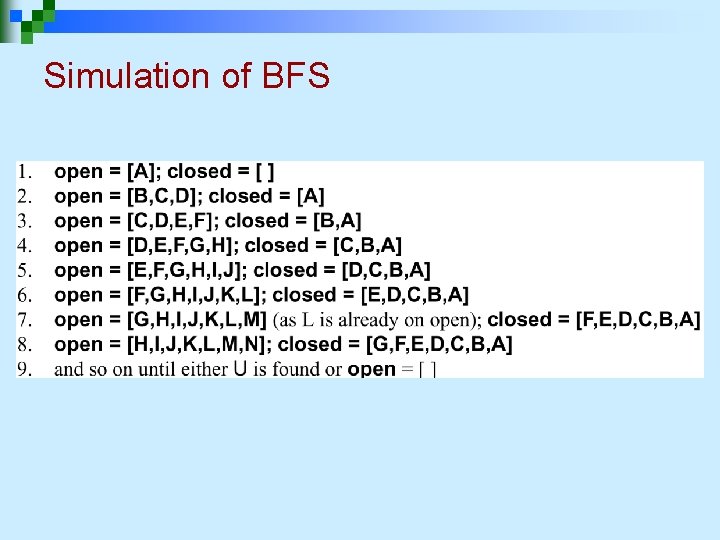
Simulation of BFS
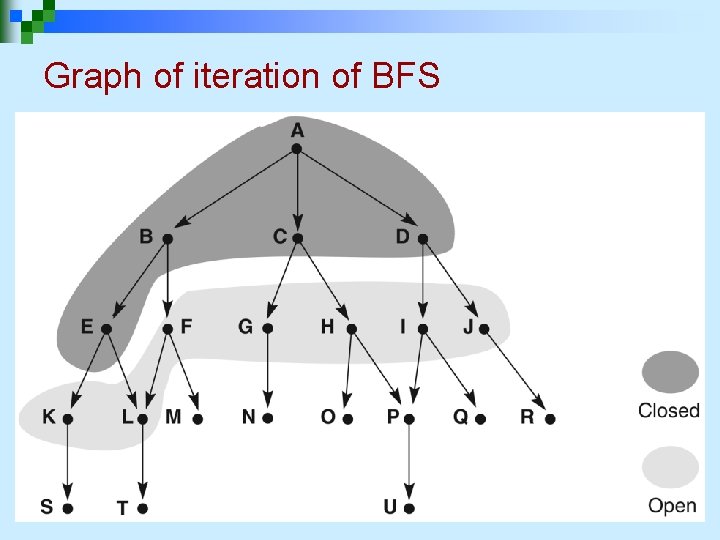
Graph of iteration of BFS
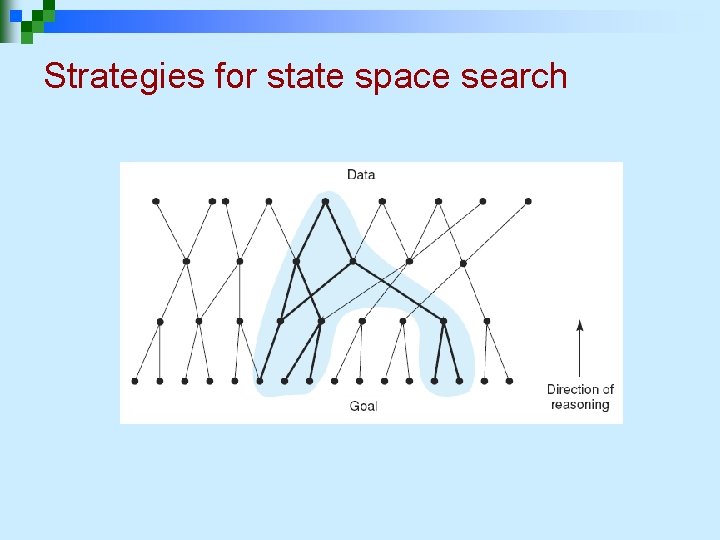
Strategies for state space search Ø A state may be searched in two directions: v From the given data of a problem instance toward a goal or v From a goal to the data
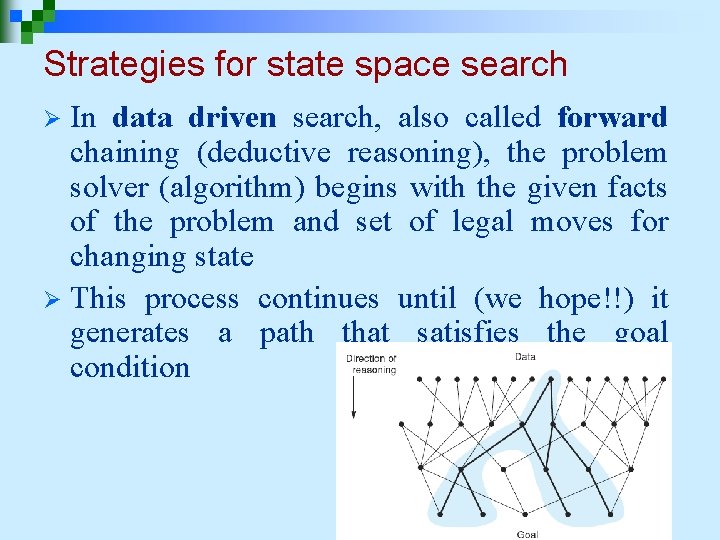
Strategies for state space search In data driven search, also called forward chaining (deductive reasoning), the problem solver (algorithm) begins with the given facts of the problem and set of legal moves for changing state Ø This process continues until (we hope!!) it generates a path that satisfies the goal condition Ø
Strategies for state space search An alternative approach (Goal Driven) is start with the goal that we want to solve Ø See what rules can generate this goal and determine what conditions must be true to use them (inductive reasoning) Ø These conditions become the new goals Ø Working backward through successive subgoals until (we hope again!) it work back to Ø
Backward Vs Forward chaining If more possible outcomes than initial states backward chaining will produce faster search with the shortest path Ø If more initial start states than there are goal states forward chaining Ø 43
Strategies for state space search
Assignment 3 DFS and BFS implementation in any language (details next slide) 2. What is heuristic search, what are different heuristic algorithms? How it works ? Note: First page of assignment should have your details such as name, roll no. , shift. Upload in turnitin deadline mentioned there. Q 1. run on the system. 1. 9/12/2021 45
DFS/BFS Programming assignment • Write a program that takes node values for a binary tree as inputs. It should store these values for possible representations of a binary tree. Then try a value to find out from this tree and tell how many comparisons are made up to the target node and also convey the level of tree at which the target value found. 9/12/2021 46
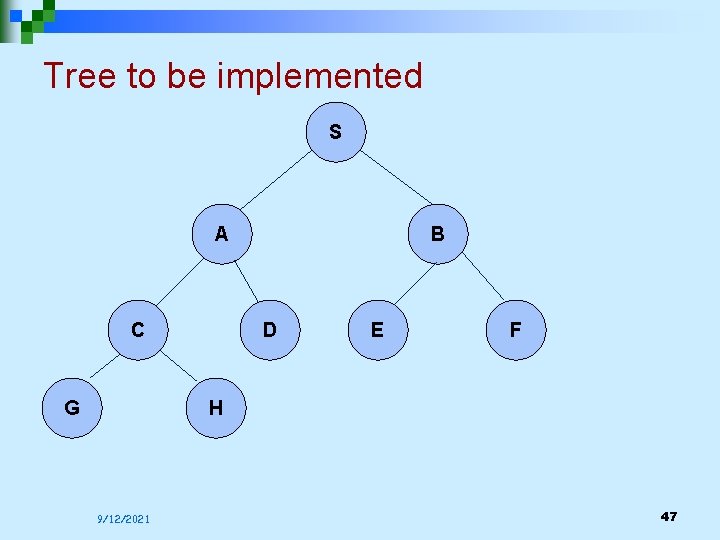
Tree to be implemented S A C G B D E F H 9/12/2021 47
References ØLouis E. Frenzel, Jr. Crash crouse in artificial intelligence and expert system, chapter No. 3
- Slides: 48