
Problem Solving In a World of Constant Change
Problem Solving In a World of Constant Change John G. Mathers 2013
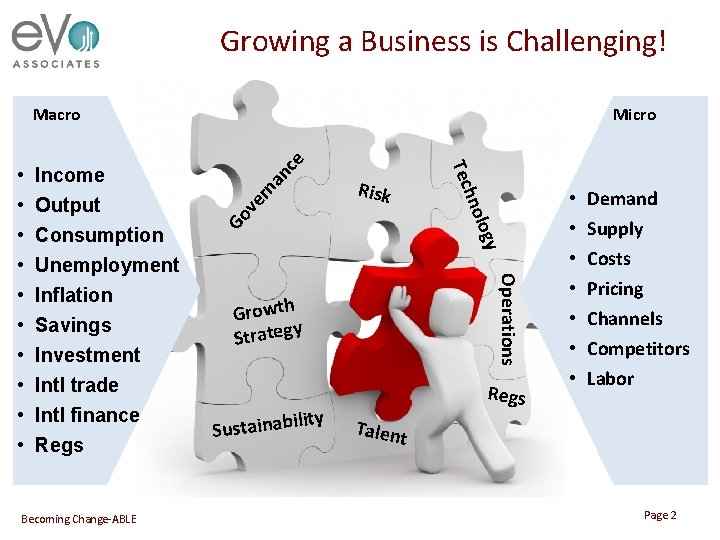
Growing a Business is Challenging! an Intl finance Regs Sustainab Operations Becoming Change-ABLE logy Consumption Unemployment Inflation Savings Investment Intl trade Go ve rn Risk hno Income Output Tec • • • Micro ce Macro Growth y Strateg ility Regs • • Demand Supply Costs Pricing Channels Competitors Labor Talent Page 2
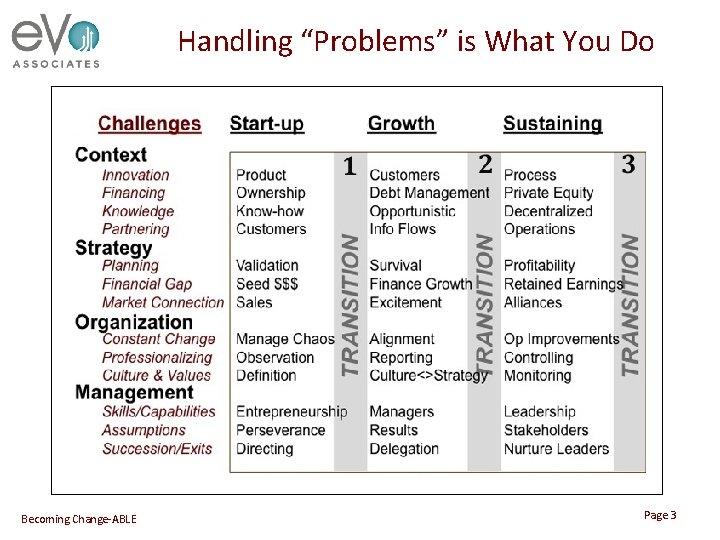
Handling “Problems” is What You Do Becoming Change-ABLE Page 3
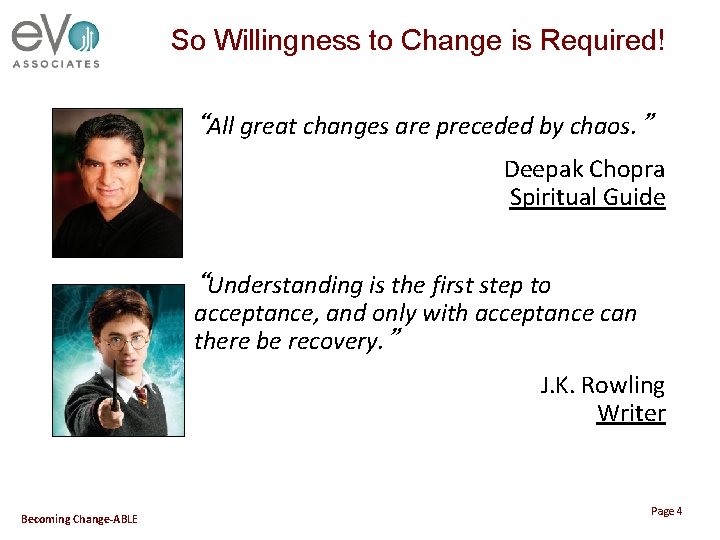
So Willingness to Change is Required! “All great changes are preceded by chaos. ” Deepak Chopra Spiritual Guide “Understanding is the first step to acceptance, and only with acceptance can there be recovery. ” J. K. Rowling Writer Becoming Change-ABLE Page 4
And Change Means … Your Mental Map! “When the structure of the industry [or a market … or a business] changes, all of the elements change too. The mental map that you have been carrying with you all these years and relied upon in charting your company's course of action suddenly loses its validity … [and] you haven't had a chance to replace it with a new mental map. ” Andy Grove Only the Paranoid Survive Becoming Change-ABLE Page 5
Becoming an Extraordinary Business “Successful organizations that have sustained rapid growth for years while achieving even higher levels of efficiency and quality have change woven into the very fabric of the organization. Like a school of fish these organizations are constantly moving -- they are fast, focused and extremely flexible. ” John Mathers & Bill Daniels Change-ABLE Organization Becoming Change-ABLE Page 6
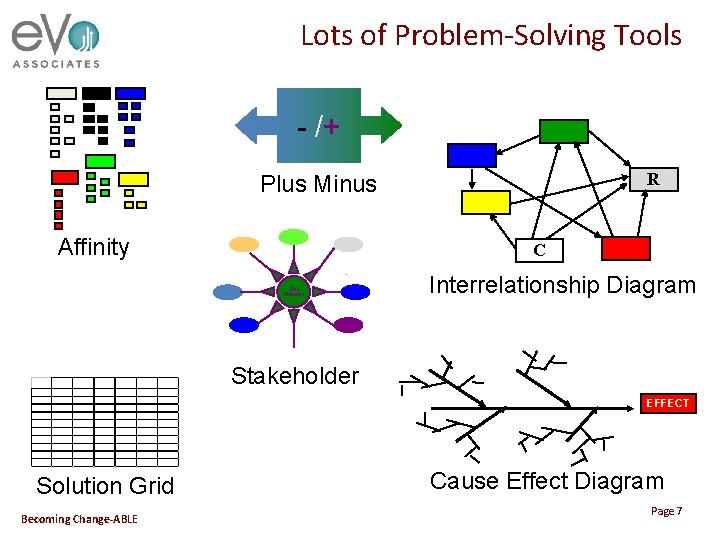
Lots of Problem-Solving Tools - /+ R Plus Minus Affinity C Our Answer Interrelationship Diagram Stakeholder EFFECT Solution Grid Becoming Change-ABLE Cause Effect Diagram Page 7
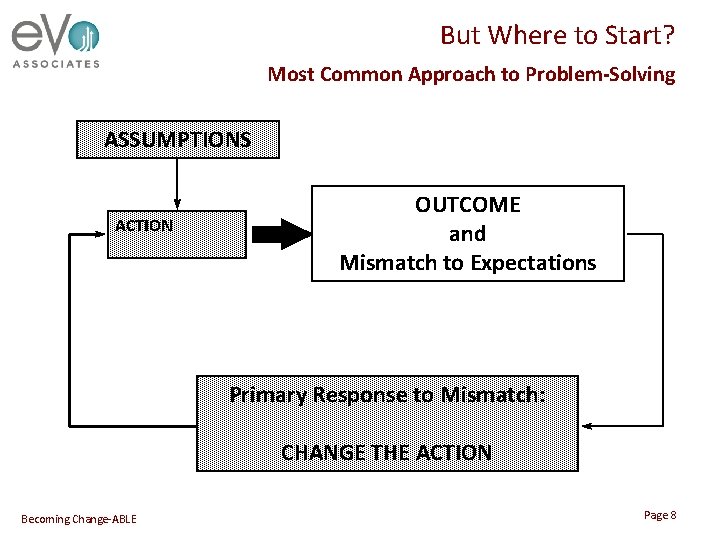
But Where to Start? Most Common Approach to Problem-Solving ASSUMPTIONS ACTION OUTCOME and Mismatch to Expectations Primary Response to Mismatch: CHANGE THE ACTION Becoming Change-ABLE Page 8
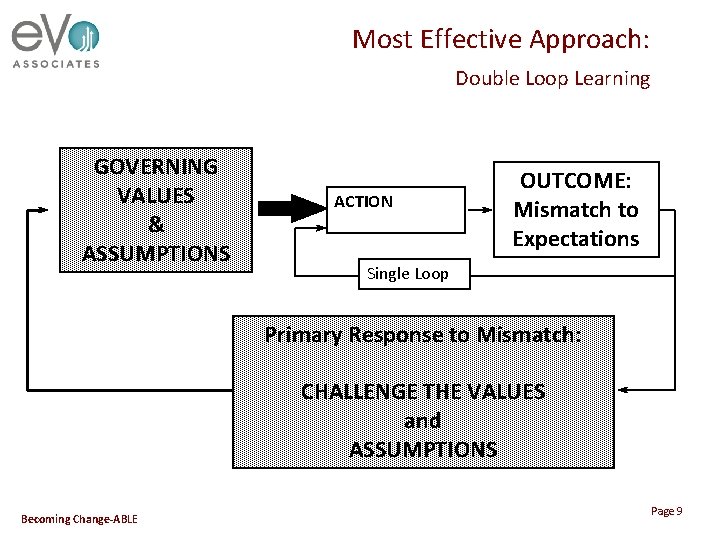
Most Effective Approach: Double Loop Learning GOVERNING VALUES & ASSUMPTIONS ACTION OUTCOME: Mismatch to Expectations Single Loop Primary Response to Mismatch: CHALLENGE THE VALUES and ASSUMPTIONS Becoming Change-ABLE Page 9
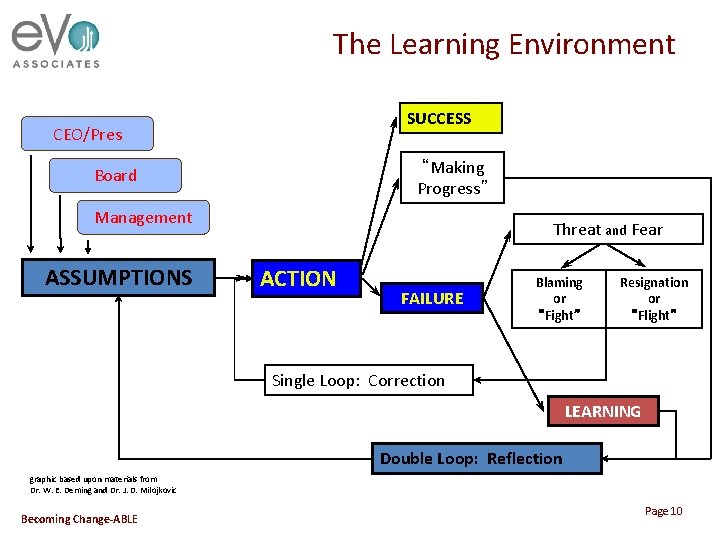
The Learning Environment SUCCESS CEO/Pres “Making Progress” Board Management ASSUMPTIONS Threat and Fear ACTION FAILURE Blaming or “Fight” Resignation or “Flight” Single Loop: Correction LEARNING Double Loop: Reflection graphic based upon materials from Dr. W. E. Deming and Dr. J. D. Milojkovic Becoming Change-ABLE Page 10
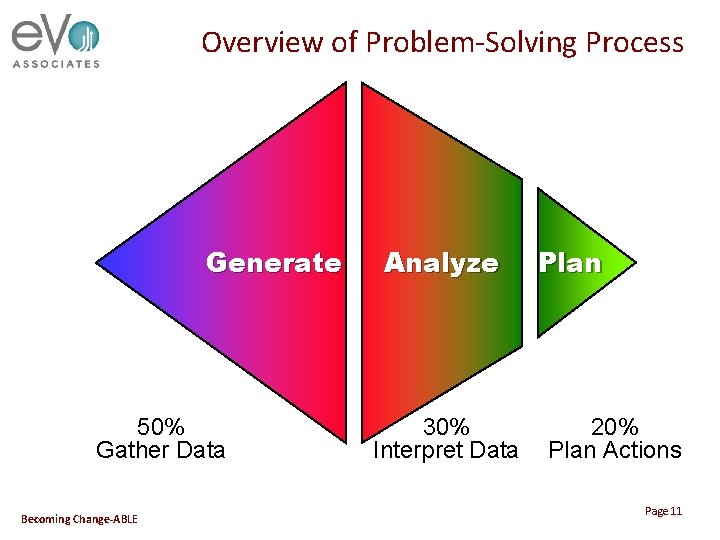
Overview of Problem-Solving Process Ge n e r a t e 50% Gather Data Becoming Change-ABLE A n a ly z e 30% Interpret Data P la n 20% Plan Actions Page 11
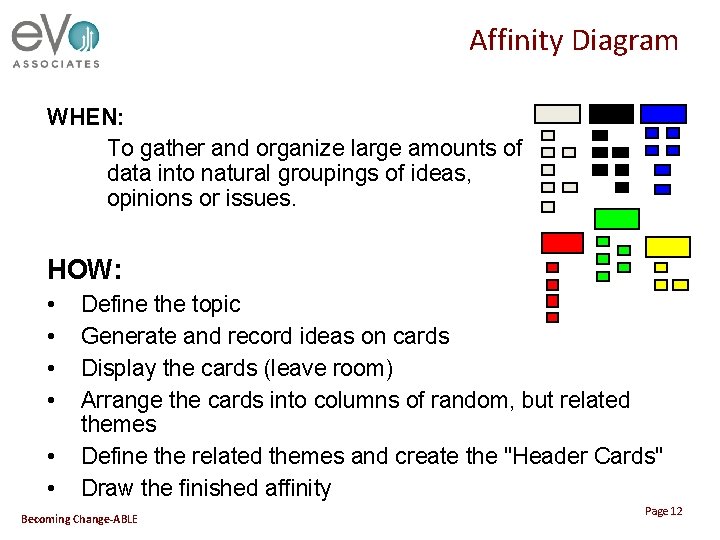
Affinity Diagram WHEN: To gather and organize large amounts of data into natural groupings of ideas, opinions or issues. HOW: • • • Define the topic Generate and record ideas on cards Display the cards (leave room) Arrange the cards into columns of random, but related themes Define the related themes and create the "Header Cards" Draw the finished affinity Becoming Change-ABLE Page 12
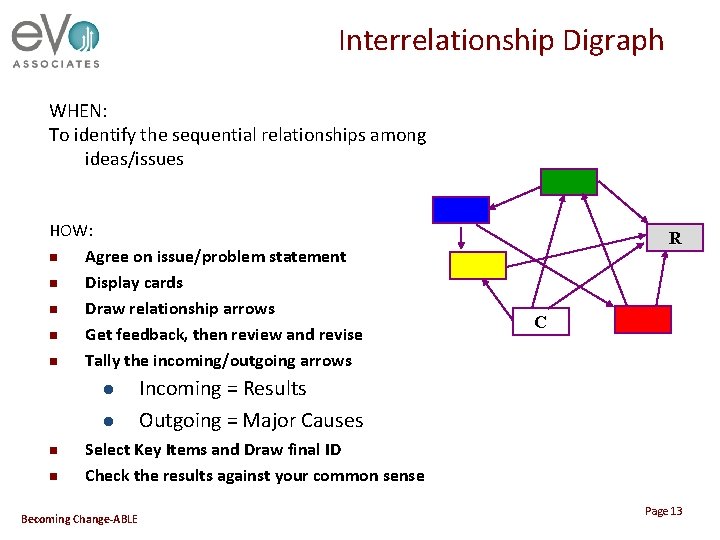
Interrelationship Digraph WHEN: To identify the sequential relationships among ideas/issues HOW: n Agree on issue/problem statement n Display cards n Draw relationship arrows n Get feedback, then review and revise n Tally the incoming/outgoing arrows l l n n R C Incoming = Results Outgoing = Major Causes Select Key Items and Draw final ID Check the results against your common sense Becoming Change-ABLE Page 13
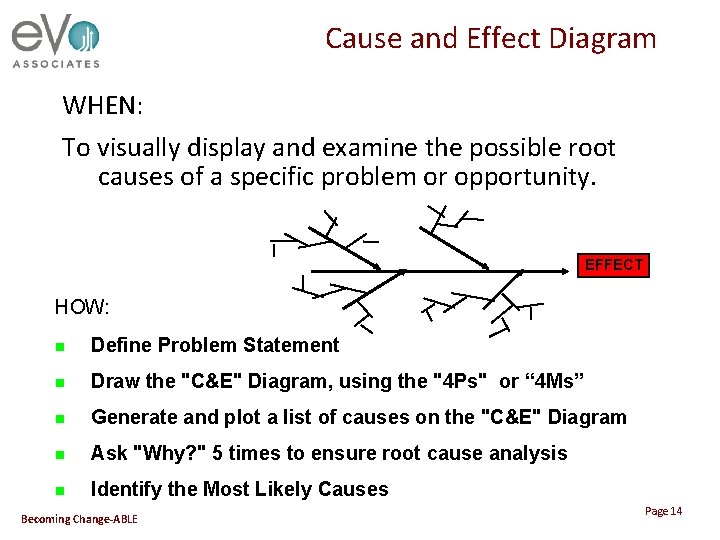
Cause and Effect Diagram WHEN: To visually display and examine the possible root causes of a specific problem or opportunity. EFFECT HOW: n Define Problem Statement n Draw the "C&E" Diagram, using the "4 Ps" or “ 4 Ms” n Generate and plot a list of causes on the "C&E" Diagram n Ask "Why? " 5 times to ensure root cause analysis n Identify the Most Likely Causes Becoming Change-ABLE Page 14
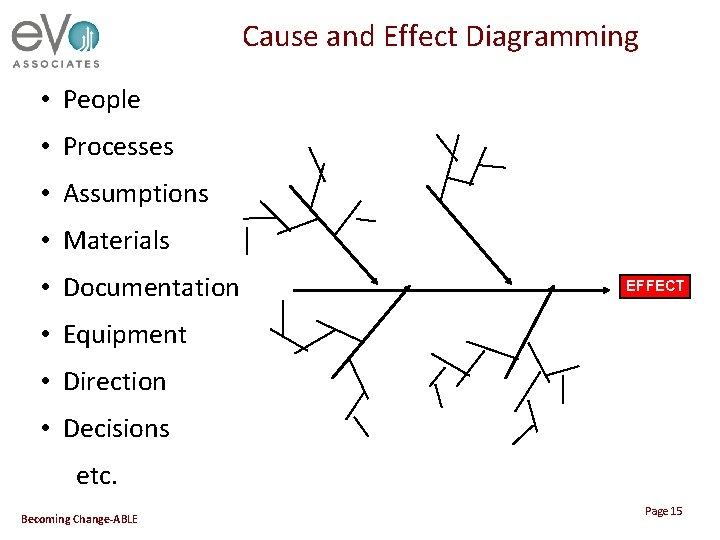
Cause and Effect Diagramming • People • Processes • Assumptions • Materials • Documentation EFFECT • Equipment • Direction • Decisions etc. Becoming Change-ABLE Page 15
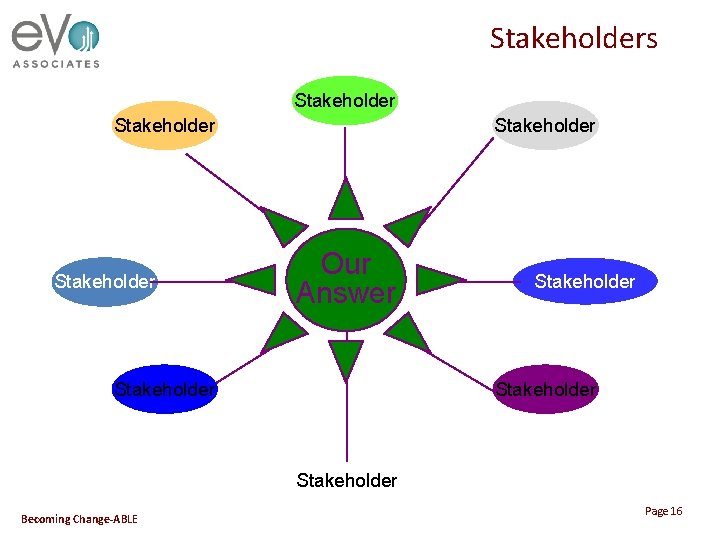
Stakeholders Stakeholder Our Answer Stakeholder Becoming Change-ABLE Page 16
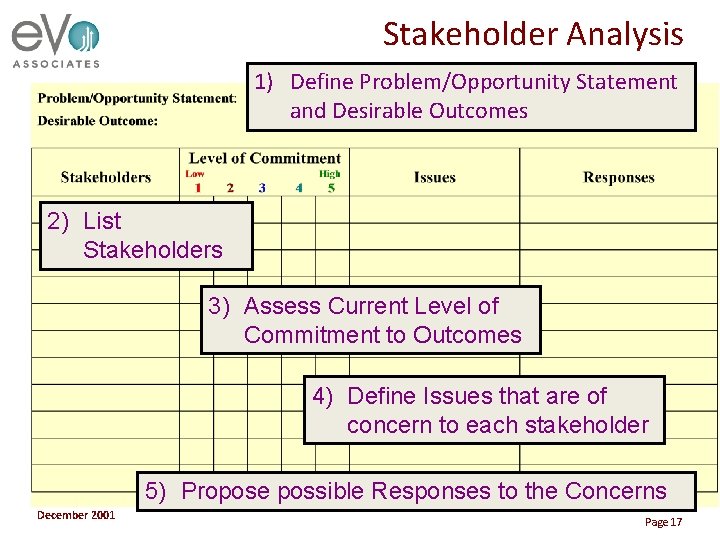
Stakeholder Analysis 1) Define Problem/Opportunity Statement and Desirable Outcomes 2) List Stakeholders 3) Assess Current Level of Commitment to Outcomes 4) Define Issues that are of concern to each stakeholder 5) Propose possible Responses to the Concerns December 2001 Page 17
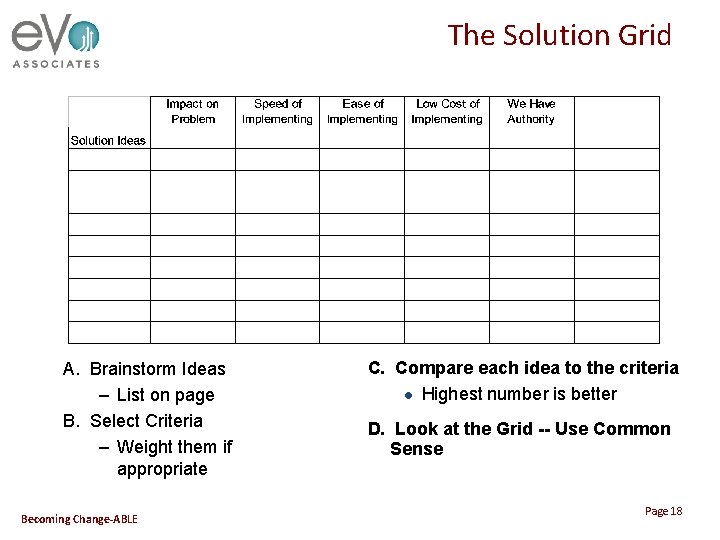
The Solution Grid A. Brainstorm Ideas – List on page B. Select Criteria – Weight them if appropriate Becoming Change-ABLE C. Compare each idea to the criteria l Highest number is better D. Look at the Grid -- Use Common Sense Page 18

Speeding the natural evolution of your business 3020 Bridgeway, Suite 414, Sausalito CA 94965 Tel: 1 (415) 381 -4660 Email: info@e. Voassociates. com Web: www. e. Voassociates. com
- Slides: 19