
PROBLEM SOLVING By Dominic Marabello and Justin Tienhaara
PROBLEM SOLVING By: Dominic Marabello and Justin Tienhaara
Six Stages of Problem Solving 1. 2. 3. 4. 5. 6. Problem Definition Evaluation of the Problem Generating Alternatives Selecting a Solution Implementation Evaluation of Results

Team Vs. Work Problems Team problems come from undesirable effects. Work focuses on how to complete tasks or assignments.
Common Mistake � Teams look for a solution first rather than defining the problem then deciding how to solve it. Why
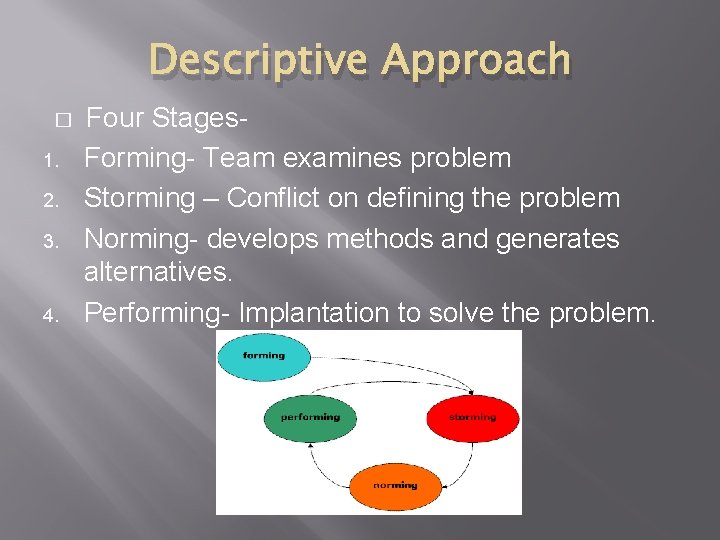
Descriptive Approach � 1. 2. 3. 4. Four Stages. Forming- Team examines problem Storming – Conflict on defining the problem Norming- develops methods and generates alternatives. Performing- Implantation to solve the problem.
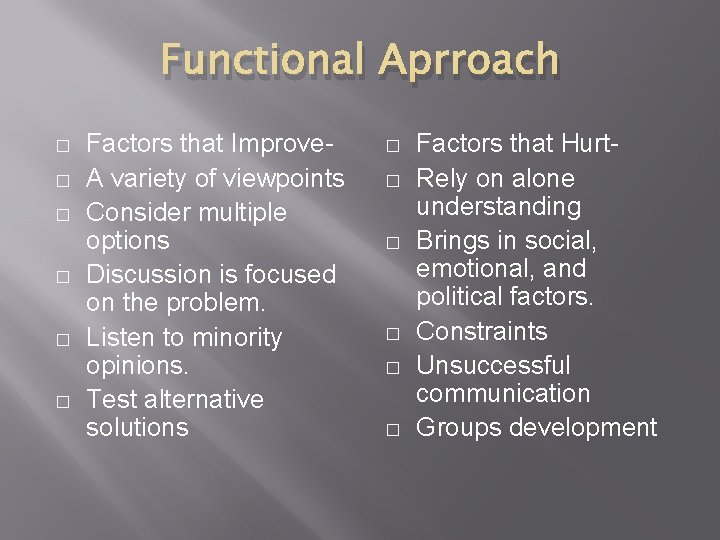
Functional Aprroach � � � Factors that Improve. A variety of viewpoints Consider multiple options Discussion is focused on the problem. Listen to minority opinions. Test alternative solutions � � � Factors that Hurt. Rely on alone understanding Brings in social, emotional, and political factors. Constraints Unsuccessful communication Groups development
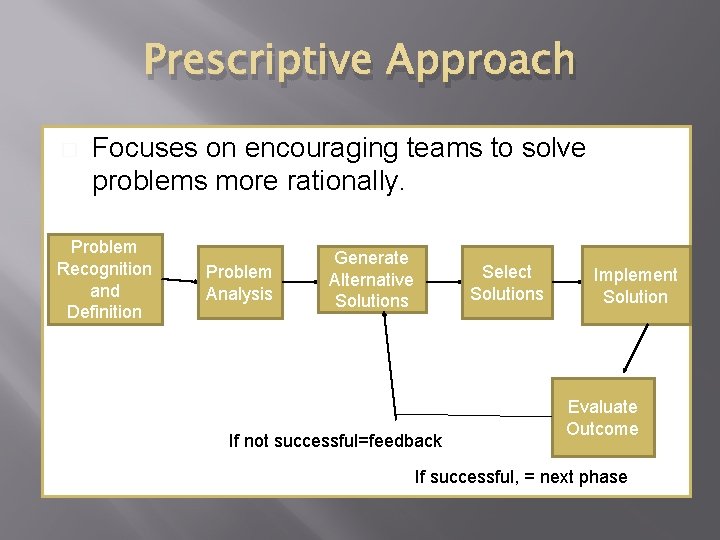
Prescriptive Approach � Focuses on encouraging teams to solve problems more rationally. Problem Recognition and Definition Problem Analysis Generate Alternative Solutions Select Solutions If not successful=feedback Implement Solution Evaluate Outcome If successful, = next phase
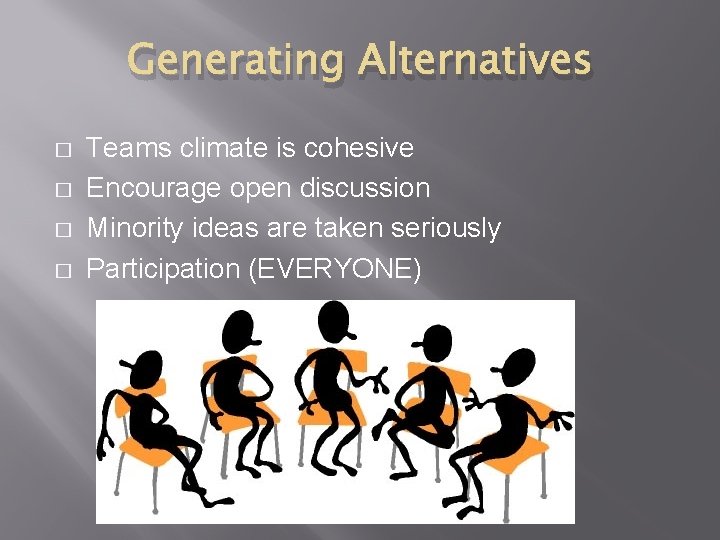
Generating Alternatives � � Teams climate is cohesive Encourage open discussion Minority ideas are taken seriously Participation (EVERYONE)
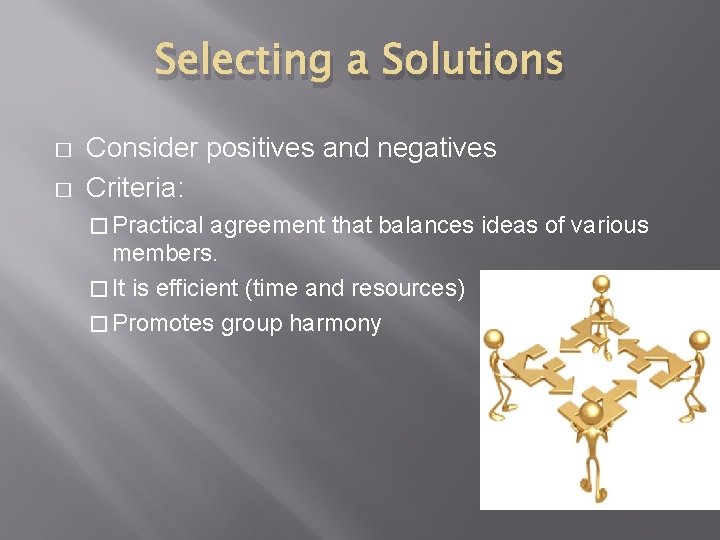
Selecting a Solutions � � Consider positives and negatives Criteria: � Practical agreement that balances ideas of various members. � It is efficient (time and resources) � Promotes group harmony
Implementation and Evaluation � � A solution need to be implemented. To implement solution has to be practical. Do not over look evaluation. Process Evaluation: � Evaluation examines how the solution was implemented. � Outcome Evaluation: � Examining the effects of the solution
Problem Solving Teams � � Put together to solve organization problems Composed of different people Rely on facilitators Problem solving techniques
Problem Solving Techniques � Problem Analysis: � Find the problem � Separate symptoms from the causes (“Why” analysis) � Criteria Matrix � Selection process of alternative solutions � Rating scales: 0=not acceptable, 1=somewhat acceptable, 2=acceptable.
Problem Solving Techniques Cont. . . � Action plans: � Translating solutions in reality (step by step map) � Establish monitoring and feedback system � Force Field Analysis: � Factors that affect change in a program � Examines relationships between driving and restraining forces. �Driving- what teams wants to achieve factors that minimize the problem �Restraining- obstacles that prevent success factors contribute to the problem � Reducing restraining forces are necessary for change.
References � � � Chapter 11 problem solving packet Dr. Mcdiarmid https: //www. google. com/search? q=nitro+ball&s ource=lnms&tbm=isch&sa=X&ei=KAlf. Uqr. IM 4 X q 8 w. TC 9 IDICw&ved=0 CAc. Q_AUo. AQ&biw=130 1&bih=620&dpr=1#q=group+problem+solving& tbm=isch&facrc
- Slides: 14