
Problem Formulation Selecting Topics and Research Questions This
Problem Formulation Selecting Topics and Research Questions

This Lecture l l Overview of the research process Narrowing topics to questions Time Units of analysis
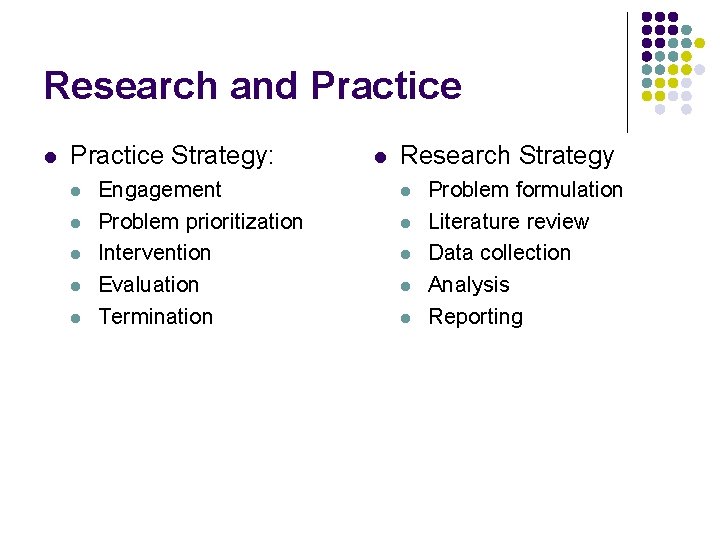
Research and Practice l Practice Strategy: l l l Engagement Problem prioritization Intervention Evaluation Termination l Research Strategy l l l Problem formulation Literature review Data collection Analysis Reporting
What is Social Work Research? l l “Applied, ” “Practical, ” “Real World” Guide social work practice Evaluate social programs Assess needs
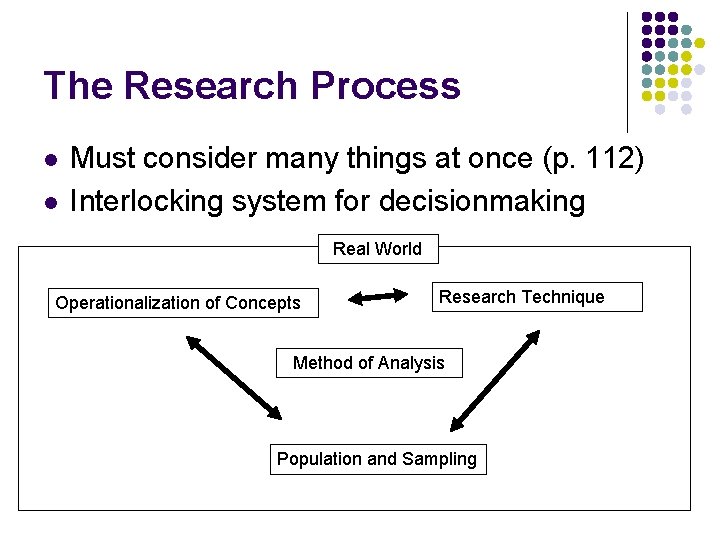
The Research Process l l Must consider many things at once (p. 112) Interlocking system for decisionmaking Real World Operationalization of Concepts Research Technique Method of Analysis Population and Sampling
The Research Question l l Social Work oriented Can be operationalized Narrow, specific Feasible l l l Money and time Access to data Energy
A Matter of Time l Point in Time Research l l Snapshot Longitudinal Research l l l Two points in time can determine a trend Sample a group cohort over time Follow a panel of the same people over time
Units of Analysis l l Individuals Groups Communities “Things” – artifacts
Units of Analysis, cont. l Mixing Units of analysis l Ecological Fallacy l l Individualistic Fallacy l l Drawing conclusions about individuals from group analysis Drawing conclusions about groups from individual analysis Reductionism l Limiting the options to answering a question § “Feminist analysis is the only means of understanding violence against women. ”
Next Week l l More on Operationalization Constructing and using scales and other instruments to operationalize variables Homework: Complete lit review for research prospectus Start adding meat (theory, hypothesis, concepts) to research ideas
- Slides: 10