
Problem Based Learning in an Online Course on
Problem Based Learning in an Online Course on Technology Assessment M. Annette Rose Jim Flowers ITEA 64 th Annual Conference 15 March, 2002
Results of a case study n Web-based course n Examined student communication n Asynchronous Conference Two group structures n Cooperative n Collaborative Problem based instructional strategy March 16, 2002 ITEA 64 th Annual Conference Columbus, Ohio M. Annette Rose
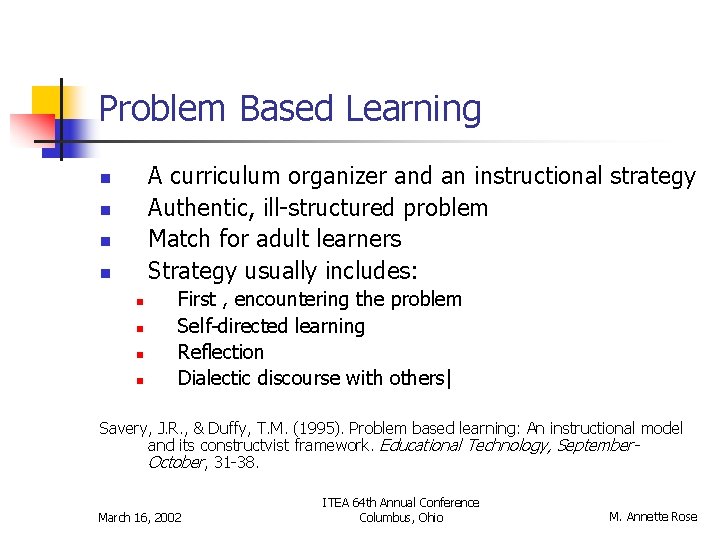
Problem Based Learning A curriculum organizer and an instructional strategy Authentic, ill-structured problem Match for adult learners Strategy usually includes: n n n n First , encountering the problem Self-directed learning Reflection Dialectic discourse with others| Savery, J. R. , & Duffy, T. M. (1995). Problem based learning: An instructional model and its constructvist framework. Educational Technology, September. October, 31 -38. March 16, 2002 ITEA 64 th Annual Conference Columbus, Ohio M. Annette Rose
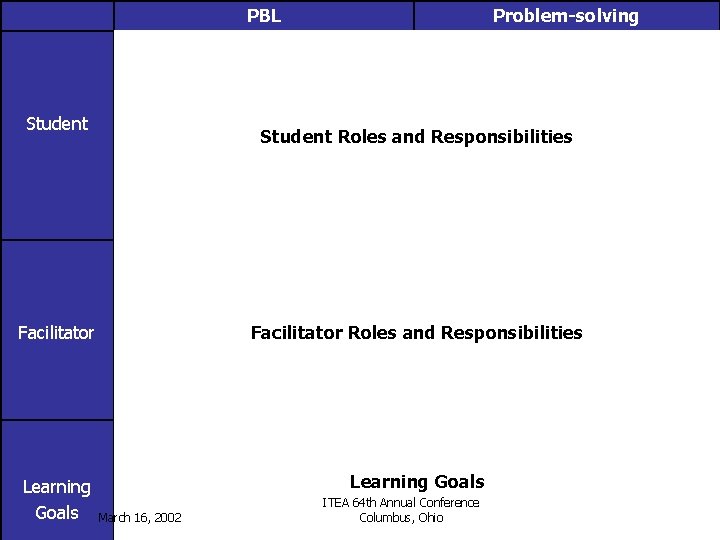
PBL n n n Student n Identifies learning needs n Attempts prescribed goals Selects info n Applies info Selects process n Applies process Generates solutions n Create technological models or Student Roles and Responsibilities drawings n n n Facilitator n n n Problem-solving technological social economic environmental Helps identify & assess learning n Prescribes learning goals n Selects information Helps identify & assess info n Prescribes process Facilitates multiple processes Facilitator Roles and Responsibilities n Create design brief Poses probing questions Challenges learner’s ideas n. More Learning Goals inference, synthesis, n. More application of design evaluation techniques Learningn. Well Goals n. Authentic, ill-structured problem formulated problem ITEA 64 th Annual Conference statement March 16, 2002 Columbus, Ohio
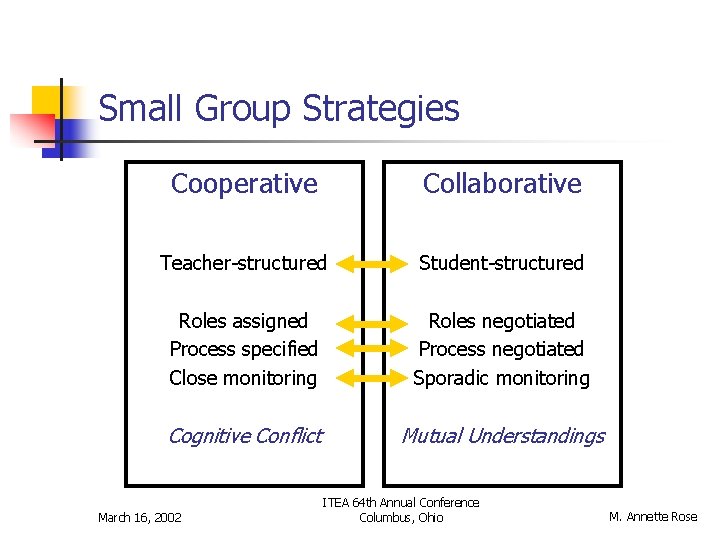
Small Group Strategies Cooperative Collaborative Teacher-structured Student-structured Roles assigned Process specified Close monitoring Roles negotiated Process negotiated Sporadic monitoring Cognitive Conflict Mutual Understandings March 16, 2002 ITEA 64 th Annual Conference Columbus, Ohio M. Annette Rose
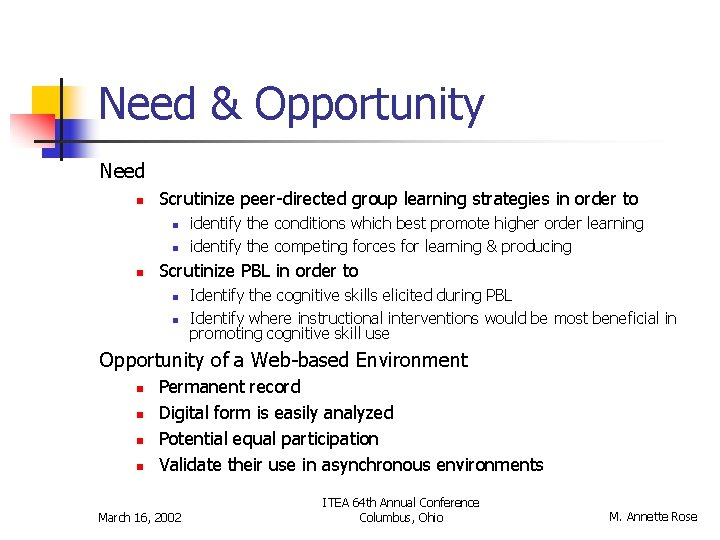
Need & Opportunity Need n Scrutinize peer-directed group learning strategies in order to n n n identify the conditions which best promote higher order learning identify the competing forces for learning & producing Scrutinize PBL in order to n n Identify the cognitive skills elicited during PBL Identify where instructional interventions would be most beneficial in promoting cognitive skill use Opportunity of a Web-based Environment n n Permanent record Digital form is easily analyzed Potential equal participation Validate their use in asynchronous environments March 16, 2002 ITEA 64 th Annual Conference Columbus, Ohio M. Annette Rose
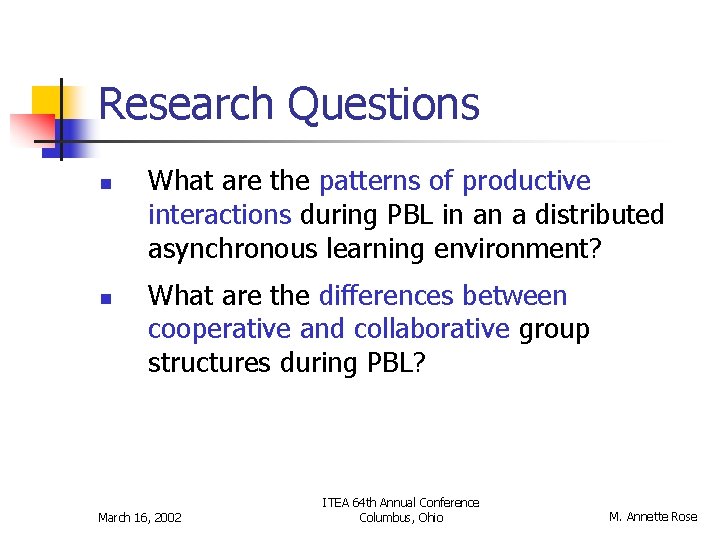
Research Questions n n What are the patterns of productive interactions during PBL in an a distributed asynchronous learning environment? What are the differences between cooperative and collaborative group structures during PBL? March 16, 2002 ITEA 64 th Annual Conference Columbus, Ohio M. Annette Rose
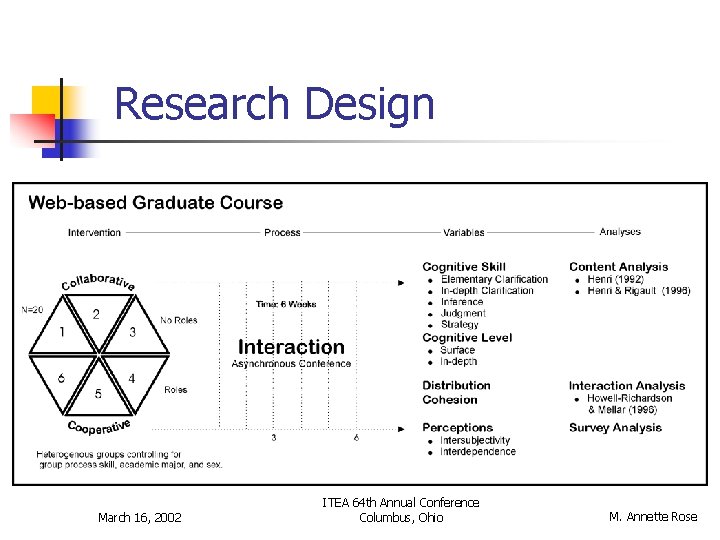
Research Design March 16, 2002 ITEA 64 th Annual Conference Columbus, Ohio M. Annette Rose
Research Context n Online course from Ball State n n “Technology: Use and Assessment” Pilot course in a newly approved online Master of Arts in Technology Education. Instructor’s first online course Blackboard Course. Info management software March 16, 2002 ITEA 64 th Annual Conference Columbus, Ohio M. Annette Rose
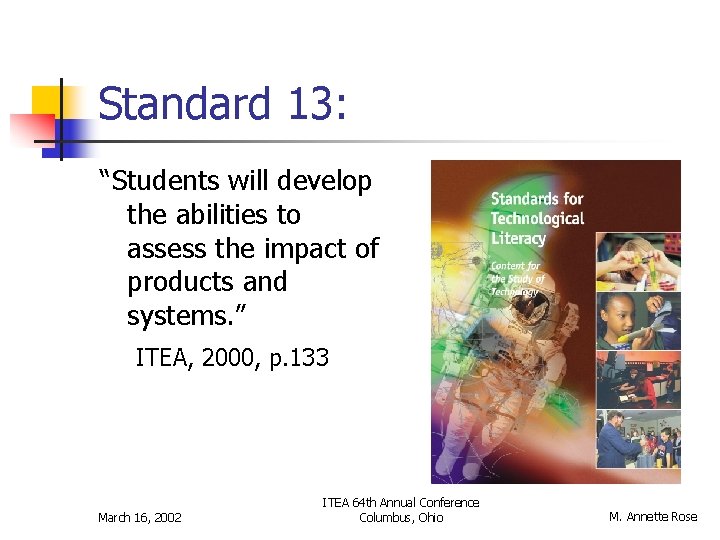
Standard 13: “Students will develop the abilities to assess the impact of products and systems. ” ITEA, 2000, p. 133 March 16, 2002 ITEA 64 th Annual Conference Columbus, Ohio M. Annette Rose
Research Participants n 20 of 26 online graduate students n Off-campus & on-campus (all online) n Wellness, education, and technology ed. n Only 1 of 20 had previously taken an online class. March 16, 2002 ITEA 64 th Annual Conference Columbus, Ohio M. Annette Rose
Six Heterogeneous Groups n Three cooperative groups n Roles assigned by the instructor: n n n n Schools Specialist Health & Wellness Specialist Economics Specialist Web Specialist (Lead Editor) Monitored every 2 to 3 days Three collaborative groups n n Group process is negotiated, no roles assigned Monitored every 4 to 6 days March 16, 2002 ITEA 64 th Annual Conference Columbus, Ohio M. Annette Rose
Problem Conduct a technology assessment of the health and wellness implications of computer use by children (as if for the U. S. Department of Education. ) Deliver a formal online report that makes recommendations for school districts to promote lifelong wellness. March 16, 2002 ITEA 64 th Annual Conference Columbus, Ohio M. Annette Rose
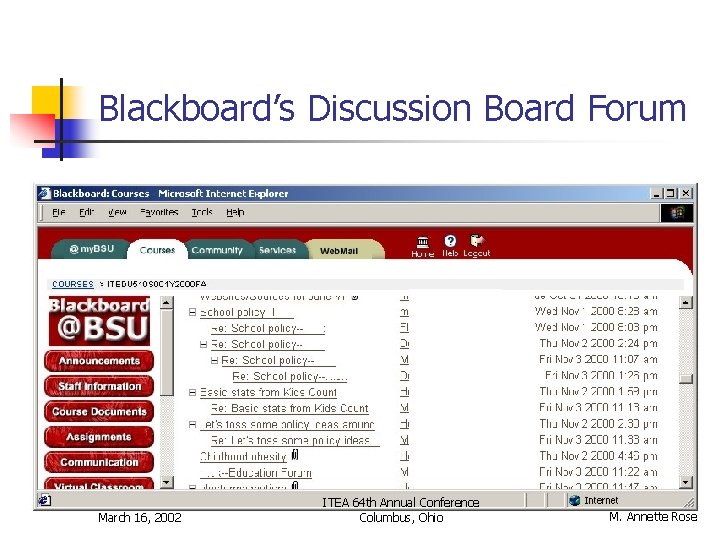
Blackboard’s Discussion Board Forum March 16, 2002 ITEA 64 th Annual Conference Columbus, Ohio M. Annette Rose
Methodology n n Student information survey Treatment Perceptions surveys Analysis of transcripts March 16, 2002 ITEA 64 th Annual Conference Columbus, Ohio M. Annette Rose
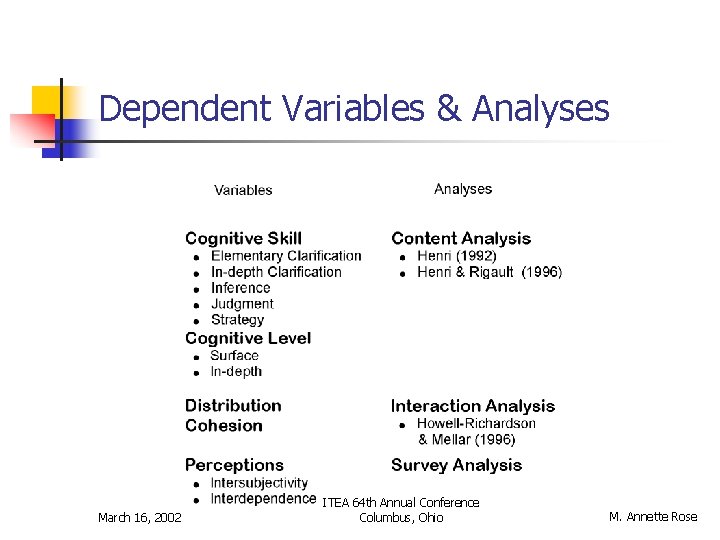
Dependent Variables & Analyses March 16, 2002 ITEA 64 th Annual Conference Columbus, Ohio M. Annette Rose
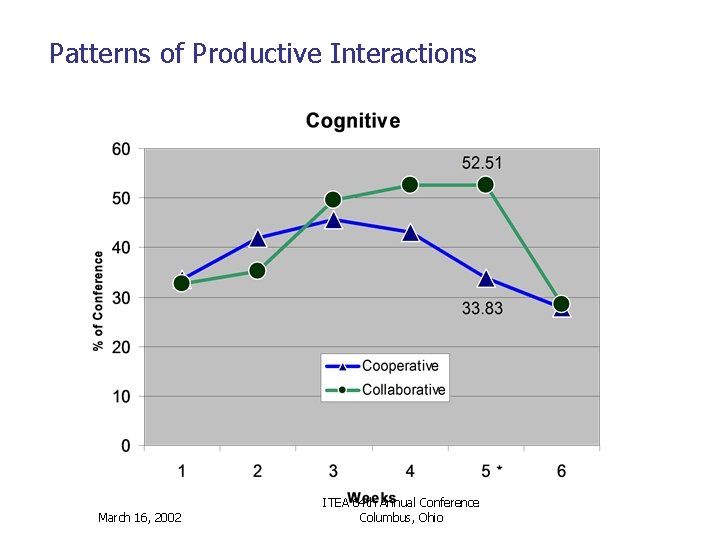
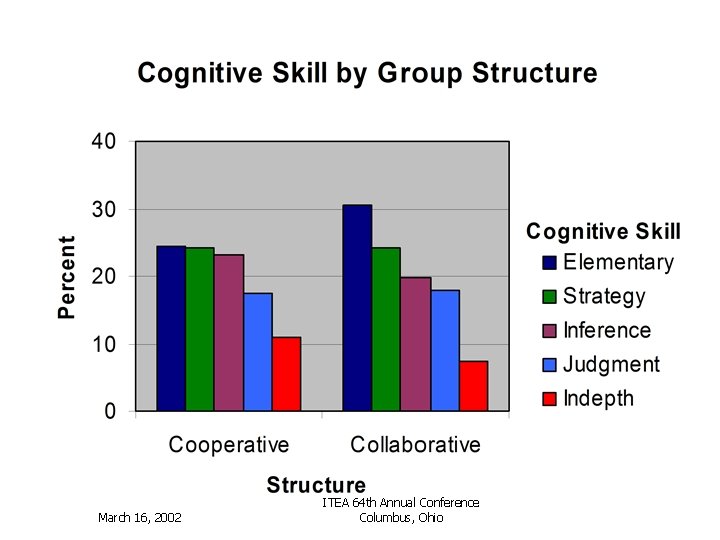
Patterns of Productive Interactions March 16, 2002 ITEA 64 th Annual Conference Columbus, Ohio
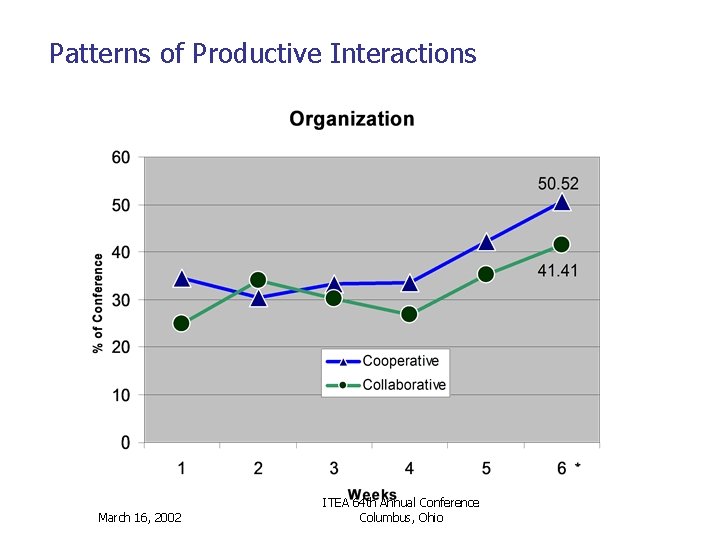
Patterns of Productive Interactions March 16, 2002 ITEA 64 th Annual Conference Columbus, Ohio
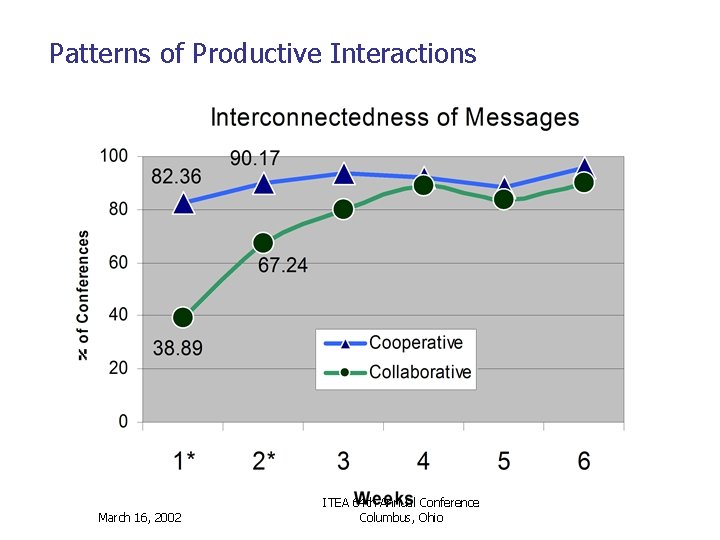
Patterns of Productive Interactions March 16, 2002 ITEA 64 th Annual Conference Columbus, Ohio
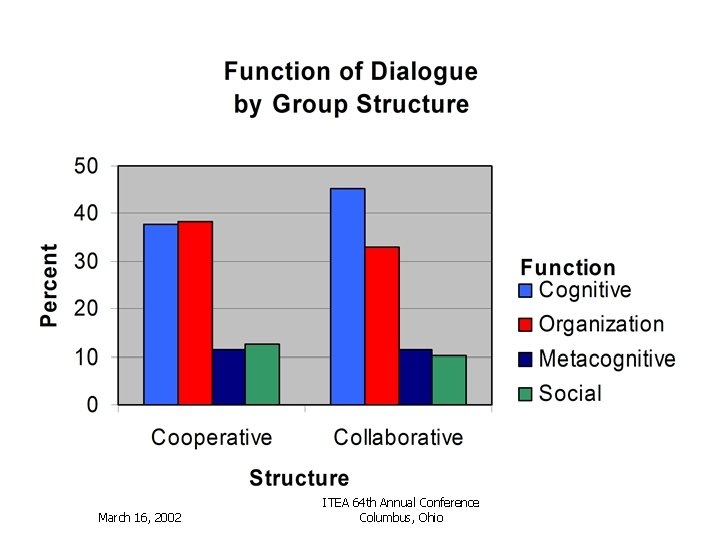
March 16, 2002 ITEA 64 th Annual Conference Columbus, Ohio
March 16, 2002 ITEA 64 th Annual Conference Columbus, Ohio
March 16, 2002 ITEA 64 th Annual Conference Columbus, Ohio
Patterns of Productive Interactions March 16, 2002 ITEA 64 th Annual Conference Columbus, Ohio
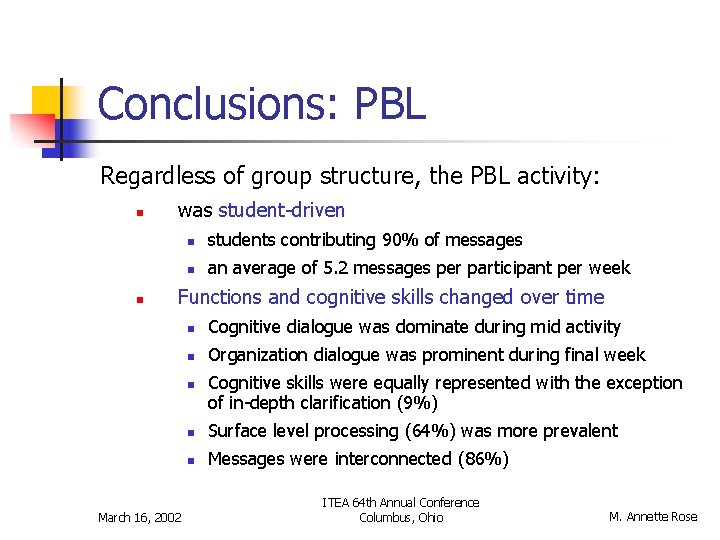
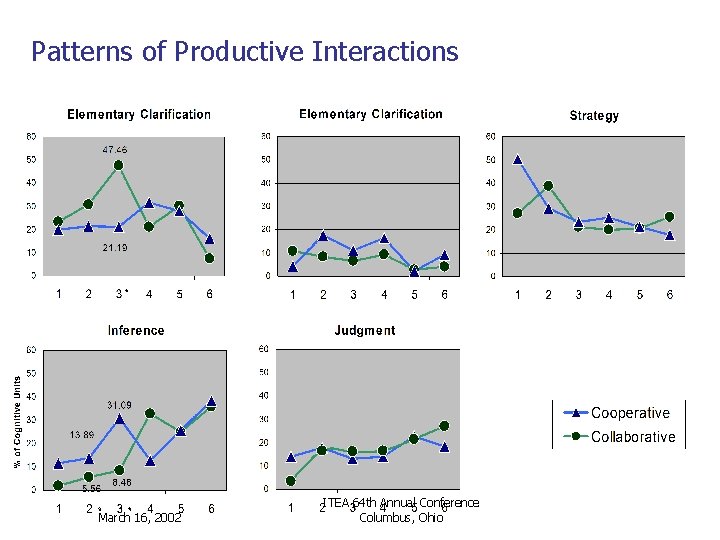
Conclusions: PBL Regardless of group structure, the PBL activity: n n was student-driven n students contributing 90% of messages n an average of 5. 2 messages per participant per week Functions and cognitive skills changed over time n Cognitive dialogue was dominate during mid activity n Organization dialogue was prominent during final week n March 16, 2002 Cognitive skills were equally represented with the exception of in-depth clarification (9%) n Surface level processing (64%) was more prevalent n Messages were interconnected (86%) ITEA 64 th Annual Conference Columbus, Ohio M. Annette Rose
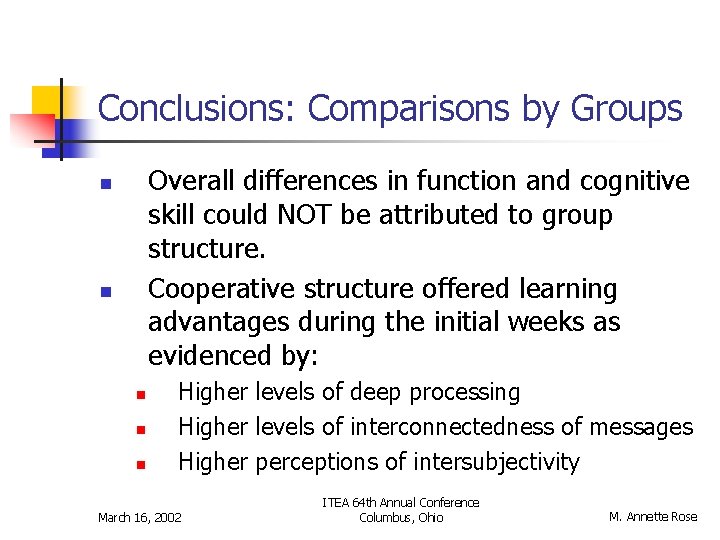
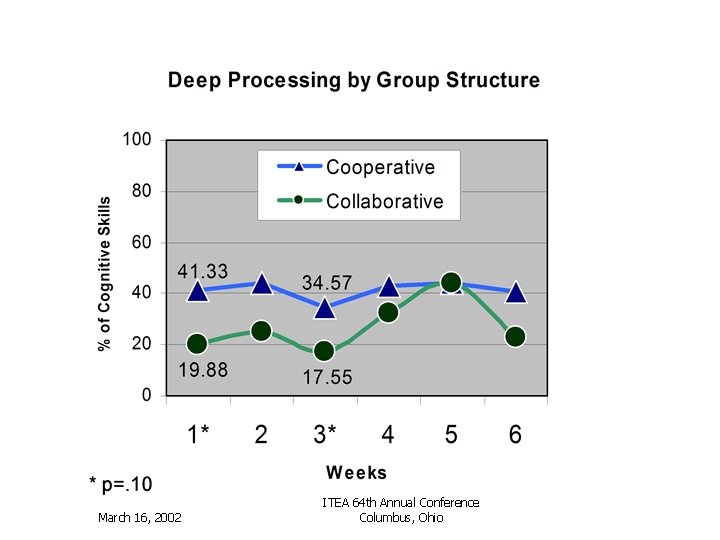
Conclusions: Comparisons by Groups Overall differences in function and cognitive skill could NOT be attributed to group structure. Cooperative structure offered learning advantages during the initial weeks as evidenced by: n n n Higher levels of deep processing Higher levels of interconnectedness of messages Higher perceptions of intersubjectivity March 16, 2002 ITEA 64 th Annual Conference Columbus, Ohio M. Annette Rose
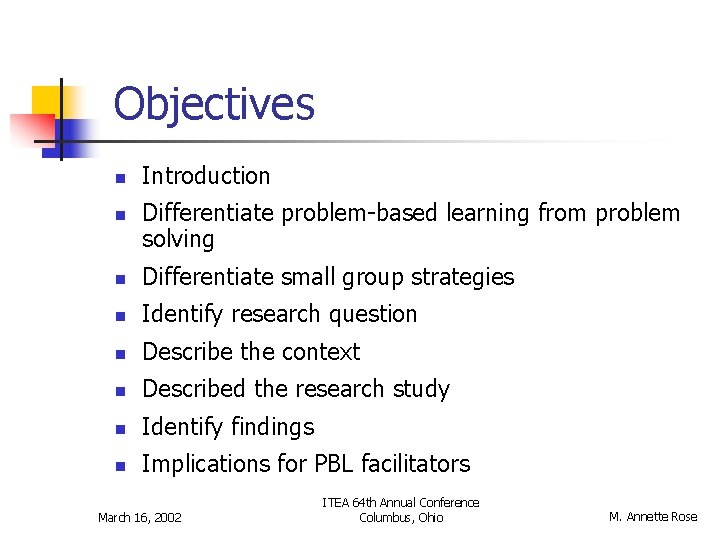
Objectives n n Introduction Differentiate problem-based learning from problem solving n Differentiate small group strategies n Identify research question n Describe the context n Described the research study n Identify findings n Implications for PBL facilitators March 16, 2002 ITEA 64 th Annual Conference Columbus, Ohio M. Annette Rose
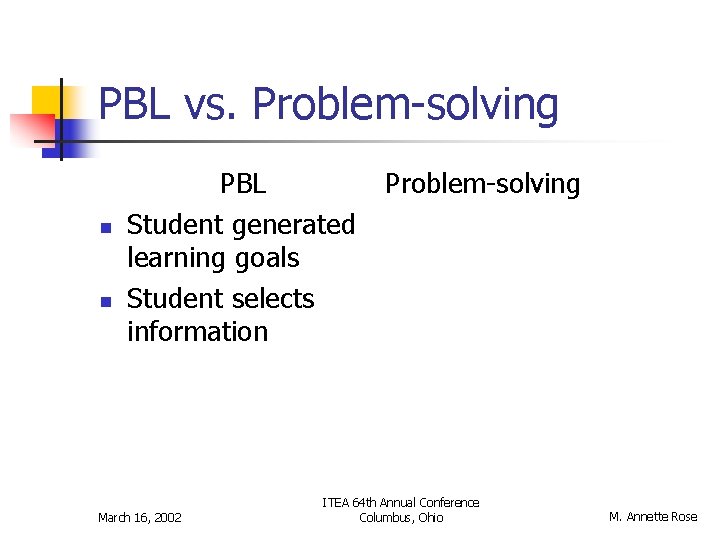
PBL vs. Problem-solving n n PBL Student generated learning goals Student selects information March 16, 2002 Problem-solving ITEA 64 th Annual Conference Columbus, Ohio M. Annette Rose
- Slides: 27