
Probing The Dark Universe Josh Frieman Fermilab The
Probing The Dark Universe Josh Frieman Fermilab & The University of Chicago Link to Learn, May, 2011
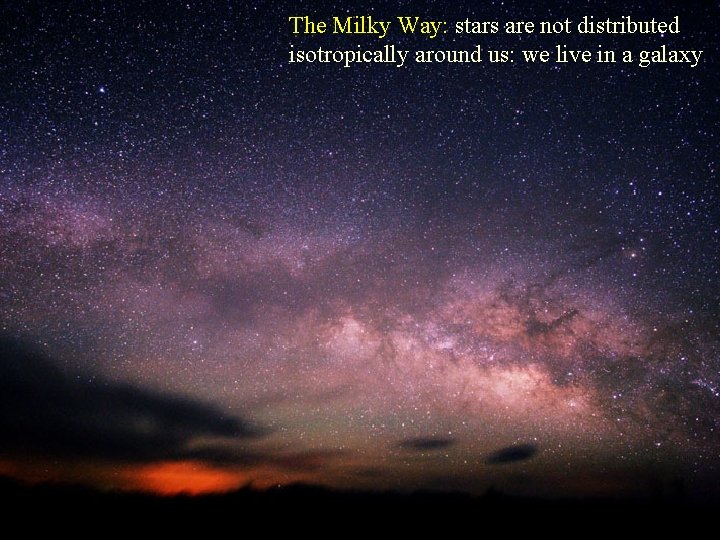
The Milky Way: stars are not distributed isotropically around us: we live in a galaxy
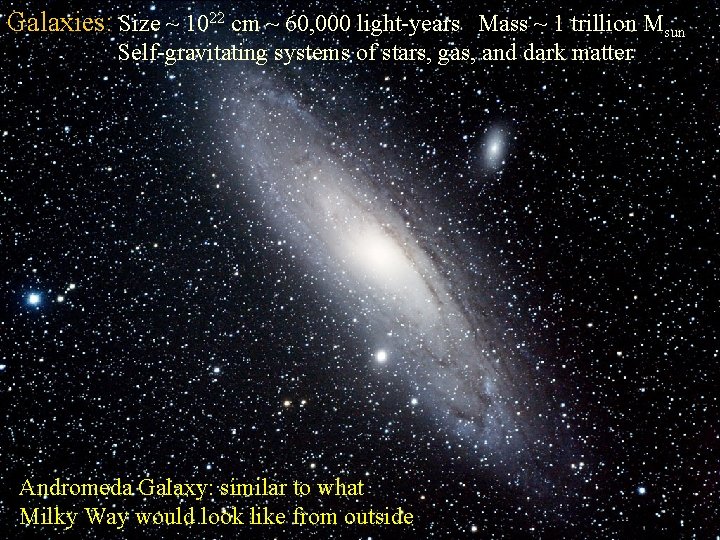
Galaxies: Size ~ 1022 cm ~ 60, 000 light-years Mass ~ 1 trillion Msun Self-gravitating systems of stars, gas, and dark matter Andromeda Galaxy: similar to what Milky Way would look like from outside
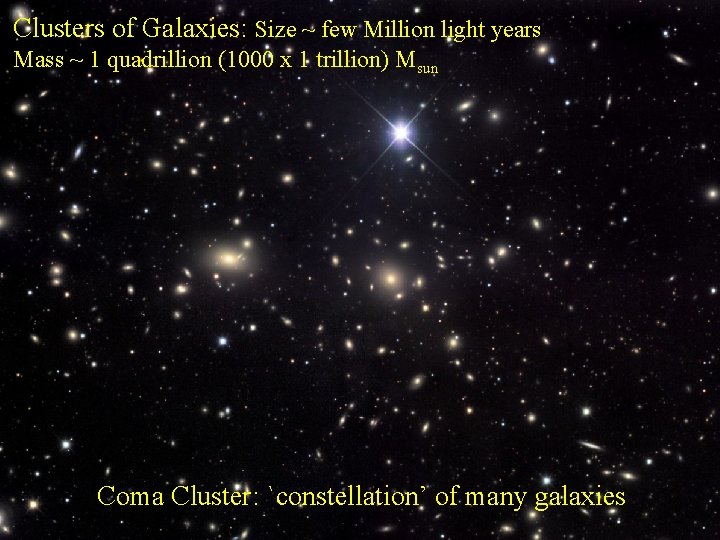
Clusters of Galaxies: Size ~ few Million light years Mass ~ 1 quadrillion (1000 x 1 trillion) Msun Coma Cluster: `constellation’ of many galaxies
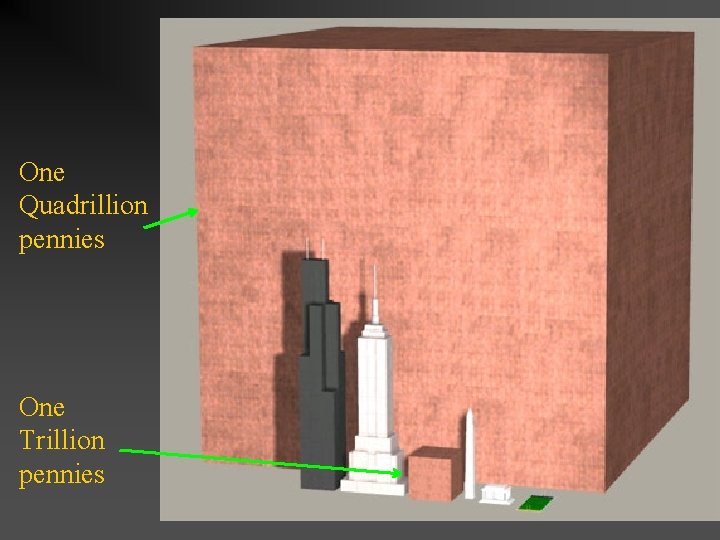
One Quadrillion pennies One Trillion pennies
2 MASS Infrared Sky Survey Large-scale Structure: patterns in the distribution of galaxies
Each point is a galaxy
Sloan Digital Sky Survey: 2. 5 -meter telescope in southern New Mexico carried out the world’s largest galaxy survey

SDSS Movie
Large-scale Structure The Universe contains a hierarchy of structure, from people to planets, stars, galaxies, clusters of galaxies, and larger structures (filaments, voids, walls). Where did all this structure come from? How did it form?
Large-scale Structure The Universe contains a hierarchy of structure, from people to planets, stars, galaxies, clusters of galaxies, and larger structures. Where did all this structure come from? How did it form? What happened in the Universe’s earliest moments? What is it made of?
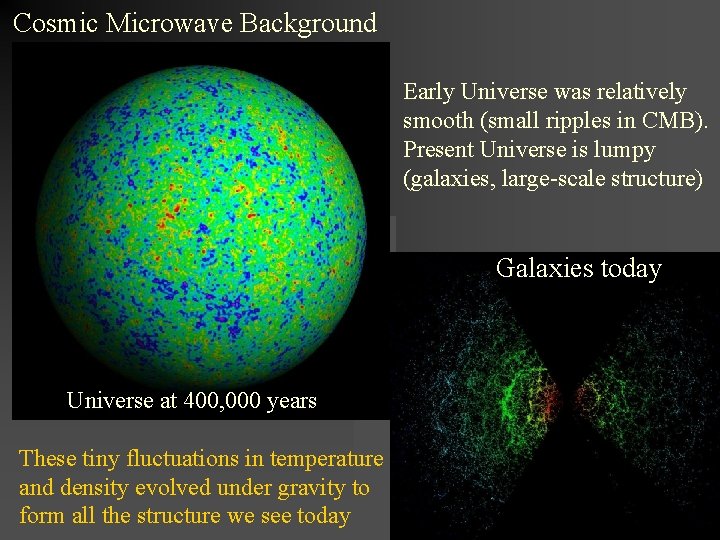
Cosmic Microwave Background Early Universe was relatively smooth (small ripples in CMB). Present Universe is lumpy (galaxies, large-scale structure) Galaxies today Universe at 400, 000 years These tiny fluctuations in temperature and density evolved under gravity to form all the structure we see today
Does the Expansion of the Universe change over time? Gravity: everything in the Universe attracts everything else we expected the expansion of the Universe to slow down over time
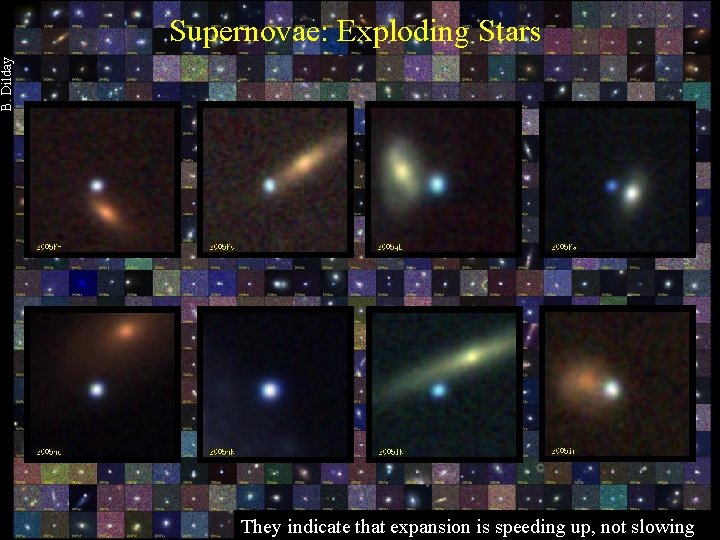
B. Dilday Supernovae: Exploding Stars They indicate that expansion is speeding up, not slowing
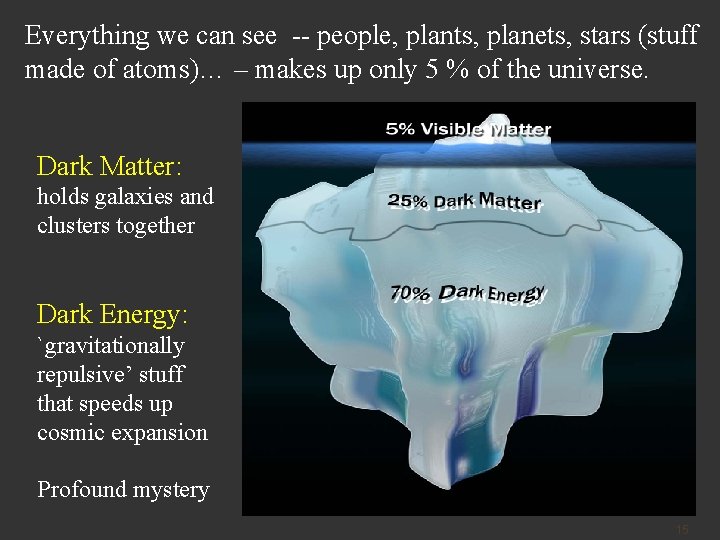
Everything we can see -- people, plants, planets, stars (stuff made of atoms)… – makes up only 5 % of the universe. Dark Matter: holds galaxies and clusters together Dark Energy: `gravitationally repulsive’ stuff that speeds up cosmic expansion Profound mystery 15
Milennium Simulation Movie A computer Universe filled with Dark Matter and Dark Energy predicts large -scale structure that looks exactly like what we see in galaxy surveys.
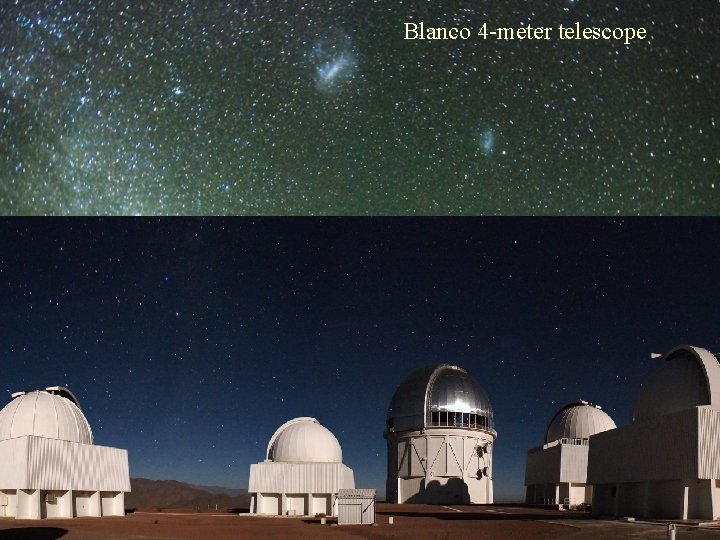
Blanco 4 -meter telescope 17 Josh Frieman: Fermilab Collaboration Meeting, October, 2010 Cerro Tololo Inter-American Observatory in Chilean Andes
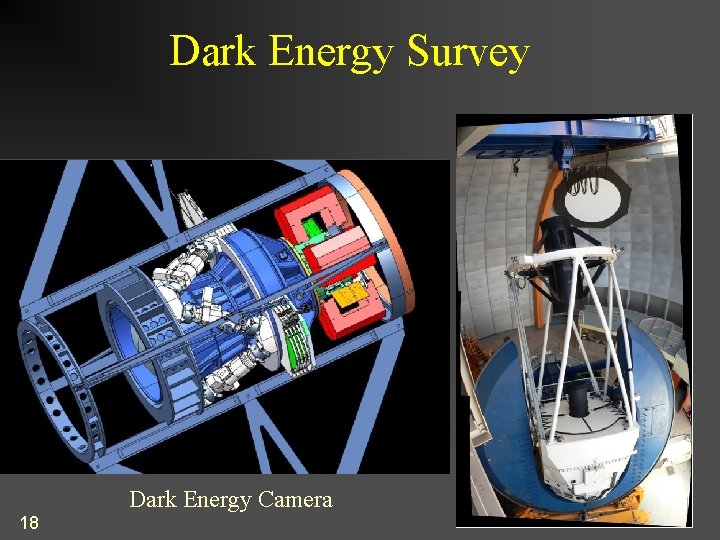
Dark Energy Survey Dark Energy Camera 18
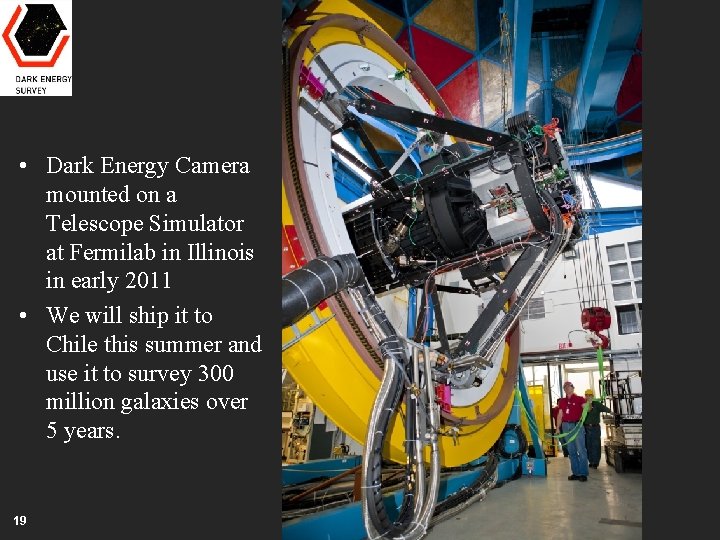
• Dark Energy Camera mounted on a Telescope Simulator at Fermilab in Illinois in early 2011 • We will ship it to Chile this summer and use it to survey 300 million galaxies over 5 years. 19
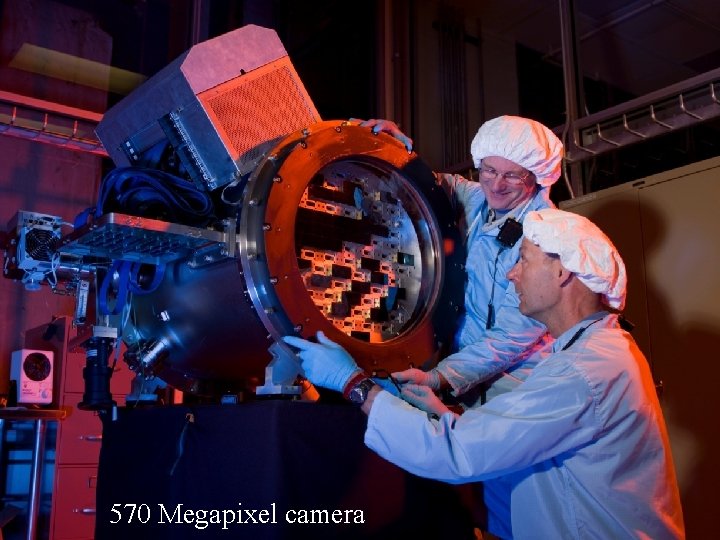
20 570 Megapixel camera
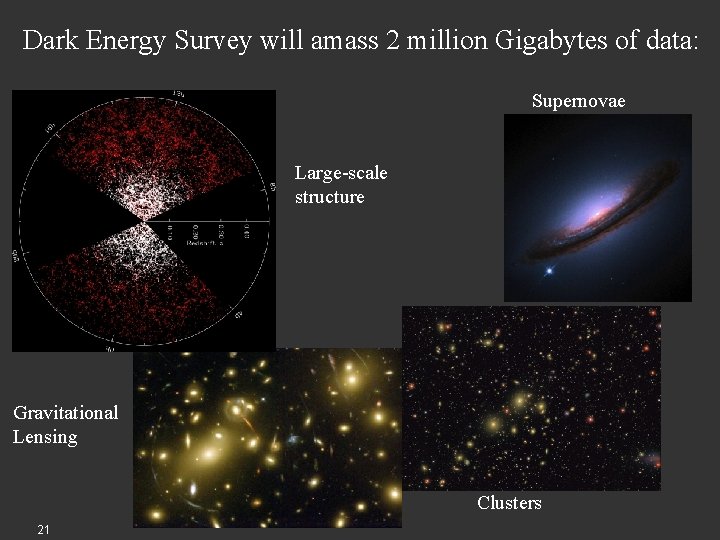
Dark Energy Survey will amass 2 million Gigabytes of data: Supernovae Large-scale structure Gravitational Lensing Clusters 21
- Slides: 21