
Probation EBP Practice Models Core Correctional Practices CCP
Probation EBP Practice Models Core Correctional Practices (CCP) Dr. Jacqueline van Wormer, Ph. D. David Sattler, M. A.
“ The Probation Officer may be the most important person (and sometimes the only person) the youth has at making a behavioral change. 2
In Juvenile Probation 3
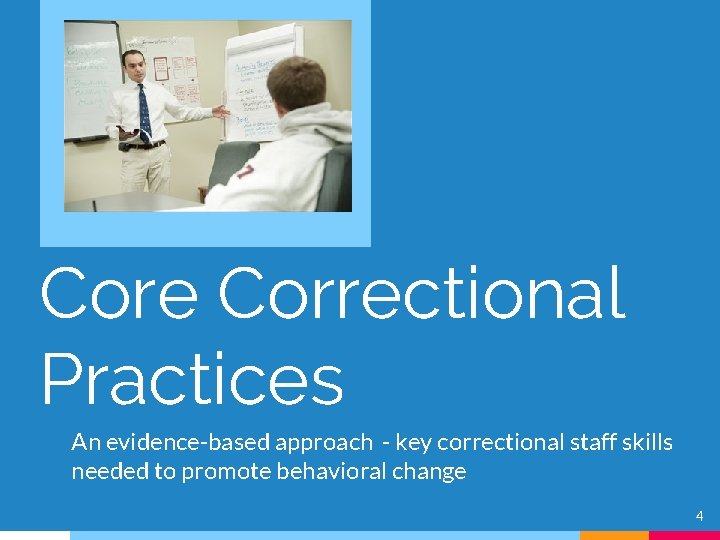
Core Correctional Practices An evidence-based approach - key correctional staff skills needed to promote behavioral change 4

Models of Supervision 5

Enforcement Model ▷ ▷ ▷ JPC monitors court order Focus on compliance Problem oriented Youth mandated to change Primary use of punish to change behavior Adversarial approach 6
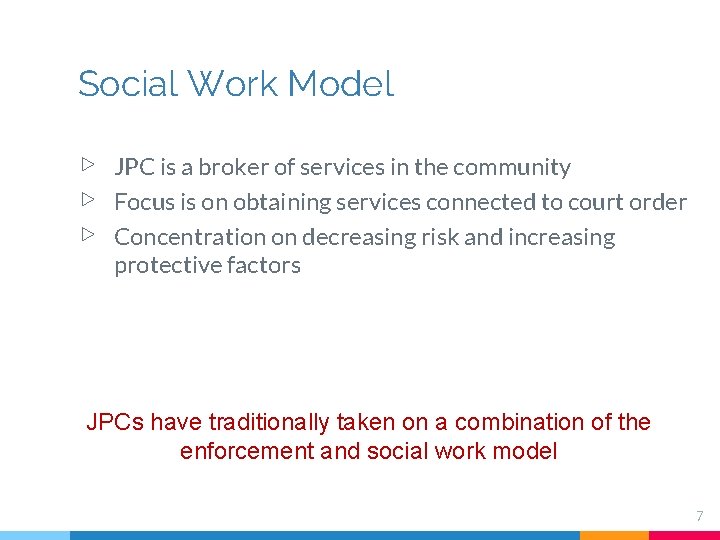
Social Work Model ▷ ▷ ▷ JPC is a broker of services in the community Focus is on obtaining services connected to court order Concentration on decreasing risk and increasing protective factors JPCs have traditionally taken on a combination of the enforcement and social work model 7
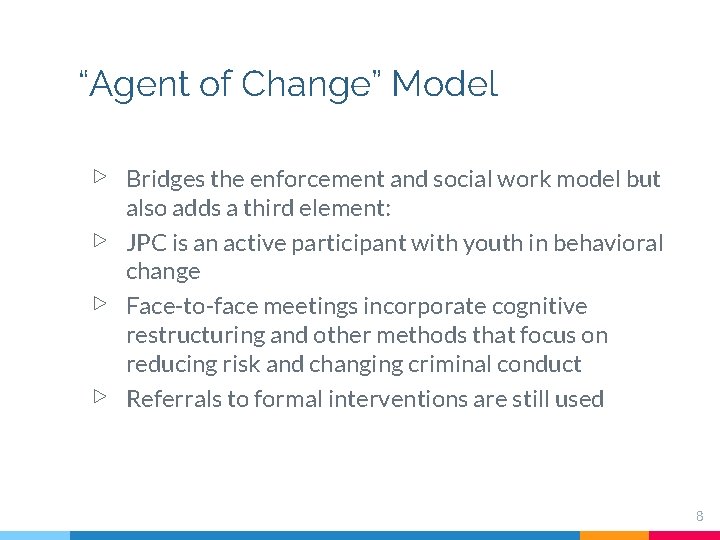
“Agent of Change” Model ▷ ▷ Bridges the enforcement and social work model but also adds a third element: JPC is an active participant with youth in behavioral change Face-to-face meetings incorporate cognitive restructuring and other methods that focus on reducing risk and changing criminal conduct Referrals to formal interventions are still used 8

Core Correctional Practices (CCP) 1. Quality Relationship 2. Effective Use of Authority Respect, empathy, warmth, and support Focusing on behavior rather than the person 3. Prosocial Modeling 4. Effective Reinforcement Using role plays and practice Using positive reinforcement 5. Effective Disapproval Non-blaming way and then show alternatives 6. Problem Solving Skills 7. Prosocial Skills Building 8. Cognitive Restructuring Skill for dealing with risk reoffending behavior Identify and practice new prosocial skills Identify thoughts that trigger behavior and replace with pro-social thoughts 9. Motivational Interviewing Eliciting internal motivation and developing discrepancy between behavior and desired goals 10. Use Community Resources Offering advocacy for accessing services 9

Research on CCP ▷ ▷ Meta-Analysis (10 studies) – 13% reduction in recidivism compared to non-trained CCP (2 studies had youth population) WSIPP – adult intensive supervision analysis (reduction in recidivism) ○ CCP trained – 16% reduction ○ Intensive supervision with treatment – 10% reduction ○ Intensive supervision (surveillance only) – 0% reduction 10

Sample EBP Practice Models Creator Strategic Training Initiative Supervision (STICS) Effective Practices in Community Supervision (EPICS) Staff Training Aimed at Reducing Rearrest (STARR) Proactive Community Supervision (PCS) Canadian Department of Public Safety University of Cincinnati US Federal Probation and Pretrial Services George Mason University & Maryland Department of Probation and Parole Skills for Offender Assessment and Responsivity George Mason University in New Goals (SOARING 2) Most Juvenile Courts in the U. S. are using EPICS or STICS 11

EBP Practice Models – Training & QA ▷ ▷ Initial 3 -4 day class training (SOARING 2 is online) Monthly/quarterly on-going trainings Videotaping Feedback and coaching Ongoing training and QA has shown to be critical for correctional staff to show competency at practicing skills 12

Considerations for WA State Juvenile Courts 1. Does CMAP have all the correctional practices? 2. What would it take for CMAP to be considered an EBP? 3. Benefit of CMAP incorporating all CCP and be evaluated for an EBP? 4. What kind of training would JPCs need? 5. What king of quality assurance would need to be in place? 13
- Slides: 13