
Probability of exceedance tool and additional useful smart
Probability of exceedance tool and additional useful smart tools Robert Deal IFPS/GFE Team WFO Burlington
Motivation • How does a IFPS/GFE centric forecaster provide DSS? • By producing “Forecaster DSS” DSS tools • By improving the forecast, then the message becomes clearer. • Good forecast in, Good Message Out
Organization • Probability of Exceedance – Confidence Levels • Hazard Check – Let your forecast dictate your hazards • Local “Ensemble” Smart Tools – Po. P/QPF/Sky/Wx/Snow Ratio?
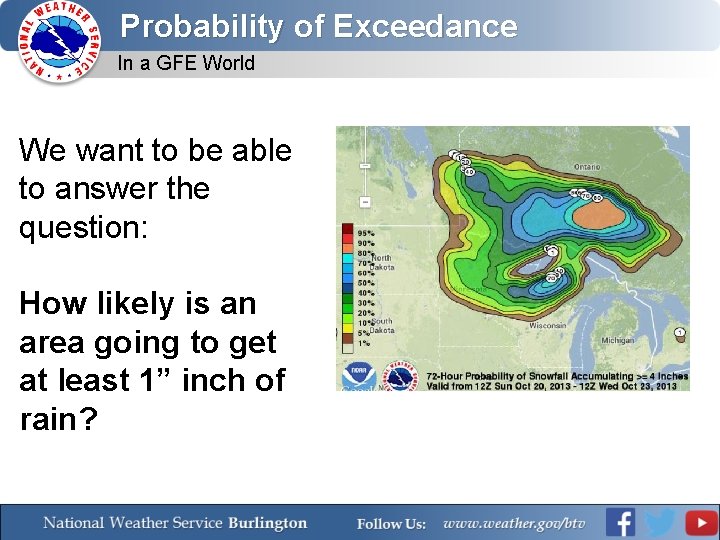
Probability of Exceedance In a GFE World We want to be able to answer the question: How likely is an area going to get at least 1” inch of rain?
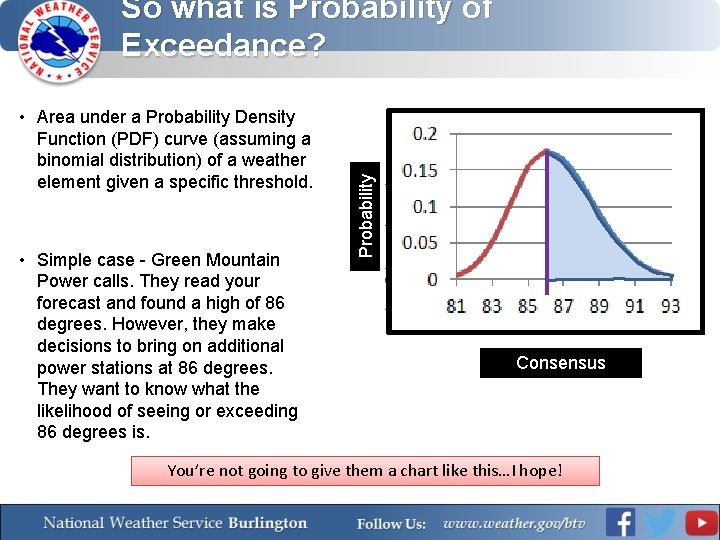
• Area under a Probability Density Function (PDF) curve (assuming a binomial distribution) of a weather element given a specific threshold. • Simple case - Green Mountain Power calls. They read your forecast and found a high of 86 degrees. However, they make decisions to bring on additional power stations at 86 degrees. They want to know what the likelihood of seeing or exceeding 86 degrees is. Probability So what is Probability of Exceedance? Consensus Temps You’re not going to give them a chart like this…I hope!
Give credit where its due • We didn’t write this smart tool. • We did write a wrapper procedure to run the tool. • The author: – Darren Van Cleave (WFO MSO) – Available on the SCP
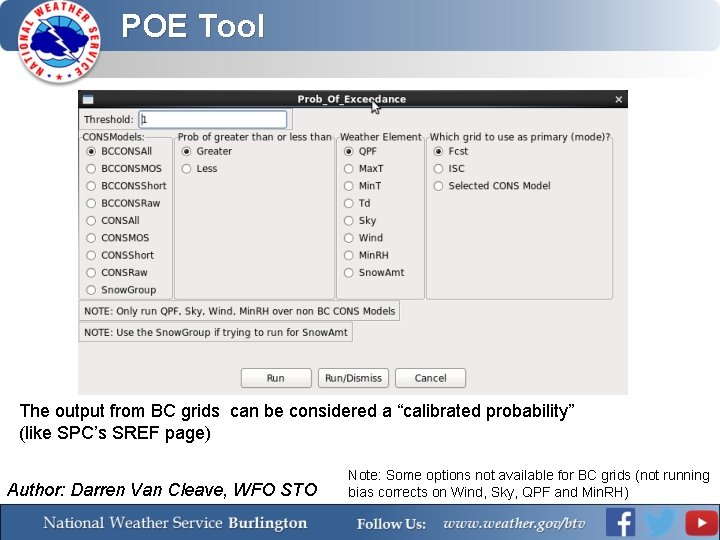
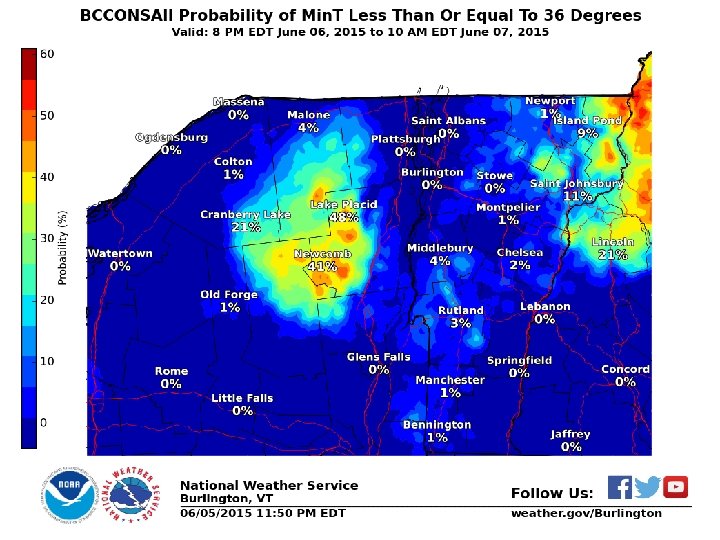
POE Tool The output from BC grids can be considered a “calibrated probability” (like SPC’s SREF page) Author: Darren Van Cleave, WFO STO Note: Some options not available for BC grids (not running bias corrects on Wind, Sky, QPF and Min. RH)
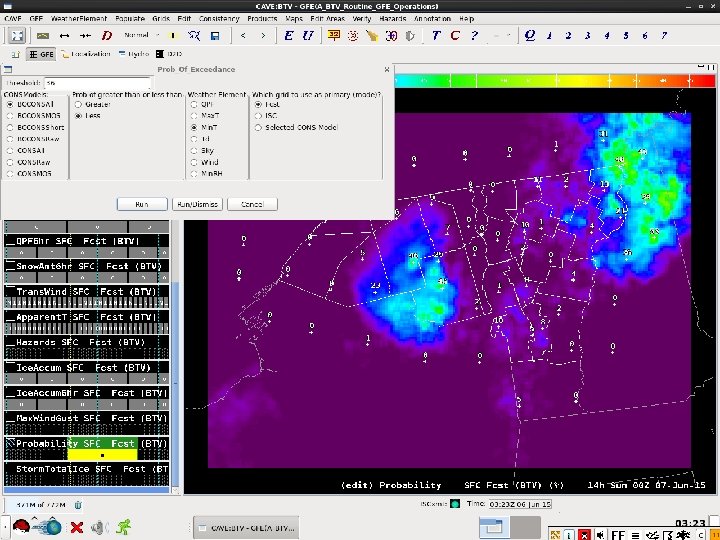
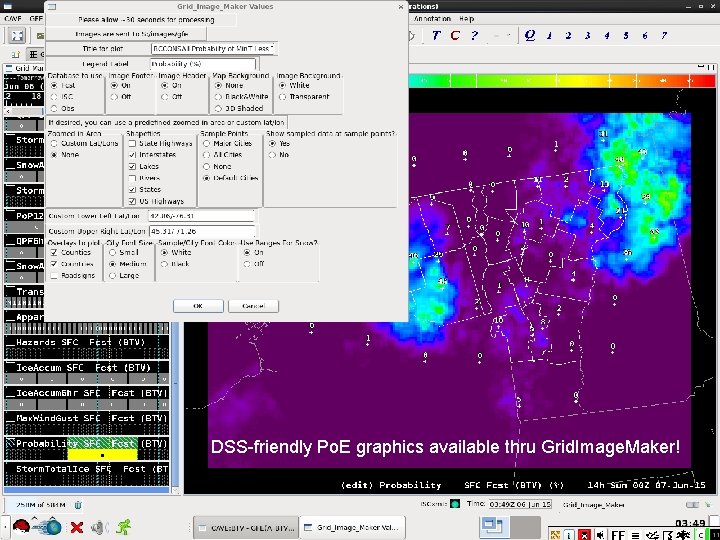
DSS-friendly Po. E graphics available thru Grid. Image. Maker!
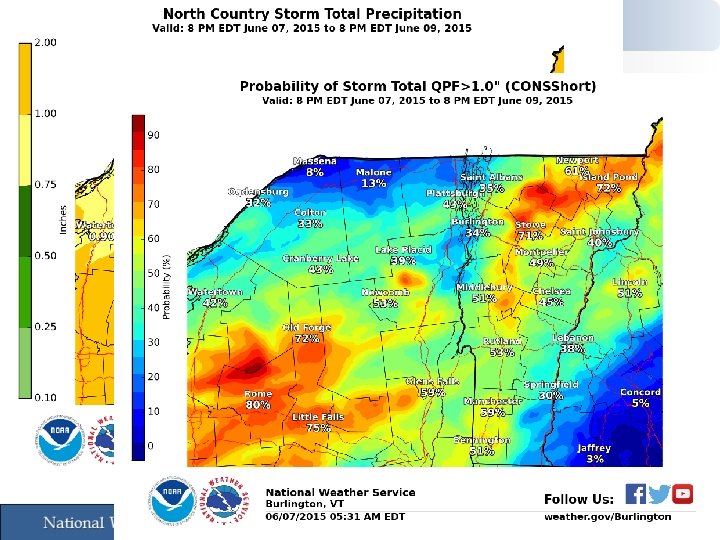
How likely is an area going to get at least 1” inch of rain?
Where we are going • Snow? • We are going to be a test office this winter and will run comparisons events from the WPC Probability Grids and our locally produced Probability Grids
Hazard Check: Let the forecast dictate the Hazards
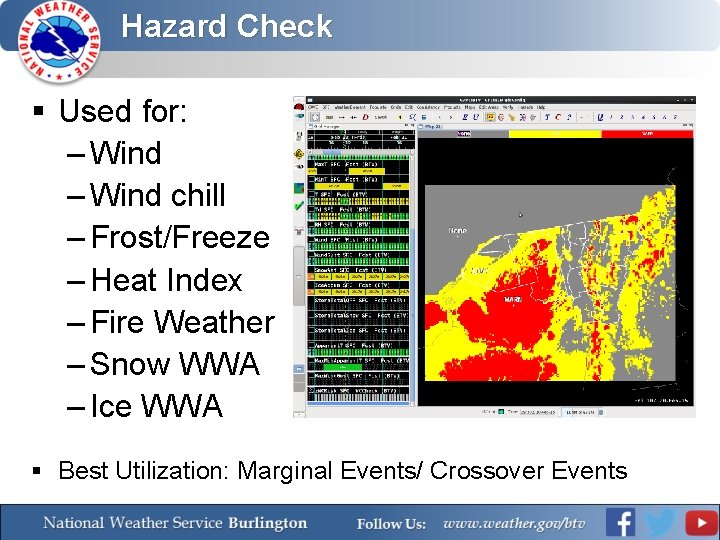
Hazard Check § Used for: – Wind chill – Frost/Freeze – Heat Index – Fire Weather – Snow WWA – Ice WWA § Best Utilization: Marginal Events/ Crossover Events
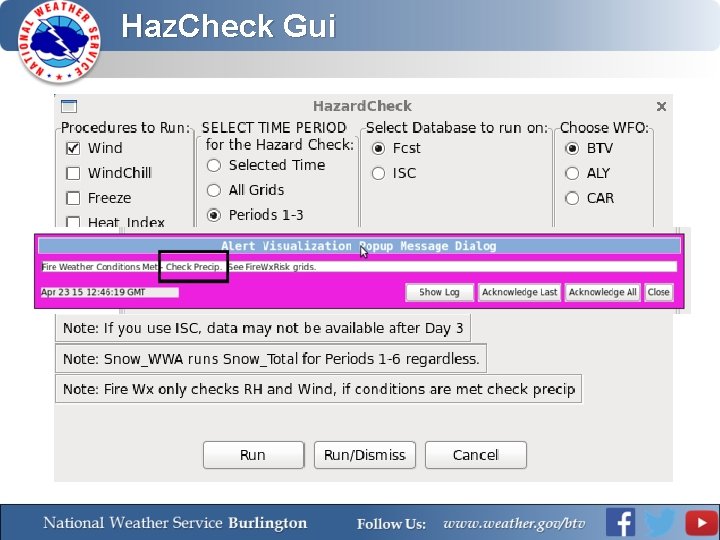
Haz. Check Gui
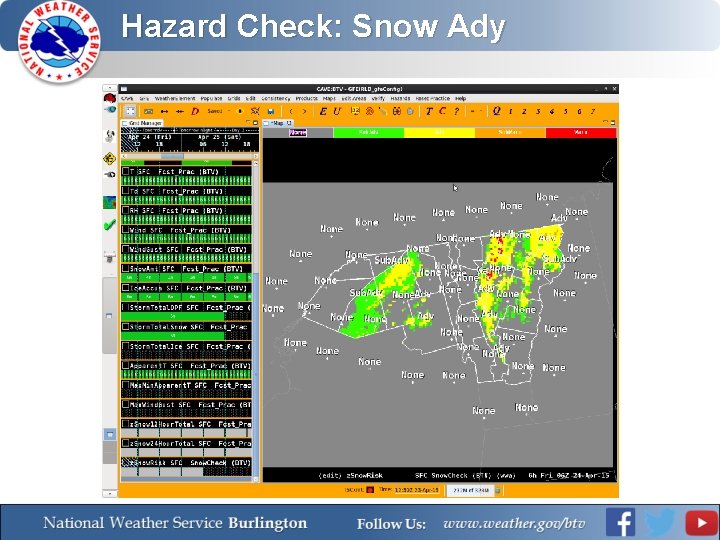
Hazard Check: Snow Ady
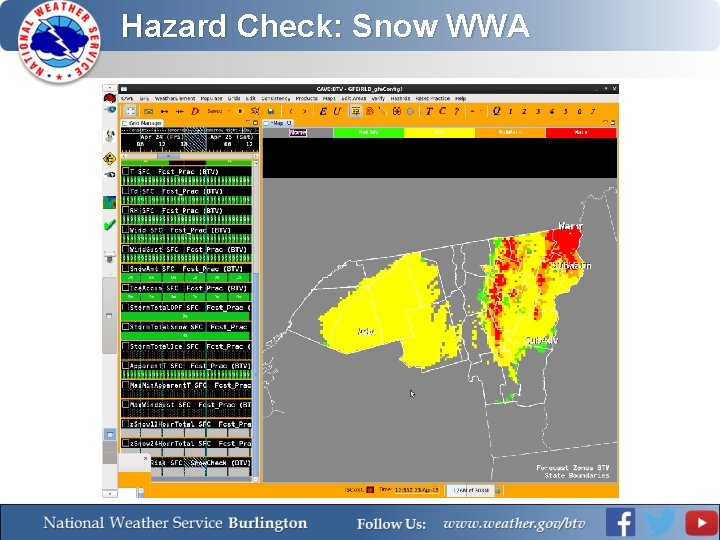
Hazard Check: Snow WWA
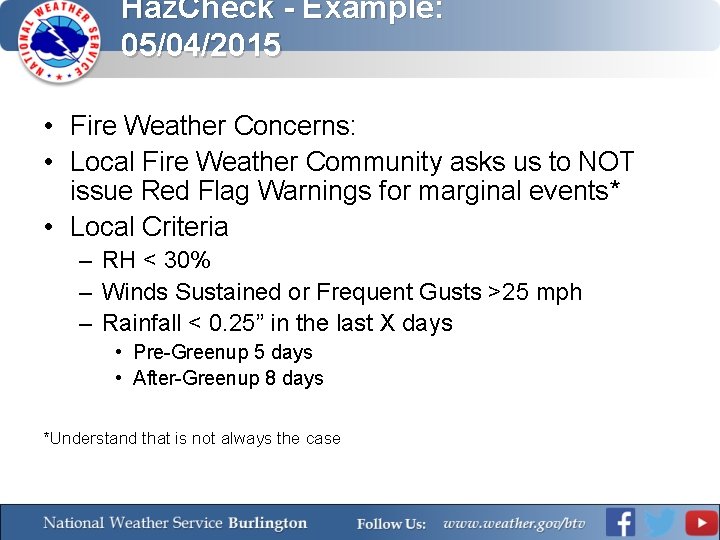
Haz. Check - Example: 05/04/2015 • Fire Weather Concerns: • Local Fire Weather Community asks us to NOT issue Red Flag Warnings for marginal events* • Local Criteria – RH < 30% – Winds Sustained or Frequent Gusts >25 mph – Rainfall < 0. 25” in the last X days • Pre-Greenup 5 days • After-Greenup 8 days *Understand that is not always the case
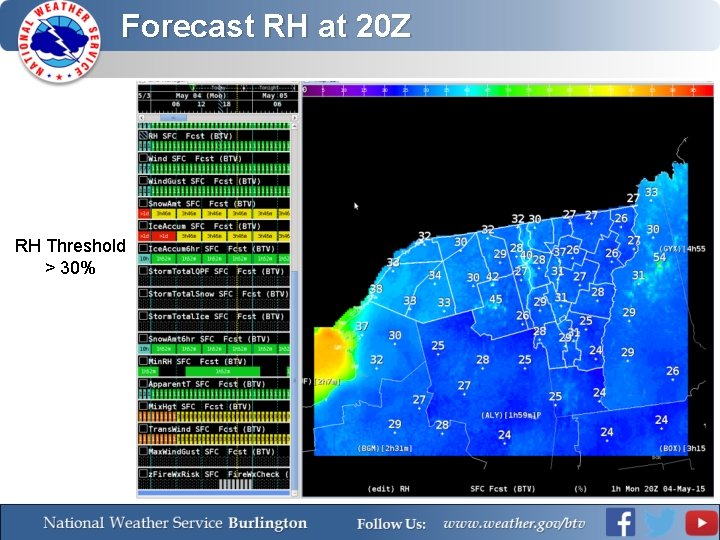
Forecast RH at 20 Z RH Threshold > 30%
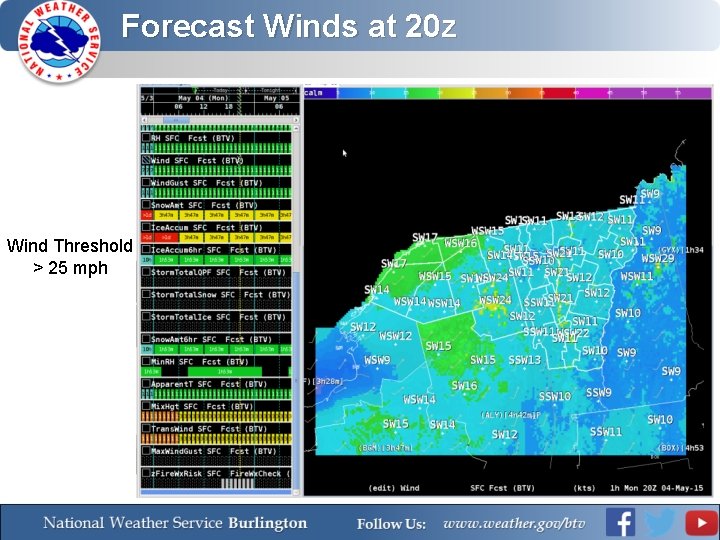
Forecast Winds at 20 z Wind Threshold > 25 mph
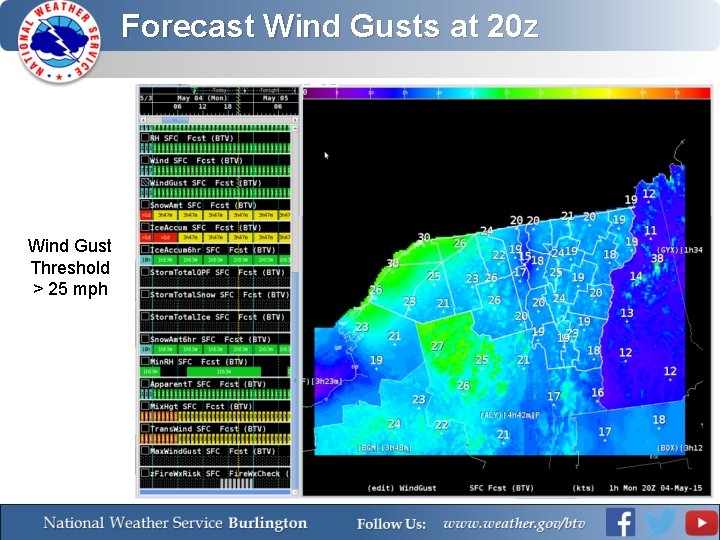
Forecast Wind Gusts at 20 z Wind Gust Threshold > 25 mph
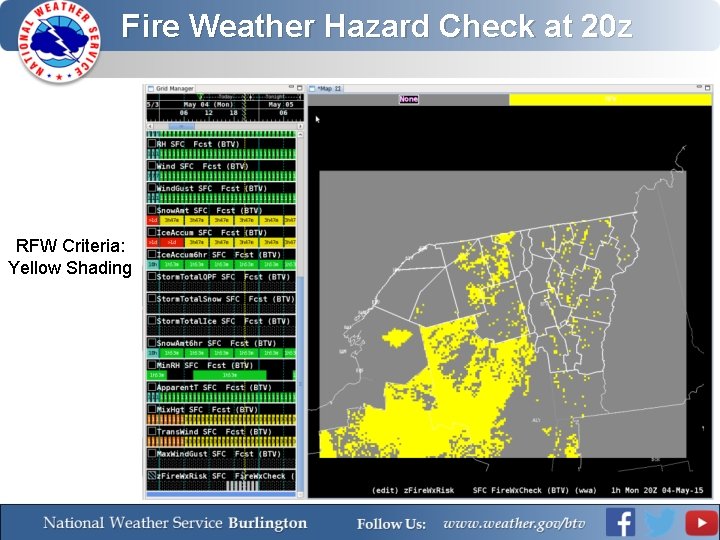
Fire Weather Hazard Check at 20 z RFW Criteria: Yellow Shading
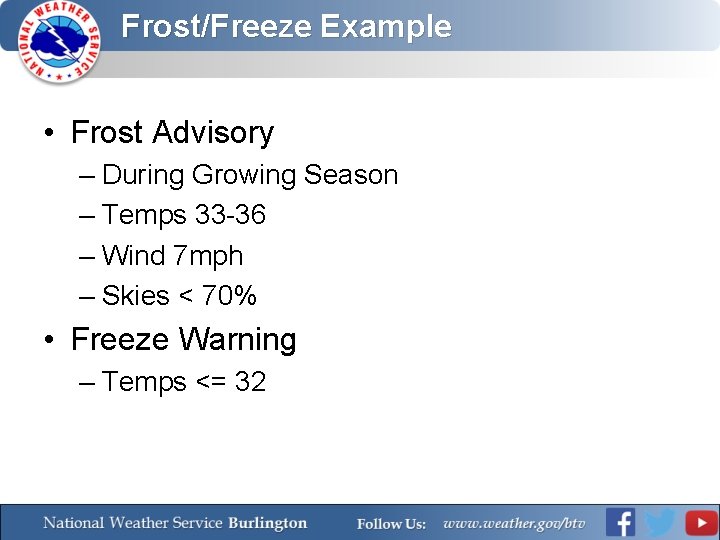
Frost/Freeze Example • Frost Advisory – During Growing Season – Temps 33 -36 – Wind 7 mph – Skies < 70% • Freeze Warning – Temps <= 32
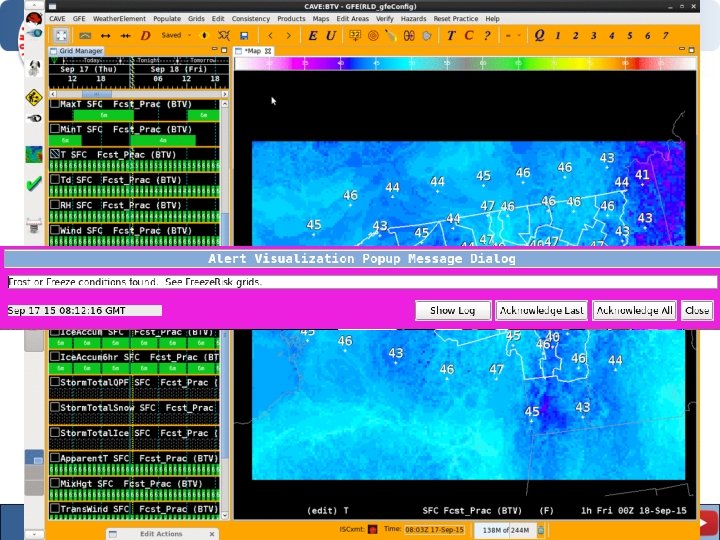
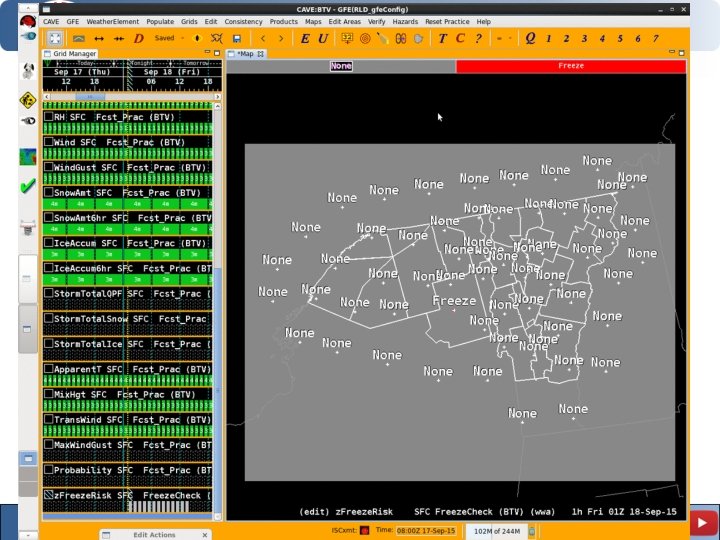
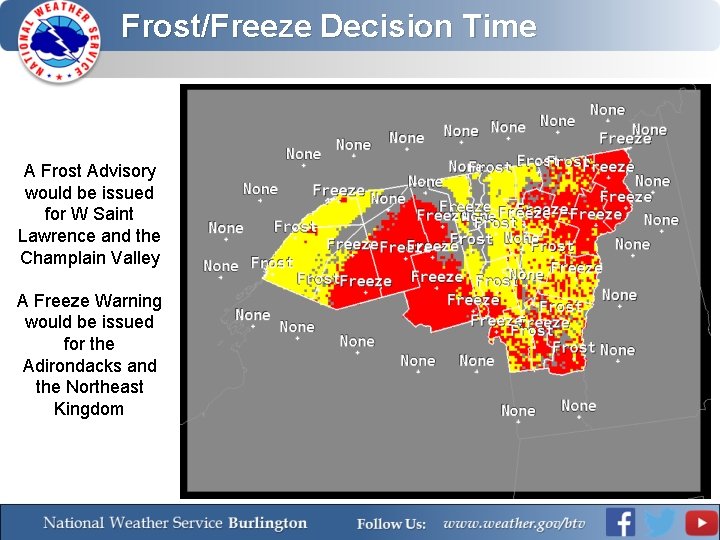
Frost/Freeze Decision Time A Frost Advisory would be issued for W Saint Lawrence and the Champlain Valley A Freeze Warning would be issued for the Adirondacks and the Northeast Kingdom
Hazard Check - Summary • Allows a forecaster to quickly view both spatially and temporarily where gridded forecasts support hazard issuance • Can be run on Local CWA or ISC • Helps determine exact starting/end points for hazard headlines • Useful in crossover advisory-> warning time periods.
Other Additional Useful Smart Tools* • We’ve started using Smart tools to create on the fly ensembles – Po. P_fm_Model_Reflectivity – Po. P_Percentof. Models – Po. P_fm_QPFBlender – Sky_fm_Model. Clouds – Convective. Wx – Snow_fm_Model. Ratio
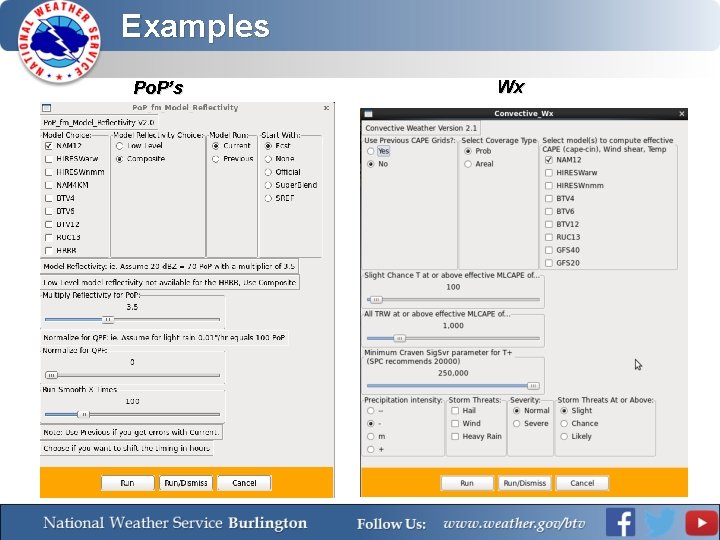
Examples Po. P’s Wx
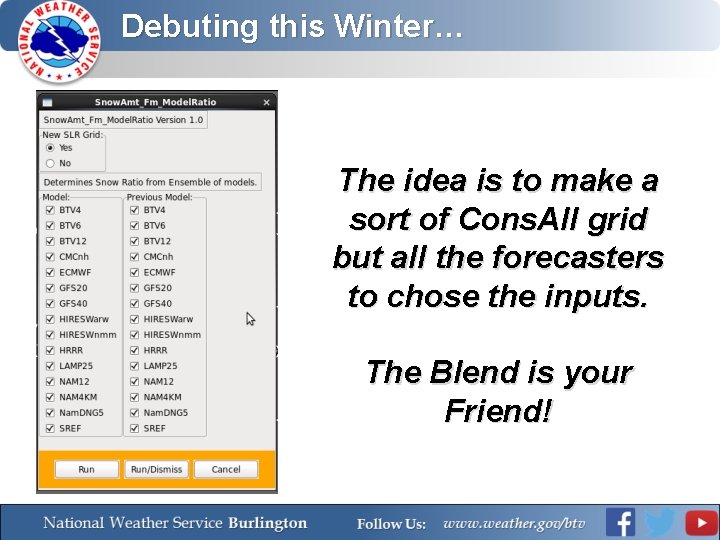
Debuting this Winter… The idea is to make a sort of Cons. All grid but all the forecasters to chose the inputs. The Blend is your Friend!
• Questions?
- Slides: 31