
Probability 6 4 1 2 Determine the probability
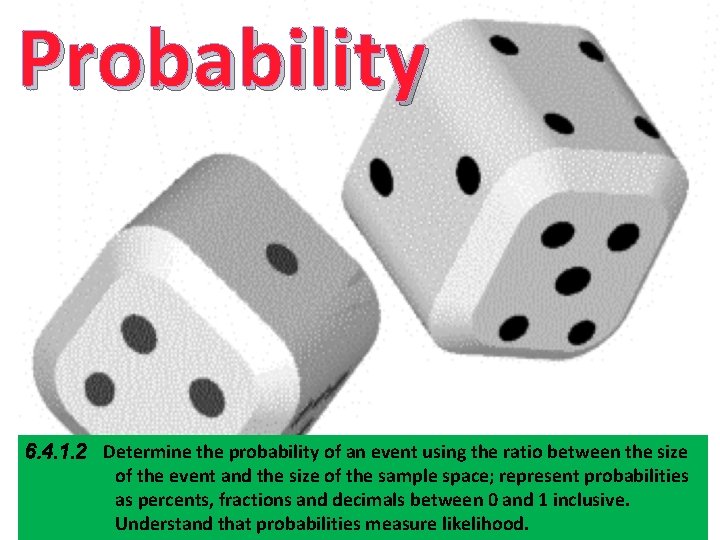
Probability 6. 4. 1. 2 Determine the probability of an event using the ratio between the size of the event and the size of the sample space; represent probabilities as percents, fractions and decimals between 0 and 1 inclusive. Understand that probabilities measure likelihood.
I can… • Determine the probability of an event using the ratio between the size of the event and the size of the sample space • Represent probabilities as percents, fractions, Self and decimals between 0 and Assessment 5 - 1 I can do it without help & teach others. 4 - I can do this with no help, but I don’t know if I can explain it. 3 - I can do this with a little help. 2 - I can do this with a lot of help! 1 - I don’t have a clue.
Probability • a measure of how likely an event is to occur. • For example – – Today there is a 60% chance of rain. – The odds of winning the lottery are a million to one. – What are some examples you can think of?
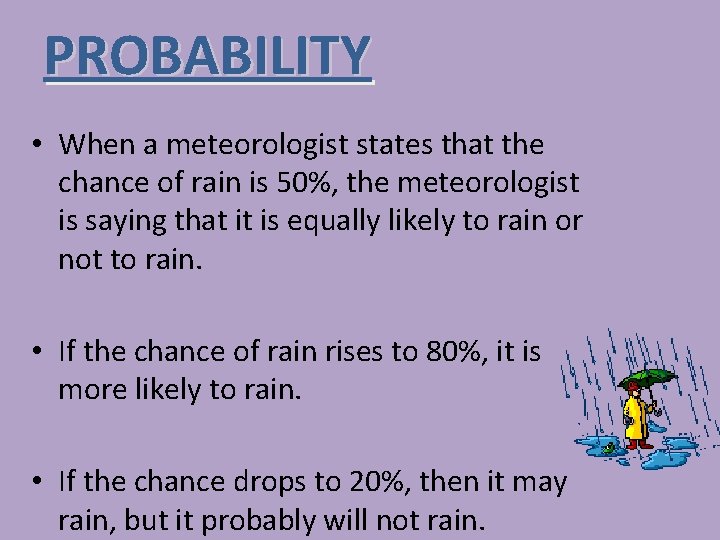
PROBABILITY • When a meteorologist states that the chance of rain is 50%, the meteorologist is saying that it is equally likely to rain or not to rain. • If the chance of rain rises to 80%, it is more likely to rain. • If the chance drops to 20%, then it may rain, but it probably will not rain.
Probability • What are some events that will never happen and have a probability of 0%? • What are some events that are certain to happen and have a probability of 100%? • What are some events that have equal chances of happening and have a probability of 50%?
Probability • The probability of an event is written: P(event) = number of ways event can occur total number of outcomes
Probability P(event) = number of ways event can occur total number of outcomes • An outcome is a possible result of a probability experiment • When rolling a number cube, the possible outcomes are 1, 2, 3, 4, 5, and 6
Probability P(event) = number of ways event can occur total number of outcomes • An event is a specific result of a probability experiment When rolling a number cube, the event of rolling an even number is 3 (you could roll a 2, 4 or 6)
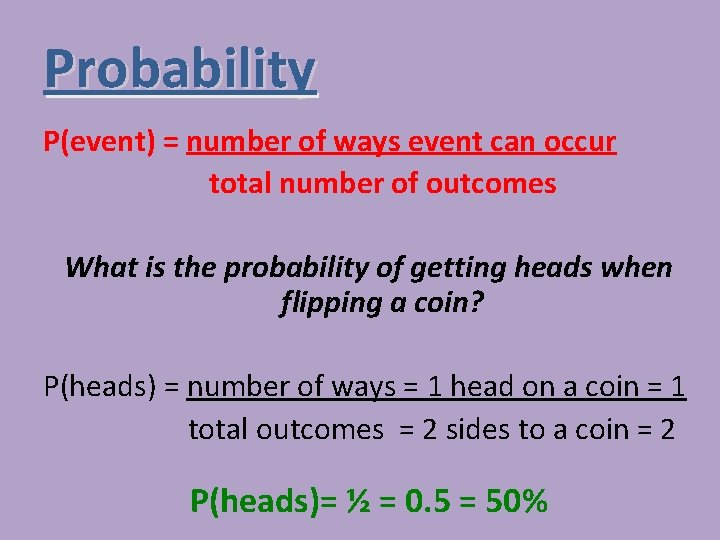
Probability P(event) = number of ways event can occur total number of outcomes What is the probability of getting heads when flipping a coin? P(heads) = number of ways = 1 head on a coin = 1 total outcomes = 2 sides to a coin = 2 P(heads)= ½ = 0. 5 = 50%
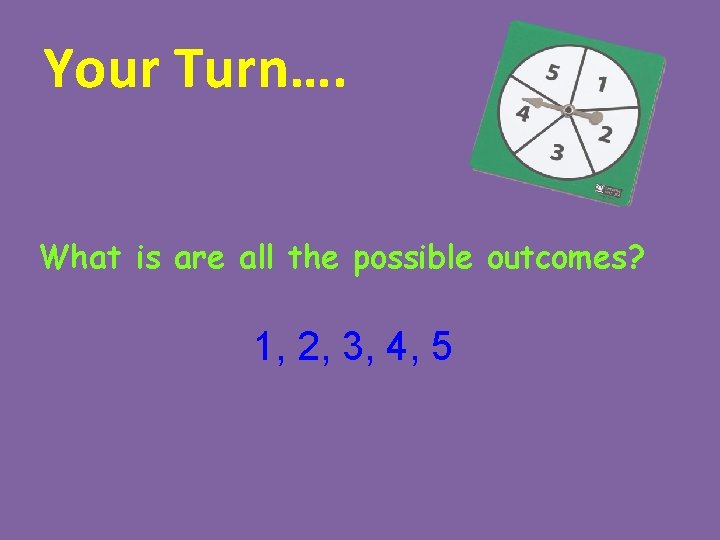
Your Turn…. What is are all the possible outcomes? 1, 2, 3, 4, 5
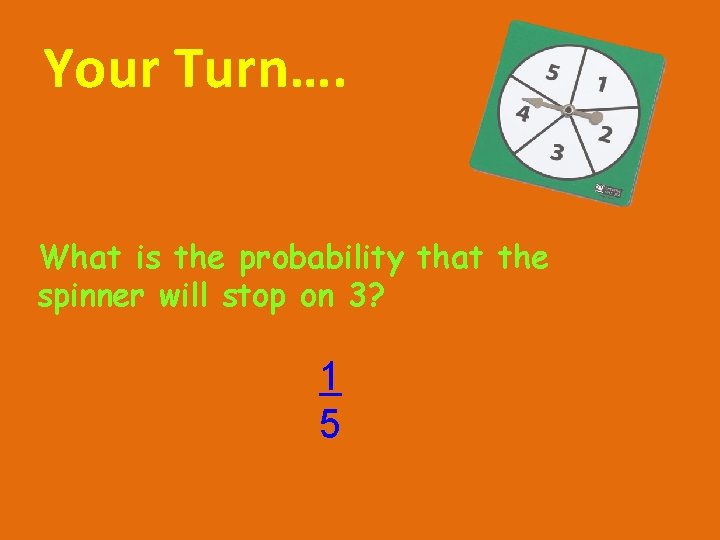
Your Turn…. What is the probability that the spinner will stop on 3? 1 5
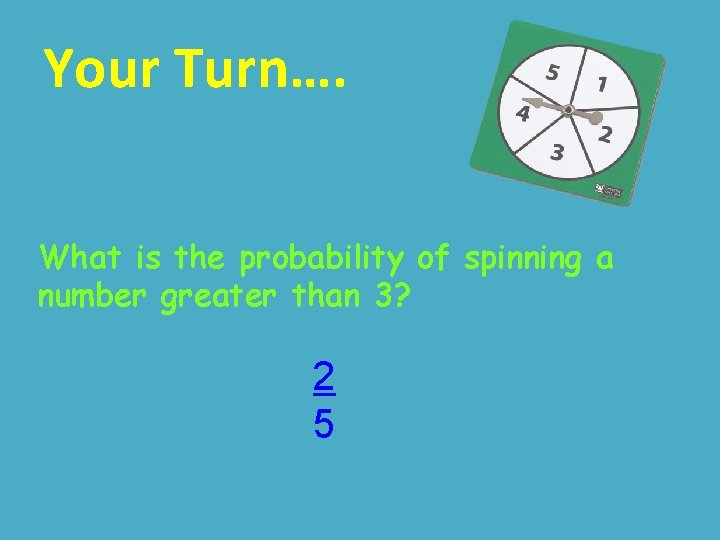
Your Turn…. What is the probability of spinning a number greater than 3? 2 5
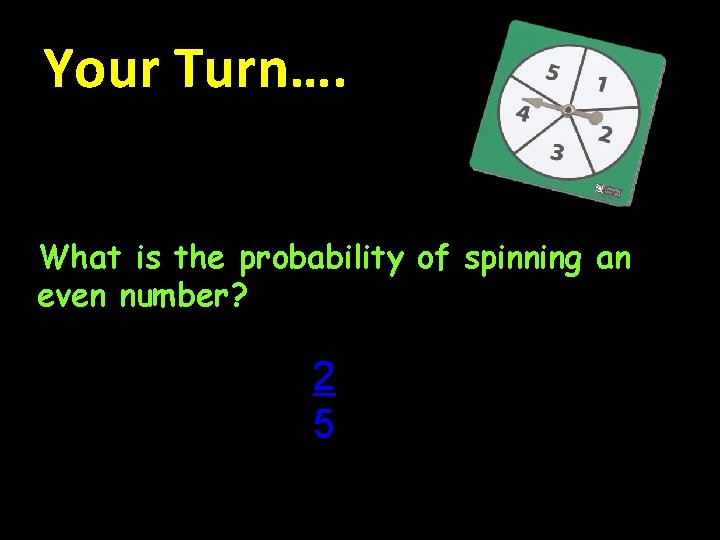
Your Turn…. What is the probability of spinning an even number? 2 5
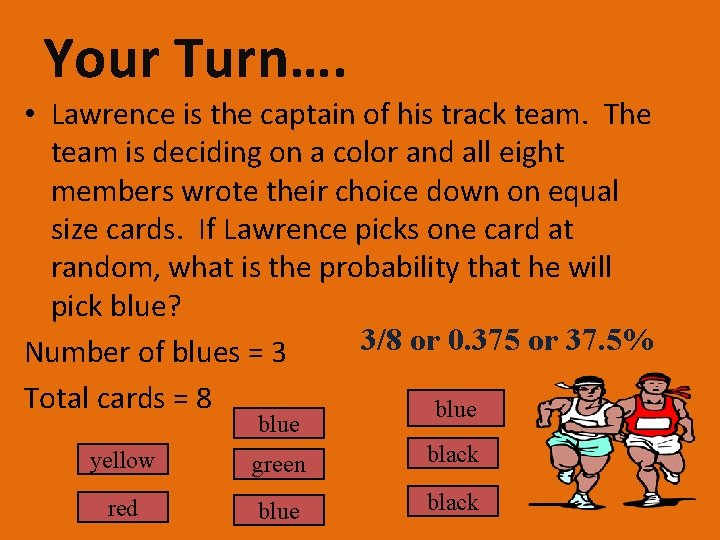
Your Turn…. • Lawrence is the captain of his track team. The team is deciding on a color and all eight members wrote their choice down on equal size cards. If Lawrence picks one card at random, what is the probability that he will pick blue? 3/8 or 0. 375 or 37. 5% Number of blues = 3 Total cards = 8 blue yellow green black red blue black
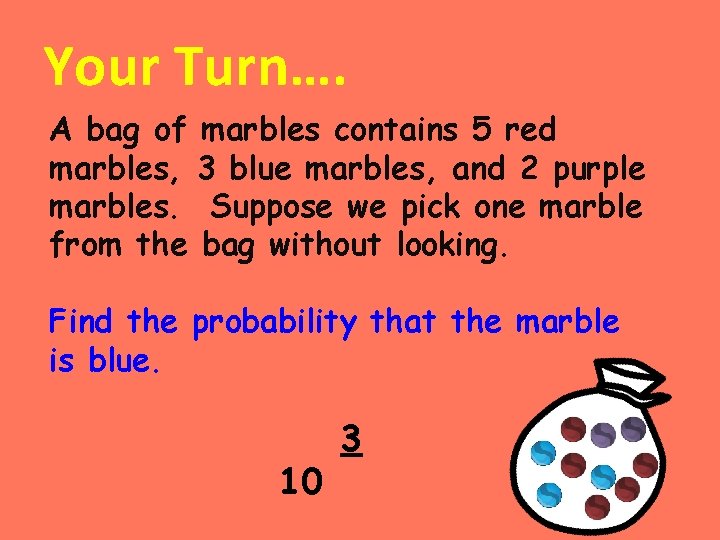
Your Turn…. A bag of marbles contains 5 red marbles, 3 blue marbles, and 2 purple marbles. Suppose we pick one marble from the bag without looking. Find the probability that the marble is blue. 10 3
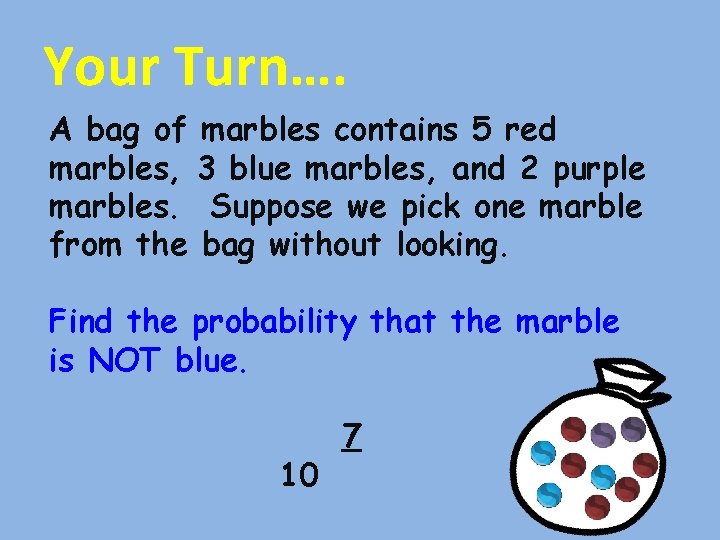
Your Turn…. A bag of marbles contains 5 red marbles, 3 blue marbles, and 2 purple marbles. Suppose we pick one marble from the bag without looking. Find the probability that the marble is NOT blue. 10 7
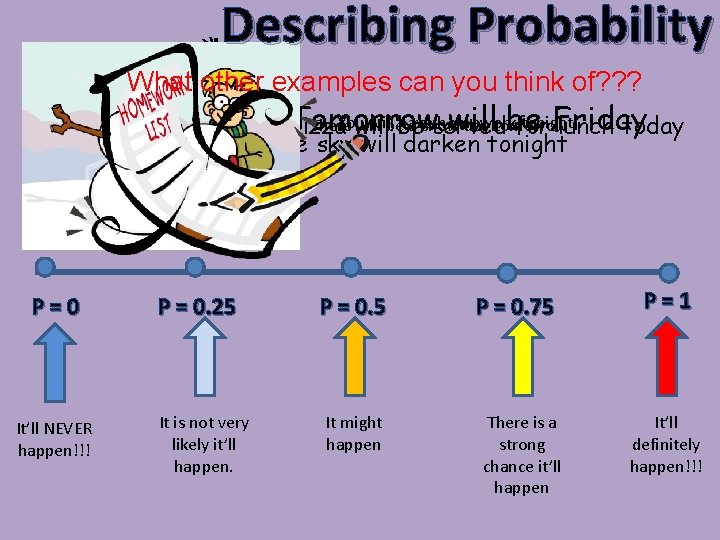
Describing Probability What other examples can you think of? ? ? You willbebe have homework tonight Tomorrow will be Friday There will a snow day tomorrow Pizza will served for lunch today The sky will darken tonight P=0 It’ll NEVER happen!!! P = 0. 25 It is not very likely it’ll happen. P = 0. 5 It might happen P = 0. 75 There is a strong chance it’ll happen P=1 It’ll definitely happen!!!
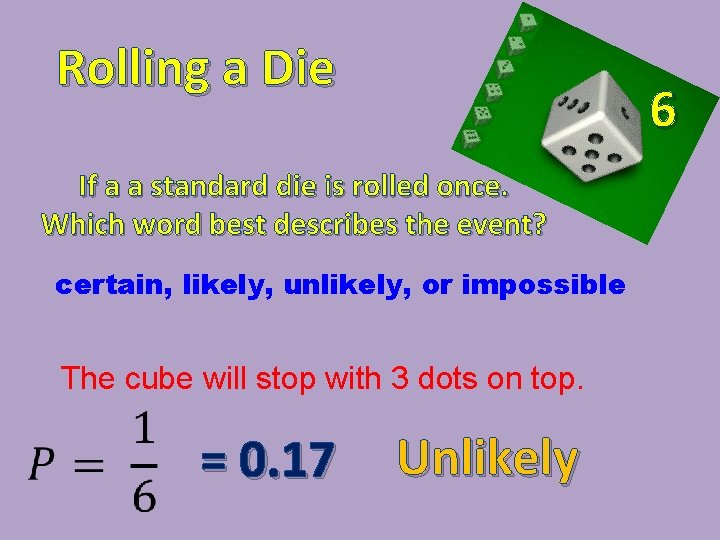
Rolling a Die 6 If a a standard die is rolled once. Which word best describes the event? certain, likely, unlikely, or impossible The cube will stop with 3 dots on top. = 0. 17 Unlikely
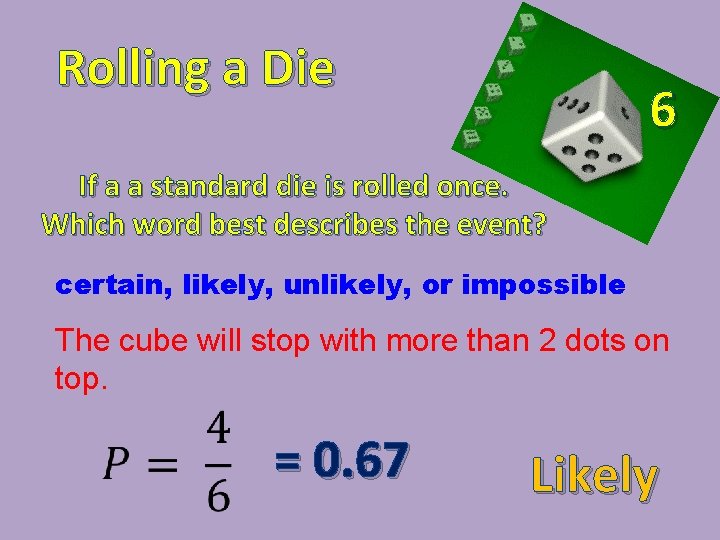
Rolling a Die 6 If a a standard die is rolled once. Which word best describes the event? certain, likely, unlikely, or impossible The cube will stop with more than 2 dots on top. = 0. 67 Likely
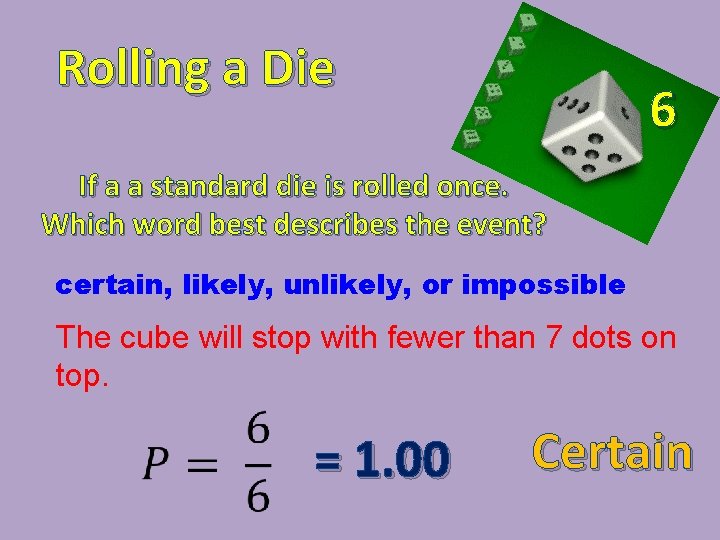
Rolling a Die 6 If a a standard die is rolled once. Which word best describes the event? certain, likely, unlikely, or impossible The cube will stop with fewer than 7 dots on top. = 1. 00 Certain
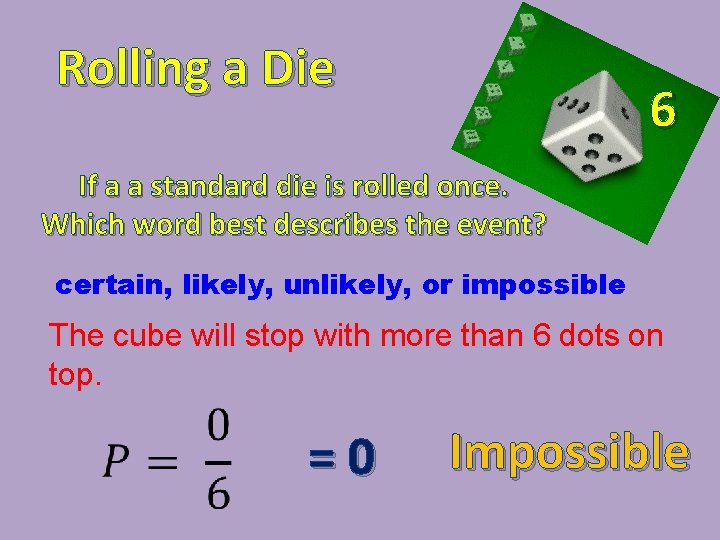
Rolling a Die 6 If a a standard die is rolled once. Which word best describes the event? certain, likely, unlikely, or impossible The cube will stop with more than 6 dots on top. =0 Impossible
Experimental Probability Data is collected through observations or experiments. Each result from the experiment is called an event. The probability of an event is equal to the number of times an event occurs divided by the total number of experiments. P (event) = Number of times an event occurs Total number of experiments
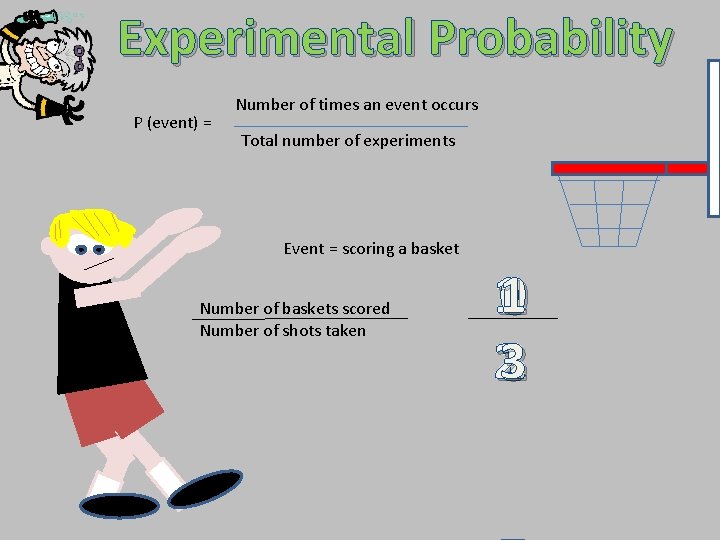
Experimental Probability P (event) = Number of times an event occurs Total number of experiments Event = scoring a basket Number of baskets scored Number of shots taken 11 0 23 1
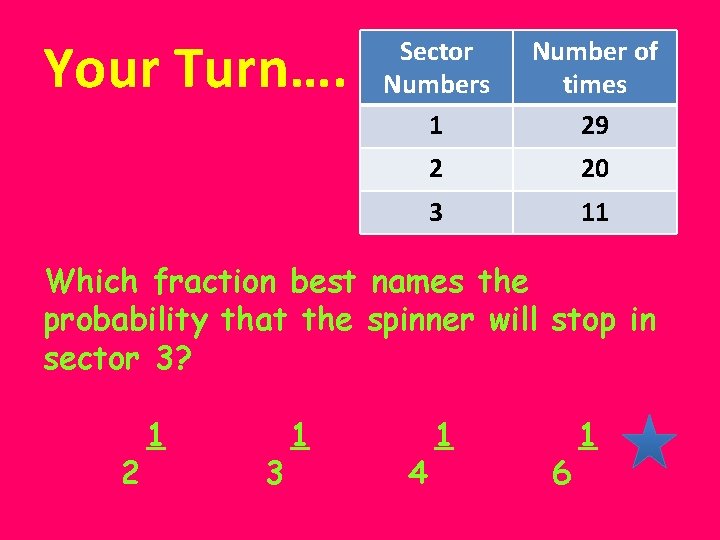
Your Turn…. Sector Numbers 1 Number of times 29 2 20 3 11 Which fraction best names the probability that the spinner will stop in sector 3? 2 1 3 1 4 1 6 1
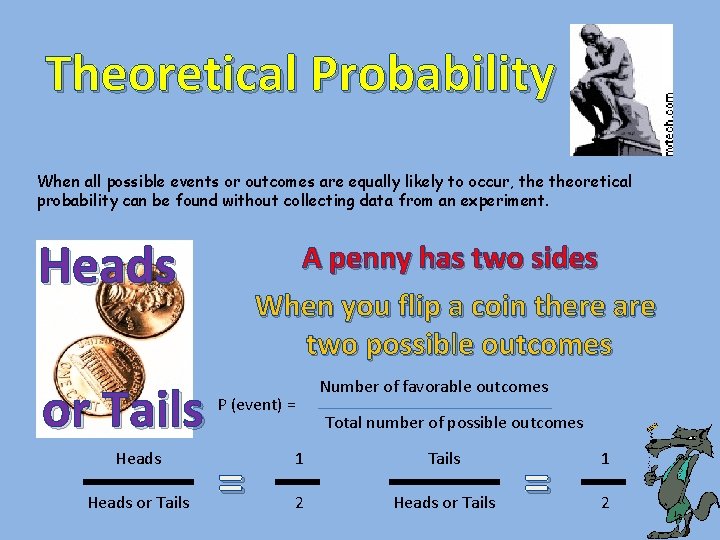
Theoretical Probability When all possible events or outcomes are equally likely to occur, theoretical probability can be found without collecting data from an experiment. Heads or Tails A penny has two sides When you flip a coin there are two possible outcomes P (event) = = Number of favorable outcomes Total number of possible outcomes 1 Tails 2 Heads or Tails = 1 2
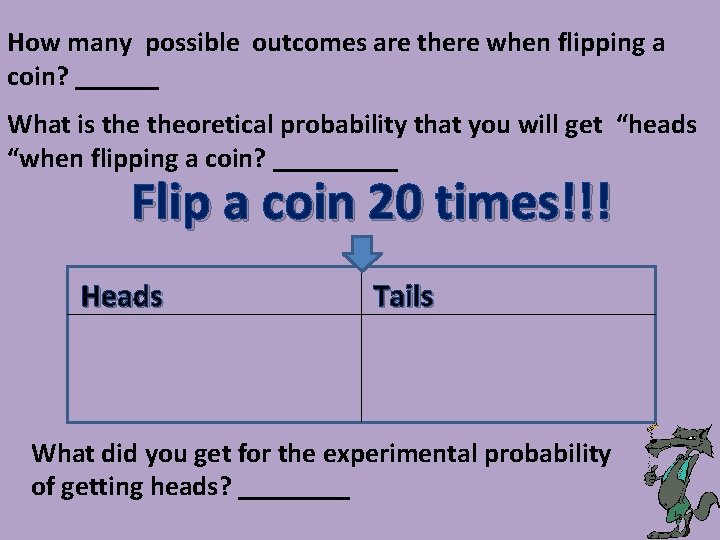
How many possible outcomes are there when flipping a coin? ______ What is theoretical probability that you will get “heads “when flipping a coin? _____ Flip a coin 20 times!!! Heads Tails What did you get for the experimental probability of getting heads? ____
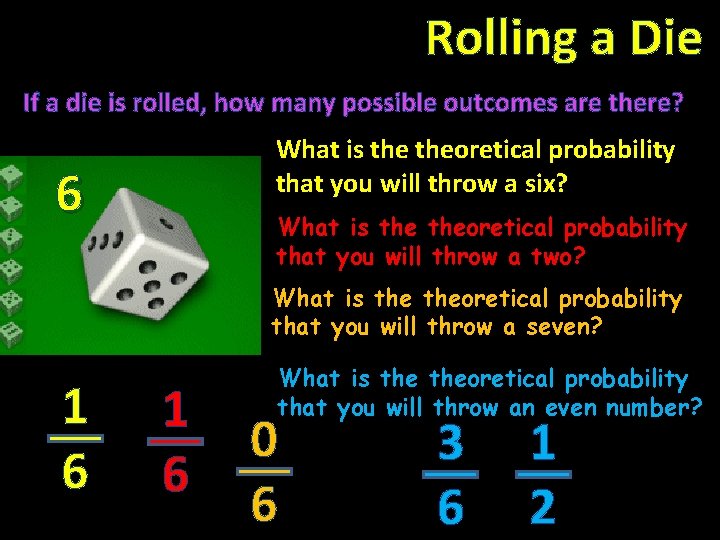
Rolling a Die If a die is rolled, how many possible outcomes are there? What is theoretical probability that you will throw a six? 6 What is theoretical probability that you will throw a two? What is theoretical probability that you will throw a seven? 1 6 What is theoretical probability that you will throw an even number? 0 6 3 6 1 2
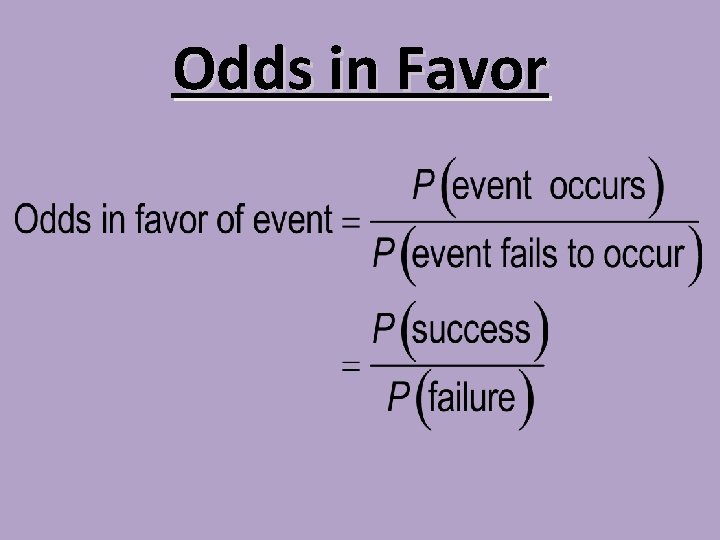
Odds in Favor
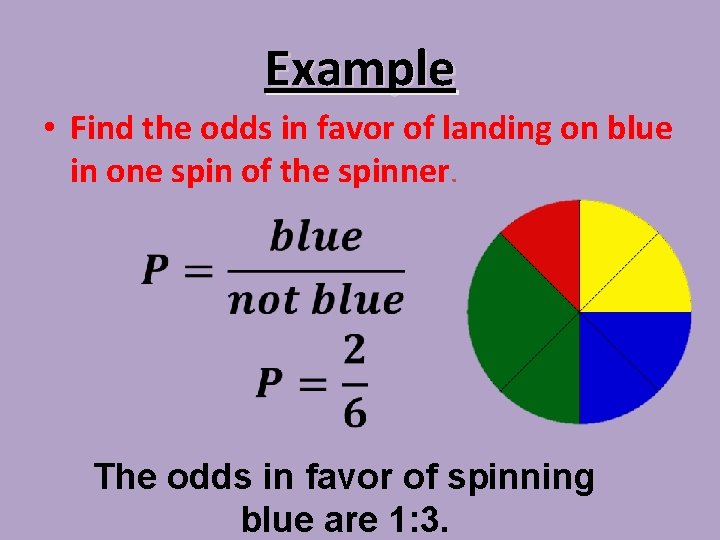
Example • Find the odds in favor of landing on blue in one spin of the spinner. The odds in favor of spinning blue are 1: 3.
I can… • Determine the probability of an event using the ratio between the size of the event and the size of the sample space • Represent probabilities as percents, fractions, Self and decimals between 0 and Assessment 5 - 1 I can do it without help & teach others. 4 - I can do this with no help, but I don’t know if I can explain it. 3 - I can do this with a little help. 2 - I can do this with a lot of help! 1 - I don’t have a clue.
- Slides: 30