
Proactive vs Reactive Safety Reporting What You Can


- Slides: 29
Proactive vs. Reactive Safety Reporting What You Can Do Before It Becomes an Investigation Becky Herrold, PHR, SHRM-CP Safety Manager, Mc. Neilus Steel, Inc. 2016
A little about myself… Mc. Neilus Steel, Inc. 2016
Find 3 people in the room you do not know. Share: üName üCompany üTitle/Role üHow long worked in Safety üWhy are you here in this course? Let’s get to know each other…. Mc. Neilus Steel, Inc. 2016
Raise your hand if you: Track injuries Track property damage and costs associated Track near misses or close calls Track hazards and action taken to correct them How many have you heard Safety is going to slow down Production? ? Mc. Neilus Steel, Inc. 2016
What do you think? ? Is the average cost of an injury? https: //www. osha. gov/dcsp/smallbusiness/safetypays/estimator. html Mc. Neilus Steel, Inc. 2016
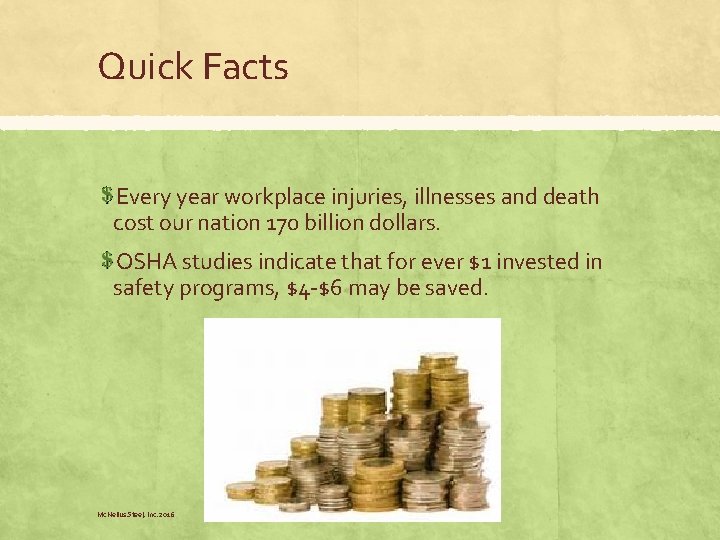
Quick Facts Every year workplace injuries, illnesses and death cost our nation 170 billion dollars. OSHA studies indicate that for ever $1 invested in safety programs, $4 -$6 may be saved. Mc. Neilus Steel, Inc. 2016
So what’s the difference? ? The term reactive can be defined as being responsive to something. A person who is reactive usually responds to another, but does not act on himself Proactive refers to being prepared even before an incident takes place Mc. Neilus Steel, Inc. 2016
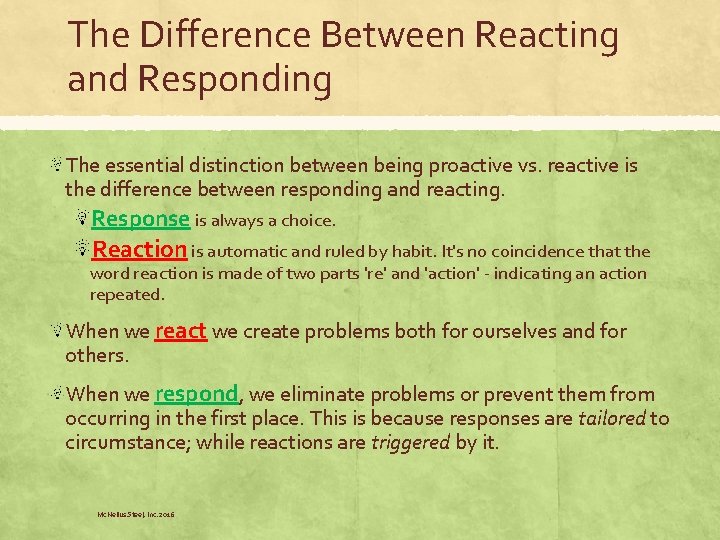
The Difference Between Reacting and Responding The essential distinction between being proactive vs. reactive is the difference between responding and reacting. Response is always a choice. Reaction is automatic and ruled by habit. It's no coincidence that the word reaction is made of two parts 're' and 'action' - indicating an action repeated. When we react we create problems both for ourselves and for others. When we respond, we eliminate problems or prevent them from occurring in the first place. This is because responses are tailored to circumstance; while reactions are triggered by it. Mc. Neilus Steel, Inc. 2016
Do you ever feel this way in Safety? Mc. Neilus Steel, Inc. 2016
Keys to Success 1. Management commitment and more importantly SUPPORT 2. 3. 4. 5. Supervisor/Leader accountability Establish baseline trends Start with the basics – build off successes Establish a Scorecard comparing location/departments/work areas to the industry average – Build upon the scorecard 6. KISS – Keep it Simple Silly 7. COMMUNICATE 8. Remain positive Mc. Neilus Steel, Inc. 2016
Management Commitment Walk the Talk Follow through – Top Management NEEDS to hold supervisors accountable to meet goals Empower Safety and Supervisors to ensure corrective action is completed Allows Safety the time needed to promote and reinforce Proactive concepts Supporting the importance of Safety as a core value – Knowing that without Safety – Production cannot be successful Mc. Neilus Steel, Inc. 2016
Supervisor/Leadership Accountability Include in decision making processes (to a point) Consider their concerns when implementing corrective action Provide with information – trends/data analysis (facts) Provide tools to encourage reporting such as: Cell phones Cameras Email Text Invite challenges and consider win-win approaches Know that someone will always disagree but look for solutions that will benefit ALL Know when to concede Sometimes the end result is not worth the battle Encourage mutual respect among leadership Can’t build a new culture if the leadership group is not on the same page Respect each leader’s function for their expertise and contribution to the overall bottom Mc. Neilus Steel, Inc. 2016 line
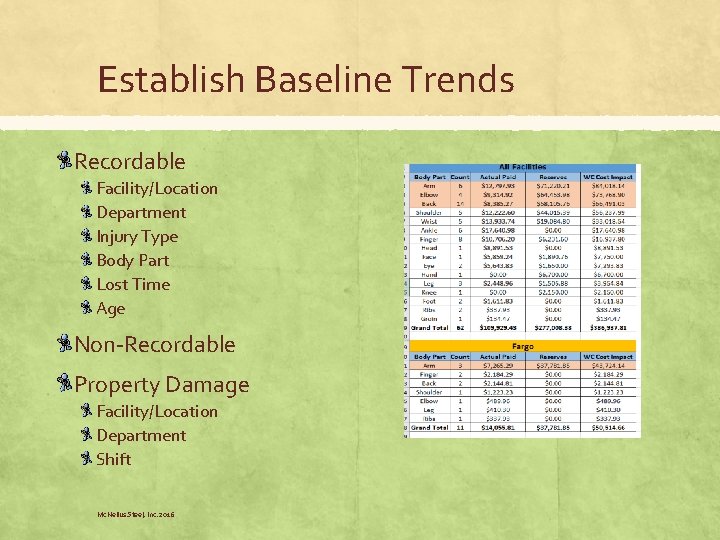
Establish Baseline Trends Recordable Facility/Location Department Injury Type Body Part Lost Time Age Non-Recordable Property Damage Facility/Location Department Shift Mc. Neilus Steel, Inc. 2016
Report Management Excel works as a good base – but once the progress begins it will become more timeconsuming to cross reference data Implement RMIS Check with insurance company Loss Control Consultant Software companies Mc. Neilus Steel, Inc. 2016
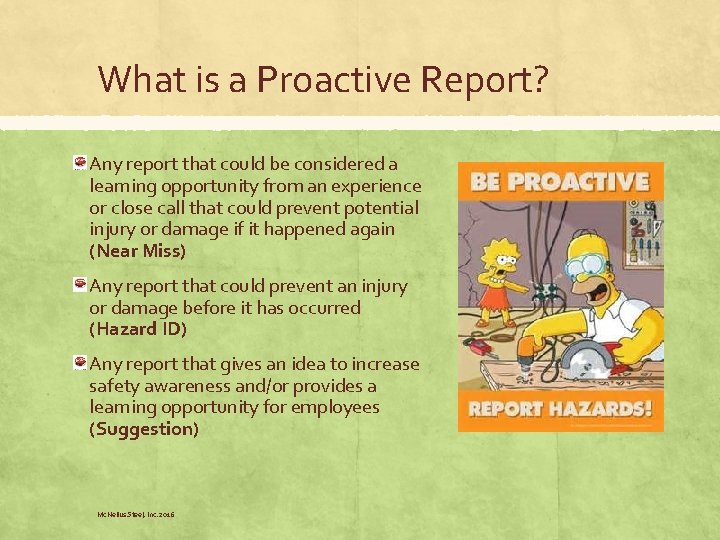
What is a Proactive Report? Any report that could be considered a learning opportunity from an experience or close call that could prevent potential injury or damage if it happened again (Near Miss) Any report that could prevent an injury or damage before it has occurred (Hazard ID) Any report that gives an idea to increase safety awareness and/or provides a learning opportunity for employees (Suggestion) Mc. Neilus Steel, Inc. 2016
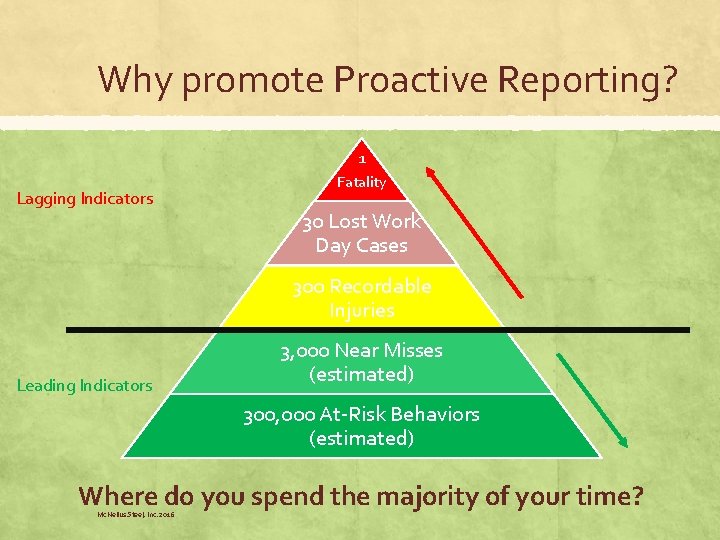
Why promote Proactive Reporting? Lagging Indicators 1 Fatality 30 Lost Work Day Cases 300 Recordable Injuries Leading Indicators 3, 000 Near Misses (estimated) 300, 000 At-Risk Behaviors (estimated) Where do you spend the majority of your time? Mc. Neilus Steel, Inc. 2016
Proactive Reporting Success Tips No punitive system Provide incentives based on proactive reports Take action with reports Explain reason for inaction Communicate Ask for feedback Talk about changes implemented from reporting Communicate Don't neglect frequent injuries even if in non hazardous areas Encourage early reporting - especially ergo issues Encourage quality of life at work and outside of work Communicate Mc. Neilus Steel, Inc. 2016
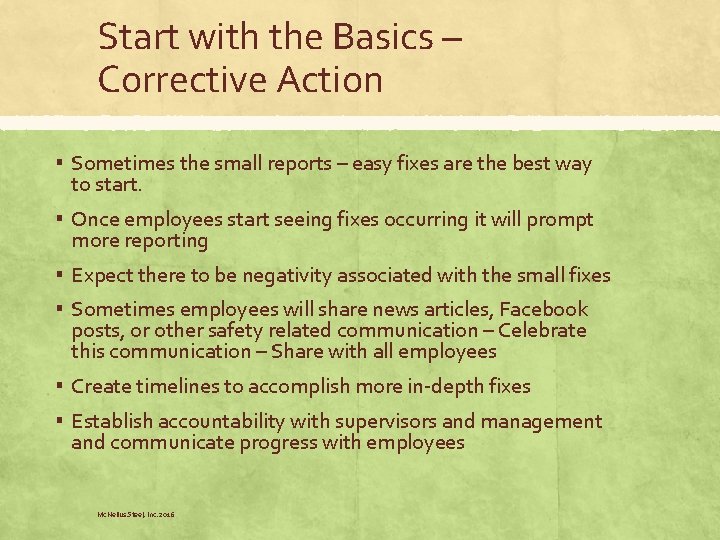
Start with the Basics – Corrective Action ▪ Sometimes the small reports – easy fixes are the best way to start. ▪ Once employees start seeing fixes occurring it will prompt more reporting ▪ Expect there to be negativity associated with the small fixes ▪ Sometimes employees will share news articles, Facebook posts, or other safety related communication – Celebrate this communication – Share with all employees ▪ Create timelines to accomplish more in-depth fixes ▪ Establish accountability with supervisors and management and communicate progress with employees Mc. Neilus Steel, Inc. 2016
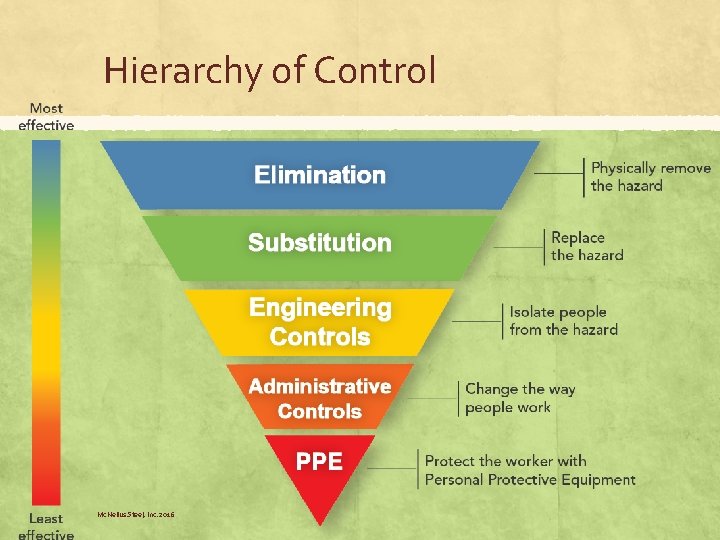
Hierarchy of Control Mc. Neilus Steel, Inc. 2016
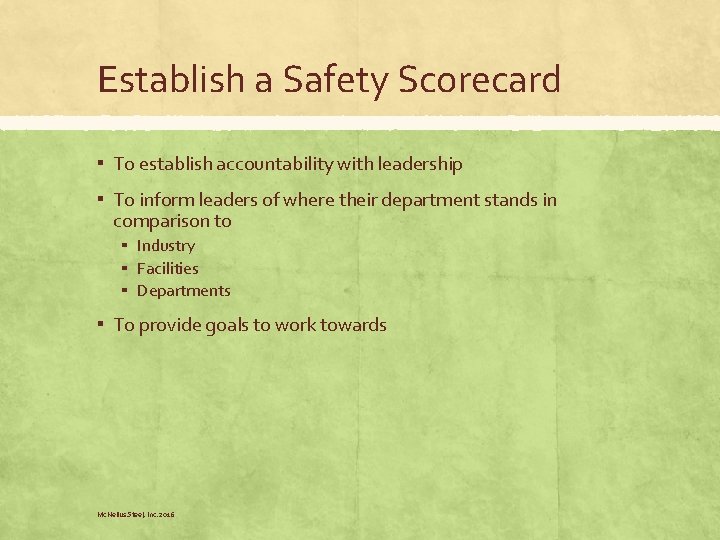
Establish a Safety Scorecard ▪ To establish accountability with leadership ▪ To inform leaders of where their department stands in comparison to ▪ Industry ▪ Facilities ▪ Departments ▪ To provide goals to work towards Mc. Neilus Steel, Inc. 2016
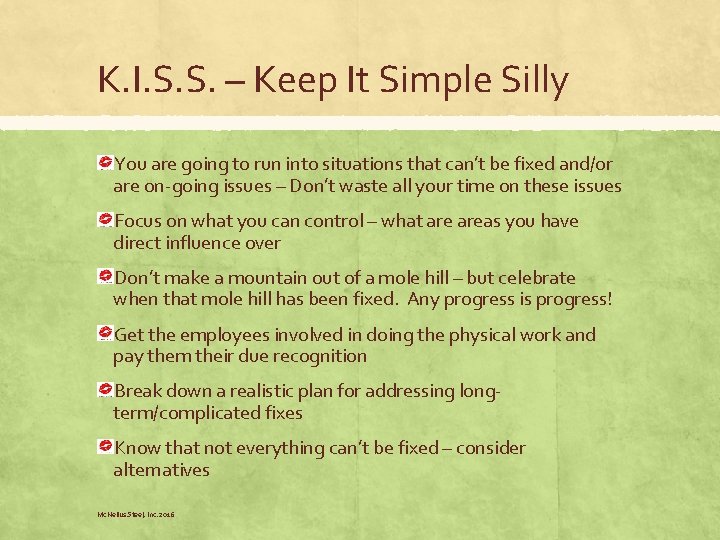
K. I. S. S. – Keep It Simple Silly You are going to run into situations that can’t be fixed and/or are on-going issues – Don’t waste all your time on these issues Focus on what you can control – what areas you have direct influence over Don’t make a mountain out of a mole hill – but celebrate when that mole hill has been fixed. Any progress is progress! Get the employees involved in doing the physical work and pay them their due recognition Break down a realistic plan for addressing longterm/complicated fixes Know that not everything can’t be fixed – consider alternatives Mc. Neilus Steel, Inc. 2016
COMMUNICATE!!! Employees won’t know if their reporting is effective if you don’t tell them. Respond to ALL safety reports – no matter the size or importance The response needs to be timely and brief (to the point) Know that when you communicate there may not be a resolution YET – but when you talk to them you are reassuring them it is on the TO DO list. Bring leaders together (quarterly or semi-annually) to discuss progress and areas for improvement Schedule individual meetings with employees and leaders when necessary to better understand behaviors Allow employees and leaders to talk – sometimes employees just need someone to “lend an ear” to feel like they are being heard Mc. Neilus Steel, Inc. 2016
Remain Positive Safety tends to focus on the negative Injuries Damages Corrective Action Inspections Compliance Behavioral Trigger positive thinking through Observations Leadership Workforce Focus on what we are doing right Positive Recognition End every safety meeting on a Positive Note Incentives Drawings Mc. Neilus Steel, Inc. 2016 Giveaways
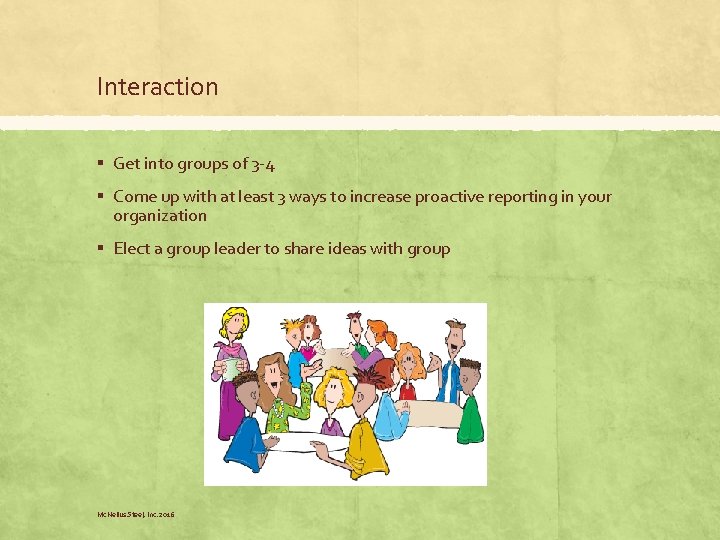
Interaction ▪ Get into groups of 3 -4 ▪ Come up with at least 3 ways to increase proactive reporting in your organization ▪ Elect a group leader to share ideas with group Mc. Neilus Steel, Inc. 2016
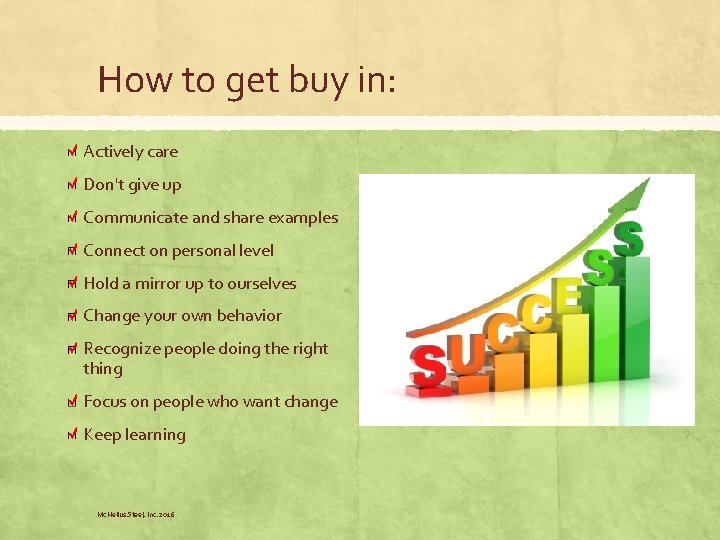
How to get buy in: Actively care Don't give up Communicate and share examples Connect on personal level Hold a mirror up to ourselves Change your own behavior Recognize people doing the right thing Focus on people who want change Keep learning Mc. Neilus Steel, Inc. 2016
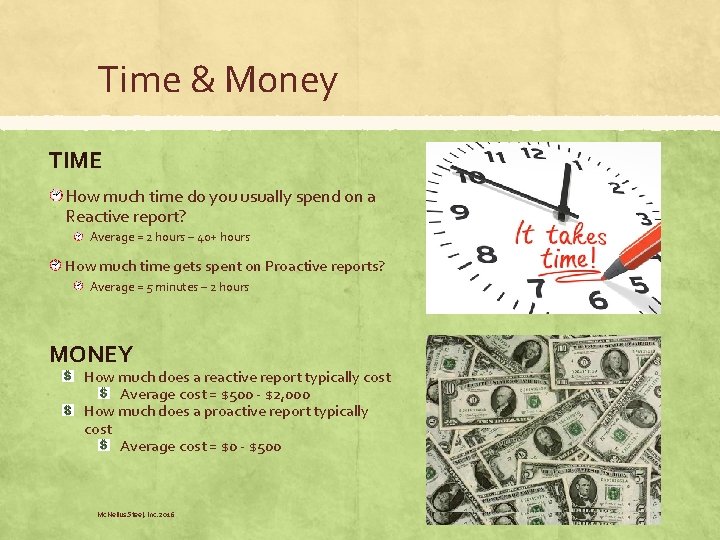
Time & Money TIME How much time do you usually spend on a Reactive report? Average = 2 hours – 40+ hours How much time gets spent on Proactive reports? Average = 5 minutes – 2 hours MONEY How much does a reactive report typically cost Average cost = $500 - $2, 000 How much does a proactive report typically cost Average cost = $0 - $500 Mc. Neilus Steel, Inc. 2016
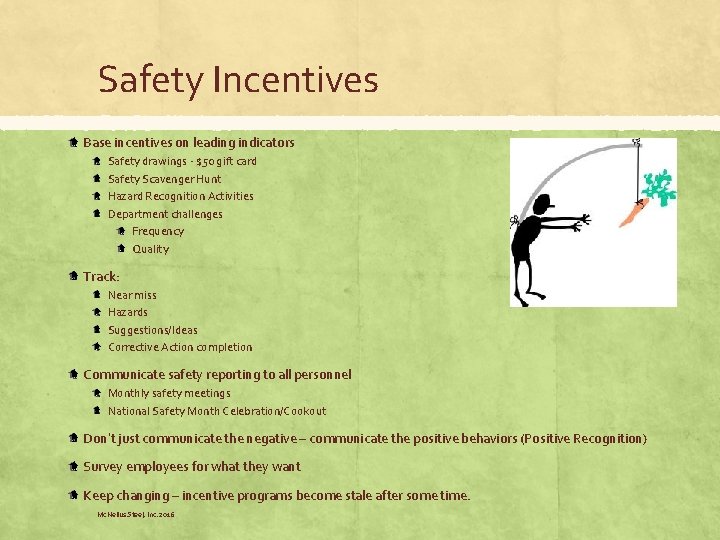
Safety Incentives Base incentives on leading indicators Safety drawings - $50 gift card Safety Scavenger Hunt Hazard Recognition Activities Department challenges Frequency Quality Track: Near miss Hazards Suggestions/Ideas Corrective Action completion Communicate safety reporting to all personnel Monthly safety meetings National Safety Month Celebration/Cookout Don’t just communicate the negative – communicate the positive behaviors (Positive Recognition) Survey employees for what they want Keep changing – incentive programs become stale after some time. Mc. Neilus Steel, Inc. 2016
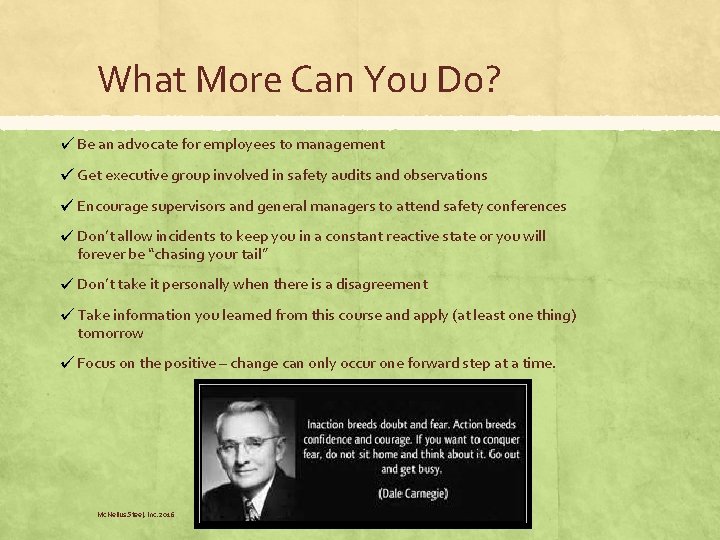
What More Can You Do? Be an advocate for employees to management Get executive group involved in safety audits and observations Encourage supervisors and general managers to attend safety conferences Don’t allow incidents to keep you in a constant reactive state or you will forever be “chasing your tail” Don’t take it personally when there is a disagreement Take information you learned from this course and apply (at least one thing) tomorrow Focus on the positive – change can only occur one forward step at a time. Mc. Neilus Steel, Inc. 2016
Thank you for your time and participation Mc. Neilus Steel, Inc. 2016