
Proactive Strategies Communication Strategies for Supporting Elementary Students
- Slides: 65
Proactive Strategies Communication Strategies for Supporting Elementary Students Sensory Social
Topics • Definition of Social Skills • Social Skills Challenges • Social Skills Development • Social Skills Instruction
Definition of Social Skills
Social Skills Defined “Socially acceptable learned behaviors that enable a student to interact with others in ways that elicit positive responses and assist the student in avoiding negative responses” (Elliott, Racine, & Busse, 1995, p. 1009).
What Are Social Skills? • Social skills are always present • Social rules differ based on culture and manners • Social skills are dynamic • Social expectations differ based on the context
It Takes Two • All parties involved in a social situation share responsibility • All parties may not have the same expectations • Assume everyone, including students with ASD, are doing the best they can with the information they have
It seems to me that if you want to make a friend, you would need to do something to get the person’s attention something to show them you would like to be their friend. I know this is how you make friends. But whenever I like someone and do something to let them know, hoping we might become friends, people say I demonstrate attention-seeking behaviors. And. . . They make is sound like bad behavior. Is it bad of me to want friends? We make friends. They demonstrate attention-seeking behaviors. Judy Endow, The Power of Words (2009)
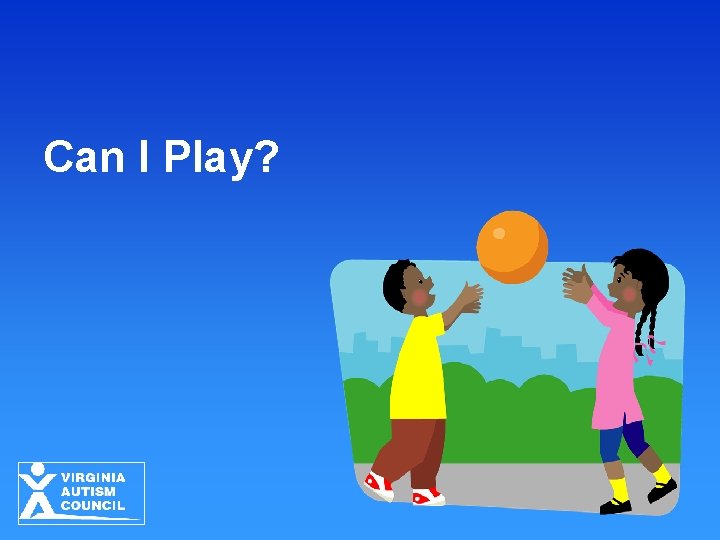
Can I Play?
Social Skill Challenges • Limited capacity to attend to others • Limited capacity to see a situation from another perspective
Friendships and Relationships Friendships are crucial to success in life for all. Not knowing how to make friends is NOT the same as not wanting friends.
Social Skill Challenges • Identifying emotions • Regulating emotions • Responding to emotions of others
Social Skill Challenges • Lack of responding to typical social reactions
Social Skill Challenges • The “do’s” and “don’ts” that govern our behavior, but are not spelled out • The skills, actions, ways of talking, or dressing that define a group • The social hierarchy
The Hidden Curriculum “The unwritten social rules that govern our behaviors in a variety of different contexts. ” (Myles, B. S. & Simpson, R. L. 2001).
Video The Hidden Curriculum: Teaching What Is Meaningful
Examples of ‘Hidden Curriculum’ Rules • What to do when you say hello to a close relative or friend at a funeral, in school, at work • How many times you should say hello to people you know in a day, in a setting, in an hour • What you should wear to work, school, church
Activity 1. As a group, read the social environment cards on your table. 2. Choose one; imagine that your team supports a student with ASD in that environment. 3. Think about the hidden curriculum rules for that environment. 4. List 4 to 5 hidden curriculum rules that the student with an ASD does not seem to know.
These challenges can lead to social isolation.
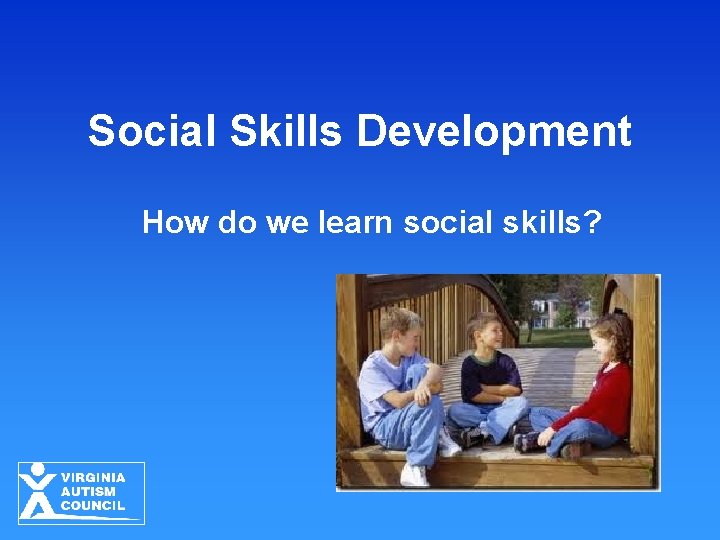
Social Skills Development How do we learn social skills?
What Helps Us Learn Social Skills? • Being with other people • Imitating • Responding to social reactions
Being with Other People Friendships are crucial to success in life for all. Not knowing how to make friends is NOT the same as not wanting friends.
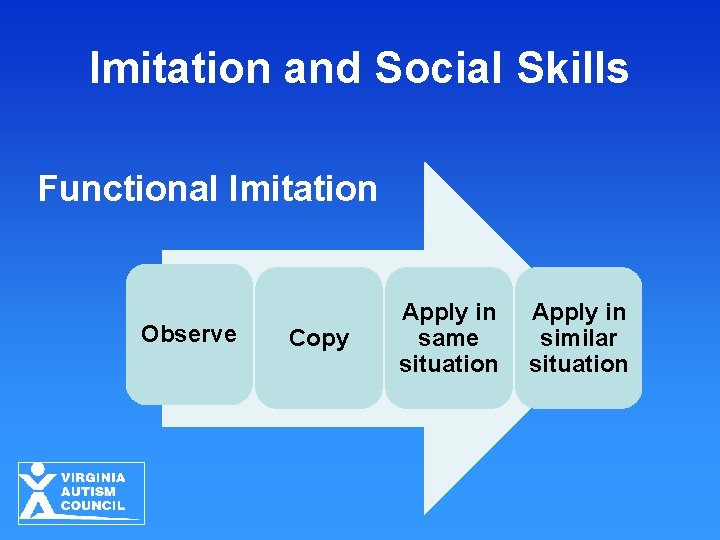
Imitation and Social Skills Functional Imitation Observe Copy Apply in same situation Apply in similar situation
Social Reactions • Observing • Understanding • Responding
Social Skills Instruction HOW DO WE TEACH SOCIAL SKILLS?
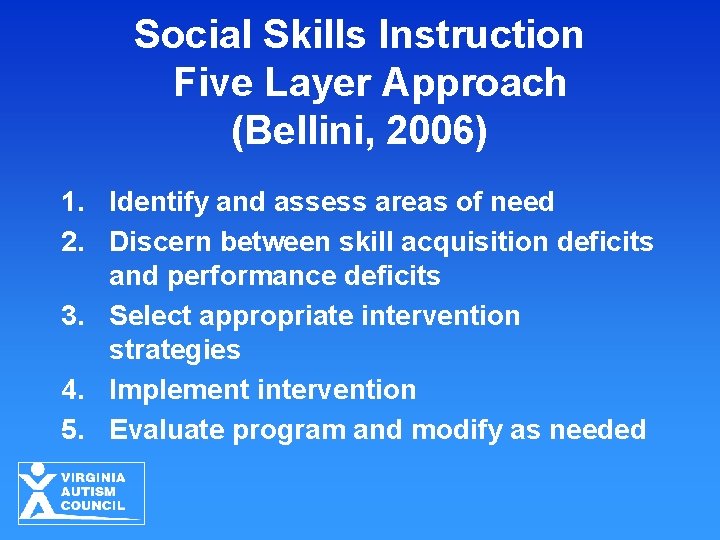
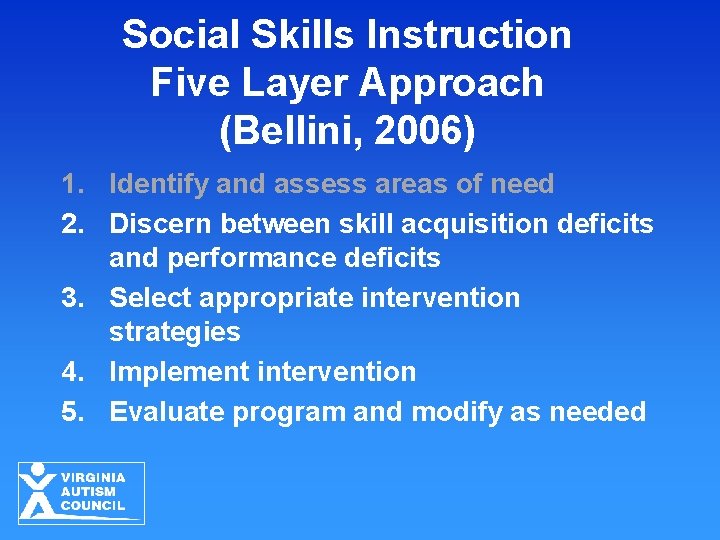
Social Skills Instruction Five Layer Approach (Bellini, 2006) 1. Identify and assess areas of need 2. Discern between skill acquisition deficits and performance deficits 3. Select appropriate intervention strategies 4. Implement intervention 5. Evaluate program and modify as needed
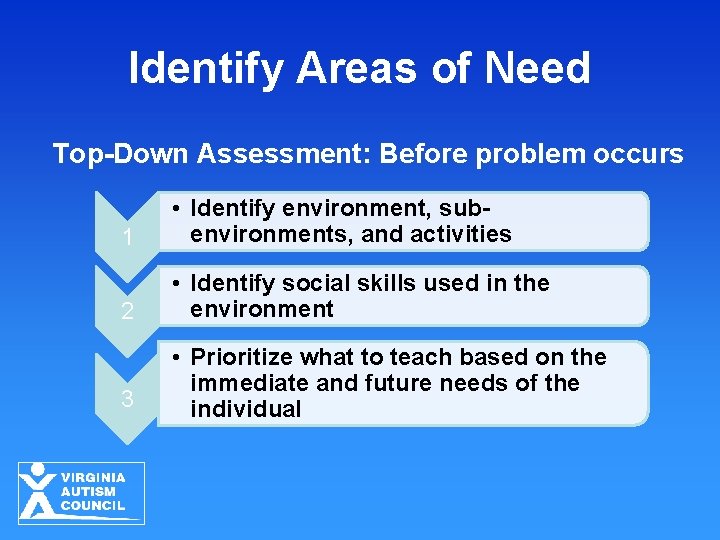
Identify Areas of Need Top-Down Assessment: Before problem occurs 1 • Identify environment, subenvironments, and activities 2 • Identify social skills used in the environment 3 • Prioritize what to teach based on the immediate and future needs of the individual
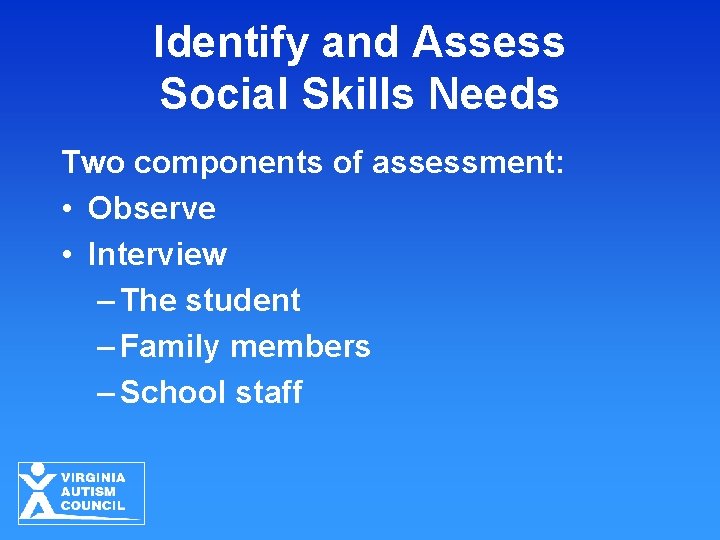
Identify and Assess Social Skills Needs Two components of assessment: • Observe • Interview – The student – Family members – School staff
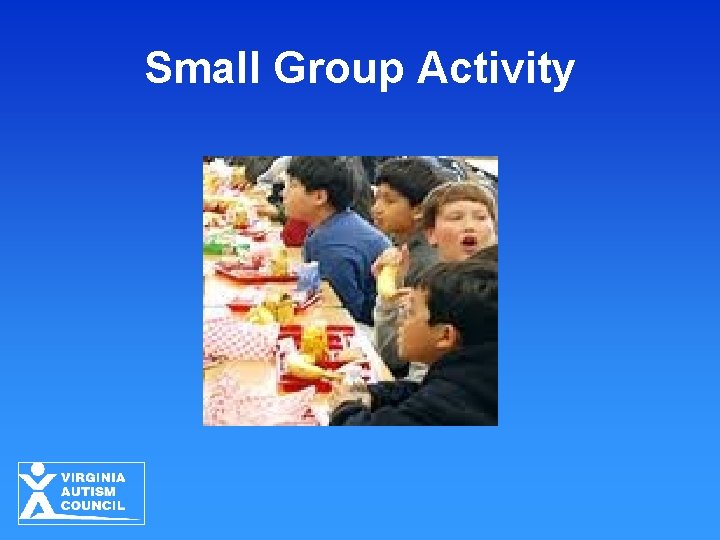
Small Group Activity
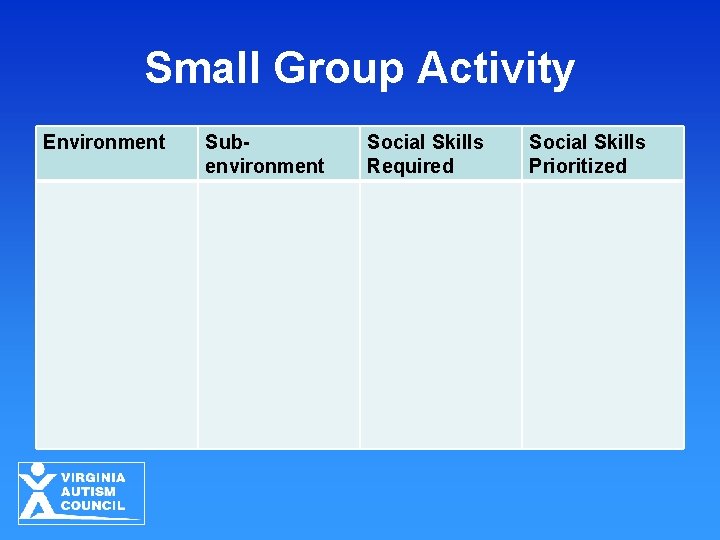
Small Group Activity Environment Subenvironment Social Skills Required Social Skills Prioritized
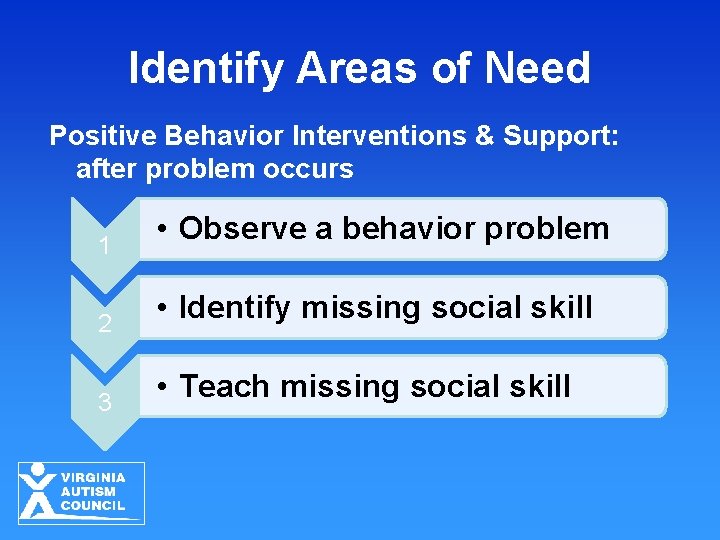
Identify Areas of Need Positive Behavior Interventions & Support: after problem occurs 1 2 3 • Observe a behavior problem • Identify missing social skill • Teach missing social skill
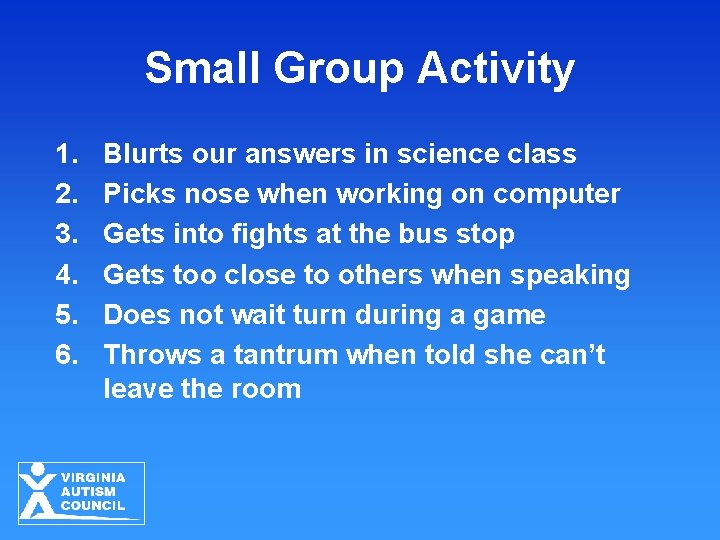
Small Group Activity 1. 2. 3. 4. 5. 6. Blurts our answers in science class Picks nose when working on computer Gets into fights at the bus stop Gets too close to others when speaking Does not wait turn during a game Throws a tantrum when told she can’t leave the room
Social Skills Instruction Five Layer Approach (Bellini, 2006) 1. Identify and assess areas of need 2. Discern between skill acquisition deficits and performance deficits 3. Select appropriate intervention strategies 4. Implement intervention 5. Evaluate program and modify as needed
Skill Acquisition Deficit or Performance Deficit Skill Acquisition Deficit – Absence of a particular skill or behavior Goal: teach new skill Performance Deficit – Skill is present, but not demonstrated or performed consistently Goal: enhance performance of existing skills
Issues Impacting Performance Deficits • Motivation • Sensory sensitivities • Anxiety • Attention and impulsivity • Memory • Generalization
Social Skills Instruction Five Layer Approach (Bellini, 2006) 1. Identify and assess areas of need 2. Discern between skill acquisition deficits and performance deficits 3. Select appropriate intervention strategies 4. Implement intervention 5. Evaluate program and modify as needed
Where Do We Teach These Social Skills? • Asking for help • Giving instructions • Having appropriate conversation • Expressing a complaint • Responding to correction • Persuading others • Demonstrating appropriate social space • Respecting others’ belongings • Responding to being told “no”
Activity Go to the Profile and complete questions 1, 2 and 3. 1. Describe this student’s social skill challenges, strengths, and needs. 2. Select 2 to 3 social skills from question 1 that are priorities for this student in the next year. 3. Look at the skills you just prioritized and list every day activities and settings where you could practice those skills.
Considerations for the Social Setting • Degree of structure in the environment • Group size • Distractions in the environment • Activity and materials
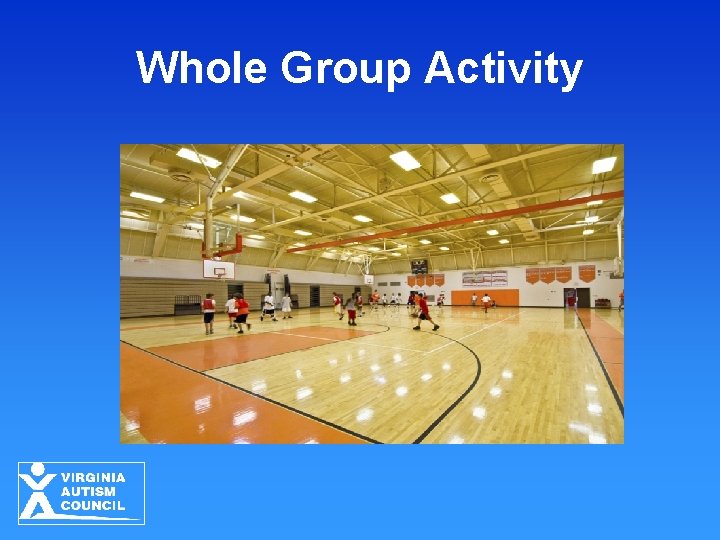
Whole Group Activity
General Teaching Strategies • Identify specific goals • Use a plan • Provide regular practice – – Instruction Model Role play Practice • Move systematically to independence
General Teaching Strategies • • Work on incidentally Create opportunities Use reinforcement Evaluate progress and revise as needed
Teaching Strategies Mentoring / Peer support l Task analysis l Role playing l Social narratives • Social scripting • Video modeling • Scales / thermometers l
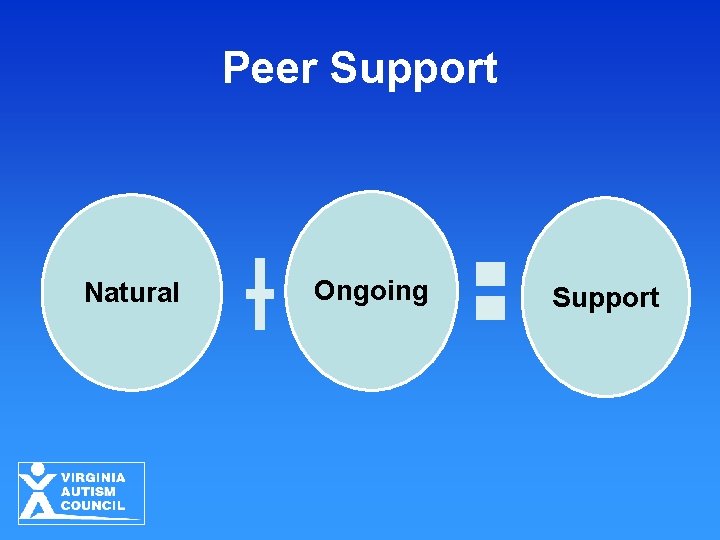
Peer Support Natural Ongoing Support
Mentor / Peer Support Qualities Rapport Adult or mature peer Understand disability and student
Mentor / Peer Support Role • Structure the social environment • Educate others • Provide assistance • Provide reinforcement
Steps to Develop Peer Support Step 1. Observe and work with student with ASD to determine needs and interests Step 2. Select peers Step 3. Educate and train peers Step 4. Help peers to problem solve
Video Model Me Kids
Task Analysis 1. Define the steps needed to demonstrate a social skill 2. Teach the steps in order 3. Reinforce the student with positive reinforcement for demonstrating steps
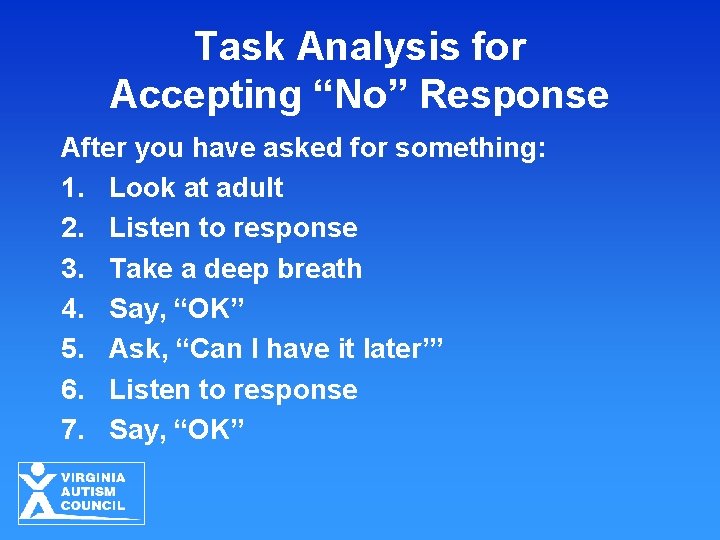
Task Analysis for Accepting “No” Response After you have asked for something: 1. Look at adult 2. Listen to response 3. Take a deep breath 4. Say, “OK” 5. Ask, “Can I have it later”’ 6. Listen to response 7. Say, “OK”
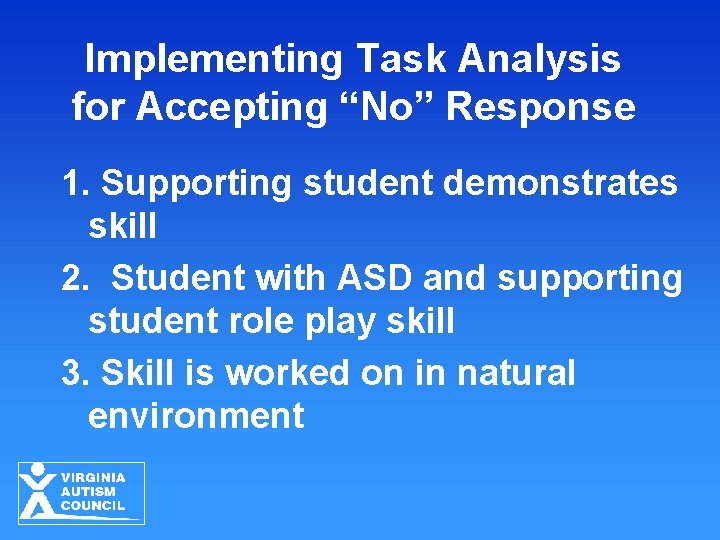
Implementing Task Analysis for Accepting “No” Response 1. Supporting student demonstrates skill 2. Student with ASD and supporting student role play skill 3. Skill is worked on in natural environment
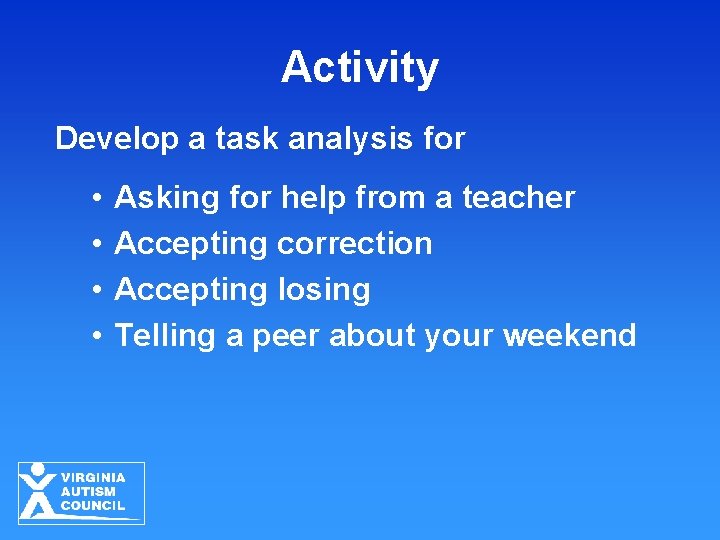
Activity Develop a task analysis for • • Asking for help from a teacher Accepting correction Accepting losing Telling a peer about your weekend
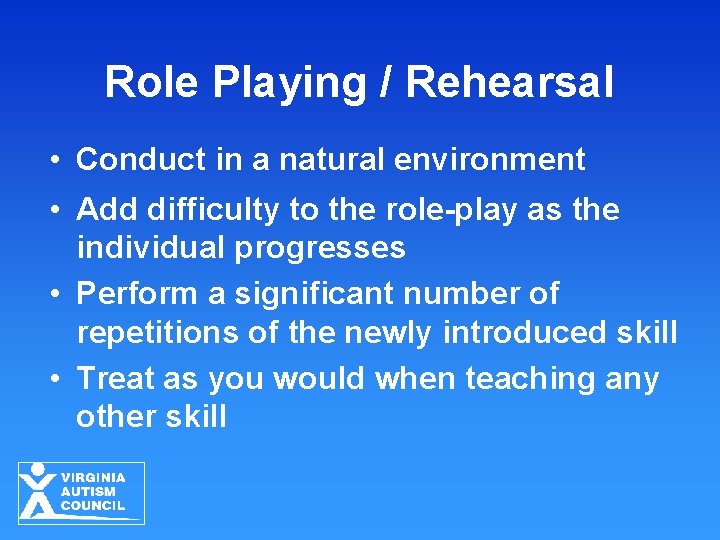
Role Playing / Rehearsal • Conduct in a natural environment • Add difficulty to the role-play as the individual progresses • Perform a significant number of repetitions of the newly introduced skill • Treat as you would when teaching any other skill
What Is a Social Narrative? A written account of a social situation describing: • What occurs in a given situation • Relevant social cues • Why something occurs • Common responses
Social Narrative Example Most students shower every day. (Descriptive) They like to feel clean and smell good to other students. (Perspective) If I don’t shower, I smell bad. (Descriptive) My smell bothers other students. (Perspective) I will try to take a shower every day. (Perspective) Taking a shower may help others want to be around me. (Perspective)
Social Scripting • Identify rote language and skills for various social situations • Script those situations • Practice script
Video Modeling 1. Videotape the student, or a respected peer demonstrating a social skill 2. Student with ASD watches the video and immediately practices the skill
Scales/Thermometers Use a 1 -5 scale or thermometer to teach a social behavior Use a 1 -5 scale or thermometer to rate a behavior from low to high
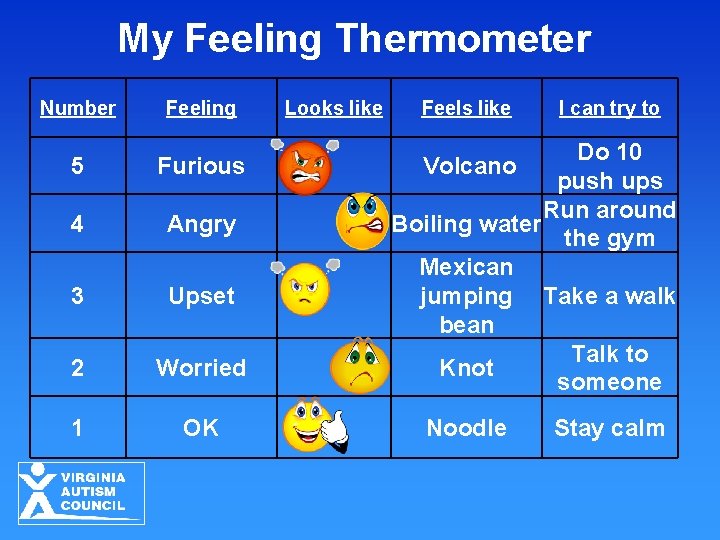
My Feeling Thermometer Number Feeling 5 Furious 4 Angry 3 Upset 2 Worried 1 OK Looks like Feels like I can try to Do 10 Volcano push ups Run around Boiling water the gym Mexican jumping Take a walk bean Talk to Knot someone Noodle Stay calm
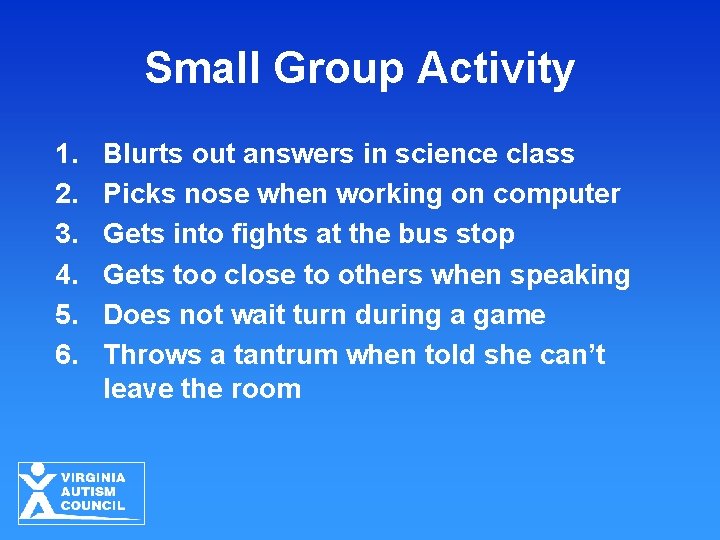
Small Group Activity 1. 2. 3. 4. 5. 6. Blurts out answers in science class Picks nose when working on computer Gets into fights at the bus stop Gets too close to others when speaking Does not wait turn during a game Throws a tantrum when told she can’t leave the room
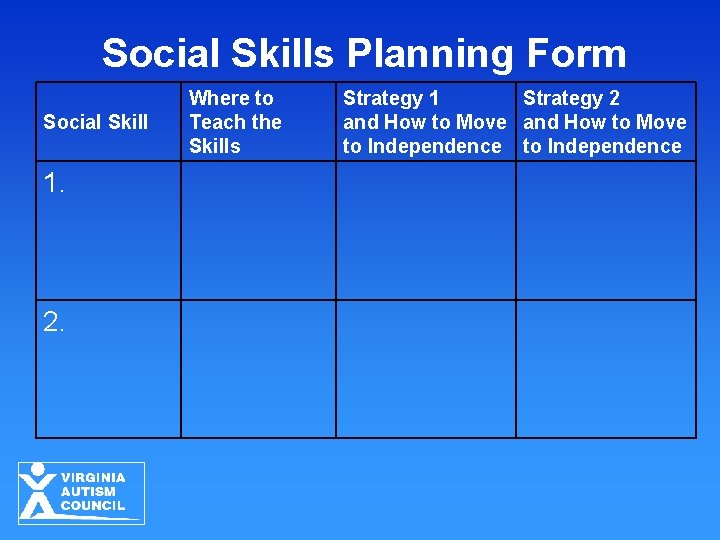
Social Skills Planning Form Social Skill 1. 2. Where to Teach the Skills Strategy 1 Strategy 2 and How to Move to Independence
Bully proofing • Teach students to recognize bullying • Teach them to avoid behaviors that make them easy or fun to bully • Teach students behaviors that protect them from being the victim
Bully Proofing What is bullying? • Physical = Harm • Verbal = Names and teasing • Social = Purposeful exclusion
Bully Proofing Behaviors to Protect Victims HA HA SO Help - get help for yourself and others Assert - say ‘I feel ___ when you ____. Please stop. ’ Humor - about the comment, not the bully Avoid - walk away Self-Talk - say good things about your self Get Out - walk away and tell self it is not true
Activity Go to the Profile and complete question 4. 4. Review the teaching methods that you discussed during today’s training and the social skill priorities that you identified above in question 3. Below list the skills on the left and a method or methods you will use to teach those skills.
Closing Points • Seek to understand the desires of the student • Seek to understand the social challenges the student faces in social environments • Provide social supports the student desires to maximize inclusion in the community