
Proactive Environmental Management System Illinois Department of Transportation



- Slides: 38
Proactive Environmental Management System Illinois Department of Transportation (IDOT) EMIS Implementation TRB ADC Conference July 26, 2011 Steve Gobelman, P. E. , P. G. S. Babusukumar, P. G. Michael Yesconis ® 1
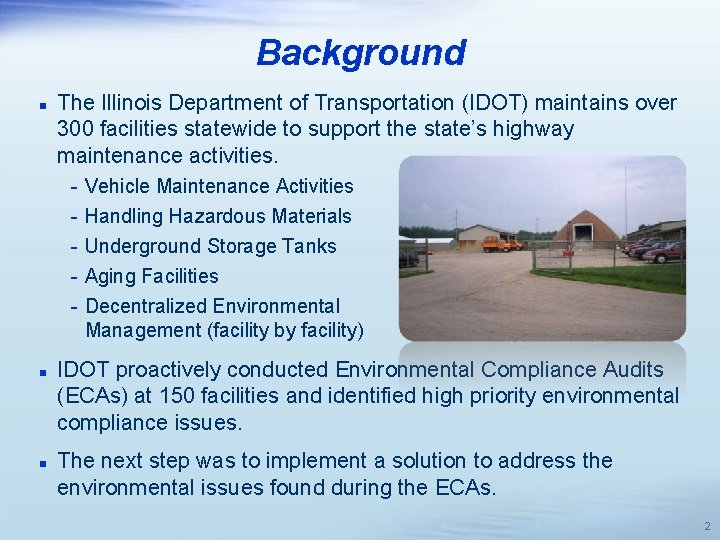
Background n The Illinois Department of Transportation (IDOT) maintains over 300 facilities statewide to support the state’s highway maintenance activities. - n n Vehicle Maintenance Activities Handling Hazardous Materials Underground Storage Tanks Aging Facilities Decentralized Environmental Management (facility by facility) IDOT proactively conducted Environmental Compliance Audits (ECAs) at 150 facilities and identified high priority environmental compliance issues. The next step was to implement a solution to address the environmental issues found during the ECAs. 2
Implementation Approach n n Environmental Compliance Audits performed at facilities to establish high priority issues and a baseline. Procedures and Technical Guidance documents were developed to manage high priority concerns as a part of an initial Environmental Management System (EMS). To facilitate the implementation of the EMS a Web-based Environmental Management Information System (EMIS) has been developed to provide a consistent and centralized approach to EMS Asset Inventories to define inspection targets which are now being conducted during the ECA’s. 3
Implementation Approach Engage the End Users of the EMIS through meetings and informational overview documents (FAQs). Training for each district is conducted on-site at their respective district headquarters. Users are also provided an EMIS Quick Start Guide for reference after training. This EMIS has been implemented in IDOT’s District 8 which contains 25 maintenance facilities and is currently being expanded to the other IDOT districts (3 districts in 2011 and the final 5 districts in 2012), totaling over 300 facilities. 4
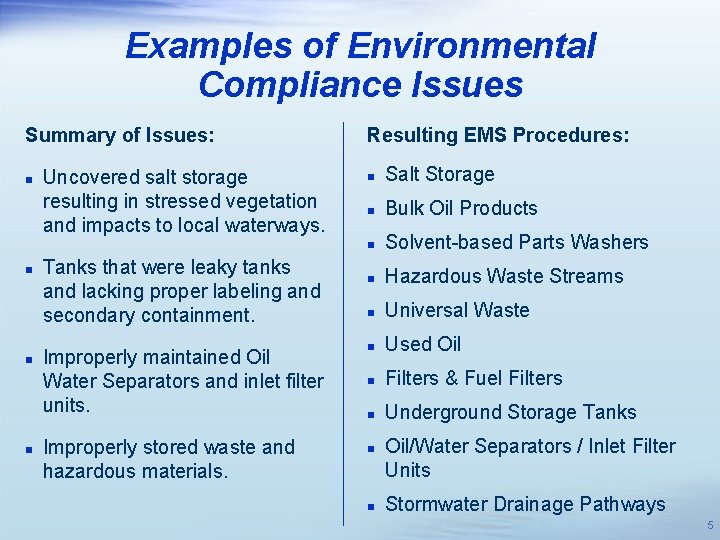
Examples of Environmental Compliance Issues Summary of Issues: n n Uncovered salt storage resulting in stressed vegetation and impacts to local waterways. Tanks that were leaky tanks and lacking proper labeling and secondary containment. Improperly maintained Oil Water Separators and inlet filter units. Improperly stored waste and hazardous materials. Resulting EMS Procedures: n Salt Storage n Bulk Oil Products n Solvent-based Parts Washers n Hazardous Waste Streams n Universal Waste n Used Oil n Filters & Fuel Filters n Underground Storage Tanks n n Oil/Water Separators / Inlet Filter Units Stormwater Drainage Pathways 5
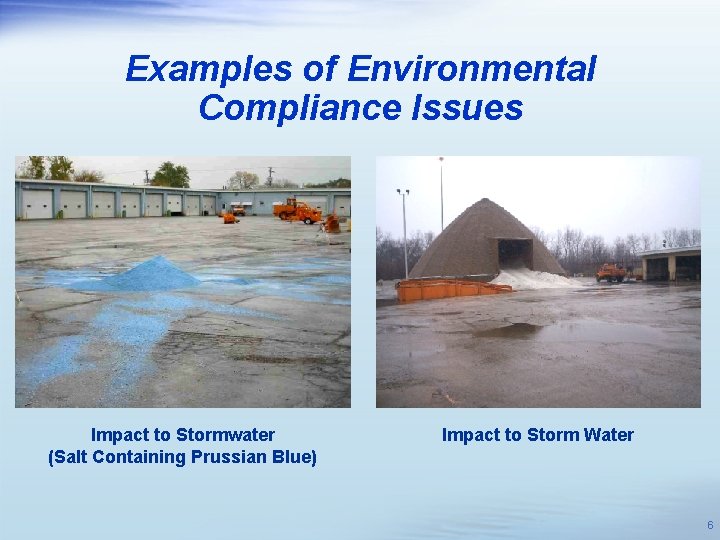
Examples of Environmental Compliance Issues Impact to Stormwater (Salt Containing Prussian Blue) Impact to Storm Water 6
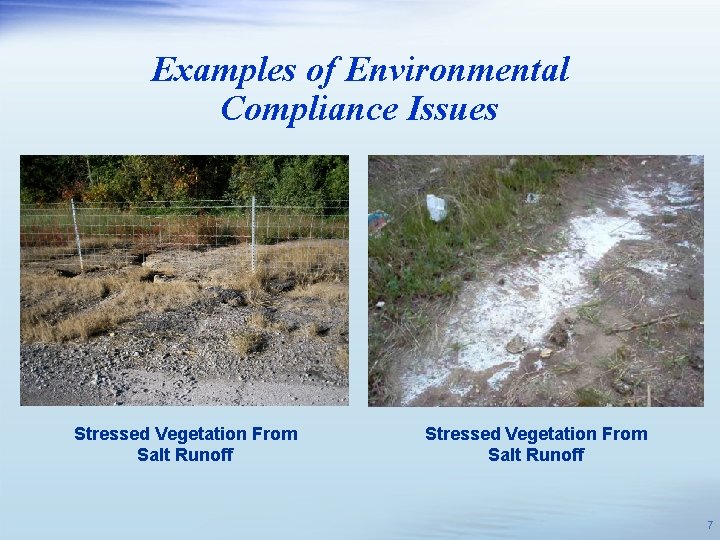
Examples of Environmental Compliance Issues Stressed Vegetation From Salt Runoff 7
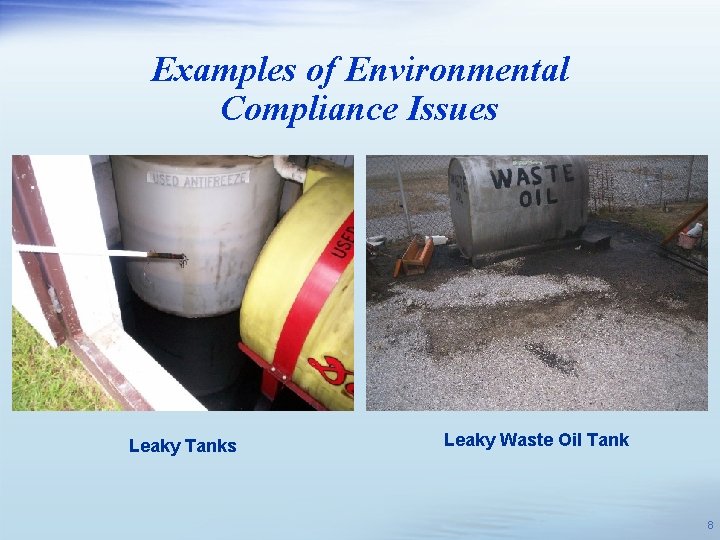
Examples of Environmental Compliance Issues Leaky Tanks Leaky Waste Oil Tank 8
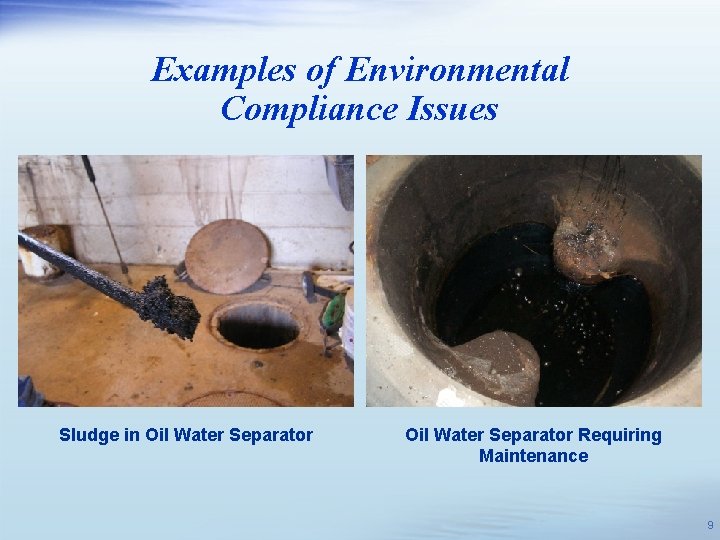
Examples of Environmental Compliance Issues Sludge in Oil Water Separator Requiring Maintenance 9
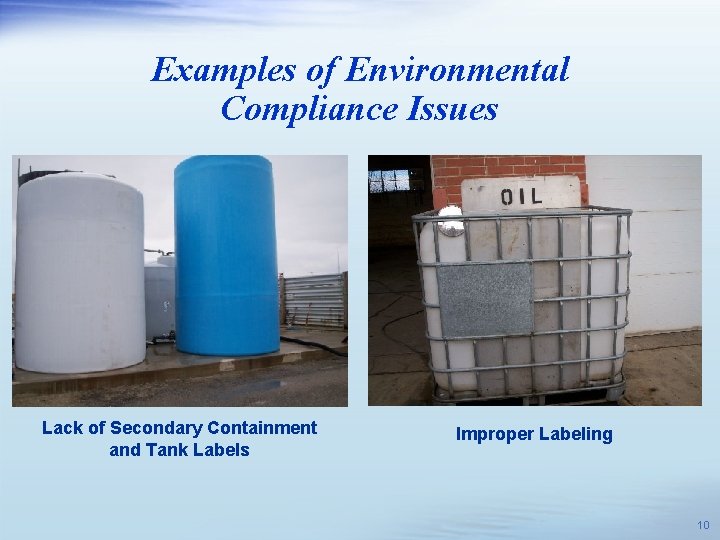
Examples of Environmental Compliance Issues Lack of Secondary Containment and Tank Labels Improper Labeling 10
Examples of Environmental Compliance Issues Potential Waste Stored in Open Containers Improperly Discarded Empty Drums 11
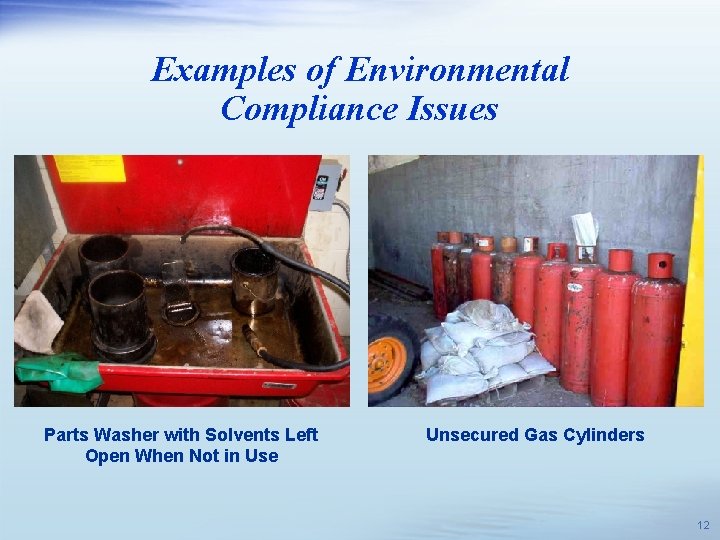
Examples of Environmental Compliance Issues Parts Washer with Solvents Left Open When Not in Use Unsecured Gas Cylinders 12
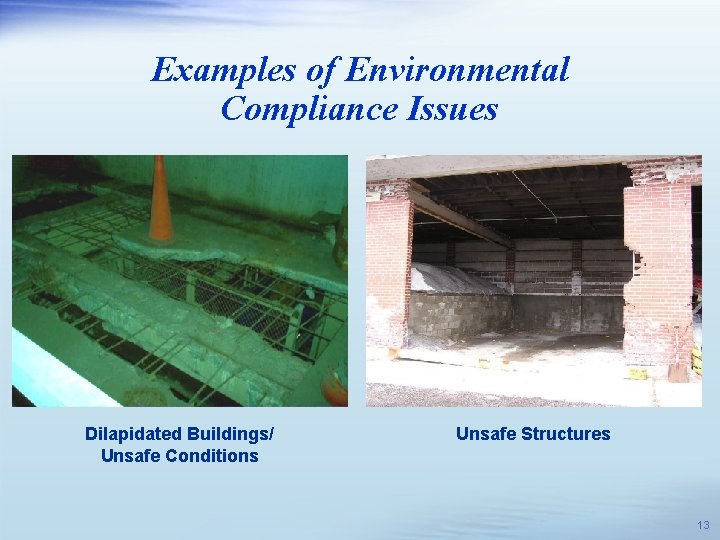
Examples of Environmental Compliance Issues Dilapidated Buildings/ Unsafe Conditions Unsafe Structures 13
Examples of Environmental Compliance Issues Improperly Stored Used Batteries Improper Storage of Flammable Material 14
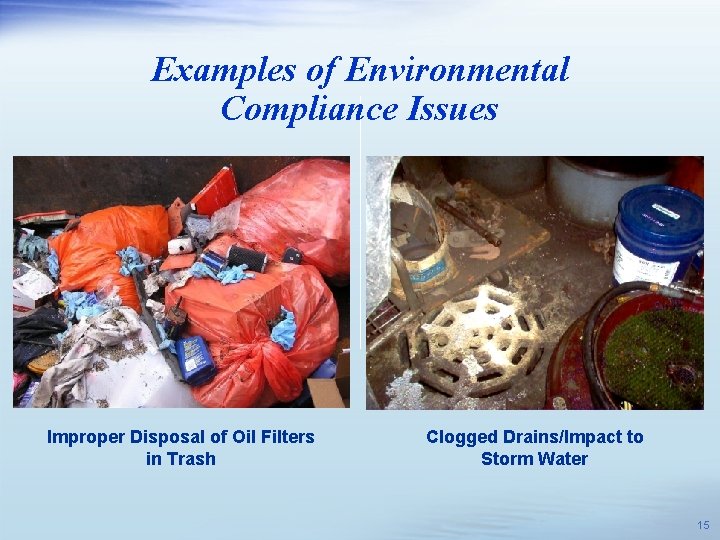
Examples of Environmental Compliance Issues Improper Disposal of Oil Filters in Trash Clogged Drains/Impact to Storm Water 15
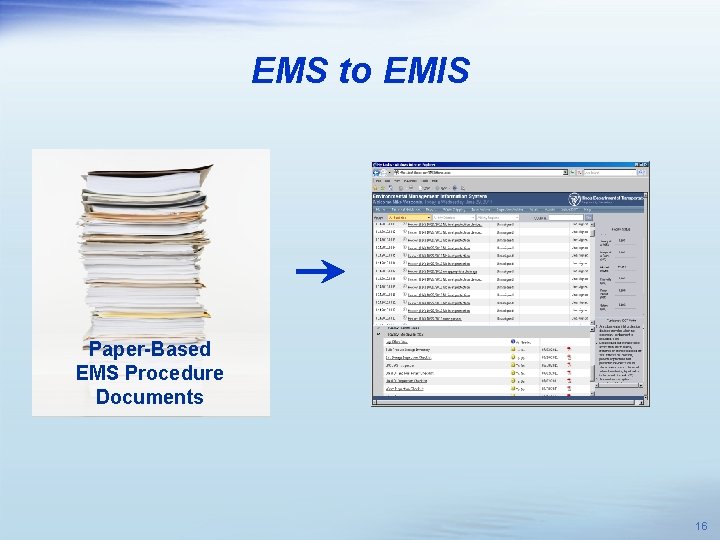
EMS to EMIS Paper-Based EMS Procedure Documents 16
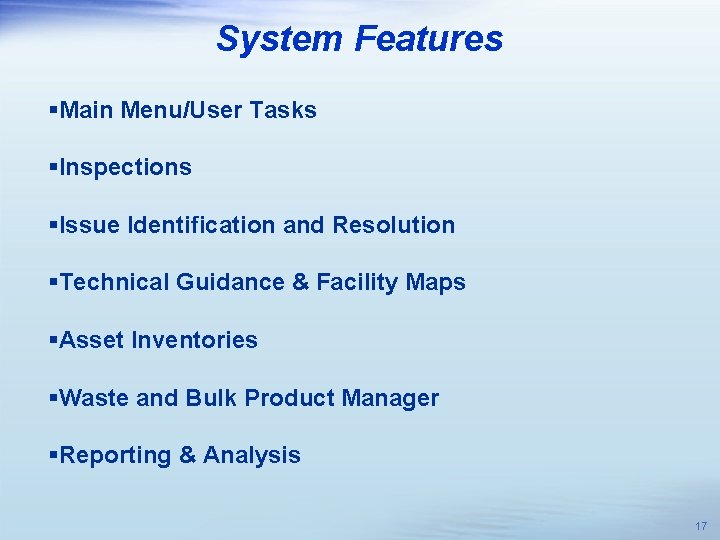
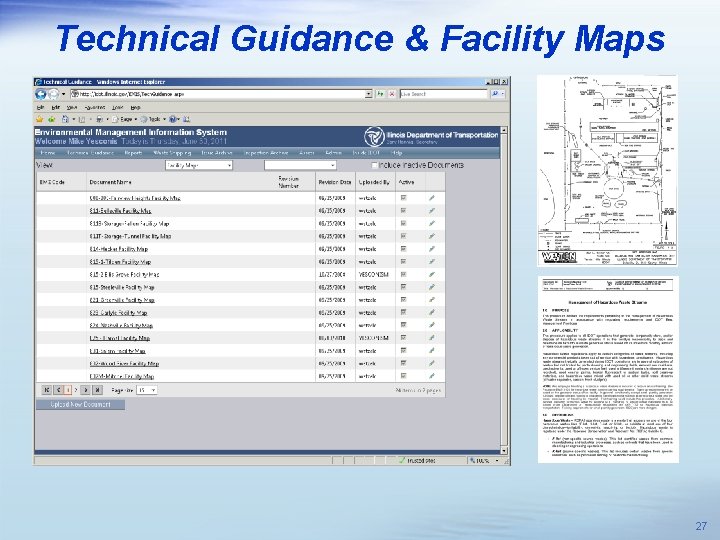
System Features §Main Menu/User Tasks §Inspections §Issue Identification and Resolution §Technical Guidance & Facility Maps §Asset Inventories §Waste and Bulk Product Manager §Reporting & Analysis 17
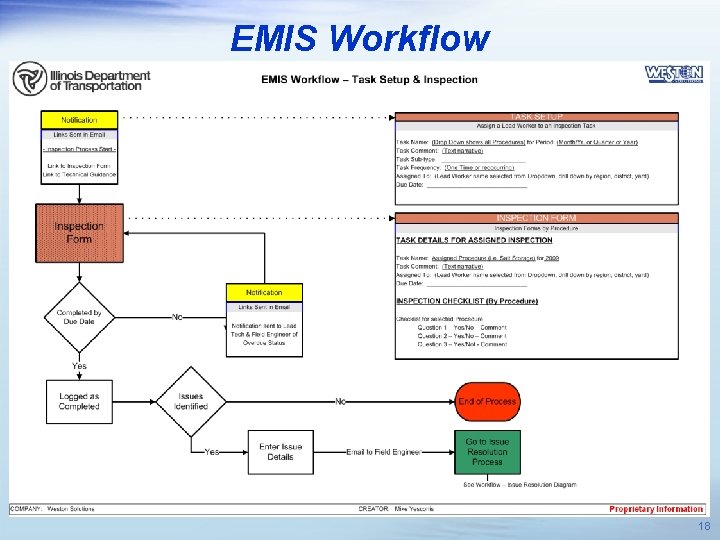
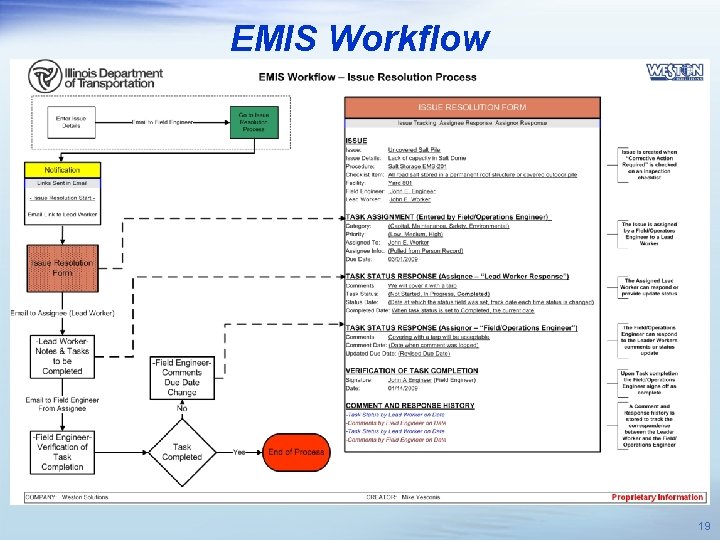
EMIS Workflow 18
EMIS Workflow 19
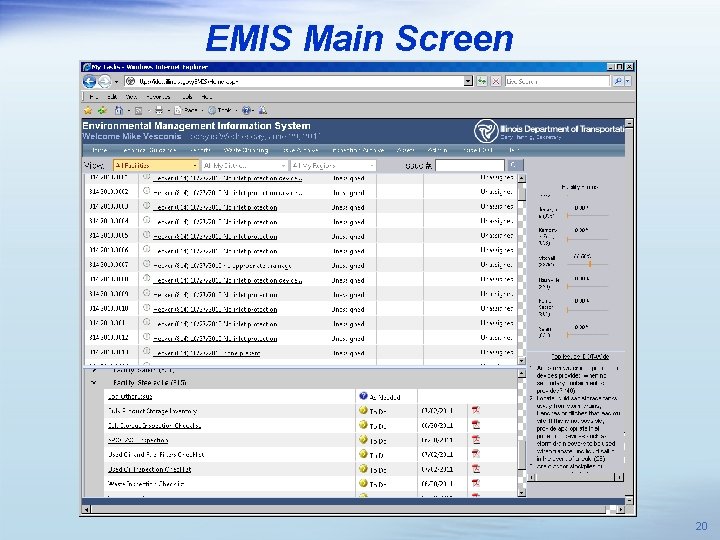
EMIS Main Screen 20
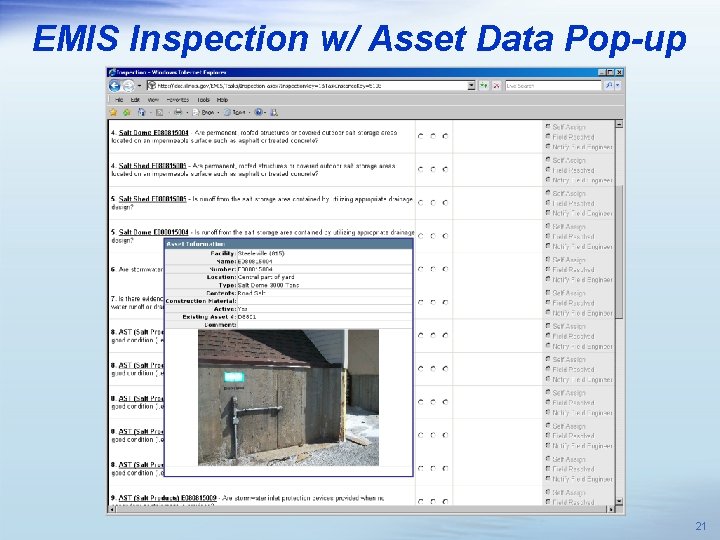
EMIS Inspection w/ Asset Data Pop-up 21
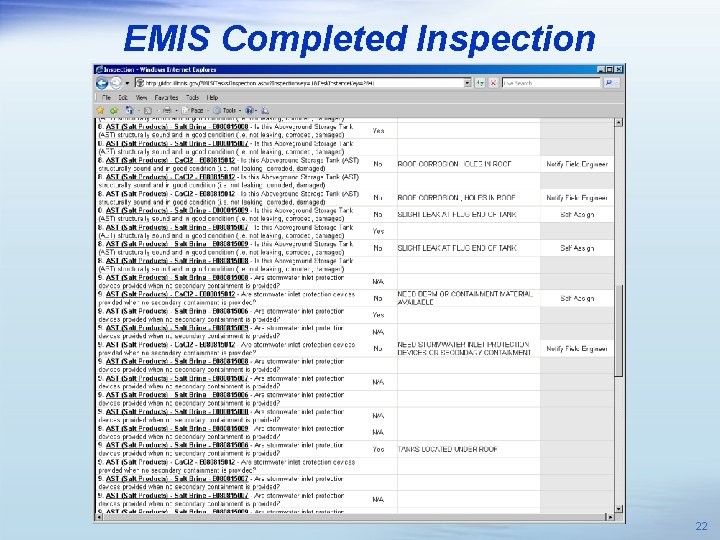
EMIS Completed Inspection 22
Issue Resolution Once issues are logged they can be resolved in 3 different ways: • Field Resolved – The inspection finds an issue that was resolvable during the inspection (i. e. , cover a pile of salt). • Self-Assigned – The inspection finds an issue that he/she can resolve, but cannot attend to it during the inspection. • Notify Field Engineer – The inspection finds an issue that needs Field Engineer support or escalation. 23
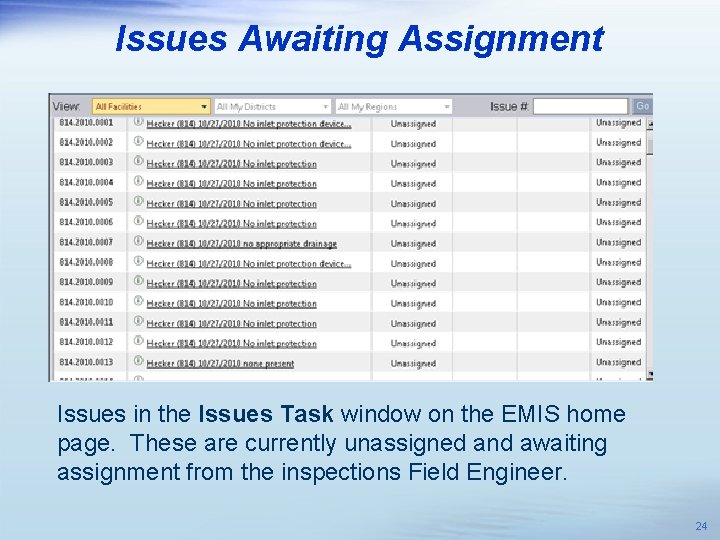
Issues Awaiting Assignment Issues in the Issues Task window on the EMIS home page. These are currently unassigned and awaiting assignment from the inspections Field Engineer. 24
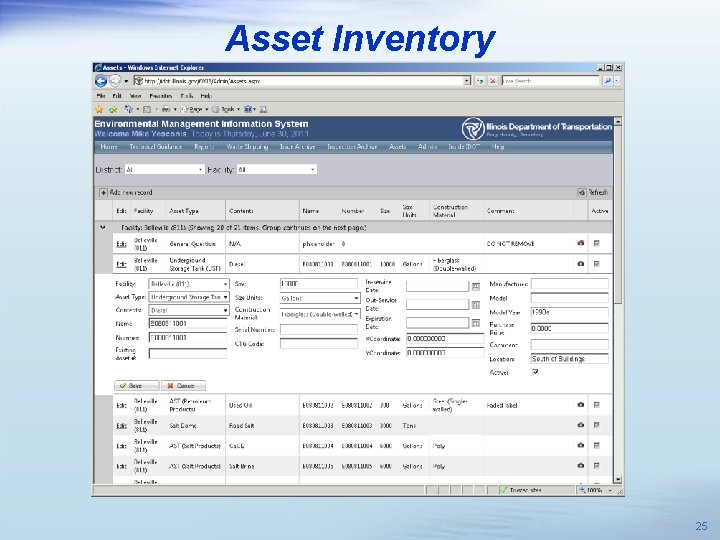
Asset Inventory 25
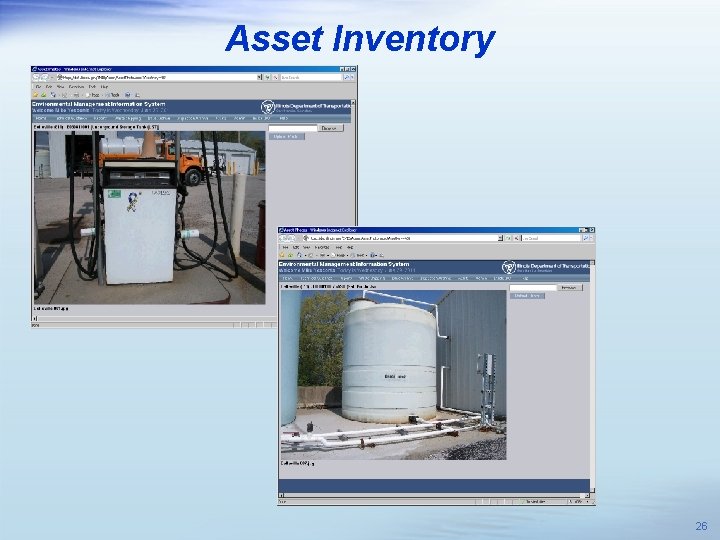
Asset Inventory 26
Technical Guidance & Facility Maps 27
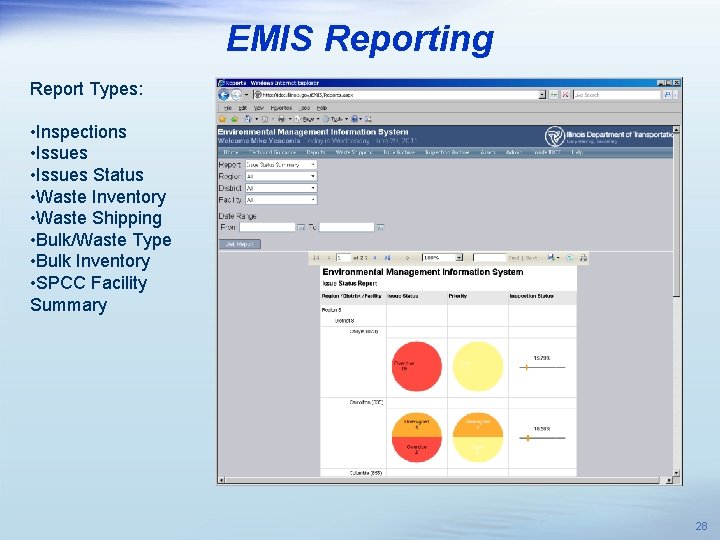
EMIS Reporting Report Types: • Inspections • Issues Status • Waste Inventory • Waste Shipping • Bulk/Waste Type • Bulk Inventory • SPCC Facility Summary 28
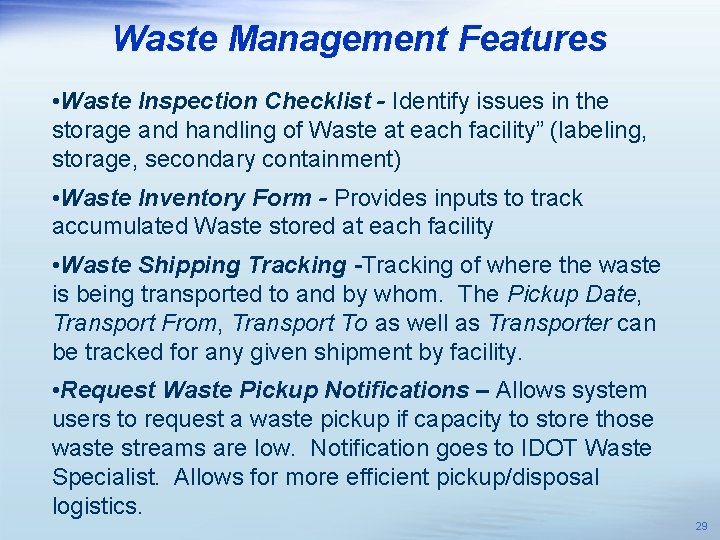
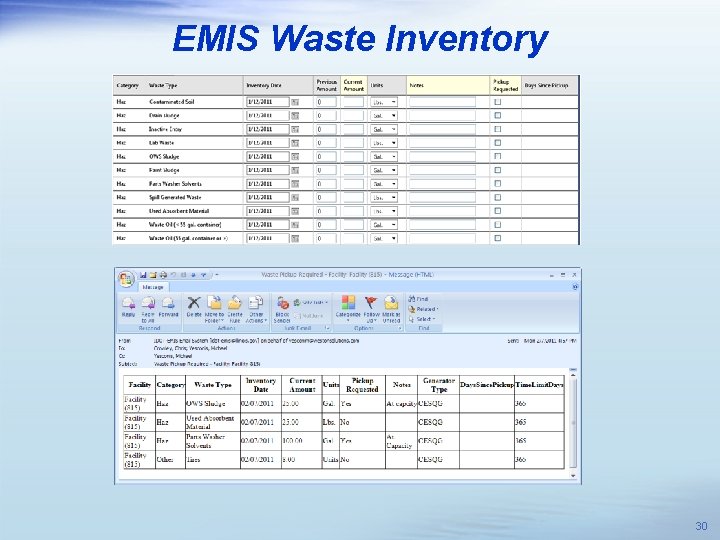
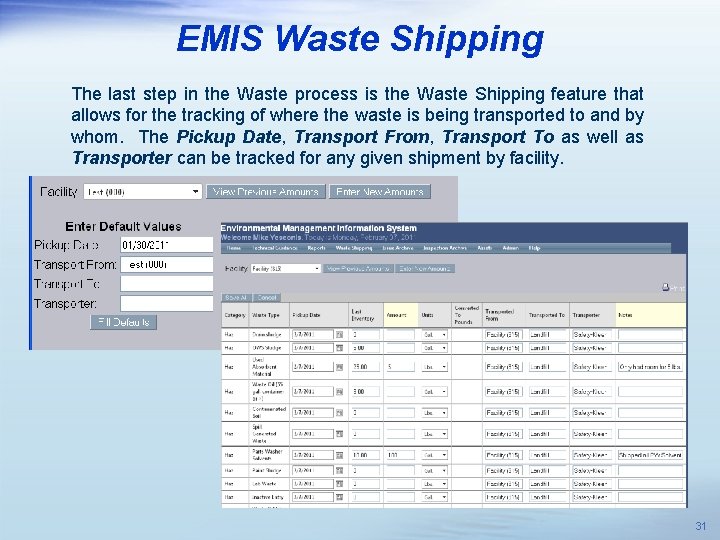
Waste Management Features • Waste Inspection Checklist - Identify issues in the storage and handling of Waste at each facility” (labeling, storage, secondary containment) • Waste Inventory Form - Provides inputs to track accumulated Waste stored at each facility • Waste Shipping Tracking -Tracking of where the waste is being transported to and by whom. The Pickup Date, Transport From, Transport To as well as Transporter can be tracked for any given shipment by facility. • Request Waste Pickup Notifications – Allows system users to request a waste pickup if capacity to store those waste streams are low. Notification goes to IDOT Waste Specialist. Allows for more efficient pickup/disposal logistics. 29
EMIS Waste Inventory 30
EMIS Waste Shipping The last step in the Waste process is the Waste Shipping feature that allows for the tracking of where the waste is being transported to and by whom. The Pickup Date, Transport From, Transport To as well as Transporter can be tracked for any given shipment by facility. 31
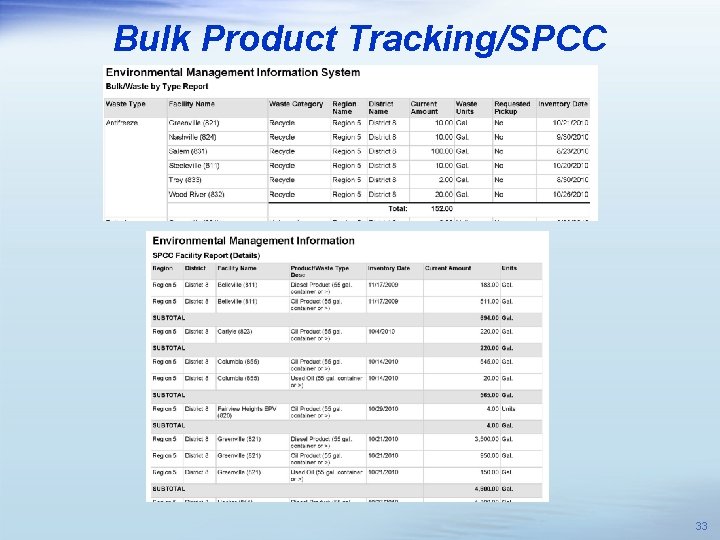
Bulk Product Tracking/SPCC The EMIS provides a Bulk Product Inventory form with the ability to determine if an SPCC plan is required at a given facility based on the amount of bulk product being stored on-site along with associated reports to assist in the tracking of bulk product at each facilities. Reports provide several ways to query and report on Bulk product inventories and SPCC status. Examples provided on the following slide. 32
Bulk Product Tracking/SPCC 33
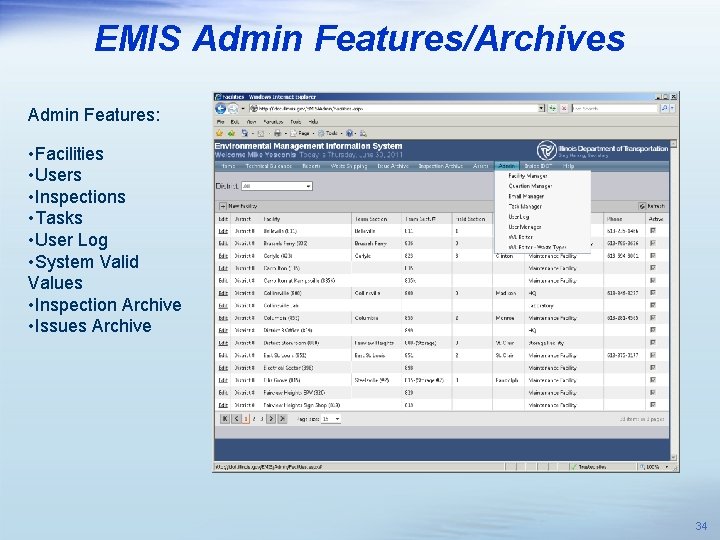
EMIS Admin Features/Archives Admin Features: • Facilities • Users • Inspections • Tasks • User Log • System Valid Values • Inspection Archive • Issues Archive 34
EMIS Top Findings n n n Are stormwater inlet protection devices provided when no secondary containment is provided? Locate liquid salt storage tanks away from storm drains, trenches or ditches that lead off site. If this is not possible, provide appropriate inlet protection devices such as storm drain covers to be used when transferring liquid salt or in the event of a leak. Are outdoor stockpiles of potential pollutants (e. g. , batteries, oil products, salt, scrap metal, etc) covered? Is this AST equipped with secondary containment? Are all hazardous waste containers stored on secondary containment? 35
EMIS Features Review n User-friendly and intuitive interface n Build specifically for IDOT’s workflow requirements n Web-based Portal provides a custom user experience based upon their role in the system n Electronic notification of Task Assignments n Electronic Inspection Checklists for all EMS Procedures n Corrective Action / Issue Resolution and Issue Prioritization features n Asset Management n Robust Reporting and Task Tracking tools 36
Benefits of the EMS & EMIS n n n Protecting public health and environment Effective compliance with regulatory requirements Improve IDOT’s public image as a green organization Facilitate efficient fiscal planning and prioritization of environmental issues Manage challenging environmental issues with top-to-bottom engagement of all IDOT stakeholders from a central Web-based system Potential integration of the EMIS into other IDOT systems (Asset / Work Order Management) 37
Contact Information Steven Gobelman, P. E. , L. P. G. IDOT Bureau of Design & Environment steven. gobelman@illinois. gov (217) 785 -4246 S. Babusukumar, P. G. Weston Solutions, Inc babusukumar@westonsolutions. com (847) 918 -4018 Michael Yesconis Weston Solutions, Inc mike. yesconis@westonsolutions. com (610) 701 -3931 38