
Pro Forma Analysis PRESENT PAST FUTURE v Historical

![Econometric Analysis Based on Investment Theory It = f{[E(Pt)×E(Qt)]/E(ct)}](https://slidetodoc.com/presentation_image/af52a297103ea0103ca727a72a880186/image-10.jpg "Econometric Analysis Based on Investment Theory It = f{[E(Pt)×E(Qt)]/E(ct)}")


- Slides: 28
Pro Forma Analysis
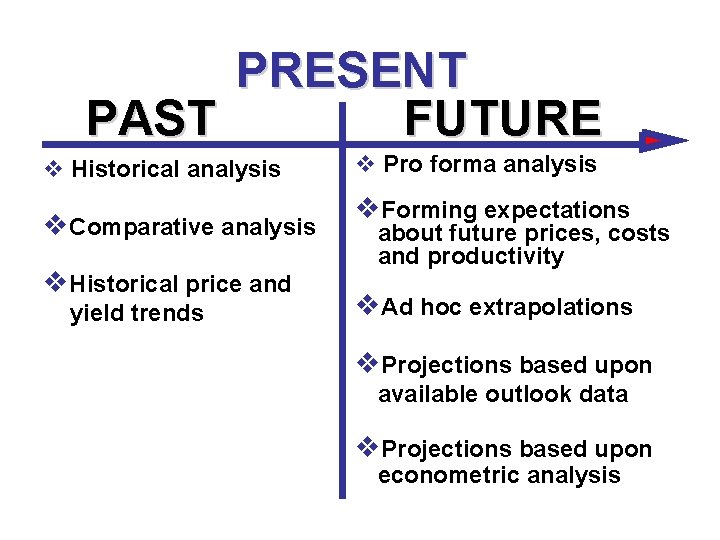
PRESENT PAST FUTURE v Historical analysis v. Comparative analysis v. Historical price and yield trends v Pro forma analysis v. Forming expectations about future prices, costs and productivity v. Ad hoc extrapolations v. Projections based upon available outlook data v. Projections based upon econometric analysis
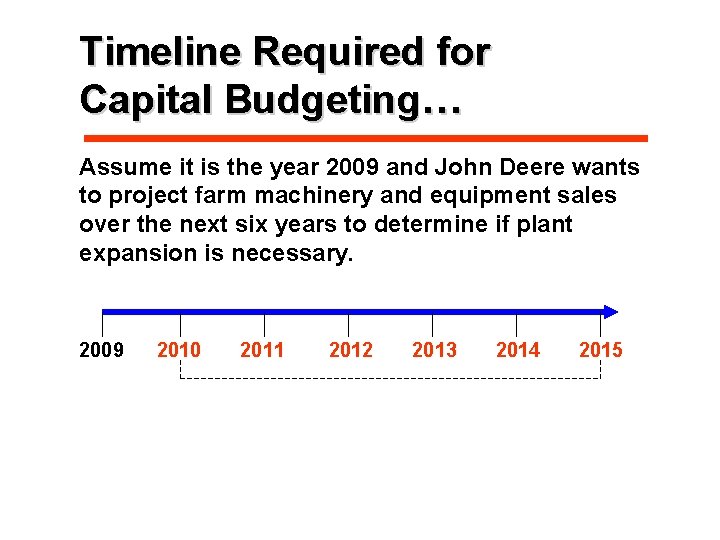
Timeline Required for Capital Budgeting… Assume it is the year 2009 and John Deere wants to project farm machinery and equipment sales over the next six years to determine if plant expansion is necessary. 2009 2010 2011 2012 2013 2014 2015
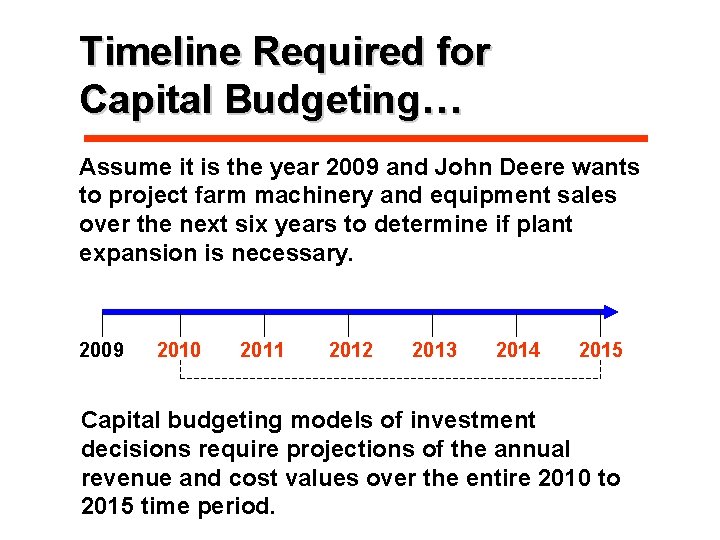
Timeline Required for Capital Budgeting… Assume it is the year 2009 and John Deere wants to project farm machinery and equipment sales over the next six years to determine if plant expansion is necessary. 2009 2010 2011 2012 2013 2014 2015 Capital budgeting models of investment decisions require projections of the annual revenue and cost values over the entire 2010 to 2015 time period.
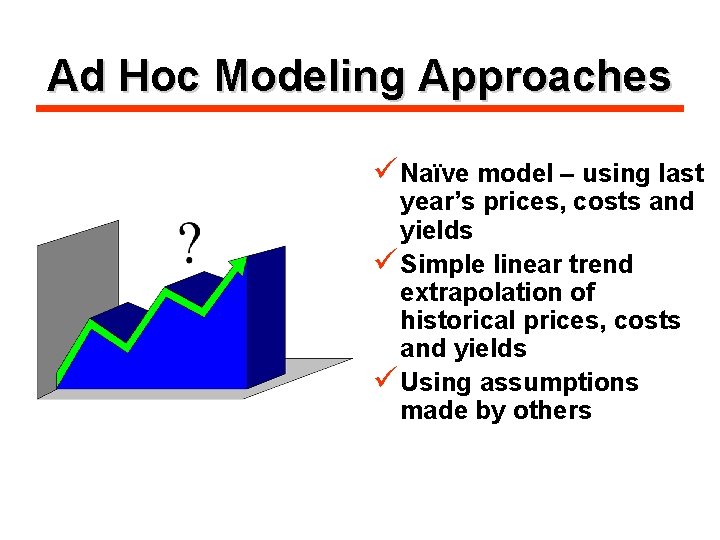
Ad Hoc Modeling Approaches ü Naïve model – using last year’s prices, costs and yields ü Simple linear trend extrapolation of historical prices, costs and yields ü Using assumptions made by others
Econometric Model Approach ü Capturing future supply/demand impacts on prices and unit costs ü Linkages to commodity policy ü Linkages to domestic economy ü Linkages to the global economy
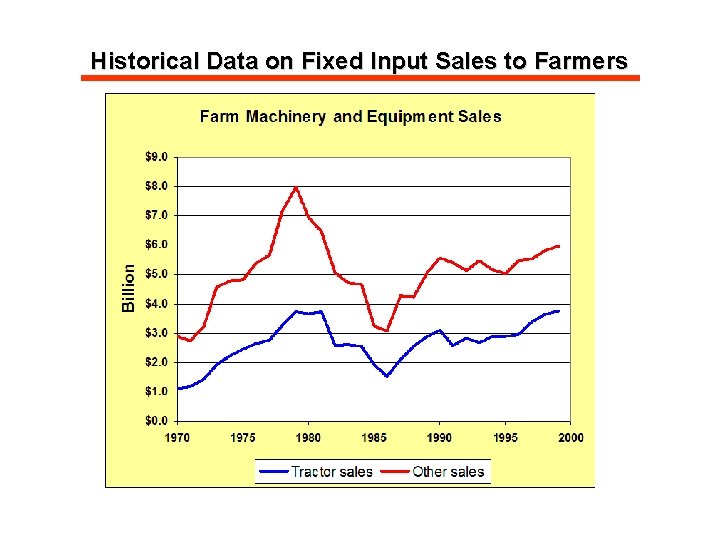
Historical Data on Fixed Input Sales to Farmers
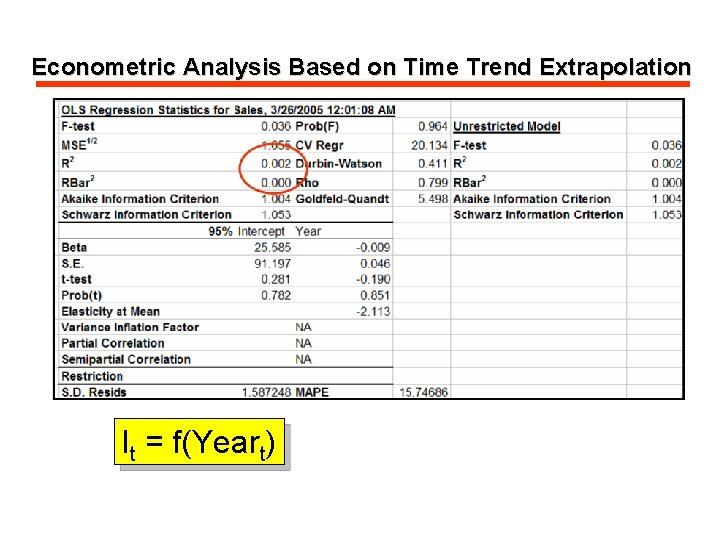
Econometric Analysis Based on Time Trend Extrapolation It = f(Yeart)
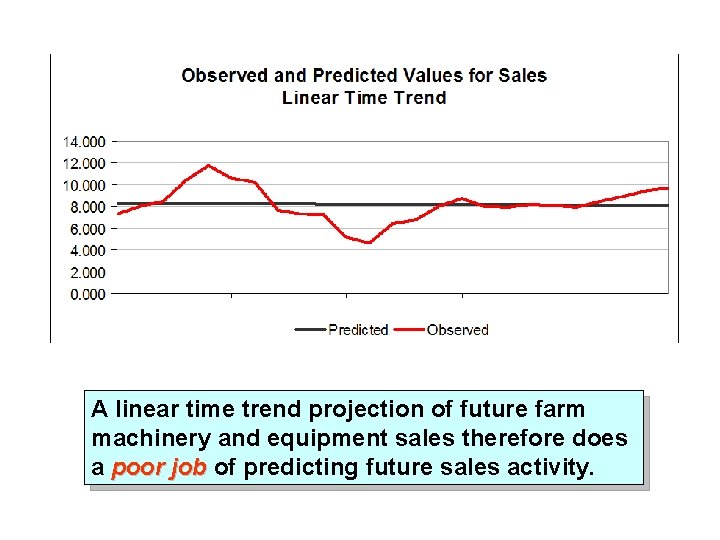
A linear time trend projection of future farm machinery and equipment sales therefore does a poor job of predicting future sales activity.
Econometric Analysis Based on Investment Theory It = f{[E(Pt)×E(Qt)]/E(ct)}
An econometric model based on investment theory does a much better job of predicting future sales activity.
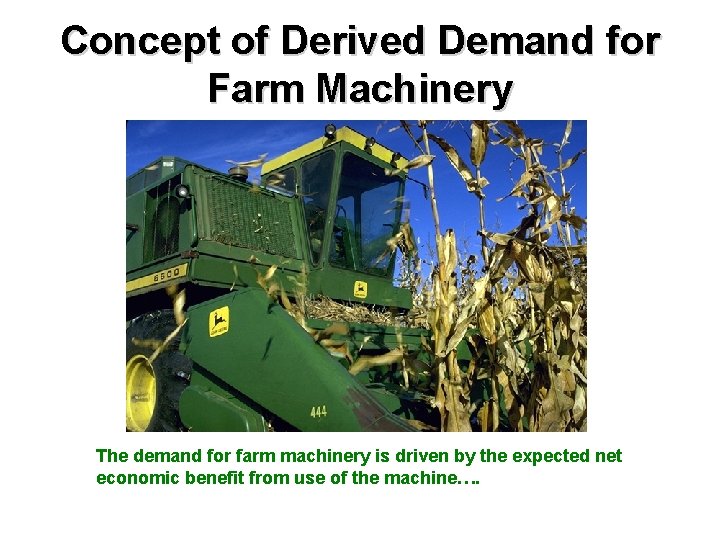
Concept of Derived Demand for Farm Machinery The demand for farm machinery is driven by the expected net economic benefit from use of the machine….
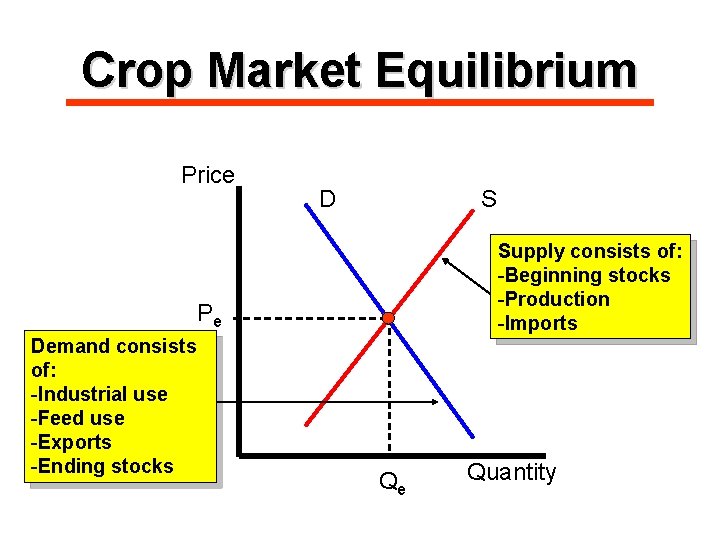
Crop Market Equilibrium Price S D Supply consists of: -Beginning stocks -Production -Imports Pe Demand consists of: -Industrial use -Feed use -Exports -Ending stocks Qe Quantity
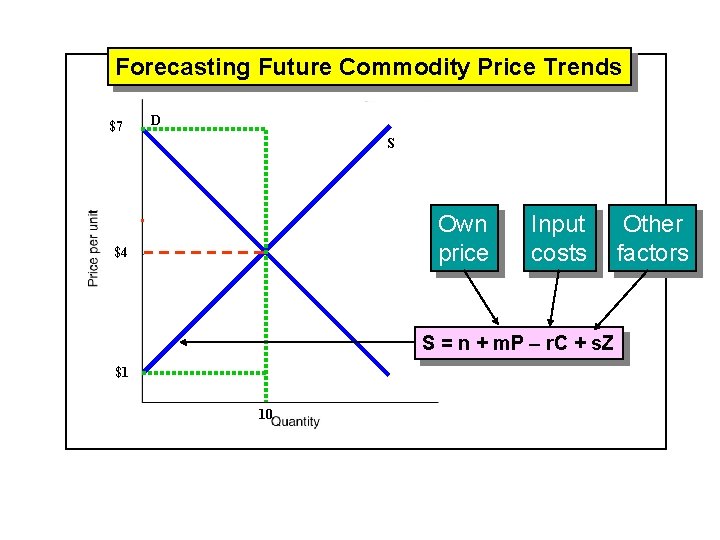
Forecasting Future Commodity Price Trends $7 D S $4 D = a – b. P + c. YD + e. X Own price $1 10 Disposable income Other factors
Forecasting Future Commodity Price Trends $7 D S Own price $4 Input costs S = n + m. P – r. C + s. Z $1 10 Other factors
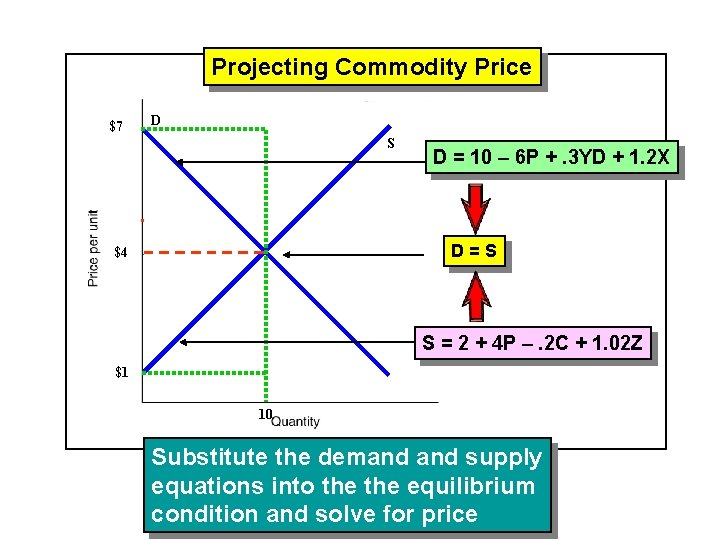
Projecting Commodity Price $7 D S D = 10 – 6 P +. 3 YD + 1. 2 X D=S $4 S = 2 + 4 P –. 2 C + 1. 02 Z $1 10 Substitute the demand supply equations into the equilibrium condition and solve for price
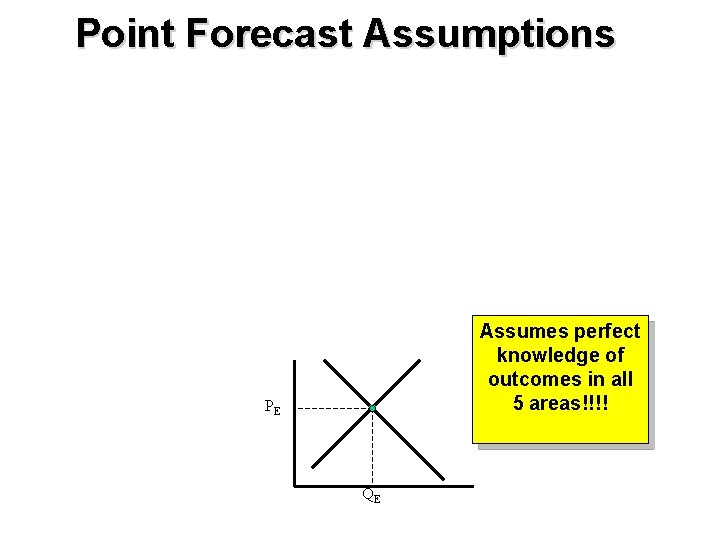
Point Forecast Assumptions Assumes perfect knowledge of outcomes in all 5 areas!!!! PE QE
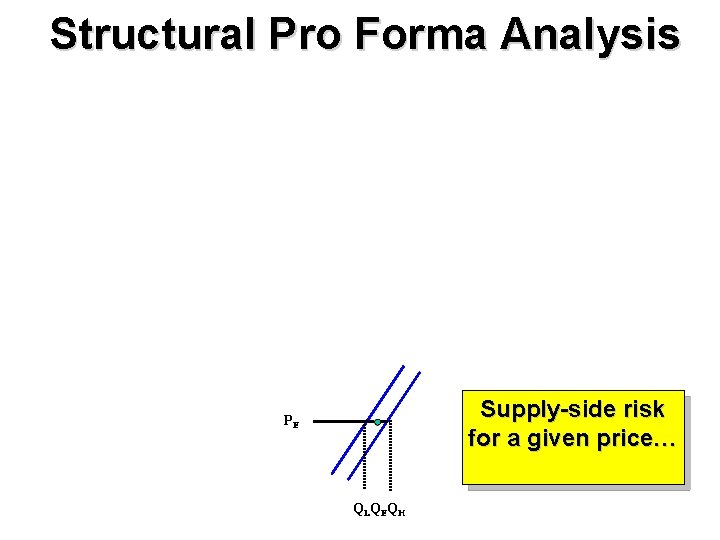
Structural Pro Forma Analysis Supply-side risk for a given price… PE QLQEQH
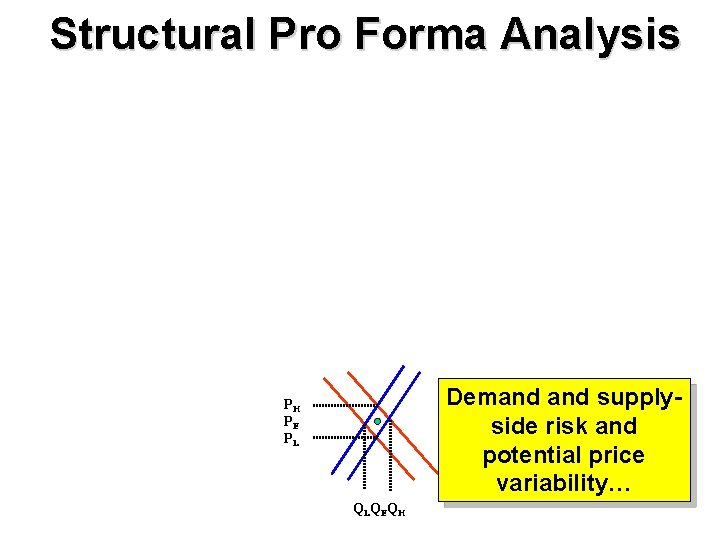
Structural Pro Forma Analysis Demand supplyside risk and potential price variability… PH PE PL QLQEQH
Estimating the Annual Supply and Use of Wheat
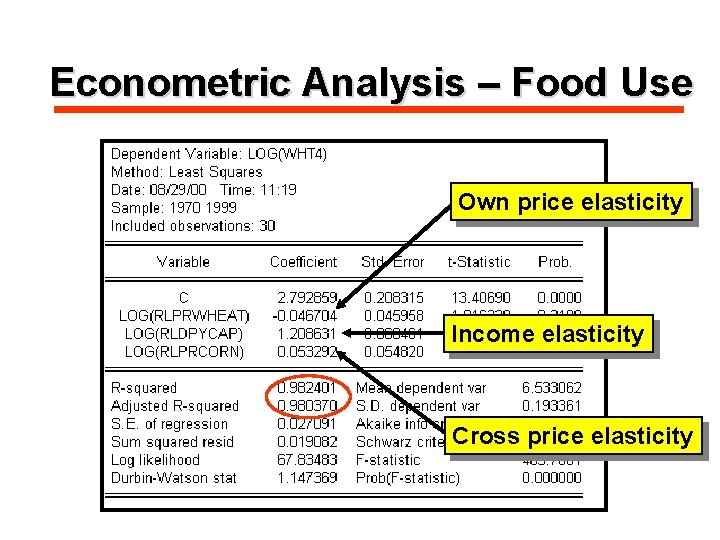
Econometric Analysis – Food Use Own price elasticity Income elasticity Cross price elasticity
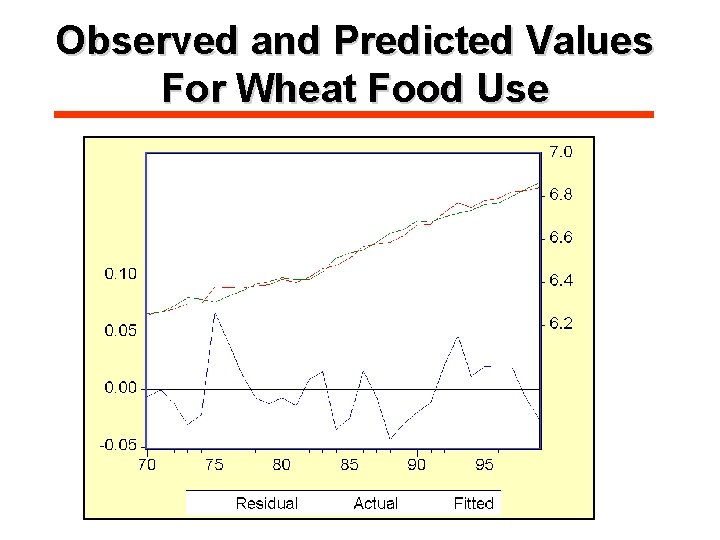
Observed and Predicted Values For Wheat Food Use
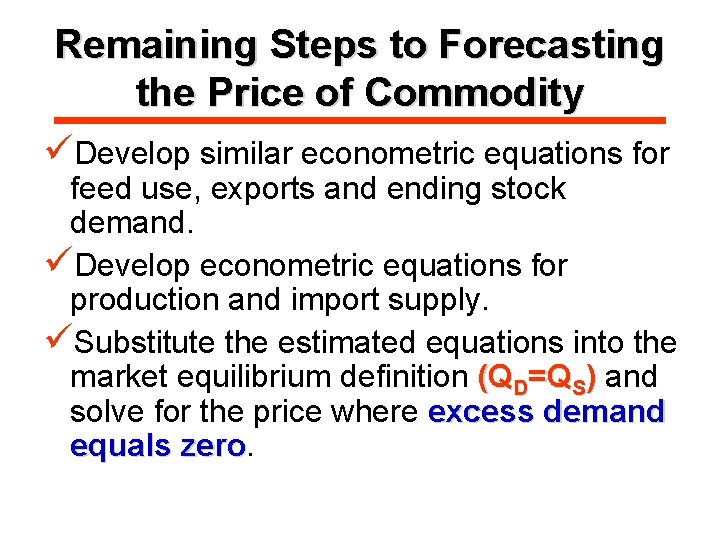
Remaining Steps to Forecasting the Price of Commodity üDevelop similar econometric equations for feed use, exports and ending stock demand. üDevelop econometric equations for production and import supply. üSubstitute the estimated equations into the market equilibrium definition (QD=QS) and solve for the price where excess demand equals zero
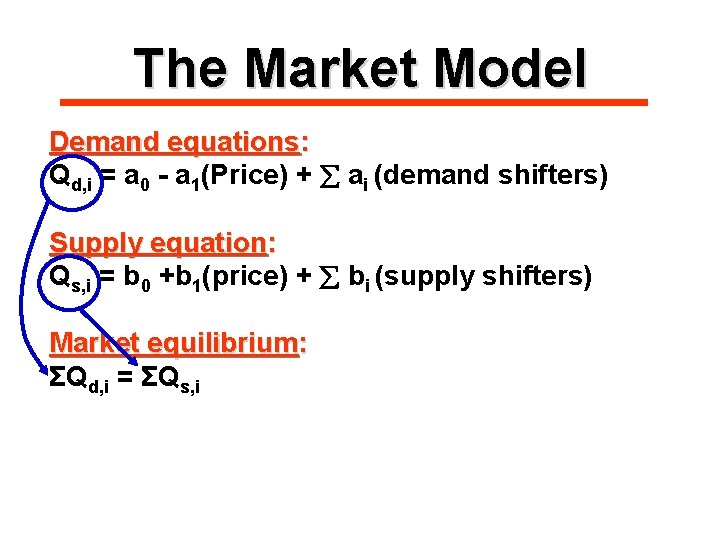
The Market Model Demand equations: Qd, i = a 0 - a 1(Price) + ai (demand shifters) Supply equation: Qs, i = b 0 +b 1(price) + bi (supply shifters) Market equilibrium: ΣQd, i = ΣQs, i
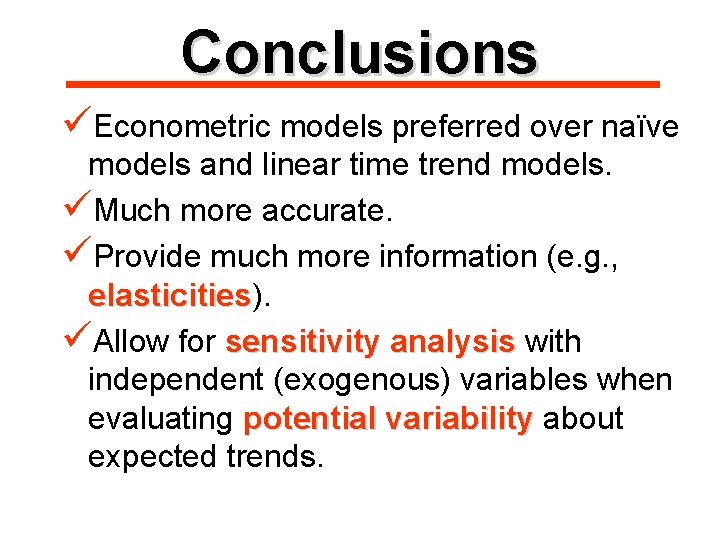
Conclusions üEconometric models preferred over naïve models and linear time trend models. üMuch more accurate. üProvide much more information (e. g. , elasticities). elasticities üAllow for sensitivity analysis with independent (exogenous) variables when evaluating potential variability about expected trends.