
Private Crypto Currencies and Monetary Policy Eli Noam



- Slides: 20
Private Crypto. Currencies and Monetary Policy Eli Noam Columbia University
Now close to 2, 000 cryptocurrencies
History of Private Moneys • United States • Scotland • Switzerland • Company chits Today: • UK “local pounds” • HK
Electronic Moneys • 1. 0: Digicash (1994) • 2. 0: Distributed Ledger Technology (DLT) • Blockchain (2008) • Satoshi Nakamoto.
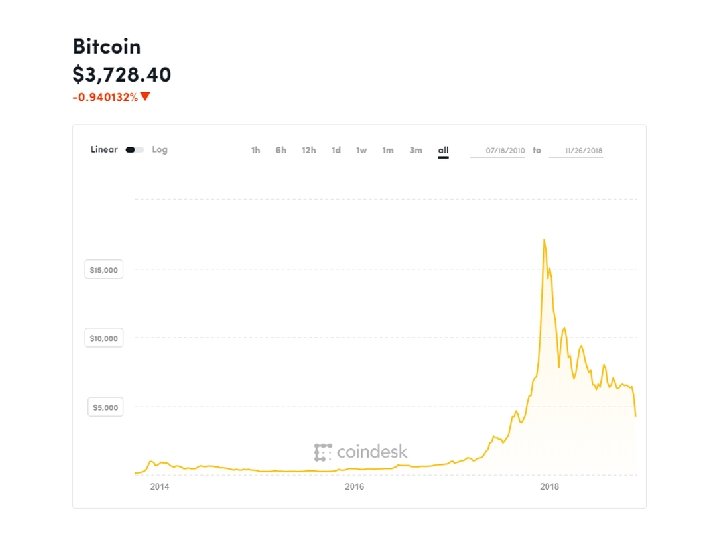
Problems of Cryptocurrencies • Manipulation • Volatility • Low scalability (10 transactions/sec) • Cost-prohibitive for small transactions • Negative environmental impact • Potential for illegal activities • Non-reversability
Problems (cont. ) • Low acceptability • Difficulties in convertibility • Regulatory uncertainty • Inefficient incentives in the creation of additional coins
Electronic Moneys • 1. 0: Digicash (1994) • 2. 0: Distributed Ledger Technology (DLT) • Blockchain (2008) • 3. 0: next-gen
Tools of Central Banks • Control the money supply - Open market operations - Reserve requirement • Control interest rates - Discount rate
Impact of Crypto-Currencies on Inflation Friedrich von Hayek Milton Friedman
Impact on Stability
New Digital Tools for Macro-Economic Policy: Implications for Central Banks
How cryptocurrency can help Central Banks’ monetary policy • 1. Create new regulatory tools
1. Regulatory Tools • Set rate of convertibility • Could impose charges or taxes • Increase or decrease the award for crypto -currency “miners” by imposing fees • With direct customer accounts, the CB can affect interest rates more directly • Possible to charge negative interest rates
Regulatory Tools (cont. ) • Could require the inclusion of smart contracts that include items important to the law enforcement and monetary authorities • Could use its cryptocurrency, or that of others, to infuse money to all ( or a subset) of citizens to stimulate the economy - “Helicopter money”
Regulatory Tools (cont. ) • Can fine-tune monetary policy. Can tzarget it to regions, or to industries. • Mandate the coding of several central bank functions into the algorithm itself • Deny legal protection to transactions and contracts with those crypto currencies that violate regulations
How cryptocurrency can help Central Banks’ monetary policy • 1. Create new regulatory tools • 2. Create Central Bank “Digital Fiat Currency” (DFC) • Fedcoin?
How Cryptocurrency can help Central Banks’ Monetary Policy • 1. Enables new regulatory tools • 2. Enables Central Bank “Digital Fiat Currency” (DFC) • Fedcoin? • 3. Create direct customer accounts at the Central Bank
Direct Customer Accounts at the Central Bank • Problem: CB becomes a retail operation. • Problem: competition with commercial banks. In which it has advantages due to greater safety. • Problem: Reduces lending by commercial banks
A Mixed System of Public and Private Moneys