
Prior Knowledge Assessment 8 th Grade Physical Science
- Slides: 9
Prior Knowledge Assessment 8 th Grade Physical Science Blacksburg Middle School Andrew Boydoh 11 -29 -11
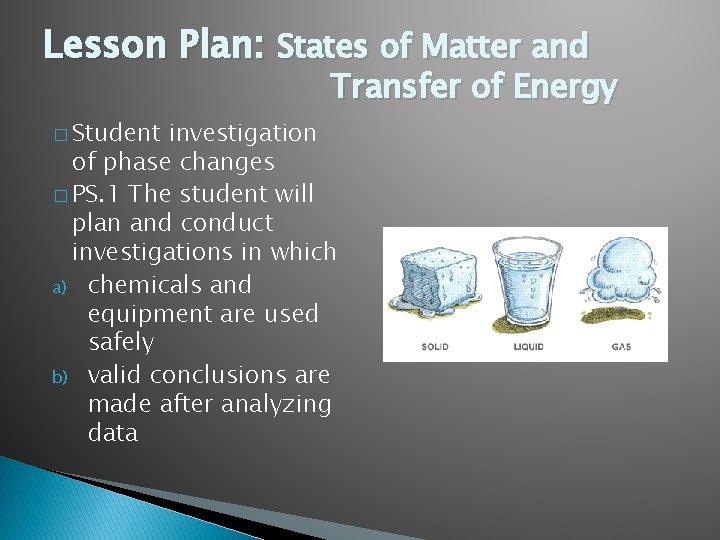
Lesson Plan: States of Matter and Transfer of Energy � Student investigation of phase changes � PS. 1 The student will plan and conduct investigations in which a) chemicals and equipment are used safely b) valid conclusions are made after analyzing data
Lesson Plan: Cont. PS. 2 The student will investigate and understand the basic nature of matter. Key concepts include c) solids, liquids, and gases d) characteristics of types of matter based on physical properties � PS. 6 The student will investigate and understand states and forms of energy and how energy is � transferred and transformed. Key concepts include � a) potential and kinetic energy � PS. 7 The student will investigate and understand temperature scales, heat, and heat transfer. Key concepts include b) phase change, freezing point, melting point, boiling point, vaporization, and condensation
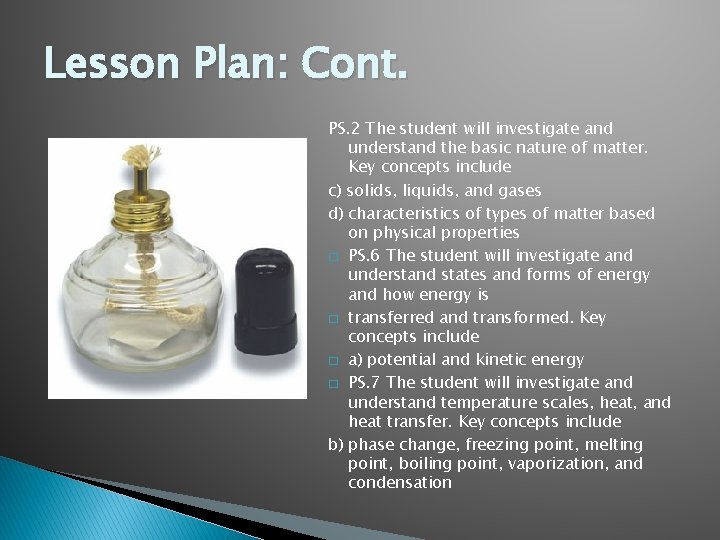
Materials and Resources � Peg board experiment stand � Alcohol burners � Test tubes with unknown substance � Ring stand � Beaker with water bath � Thermometer � Test tube clamp � Plastic bags (large & Unknown Substance Lab Ice Cream Lab small) � Milk, sugar, vanilla � Ice and rock salt � Bowls � Cups and spoons � Sprinkles � Chocolate syrup
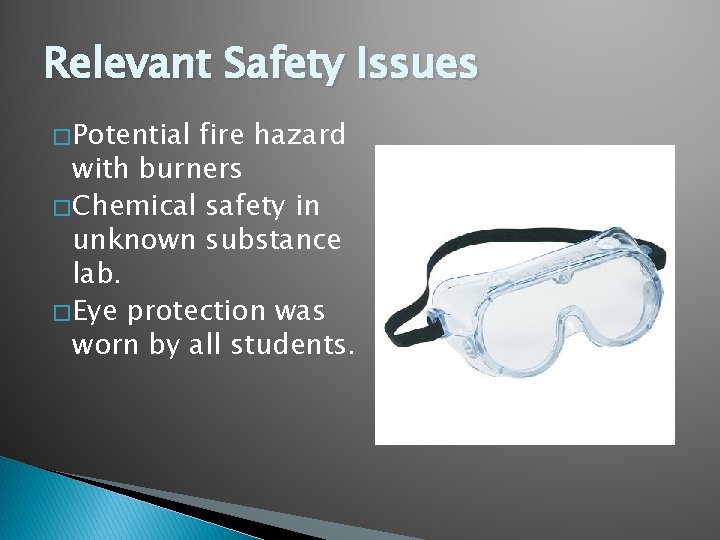
Relevant Safety Issues � Potential fire hazard with burners � Chemical safety in unknown substance lab. � Eye protection was worn by all students.
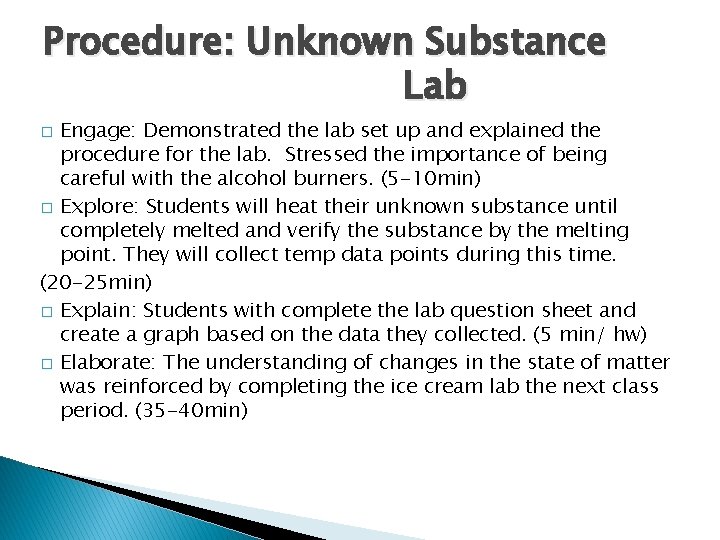
Procedure: Unknown Substance Lab Engage: Demonstrated the lab set up and explained the procedure for the lab. Stressed the importance of being careful with the alcohol burners. (5 -10 min) � Explore: Students will heat their unknown substance until completely melted and verify the substance by the melting point. They will collect temp data points during this time. (20 -25 min) � Explain: Students with complete the lab question sheet and create a graph based on the data they collected. (5 min/ hw) � Elaborate: The understanding of changes in the state of matter was reinforced by completing the ice cream lab the next class period. (35 -40 min) �
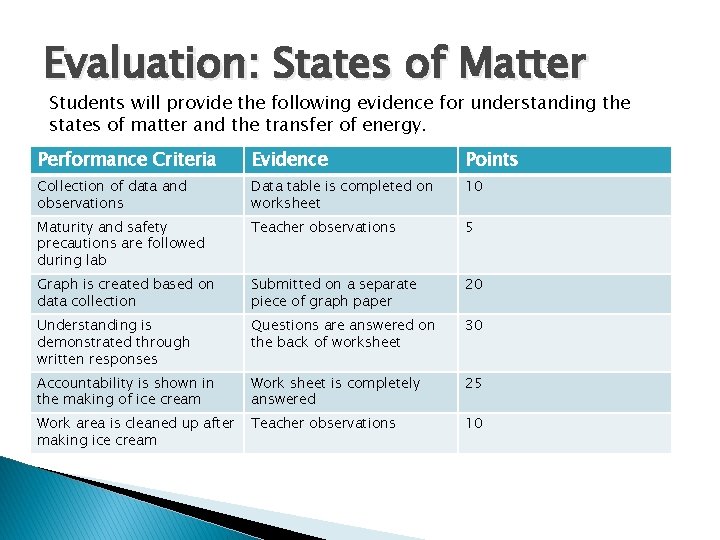
Evaluation: States of Matter Students will provide the following evidence for understanding the states of matter and the transfer of energy. Performance Criteria Evidence Points Collection of data and observations Data table is completed on worksheet 10 Maturity and safety precautions are followed during lab Teacher observations 5 Graph is created based on data collection Submitted on a separate piece of graph paper 20 Understanding is demonstrated through written responses Questions are answered on the back of worksheet 30 Accountability is shown in the making of ice cream Work sheet is completely answered 25 Work area is cleaned up after making ice cream Teacher observations 10
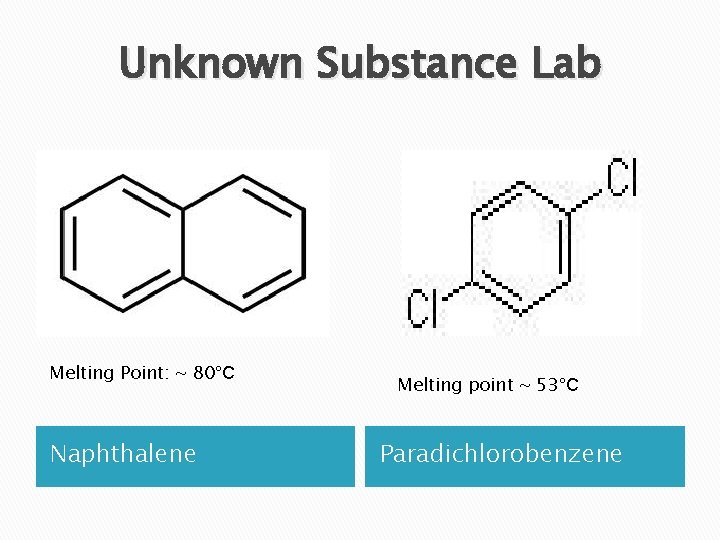
Unknown Substance Lab Melting Point: ~ 80°C Naphthalene Melting point ~ 53°C Paradichlorobenzene
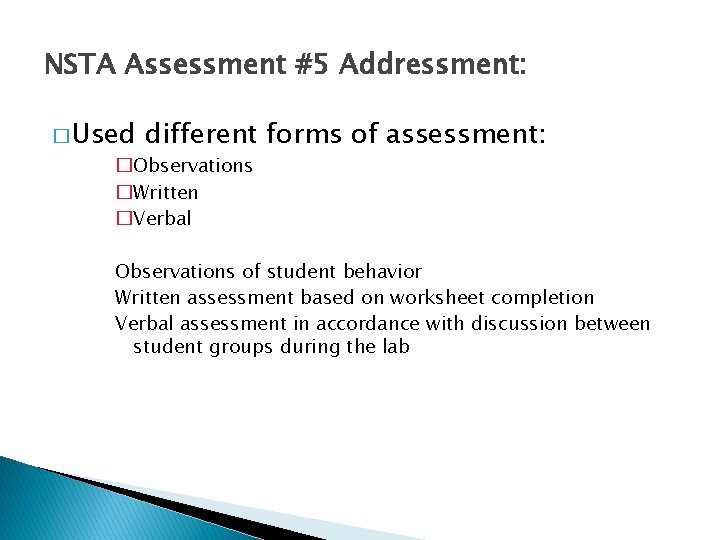
NSTA Assessment #5 Addressment: � Used different forms of assessment: �Observations �Written �Verbal Observations of student behavior Written assessment based on worksheet completion Verbal assessment in accordance with discussion between student groups during the lab