
Printmaking Unit Monoprint Experiments Linocuts Collographs Monoprint https
- Slides: 19
Printmaking Unit Monoprint Experiments Linocut’s Collographs
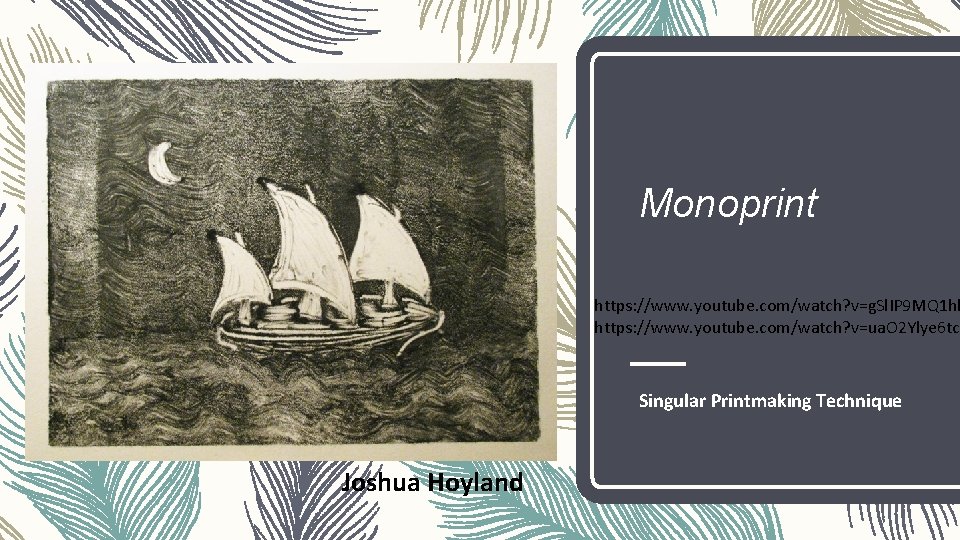
Monoprint https: //www. youtube. com/watch? v=g. Sl. IP 9 MQ 1 hk https: //www. youtube. com/watch? v=ua. O 2 Ylye 6 tc Singular Printmaking Technique Joshua Hoyland
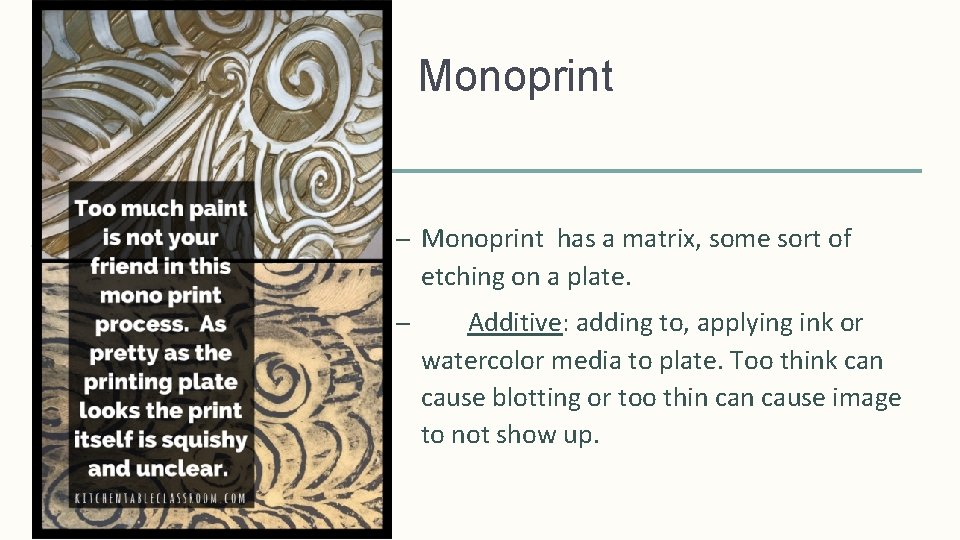
Monoprint – Monoprint has a matrix, some sort of etching on a plate. – Additive: adding to, applying ink or watercolor media to plate. Too think can cause blotting or too thin cause image to not show up.
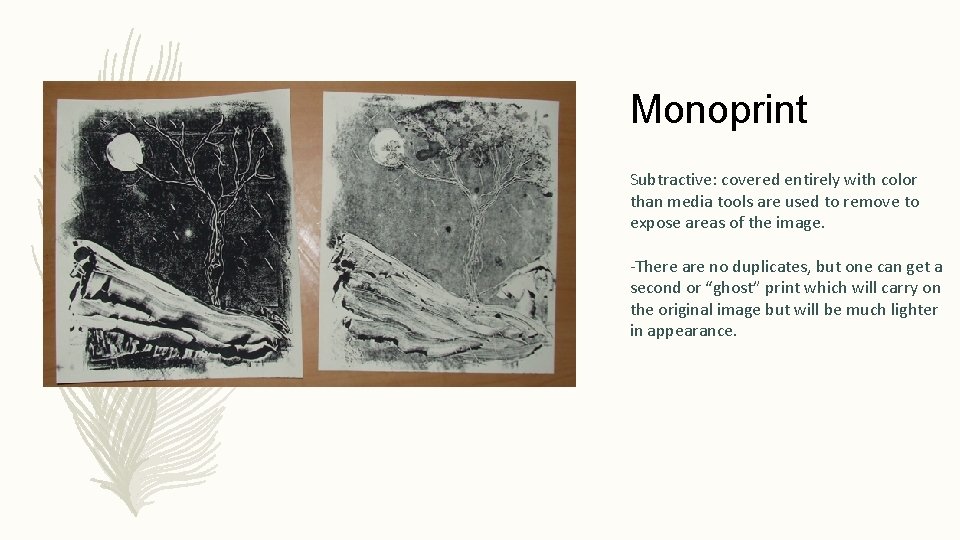
Monoprint Subtractive: covered entirely with color than media tools are used to remove to expose areas of the image. -There are no duplicates, but one can get a second or “ghost” print which will carry on the original image but will be much lighter in appearance.
Monoprint Experiments Understanding Check Experiment using foam plates to create monoprints. – May use Acrylic Paint, Tempera Paint, or SPARINGLY use block printing ink. – May use scapels, or dull pencil to etch into foam, before inking. – Or can do a monotype instead where one does not etch into plate but solely uses additive or subtractive processes with inking to create image. – Hand in 10 best for grading in unit
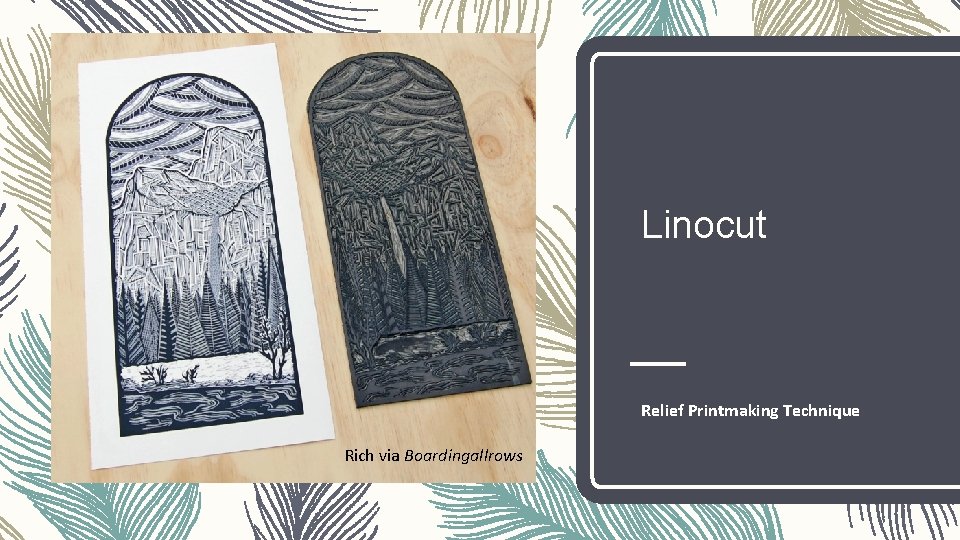
Linocut Relief Printmaking Technique Rich via Boardingallrows
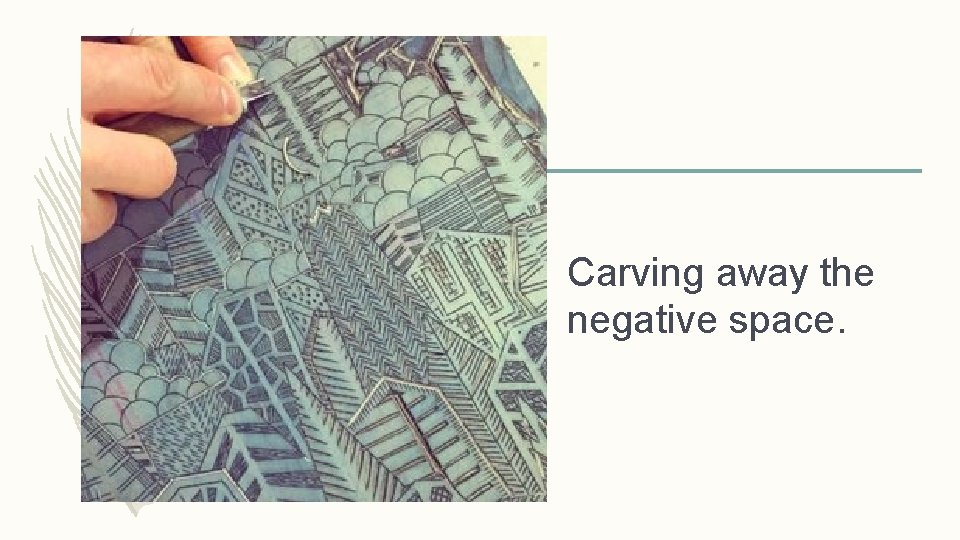
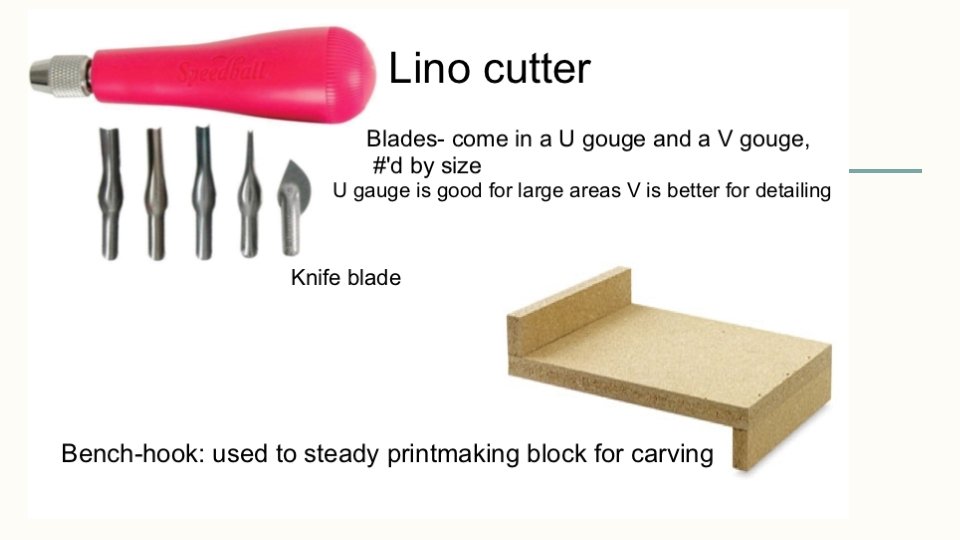
A linocut is a type of relief, or block print, and bears a lot of similarities to woodblock printing. Essentially, the artist carves an image into a linoleum (lino) block and what's left of the block is inked and printed. – Keep in mind that the image will be printed in reverse so plan accordingly. – Carving a Linoleum Block - using gouges carve the image in the linoleum block. What is carved out of the block will not be printed in the image. Always carve in a direction away from your other hand for safety's sake. Also ALWAYS use a bench hook to hold your block in place. – http: //www. boardingallrows. com/linocut-process/ – Our linoleum print will be a single color single print. There also Reductive Prints that can be multi color and the image is gradually carved out more with each printing to create more details to the image.
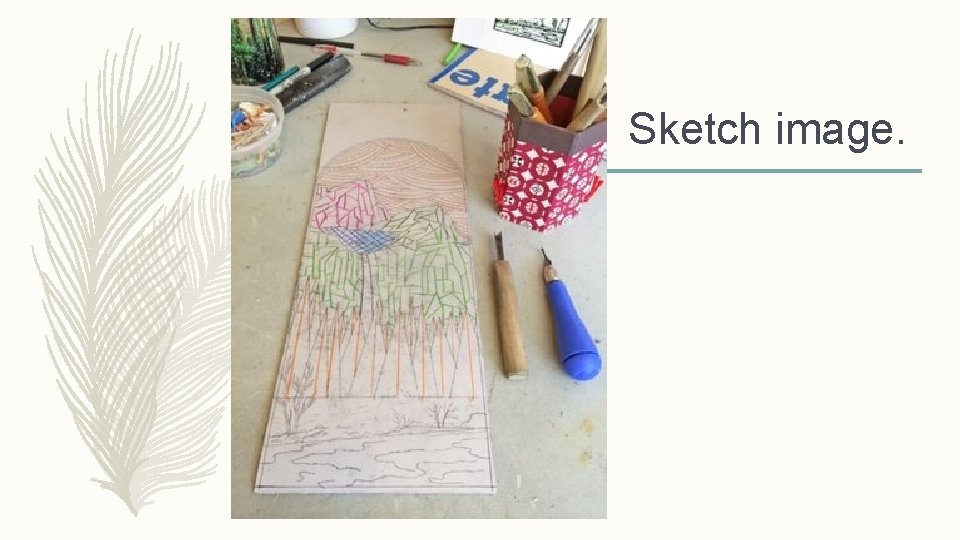
Sketch image.
Carving away the negative space.
Some Rules for Linocut Printing. – Using lino cutters – Carry cutters with the blade pointing down. – Only use the cutter for the job it was intended for. – Work away from your hands when cutting. – Use of materials – Wipe tables after printing. – Wash your hands thoroughly after every lesson.
Continued – Personal responsibility – Wear older clothes when printing. . ink will stain. – Alert your teacher to injuries or breakages. – Tidying up – Be responsible for any job you have been asked to do. – Be responsible for tidying up your own work space.
Labeling Prints – Prints should all be labeled with artist name, title of piece, and edition.
Understanding Check – Must submit 10 finalized CLEAN Prints (cut and attatched to backing paper) – One color reductive lino print block to be used – MUST BE AN ORIGINAL DESIGN – NO WORDS!!! These have to be done in reverse to print properly. – Will lose points for improper use of tools – Can also lose points for not cleaning up
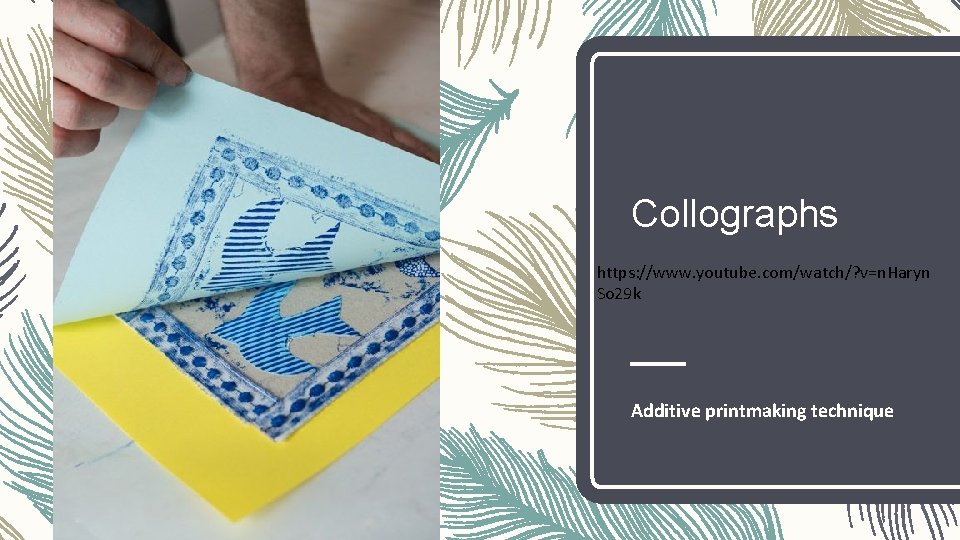
Collographs https: //www. youtube. com/watch/? v=n. Haryn So 29 k Additive printmaking technique
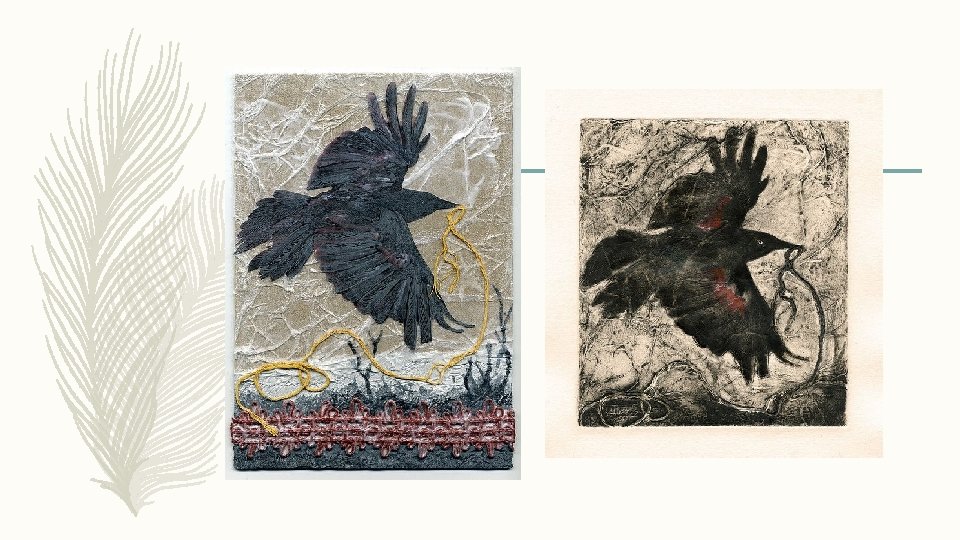
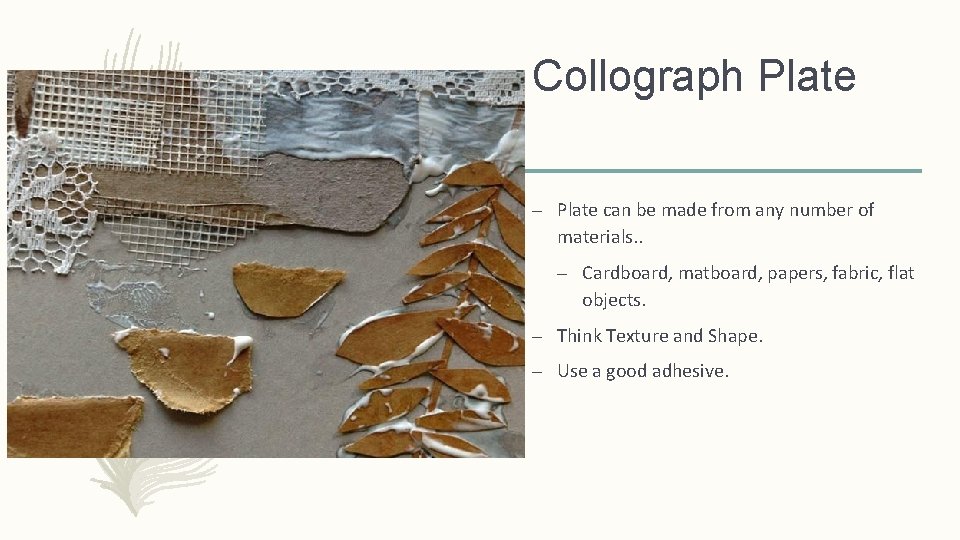
Collograph Plate – Plate can be made from any number of materials. . – Cardboard, matboard, papers, fabric, flat objects. – Think Texture and Shape. – Use a good adhesive.
Application of Ink or Paint – Additive method, much like monoprints. – Dabbed in. – https: //www. youtube. com/watch/? v=n. Haryn. So 29 k
Understanding Check – Must submit 10 finalized CLEAN Prints (cut and attatched to backing paper) – More than one Collagraph plate may be made and used but not required – MUST BE AN ORIGINAL DESIGN (s) – NO WORDS!!! These have to be done in reverse to print properly. – Will lose points for improper use of tools – Can also lose points for not cleaning up