
Principles Powers and Clauses in the U S
- Slides: 6
Principles, Powers, and Clauses in the U. S. Constitution Objective 2. 01
Basic Principles l. Majority Rule--- ¡Most votes wins (has power) l. Separation of Powers ¡ 3 branches of gov’t. Legislative, Executive, Judicial l. Rule of Law---Law applies to ALL, even those who govern. Ex: Magna Carta (1215)
l. Popular Sovereignty---Power lies with the people. Ex: Voting, Petitioning Gov’t l. Federalism ---Creation of national, state, local gov’t, and how they share powers and roles. l. Checks and Balances ¡Each branch is able to check, or restrain, the powers of the others • Judicial Review---Judicial branch reviews laws to ensure they are fair and just.
Types of Powers l. Enumerated Powers ¡Powers given only to the federal government ¡A. K. A. – Delegated Powers l. Reserved Powers ¡Powers reserved for state governments only l. Concurrent Powers ¡Powers shared between the state and federal governments
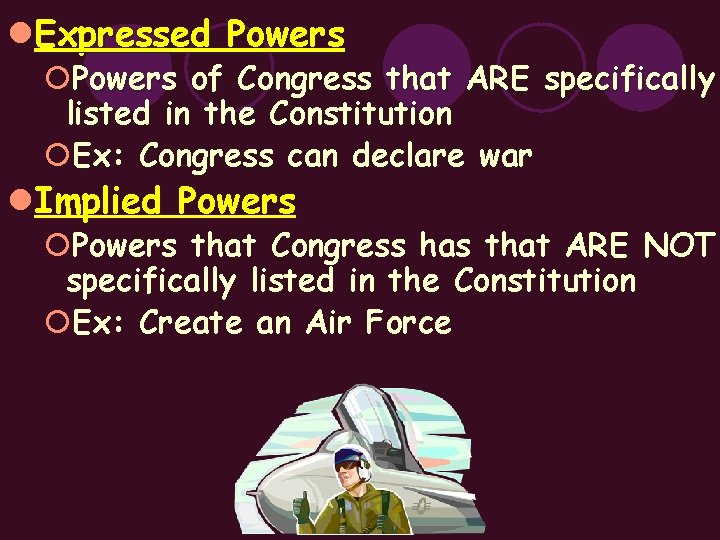
l. Expressed Powers ¡Powers of Congress that ARE specifically listed in the Constitution ¡Ex: Congress can declare war l. Implied Powers ¡Powers that Congress has that ARE NOT specifically listed in the Constitution ¡Ex: Create an Air Force
Clauses l Elastic Clause ¡In Article I ¡Gives Congress the right to make all laws that they deem to be “necessary and proper” ¡A. K. A. – Necessary and Proper Clause l Full Faith and Credit Clause ¡In Article IV ¡States must recognize laws, public records (i. e. licenses), and judicial decisions of other states l Supremacy Clause ¡National government is ALWAYS supreme