
PRINCIPLES PEARLS AND PROCEDURES OF PATIENT PACKAGING Steve













- Slides: 49
PRINCIPLES, PEARLS AND PROCEDURES OF PATIENT PACKAGING Steve Pitts, RRT, NREMT-P Northwest Med. Star
OBJECTIVES: • Discuss methods of packaging that allow the transporting agent easy access to the necessary “parts” of the patient • Discuss methods of allowing for patient comfort, while still maintaining immobilization guidelines
OBJECTIVES (cont. ) • Discuss options for immobilizing and packaging different sizes of patients with “what you got”. • Discuss different types of transport vehicles; their pros and cons • Address questions and concerns regarding packaging issues
Just what exactly is patient packaging?
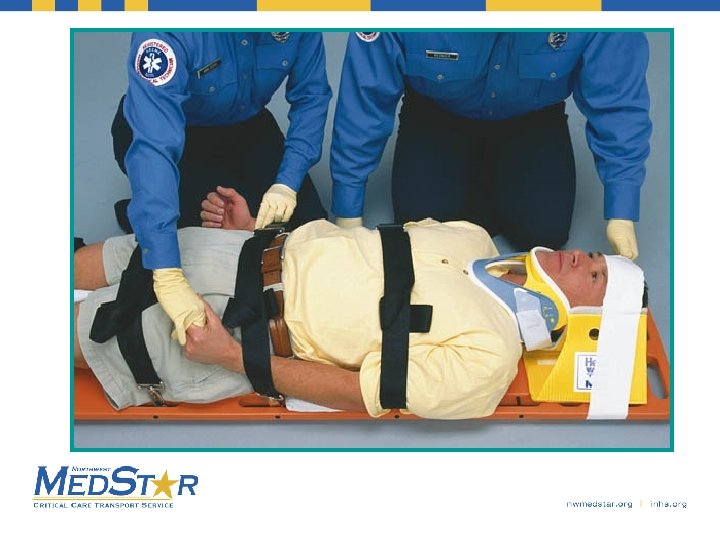
Patient packing is the process in which a patient is prepared for transport, in a vehicle, to a receiving facility, while providing for comfort and immobilization. This process should not interfere with the patient’s ability to continue with normal bodily function and yet should allow the transporting personnel the ability to maintain an accurate account of the patient’s vital signs, continue with the treatment of any and all illness and injury and provide the appropriate medical care.
This process must be able to be provided in a rapid and easy manner so as to not compromise scene time, the safety of the patient and medical personnel, and not become a burden in its application, whether financial or physical.
ISSUES: • Arms tied down • Inability to access the chest, abdomen • Shirt under the cervical collar • • IV access Placement of ECG leads Buttons, necklaces Bunching of material under collar
ISSUES: • Patient fully clothed – – Inability to exam injuries IV access Placement of monitoring equipment Will this equipment fit into the transport vehicle
PEARL # 1 It is important, for packaging purposes, to know your transport vehicle
Vehicle Characteristics • Patient size restrictions – Patient length, width, height • Which side is accessible to the transport crew • How much of the patient’s body is accessible • Can the patient be “rolled"
EC-135 (rotor wing) • Patient’s right side against wall – – – Difficult to start IV Arm must be at the patient’s side or on chest BP cable across patient Lower body difficult to access Difficult to roll patient whole in flight
EC-135 (cont) • • • Hare style traction splints left hanging Shoulder or elbow injuries; will the patient fit Hip or knee injuries Place cuff on patient’s left arm IV’s in left arm (preferable)
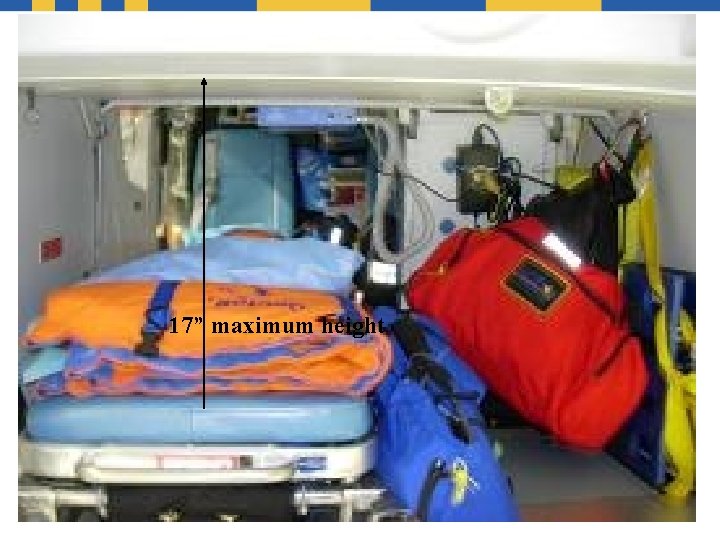
17” maximum height
Maximum height includes Backboard, clothing, blankets, etc….
King Air (200 and F-90) • • Patient’s left side against wall Small walkway area to patient’s right Hip, knee and shoulder injuries… Standard back board just barely fits…. length of stretcher to “turn the corner • Traction splints
King Air (cont) • • • IV’s in either arm BP cuff on right arm Good access to patient’s full body Can roll patient if necessary Patient can be loaded “backwards” if necessary (feet to the front)
Maximum width 25 inches
Width restriction is due to the size of the door opening
AMBULANCES • • Van type has limited access on the patent’s right Some “box type” have good access to both sides Good access to whole body Van type may have limited length due to proximity to doors
PEARLS 2 -6…. . • Use packaging devices designed for different size patients • EXPENSIVE TO HAVE IT ALL!!! • Must practice to become proficient
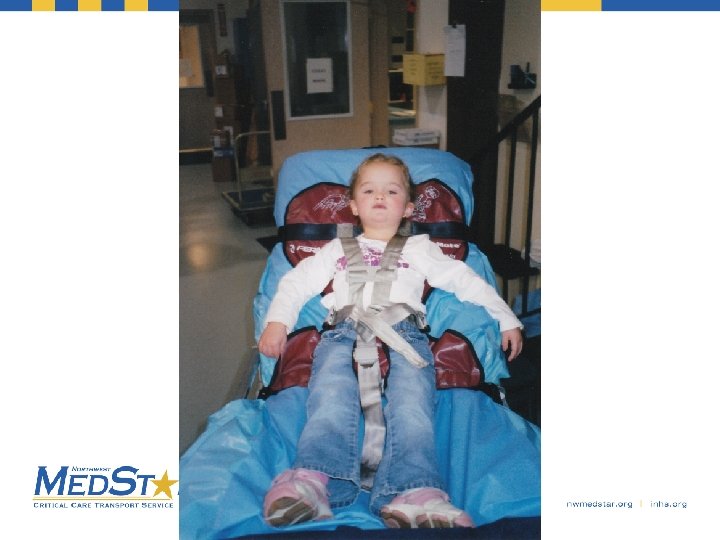
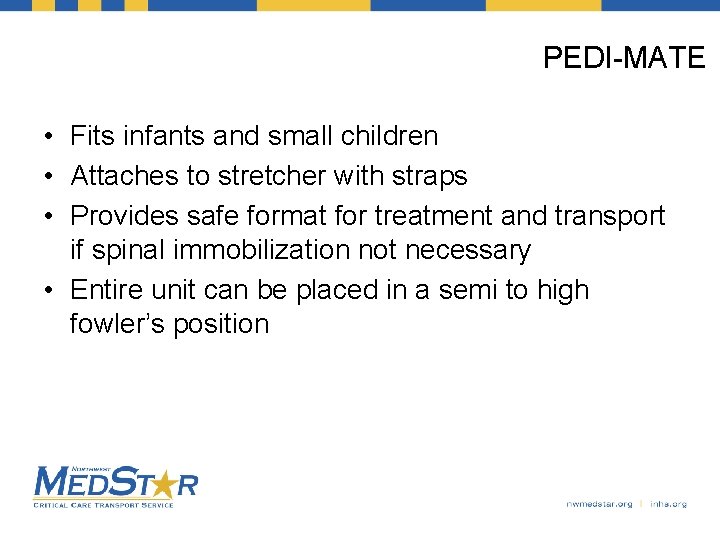
PEDI-MATE • Fits infants and small children • Attaches to stretcher with straps • Provides safe format for treatment and transport if spinal immobilization not necessary • Entire unit can be placed in a semi to high fowler’s position
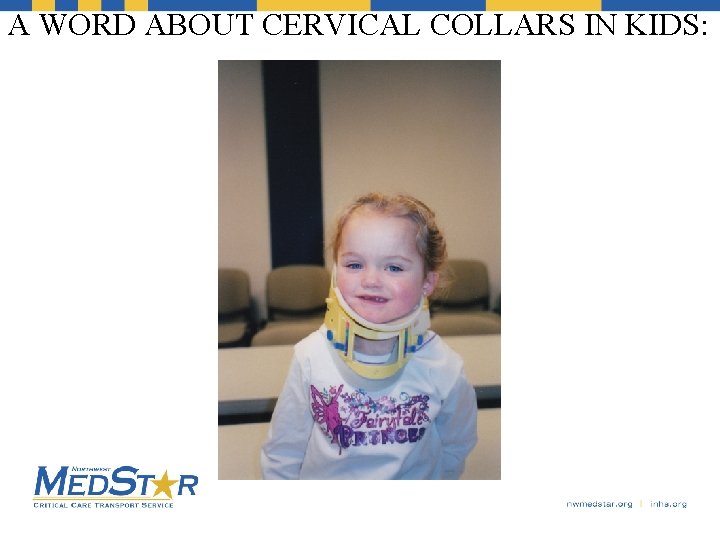
A WORD ABOUT CERVICAL COLLARS IN KIDS:
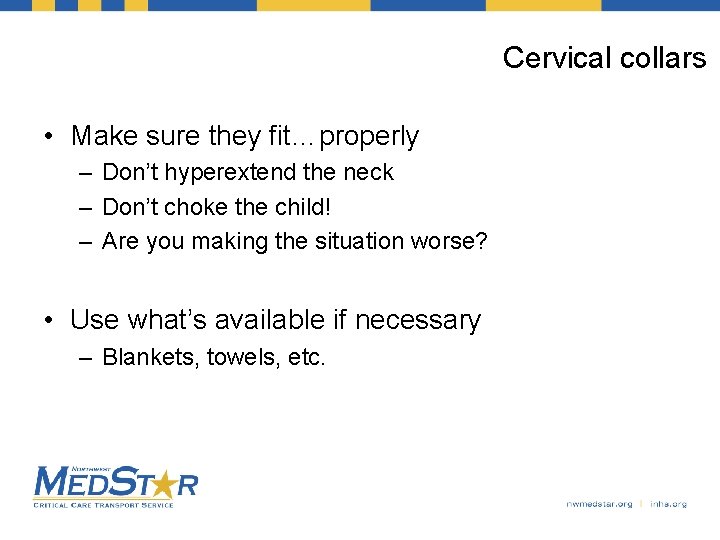
Cervical collars • Make sure they fit…properly – Don’t hyperextend the neck – Don’t choke the child! – Are you making the situation worse? • Use what’s available if necessary – Blankets, towels, etc.
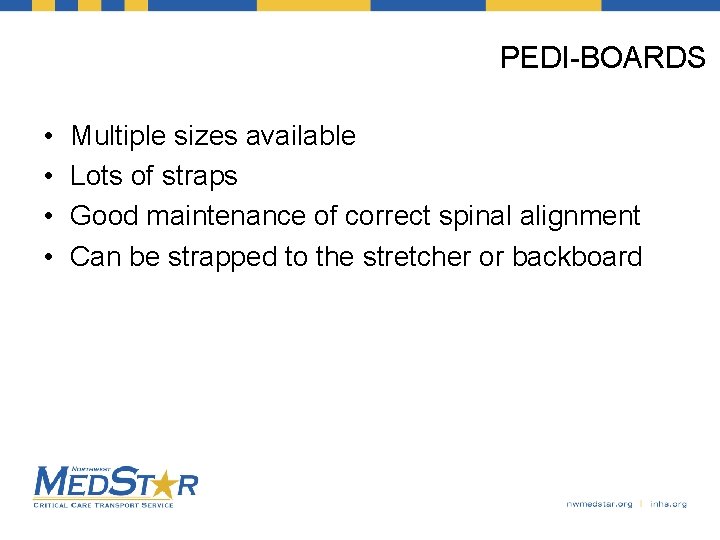
PEDI-BOARDS • • Multiple sizes available Lots of straps Good maintenance of correct spinal alignment Can be strapped to the stretcher or backboard
The problem with backboards • • Definitely not one size fits all Cold in the winter, hot in the summer Slickery Uncomfortable
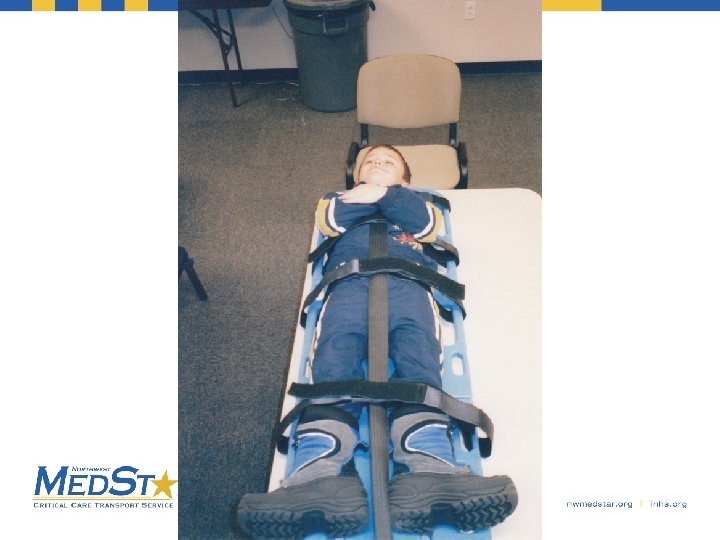
Looks pretty good huh…. .
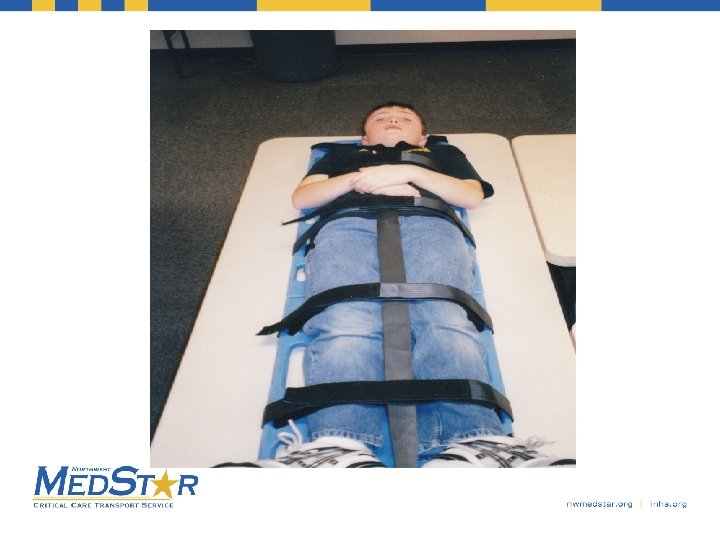
How about a bigger person…. .
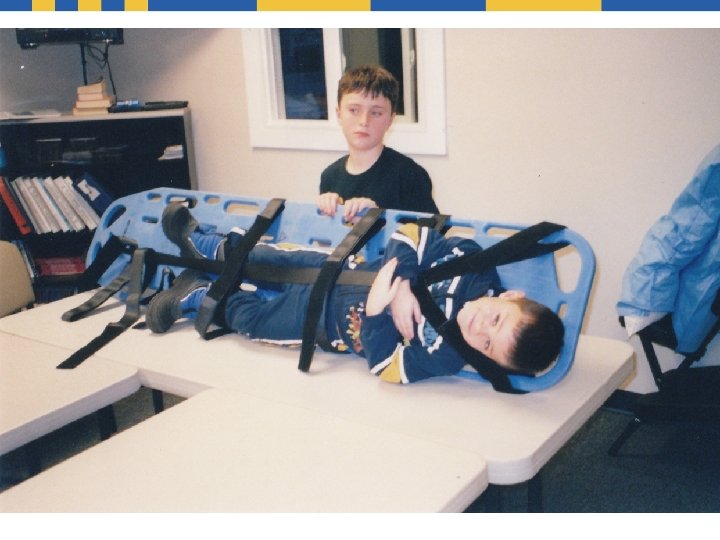
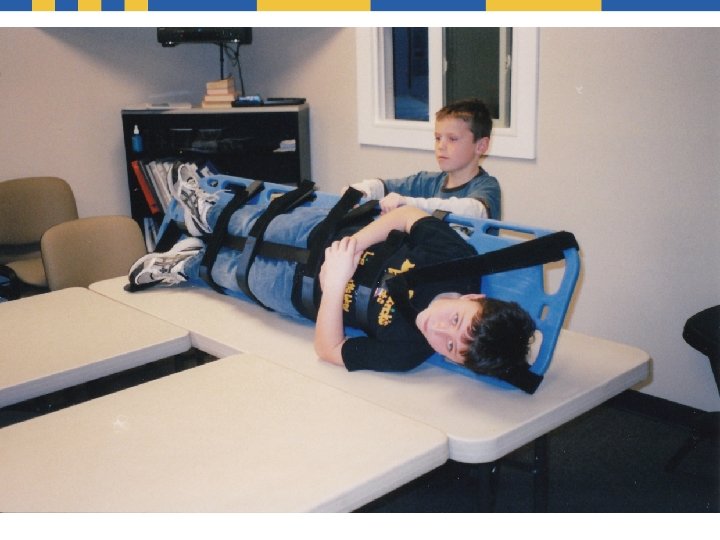
Pearls of Backboard Use • • Straps must be tight; but not too tight Fill in open areas with blankets, towels, etc…… Pad areas where applicable Legs can be bent at the knee – More comfortable – Distributes weight more equally
Backboards (cont) • Cut clothing down the back while inspecting the back – Can place the clothing backwards over the top of the patient after securing with straps if environmental concerns – Leave arms out of straps and clothing for access to IV’s, BP, etc.
Now…a word about padding • Skin breakdown can begin to occur in as little as 1 hour • Redistribute the weight off of the shoulder blades, buttocks and heels – Padding (not a lot) makes a huge difference – Bending knees flattens the back, flattens the feet to redistribute the weight
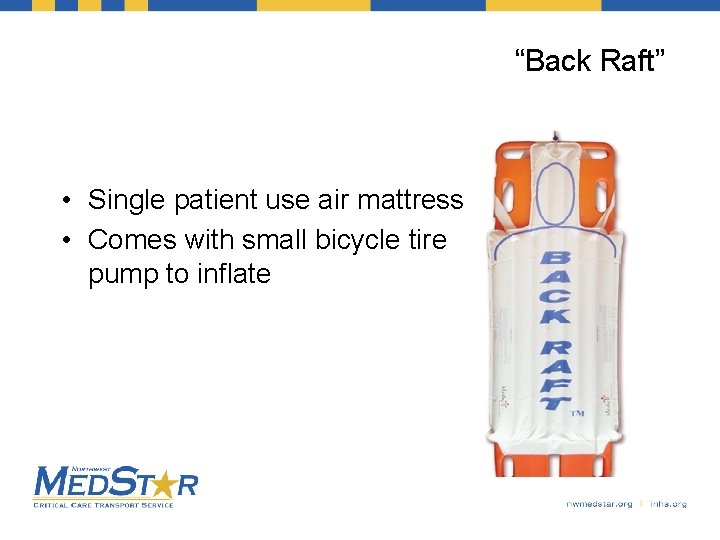
“Back Raft” • Single patient use air mattress • Comes with small bicycle tire pump to inflate
Special circumstances • Severe closed head injuries – Tilt head of backboard up • Penetrating back injuries – May need to hold direct pressure • Impaled objects – May need to get creative
Special circumstances • Trauma patients with medical problems – Kyphosis or Scoliosis • Lots of padding – CHF • Need to sit up to breathe • Pregnant women – Left side down-pad between knees
PUTTING IT ALL TOGETHER
Unless you are in a rapid extraction/extrication situation, take your time and think ahead: Pad the board prior to placing the patient on it Remove the patients clothing prior to placing them on the board Secure the patient with the transport vehicle in mind
Leave the appropriate arm/arms accessible to allow therapies and monitoring Cover the top of the straps rather than under them Make sure that the patient will not move side to side if tipped
Use specialty securing devices for little people if they are available Size your cervical immobilization devices properly
PATIENT PACKAGING April 2009 POST-TEST 1. Which side of the patient’s body is preferable to leave for IV and monitoring access in an ambulance or the EC-135 helicopter? a. Left b. Right c. Doesn’t matter 2. Which side of the patient’s body is preferable to leave for IV and monitoring access in the King Air F-90 or 200 airplanes? a. Left b. Right c. Doesn’t matter 3. A standard backboard can be used to secure all types of patients? a. True b. False
4. List 2 types of pediatric securing devices A. _______________ B. _______________ 5. Skin breakdown can begin to occur in as little as ______ for patients secured on a backboard. A. 15 minutes B. 1 hour C. 2 hours D. 3 hours
Contact: Renée Anderson 509 -232 -8155 1 -866 -630 -4033 andersr@inhs. org Fax: 509 -232 -8344