
Principles of Weather Hurricane Jeanne 2004 Outline Impact

- Slides: 37
Principles of Weather Hurricane Jeanne, 2004
Outline • • Impact of severe weather Role of solar radiation Properties of water, air masses Effects from Earth’s rotation
Severe Weather • Includes thunderstorms, cyclones, floods, hurricanes, tornadoes • Counting all natural hazard effects, severe weather leads to ~75% of yearly fatalities and damage
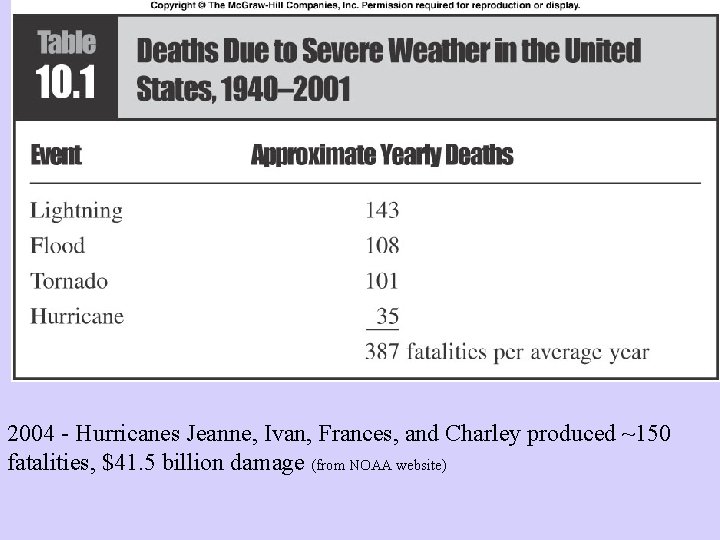
2004 - Hurricanes Jeanne, Ivan, Frances, and Charley produced ~150 fatalities, $41. 5 billion damage (from NOAA website)
Weather vs. Climate • Weather: condition of the atmosphere at any particular time/place • Made of several elements – – – Air temperature and pressure Humidity Clouds Precipitation Visibility Wind
Weather vs. Climate • Climate: “Average weather” • Described for a particular region over a specified time
Atmosphere • Thin gas envelope that surrounds the planet • Most within 30 km of the surface of the planet • Mostly composed of – – Nitrogen Oxygen Smaller amounts of water, carbon dioxide, ozone Clouds with liquid water and ice • Important: shields from UV radiation, space junk
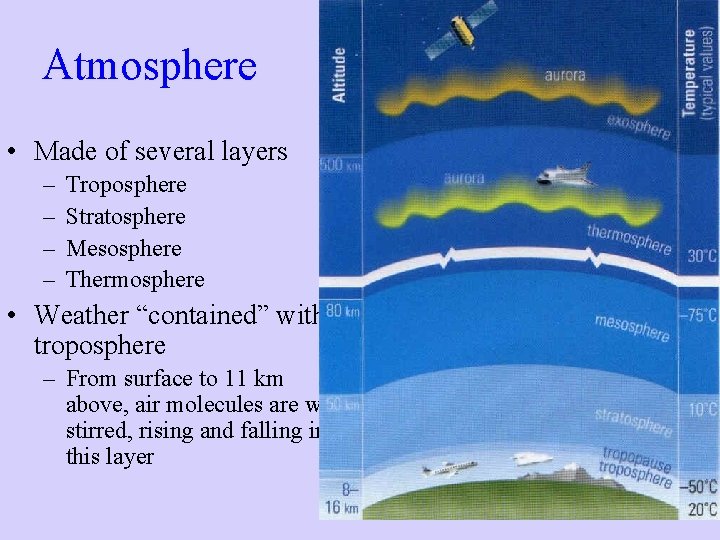
Atmosphere • Made of several layers – – Troposphere Stratosphere Mesosphere Thermosphere • Weather “contained” within troposphere – From surface to 11 km above, air molecules are well stirred, rising and falling in this layer
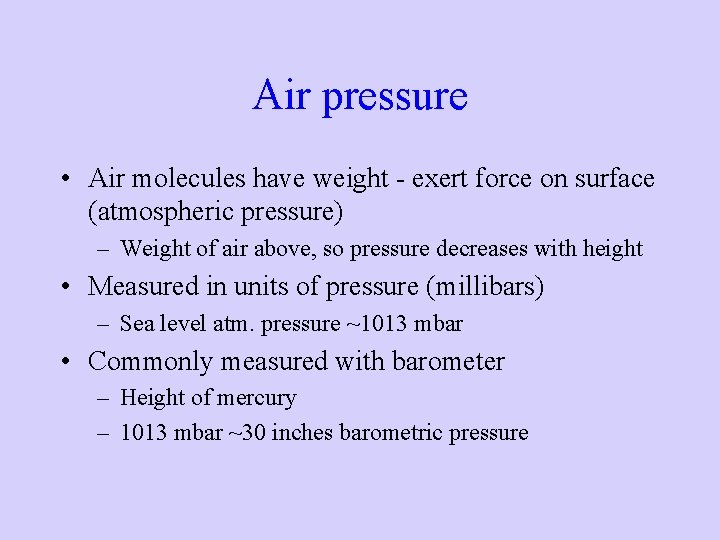
Air pressure • Air molecules have weight - exert force on surface (atmospheric pressure) – Weight of air above, so pressure decreases with height • Measured in units of pressure (millibars) – Sea level atm. pressure ~1013 mbar • Commonly measured with barometer – Height of mercury – 1013 mbar ~30 inches barometric pressure
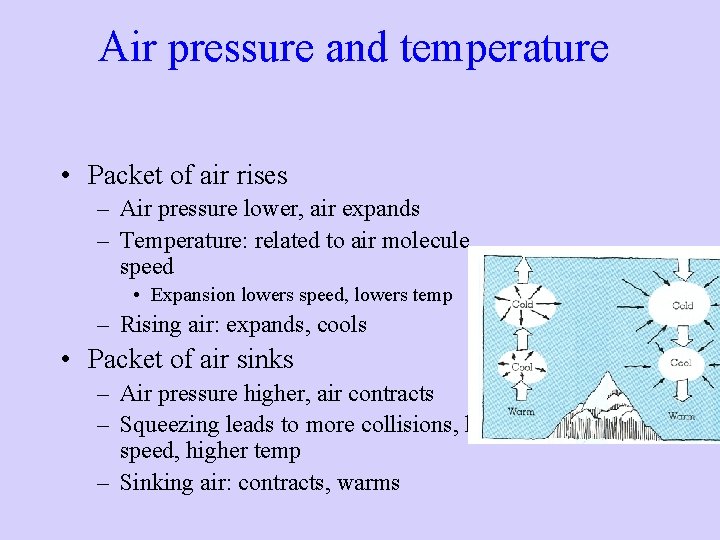
Air pressure and temperature • Packet of air rises – Air pressure lower, air expands – Temperature: related to air molecule speed • Expansion lowers speed, lowers temp – Rising air: expands, cools • Packet of air sinks – Air pressure higher, air contracts – Squeezing leads to more collisions, higher speed, higher temp – Sinking air: contracts, warms
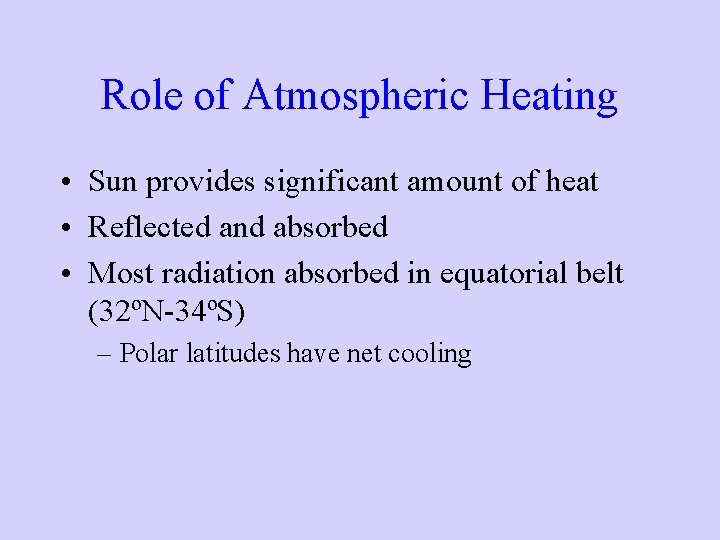
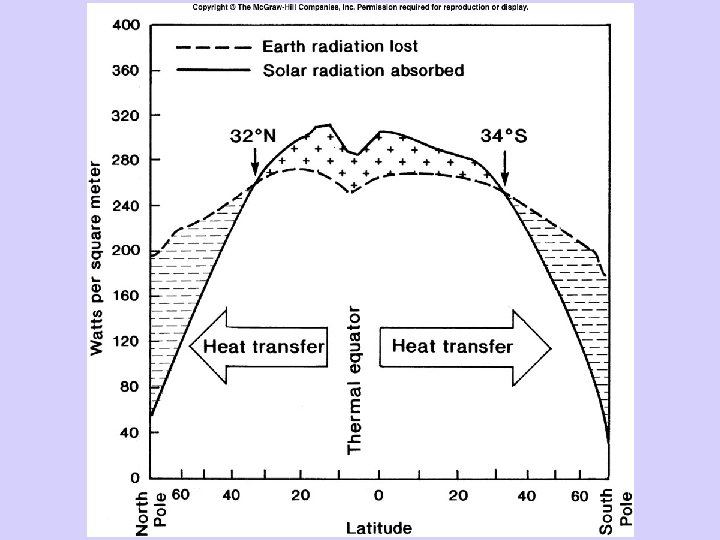
Role of Atmospheric Heating • Sun provides significant amount of heat • Reflected and absorbed • Most radiation absorbed in equatorial belt (32ºN-34ºS) – Polar latitudes have net cooling
Fate of Heat • Some trapped in rock at surface • Some absorbed in water/water vapor in air – Different amounts of heat lead to heat transport, moving air masses, storms
Water and Heat • High heat capacity • Water and air can move heat around through convection • Water changing phase - change in heat – Ice to water: latent heat stored in water – Water evaporation: latent heat of vaporization – Vapor condensation: latent heat of condensation
Temperature and Water • Amount of water in air: humidity • Higher temperatures mean more water vapor can be stored in the air (higher humidity)
Back to Air Movement • Convection: warm air rises, cool air sinks • Warm rising air – Pressure, temp lower, less water vapor it can hold. Condensation forms clouds. • Cool sinking air – Pressure, temp higher, can hold more water vapor. Clear skies result.
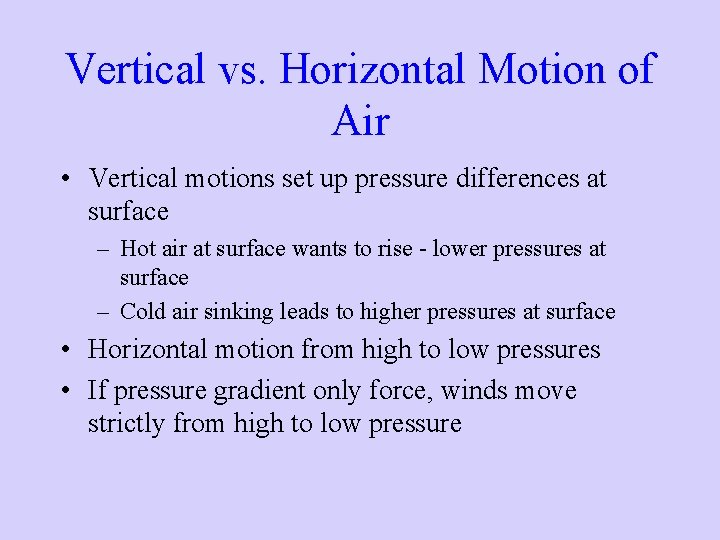
Vertical vs. Horizontal Motion of Air • Vertical motions set up pressure differences at surface – Hot air at surface wants to rise - lower pressures at surface – Cold air sinking leads to higher pressures at surface • Horizontal motion from high to low pressures • If pressure gradient only force, winds move strictly from high to low pressure
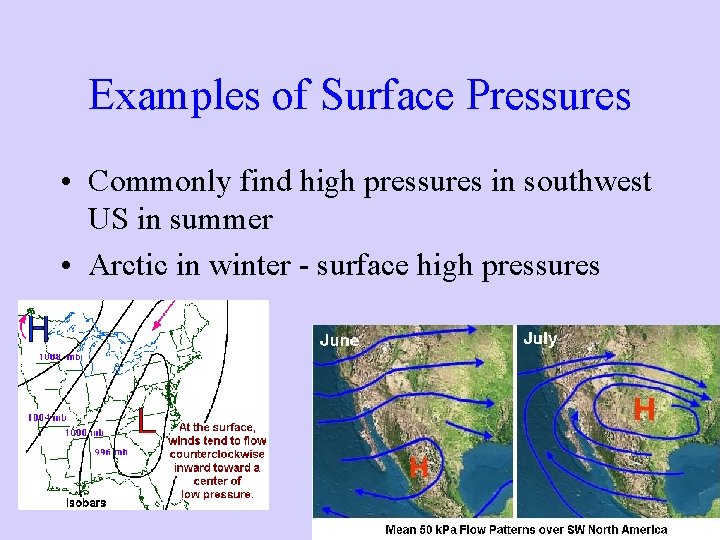
Examples of Surface Pressures • Commonly find high pressures in southwest US in summer • Arctic in winter - surface high pressures
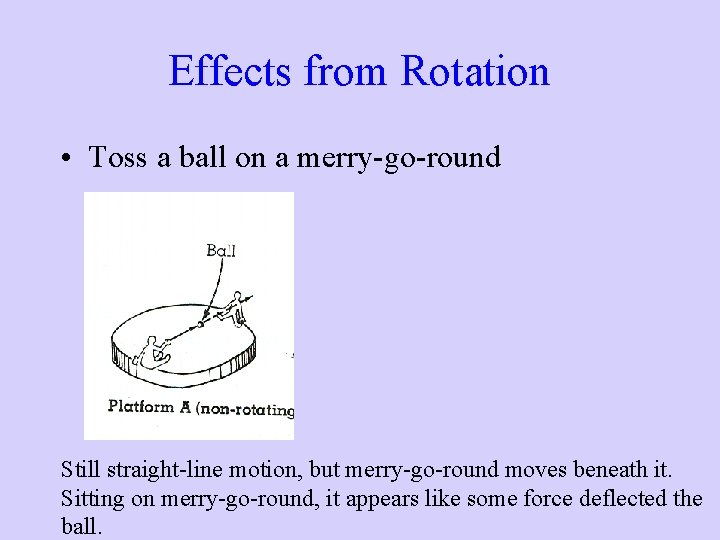
Effects from Rotation • Toss a ball on a merry-go-round Still straight-line motion, but merry-go-round moves beneath it. Sitting on merry-go-round, it appears like some force deflected the ball.
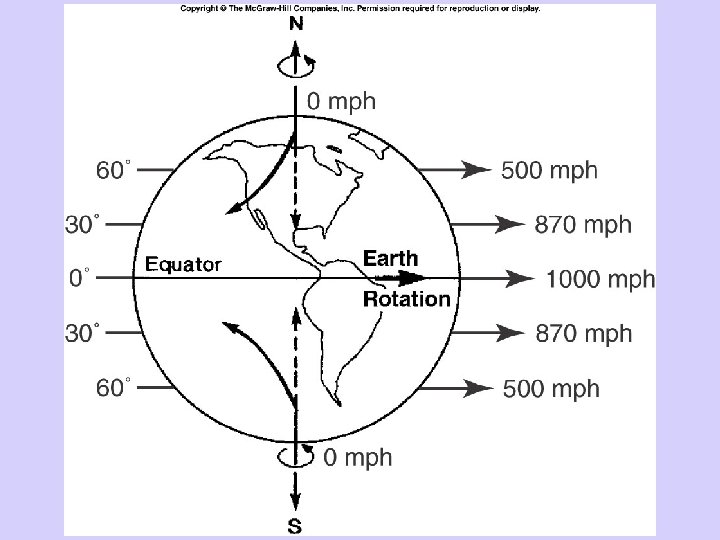
Coriolis Effect • Apparent force due to rotation of Earth (changes direction, not speed) • Northern Hemisphere: winds deflected to right • Southern Hemisphere: winds deflected to the left • Effect greatest near poles, less at equator • Important for paths of ocean currents, large winds, hurricanes
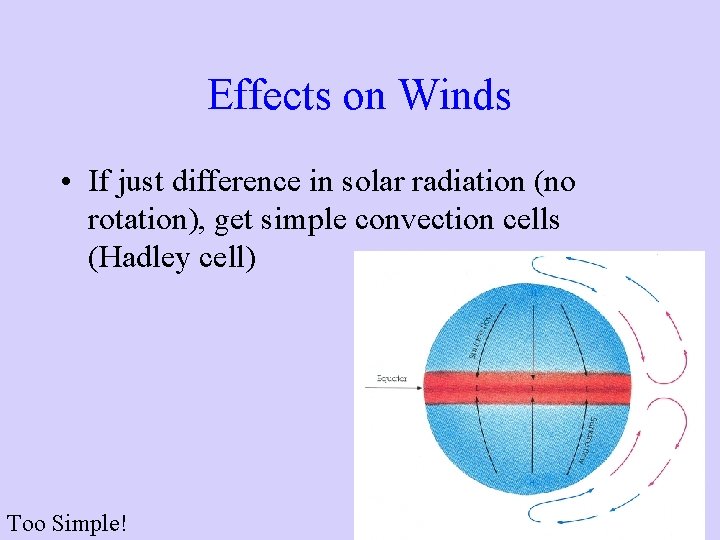
Effects on Winds • If just difference in solar radiation (no rotation), get simple convection cells (Hadley cell) Too Simple!
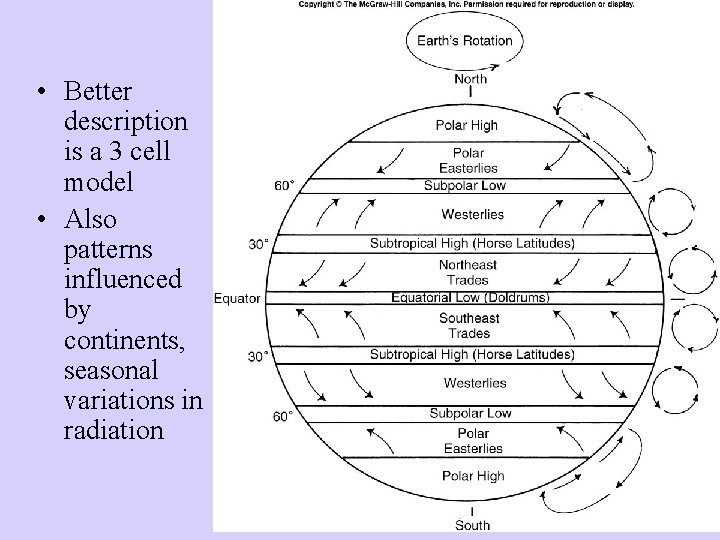
• Better description is a 3 cell model • Also patterns influenced by continents, seasonal variations in radiation Example fig
Jet Streams • Narrow high velocity winds that flow west to east • Operate high in the atmosphere (10 -14 km) • 2 main jets – Polar *more impact on weather – Subtropical
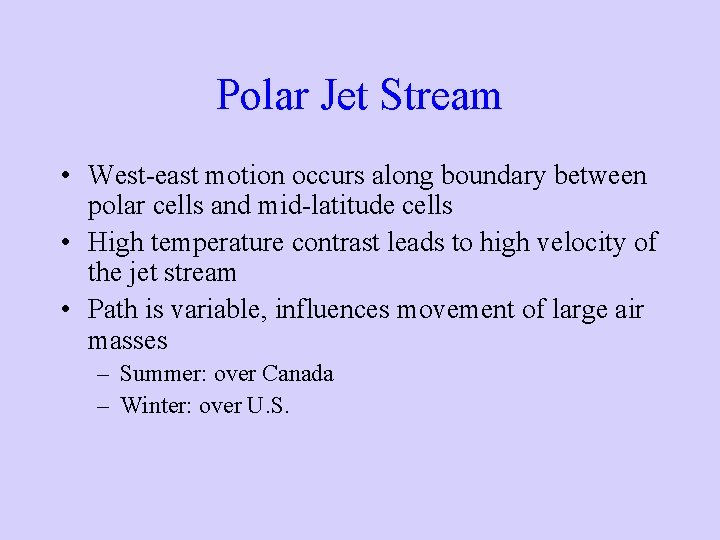
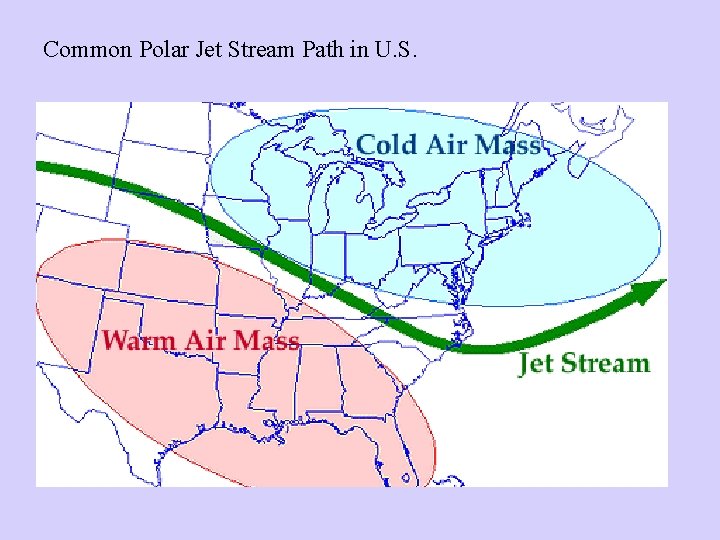
Polar Jet Stream • West-east motion occurs along boundary between polar cells and mid-latitude cells • High temperature contrast leads to high velocity of the jet stream • Path is variable, influences movement of large air masses – Summer: over Canada – Winter: over U. S.
Common Polar Jet Stream Path in U. S.
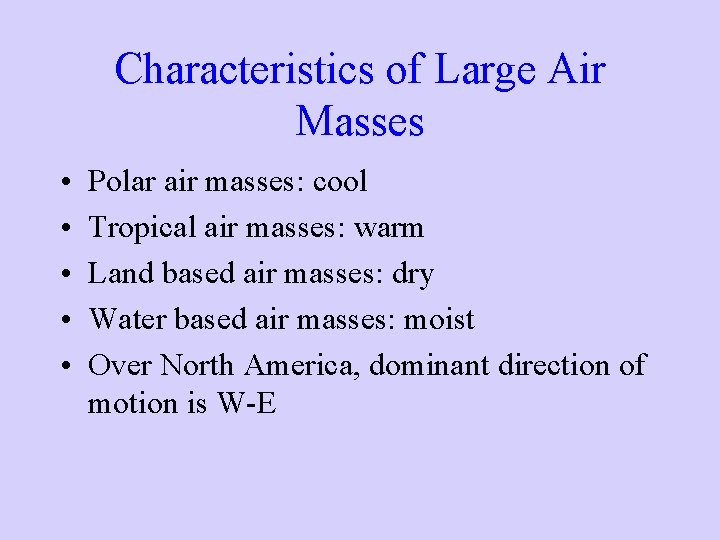
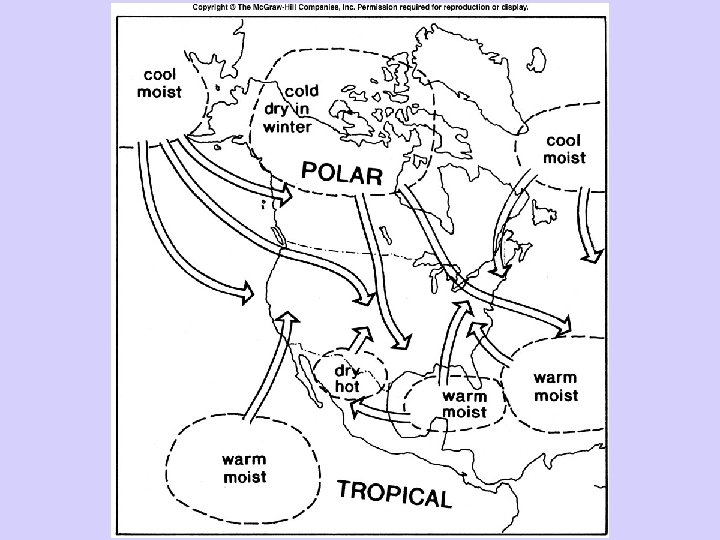
Characteristics of Large Air Masses • • • Polar air masses: cool Tropical air masses: warm Land based air masses: dry Water based air masses: moist Over North America, dominant direction of motion is W-E
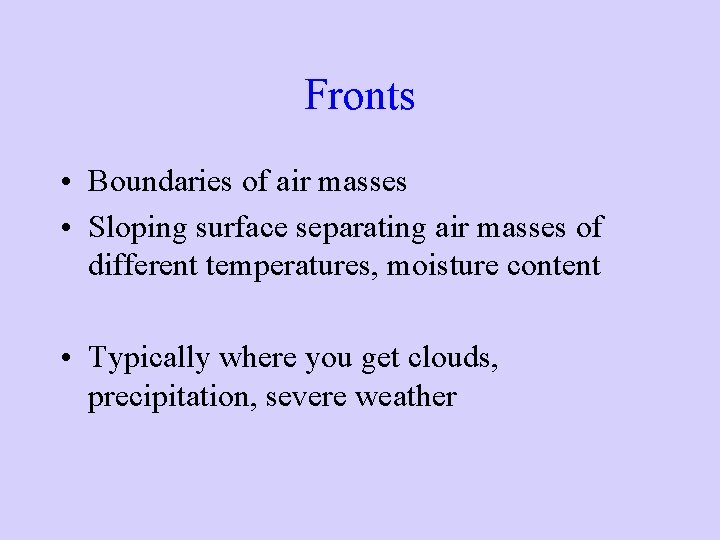
Fronts • Boundaries of air masses • Sloping surface separating air masses of different temperatures, moisture content • Typically where you get clouds, precipitation, severe weather
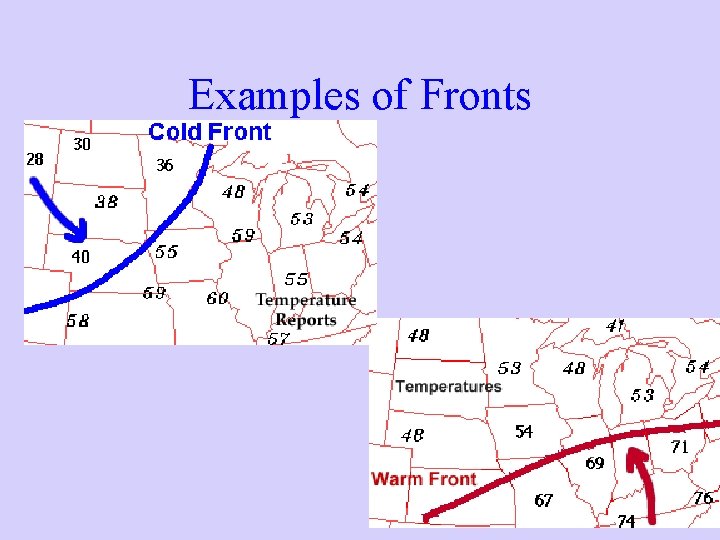
Examples of Fronts
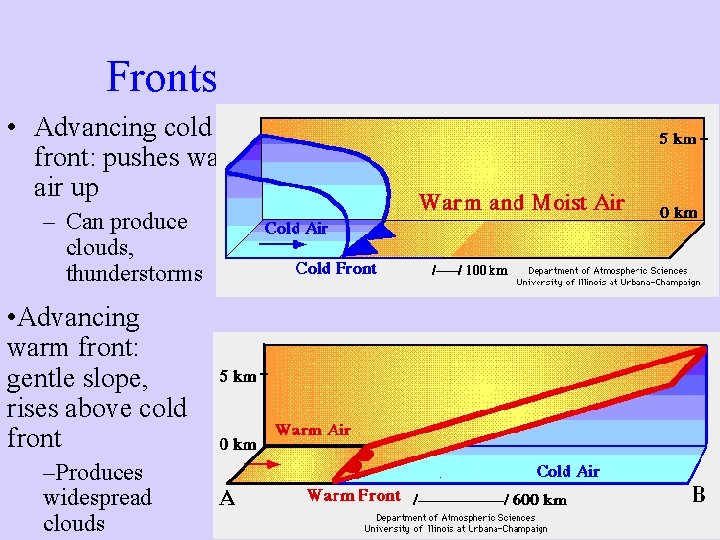
Fronts • Advancing cold front: pushes warm air up – Can produce clouds, thunderstorms • Advancing warm front: gentle slope, rises above cold front –Produces widespread clouds
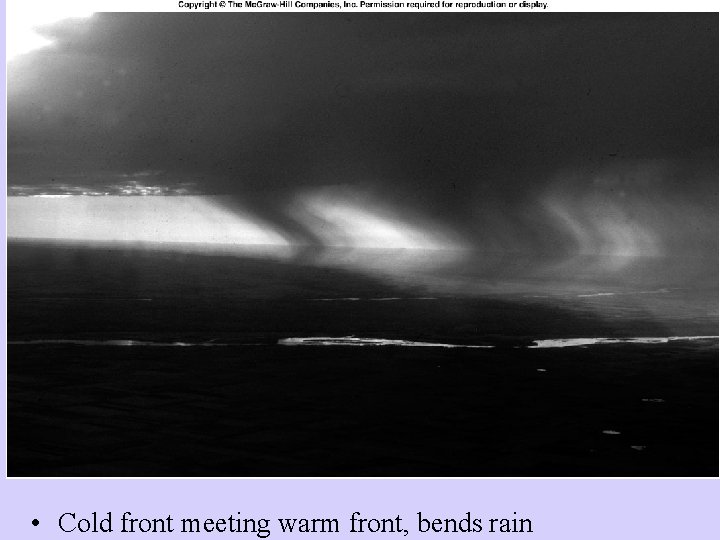
• Cold front meeting warm front, bends rain
Next Time • Mid-Latitude Cyclones and Thunderstorms
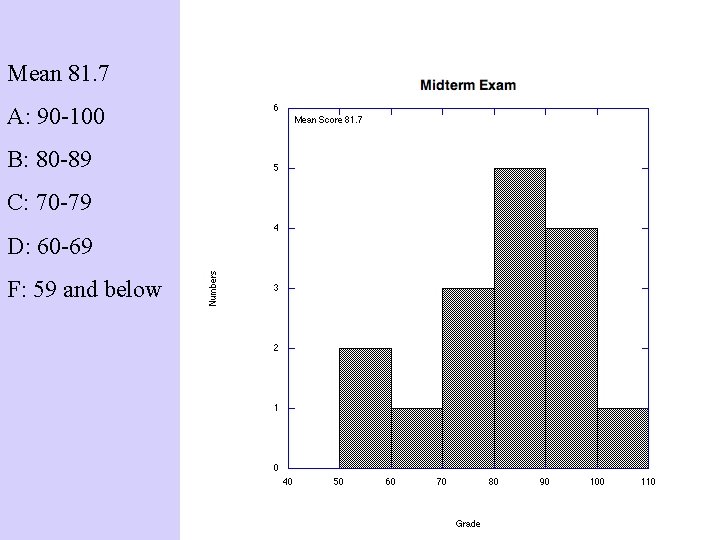
Mean 81. 7 A: 90 -100 B: 80 -89 C: 70 -79 D: 60 -69 F: 59 and below Midterm Exam
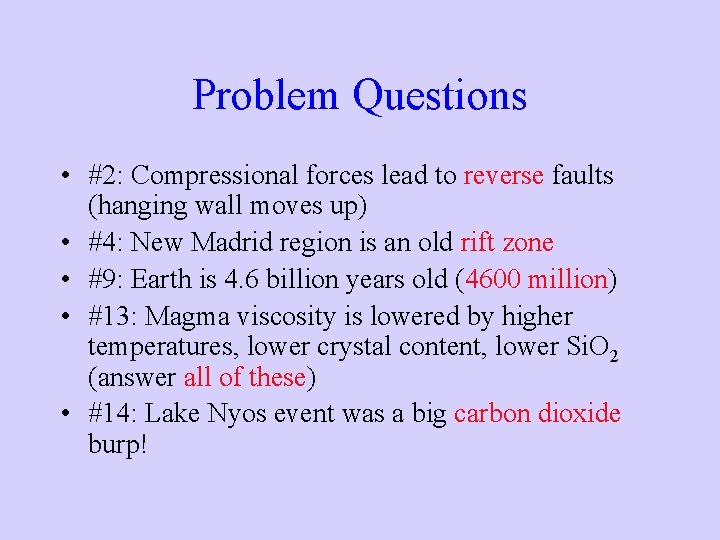
Problem Questions • #2: Compressional forces lead to reverse faults (hanging wall moves up) • #4: New Madrid region is an old rift zone • #9: Earth is 4. 6 billion years old (4600 million) • #13: Magma viscosity is lowered by higher temperatures, lower crystal content, lower Si. O 2 (answer all of these) • #14: Lake Nyos event was a big carbon dioxide burp!
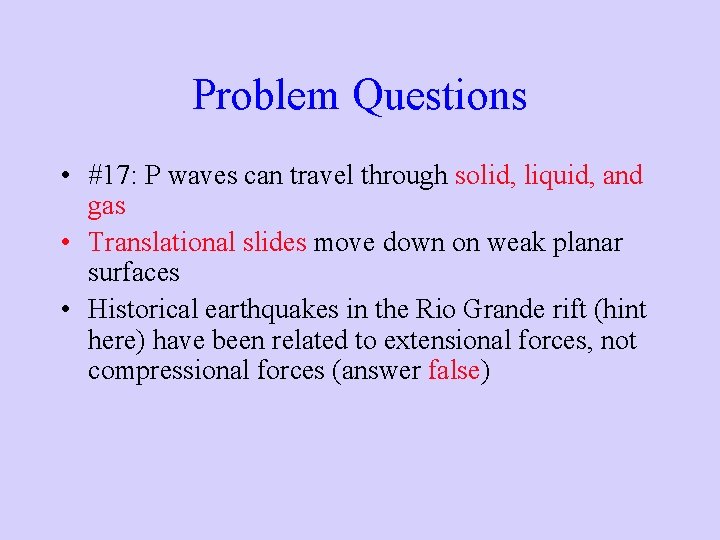
Problem Questions • #17: P waves can travel through solid, liquid, and gas • Translational slides move down on weak planar surfaces • Historical earthquakes in the Rio Grande rift (hint here) have been related to extensional forces, not compressional forces (answer false)
Hints for Next Time • Read each question carefully • Look for hints in the question • Attend class, particularly when video clips are presented (not posted on website)