
Principles of Training The 5 Components of Fitness

- Slides: 12
Principles of Training
The 5 Components of Fitness • • • Cardio respiratory endurance Muscular Strength Muscular Endurance Flexibility Body composition
Cardio respiratory Endurance The measure of how effectively your heart and lungs work during exercise and how quickly they return to normal.
Muscle Strength • The ability of muscles to exert a force.
Muscular Endurance • The measure of how long a group of muscles can exert a force without tiring.
Flexibility • The ability to move joints fully and easily.
Body Composition • The amount of fat compared with lean body tissue.
Words to know Muscular Strength: The force or power a muscle can exert over a short period of time. Muscular Endurance: How long a muscle can exert a force without getting tired
Principles of Training Specificity: Targeting certain muscle groups. Progression – Over time you will need to lift more to gain strength or endurance. Overload –To improve you must do more than you usually do.
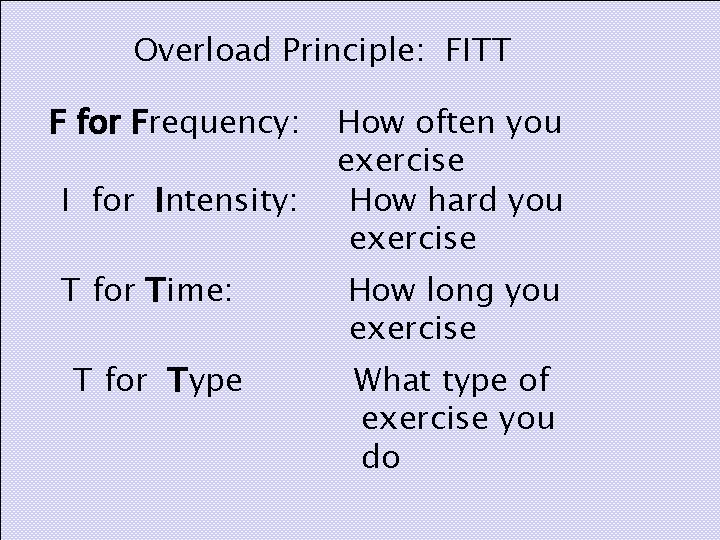
Overload Principle: FITT F for Frequency: I for Intensity: T for Time: T for Type How often you exercise How hard you exercise How long you exercise What type of exercise you do
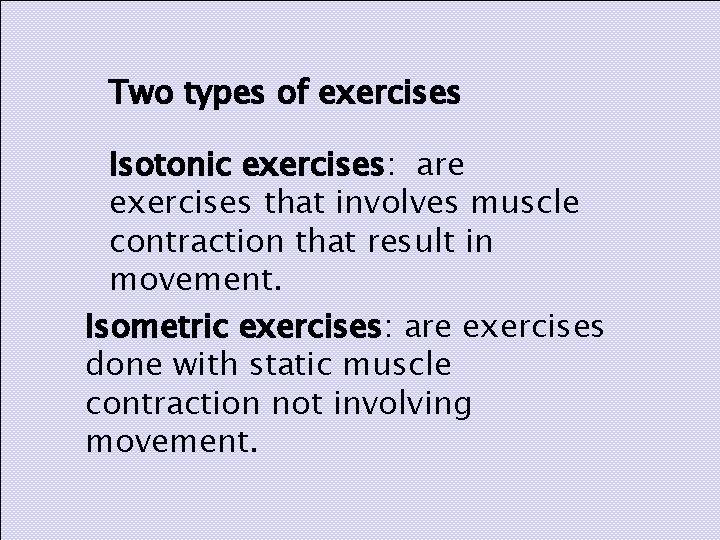
Two types of exercises Isotonic exercises: are exercises that involves muscle contraction that result in movement. Isometric exercises: are exercises done with static muscle contraction not involving movement.
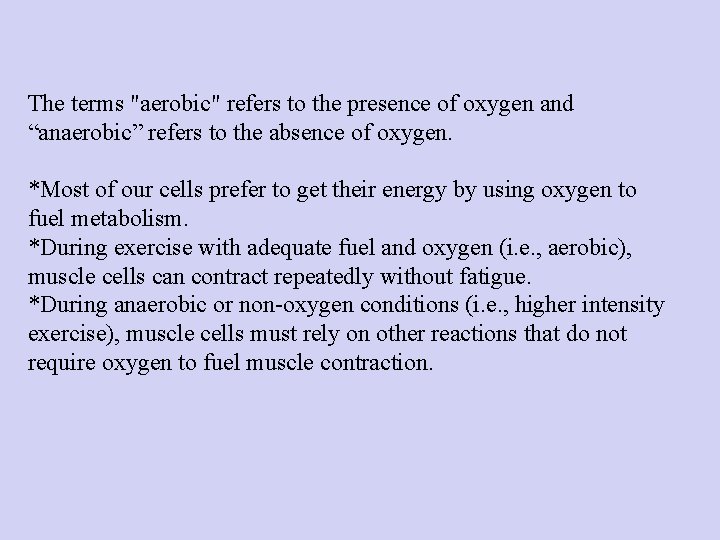
The terms "aerobic" refers to the presence of oxygen and “anaerobic” refers to the absence of oxygen. *Most of our cells prefer to get their energy by using oxygen to fuel metabolism. *During exercise with adequate fuel and oxygen (i. e. , aerobic), muscle cells can contract repeatedly without fatigue. *During anaerobic or non-oxygen conditions (i. e. , higher intensity exercise), muscle cells must rely on other reactions that do not require oxygen to fuel muscle contraction.