
Principles of Training NCFE Sport Mr Coleman LOs
- Slides: 13
Principles of Training NCFE Sport Mr Coleman
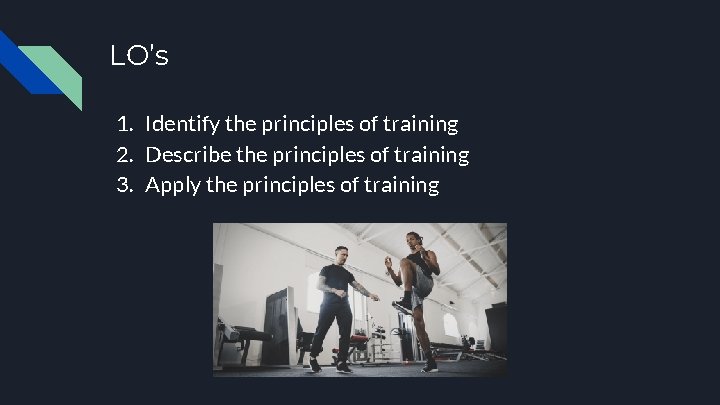
LO’s 1. Identify the principles of training 2. Describe the principles of training 3. Apply the principles of training
The Principles of Training ● The principles of training should be thought of as the 'golden rules' of making fitness training work for the individual participant. ● Following these golden rules will help to guarantee success and will carry athletes towards their training and performance goals. ● All training is aimed at creating long-term physical changes in the body systems, these can be known as adaptations
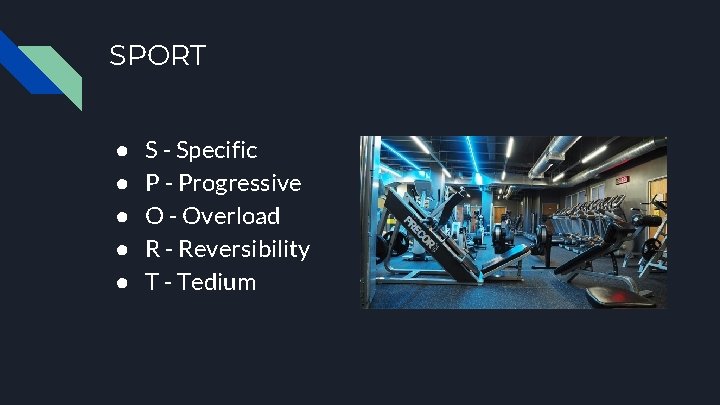
SPORT ● ● ● S - Specific P - Progressive O - Overload R - Reversibility T - Tedium
Specific ● Training must be matched to the needs of the sporting activity to improve fitness in the body parts the sport uses. ● If you are training body parts that are not used in that chosen sport, training is pointless ● A good example would be doing bicep curls to strength the arms to tackle better in rugby
Progressive Overload ● Training frequency, intensity, time or type must be increased over the training period to ensure that the body is pushed beyond its normal rhythm. ● Increases must be gradual so that the athlete doesn’t get injured ● Shock your body, don’t be comfortable ● A good example of this would be lifting an extra 5 kg each week on the bench press
Reversibility ● If you don’t use it you lose it ● If training stops because of lack of motivation or complacency, your body will weaken what was trained ● It is essential to not stop training when training ● Rest days can be used for the body and muscle fibres to recover ● A example of this would be having 3 rest days in a 7 day week
Tedium ● ● ● Athletes need variety in their training to prevent boredom but also some types of overuse injuries such as strains or even stress fractures. The principle of tedium is applied when a trainer builds variety into the training by changing the training method. A example of this would be performing different types of arm training. E. g bicep curls, bench presses or push ups
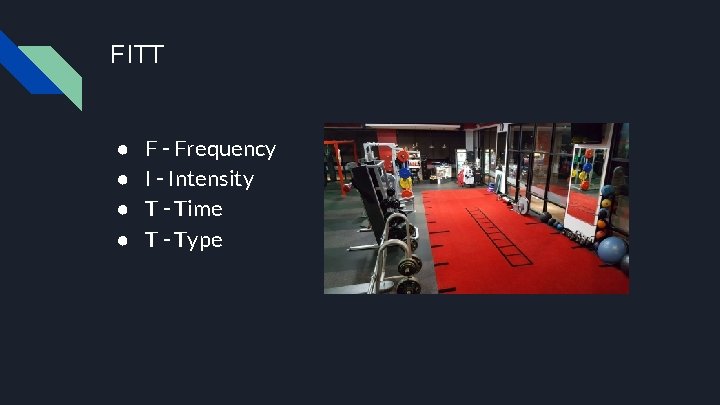
FITT ● ● F - Frequency I - Intensity T - Time T - Type
Frequency ● This is the number of times a week training takes place ● Different types of training require a different number of workouts ● Usually the greater number of sessions equals better progress
Intensity ● ● The degree of intensity is based on the amount of work you have to put in. When you’re doing cardio, such as jogging, intensity is determined by the speed and distance of your running. When you’re strength training, it’s the number of weight lifting reps you end up completing. It’s wise to do high-intensity training fewer times a week, allowing longer rest periods than you would with low-intensity training.
Time ● The length of time you spend exercising is directly impacted by the other three components of the FITT model. ● Cardio routines, are almost always longer than weight lifting routines. ● High-intensity workouts should be shorter than low-intensity workouts. ● You can exercise more frequently by doing shorter sessions
Type ● ● Type is the chosen training method Generally speaking, cardio and resistance training are the two most common types of exercise. The former includes running, swimming, bike riding, and hiking. Meanwhile, the latter includes weight lifting, pull-ups, push-ups, and situps. Depending on your desired goals and outcome, you can mix and match the above, as needed.