
Principles of the MRI Signal Contrast Mechanisms MR
- Slides: 19
ﻣﺤﺎﺿﺮﺍﺕ ﺍﻟﻔﻴﺰﻳﺎﺀ ﺍﻟﻄﺒﻴﺔ Principles of the MRI Signal Contrast Mechanisms MR Image Formation
Contrast Principles of the MRI Signal MR Image Formation Mechanisms ﺍﻟﻤﺤﺎﺿﺮﺓ ﺍﻟﺴﺎﺑﻌﺔ ﺳﻌﻴﺪ ﺳﻠﻤﺎﻥ ﻛﻤﻮﻥ. ﺍﻋﺪﺍﺩ ﺩ ﻛﻠﻴﺔ ﻣﺪﻳﻨﺔ ﺍﻟﻌﻠﻢ ﺍﻟﺠﺎﻣﻌﺔ ﻗﺴﻢ ﺍﻟﻔﻴﺰﻳﺎﺀ ﺍﻟﻄﺒﻴﺔ– ﺍﻟﻤﺮﺣﻠﺔ ﺍﻟﺮﺍﺑﻌﺔ John Van. Meter, Ph. D. Center for Functional and Molecular Imaging Georgetown University Medical Center
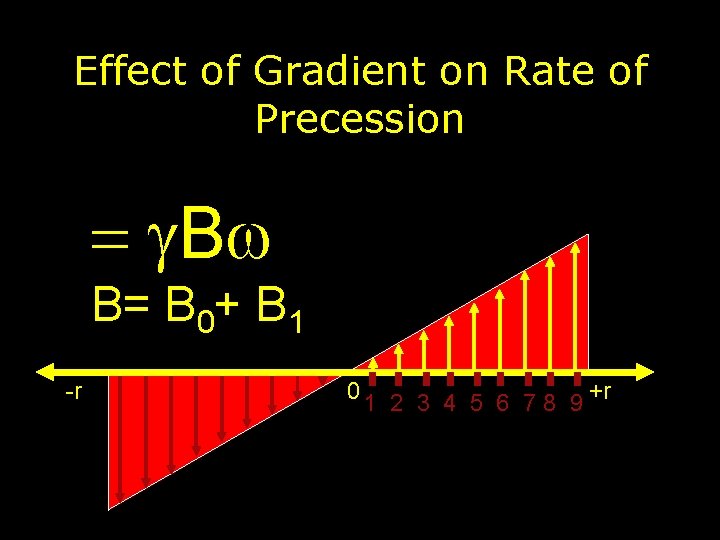
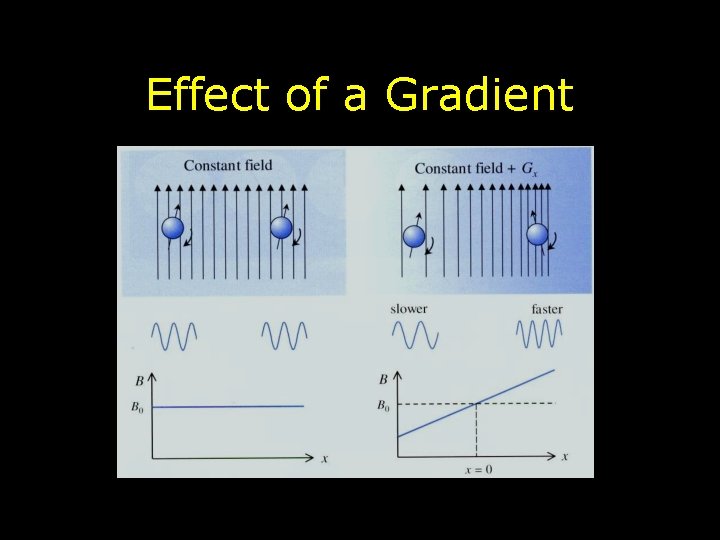
Gradients • A gradient is simply a deliberate change in the magnetic field • Gradients are used in MRI to linearly modify the magnetic field from one point in space to another • Gradients are applied along an axis (i. e. Gx along the x-axis, Gy along the y-axis, Gz along the z-axis) • What happens to the frequency at which the precess when we turn on a gradient?
Effect of Gradient on Rate of Precession = g. Bw B= B 0+ B 1 -r 0 1 2 3 4 5 6 7 8 9 +r
Effect of a Gradient
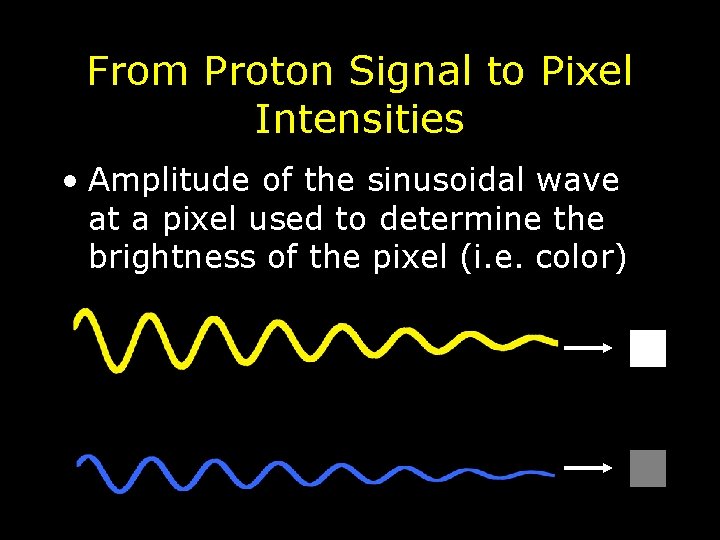
From Proton Signal to Pixel Intensities • Amplitude of the sinusoidal wave at a pixel used to determine the brightness of the pixel (i. e. color)
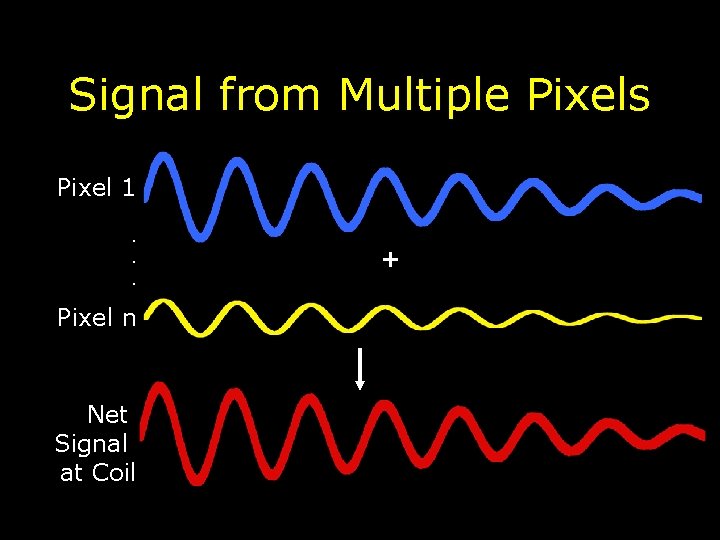
Signal from Multiple Pixels Pixel 1. . . Pixel n Net Signal at Coil +
Decomposing Received Signal • Left unchanged the signal received cannot be broken down by location of individual pixels • Need method for efficiently pulling out the signal from many pixels at once • Gradients used to relate where a particular signal is coming from
Frequency Encoding • Use a gradient to modify the rate at which the protons spin based on location of the proton • Requires the gradient to remain on
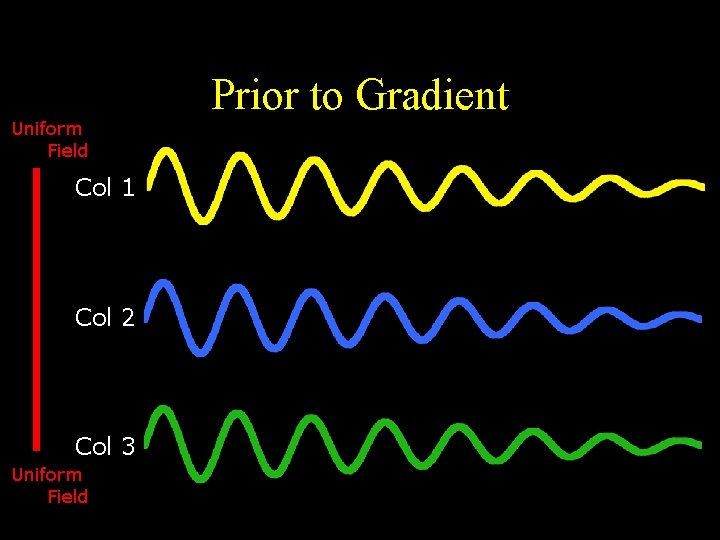
Uniform Field Col 1 Col 2 Col 3 Uniform Field Prior to Gradient
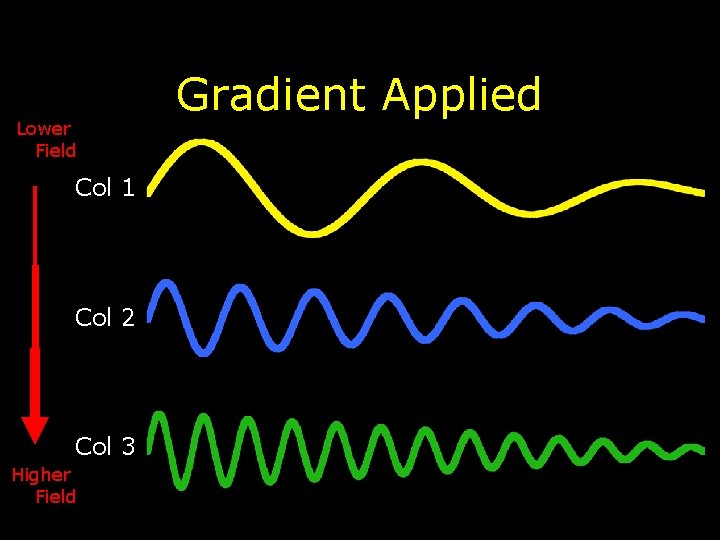
Lower Field Col 1 Col 2 Col 3 Higher Field Gradient Applied
Frequency Encoding • Apply gradient in one direction and leave it on • Result: ØProtons that experience a decrease in the net magnetic field precess slower ØProtons that experience an increase in the net magnetic field precess faster
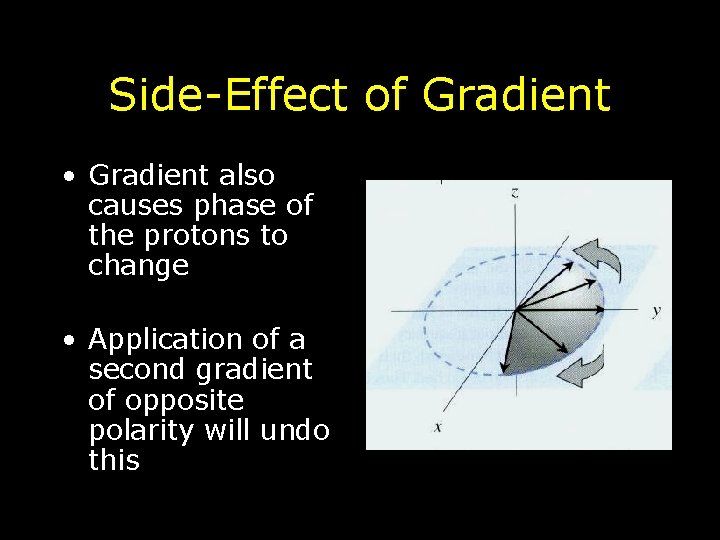
Side-Effect of Gradient • Gradient also causes phase of the protons to change • Application of a second gradient of opposite polarity will undo this
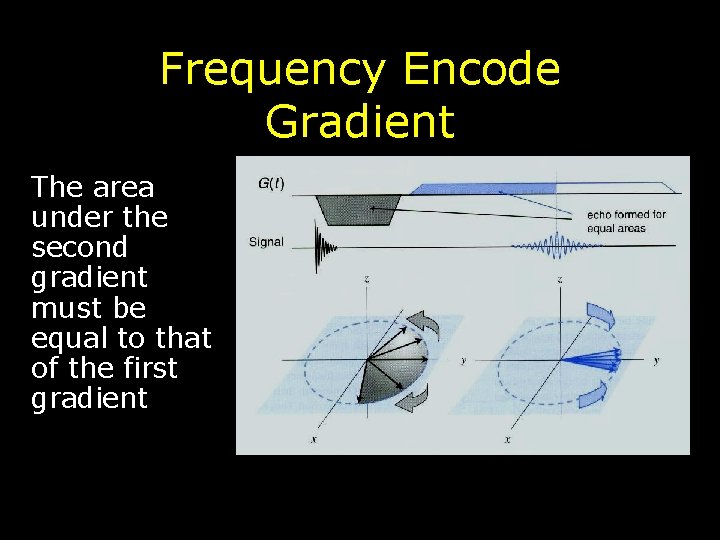
Frequency Encode Gradient The area under the second gradient must be equal to that of the first gradient
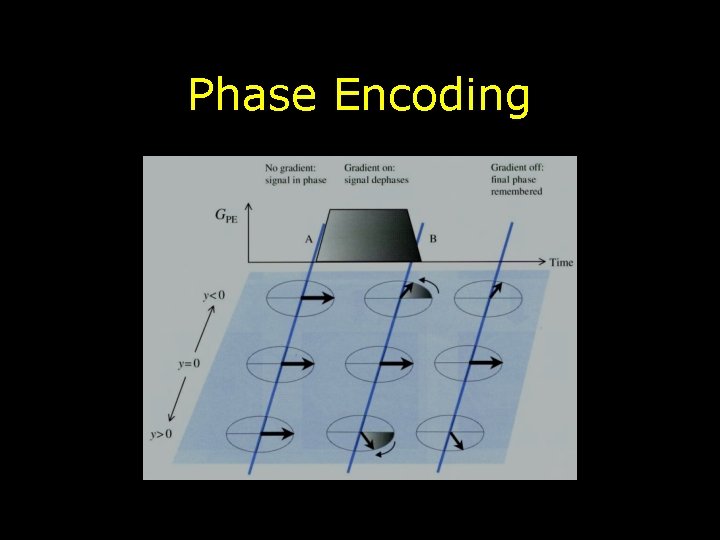
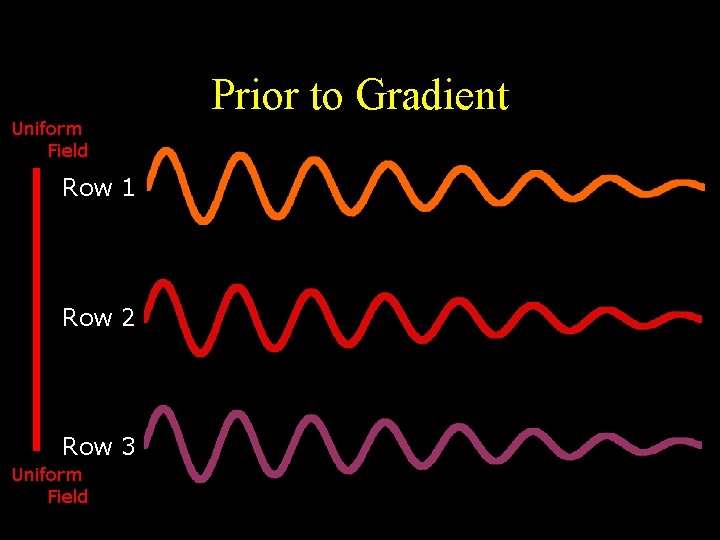
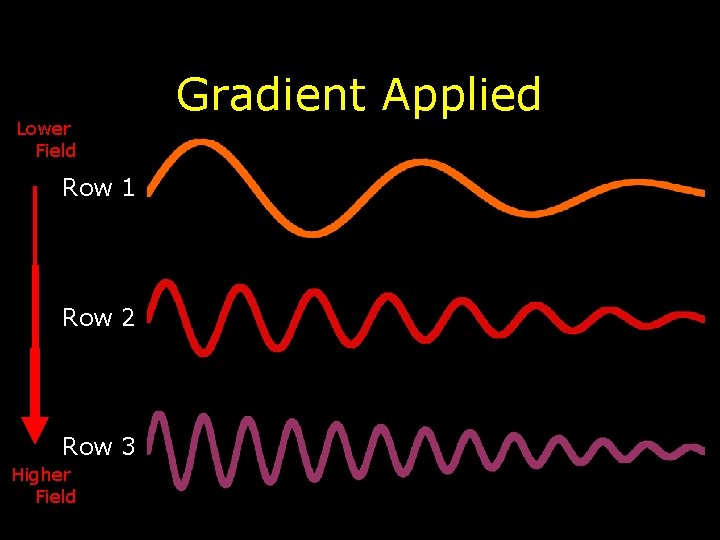
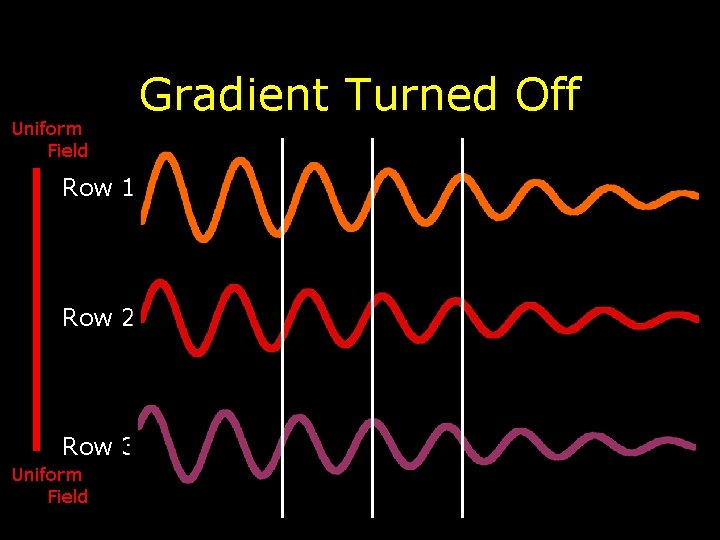
Phase Encoding • Turn gradient on briefly then turn it off • Turning on the gradient will cause some protons to spin faster others to spin slower depending on where they are located • Turning off the gradient will make them all spin at the same rate again • BUT they will be out of ‘phase’ with one another based on where they are located
Phase Encoding
Uniform Field Row 1 Row 2 Row 3 Uniform Field Prior to Gradient
Lower Field Row 1 Row 2 Row 3 Higher Field Gradient Applied
Uniform Field Row 1 Row 2 Row 3 Uniform Field Gradient Turned Off